
Types of help Available NHS Stop Smoking Services
Types of help Available • NHS Stop Smoking Services • Nicotine Replacement Therapy (NRT) • Other Pharmacological Treatments (non nicotine) • Alternative Therapies

NHS Stop Smoking Services What Does it do? • Free Local Help for anyone who wants to stop smoking • Evidence is that you are far more likely to stop smoking using the NHS stop smoking service • Bromley Offers Free Group support, individual support and advice on NRT and Zyban and Champix • Times of Sessions Mon – Fri : 9 am to 5 pm
NHS Stop Smoking Services Example of what a group course could be like (this may vary): • • • Week 1: Learn about the programme, meet the group, discuss best ways to stop. Week 2: Find out more about stop smoking aids you may want to use and prepare a quit date. Week 3: Quit Day! Get your quitting aids prescribed, make sure you know how to use them. Use group support to share tips and tactics Weeks 4 – 6: share experiences on quitting, group support Week 7: Celebrating staying smoke free, discuss tactics to stay on track
NHS Stop Smoking Services How to access the Service • Use self Referral forms you can get from your GP, Dental Surgeries or Hospitals • Free Phone 0800 587 8821

Nicotine Replacement Therapy (NRT) • NRT is a way of getting nicotine into the bloodstream without smoking • NRT stops or reduces symptoms of nicotine withdrawal. Aids you to stop smoking by minimising the withdrawal symptoms. • NRT does not “Make” you stop. You still need willpower. • NRTs make it twice as likely to succeed. However a combination of NRT and support / counselling gives the best chance of success • Combining different methods of NRT is not recommended. Consult your GP • Dose of nicotine in NRT is less than in cigarettes and has a slower effect. You still may feels some withdrawal symptoms • NRT obtained through your GP or NHS stopping smoking services

Types of Nicotine Replacement Therapy (NRT) • Nicotine Gum • Nicotine Patches • Nicotine Inhaler • Nicotine tablets/lozenges • Nicotine nasal spray
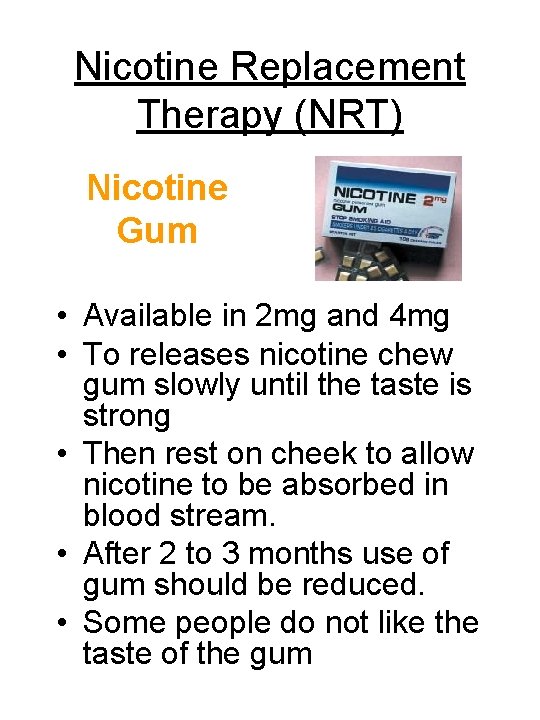
Nicotine Replacement Therapy (NRT) Nicotine Gum • Available in 2 mg and 4 mg • To releases nicotine chew gum slowly until the taste is strong • Then rest on cheek to allow nicotine to be absorbed in blood stream. • After 2 to 3 months use of gum should be reduced. • Some people do not like the taste of the gum
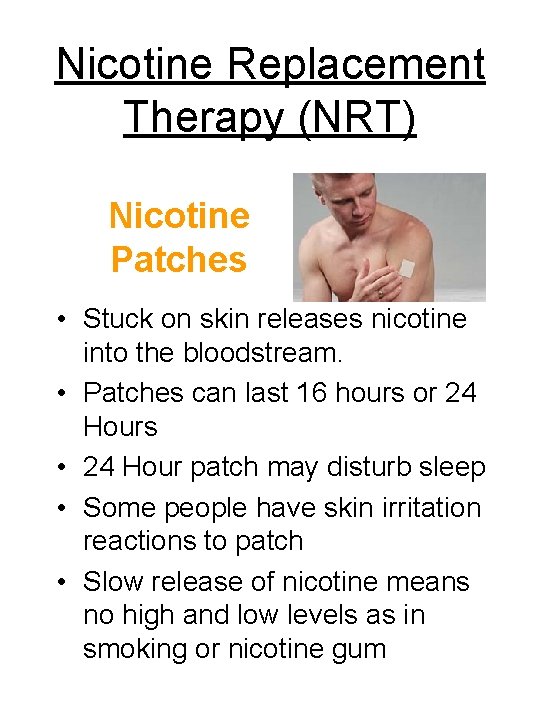
Nicotine Replacement Therapy (NRT) Nicotine Patches • Stuck on skin releases nicotine into the bloodstream. • Patches can last 16 hours or 24 Hours • 24 Hour patch may disturb sleep • Some people have skin irritation reactions to patch • Slow release of nicotine means no high and low levels as in smoking or nicotine gum
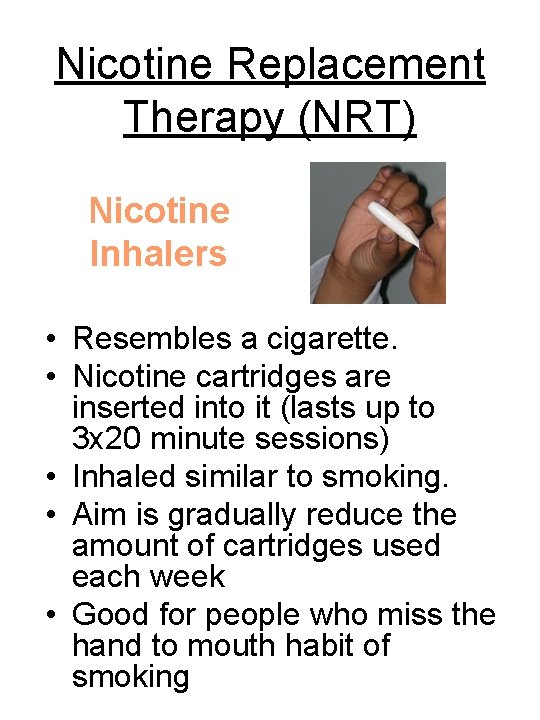
Nicotine Replacement Therapy (NRT) Nicotine Inhalers • Resembles a cigarette. • Nicotine cartridges are inserted into it (lasts up to 3 x 20 minute sessions) • Inhaled similar to smoking. • Aim is gradually reduce the amount of cartridges used each week • Good for people who miss the hand to mouth habit of smoking
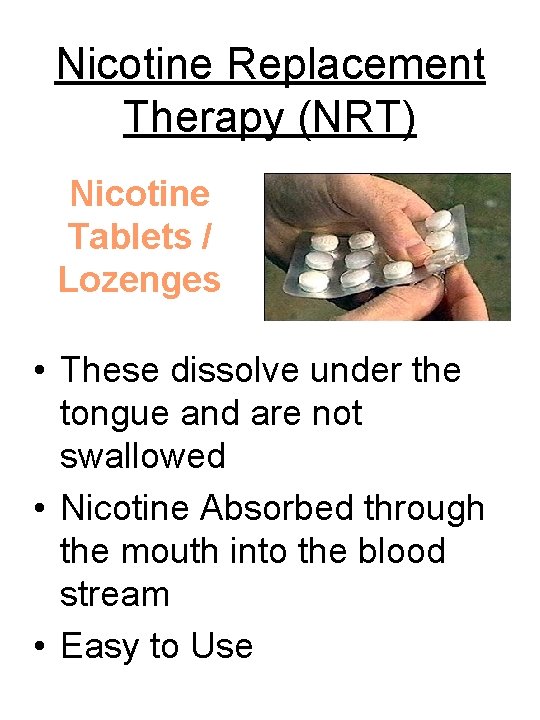
Nicotine Replacement Therapy (NRT) Nicotine Tablets / Lozenges • These dissolve under the tongue and are not swallowed • Nicotine Absorbed through the mouth into the blood stream • Easy to Use
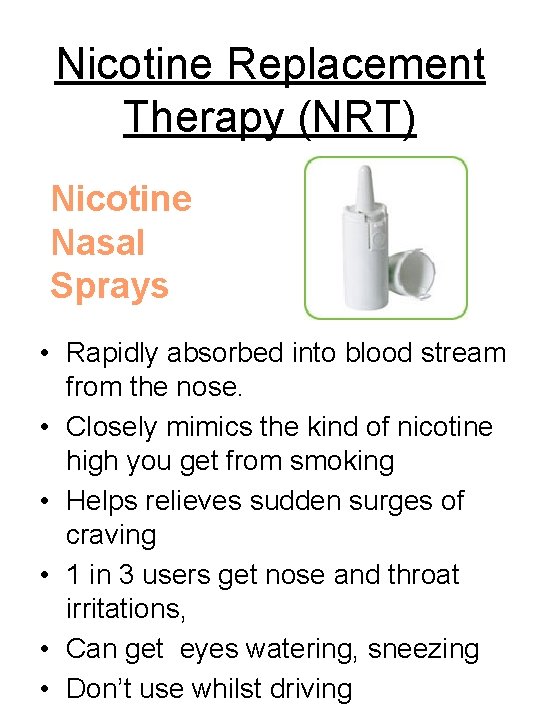
Nicotine Replacement Therapy (NRT) Nicotine Nasal Sprays • Rapidly absorbed into blood stream from the nose. • Closely mimics the kind of nicotine high you get from smoking • Helps relieves sudden surges of craving • 1 in 3 users get nose and throat irritations, • Can get eyes watering, sneezing • Don’t use whilst driving
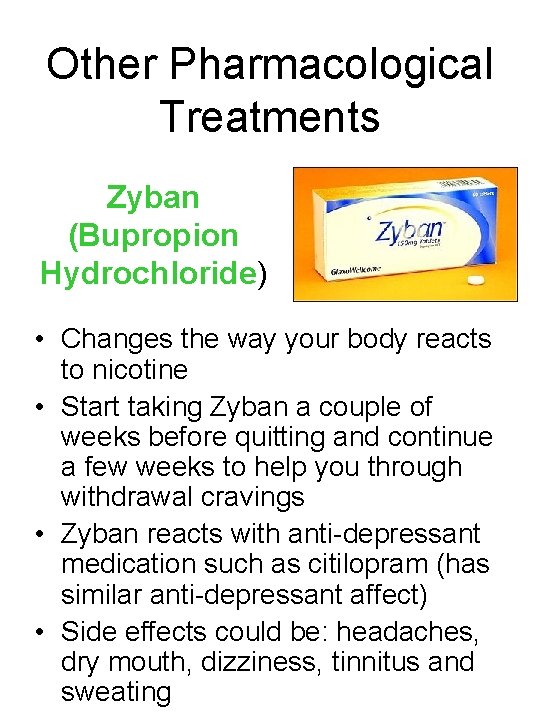
Other Pharmacological Treatments Zyban (Bupropion Hydrochloride) • Changes the way your body reacts to nicotine • Start taking Zyban a couple of weeks before quitting and continue a few weeks to help you through withdrawal cravings • Zyban reacts with anti-depressant medication such as citilopram (has similar anti-depressant affect) • Side effects could be: headaches, dry mouth, dizziness, tinnitus and sweating
Other Pharmacological Treatments Champix (Varenicline) • Reduces the effects you feel when you do not have a cigarette • Can also reduce the enjoyment of having a cigarette • Can alter the ay other drugs may work such as Insulin, Waferine and Theophynine • Can have side effects such as headaches, nausea, increased appetite, dry mouth. • No evidence that Champuix reacts with other medication. However may increase the symptoms of side effects of medication like citilopram
Alternative Therapies Not clinically proven that it helps but a lot of people find it helpful • Hypnotherapy: helps you to relax when to desire to smoke or increase your resolve to give up smoking. • Acupuncture: Traditional Chinese therapy. Uses needles to stimulate energy points in the body. • Aroma Therapy: claims to help reduce symptoms of nicotine withdrawal such as anger and frustration through relaxation using the burning of essential oils. • Herbalism: use of herbs to reduce the symptoms of stopping smoking. • Massage: helps you relax and take your mind off smoking.
Alternative Therapies Council for Hypnotherapy: Call 01451 810500 or log onto www. hypnotherapists. org. uk. British Acupuncture Online: Call 020 8735 0400 or log onto www. acupuncture. org. uk British Complementary Medicine Association: Call 0845 345 5977 or log onto www. bcma. co. uk.

What do you remember?
Sources of information Support is available from, Bromley For more information ring: 01689 866 651 These websites may also help: www. nosmokingday. org. uk www. givingupsmoking. co. uk www. thebigquit. co. uk or call the NHS Smoking Helpline on 0800 169 0169. Mind also has a section on stopping smoking at: www. mind. org
- Slides: 18