
TYPES OF GOVERNMENT TYPES Of GOVERNMENT Who rules





- Slides: 18
TYPES OF GOVERNMENT
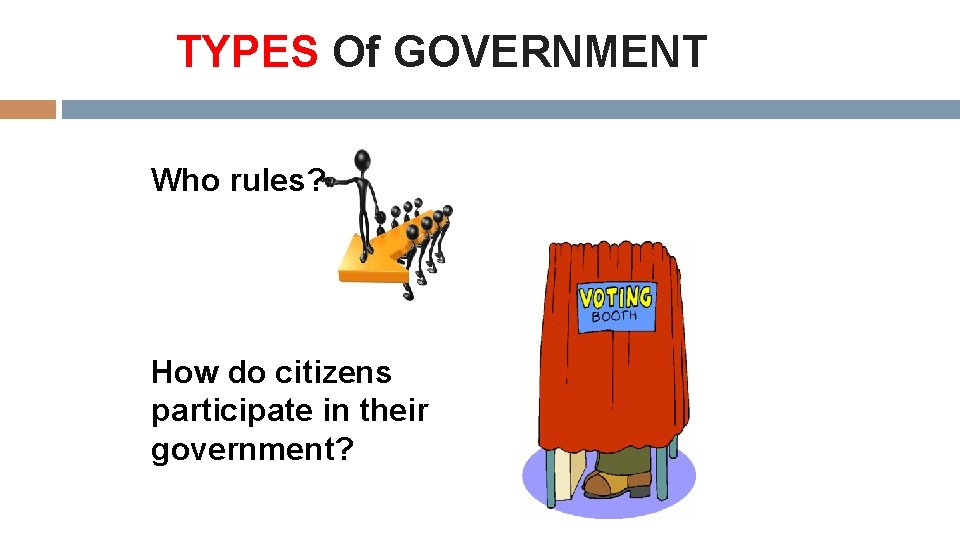
TYPES Of GOVERNMENT Who rules? How do citizens participate in their government?
TYPES Of GOVERNMENT There are 3 basic types of government. Autocracy Oligarchy Democracy
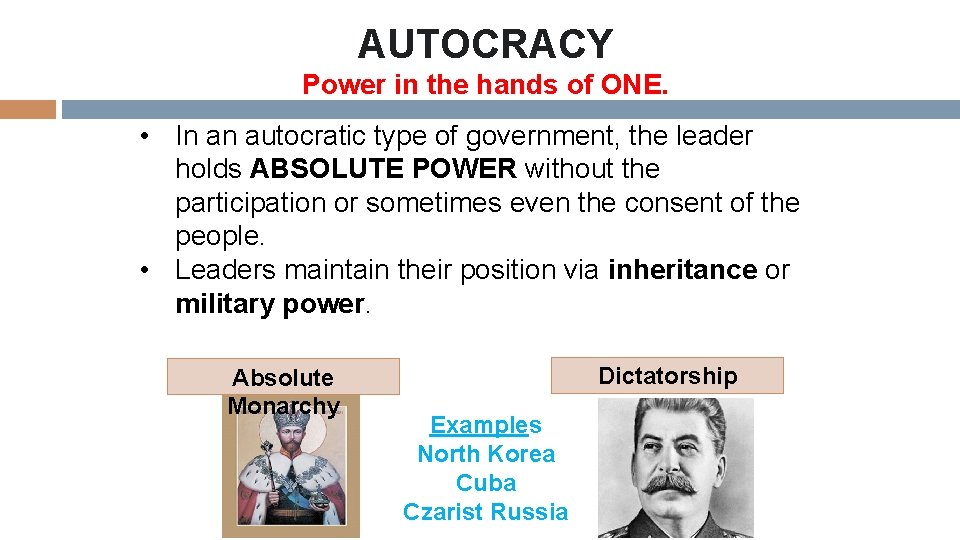
AUTOCRACY Power in the hands of ONE. • In an autocratic type of government, the leader holds ABSOLUTE POWER without the participation or sometimes even the consent of the people. • Leaders maintain their position via inheritance or military power. Absolute Monarchy Dictatorship Examples North Korea Cuba Czarist Russia
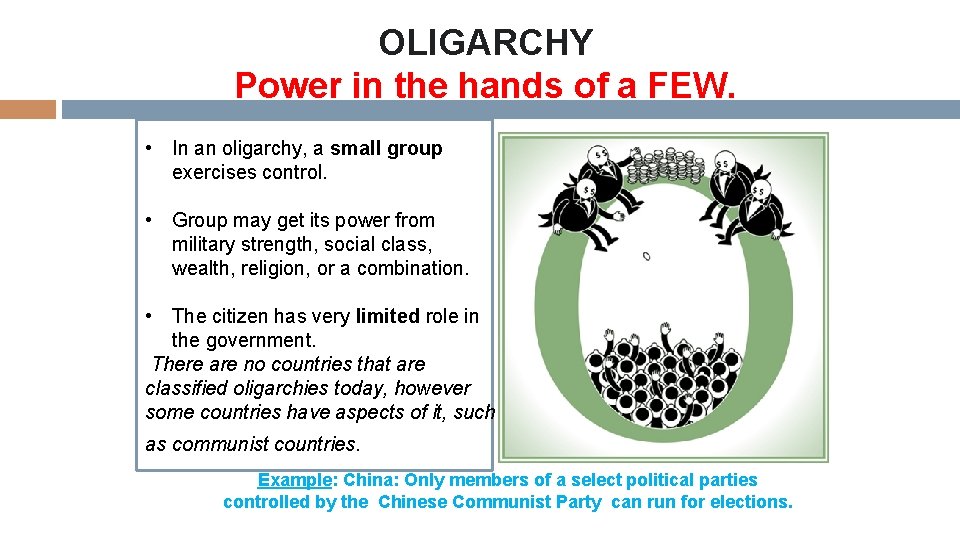
OLIGARCHY Power in the hands of a FEW. • In an oligarchy, a small group exercises control. • Group may get its power from military strength, social class, wealth, religion, or a combination. • The citizen has very limited role in the government. There are no countries that are classified oligarchies today, however some countries have aspects of it, such as communist countries. Example: China: Only members of a select political parties controlled by the Chinese Communist Party can run for elections.
Autocracy and Oligarchy People have very little say in both types of government, yet may claim they “rule for the people”. For example: May hold elections with only one candidate or control the results in various ways. Even when these governments have a legislature or national assembly, they often only approve decisions made by the leaders.
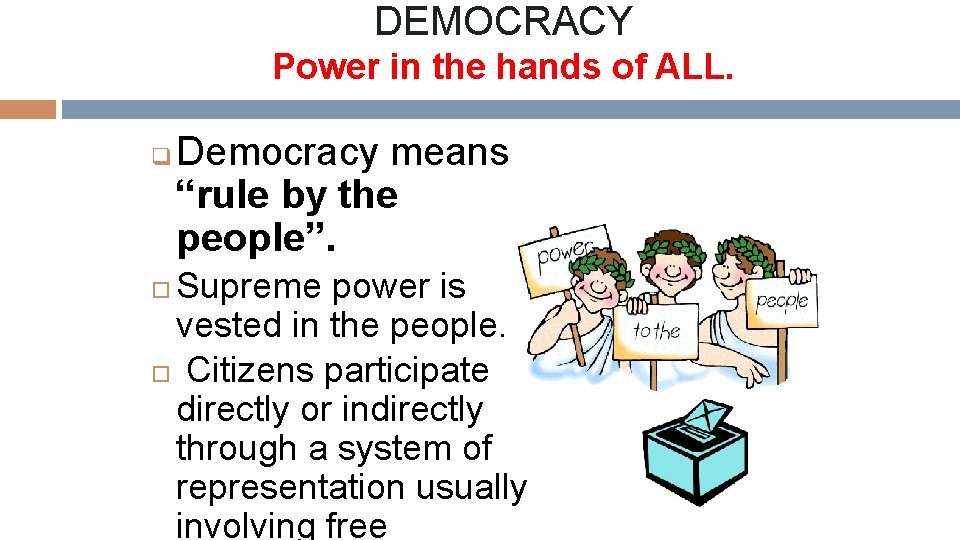
DEMOCRACY Power in the hands of ALL. q Democracy means “rule by the people”. Supreme power is vested in the people. Citizens participate directly or indirectly through a system of representation usually involving free
Activity ACTIVITY
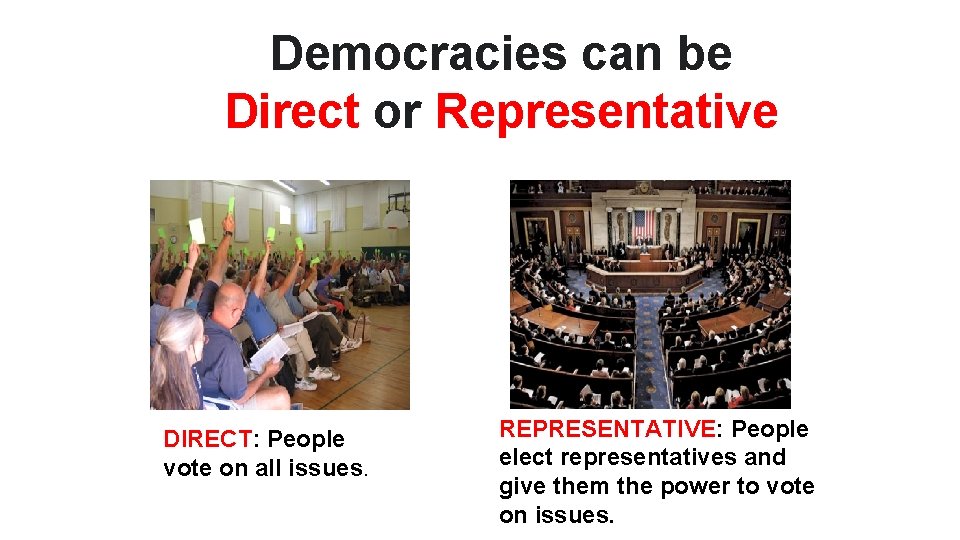
Democracies can be Direct or Representative DIRECT: People vote on all issues. REPRESENTATIVE: People elect representatives and give them the power to vote on issues.
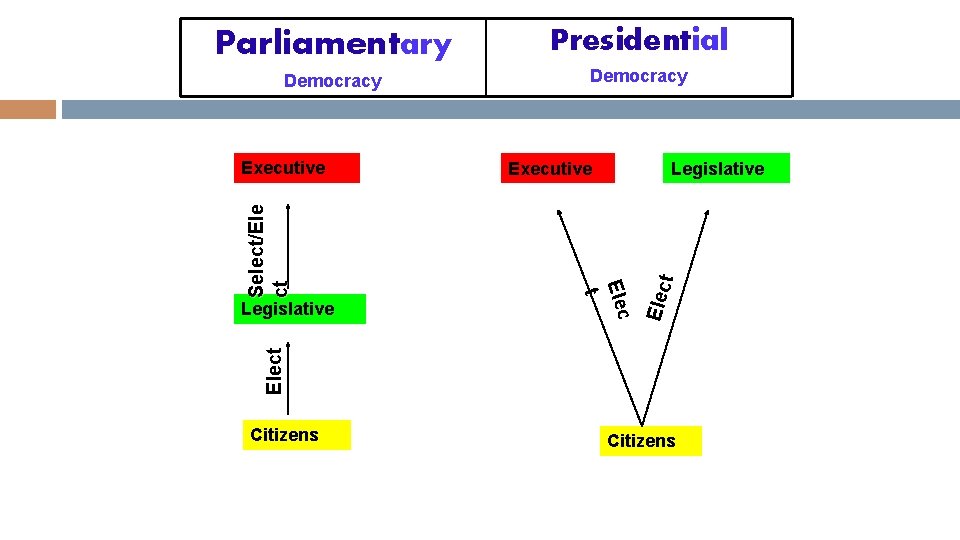
The Two Predominant Forms Of DEMOCRACIES PARLIAMENTA RY Voters select the members of the legislature (parliament) and the legislature (parliament) selects or elects the leader ( a prime minister, premier, or chancellor). The leader is chosen from within the legislature (parliament). EXAMPLE: United PRESIDENTIAL Voters elect the members of the legislator as well as the leader (President). The leader is elected separately. EXAMPLE: United States, Mexico, Brazil.
Parliamentary Presidential Democracy E lec t Legislative Elect Legislative Executive Elec t Select/Ele ct Executive Citizens
…. and then there is An aspect of government in which a monarch is guided by a constitution. The Monarch does not have too much power. They usually act as the head of the state and have to follow the laws of the democratic government. Constitutional Monarchies are commonly found in countries with Parliamentary Democracies.
Europe’s Most Famous Constitutional Monarchy Europe’s most famous constitutional monarchy is Great Britain. The Royal Family is always in the news though not for governing. Their roles are largely ceremonial, representing the U. K. at occasions such as state dinners or charity events.
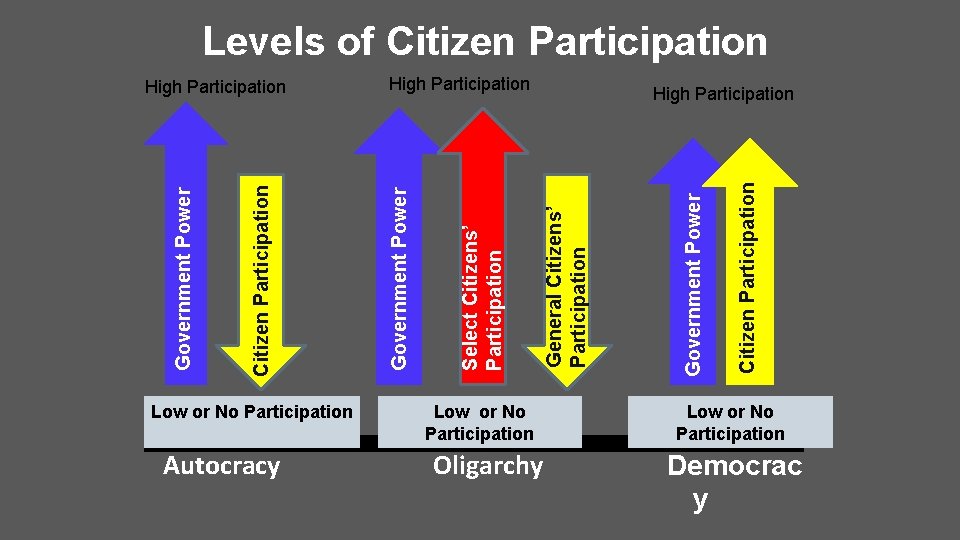
Levels of Citizen Participation Low or No Participation Autocracy Low or No Participation Oligarchy Citizen Participation Government Power High Participation General Citizens’ Participation Select Citizens’ Participation High Participation Government Power Citizen Participation Government Power High Participation Low or No Participation Democrac y
How Governments Determine Citizen Participation. More Freedom High citizen participation Each star on the continuum represents a type of government. Identify the type of government each star represents based on its placement on the continuum. Least Freedom Low Citizen participation
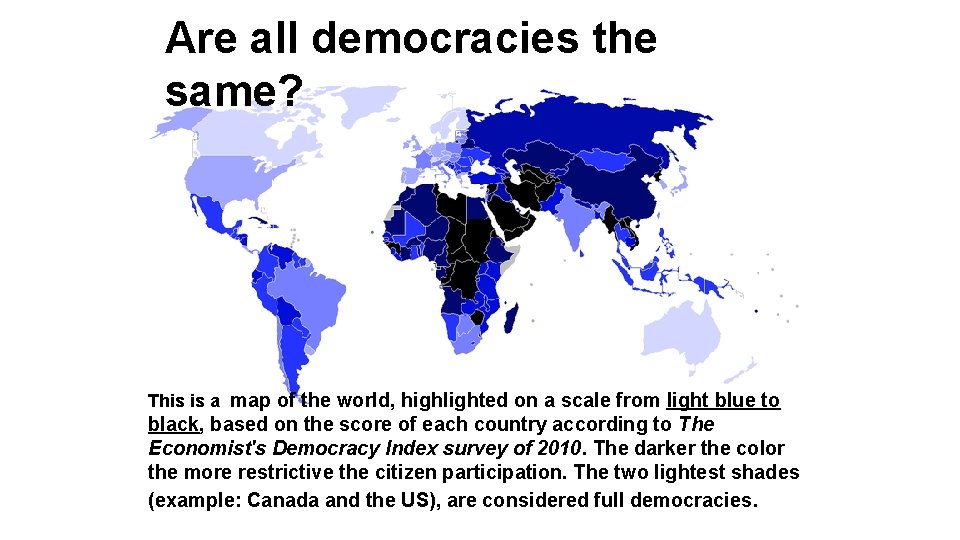
Are all democracies the same? This is a map of the world, highlighted on a scale from light blue to black, based on the score of each country according to The Economist's Democracy Index survey of 2010. The darker the color the more restrictive the citizen participation. The two lightest shades (example: Canada and the US), are considered full democracies.