
TYPES OF GOVERNMENT IN CANADA Representative Democracy Elected
- Slides: 8
TYPES OF GOVERNMENT IN CANADA
Representative Democracy Elected representatives who act on behalf of the voters We elect in our own ridings We have the ability to elect new governments “Rule by the People”
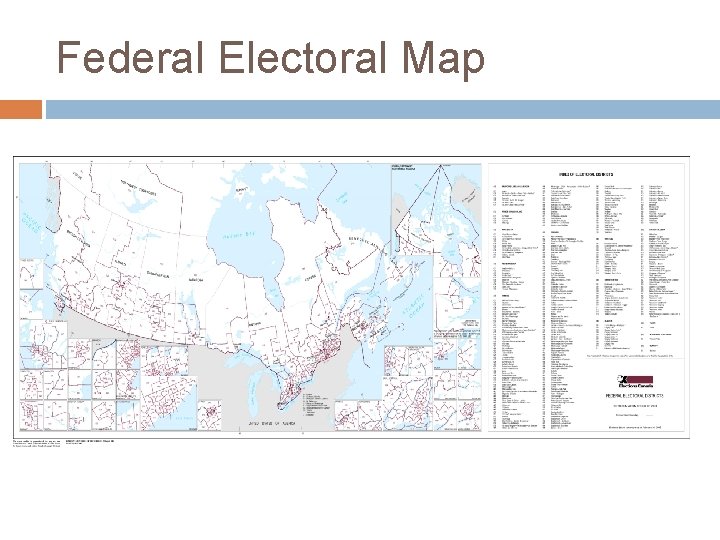
Federal Electoral Map
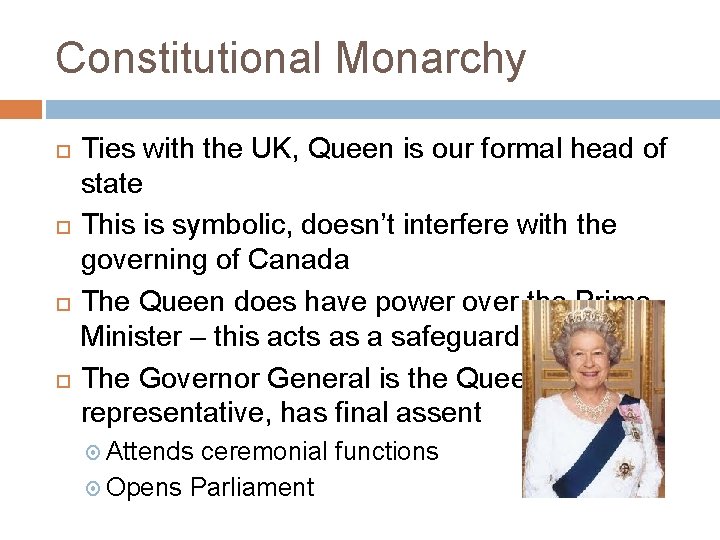
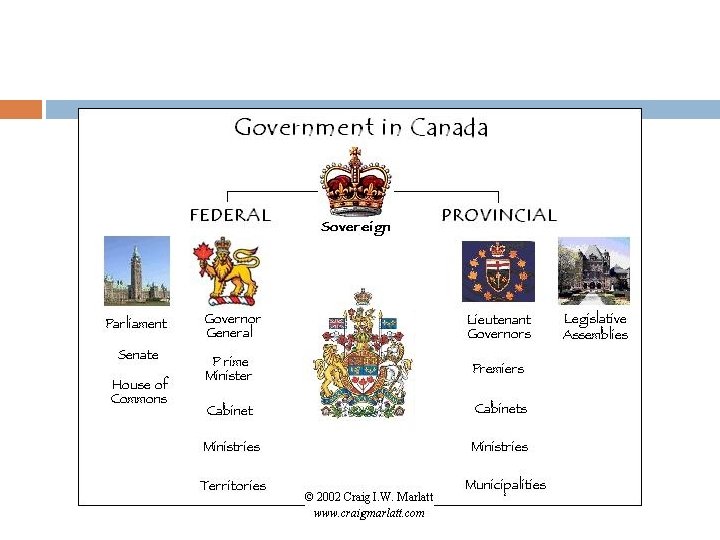
Constitutional Monarchy Ties with the UK, Queen is our formal head of state This is symbolic, doesn’t interfere with the governing of Canada The Queen does have power over the Prime Minister – this acts as a safeguard The Governor General is the Queen’s representative, has final assent Attends ceremonial functions Opens Parliament
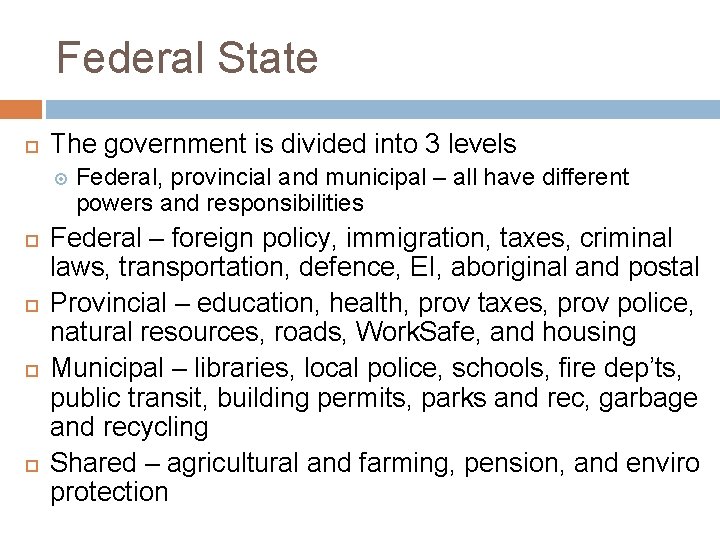
Federal State The government is divided into 3 levels Federal, provincial and municipal – all have different powers and responsibilities Federal – foreign policy, immigration, taxes, criminal laws, transportation, defence, EI, aboriginal and postal Provincial – education, health, prov taxes, prov police, natural resources, roads, Work. Safe, and housing Municipal – libraries, local police, schools, fire dep’ts, public transit, building permits, parks and rec, garbage and recycling Shared – agricultural and farming, pension, and enviro protection
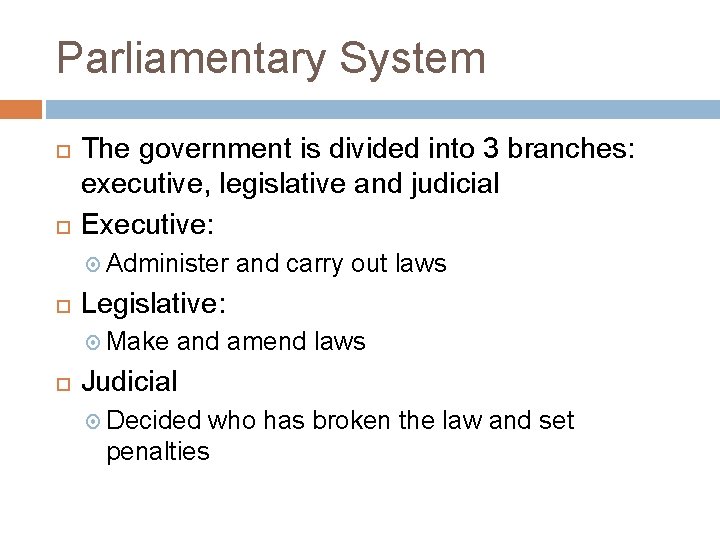
Parliamentary System The government is divided into 3 branches: executive, legislative and judicial Executive: Administer Legislative: Make and carry out laws and amend laws Judicial Decided who has broken the law and set penalties
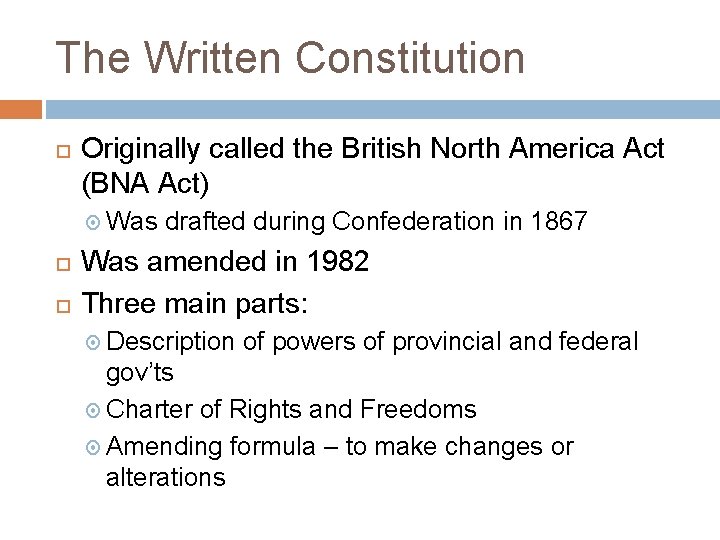
The Written Constitution Originally called the British North America Act (BNA Act) Was drafted during Confederation in 1867 Was amended in 1982 Three main parts: Description of powers of provincial and federal gov’ts Charter of Rights and Freedoms Amending formula – to make changes or alterations