
Types of Government Government is the body with
Types of Government
Government is … • the body with the power to make and/or enforce laws for a country, land area, people, or organization. • the state and its administration viewed as the ruling political power. • the management or control of a system.
Why are there different types of Government? Government and political institutions vary widely throughout the various empires and countries that make up civilization. This is due not only to cultural differences, but also to the different meanings of power, leadership, and administration in the different nations. There is no right or wrong way to lead a government. Let’s take a closer look at the different types of government…. .
Anarchy (chaos) has no organized government at all. This sort of arrangement always is replaced by another more organized but still short-lived form of government - e. g. Dictatorship
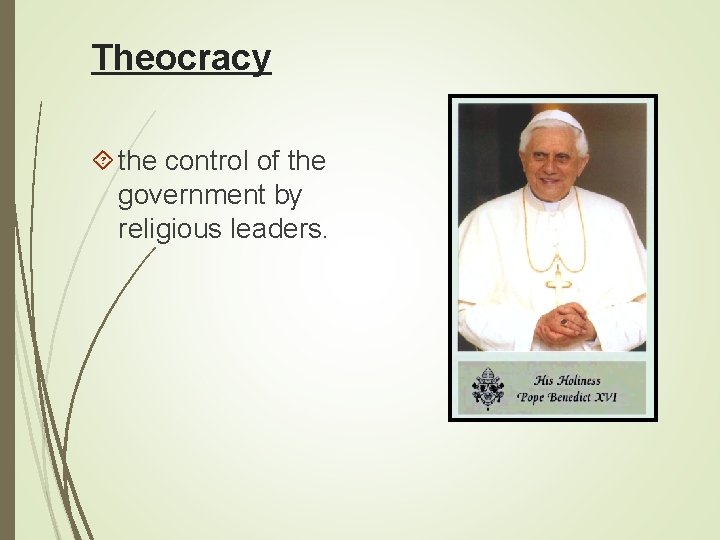
Theocracy the control of the government by religious leaders.
Advantages: General agreement on operation of the country. Keeps the traditions of the country. People look-up to the leaders. Disadvantages: Driven by religious theory. Can result in discrimination. Countries: Vatican City. Iran is a theocracy, as is Saudi Arabia however they are also monarchies. . . Nothing is done without consent and approval of the religious leaders.
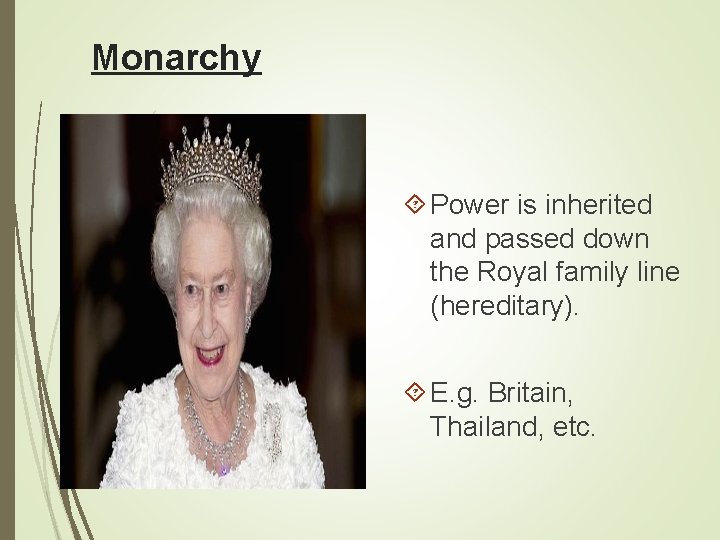
Monarchy Power is inherited and passed down the Royal family line (hereditary). E. g. Britain, Thailand, etc.
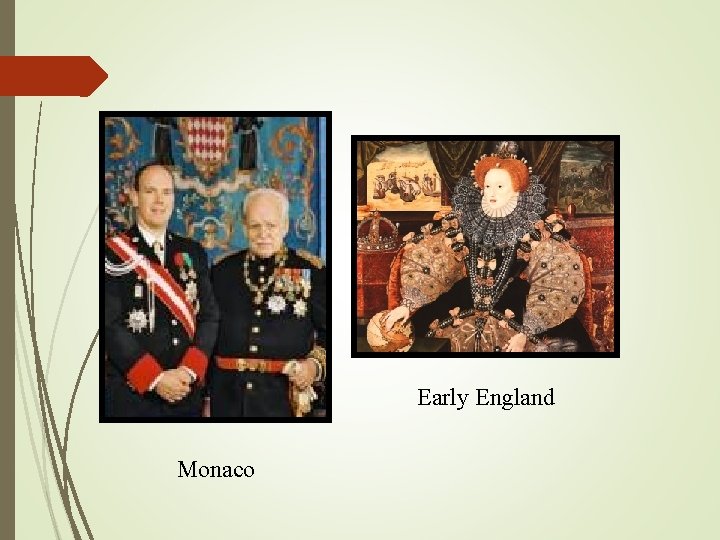
Early England Monaco
Advantages: • No conflict over elections. • Stable, long lines of heirs. • Traditions of the country will carry on. Disadvantages: • people do not get the vote. • Elitist. • Does not represent the entire society. Countries: early England, Monaco, Saudi Arabia, Jordan, UAE
Dictatorship Power is in the hands of ONE individual who usually has the support of the army. A dictatorship is an autocratic form of government.
Dictatorship Advantages: Little or no conflict in government because decisions made by an individual. No debate, quick decisions. Strong leadership. Disadvantages: Life is in the hands of one individual. If mistakes are made, there is no recourse.
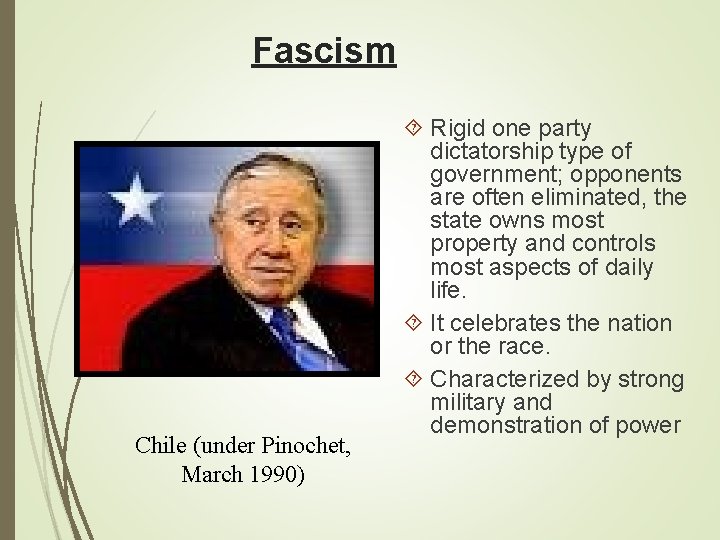
Fascism Chile (under Pinochet, March 1990) Rigid one party dictatorship type of government; opponents are often eliminated, the state owns most property and controls most aspects of daily life. It celebrates the nation or the race. Characterized by strong military and demonstration of power
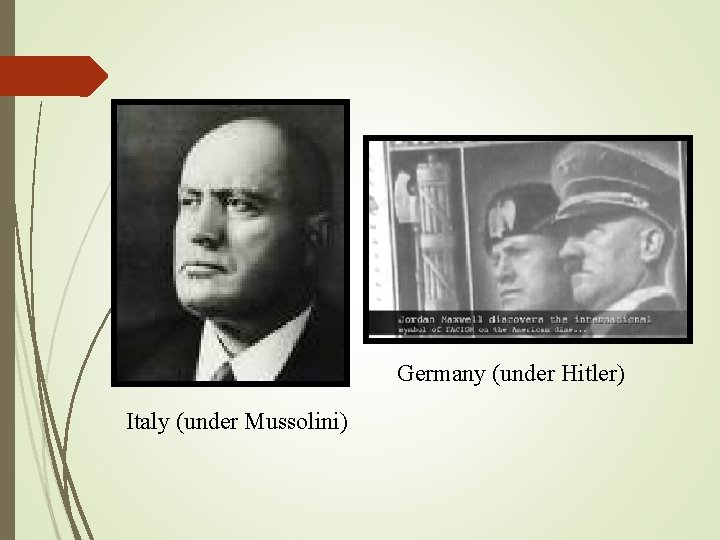
Germany (under Hitler) Italy (under Mussolini)
Fascism Advantage: Keeps political opponents quiet (no disturbances/conflicting ideas). Decisions are quick. Unifies the nation. Disadvantages: No alternative view accepted. Brutal violence and repression.
Democracy Power lies in the hands of officials who are elected by the people. Individuality and freedom of expression are valued.
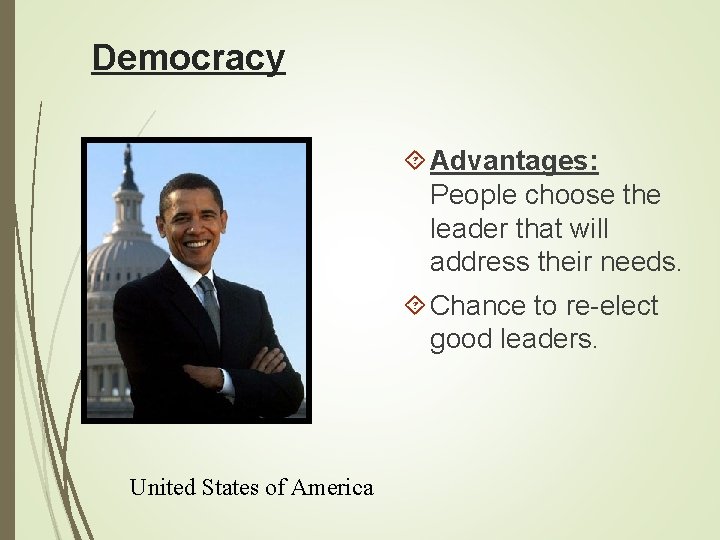
Democracy Advantages: People choose the leader that will address their needs. Chance to re-elect good leaders. United States of America
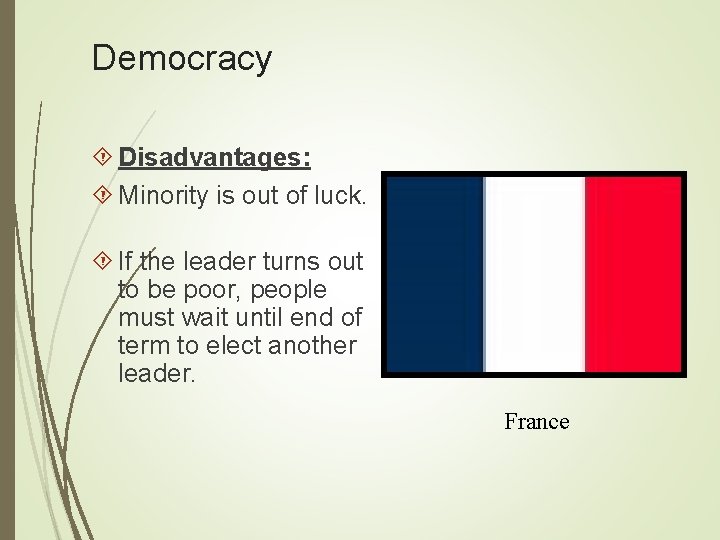
Democracy Disadvantages: Minority is out of luck. If the leader turns out to be poor, people must wait until end of term to elect another leader. France
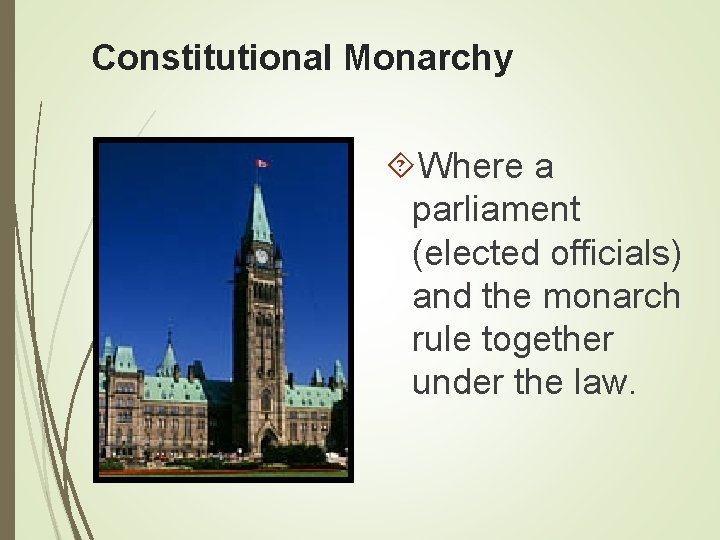
Constitutional Monarchy Where a parliament (elected officials) and the monarch rule together under the law.
Advantages: Concerns of everyone addressed. Powers of government are limited; makes sure that leaders of government do not misuse the powers they have been given. keeps some tradition.
Disadvantages: Decision making process is slow (too much negotiation).
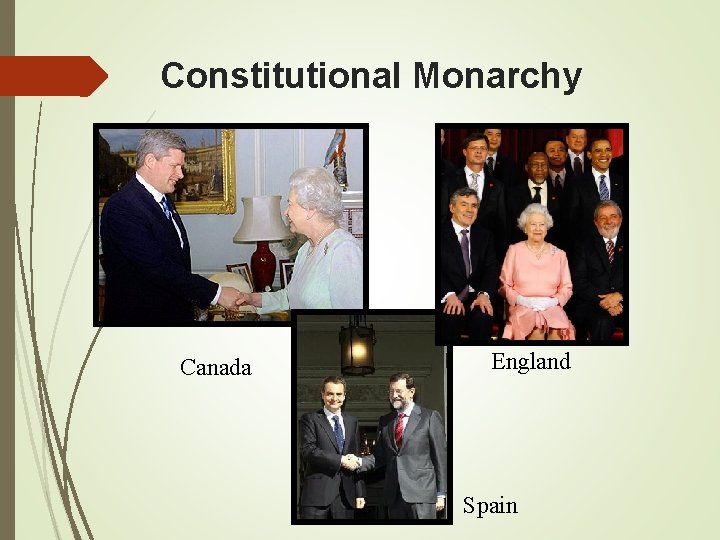
Constitutional Monarchy Canada England Spain
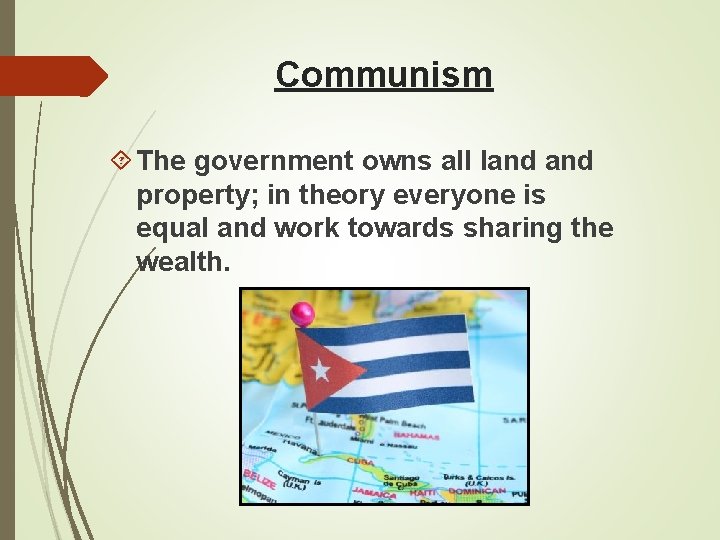
Communism The government owns all land property; in theory everyone is equal and work towards sharing the wealth.
Advantages: People may be united in their loyalty. Everyone is seen as equal – less conflicts. Disadvantages: Ruler takes on a dictator role. Decision making process may not fully be supported by the people. Country Examples: Cuba, China.
- Slides: 23