
Types of Government Autocracy Power and authority are
- Slides: 18
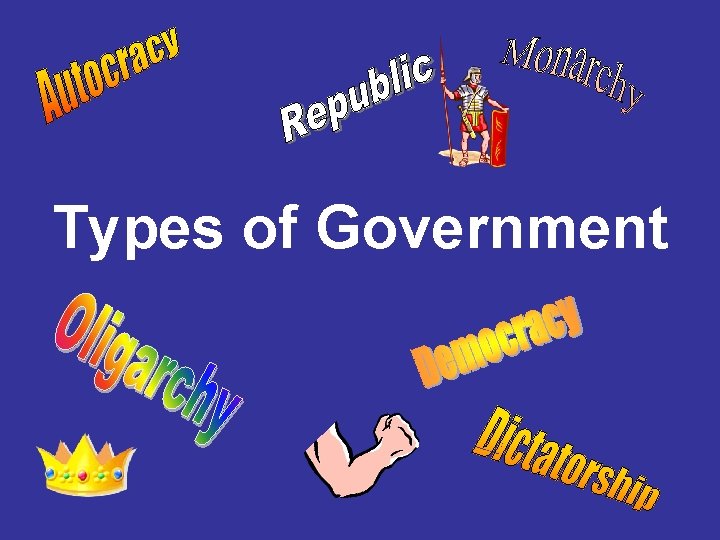
Types of Government
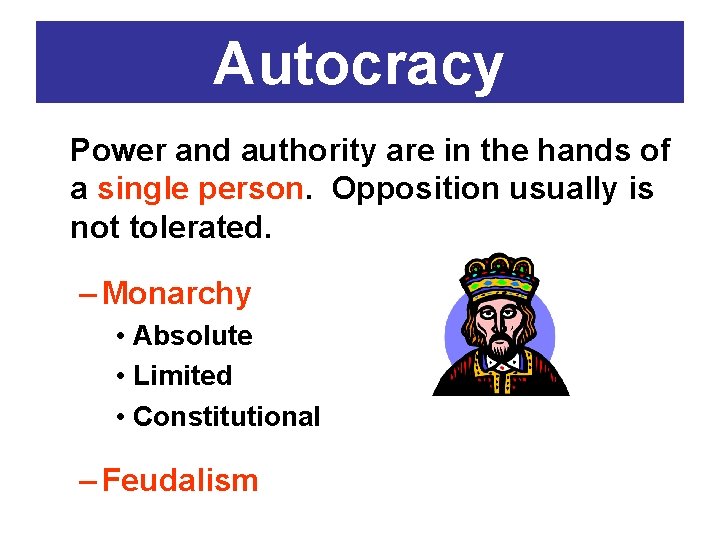
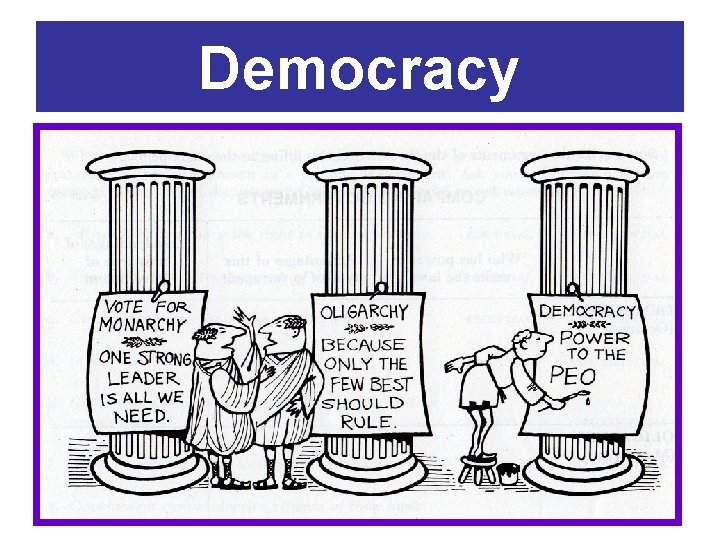
Autocracy Power and authority are in the hands of a single person. Opposition usually is not tolerated. – Monarchy • Absolute • Limited • Constitutional – Feudalism
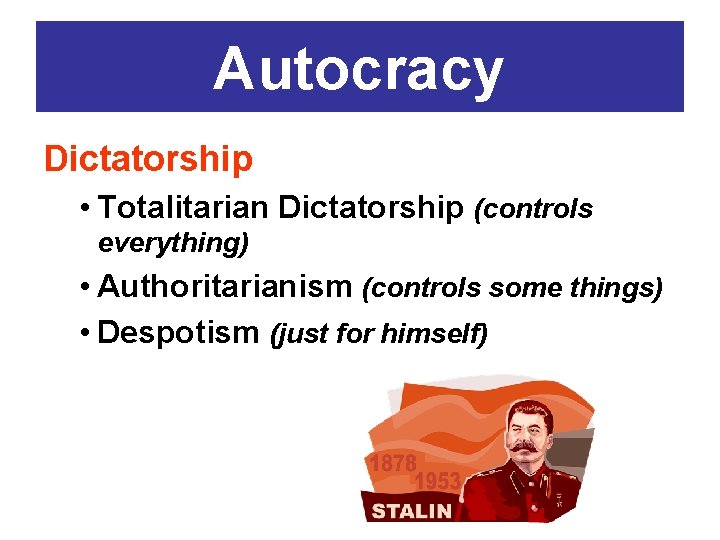
Autocracy Dictatorship • Totalitarian Dictatorship (controls everything) • Authoritarianism (controls some things) • Despotism (just for himself)
Oligarchy A small group holds power and they often suppress opposition. Their power comes from: • Wealth • Military position • Social position (family) • Religious position
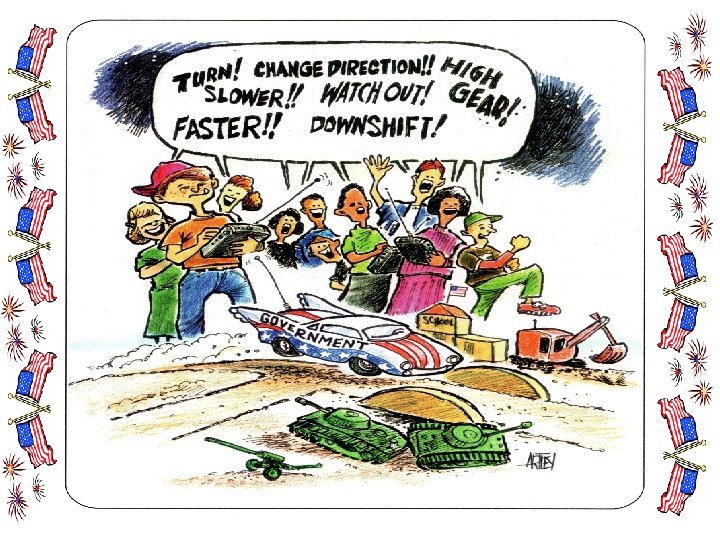
Democracy Many people (perhaps all) participate in ruling the government. • Classical Republic ancient Athens and early Rome upper class
Democracy
Democracy • Limited Democracy early U. S. • men • property • religion
Democracy • Liberal Democracy present-day U. S. Age Citizenship Residency
Theocracy Where a religious leader makes all the decisions and leads the country Example: Vatican City and the Pope
Characteristics of Democracy Individual Liberty The government promotes • Equality • Equal opportunity
Characteristics of Democracy Majority rule with minority rights Government must avoid the “tyranny of the majority”
Characteristics of Democracy Free Elections • • • 1 person = 1 vote Open to all candidates Free to express views & criticize Secret ballots Minimal restrictions (age, citizen, resident, etc. )
Characteristics of Democracy Competing political parties Need a choice in elections. “Loyal Opposition” to question and challenge
What Makes A Good Democracy? Active Citizen Participation • Citizens need to vote and debate. Widespread Education • Usually need public schools (supported by taxes)
What Makes A Good Democracy? Strong Civil Society • NRA, MADD, Sierra Club • Labor unions • Churches • Newspapers • Business associations (Chamber of Commerce, etc. )
What Makes A Good Democracy? A Social Consensus • General agreement about the purpose of government. • General agreement about the limits of government.
What Makes A Good Democracy? A Favorable Economy • Free enterprise is usually needed. • Germany between WWI & WWII