
TYPES OF GENETIC MODIFICATIONS IN PLANTS GM Plants
- Slides: 15
TYPES OF GENETIC MODIFICATIONS IN PLANTS
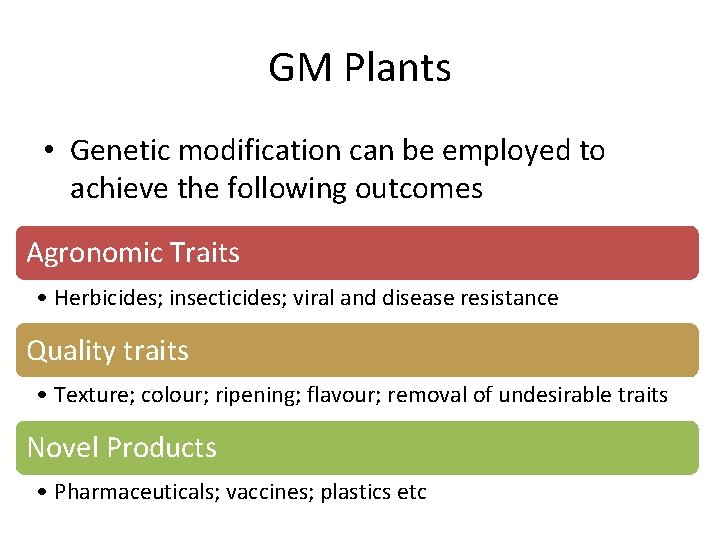
GM Plants • Genetic modification can be employed to achieve the following outcomes Agronomic Traits • Herbicides; insecticides; viral and disease resistance Quality traits • Texture; colour; ripening; flavour; removal of undesirable traits Novel Products • Pharmaceuticals; vaccines; plastics etc
Characteristics of Herbicides • Characteristics of ideal herbicide – Not harmful to animals – Be biodegradable – Specifically target weeds and not harm crops • Most herbicides target the basic functions of plants (photosynthesis or amino acid biosynthesis etc) • Mainly used to target “undesirable competitive plants” • Glyphosate (Round-up Ready)
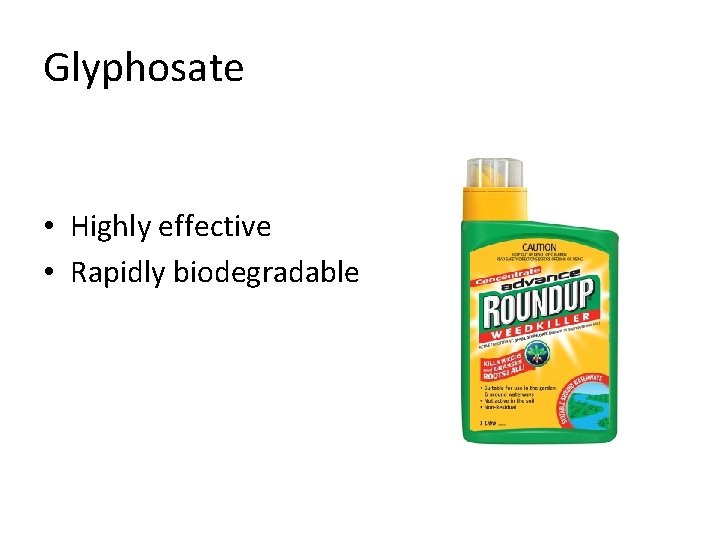
Glyphosate • Highly effective • Rapidly biodegradable
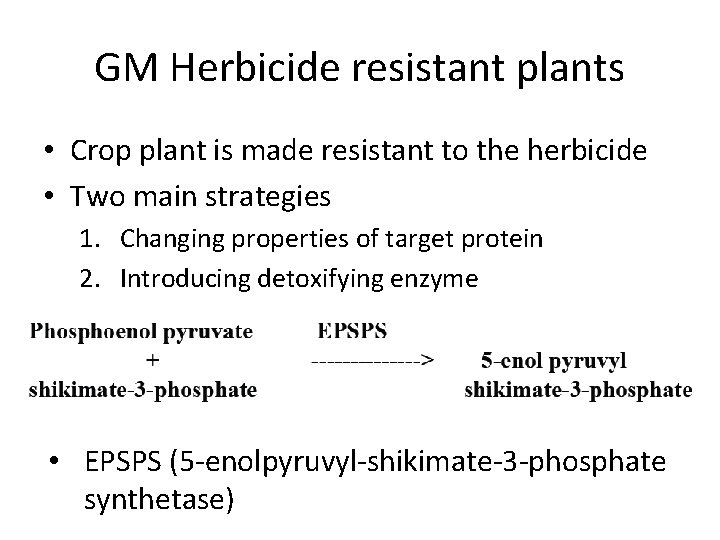
GM Herbicide resistant plants • Crop plant is made resistant to the herbicide • Two main strategies 1. Changing properties of target protein 2. Introducing detoxifying enzyme • EPSPS (5 -enolpyruvyl-shikimate-3 -phosphate synthetase)
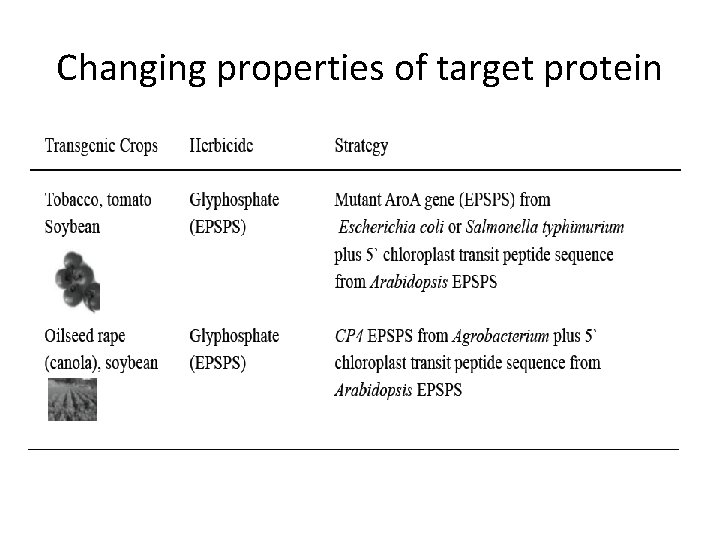
Changing properties of target protein
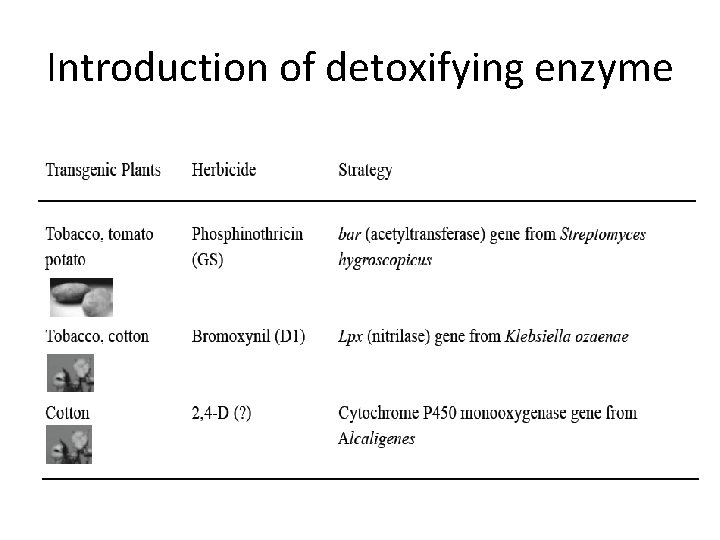
Introduction of detoxifying enzyme
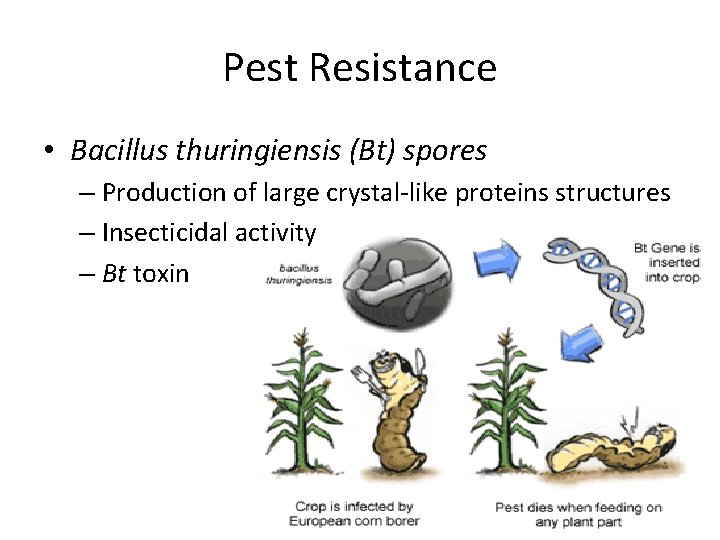
Pest Resistance • Bacillus thuringiensis (Bt) spores – Production of large crystal-like proteins structures – Insecticidal activity – Bt toxin
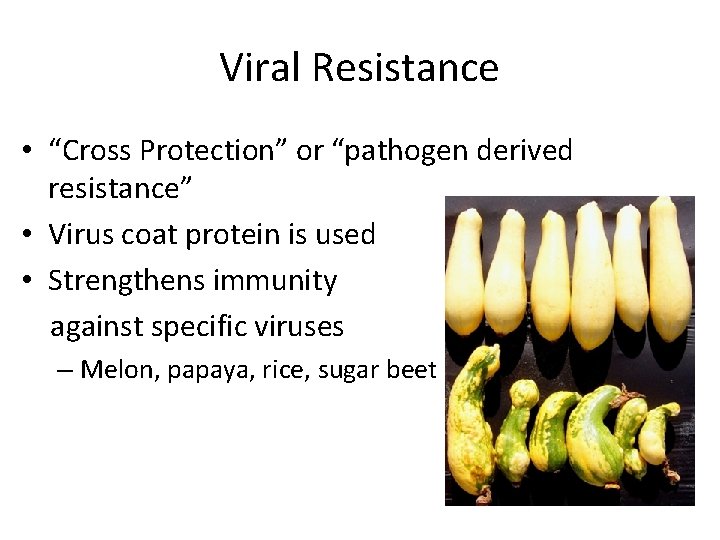
Viral Resistance • “Cross Protection” or “pathogen derived resistance” • Virus coat protein is used • Strengthens immunity against specific viruses – Melon, papaya, rice, sugar beet
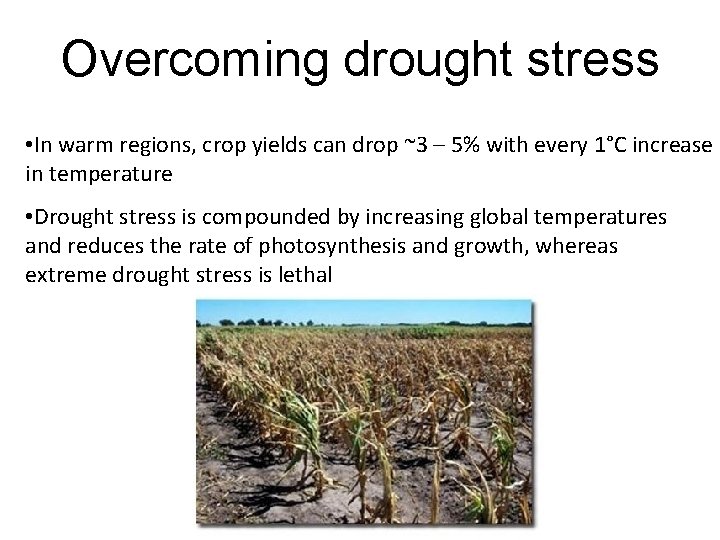
Overcoming drought stress • In warm regions, crop yields can drop ~3 – 5% with every 1°C increase in temperature • Drought stress is compounded by increasing global temperatures and reduces the rate of photosynthesis and growth, whereas extreme drought stress is lethal
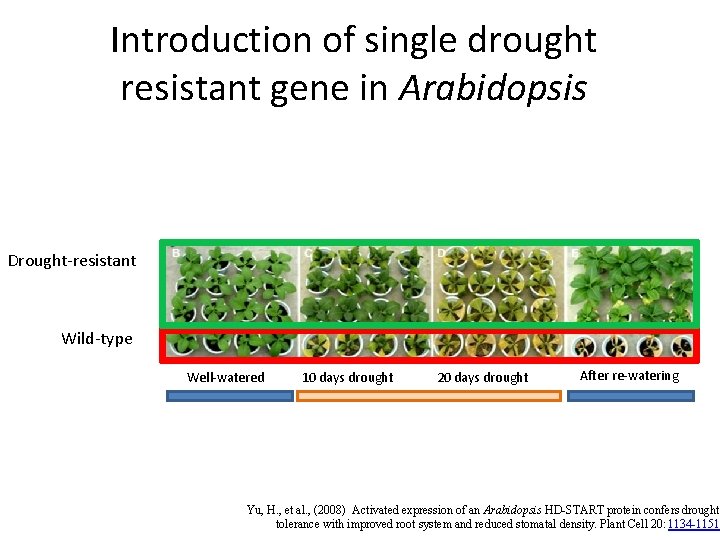
Introduction of single drought resistant gene in Arabidopsis Drought-resistant Wild-type Well-watered 10 days drought 20 days drought After re-watering Yu, H. , et al. , (2008) Activated expression of an Arabidopsis HD-START protein confers drought tolerance with improved root system and reduced stomatal density. Plant Cell 20: 1134 -1151
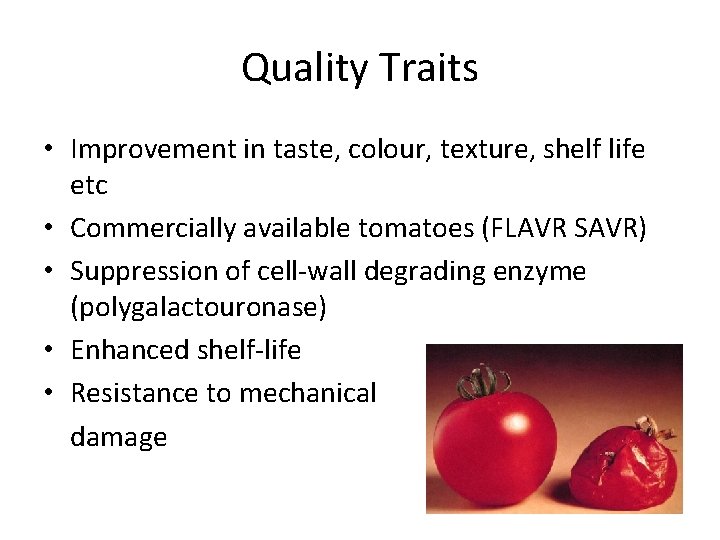
Quality Traits • Improvement in taste, colour, texture, shelf life etc • Commercially available tomatoes (FLAVR SAVR) • Suppression of cell-wall degrading enzyme (polygalactouronase) • Enhanced shelf-life • Resistance to mechanical damage
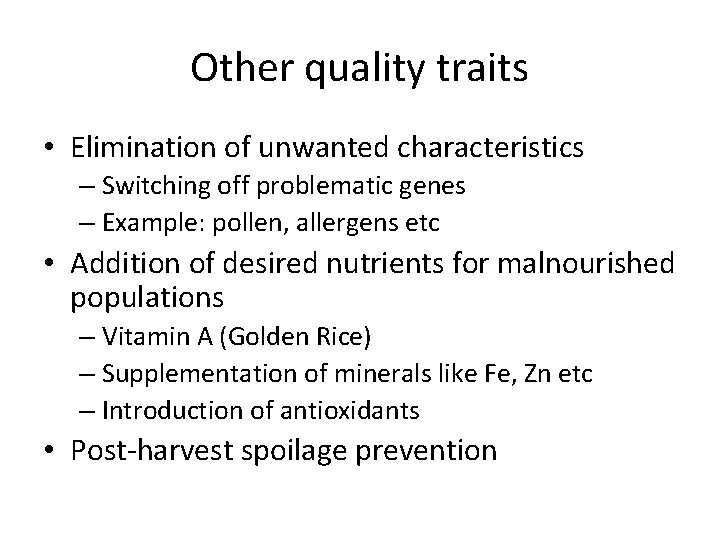
Other quality traits • Elimination of unwanted characteristics – Switching off problematic genes – Example: pollen, allergens etc • Addition of desired nutrients for malnourished populations – Vitamin A (Golden Rice) – Supplementation of minerals like Fe, Zn etc – Introduction of antioxidants • Post-harvest spoilage prevention
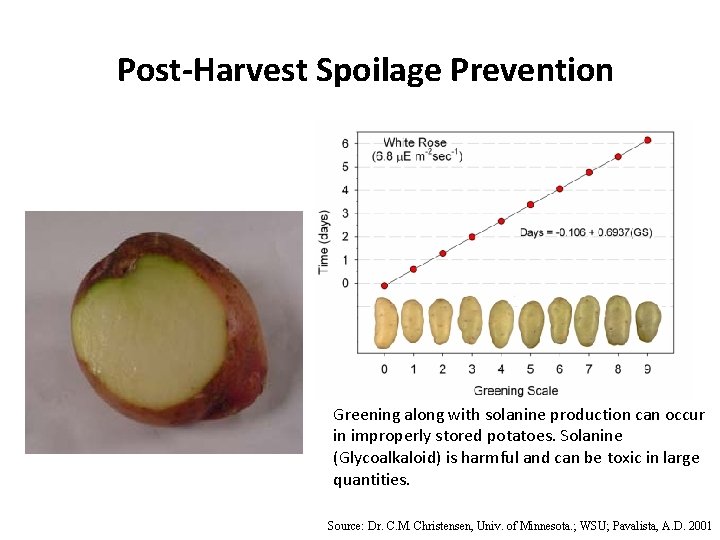
Post-Harvest Spoilage Prevention Greening along with solanine production can occur in improperly stored potatoes. Solanine (Glycoalkaloid) is harmful and can be toxic in large quantities. Source: Dr. C. M. Christensen, Univ. of Minnesota. ; WSU; Pavalista, A. D. 2001
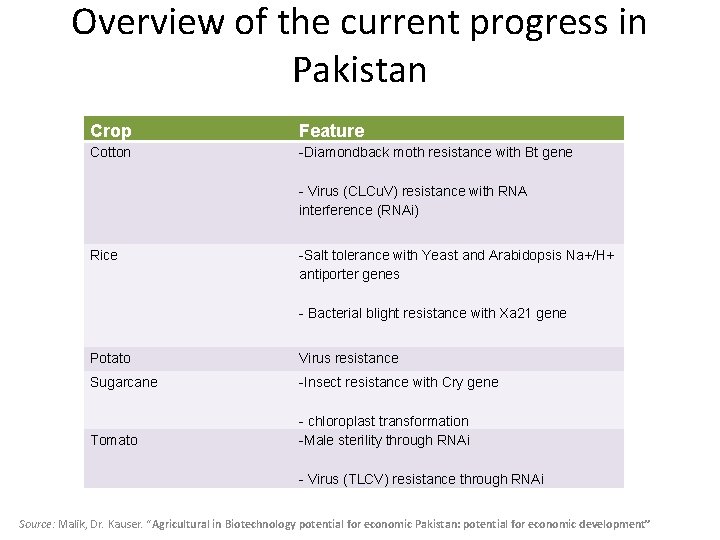
Overview of the current progress in Pakistan Crop Feature Cotton -Diamondback moth resistance with Bt gene - Virus (CLCu. V) resistance with RNA interference (RNAi) Rice -Salt tolerance with Yeast and Arabidopsis Na+/H+ antiporter genes - Bacterial blight resistance with Xa 21 gene Potato Virus resistance Sugarcane -Insect resistance with Cry gene Tomato - chloroplast transformation -Male sterility through RNAi - Virus (TLCV) resistance through RNAi Source: Malik, Dr. Kauser. “Agricultural in Biotechnology potential for economic Pakistan: potential for economic development”