
Types of genetic markers multilocus markers RAPD AFLP
- Slides: 28
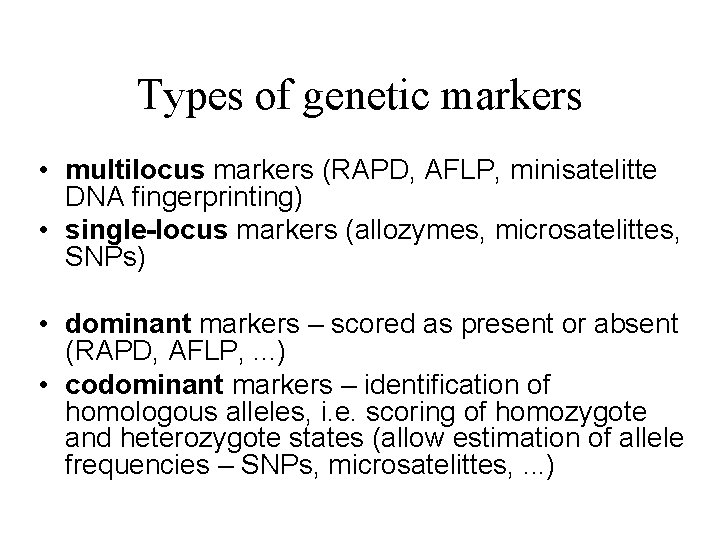
Types of genetic markers • multilocus markers (RAPD, AFLP, minisatelitte DNA fingerprinting) • single-locus markers (allozymes, microsatelittes, SNPs) • dominant markers – scored as present or absent (RAPD, AFLP, . . . ) • codominant markers – identification of homologous alleles, i. e. scoring of homozygote and heterozygote states (allow estimation of allele frequencies – SNPs, microsatelittes, . . . )
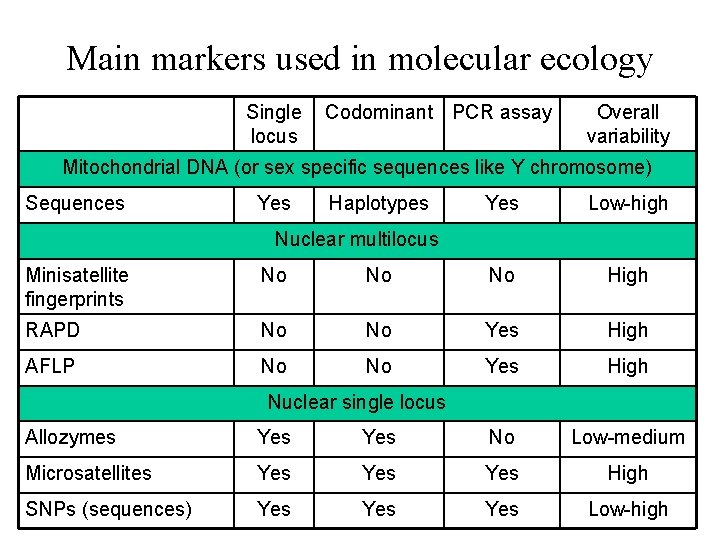
Main markers used in molecular ecology Single locus Codominant PCR assay Overall variability Mitochondrial DNA (or sex specific sequences like Y chromosome) Sequences Yes Haplotypes Yes Low-high Nuclear multilocus Minisatellite fingerprints No No No High RAPD No No Yes High AFLP No No Yes High Nuclear single locus Allozymes Yes No Low-medium Microsatellites Yes Yes High SNPs (sequences) Yes Yes Low-high
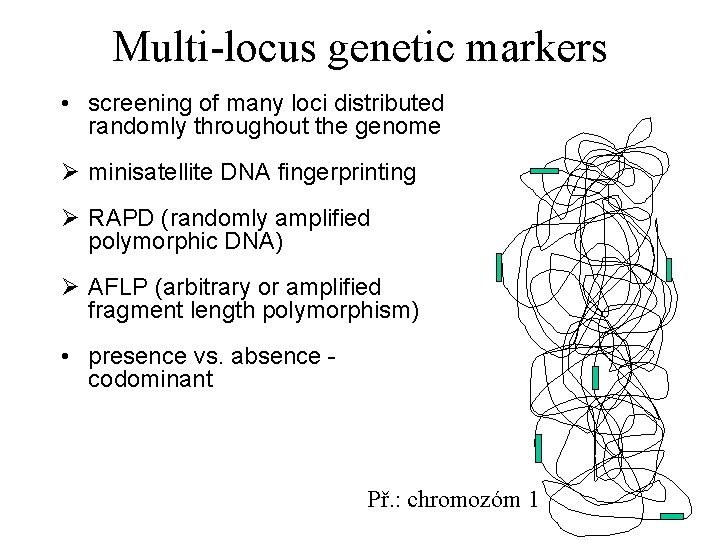
Multi-locus genetic markers • screening of many loci distributed randomly throughout the genome Ø minisatellite DNA fingerprinting Ø RAPD (randomly amplified polymorphic DNA) Ø AFLP (arbitrary or amplified fragment length polymorphism) • presence vs. absence codominant Př. : chromozóm 1
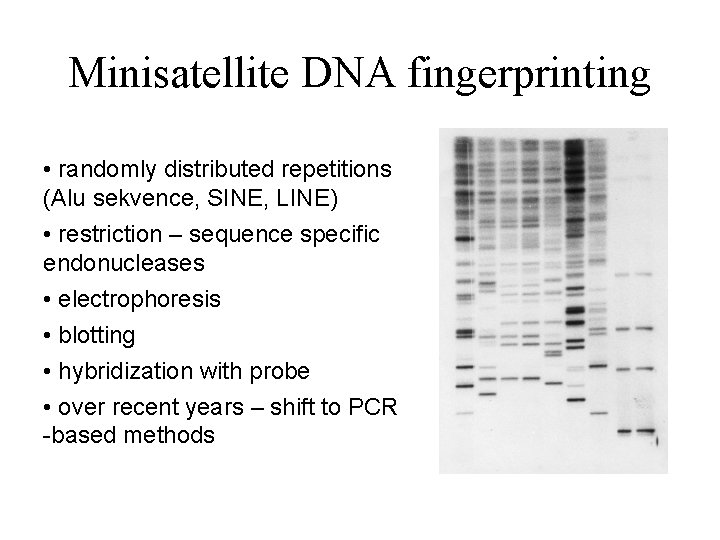
Minisatellite DNA fingerprinting • randomly distributed repetitions (Alu sekvence, SINE, LINE) • restriction – sequence specific endonucleases • electrophoresis • blotting • hybridization with probe • over recent years – shift to PCR -based methods
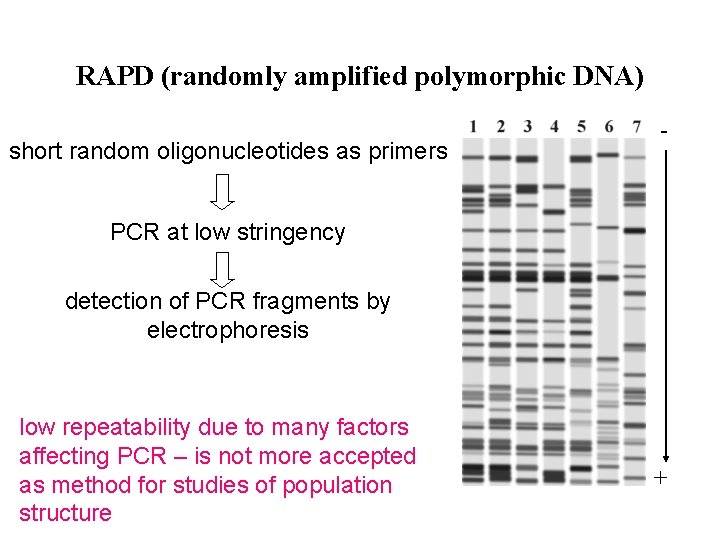
RAPD (randomly amplified polymorphic DNA) short random oligonucleotides as primers - PCR at low stringency detection of PCR fragments by electrophoresis low repeatability due to many factors affecting PCR – is not more accepted as method for studies of population structure +
AFLP (amplified fragments length polymorphism) • cheap, easy, fast and reliable method to generate hunderds of informative genetic markers • simultaneous screening of many different DNA regions distributed randomly throughout the genome • more reproducible banding pattern than RAPD
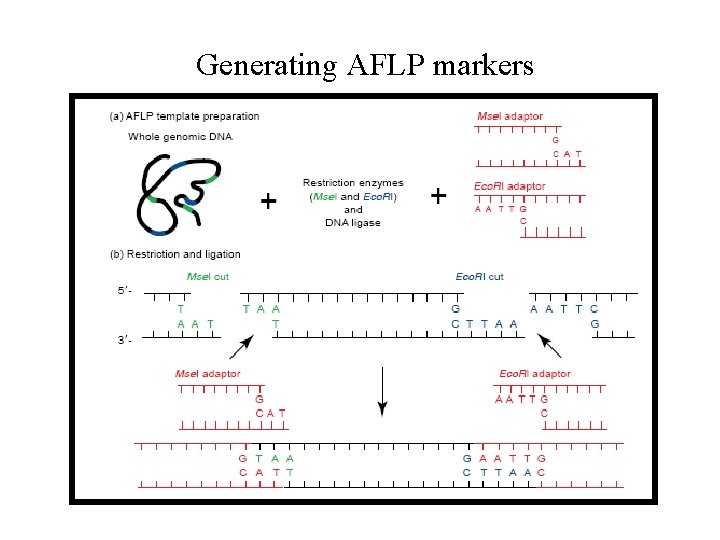
Generating AFLP markers
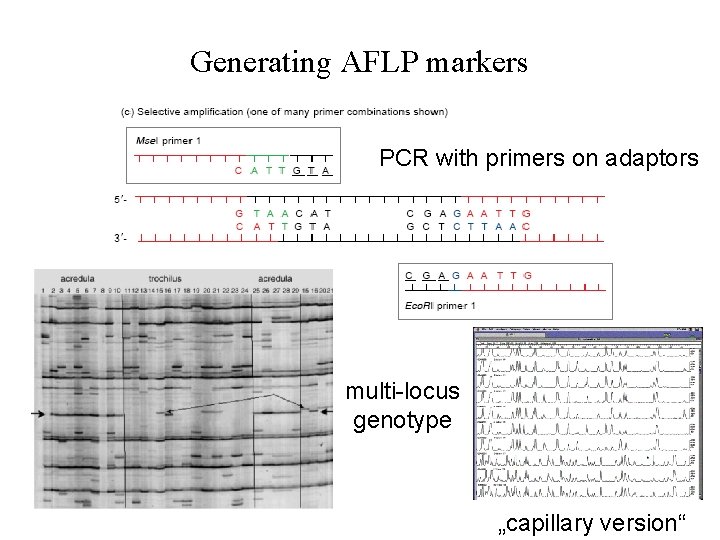
Generating AFLP markers PCR with primers on adaptors multi-locus genotype „capillary version“
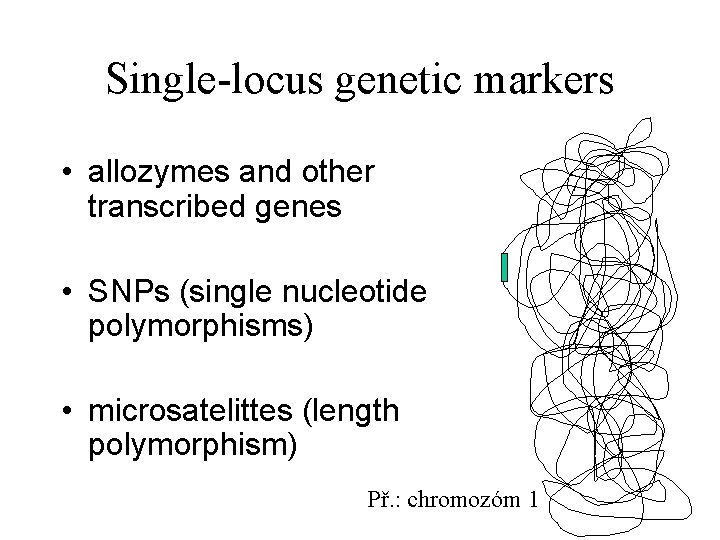
Single-locus genetic markers • allozymes and other transcribed genes • SNPs (single nucleotide polymorphisms) • microsatelittes (length polymorphism) Př. : chromozóm 1
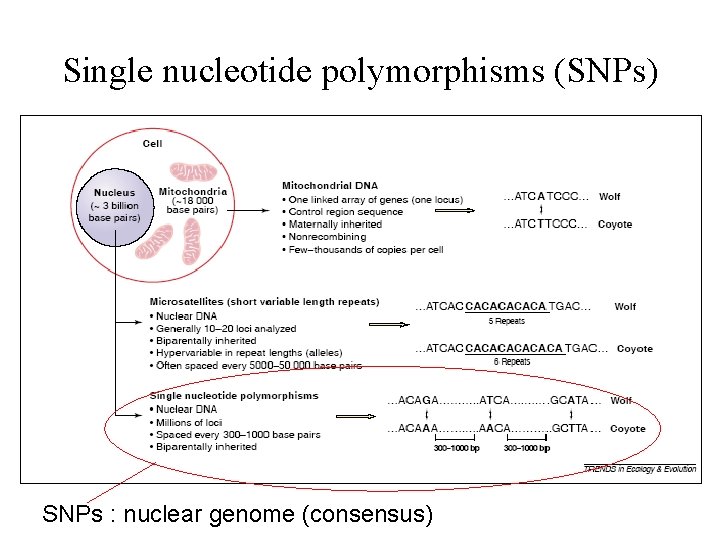
Single nucleotide polymorphisms (SNPs) SNPs : nuclear genome (consensus)
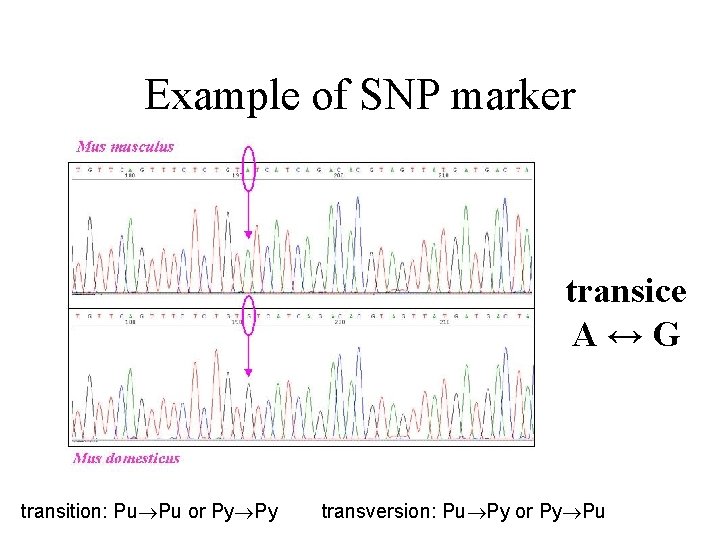
Example of SNP marker transice A↔G transition: Pu Pu or Py Py transversion: Pu Py or Py Pu
Use of SNPs markers • species (or genetical group) identification and analysis of hybridization • phylogeography • population genetics (genetic variation, individual identification – parentage, relatedness, population structure, population size, changes in population size)
Advantages • abundant and widespread in many genomes (in both coding and non-coding regions) – milions of loci • spaced every 300 -1000 bp • biparentaly inherited (vs. mt. DNA) • evolution is well described by simple mutation models (vs. microsatellites) • shorter fragments are needed – using in non-invasive methods
Disadvantages • ascertainment bias – selection of loci from an unrepresentative sample of individuals • low variability per locus (usually bi-allelic) • higher number of loci is needed in population genetic applications (4 -10 times more loci)
Methods 1. Locus discovery (ascertainment) 2. Genotyping
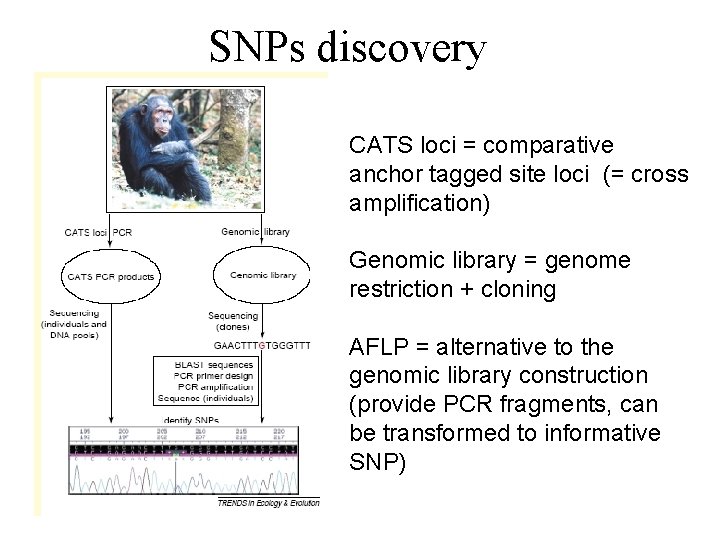
SNPs discovery CATS loci = comparative anchor tagged site loci (= cross amplification) Genomic library = genome restriction + cloning AFLP = alternative to the genomic library construction (provide PCR fragments, can be transformed to informative SNP)
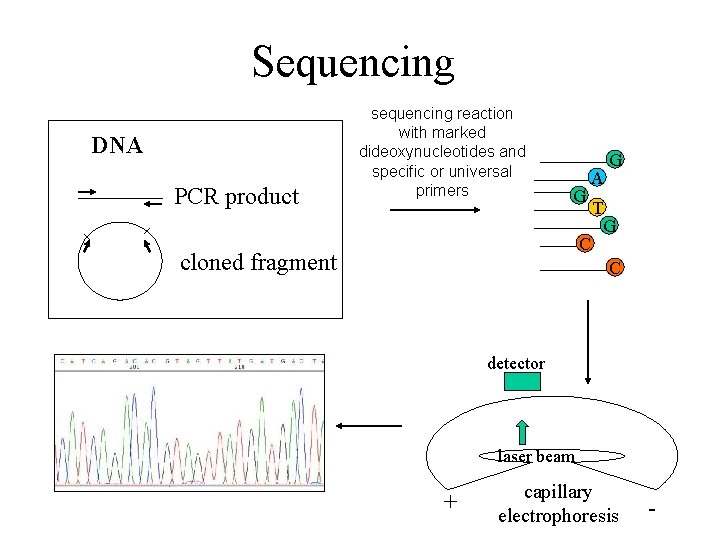
Sequencing DNA PCR product sequencing reaction with marked dideoxynucleotides and specific or universal primers G A C cloned fragment T G G C detector laser beam + capillary electrophoresis -
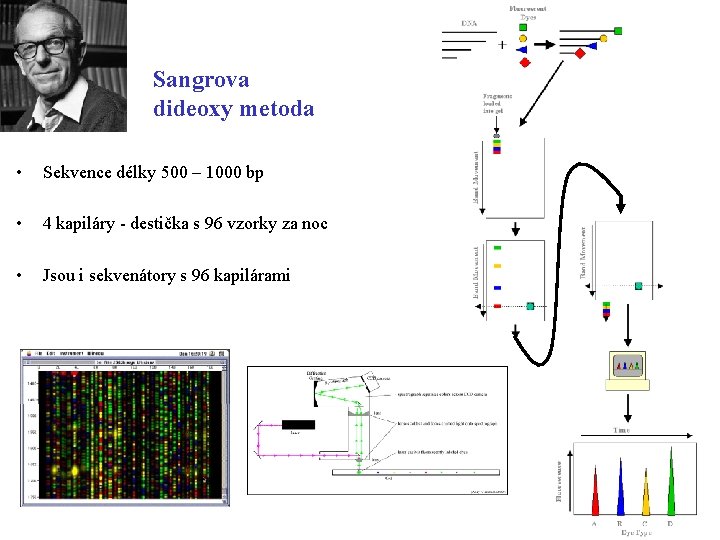
Sangrova dideoxy metoda • Sekvence délky 500 – 1000 bp • 4 kapiláry - destička s 96 vzorky za noc • Jsou i sekvenátory s 96 kapilárami
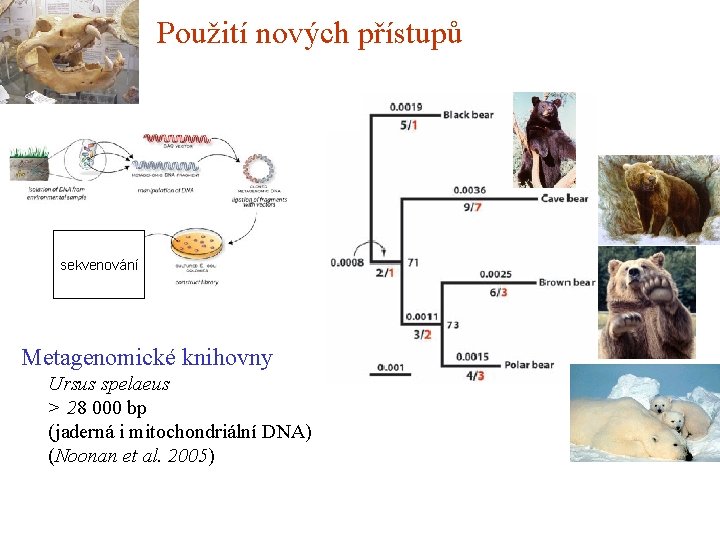
Použití nových přístupů sekvenování Metagenomické knihovny Ursus spelaeus > 28 000 bp (jaderná i mitochondriální DNA) (Noonan et al. 2005)
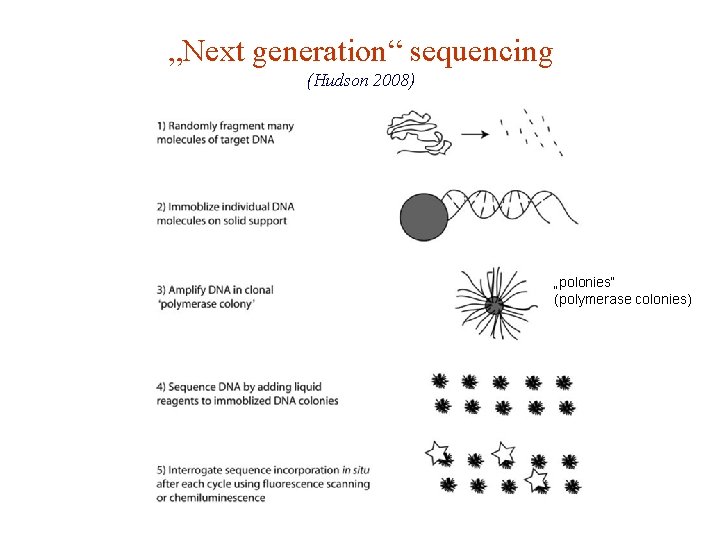
„Next generation“ sequencing (Hudson 2008) „polonies“ (polymerase colonies)
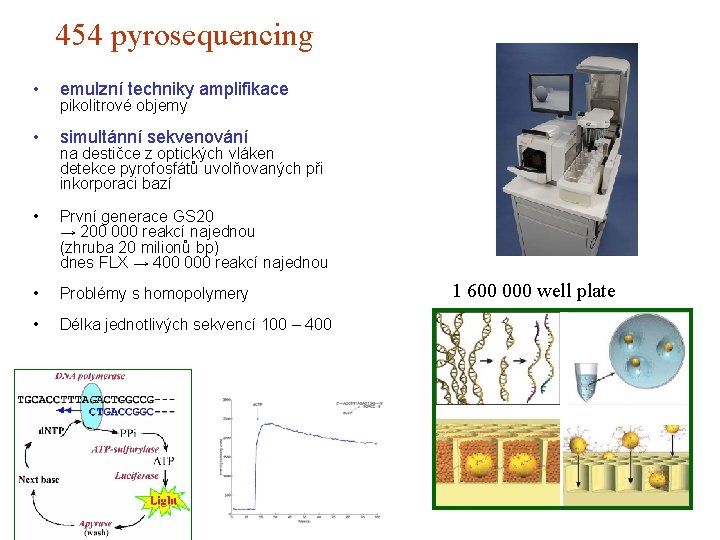
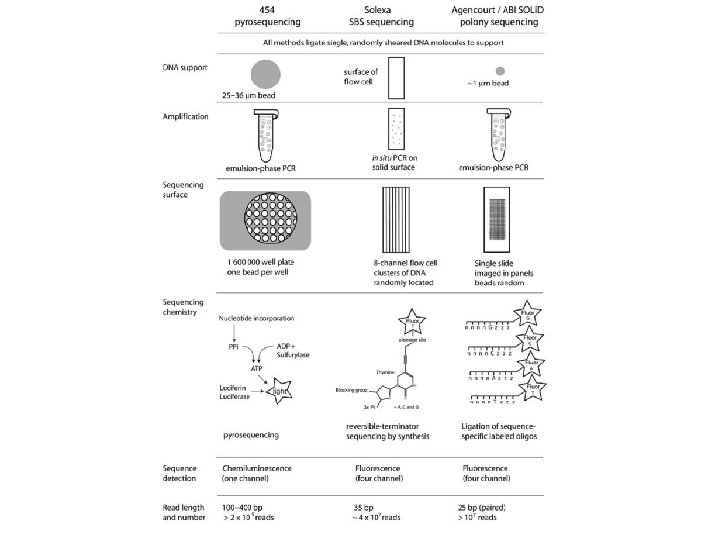
454 pyrosequencing • emulzní techniky amplifikace • simultánní sekvenování • První generace GS 20 → 200 000 reakcí najednou (zhruba 20 milionů bp) dnes FLX → 400 000 reakcí najednou • Problémy s homopolymery • Délka jednotlivých sekvencí 100 – 400 pikolitrové objemy na destičce z optických vláken detekce pyrofosfátů uvolňovaných při inkorporaci bazí 1 600 000 well plate
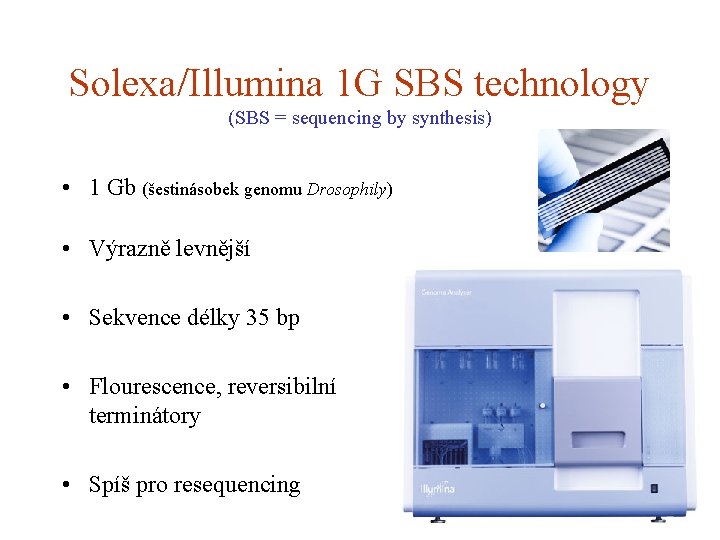
Solexa/Illumina 1 G SBS technology (SBS = sequencing by synthesis) • 1 Gb (šestinásobek genomu Drosophily) • Výrazně levnější • Sekvence délky 35 bp • Flourescence, reversibilní terminátory • Spíš pro resequencing
SOLi. D (sequencing by Oligonucleotide Ligation and Detection)
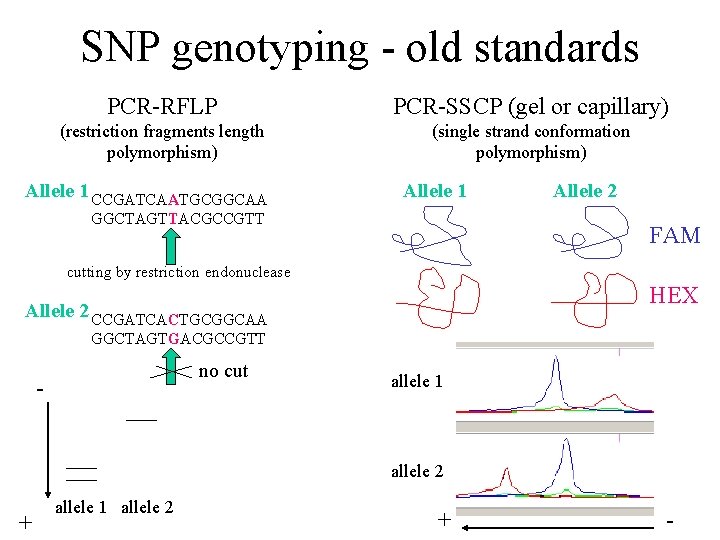
SNP genotyping - old standards PCR-RFLP PCR-SSCP (gel or capillary) (restriction fragments length polymorphism) (single strand conformation polymorphism) Allele 1 CCGATCAATGCGGCAA Allele 1 GGCTAGTTACGCCGTT Allele 2 FAM cutting by restriction endonuclease HEX Allele 2 CCGATCACTGCGGCAA GGCTAGTGACGCCGTT no cut - allele 1 allele 2 + -
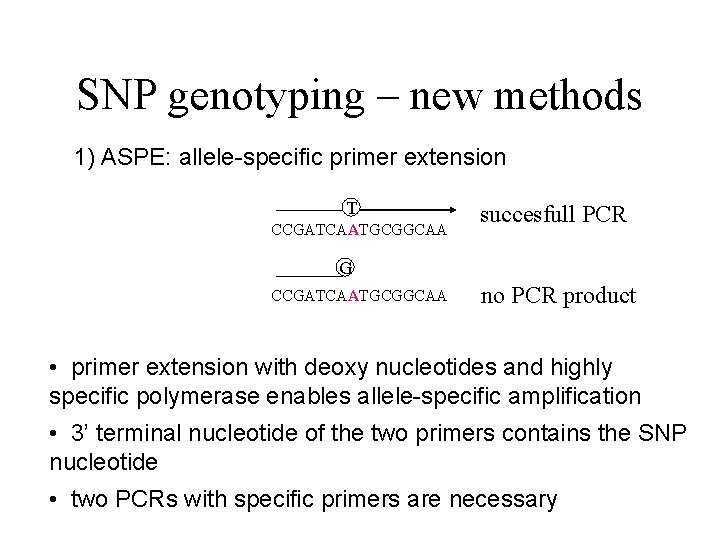
SNP genotyping – new methods 1) ASPE: allele-specific primer extension T CCGATCAATGCGGCAA succesfull PCR G CCGATCAATGCGGCAA no PCR product • primer extension with deoxy nucleotides and highly specific polymerase enables allele-specific amplification • 3’ terminal nucleotide of the two primers contains the SNP nucleotide • two PCRs with specific primers are necessary
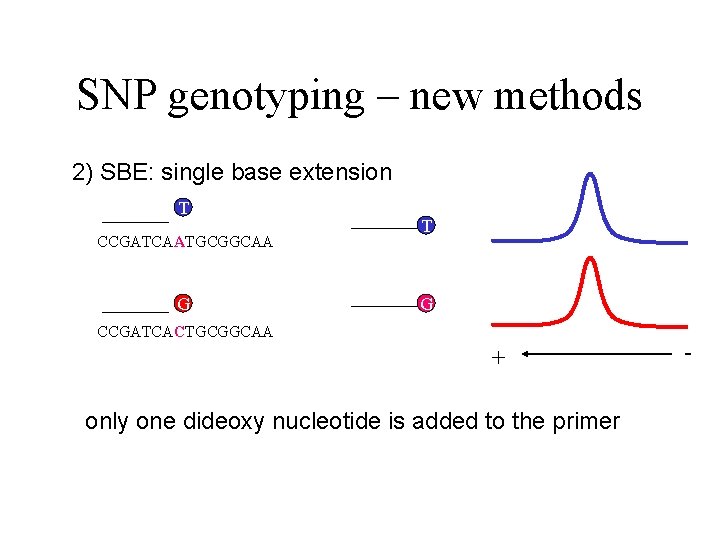
SNP genotyping – new methods 2) SBE: single base extension T CCGATCAATGCGGCAA G T G CCGATCACTGCGGCAA + only one dideoxy nucleotide is added to the primer -
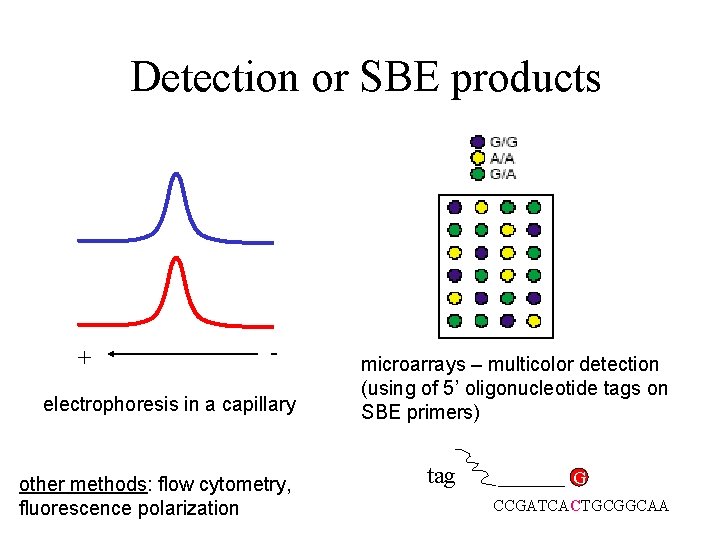
Detection or SBE products + - electrophoresis in a capillary other methods: flow cytometry, fluorescence polarization microarrays – multicolor detection (using of 5’ oligonucleotide tags on SBE primers) tag G CCGATCACTGCGGCAA