
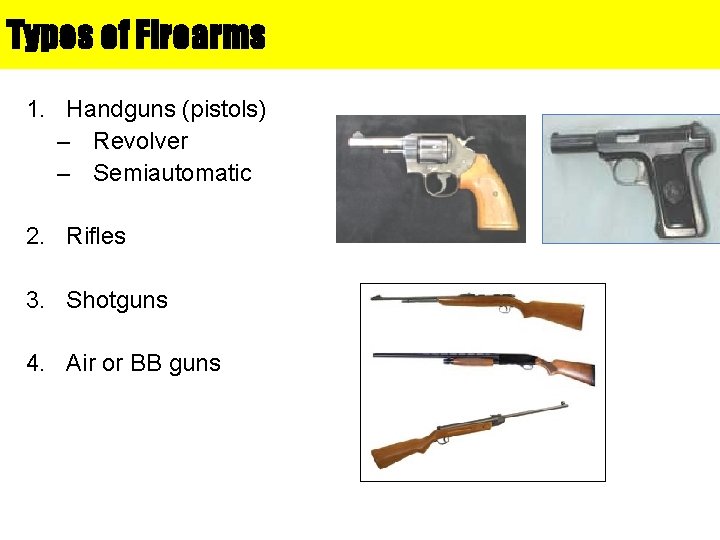
Types of Firearms 1 Handguns pistols Revolver Semiautomatic


- Slides: 39
Types of Firearms 1. Handguns (pistols) – Revolver – Semiautomatic 2. Rifles 3. Shotguns 4. Air or BB guns
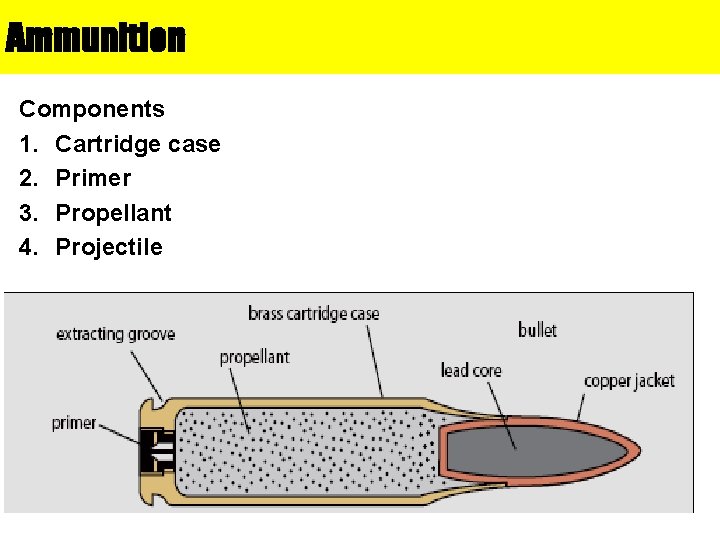
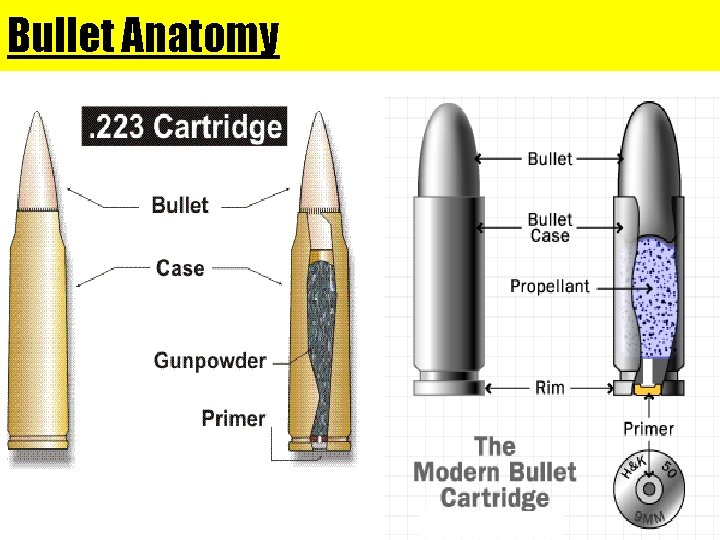
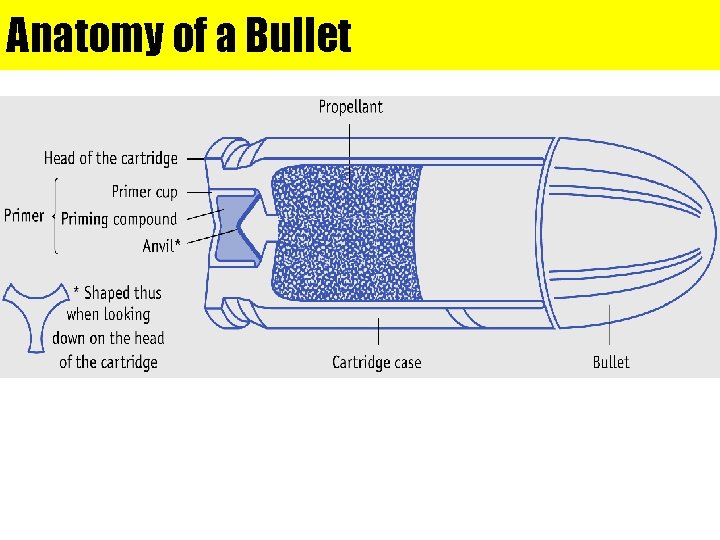
Ammunition Components 1. Cartridge case 2. Primer 3. Propellant 4. Projectile
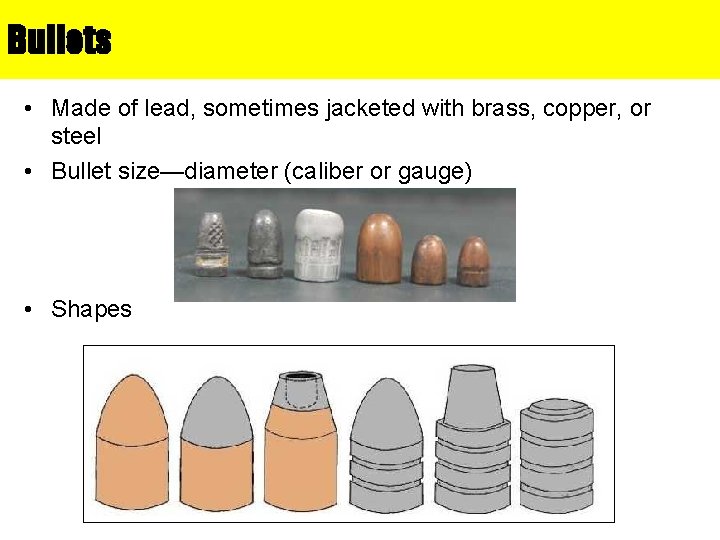
Bullets • Made of lead, sometimes jacketed with brass, copper, or steel • Bullet size—diameter (caliber or gauge) • Shapes
Firearms Identification 1. 2. Often confused with the term ballistics Ballistics is the study of a projectile in motion. • Inside the firearm • After it leaves the firearm • When it impacts the target 3. Identification of Firearms is based upon this basic idea: A harder object marks a softer one & imparts/transfers its microscopic irregularities to that object.
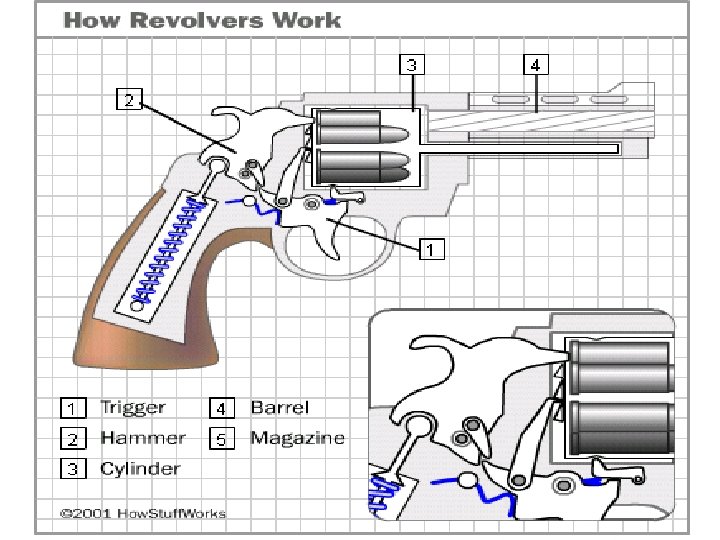
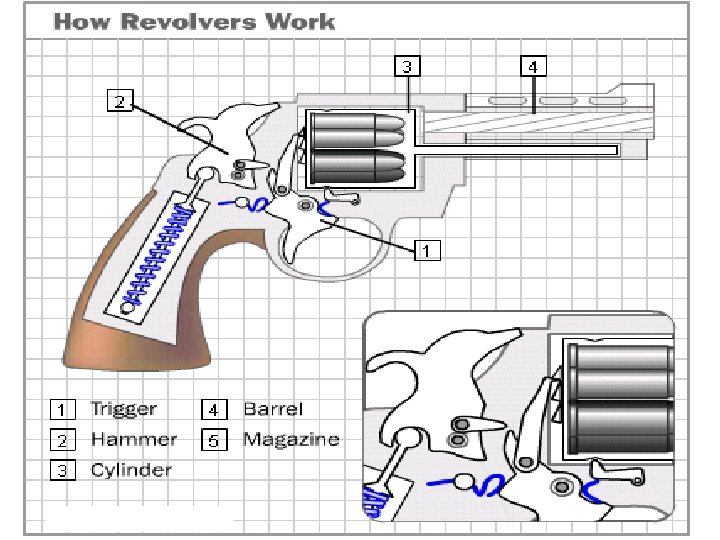
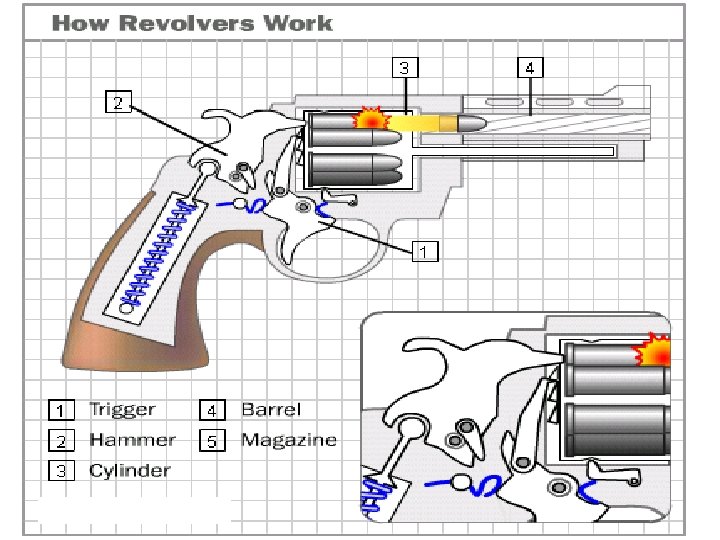
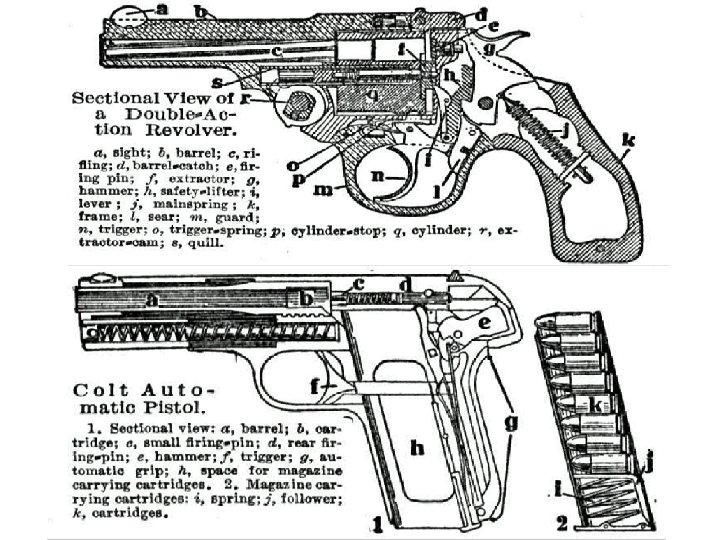
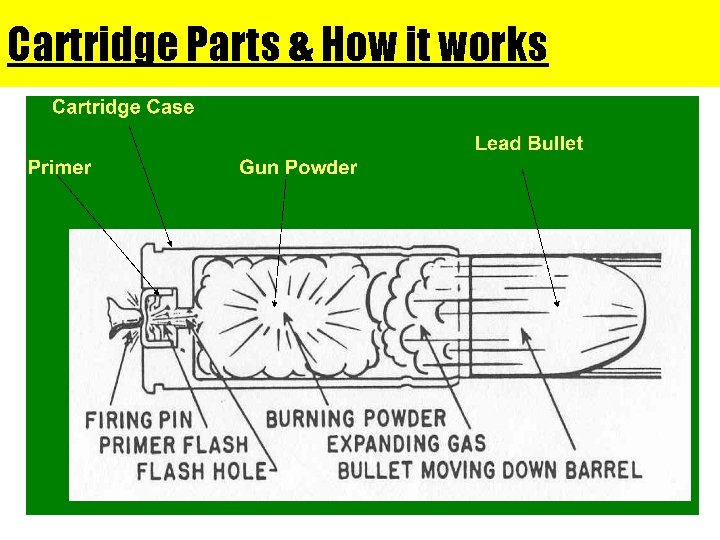
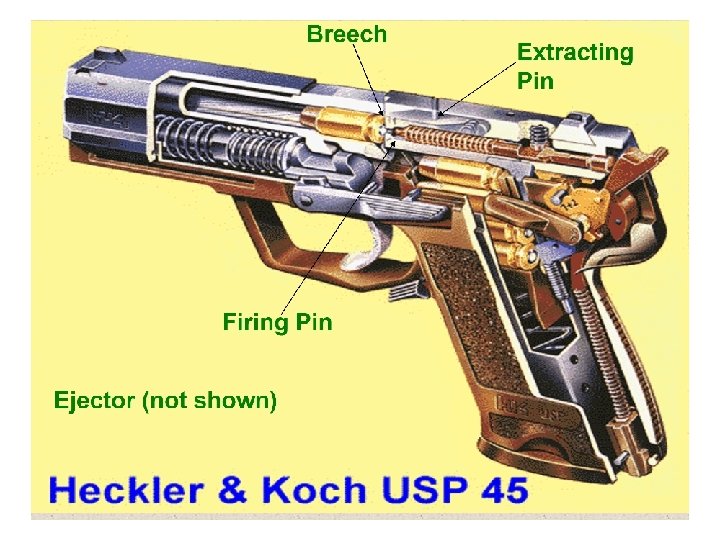
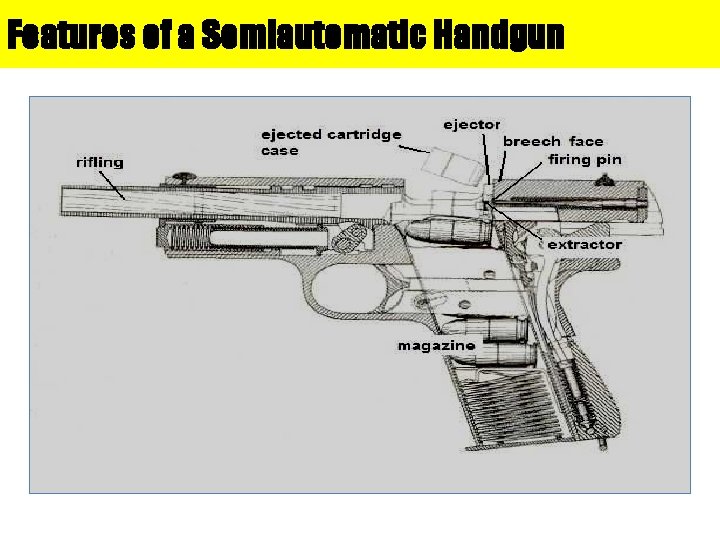
Pulling the Trigger 1. 2. 3. 4. Pulling the trigger releases the firing pin… The firing pin strikes the primer… The primer ignites the gun powder… The powder generates gas that propels the bullet forward through the barrel & ejects the spent cartridge case.
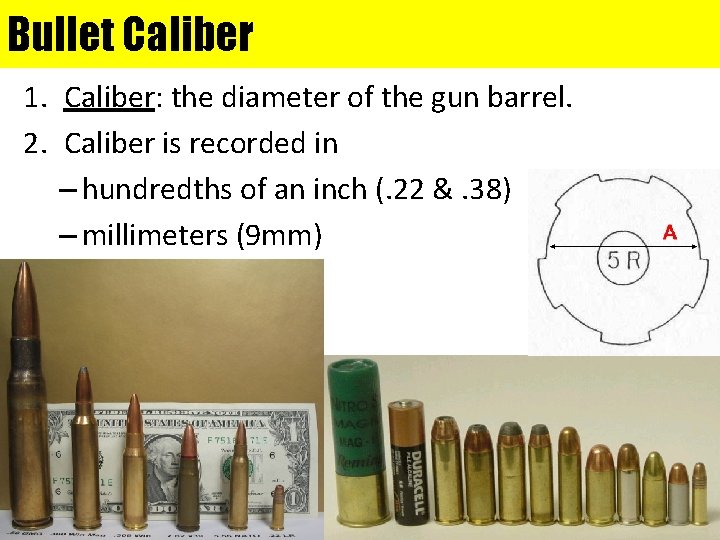
Bullet Caliber 1. Caliber: the diameter of the gun barrel. 2. Caliber is recorded in – hundredths of an inch (. 22 &. 38) – millimeters (9 mm)
Bullet Anatomy
Cartridge Parts & How it works
Anatomy of a Bullet
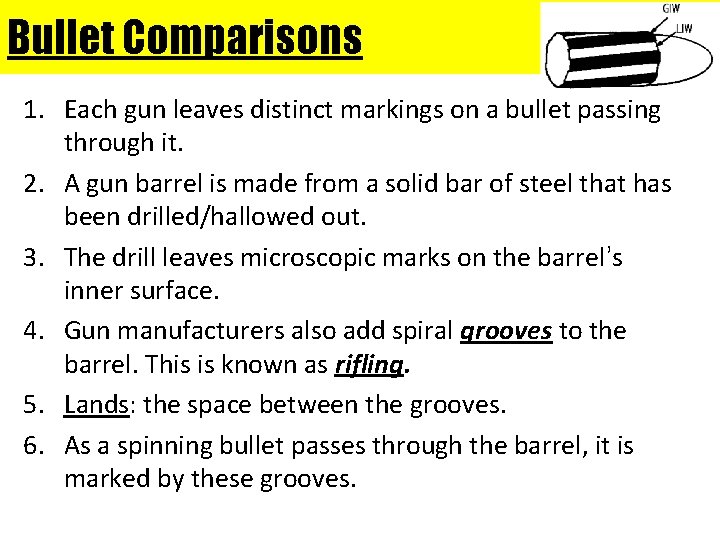
Bullet Comparisons 1. Each gun leaves distinct markings on a bullet passing through it. 2. A gun barrel is made from a solid bar of steel that has been drilled/hallowed out. 3. The drill leaves microscopic marks on the barrel’s inner surface. 4. Gun manufacturers also add spiral grooves to the barrel. This is known as rifling. 5. Lands: the space between the grooves. 6. As a spinning bullet passes through the barrel, it is marked by these grooves.
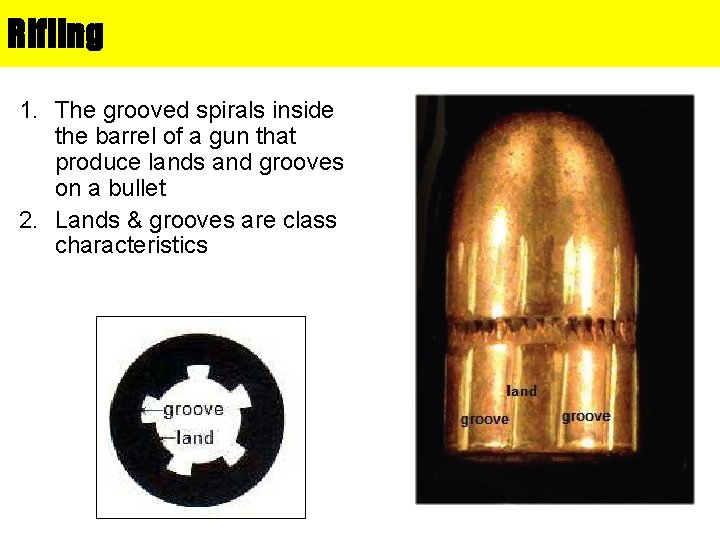
Rifling 1. The grooved spirals inside the barrel of a gun that produce lands and grooves on a bullet 2. Lands & grooves are class characteristics
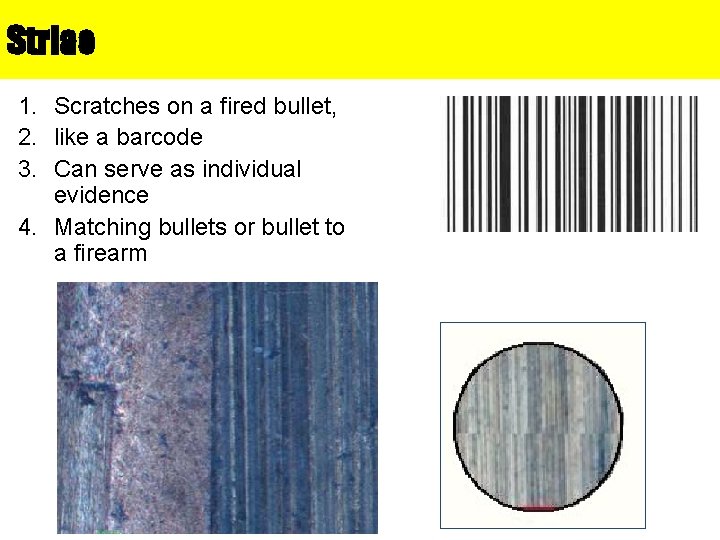
Striae 1. Scratches on a fired bullet, 2. like a barcode 3. Can serve as individual evidence 4. Matching bullets or bullet to a firearm
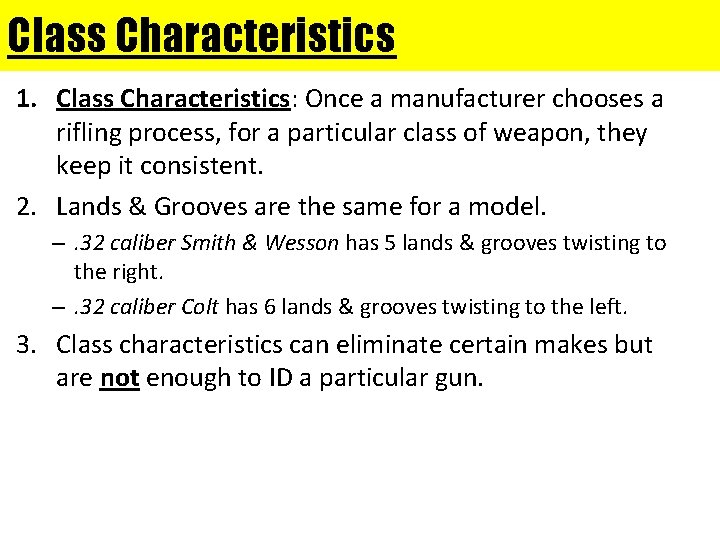
Class Characteristics 1. Class Characteristics: Once a manufacturer chooses a rifling process, for a particular class of weapon, they keep it consistent. 2. Lands & Grooves are the same for a model. –. 32 caliber Smith & Wesson has 5 lands & grooves twisting to the right. –. 32 caliber Colt has 6 lands & grooves twisting to the left. 3. Class characteristics can eliminate certain makes but are not enough to ID a particular gun.
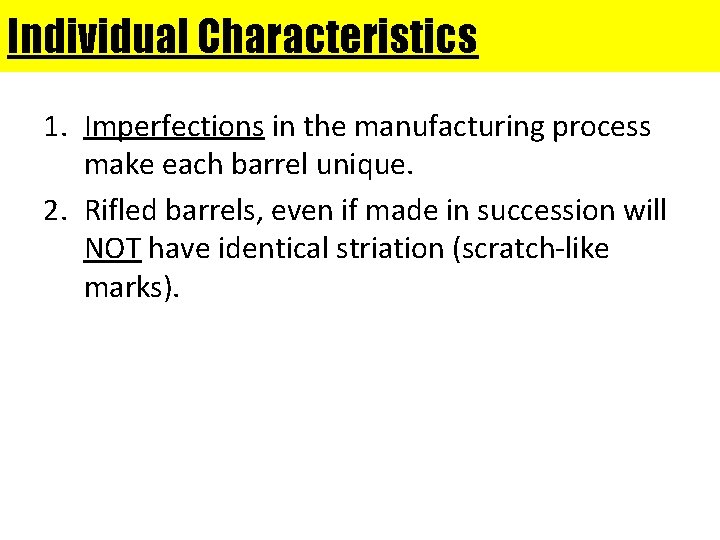
Individual Characteristics 1. Imperfections in the manufacturing process make each barrel unique. 2. Rifled barrels, even if made in succession will NOT have identical striation (scratch-like marks).
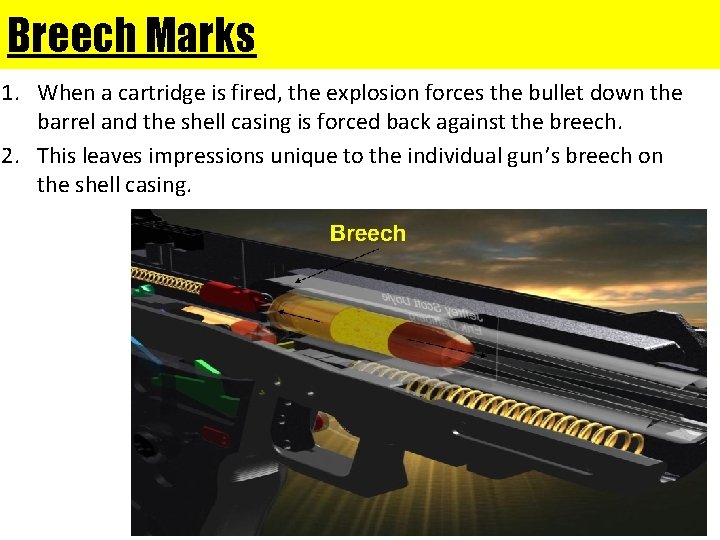
Breech Marks 1. When a cartridge is fired, the explosion forces the bullet down the barrel and the shell casing is forced back against the breech. 2. This leaves impressions unique to the individual gun’s breech on the shell casing.
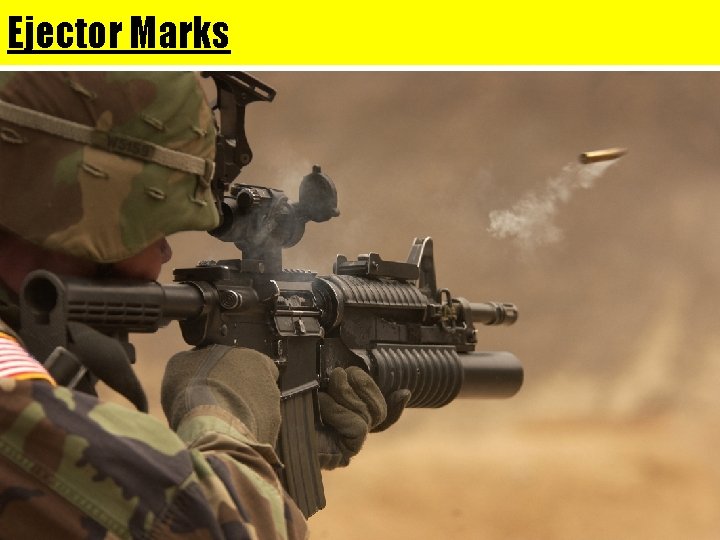
Ejector Marks
Features of a Semiautomatic Handgun
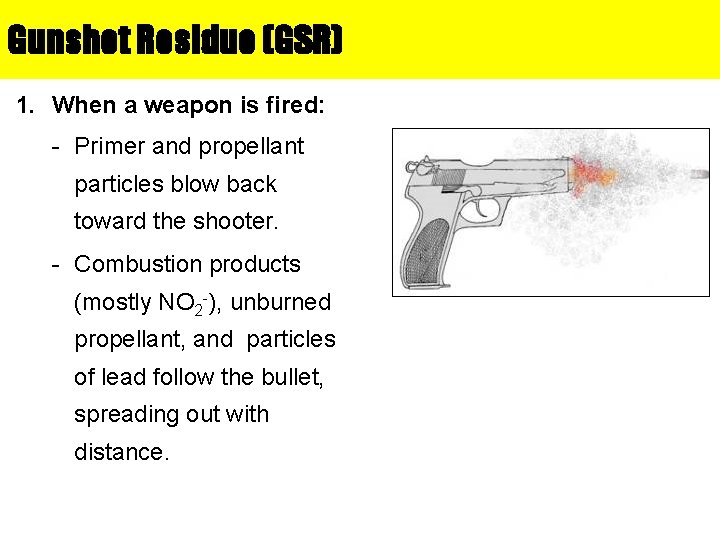
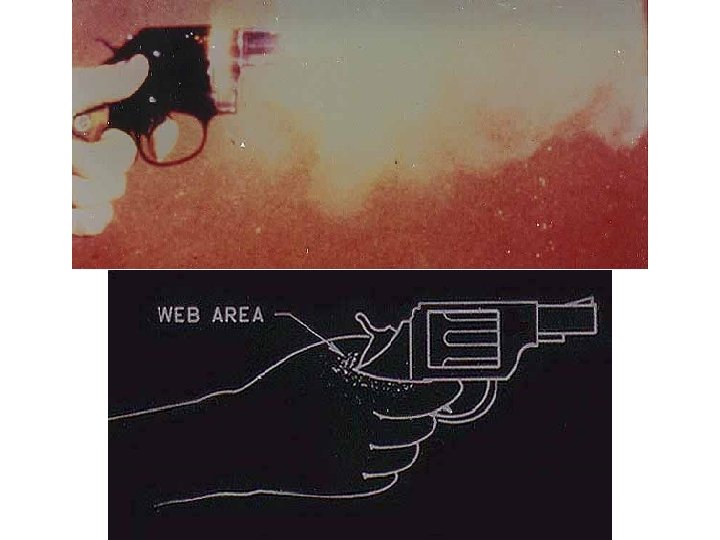
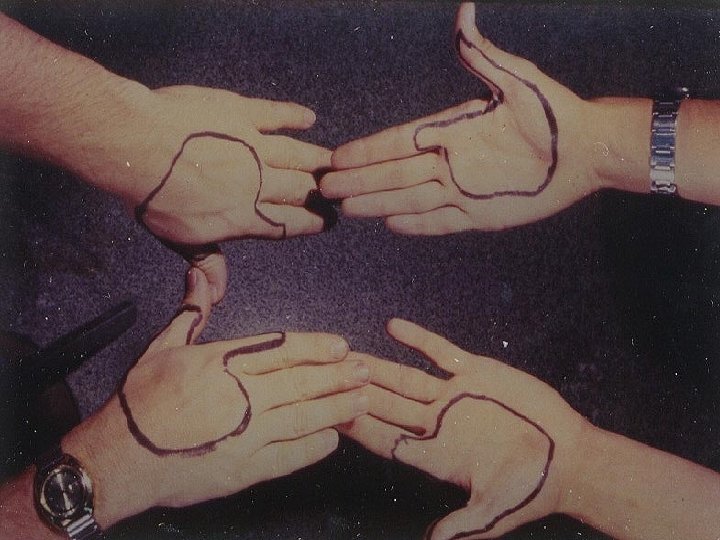
Gunshot Residue (GSR) 1. When a weapon is fired: - Primer and propellant particles blow back toward the shooter. - Combustion products (mostly NO 2 -), unburned propellant, and particles of lead follow the bullet, spreading out with distance.
1. GSR Sources: – victim, clothing or target – shooter’s hands 2. Gunpowder Chemistry – Major detectable elements are: lead (Pb), barium (Ba) & antimony (Sb) – Virtually all cartridge cases are made of brass (copper & zinc); also detectable.
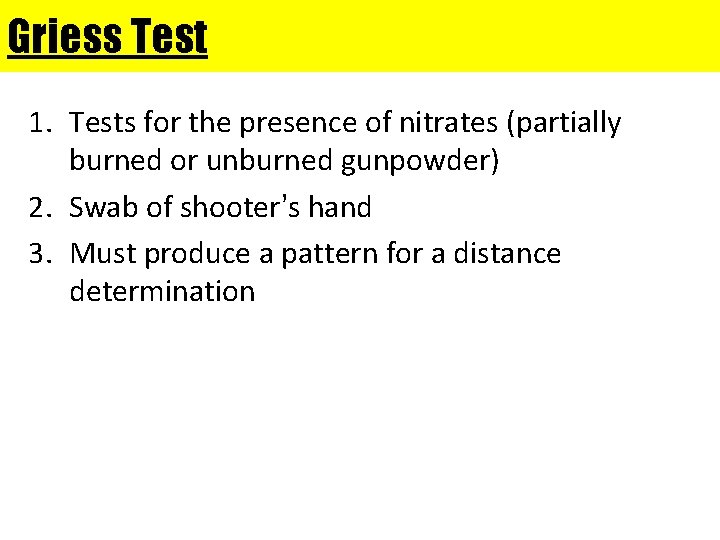
Griess Test 1. Tests for the presence of nitrates (partially burned or unburned gunpowder) 2. Swab of shooter’s hand 3. Must produce a pattern for a distance determination
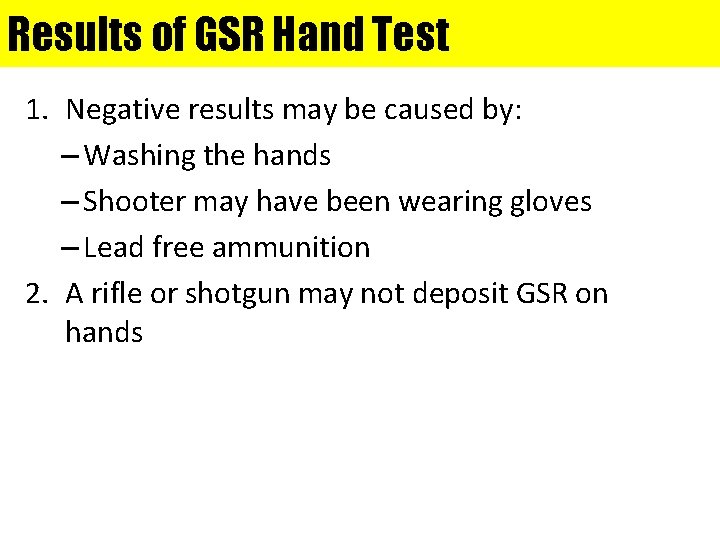
Results of GSR Hand Test 1. Negative results may be caused by: – Washing the hands – Shooter may have been wearing gloves – Lead free ammunition 2. A rifle or shotgun may not deposit GSR on hands
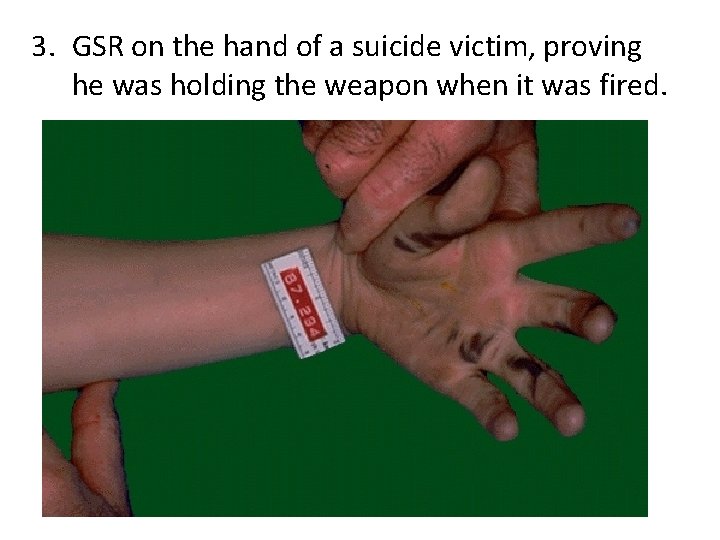
3. GSR on the hand of a suicide victim, proving he was holding the weapon when it was fired.
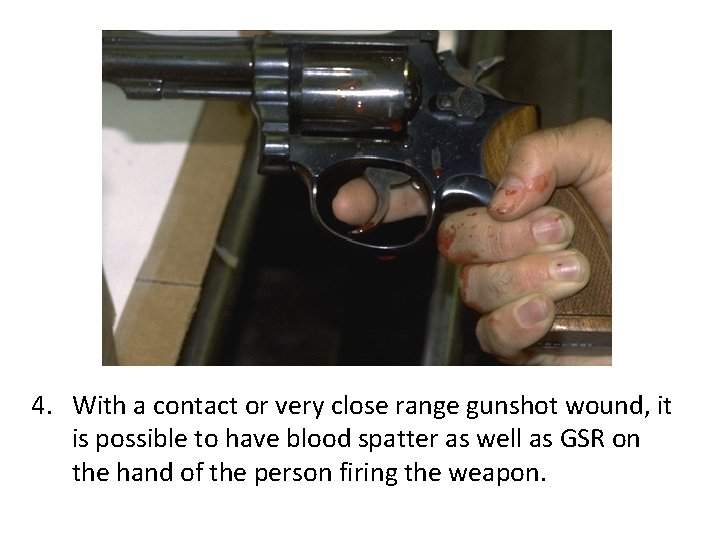
4. With a contact or very close range gunshot wound, it is possible to have blood spatter as well as GSR on the hand of the person firing the weapon.
DANGER GRAPHIC IMAGES!
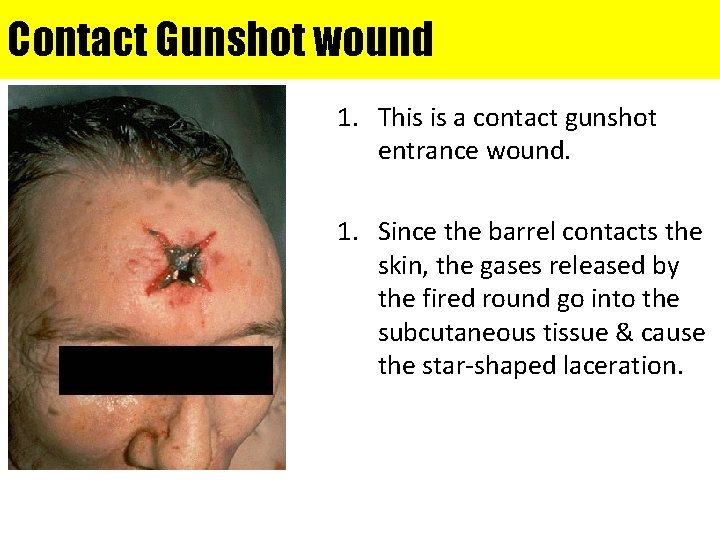
Contact Gunshot wound 1. This is a contact gunshot entrance wound. 1. Since the barrel contacts the skin, the gases released by the fired round go into the subcutaneous tissue & cause the star-shaped laceration.
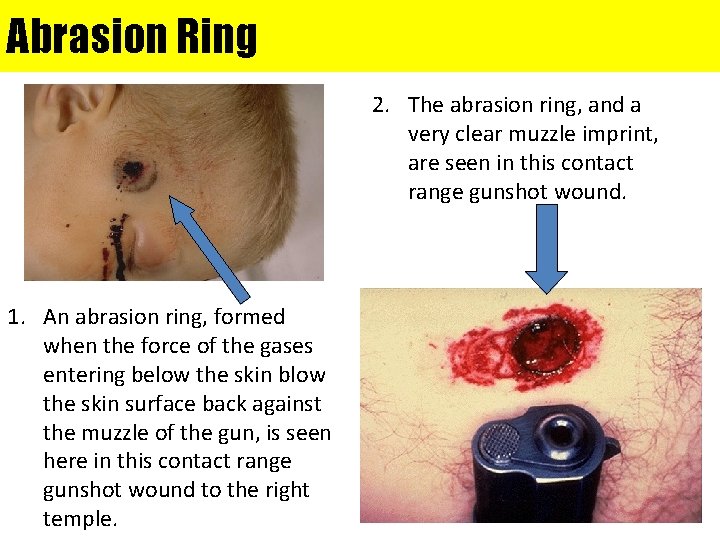
Abrasion Ring 2. The abrasion ring, and a very clear muzzle imprint, are seen in this contact range gunshot wound. 1. An abrasion ring, formed when the force of the gases entering below the skin blow the skin surface back against the muzzle of the gun, is seen here in this contact range gunshot wound to the right temple.
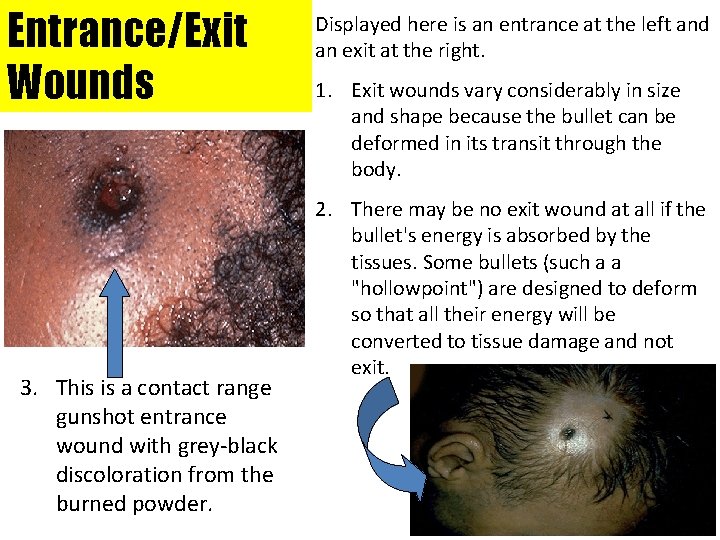
Entrance/Exit Wounds 3. This is a contact range gunshot entrance wound with grey-black discoloration from the burned powder. Displayed here is an entrance at the left and an exit at the right. 1. Exit wounds vary considerably in size and shape because the bullet can be deformed in its transit through the body. 2. There may be no exit wound at all if the bullet's energy is absorbed by the tissues. Some bullets (such a a "hollowpoint") are designed to deform so that all their energy will be converted to tissue damage and not exit.
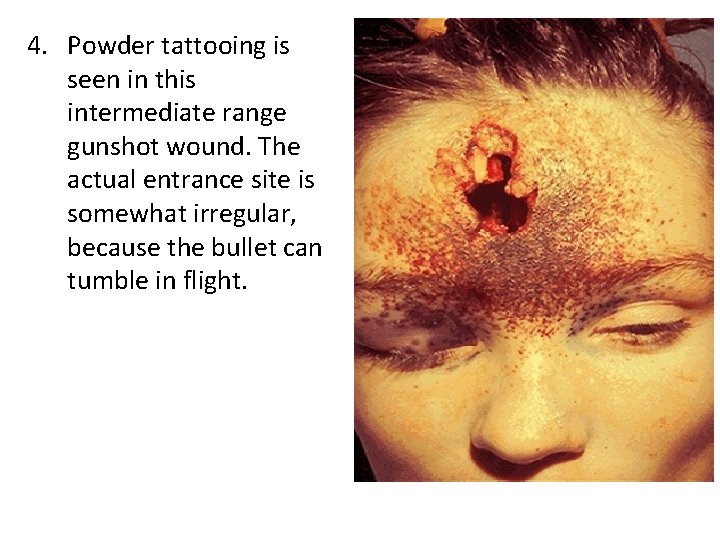
4. Powder tattooing is seen in this intermediate range gunshot wound. The actual entrance site is somewhat irregular, because the bullet can tumble in flight.
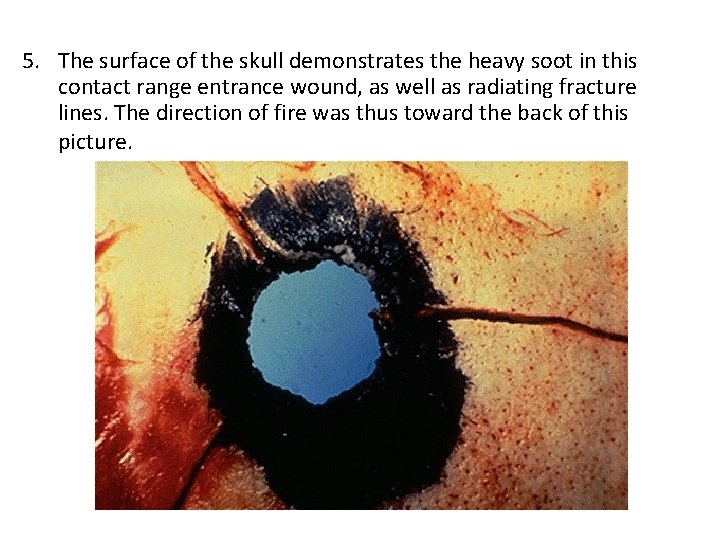
5. The surface of the skull demonstrates the heavy soot in this contact range entrance wound, as well as radiating fracture lines. The direction of fire was thus toward the back of this picture.
END GRAPHIC IMAGES!
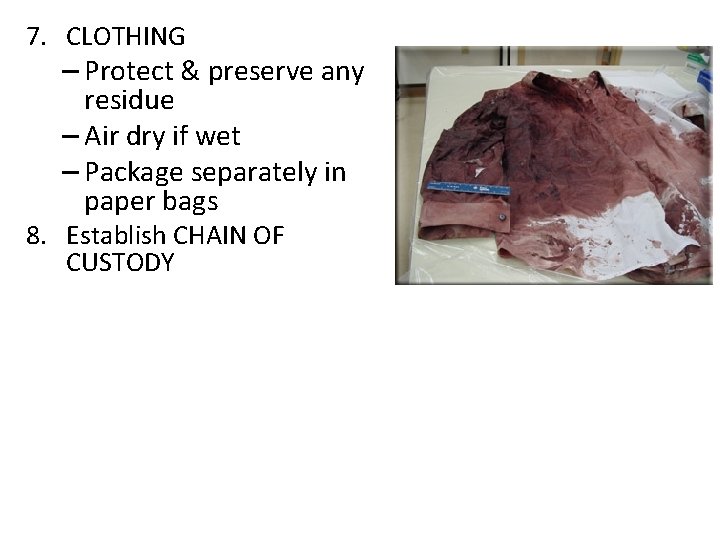
7. CLOTHING – Protect & preserve any residue – Air dry if wet – Package separately in paper bags 8. Establish CHAIN OF CUSTODY
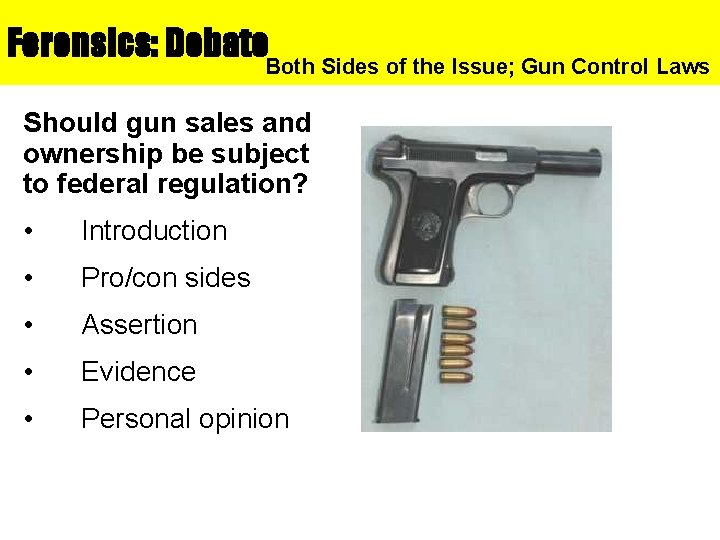
Forensics: Debate Both Sides of the Issue; Gun Control Laws Should gun sales and ownership be subject to federal regulation? • Introduction • Pro/con sides • Assertion • Evidence • Personal opinion