
Types of Faults Stress Strain and Faulting Faults

- Slides: 32
Types of Faults Stress, Strain and Faulting
Faults and strain • Faults form when stress causes the two opposing sides of a rock formation (called fault blocks) to break apart and move in different directions. Stress falls into 3 categories: 1. Tension 2. Compression 3. Shear
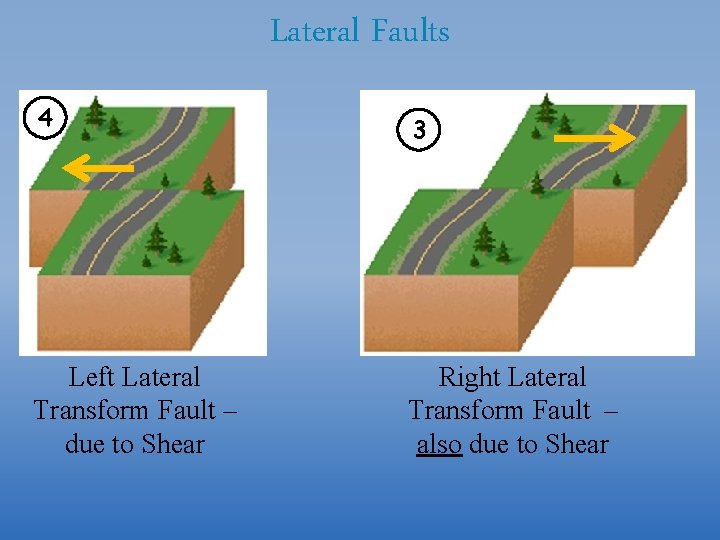
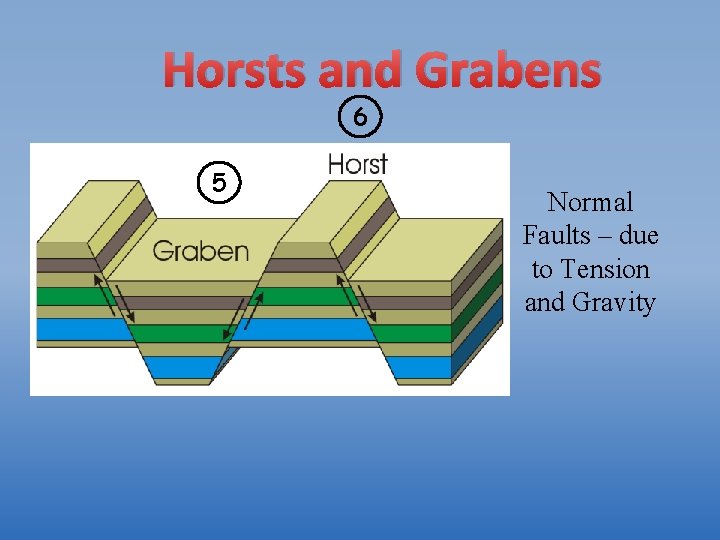
1. 2. 3 Types of Stress Tension – caused by tectonic forces pulling the fault blocks apart Examples: # 1, 5, 6, 7 and 9 a Compression – caused by tectonic forces pushing the fault blocks together Examples: # 2, 8 and 9 b Shear – caused by tectonic forces which cause the fault blocks to slide past each other sideways – Examples: # 3, 4, 9 a & 9 b
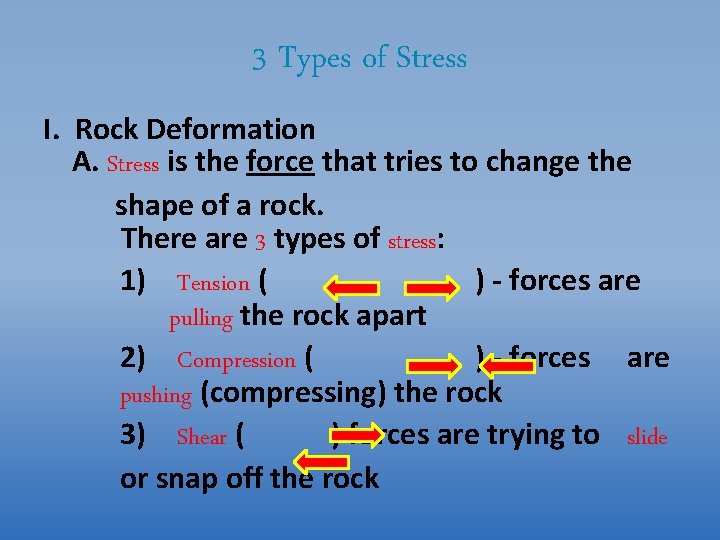
3 Types of Stress I. Rock Deformation A. Stress is the force that tries to change the shape of a rock. There are 3 types of stress: 1) Tension ( ) - forces are pulling the rock apart 2) Compression ( ) - forces are pushing (compressing) the rock 3) Shear ( ) forces are trying to slide or snap off the rock
3 Types of strain B. Strain is the effect that stress has on the rock. There are 3 types of strain: 1) Elastic Deformation - when stress is removed, the strain goes back to zero (rock or object returns to its original shape); Ex: rubber band, ruler
3 Types of strain B. Strain is the effect that stress has on the rock. There are 3 types of strain : 2) Plastic Deformation - when stress is removed, the rock remains deformed; Ex: Silly Putty. Rocks deep in the crust are subject to the high confining pressures required for plastic deformation.
3 Types of strain B. Strain is the effect that stress has on the rock. There are 3 types of strain : 3) Brittle Deformation - stresses are so great the rock breaks or ruptures. Example: Pencil, twig, window glass C. Rocks that undergo plastic deformation deep in the crust become folded. Rocks that undergo rupture and move form faults:
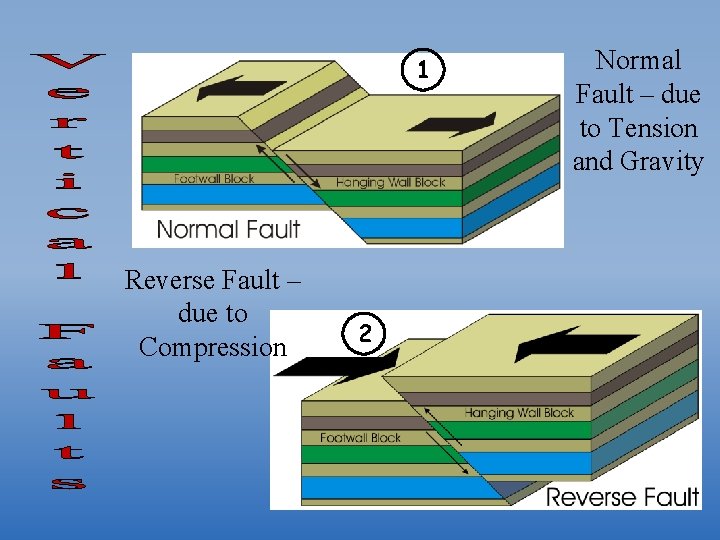
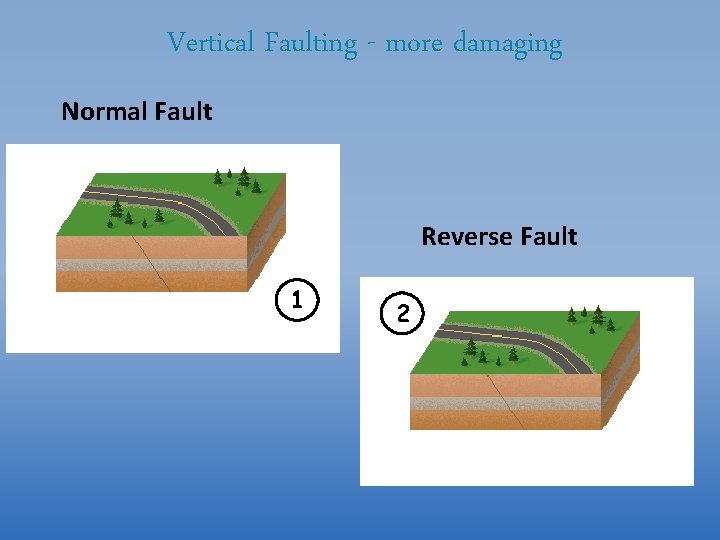
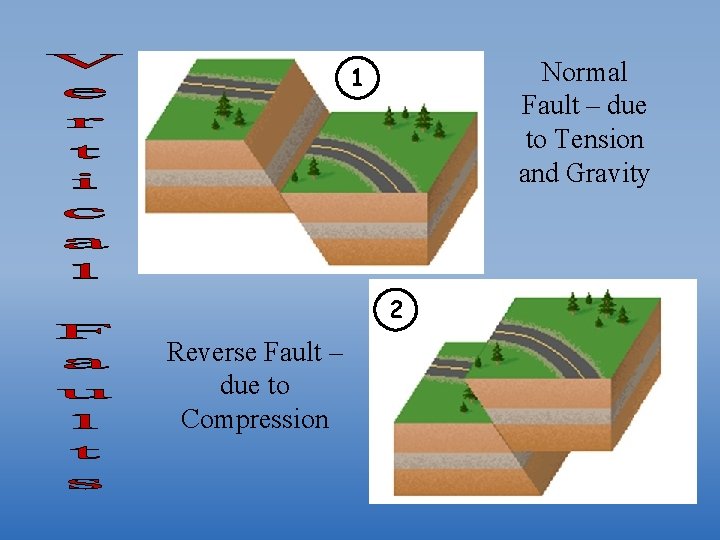
1 Reverse Fault – due to Compression 2 Normal Fault – due to Tension and Gravity
Vertical Faulting - more damaging Normal Fault Reverse Fault 1 2
Normal Fault – due to Tension and Gravity 1 2 Reverse Fault – due to Compression
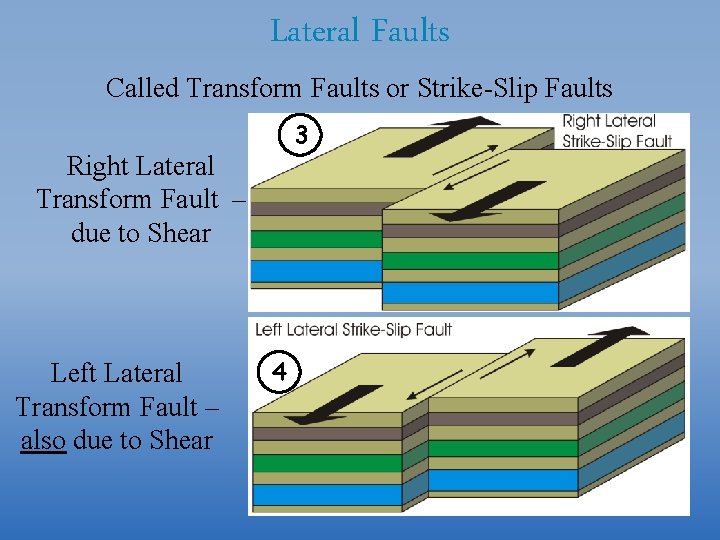
Lateral Faults Called Transform Faults or Strike-Slip Faults 3 Right Lateral Transform Fault – due to Shear Left Lateral Transform Fault – also due to Shear 4
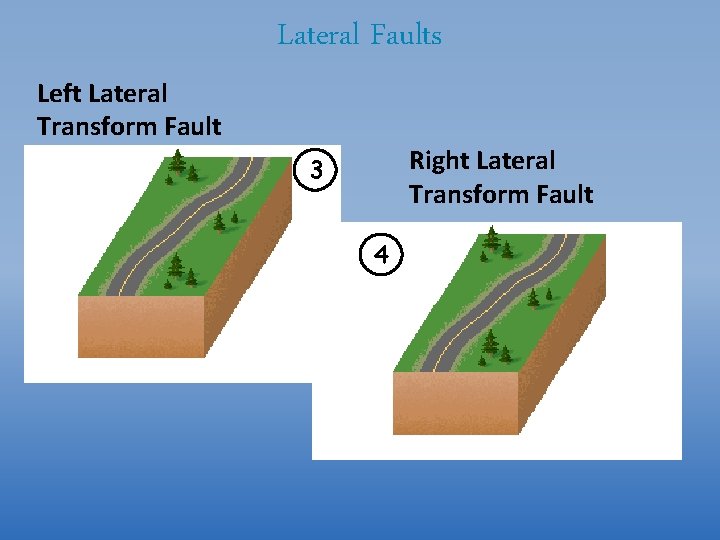
Lateral Faults Left Lateral Transform Fault Right Lateral Transform Fault 3 4
Lateral Faults 4 3 Left Lateral Transform Fault – due to Shear Right Lateral Transform Fault – also due to Shear
Horsts and Grabens 6 5 Normal Faults – due to Tension and Gravity
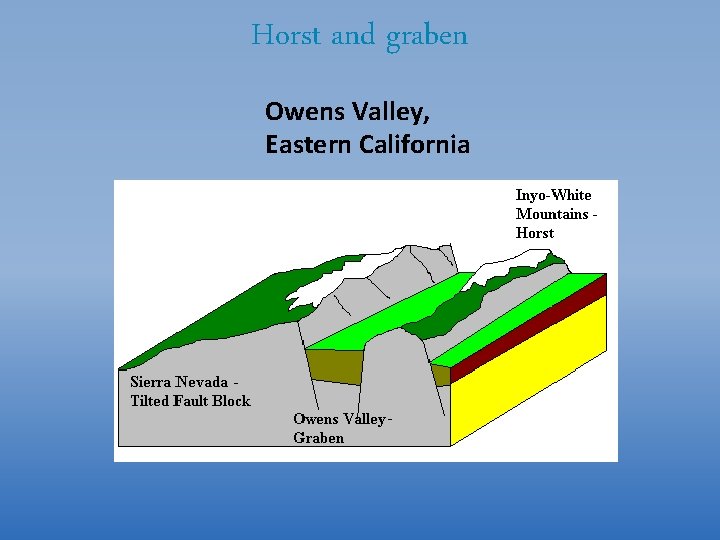
Horst and graben Owens Valley, Eastern California
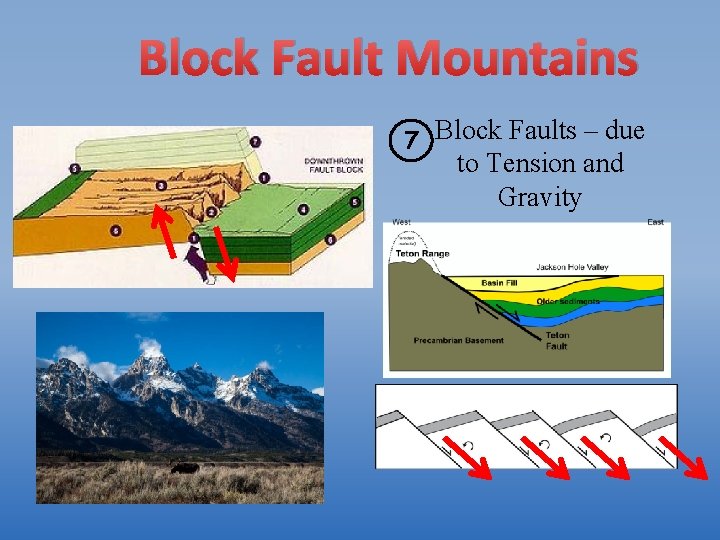
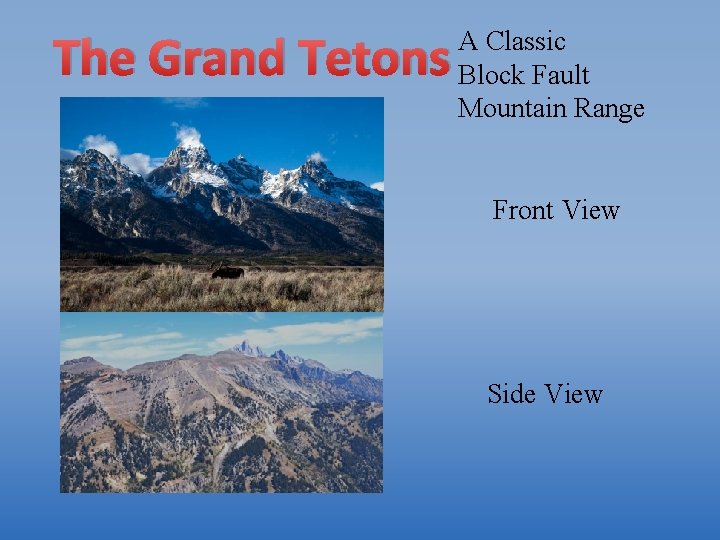
Block Fault Mountains 7 Block Faults – due to Tension and Gravity
The Grand Tetons A Classic Block Fault Mountain Range Front View Side View
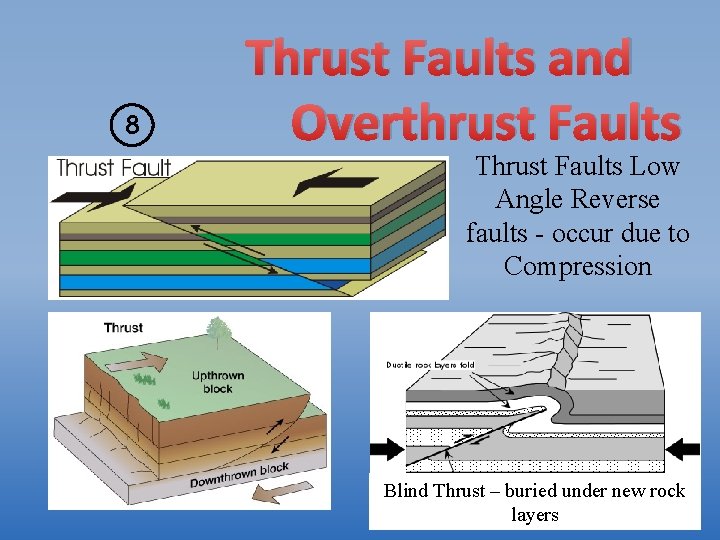
8 Thrust Faults and Overthrust Faults Thrust Faults Low Angle Reverse faults - occur due to Compression Blind Thrust – buried under new rock layers
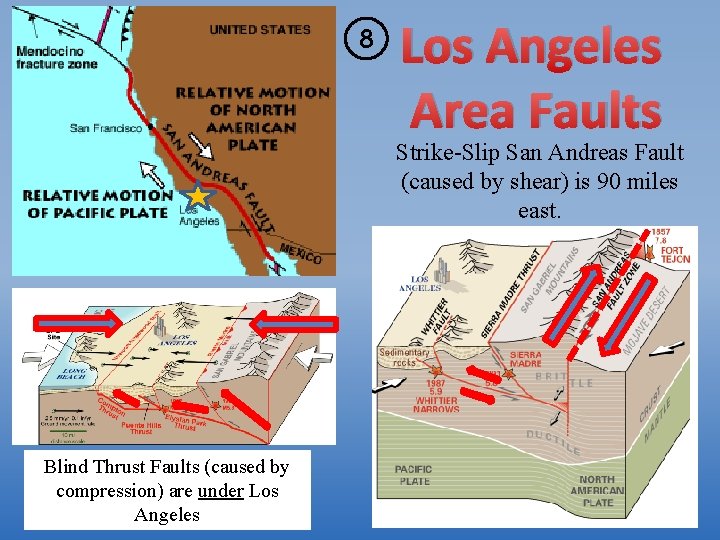
8 Los Angeles Area Faults Strike-Slip San Andreas Fault (caused by shear) is 90 miles east. Blind Thrust Faults (caused by compression) are under Los Angeles
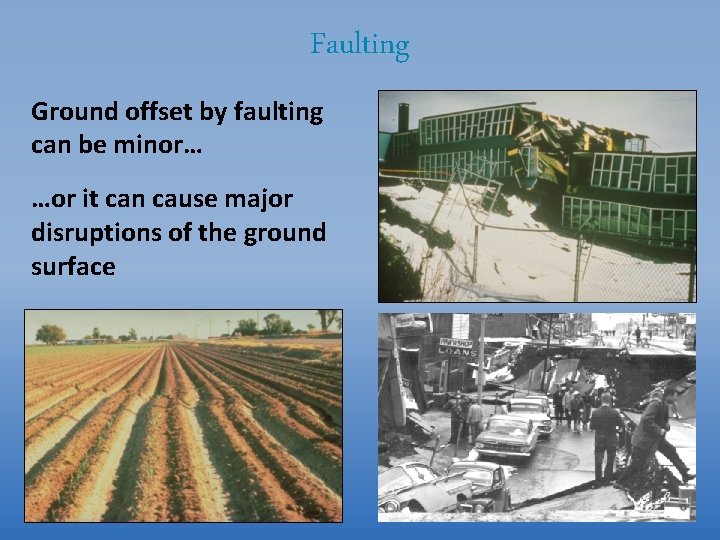
Faulting Ground offset by faulting can be minor… …or it can cause major disruptions of the ground surface
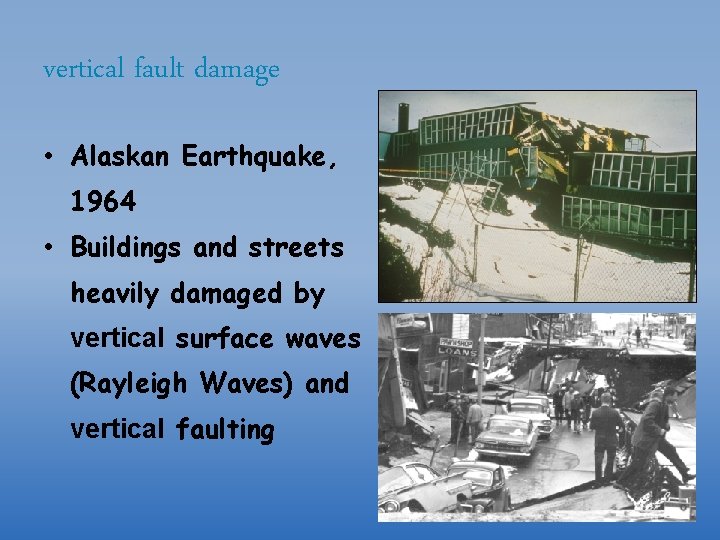
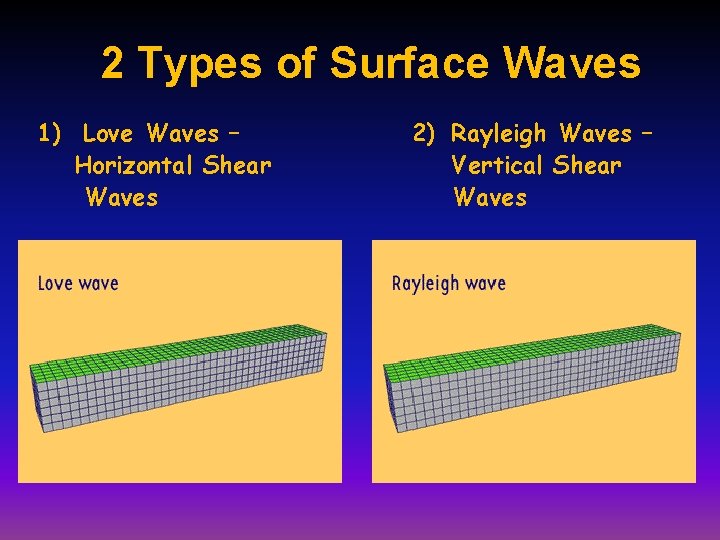
vertical fault damage • Alaskan Earthquake, 1964 • Buildings and streets heavily damaged by vertical surface waves (Rayleigh Waves) and vertical faulting
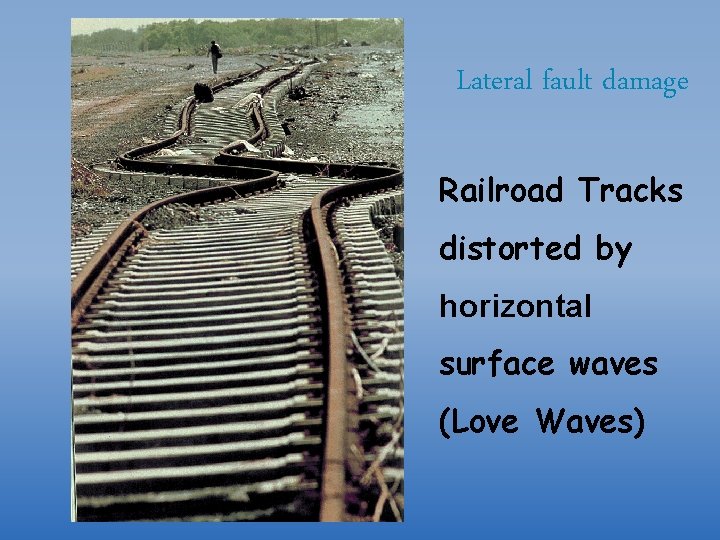
Lateral fault damage Railroad Tracks distorted by horizontal surface waves (Love Waves)
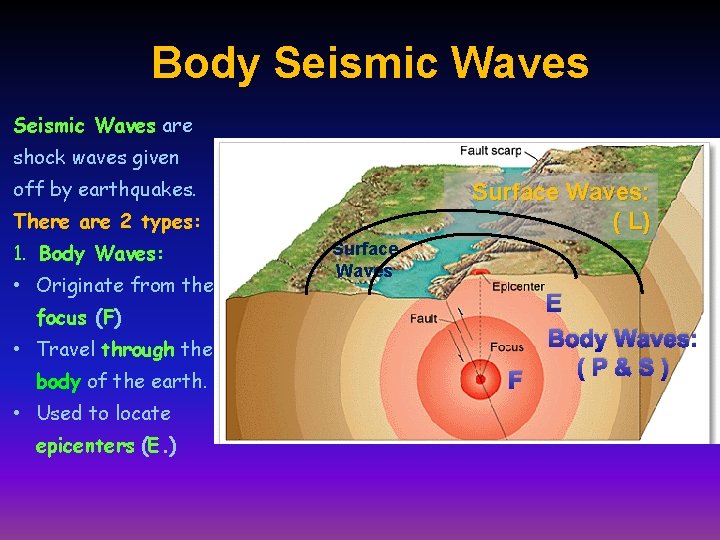
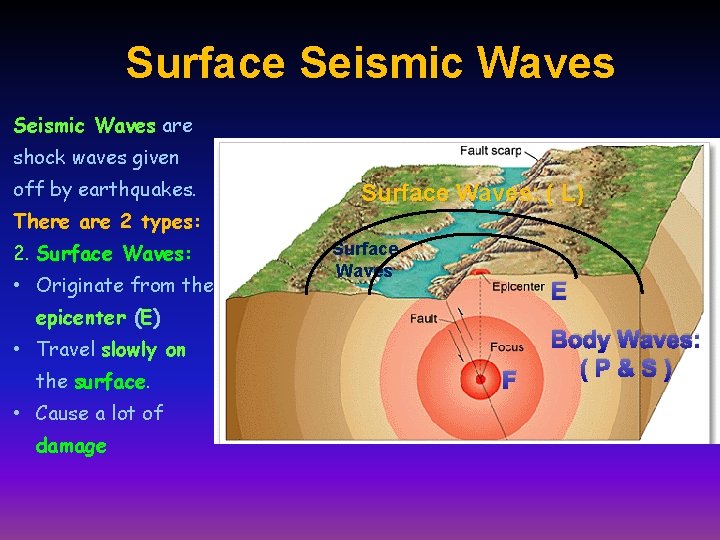
Body Seismic Waves are shock waves given off by earthquakes. Surface Waves: ( L) There are 2 types: 1. Body Waves: • Originate from the Surface Waves focus (F) • Travel through the body of the earth. • Used to locate epicenters (E. ) F E Body Waves: (P&S)
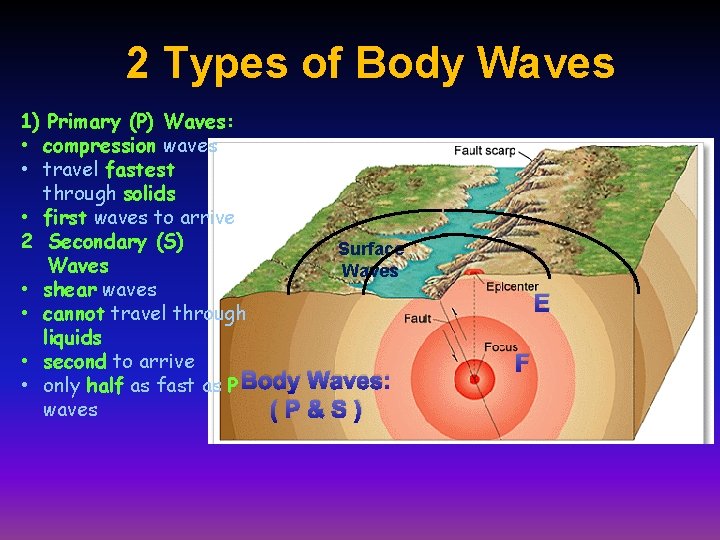
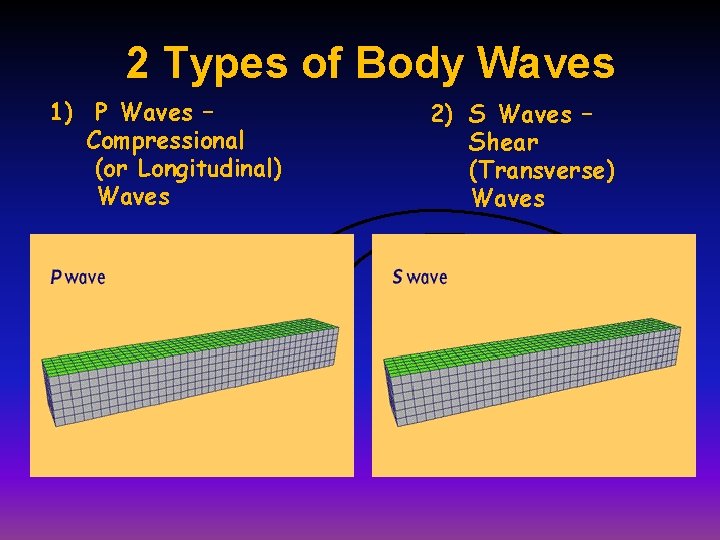
2 Types of Body Waves 1) Primary (P) Waves: • compression waves • travel fastest through solids • first waves to arrive 2 Secondary (S) Surface Waves • shear waves • cannot travel through liquids • second to arrive • only half as fast as P Body Waves: waves (P&S) E F
2 Types of Body Waves 1) P Waves – Compressional (or Longitudinal) Waves 2) S Waves – Shear (Transverse) Waves
Surface Seismic Waves are shock waves given off by earthquakes. There are 2 types: 2. Surface Waves: • Originate from the Surface Waves: ( L) Surface Waves E epicenter (E) • Travel slowly on the surface. • Cause a lot of damage F Body Waves: (P&S)
2 Types of Surface Waves 1) Love Waves – Horizontal Shear Waves 2) Rayleigh Waves – Vertical Shear Waves
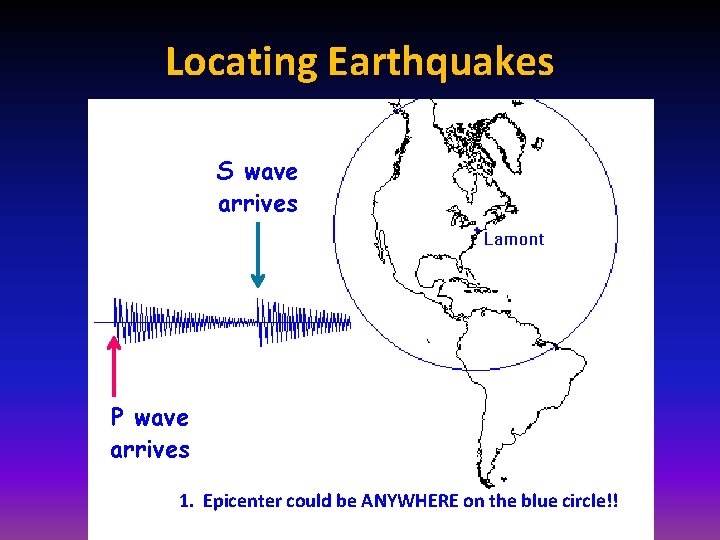
Locating Earthquakes S wave arrives P wave arrives 1. Epicenter could be ANYWHERE on the blue circle!!
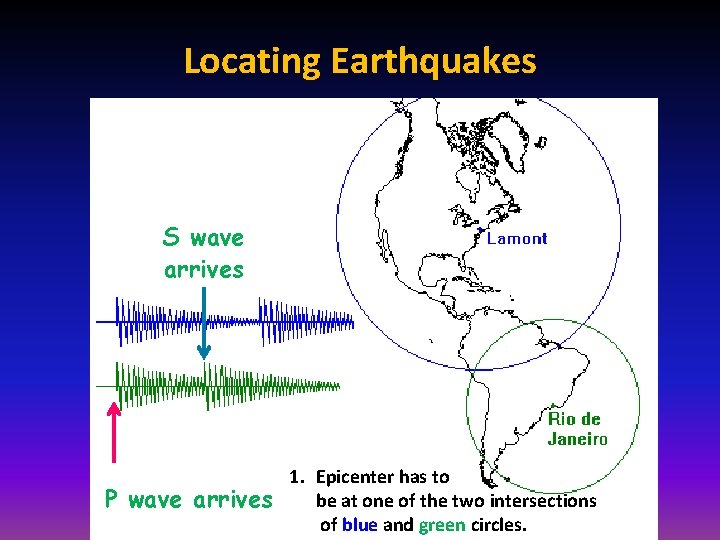
Locating Earthquakes S wave arrives 1. Epicenter has to be at one of the two intersections P wave arrives of blue and green circles.
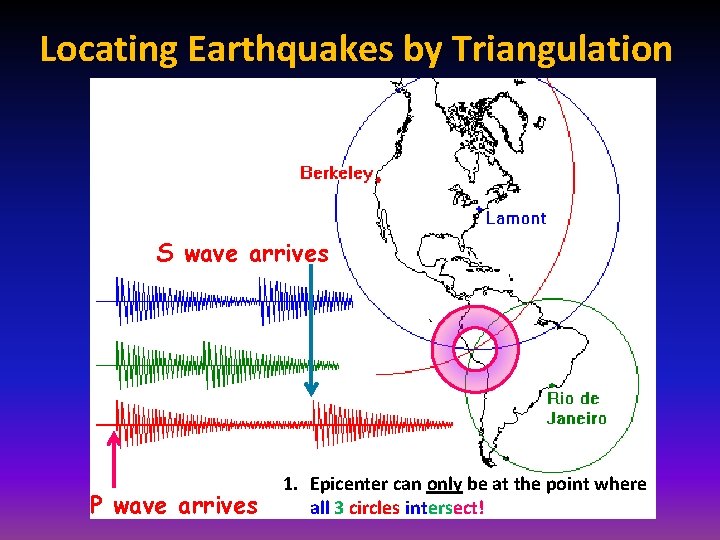
Locating Earthquakes by Triangulation S wave arrives P wave arrives 1. Epicenter can only be at the point where all 3 circles intersect!
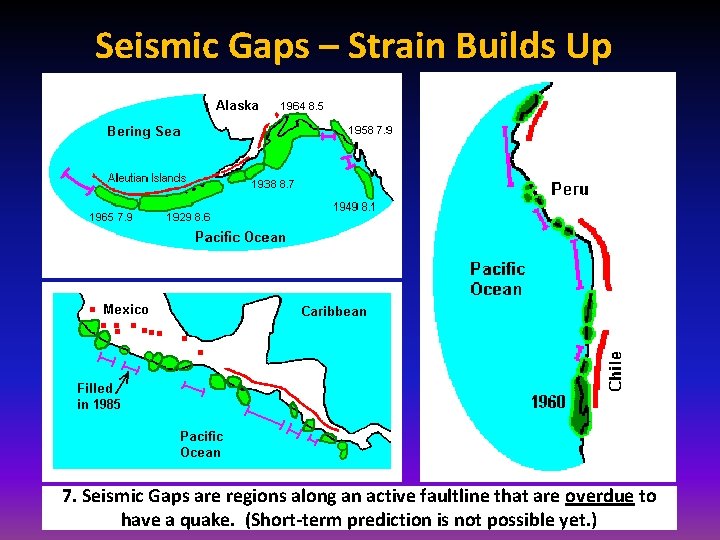
Seismic Gaps – Strain Builds Up 7. Seismic Gaps are regions along an active faultline that are overdue to have a quake. (Short-term prediction is not possible yet. )