
Types of Faults Right Lateral Strike Slip San


- Slides: 21
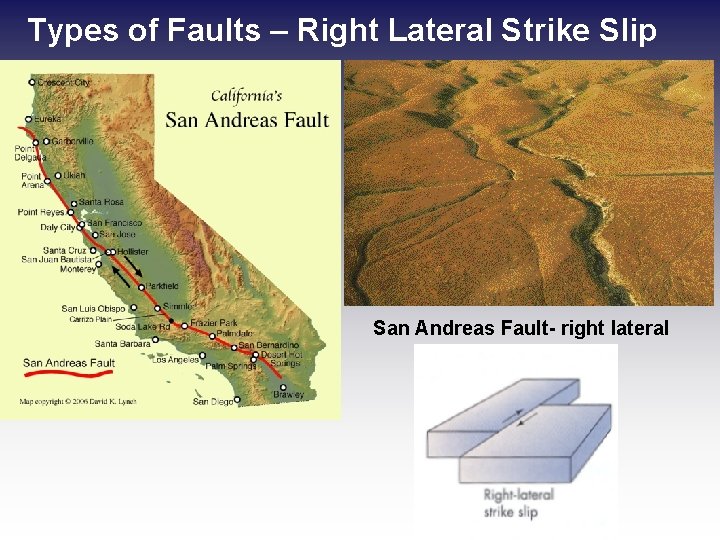
Types of Faults – Right Lateral Strike Slip San Andreas Fault- right lateral
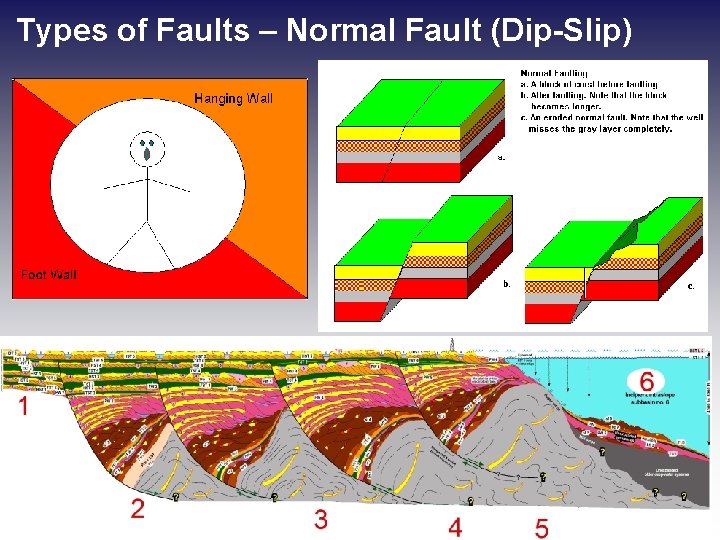
Types of Faults – Normal Fault (Dip-Slip)
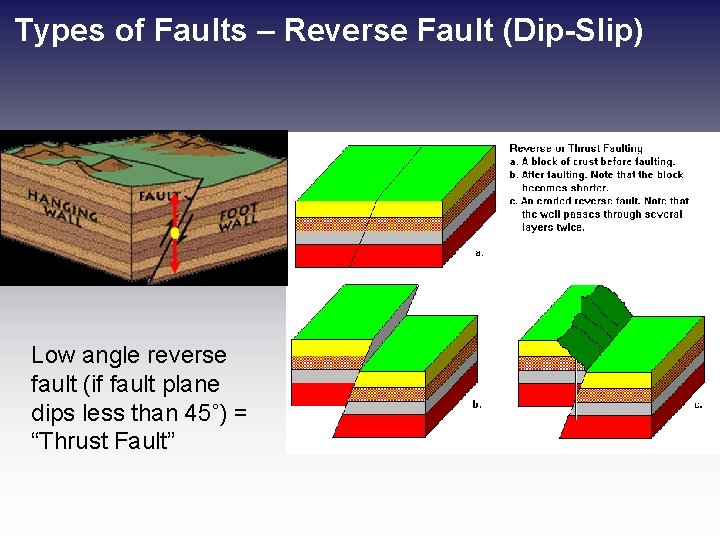
Types of Faults – Reverse Fault (Dip-Slip) Low angle reverse fault (if fault plane dips less than 45˚) = “Thrust Fault”
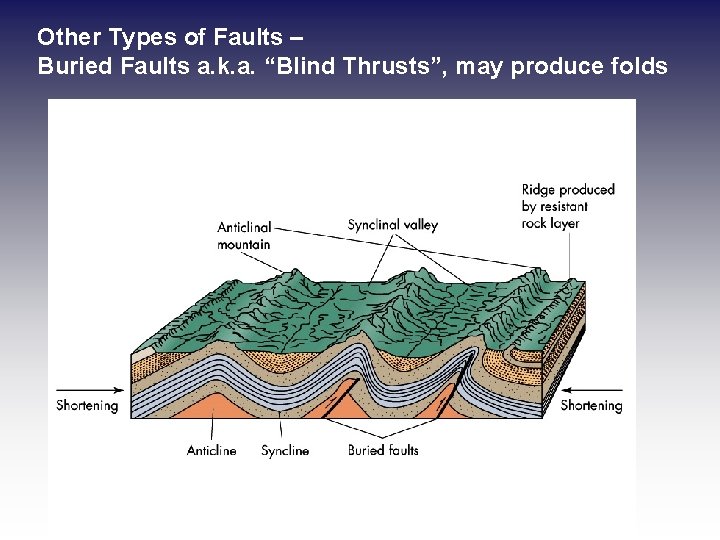
Other Types of Faults – Buried Faults a. k. a. “Blind Thrusts”, may produce folds
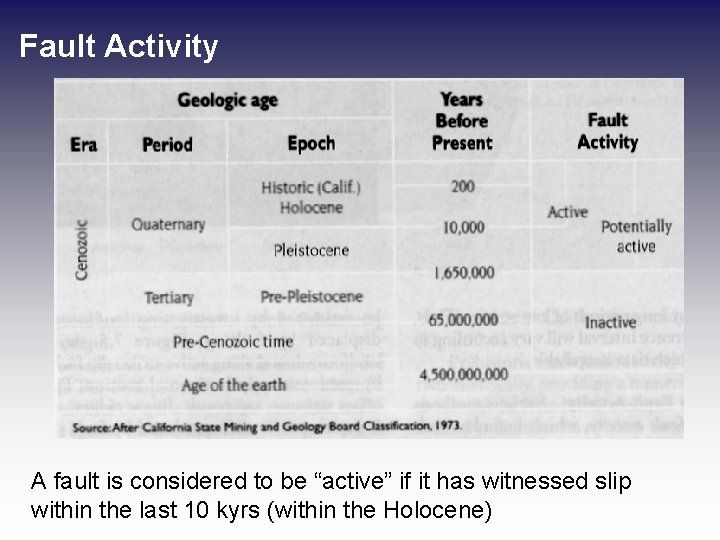
Fault Activity A fault is considered to be “active” if it has witnessed slip within the last 10 kyrs (within the Holocene)
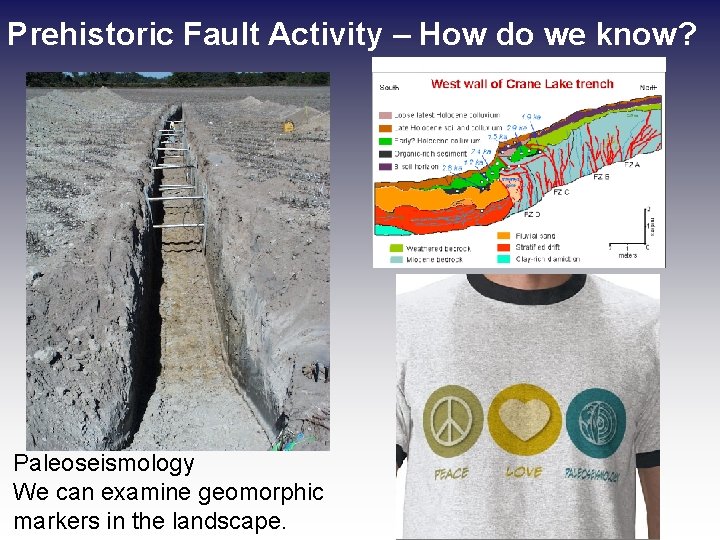
Prehistoric Fault Activity – How do we know? Paleoseismology We can examine geomorphic markers in the landscape.
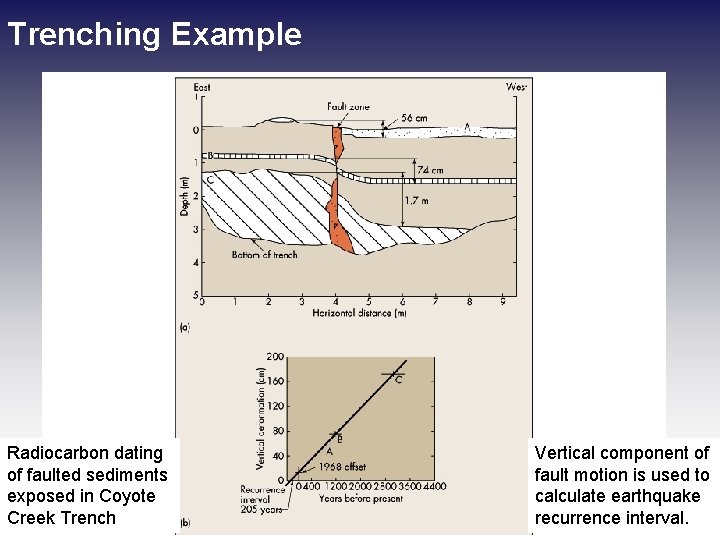
Trenching Example Radiocarbon dating of faulted sediments exposed in Coyote Creek Trench Vertical component of fault motion is used to calculate earthquake recurrence interval.
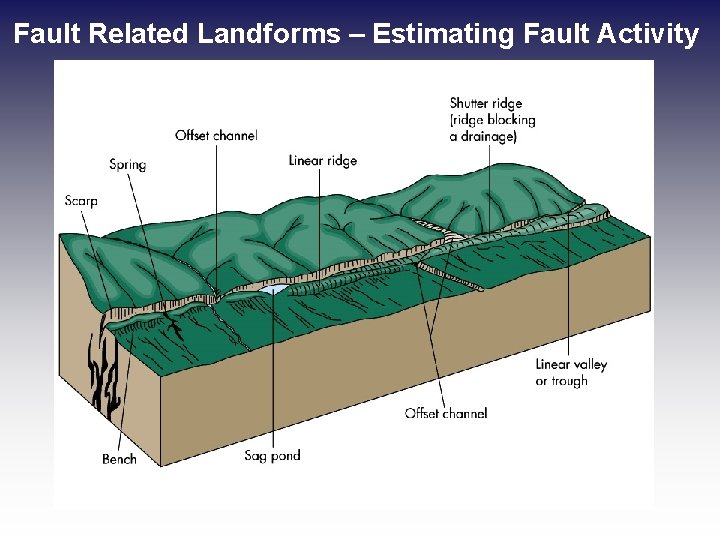
Fault Related Landforms – Estimating Fault Activity
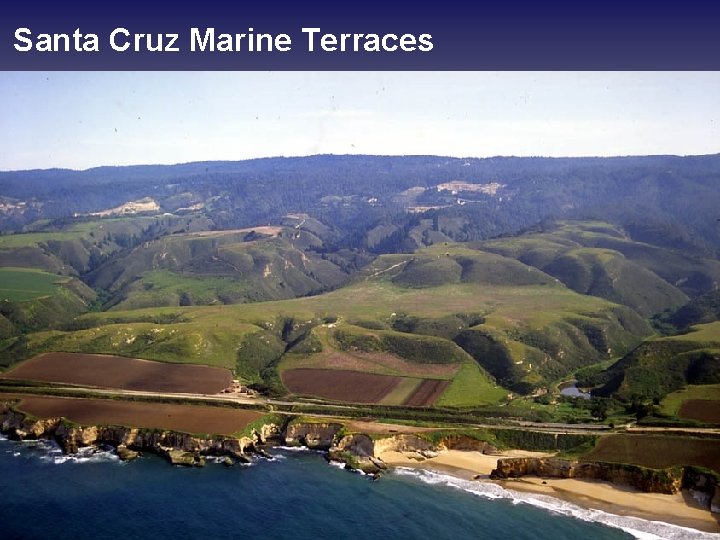
Santa Cruz Marine Terraces
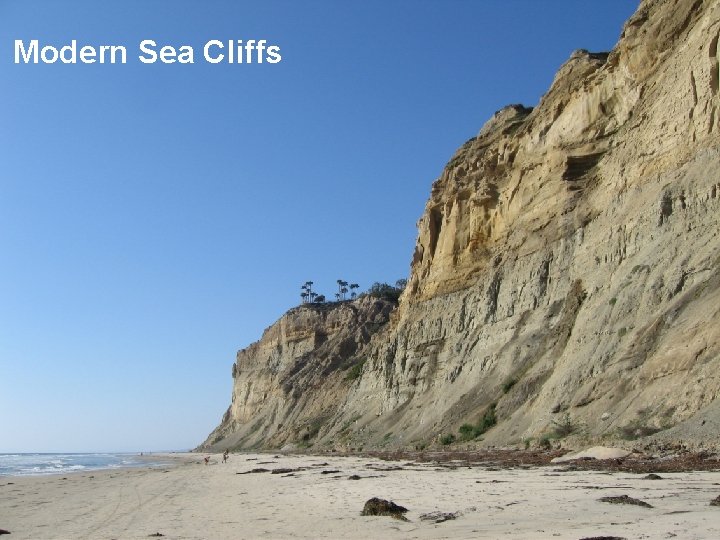
Modern Sea Cliffs
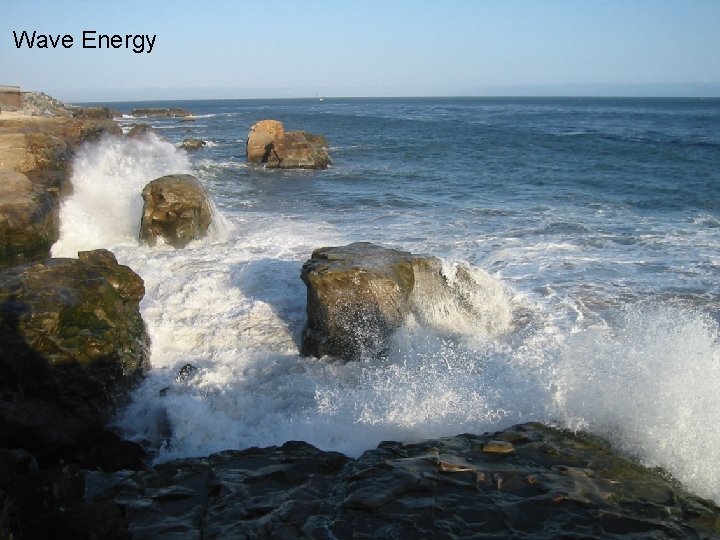
Wave Energy
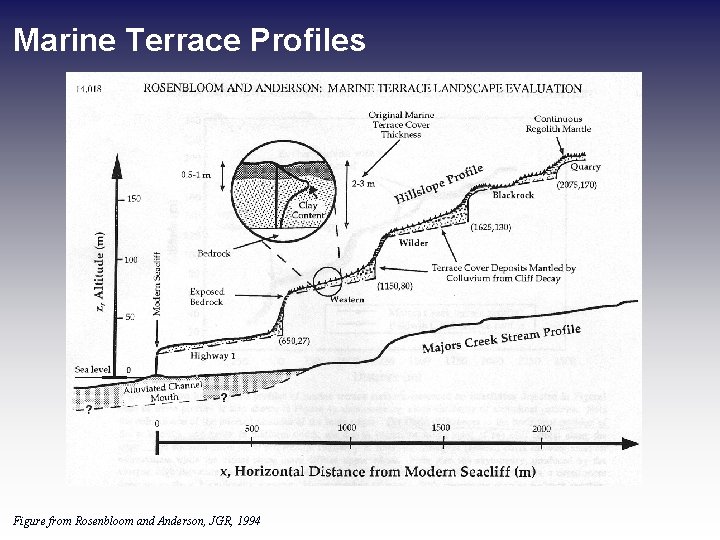
Marine Terrace Profiles Figure from Rosenbloom and Anderson, JGR, 1994
Loma Prieta Event - 1989 http: //en. wikipedia. org/wiki/Image: Car_Crushed_Under_Marina_Apartments. jpg
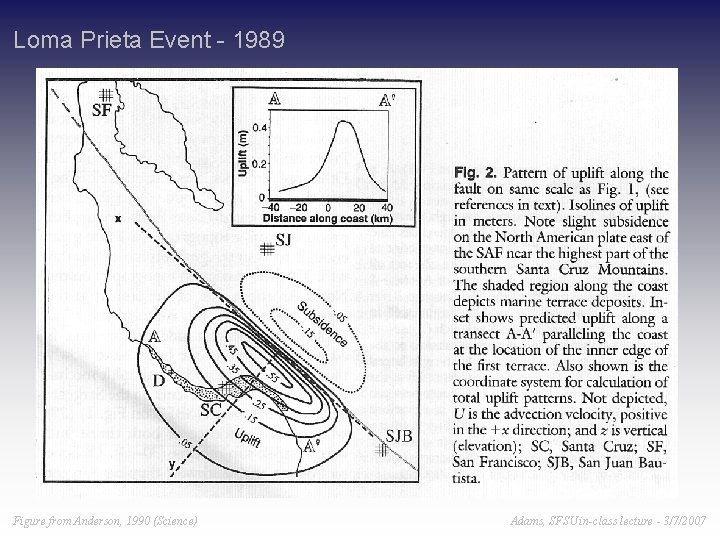
Loma Prieta Event - 1989 Figure from Anderson, 1990 (Science) Adams, SFSU in-class lecture - 3/7/2007
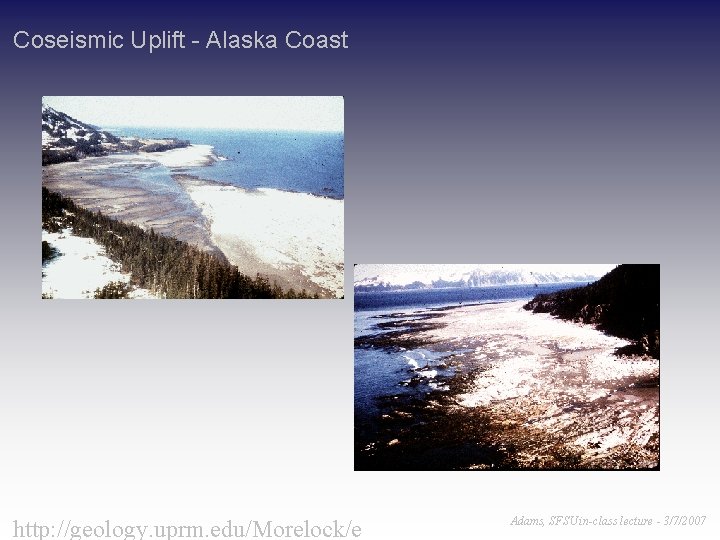
Coseismic Uplift - Alaska Coast http: //geology. uprm. edu/Morelock/e Adams, SFSU in-class lecture - 3/7/2007
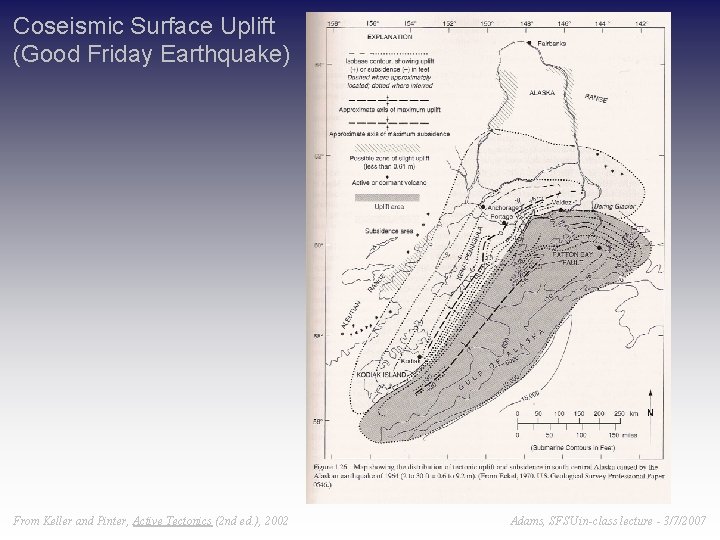
Coseismic Surface Uplift (Good Friday Earthquake) From Keller and Pinter, Active Tectonics (2 nd ed. ), 2002 Adams, SFSU in-class lecture - 3/7/2007
Restraining Bend - Transpression Figure from Anderson, 1990 (Science) Adams, SFSU in-class lecture - 3/7/2007
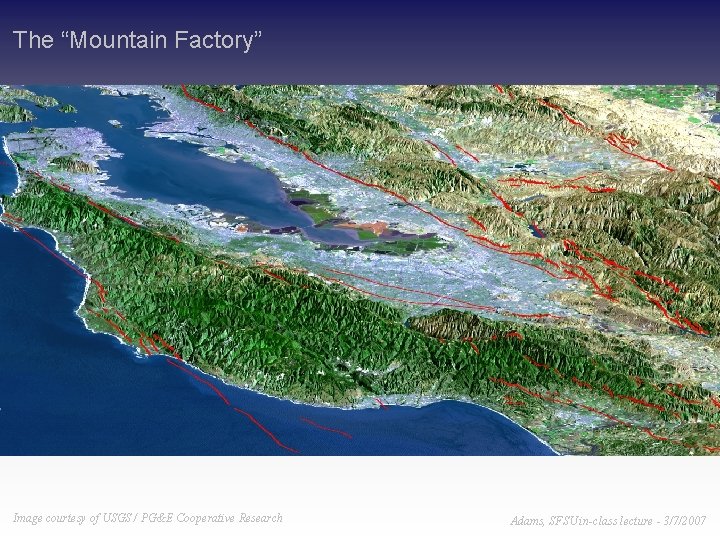
The “Mountain Factory” Image courtesy of USGS / PG&E Cooperative Research Adams, SFSU in-class lecture - 3/7/2007
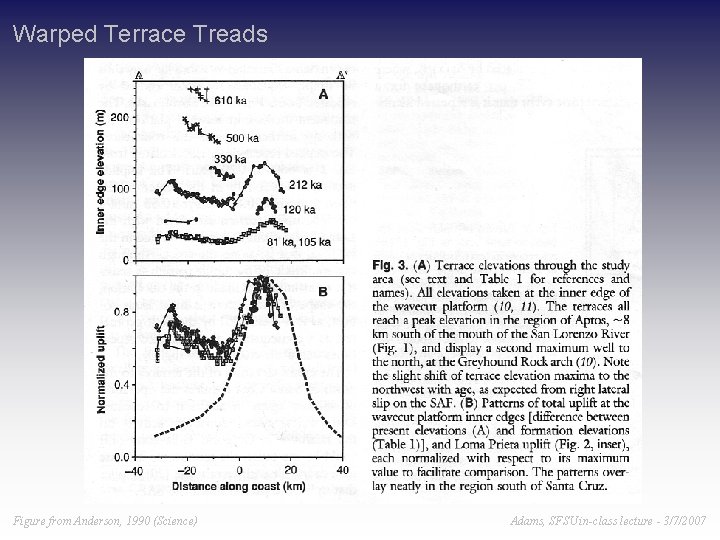
Warped Terrace Treads Figure from Anderson, 1990 (Science) Adams, SFSU in-class lecture - 3/7/2007
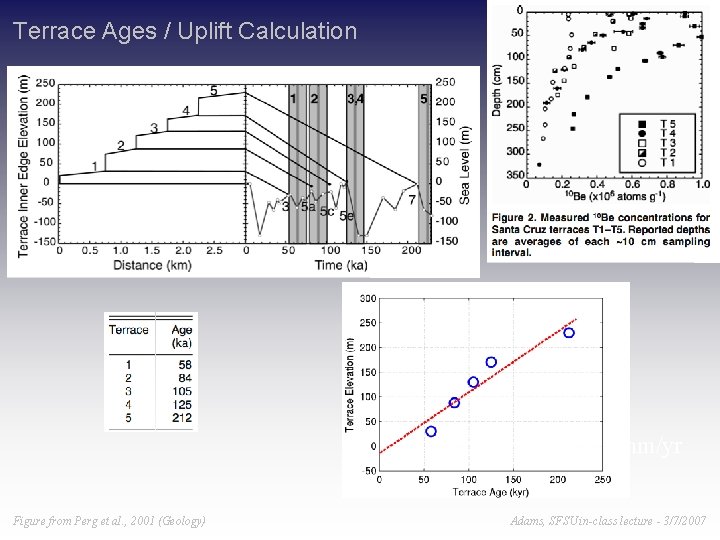
Terrace Ages / Uplift Calculation uplift rate = 1. 1 mm/yr Figure from Perg et al. , 2001 (Geology) Adams, SFSU in-class lecture - 3/7/2007
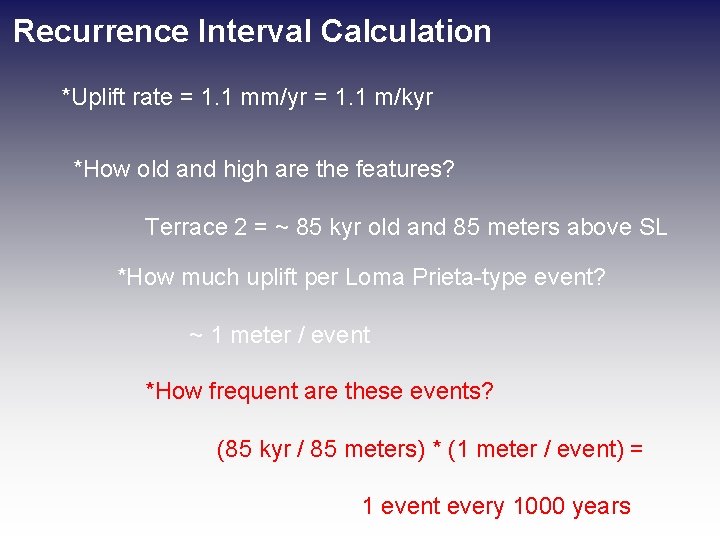
Recurrence Interval Calculation *Uplift rate = 1. 1 mm/yr = 1. 1 m/kyr *How old and high are the features? Terrace 2 = ~ 85 kyr old and 85 meters above SL *How much uplift per Loma Prieta-type event? ~ 1 meter / event *How frequent are these events? (85 kyr / 85 meters) * (1 meter / event) = 1 event every 1000 years