
Types of Fats Properties and functions of ingredients
- Slides: 8
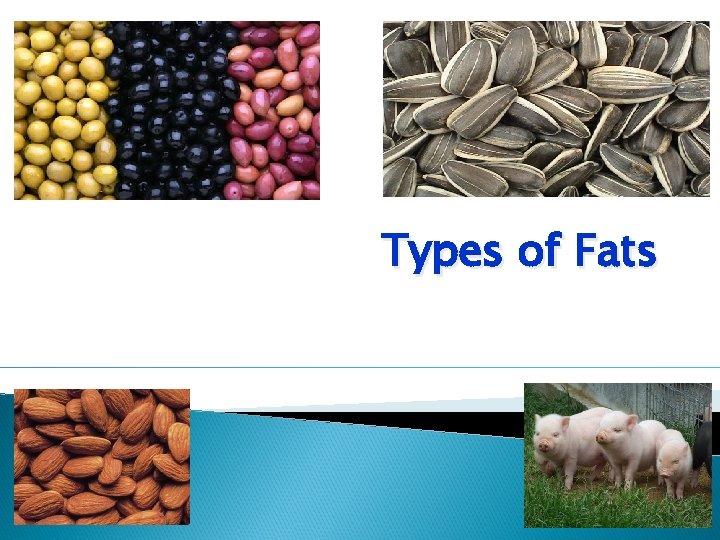
Types of Fats
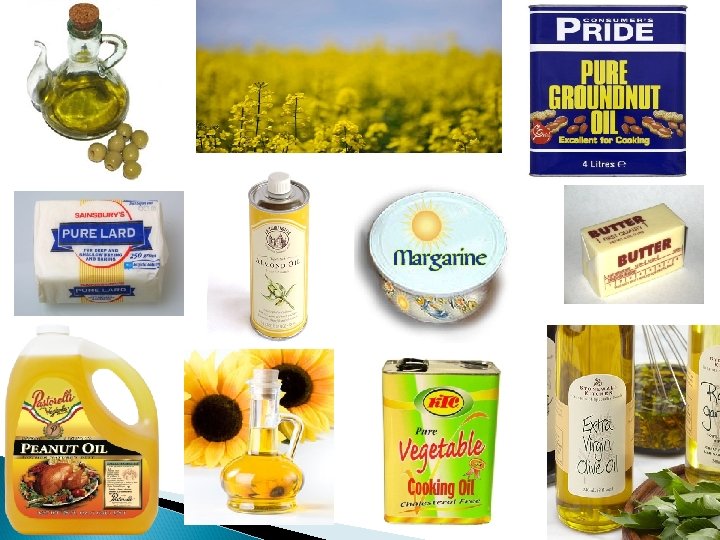
Properties and functions of ingredients Fats come from three different sources Animal – pigs, cows, sheep Vegetable – wheat, barley, oats, seeds, olives, beans, some fruit (avocado) Fish – trout, mackerel, salmon, herring
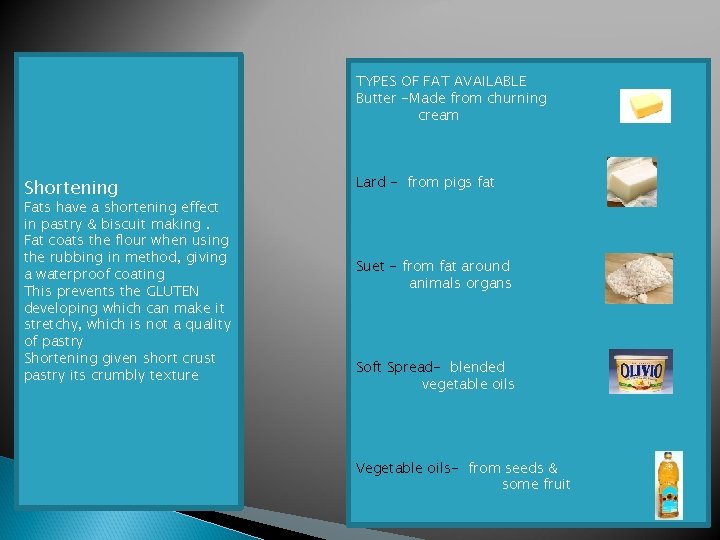
TYPES OF FAT AVAILABLE Butter -Made from churning cream Shortening Fats have a shortening effect in pastry & biscuit making. Fat coats the flour when using the rubbing in method, giving a waterproof coating This prevents the GLUTEN developing which can make it stretchy, which is not a quality of pastry Shortening given short crust pastry its crumbly texture Lard - from pigs fat Suet - from fat around animals organs Soft Spread- blended vegetable oils Vegetable oils- from seeds & some fruit
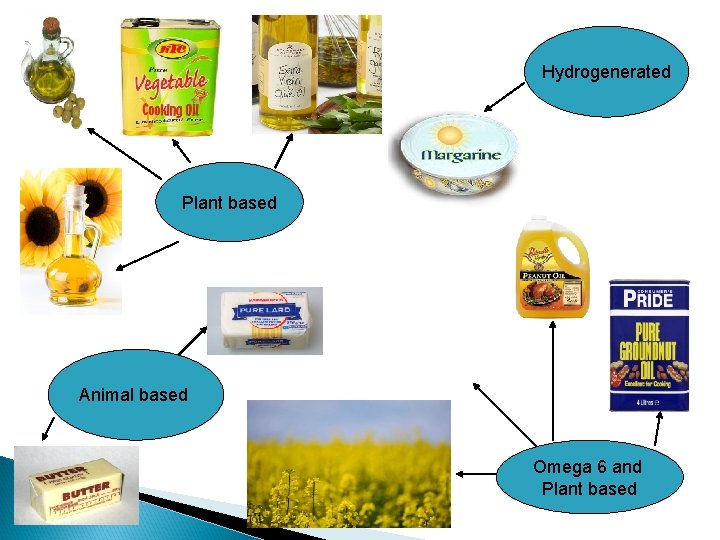
Properties and functions of ingredients Types Fat is solid at room temperature – soft margarine, butter, dripping, block margarine, low fat spread, suet. Oil is liquid at room temperature – cream, sesame seed oil, fish oils, olive oil, vegetable oil, sunflower oil, rape-seed oil. Saturated Fats – mainly from animal sources, can increase blood cholesterol that leads to heart disease. Saturated found in lard, butter should be used sparingly as HIGH in CHOLESTEROL Unsaturated found mainly in vegetable oil contain LESS CHOLESTEROL Polyunsaturated – mainly from plant sources
Hydrogenerated Plant based Animal based Omega 6 and Plant based
Properties and functions of ingredients Low fat spreads These contain approx half the fat of butter, But contain HIGH proportions of WATER This makes low fat spreads unsuitable for frying or baking Too much can cause obesity, too much saturated can result in heart disease. Using low fat products can help reduce these risks. Look for low fat or fat reduced on the packaging.
Properties and functions of ingredients What it does Example …. . Adds flavour Fat in biscuits, cakes, bread. Melted on vegetables, Olive oil drizzled on pasta Cooking Glaze Sauces used for roasting & frying finishing technique on vegetables, knob of butter on carrots helps prevent lumps in sauce making Makes food moist Butter, margarine on bread and scones Seals Butter and lard help to preserve pâtés by sealing them Shortens/changes texture Shortbread, cakes and pastries have a crumbly texture because the flour particles are coated in fat Aerates In cake mixtures, butter and margarine help to trap air when creamed with sugar Extends the shelf life The addition of fat to baked products means that they stay moist for longer.