
Types of expenses Matt Haller Durable goods Durable
Types of expenses Matt Haller
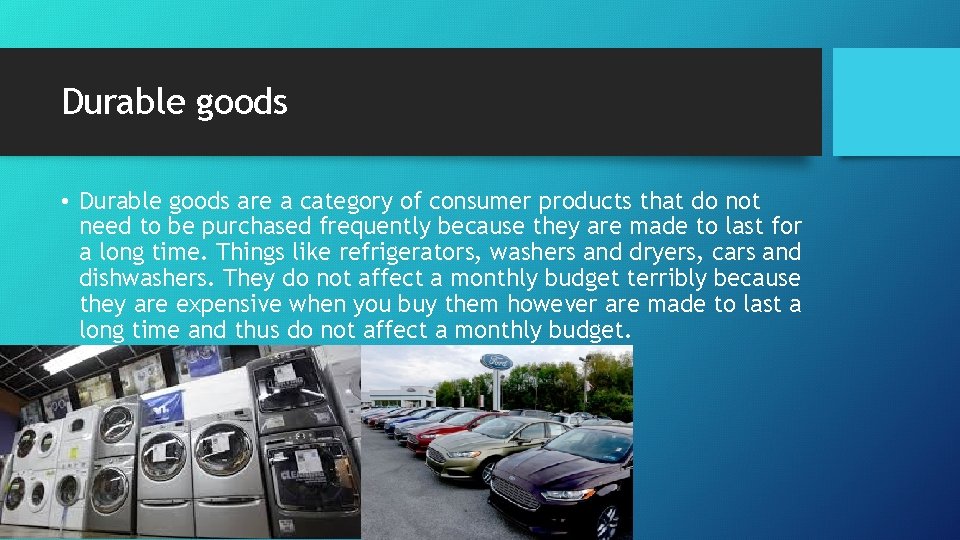
Durable goods • Durable goods are a category of consumer products that do not need to be purchased frequently because they are made to last for a long time. Things like refrigerators, washers and dryers, cars and dishwashers. They do not affect a monthly budget terribly because they are expensive when you buy them however are made to last a long time and thus do not affect a monthly budget.
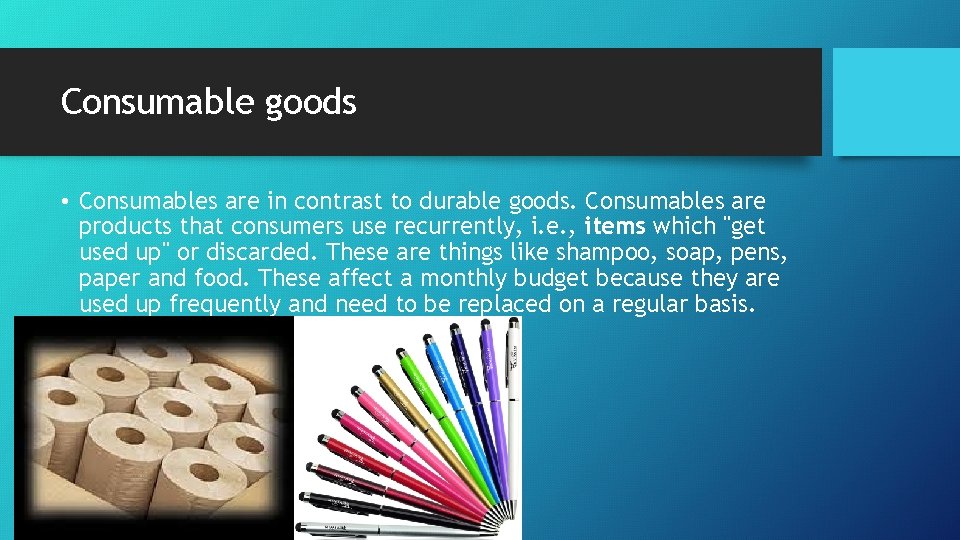
Consumable goods • Consumables are in contrast to durable goods. Consumables are products that consumers use recurrently, i. e. , items which "get used up" or discarded. These are things like shampoo, soap, pens, paper and food. These affect a monthly budget because they are used up frequently and need to be replaced on a regular basis.
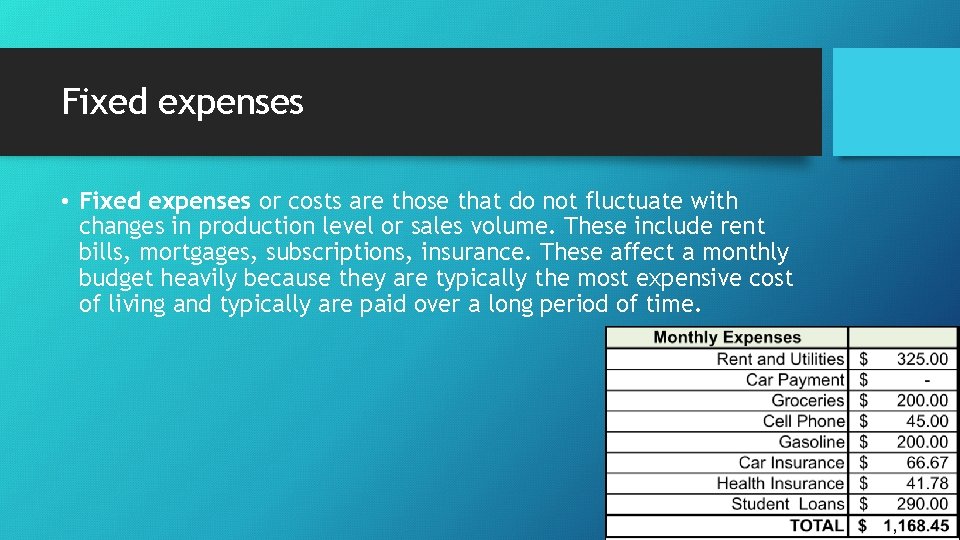
Fixed expenses • Fixed expenses or costs are those that do not fluctuate with changes in production level or sales volume. These include rent bills, mortgages, subscriptions, insurance. These affect a monthly budget heavily because they are typically the most expensive cost of living and typically are paid over a long period of time.
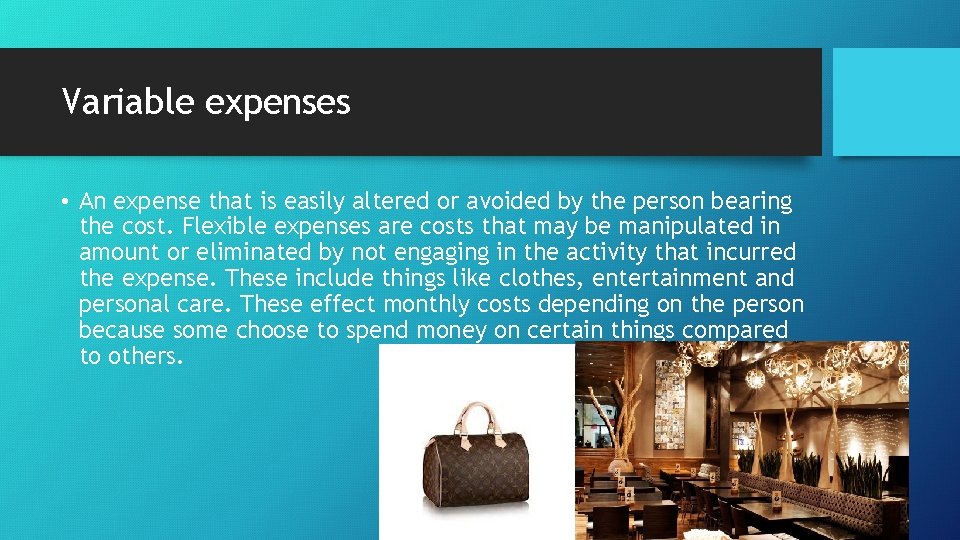
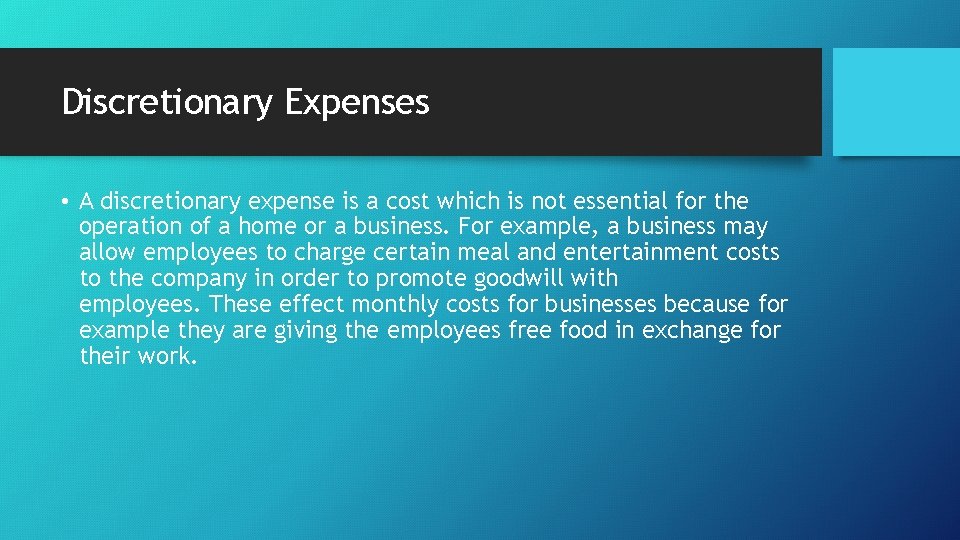
Variable expenses • An expense that is easily altered or avoided by the person bearing the cost. Flexible expenses are costs that may be manipulated in amount or eliminated by not engaging in the activity that incurred the expense. These include things like clothes, entertainment and personal care. These effect monthly costs depending on the person because some choose to spend money on certain things compared to others.
Discretionary Expenses • A discretionary expense is a cost which is not essential for the operation of a home or a business. For example, a business may allow employees to charge certain meal and entertainment costs to the company in order to promote goodwill with employees. These effect monthly costs for businesses because for example they are giving the employees free food in exchange for their work.
- Slides: 6