
TYPES OF ENERGY Grade Seven 7 Subject Integrated
TYPES OF ENERGY Grade: Seven (7) Subject: Integrated Science Teacher: Miss Johnson
Objectives 1. Define the term energy 2. List the different sources of energy 3. Distinguish between kinetic and potential energy 4. Explain the different forms of energy
What is Energy ? Energy is the ability to do work. Energy will make things happen, for example, it will heat up water, make radio work, turn bicycle wheels or light an electric lamp. Energy does many things. We use energy to move, to talk and to remain alive.
Sources of Energy There are two (2) main types of energy sources. 1. Renewable Energy Sources 2. Non-Renewable Energy Sources
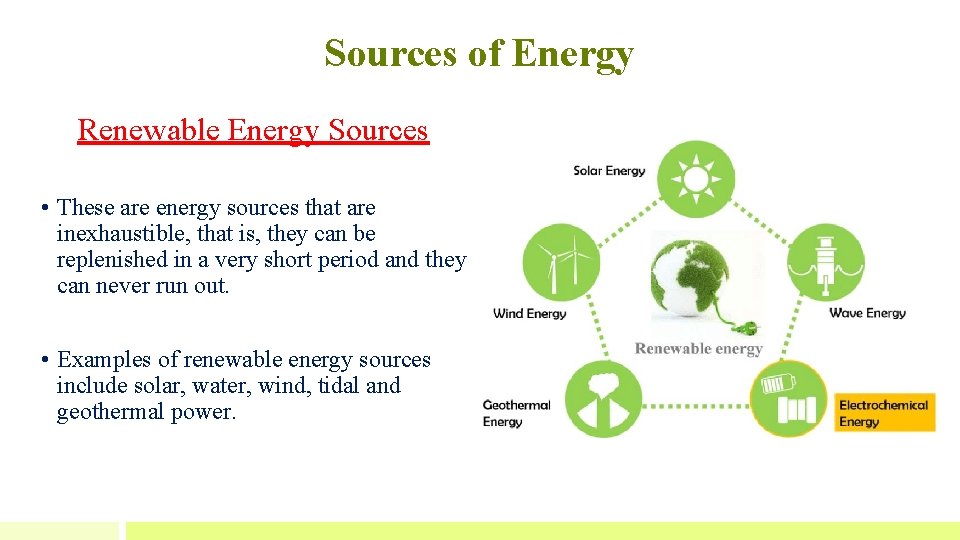
Sources of Energy Renewable Energy Sources • These are energy sources that are inexhaustible, that is, they can be replenished in a very short period and they can never run out. • Examples of renewable energy sources include solar, water, wind, tidal and geothermal power.
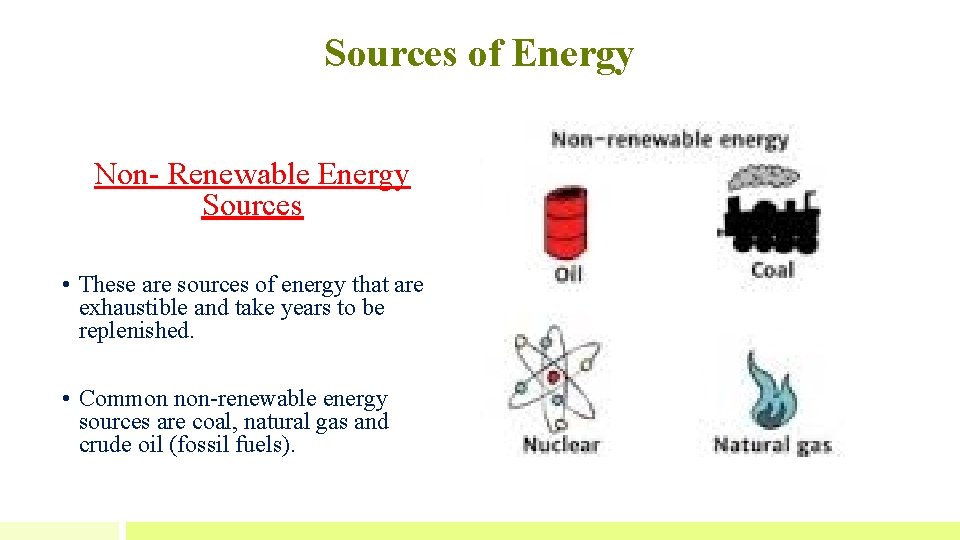
Sources of Energy Non- Renewable Energy Sources • These are sources of energy that are exhaustible and take years to be replenished. • Common non-renewable energy sources are coal, natural gas and crude oil (fossil fuels).
Potential Energy • Potential energy (PE) is energy stored by an object because of its position because there is no movement. An eraser on the top of a desk has the potential energy to fall. A stretched elastic band has the potential to spring back to its original shape.

Types of Potential Energy Nuclear Energy – This is energy stored in the nucleus of an atom. It is released in nuclear reactors and converted into other forms of energy like electrical energy. In other words, nuclear power plants spilt the nuclei of atoms to produce electricity.
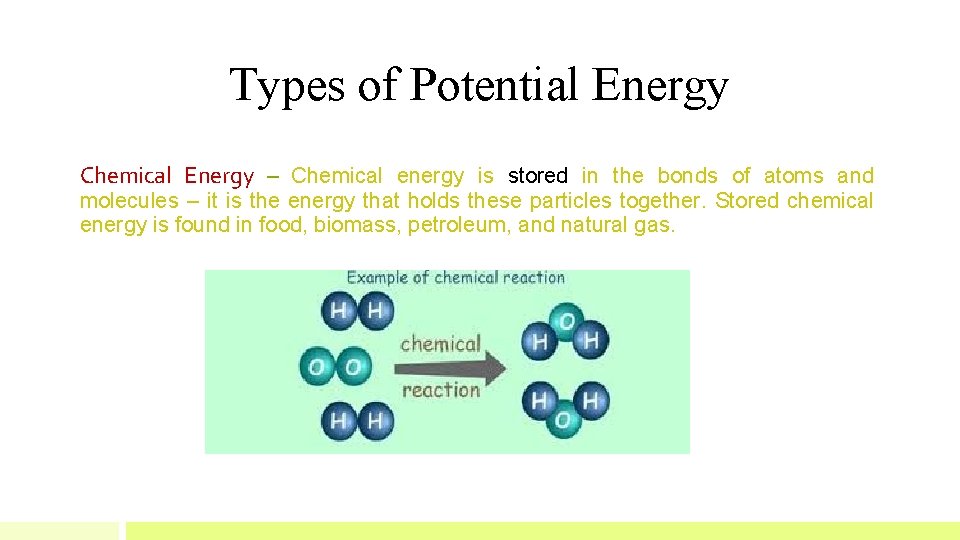
Types of Potential Energy Chemical Energy – Chemical energy is stored in the bonds of atoms and molecules – it is the energy that holds these particles together. Stored chemical energy is found in food, biomass, petroleum, and natural gas.
Kinetic Energy • Kinetic energy (KE) is often called movement energy. • It is described as energy in motion. • Any moving object has kinetic energy A cricket ball flying in the air after being bowled by Chris Gayle has kinetic energy. A flying bird and a moving bicycle have kinetic energy.
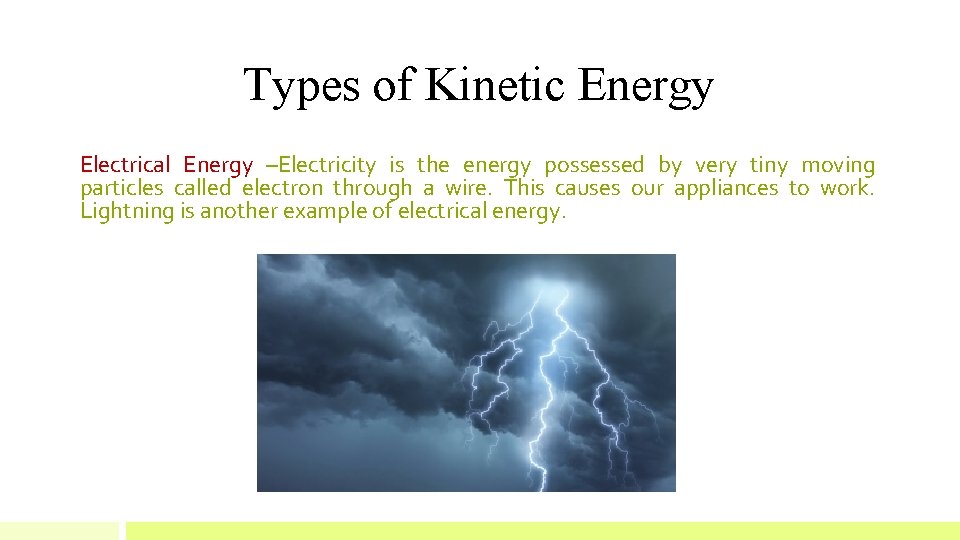
Types of Kinetic Energy Electrical Energy –Electricity is the energy possessed by very tiny moving particles called electron through a wire. This causes our appliances to work. Lightning is another example of electrical energy.
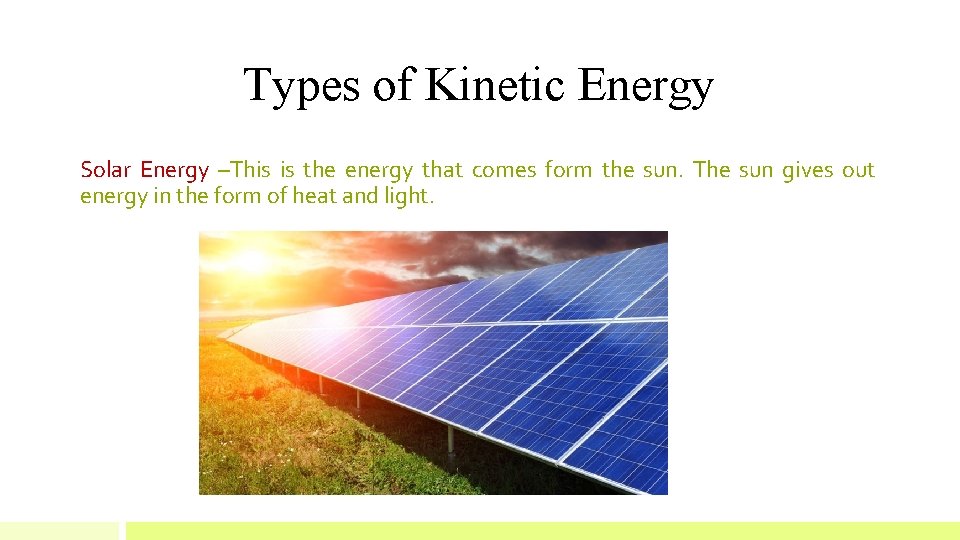
Types of Kinetic Energy Solar Energy –This is the energy that comes form the sun. The sun gives out energy in the form of heat and light.
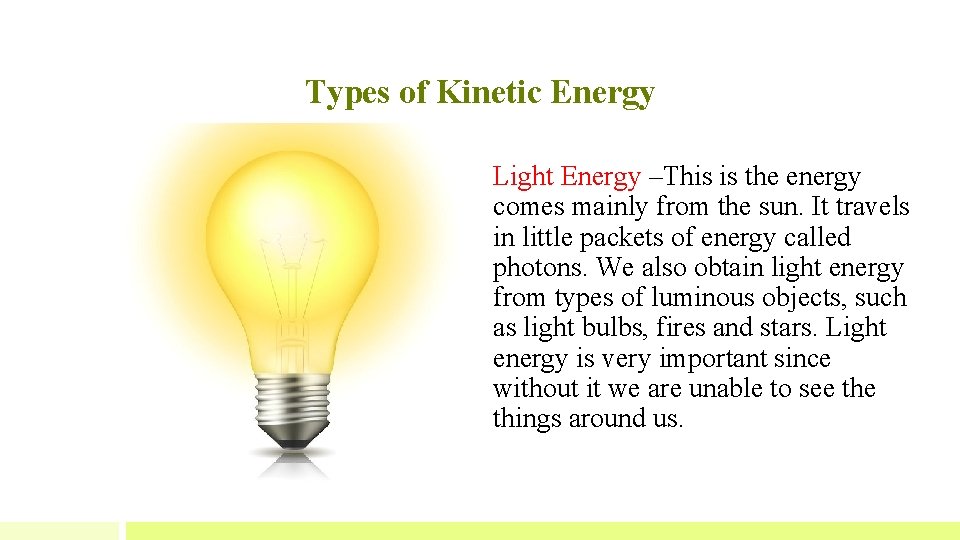
Types of Kinetic Energy Light Energy –This is the energy comes mainly from the sun. It travels in little packets of energy called photons. We also obtain light energy from types of luminous objects, such as light bulbs, fires and stars. Light energy is very important since without it we are unable to see things around us.
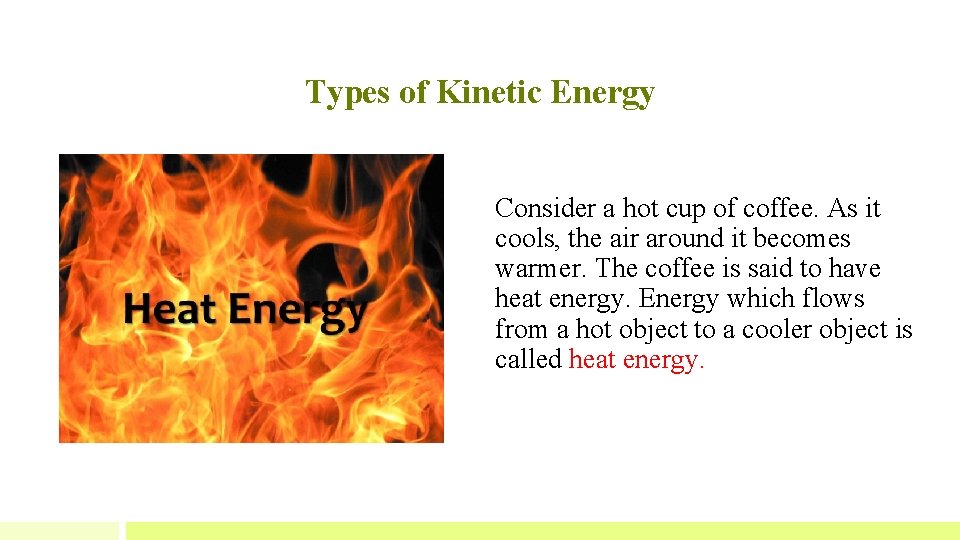
Types of Kinetic Energy Consider a hot cup of coffee. As it cools, the air around it becomes warmer. The coffee is said to have heat energy. Energy which flows from a hot object to a cooler object is called heat energy.
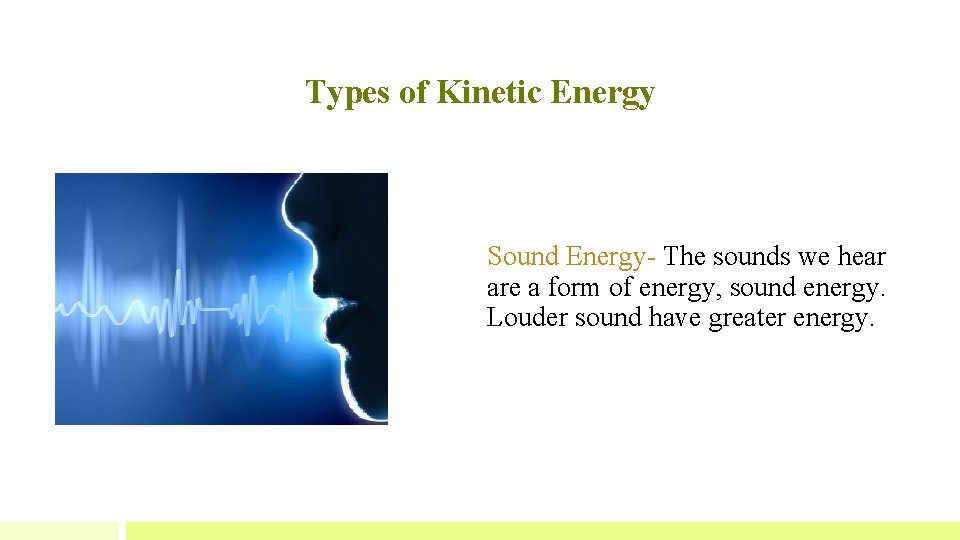
Types of Kinetic Energy Sound Energy- The sounds we hear are a form of energy, sound energy. Louder sound have greater energy.
Kinetic & Potential Energy Activity From your understanding of kinetic and potential energy, determine the type of energy exhibited by the simple sentences below. 1. The ball is rolling down the hill. 2. The car is parked at the supermarket. 3. The river flows directly in the sea. 4. The leaf falls from the tree. 5. The baby creeped on the bed. 6. The refrigerator is standing next to the dining table.
FUN FACT A cow has a total of four (4) stomachs!!!

THE END
- Slides: 18