
Types of Economic Systems 3 Major Economic Questions


- Slides: 19
Types of Economic Systems
3 Major Economic Questions • Countries must decide how to use their scarce resources. • Every economic system must answer 3 basic questions: –What to produce? –How to produce? –For whom to produce?
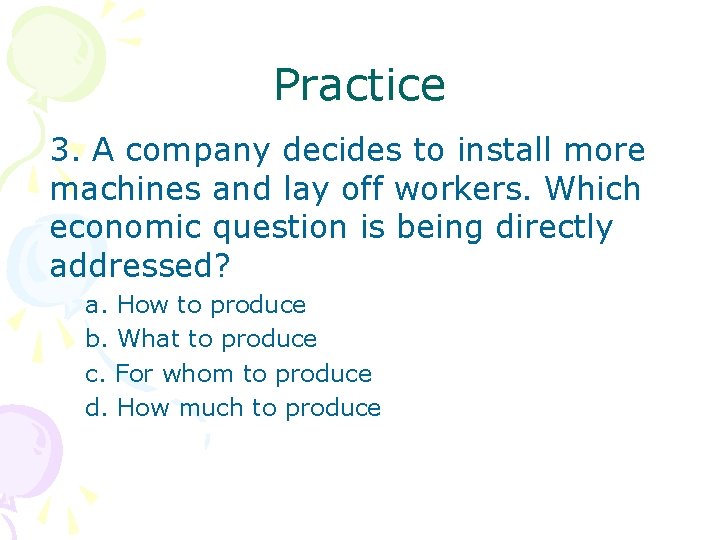
Answer the question below based on the following scenario. . . • A company decides to install more machines and lay off some of its workers. • Which economic question is being directly addressed? – What to produce? – How to produce? – For whom to produce?
Traditional Economy • Economic questions are answered by what happened in the past, by customs and traditions • Strengths: No need to worry about what your job will be or how your life will be • Weaknesses – Lack of many resources – They only produce enough to live on – If there is a shortage, people will either leave the society or die
Market Economy • Buyers and sellers answer the three basic economic questions • Strengths: possibility of making profits as long as producers make what the people want to buy • Weaknesses – Risky – Desire to make money can lead to abuses such as poor quality goods and services, illegal business activities and paying low wages to workers
Command Economy • The government answers the three basic economic questions – The government prepares detailed economic plans • Strengths: individuals do not have to worry about employment, housing, education and healthcare • Weaknesses – Problems meeting production goals lead to economic instability – Planners often ignore the needs and wants of the people
• Traditional System - Things are done as they were in the past based on tradition, customs, and beliefs (religious) • Command System – government controls all factors of production and makes all decisions – Even decides roles people will play (jobs) • Market/Capitalist System – government does not intervene. Market is freely chosen activities between buyers and sellers of goods and services
Traditional, Market or Command? • A planning commission decided how much coal should be produced. • Doctors are employed by the state and their fees are set by the government. • The harvests of corn throughout the village were collected and distributed equally to all citizens.
• Mixed Economic System – contains elements of all 3 –In the U. S. : • Not all decisions are made by individuals reacting to the market • Federal, state, ands local governments make laws regulating areas of business • Public and private sectors contribute to the economy in varying ways • Government steps in to handle inequalities in the system • Holidays and traditions affect portions of the economy
Mixed Economy • A mixed economy is a blend of different economies – in most cases it reflects part of market decision making and government participation • The United States has a mixed economy – Most decisions are made by buyers and sellers, but the government has a hand in decision making (i. e. setting the minimum wage)
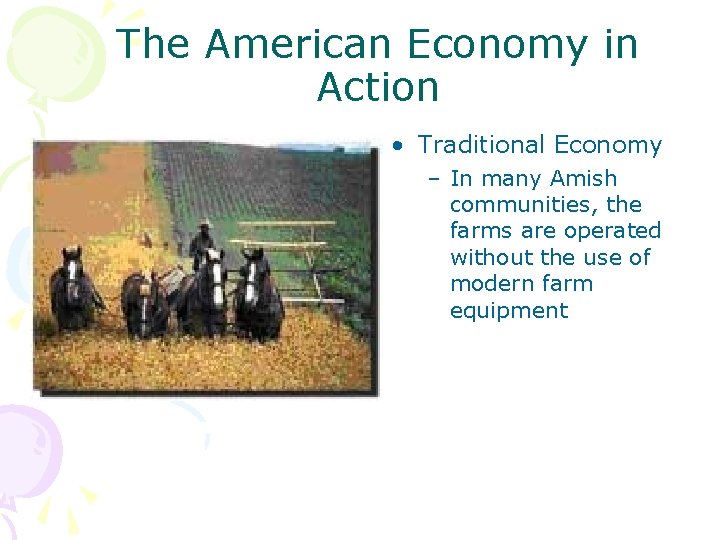
The American Economy in Action • Traditional Economy – In many Amish communities, the farms are operated without the use of modern farm equipment
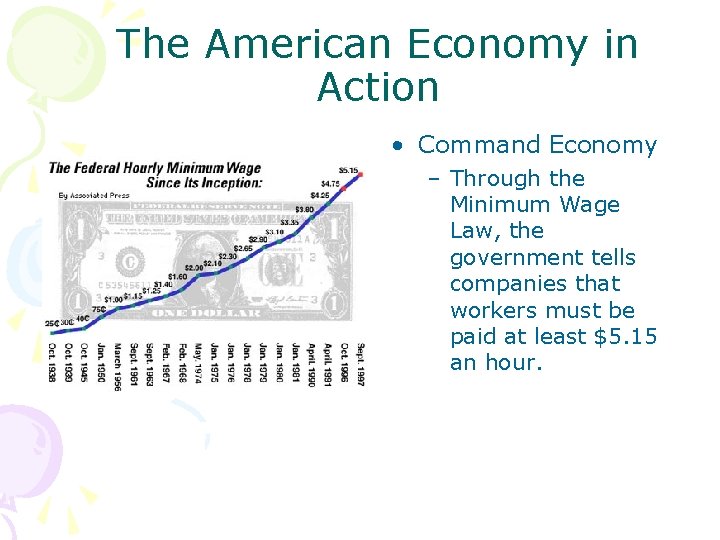
The American Economy in Action • Command Economy – Through the Minimum Wage Law, the government tells companies that workers must be paid at least $5. 15 an hour.
The American Economy in Action • Market Economy – The mall is where buyers go to purchase products and services. – Malls also provide a central location for producers to sell products and services.
GDP vs. GNP • GDP - the market value of all final goods and services produced within a country in a given period of time – Ex: Ford is an American made car so every Ford made and sold within the U. S. is part of its GDP • GNP - the total value of all final goods and services produced by a country's factors of production and sold on the market in a given time period – Example: Any Ford made and sold in Switzerland will count towards the U. S. ’s GNP
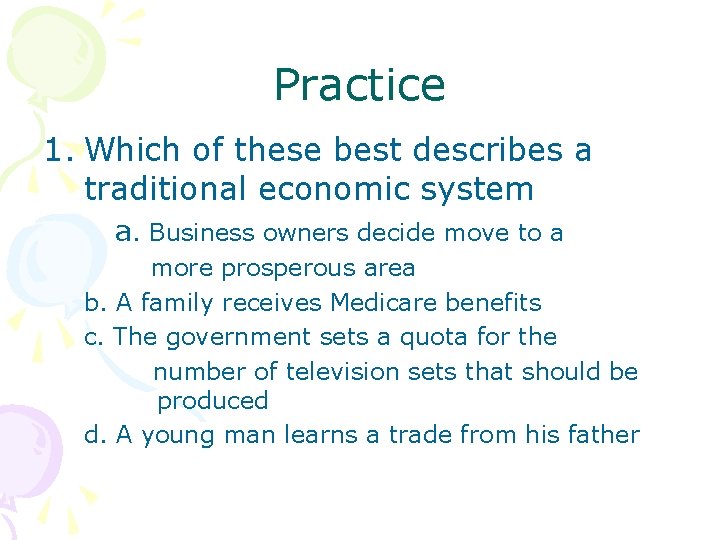
Practice 1. Which of these best describes a traditional economic system a. Business owners decide move to a more prosperous area b. A family receives Medicare benefits c. The government sets a quota for the number of television sets that should be produced d. A young man learns a trade from his father
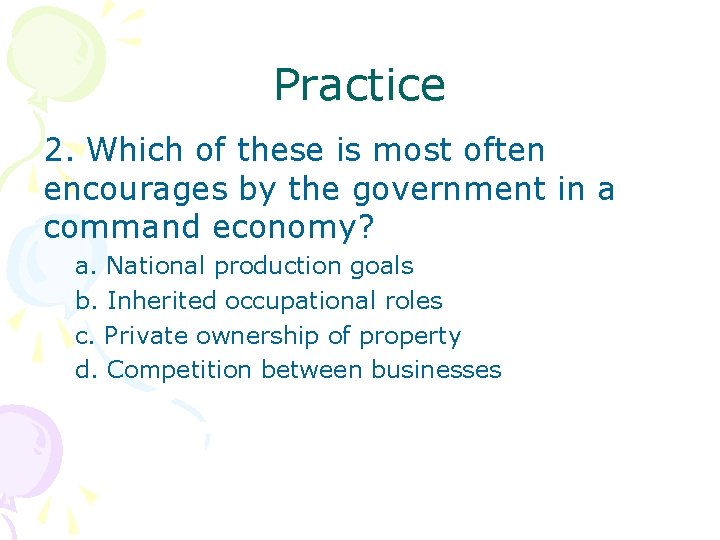
Practice 2. Which of these is most often encourages by the government in a command economy? a. National production goals b. Inherited occupational roles c. Private ownership of property d. Competition between businesses
Practice 3. A company decides to install more machines and lay off workers. Which economic question is being directly addressed? a. How to produce b. What to produce c. For whom to produce d. How much to produce
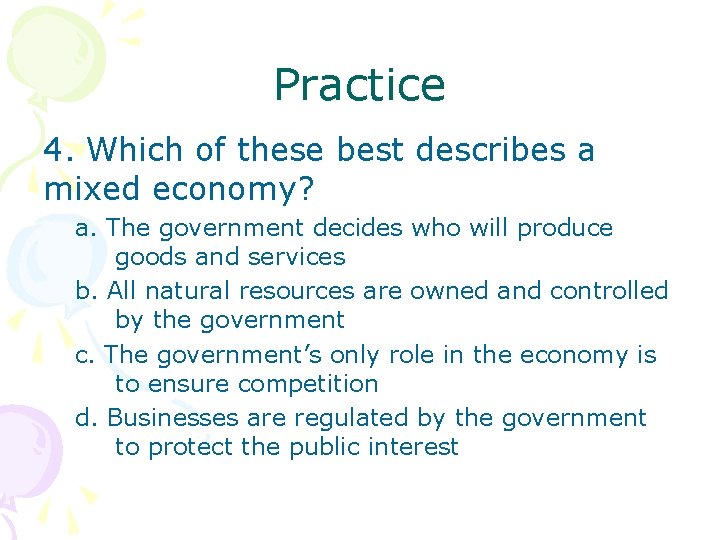
Practice 4. Which of these best describes a mixed economy? a. The government decides who will produce goods and services b. All natural resources are owned and controlled by the government c. The government’s only role in the economy is to ensure competition d. Businesses are regulated by the government to protect the public interest
ECR • Typically a government follows one of four types of economic systems: traditional, command, market and mixed. Explain how each system answers the basic economic questions of what to produce, how to produce and for whom to produce. Include details and examples to support your response.