
TYPES OF DRUG THERAPY DR AZMAH SAAT LECTURE
- Slides: 27
TYPES OF DRUG THERAPY DR. AZMAH SA’AT
LECTURE OUTLINE The goal of drug administration Drug actions
WHAT IS DRUG A drug is any chemical you take that affects the way your body work Can be natural or synthetic substance which affect living body’s: Function or structure Used in the diagnosis, mitigation, treatment or prevention of a disease or relief of discomfort Also called legal drug or medicine. A legal or medicinal drug (such as amphetamines), however, can be harmful and addictive if misused.
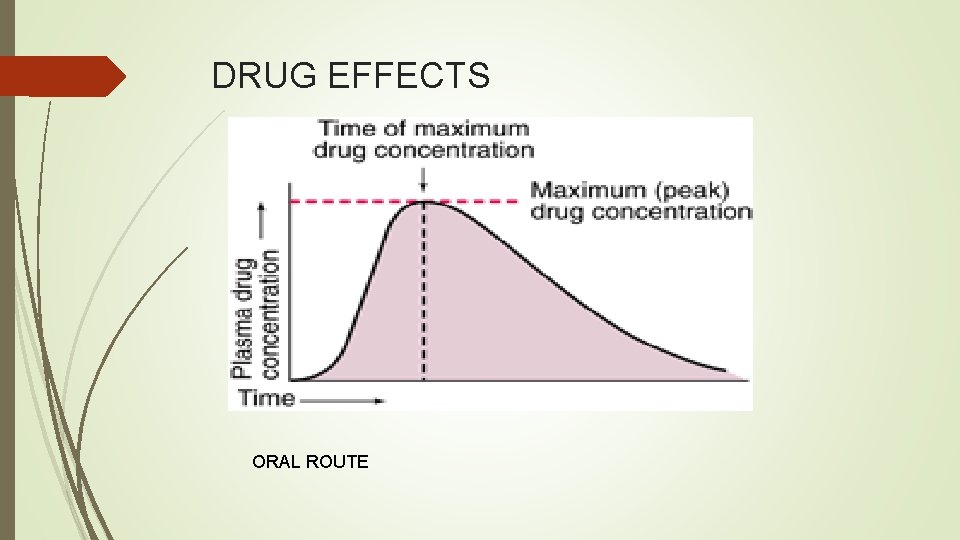
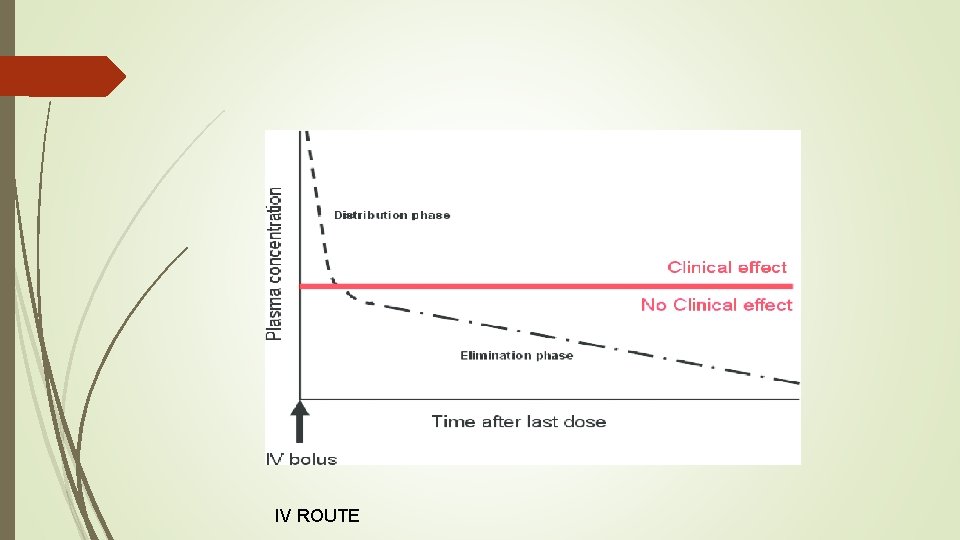
DRUG EFFECTS ORAL ROUTE
IV ROUTE
DRUG ACTIONS DRUG ACTION IS CLASSIFIED BASED ON ITS THERAPEUTIC EFFECT: 1. CURATIVE 2. PALLIATIVE OR SYMPTOMATIC 3. PROPHYLACTIC OR PREVENTIVE
WHAT IS CURATIVE THERAPY? Administration of drug with the intention to cure the disease Medication is able to relieve illness and improves injury Once we have diagnosed with a disease or condition, we hope to return to 100% of our health. The goal requires a cure or total healing: Curative treatment Works is the region of individual care
EXAMPLES OF CURATIVE THERAPY Cause of the disease is known. Examples: 1. Antibiotics that kill bacteria 2. Anti-fungal medicines that kill fungal infection 3. Antihistamines which help clear up a reaction to an allergen 4. Anti-pyretic to reduce fever. 5. Analgesics as pain relief. It is a definitive care and outcome
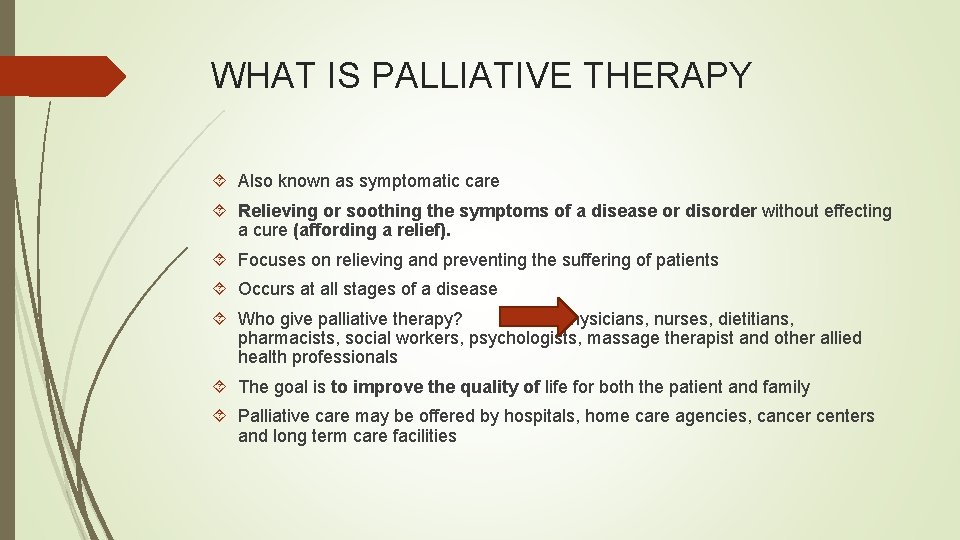
WHAT IS PALLIATIVE THERAPY Also known as symptomatic care Relieving or soothing the symptoms of a disease or disorder without effecting a cure (affording a relief). Focuses on relieving and preventing the suffering of patients Occurs at all stages of a disease Who give palliative therapy? Physicians, nurses, dietitians, pharmacists, social workers, psychologists, massage therapist and other allied health professionals The goal is to improve the quality of life for both the patient and family Palliative care may be offered by hospitals, home care agencies, cancer centers and long term care facilities
EXAMPLES OF PALLIATIVE THERAPY Reduction of pain in stiff neck due to ruptured disc. A massage for a stiff neck – caused by a ruptured disc in the cervical spine The massage helps alleviate some of the pain, but does not cure the spinal defect. NSAIDS administration (analgesics) Pain management in cancer therapy Chemotherapy- to manage the tumour and prolonging life expectancy HIV/AIDS patient Asthmatic patients given nebuliser
WHAT IS PROPHYLACTIC THERAPY A preventive measure Medication or a treatment designed and used to prevent a disease from occurring Guarding from or preventing the spread or occurrence of disease or infection Can be divided into: 1. Primary prophylaxis (to prevent the development of a disease). 2. Secondary prophylaxis (whereby the disease has already developed and the patient is protected against worsening of this process. )
EXAMPLES OF PROPHYLACTIC Immunisation: many vaccines are prophylactic, vaccines such as THERAPY - polio vaccine - small pox vaccine - measles vaccine - mumps vaccine and others have greatly reduced many childhood diseases - human papilloma virus (HPV)vaccines prevent certain cancers. - influenza vaccine Birth control methods are used to prevent unwanted pregnancy. - Condoms, for instance, are sometimes referred to as “prophylactics” because of their use to prevent pregnancy as well as the transmission of sexually transmitted infections. Daily and moderate physical exercise in various forms can be called prophylactic because it can maintain or improve one’s health. - Cycling for transport appears to very significantly improve health by reducing risk of heart diseases, various cancers, muscular-skeletal diseases and overall mortality. Aspirin: to prevent thrombosis in myocardial infarction.
TYPES OF DRUG THERAPY – SIDE EFFECTS. Unfavorable/bad effects - any seen effect which is not of therapeutic intention. Can be worsening of illness condition or effects seen of unspecific site. There is a range of side effects (unintended and occurring at normal dosages) of drugs that cause mild to severe side effects, including anaphylaxis. A drug side effects – undesirable secondary effect which occurs in addition to the desired therapeutic effect of a drug or medication. Often occurs with drugs with low therapeutic index. Which have a narrow margin of safety and high danger of producing a toxic effect. Drugs with unselective action. Drugs act on many receptors system.
EXAMPLES OF DRUG SIDE EFFECTS Inhalant forms of anti-asthmatic drugs may cause dryness or irritation in the throat, dry mouth or an unpleasant taste in the mouth Side effects of anti-depressant: Urinary retention, blurred vision Constipation Sedation (can interfere with driving or operating machinery), sleep disruption, weight gain, headache. Nausea, gastrointestinal disturbance/diarrhea, abdominal pain. Inability to achieve an erection or orgasm (men and women), loss of libido, agitation and anxiety. Side effects may occur due to preexisting abnormalities. Liver diseases Compromise in renal function Adverse drug reaction is an expression that describes harm associated with the use of given medications at a normal dosage. May occur following a single dose or prolonged administration of a drug or result from the combination of two or more drugs.
FACTORS CONTRIBUTING TO DRUG EFFECTS DISEASE STATES Various diseases, especially those that cause renal or hepatic insufficiency may alter drug metabolism. GENETIC FACTORS Abnormal drug metabolism may be due to inherited factors or either phase 1 oxidation or phase 2 conjugation. Inheriting abnormal alleles of cytochrome p 450 can alter drug metabolism. Tables are available to check for drug interactions due to p 450 interactions. Inheriting abnormal butyrilcholinesterase (psseudocholinesterase) may affect metabolism of drugs such as succinylcholine. Inheriting abnormal n-acetyltransferase which conjugated some drugs to facilitate excretion may affect the metabolism of drugs such as isoniazid, hydralazine and procainamide.
FACTORS CONTRIBUTING TO DRUG EFFECTS (cont. ) Interaction with other drugs The risk of drug interactions is increased with polypharmacy Protein binding These interactions are usually transient, mild until a new steady state is achieved. These are mainly for drugs without much first-pass liver metabolism. The principal plasma proteins for drug binding are: 1) albumin 2) α 1 - acid glycoprotein 3) Lipoproteins Some drug interactions with warfarin are due to changes in protein binding.
OTHER DRUG EFFECTS Tachyphylaxis – rapid appearance of progressive decrease in response to a given dose after repetitive administration of drugs. Tolerance – no longer responds to the drug in the way that initially responded. Need a higher dose of the drug to achieve the same level of response achieved initially.
TACHYPHYLAXIS The effect is common with drug acting in the nervous system. Pharmacodynamic mechanism Depletion or marked reduction of the amount of neurotransmitter Depletion of receptors available for the drug or neurotransmitter to bind. Pharmacokinetic mechanism Induction of metabolic enzymes drugs. increase in the metabolic breakdown of
FEATURES OF DRUG TOLERANCE Basically the body’s ability to adapt to the presence of a drug. The magnitude of the body’s response to a particular drug depends on two factors: 1) Concentration of the drug at its site of action. 2) Sensitivity of the target site to the drug For examples: Anti-depressant medications (benzodiazepines). Analgesia in cancer therapy (tolerance to morphine) Antipsychotics to treat schizophrenia, bipolar and delusional disorders.
CATEGORIES OF TOLERANCE Innate/natural tolerance Does not depend on prior use of the drug In born Genetically determine resistance to drug in relation to general population. E. g. opioid intolerance (genetic variation), alcohol: those with low innate sensitivity as young adults are at a higher risk for alcoholism later in life. Acquired/ chronic tolerance Is reduced sensitivity to a drug that develops after one or more exposure Due to metabolic, functional or behavioural mechanism.
DRUG DEPENDENCE The need for the drug to be present in the brain to maintain “near-normal” functioning Abrupt stopping of the drug leads to withdrawal symptoms. Withdrawal symptoms: Abnormal physical or psychological features that follow the abrupt discontinuation of a drug that has the capability of producing physical dependence. Common withdrawal symptoms include sweating, tremor, vomiting, anxiety, insomnia and muscle pain. A compulsive use of a substance, despite its negative or dangerous side effects.
TYPES OF DRUG DEPENDENCE 1) Physical Dependence A person may have a physical dependence on a substance without having an addiction. For example, certain blood pressure medication do not cause addiction but can cause physical dependence. 2) Psychological dependence Other drugs, such as cocaine, cause addiction without leading to physical dependence. Tolerance to a drug (needing a higher dose to attain the same effect) is usually part of addiction.
EXAMPLES OF DRUG DEPENDENCE Tetrahydrocannabinol (THC) is the active ingredient found in marijuana (cannabis). Opiates and narcotics are powerful analgesics that cause drowsiness (sedation) and sometimes feeling of euphoria. These include heroin, opium and codeine. Central nervous system (CNS) stimulants include amphetamines, cocaine, dextroamphetamine, methamphetamine and methylphenidate. These drugs have a stimulating effect and people can start needing higher amounts of these drugs to feel the same effect (tolerance). Central nervous system (CNS) depressants include alcohol, barbiturates (amobarbital, Pentobarbital, secobarbital), benzodiazepines, chloral hydrate and paraldehyde. These substances produce a sedative and anxiety-reducing effect, which can lead to dependence. Hallucinogens include lsd, mescaline, psilocybin (“mushrooms”) and phencyclidine (PCP or “angle dust”). They can cause people to see things that aren’t there (hallucinations) and can lead to psychological dependence.
ADDICTIONS World Health Organization (WHO)definitions; “A behavioural pattern of drug use, characterized by overwhelming involvement with the use of a drug (compulsive use), the securing of the supply, and a high tendency to relapse after withdrawal. Addiction is viewed as an extreme on a continuum of drug use patterns. It refers, in a quantitative rather than a qualitative sense, to the degree to which drug use pervades the total life activity of the user, and to the range of circumstances in which drug use controls his/her behavior”. Compulsive and repeated use of increasing amounts of drugs with the appearance of withdrawal symptoms when drug use ceases. May cause by: Psychology i) Trauma from physical abuse, neglect or chaos in the home leading to stress. (self medicated) ii) Depression iii) Lack of friend iv) Poor performance at school or work v) Poor stress coping skill
Environment ( Seen as permissible in neighbourhood) i) Parental oversight ii) In sports performance iii) Peer group. iv) Low socioeconomy v) Gender and ethnicity. Genetic i) Involve multiple gene sequences and science. Has not yet been able to pinpoint all the genes involved. Sign and symptoms of Addiction i) Chills ii) Sweat iii) Flu-like symptoms iv) Excess amounts of physical energy v) Nervousness vi) Anxiety vii) Delusions of grandeur viii) Mood swings ix) euphoria
TYPES OF DRUG ADDICTION Cocaine addiction Heroin addiction Prescription drug addiction, including addiction to Vicodin and Oxy. Contin Crystal meth addicion Percocet addiction Marijuana addiction
DRUG TOXICITY What is drug toxicity? - Medications are more pronounced at toxic levels, and side effects may be severe. - Dose is too high, or it may result when the liver or kidneys are unable to remove the drug from the blood stream. Symptoms of drug toxicity? - Depends on the drug taken. - Symptoms of hallucinogens, symptoms of narcotics, symptoms of sedatives and symptoms of stimulants.