
Types of Data Points Occurrences Surveys Polygons Census

- Slides: 10
Types of Data • • • Points: Occurrences, Surveys Polygons: Census, Soils, Refuges Polylines: ? Rasters: Remotely Sensed, Models Volumes: – Marine data • 2 D + Time: – Climate (PRISM) • 4 D (3 D + Time): – Climate, Currents marineemlab. ucsd. edu
Problems • Software/methods do not all support large datasets • Performance (i. e. time to develop methods and get final results) • Need to “reduce” the size of the data while maintaining the important information • Or, get a lot of computers – (more on this later)
File Formats • • • CSV, Txt: Points Shapefiles Geo. Databases “Las” for Li. DAR HDF and Net. CDF: – General hierarchical data formats – “CF” standard for Net. CDF data – Arc. GIS supports Net. CDF
Data Reduction • Point Methods: – Clusters: group related data (spatially, temporally, categorically) – Gridding: find density, mean values – Windowing: moving a “window” over the data (does not reduce processing)
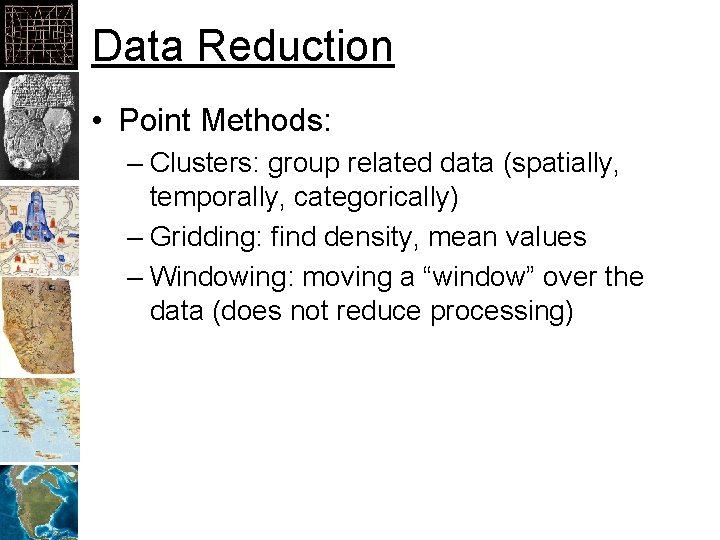
Polygons • Generalization/Simplification – Reduce resolution • Remove less critical polygons Soil Data for Czech Republic, eusoils. jrc. europa. eu
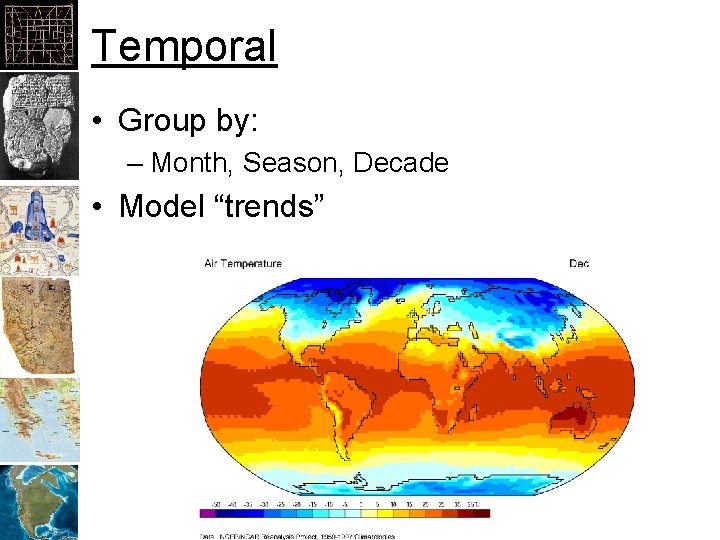
Temporal • Group by: – Month, Season, Decade • Model “trends”
Software • Arc. GIS will work up to a point • Then, we have to program – Python: • TXT and CSV files • Maybe for rasters, ND data – Java: • Effectively no limits • High performance
Databases • The simpler the data is, the faster it is to access: – Small, simple: • Text files – Small to Medium, complicated: • SQL Databases – Large: • Text and binary files – Avoid large, complicated data
Blue. Spray • Java-based GIS application – Requires Java 7 • Built to be: – High-performance – Extensible – Portable – Takes advantage of RAM, processors – Easy to install and use • Owned by Schooner. Turtles, Inc. • Available at www. schoonerturtles. com – In early beta
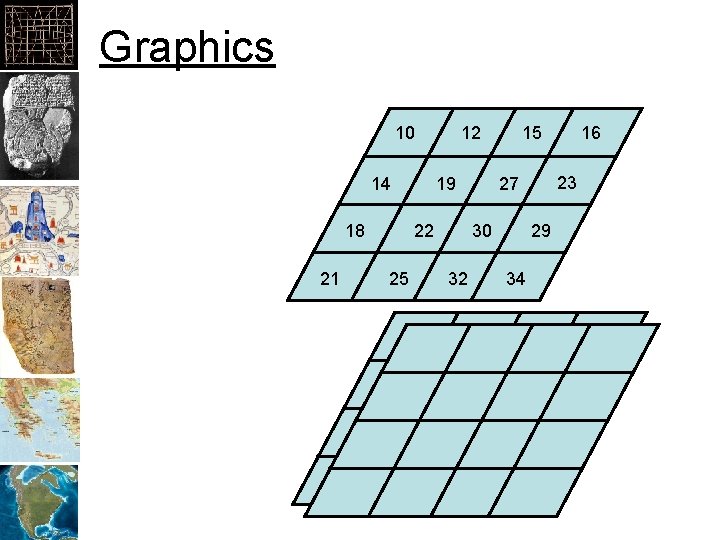
Graphics 10 14 18 21 25 29 30 22 32 23 27 19 16 15 12 34