
Types of Conflict Elements of plot that drive
- Slides: 11
Types of Conflict Elements of plot that drive the narrative forward
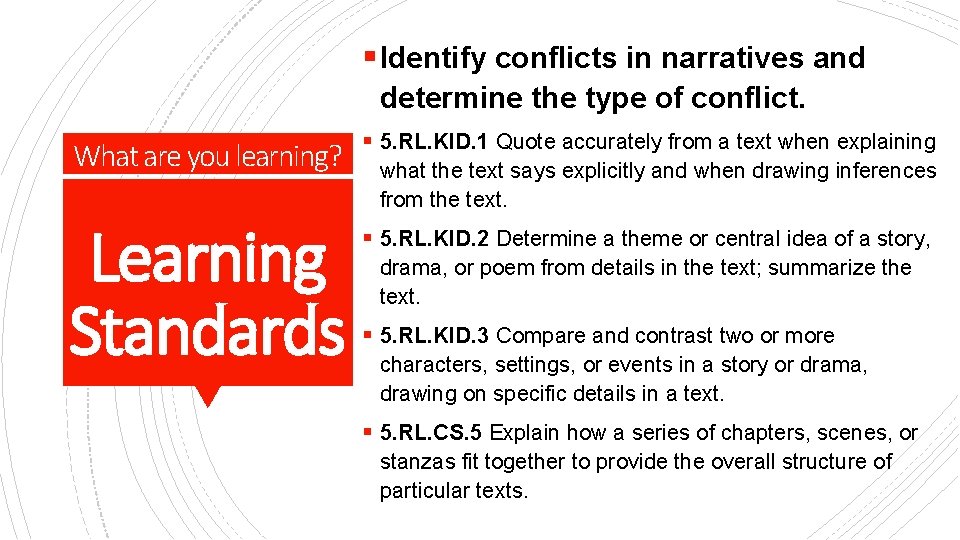
§ Identify conflicts in narratives and determine the type of conflict. What are you learning? Learning Standards § 5. RL. KID. 1 Quote accurately from a text when explaining what the text says explicitly and when drawing inferences from the text. § 5. RL. KID. 2 Determine a theme or central idea of a story, drama, or poem from details in the text; summarize the text. § 5. RL. KID. 3 Compare and contrast two or more characters, settings, or events in a story or drama, drawing on specific details in a text. § 5. RL. CS. 5 Explain how a series of chapters, scenes, or stanzas fit together to provide the overall structure of particular texts.
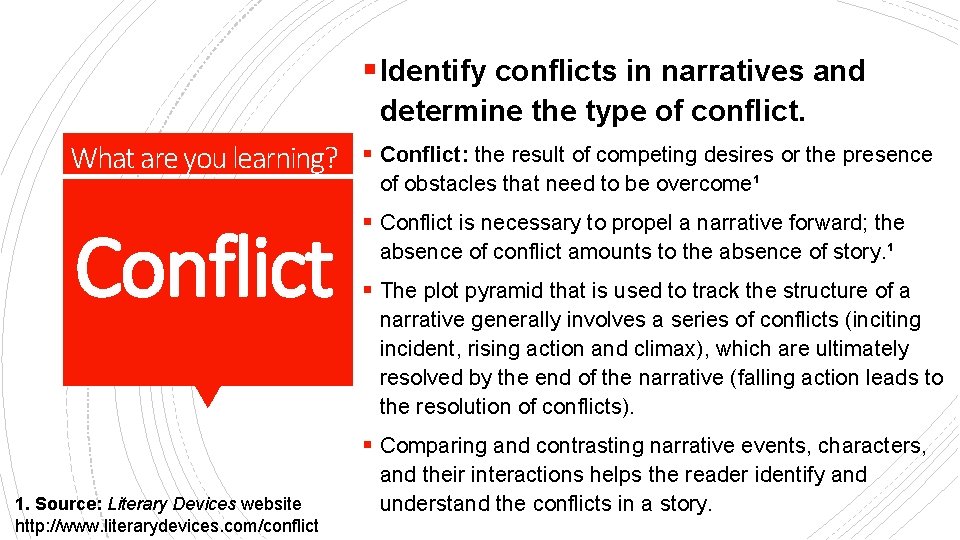
§ Identify conflicts in narratives and determine the type of conflict. What are you learning? § Conflict: the result of competing desires or the presence Conflict § Conflict is necessary to propel a narrative forward; the of obstacles that need to be overcome¹ absence of conflict amounts to the absence of story. ¹ § The plot pyramid that is used to track the structure of a narrative generally involves a series of conflicts (inciting incident, rising action and climax), which are ultimately resolved by the end of the narrative (falling action leads to the resolution of conflicts). § Comparing and contrasting narrative events, characters, 1. Source: Literary Devices website http: //www. literarydevices. com/conflict and their interactions helps the reader identify and understand the conflicts in a story.
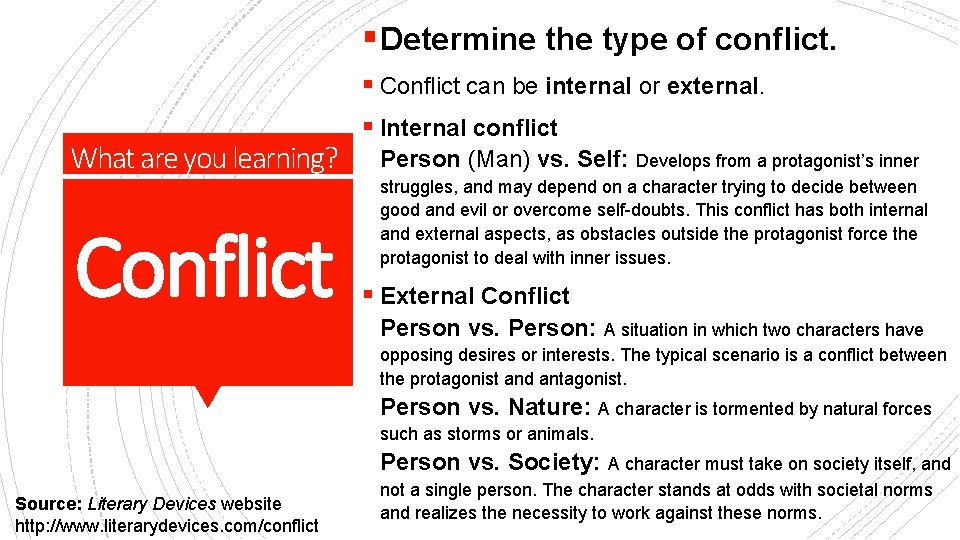
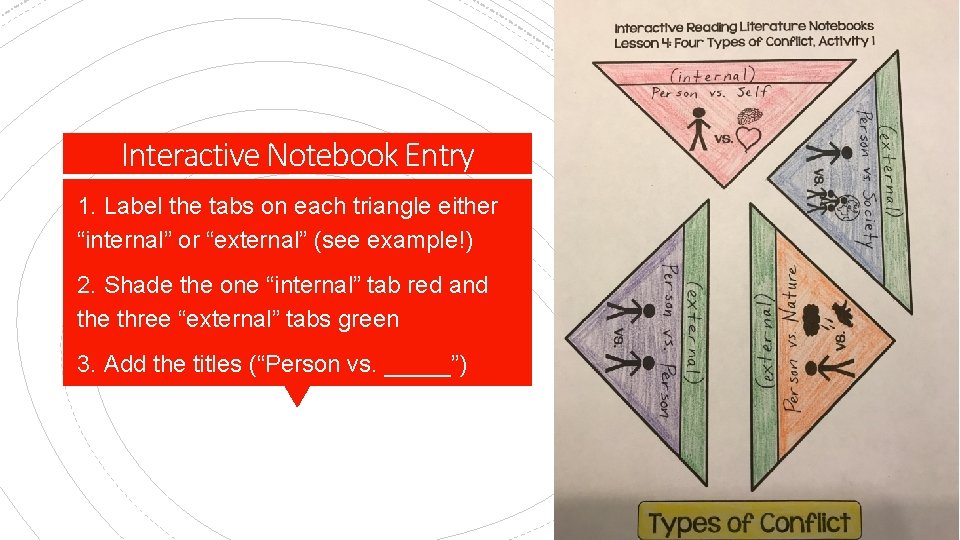
§ Determine the type of conflict. § Conflict can be internal or external. What are you learning? Conflict § Internal conflict Person (Man) vs. Self: Develops from a protagonist’s inner struggles, and may depend on a character trying to decide between good and evil or overcome self-doubts. This conflict has both internal and external aspects, as obstacles outside the protagonist force the protagonist to deal with inner issues. § External Conflict Person vs. Person: A situation in which two characters have opposing desires or interests. The typical scenario is a conflict between the protagonist and antagonist. Person vs. Nature: A character is tormented by natural forces such as storms or animals. Person vs. Society: A character must take on society itself, and Source: Literary Devices website http: //www. literarydevices. com/conflict not a single person. The character stands at odds with societal norms and realizes the necessity to work against these norms.
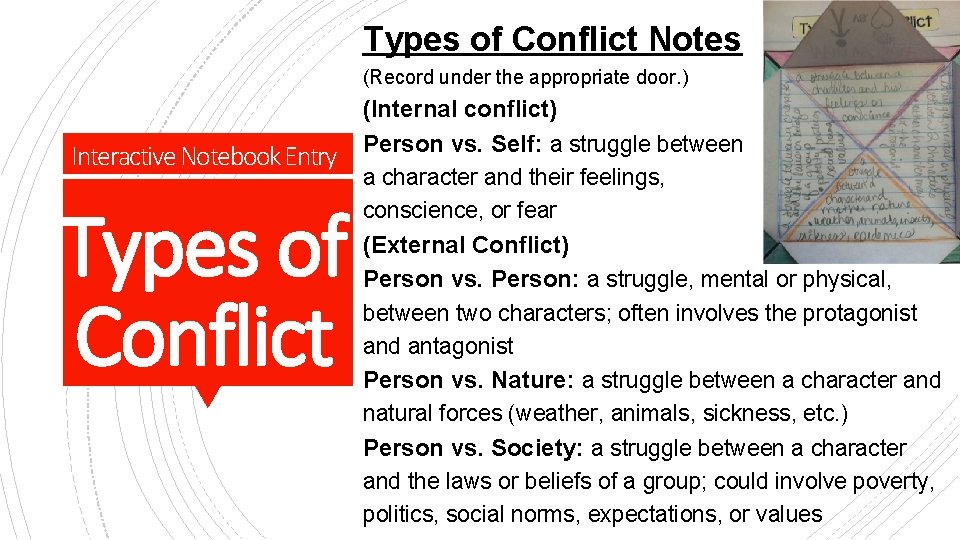
Interactive Notebook Entry 1. Label the tabs on each triangle either “internal” or “external” (see example!) 2. Shade the one “internal” tab red and the three “external” tabs green 3. Add the titles (“Person vs. _____”)
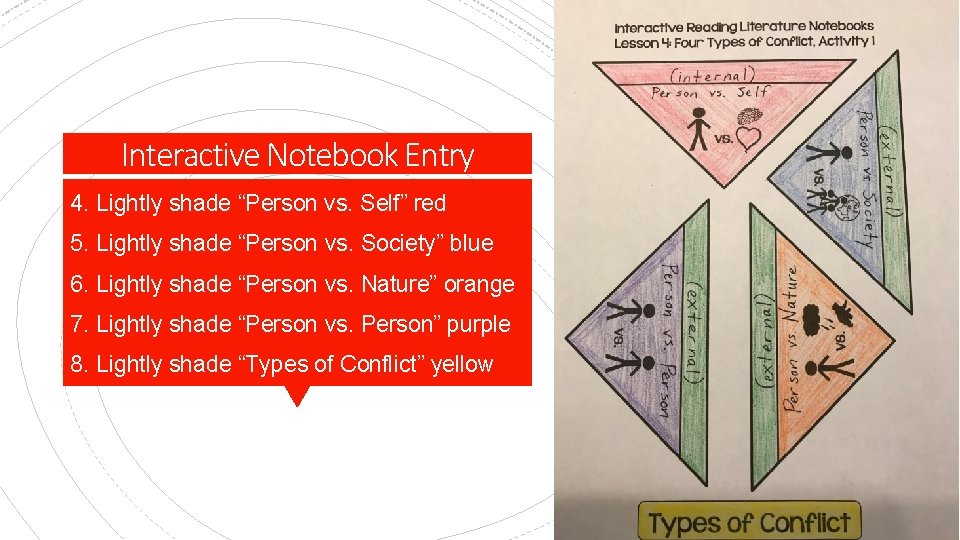
Interactive Notebook Entry 4. Lightly shade “Person vs. Self” red 5. Lightly shade “Person vs. Society” blue 6. Lightly shade “Person vs. Nature” orange 7. Lightly shade “Person vs. Person” purple 8. Lightly shade “Types of Conflict” yellow
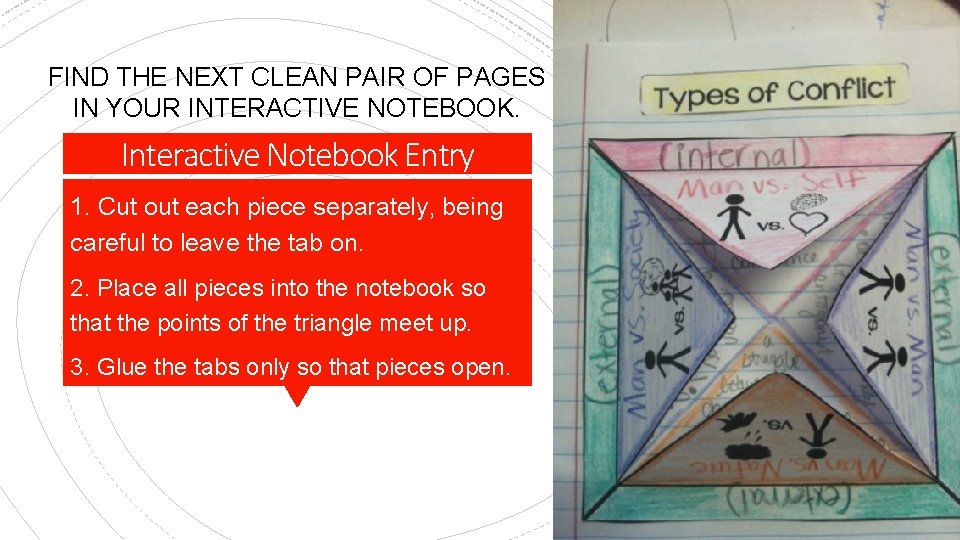
FIND THE NEXT CLEAN PAIR OF PAGES IN YOUR INTERACTIVE NOTEBOOK. Interactive Notebook Entry 1. Cut out each piece separately, being careful to leave the tab on. 2. Place all pieces into the notebook so that the points of the triangle meet up. 3. Glue the tabs only so that pieces open.
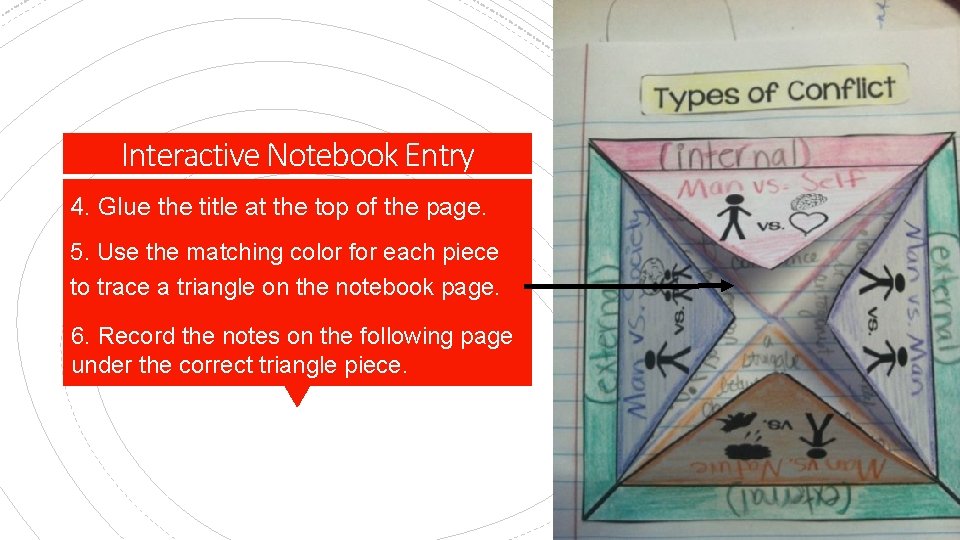
Interactive Notebook Entry 4. Glue the title at the top of the page. 5. Use the matching color for each piece to trace a triangle on the notebook page. 6. Record the notes on the following page under the correct triangle piece.
Types of Conflict Notes (Record under the appropriate door. ) Interactive Notebook Entry Types of Conflict (Internal conflict) Person vs. Self: a struggle between a character and their feelings, conscience, or fear (External Conflict) Person vs. Person: a struggle, mental or physical, between two characters; often involves the protagonist and antagonist Person vs. Nature: a struggle between a character and natural forces (weather, animals, sickness, etc. ) Person vs. Society: a struggle between a character and the laws or beliefs of a group; could involve poverty, politics, social norms, expectations, or values
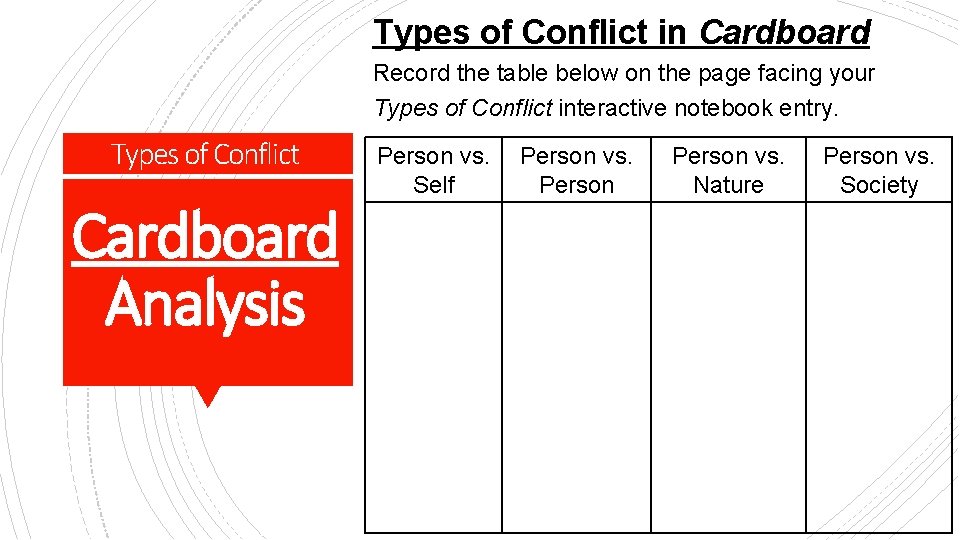
Types of Conflict in Cardboard Record the table below on the page facing your Types of Conflict interactive notebook entry. Types of Conflict Cardboard Analysis Person vs. Self Person vs. Nature Person vs. Society
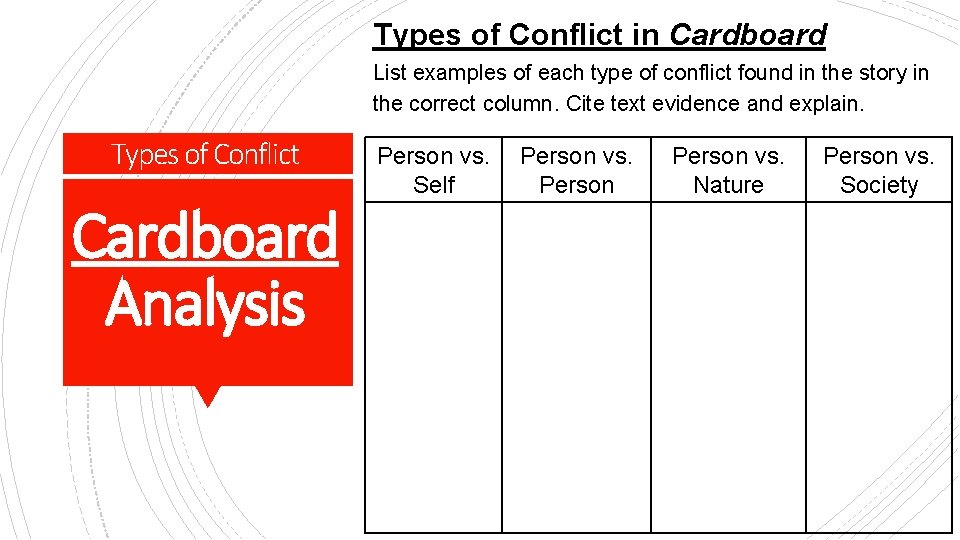
Types of Conflict in Cardboard List examples of each type of conflict found in the story in the correct column. Cite text evidence and explain. Types of Conflict Cardboard Analysis Person vs. Self Person vs. Nature Person vs. Society