
Types of Compounds and States of Matter Do
- Slides: 12
Types of Compounds and States of Matter Do Now: 1. Take out homework so I can check it. 2. Complete Do Now handout – it will be collected!
The 4 States of Matter • You’ve probably heard of solids, liquids, and gases, but the most common state (aka phase) of matter in the Universe is something else. • Hint: it’s what stars are made of
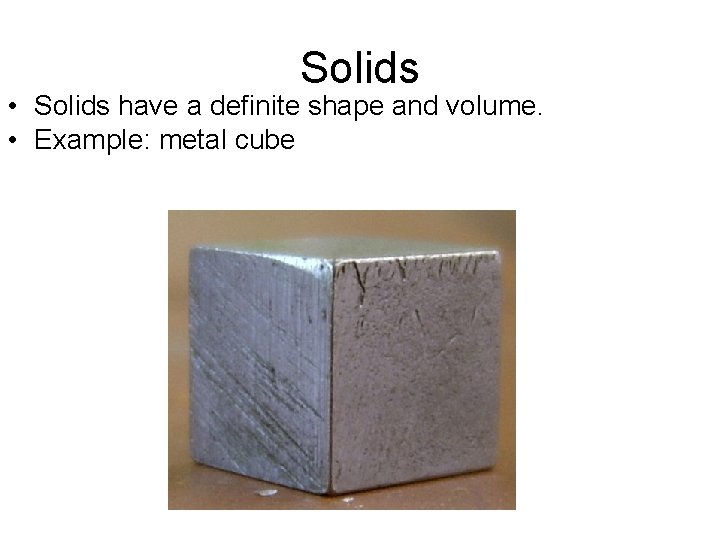
Solids • Solids have a definite shape and volume. • Example: metal cube
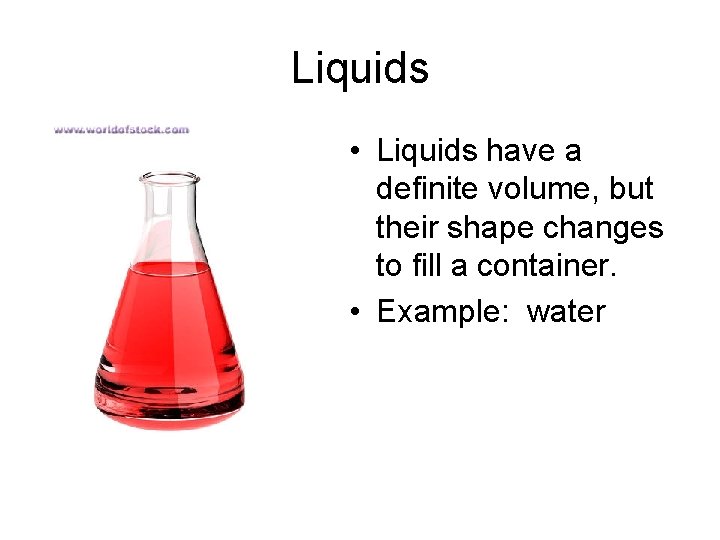
Liquids • Liquids have a definite volume, but their shape changes to fill a container. • Example: water
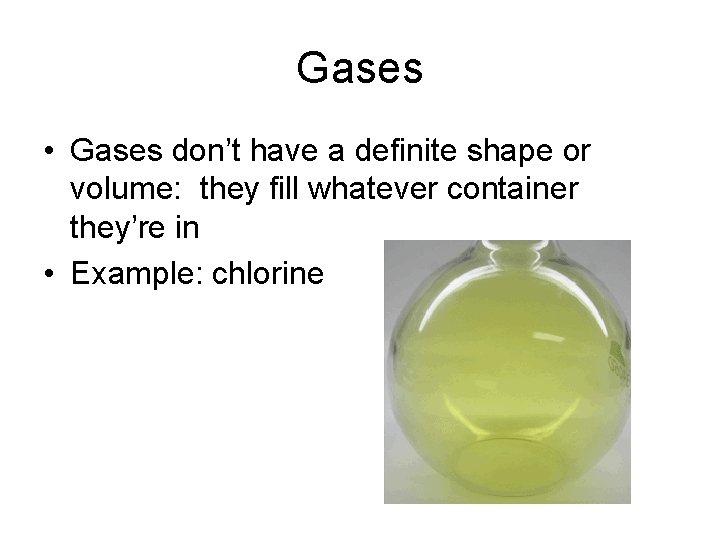
Gases • Gases don’t have a definite shape or volume: they fill whatever container they’re in • Example: chlorine
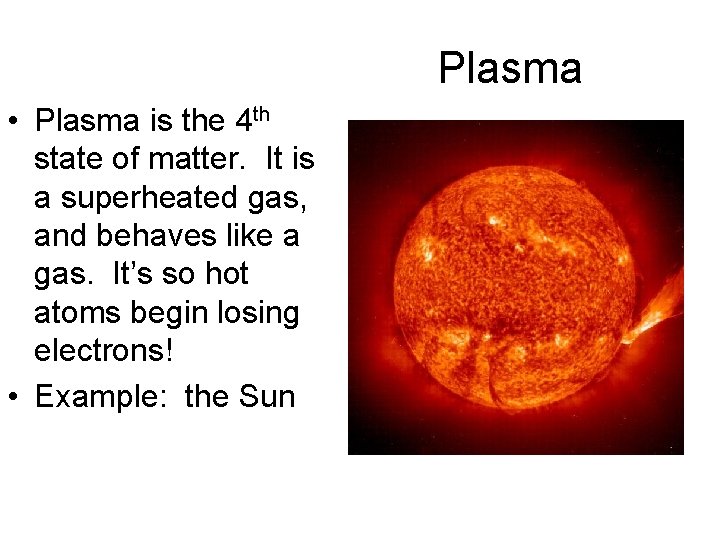
Plasma • Plasma is the 4 th state of matter. It is a superheated gas, and behaves like a gas. It’s so hot atoms begin losing electrons! • Example: the Sun
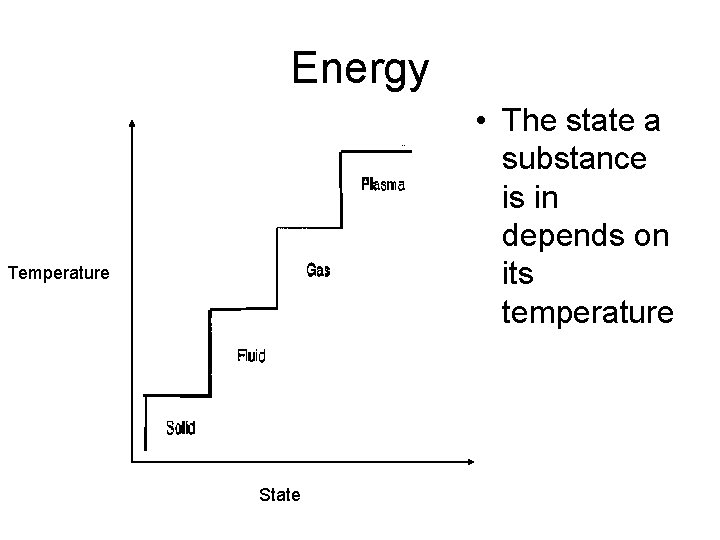
Energy • The state a substance is in depends on its temperature Temperature State
Changes of State • The melting/freezing point of a substance is the temperature at which it begins to change from a solid to a liquid or vice versa. • The boiling point of a substance is the temperature at which a liquid begins turning into a gas
Types of compounds • CHANGE GEARS – NEW TOPIC • Compounds are classified as organic or inorganic depending on what elements they contain
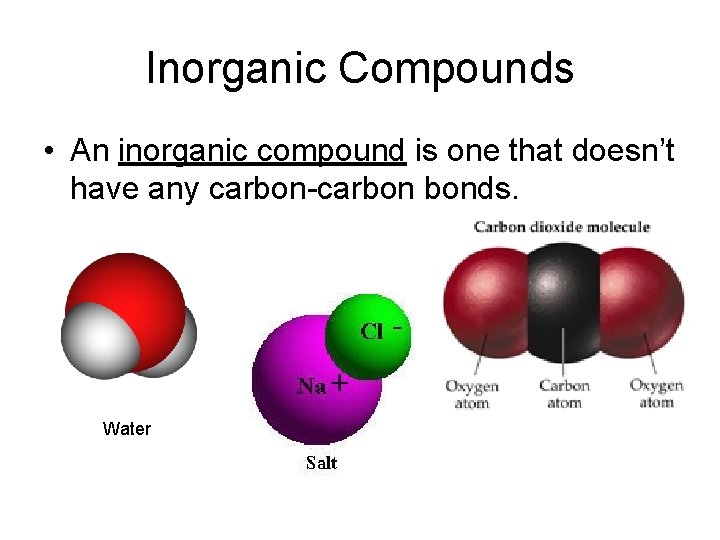
Inorganic Compounds • An inorganic compound is one that doesn’t have any carbon-carbon bonds. Water
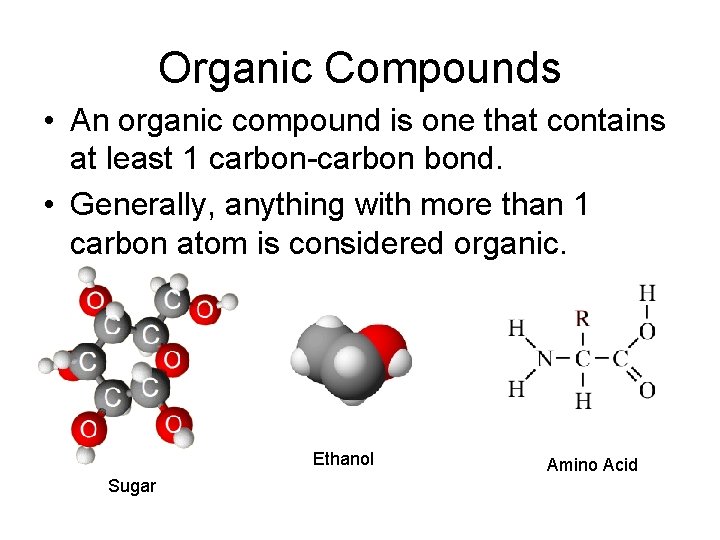
Organic Compounds • An organic compound is one that contains at least 1 carbon-carbon bond. • Generally, anything with more than 1 carbon atom is considered organic. Ethanol Sugar Amino Acid
Classify • Classify the compounds on your handout as inorganic or organic. • No homework tonight