
Types of Communication Formal Communication Communication takes place


- Slides: 7
Types of Communication
Formal Communication • Communication takes place through the formal channels of the organization structure along the lines of authority established by the management. • Such communications are generally in writing and may take any of the forms; policy; manuals: procedures and rule books; memoranda; official meetings; reports, etc.
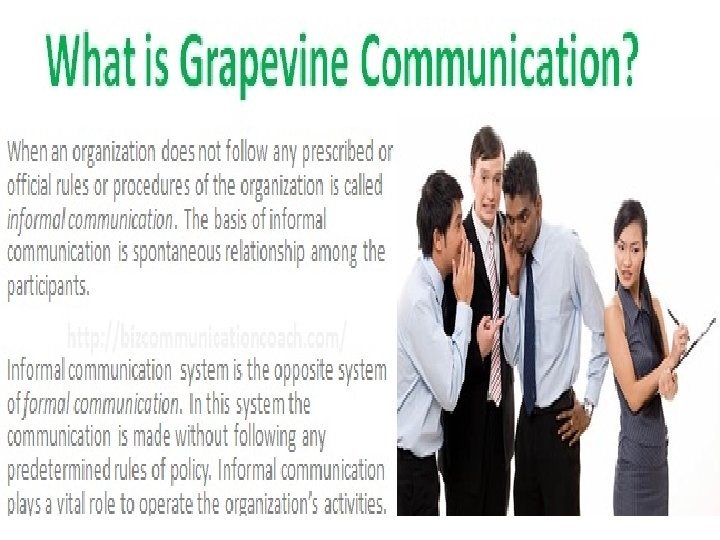
Informal Communication • Arises out of all those channels that fall outside the formal channels and it is also known as grapevine. • Established around the societal affiliation of members of the organization. • Does not follow authority lines as in the case of formal communication.
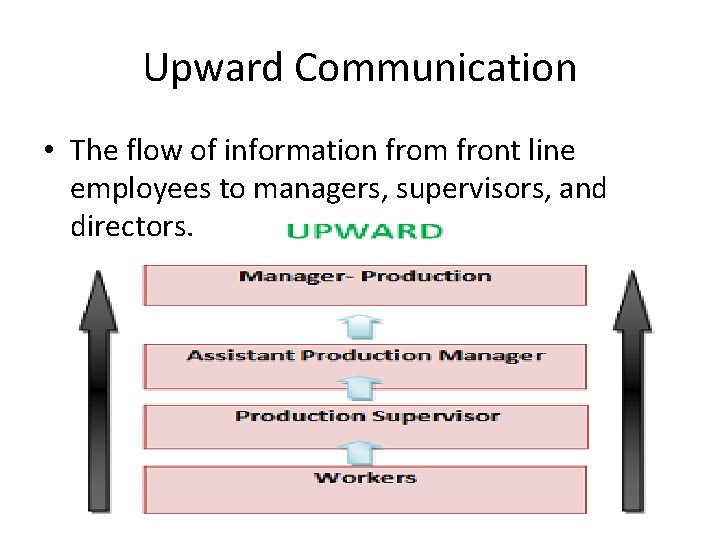
Upward Communication • The flow of information from front line employees to managers, supervisors, and directors.
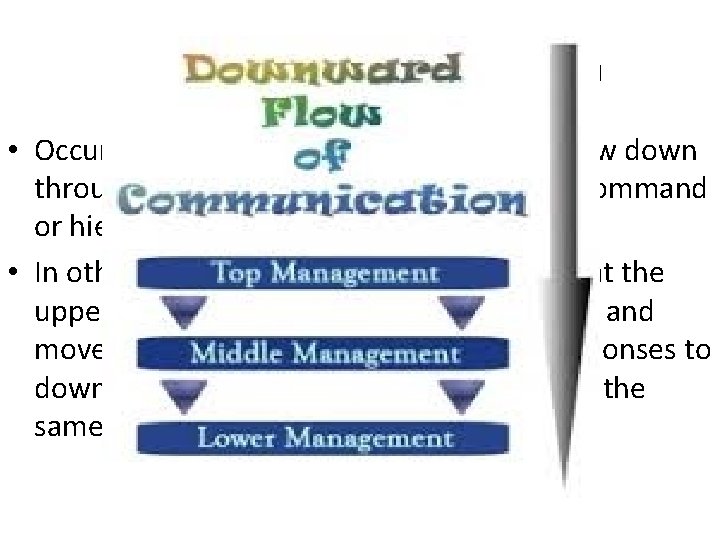
Downward Communication • Occurs when information and messages flow down through an organization's formal chain of command or hierarchical structure. • In other words, messages and orders start at the upper levels of the organizational hierarchy and move down toward the bottom levels. Responses to downward communications move up along the same path.
Lateral/Horizontal Communication • The flow of information across departmental boundaries either laterally or diagonally • Process of exchanging information between peers at any organizational level usually to co-ordinate activities.