
Types of Clouds Target audience Middle school Jr

- Slides: 18
Types of Clouds Target audience: Middle school, Jr. High school Subject: Science
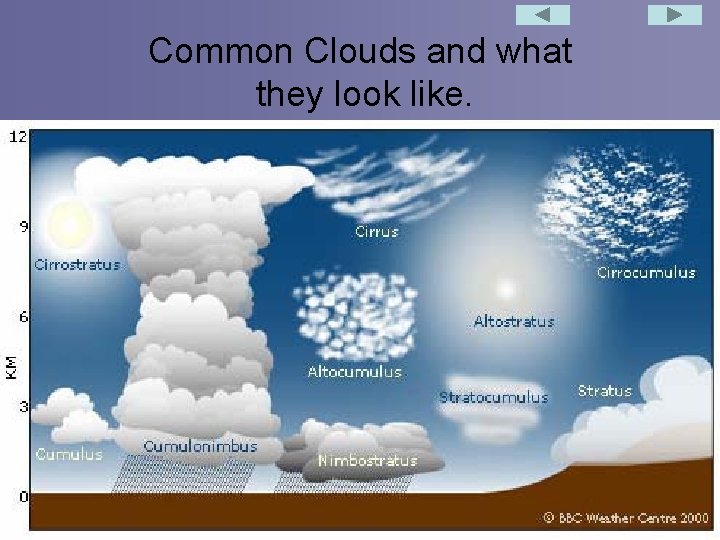
Common Clouds and what they look like.
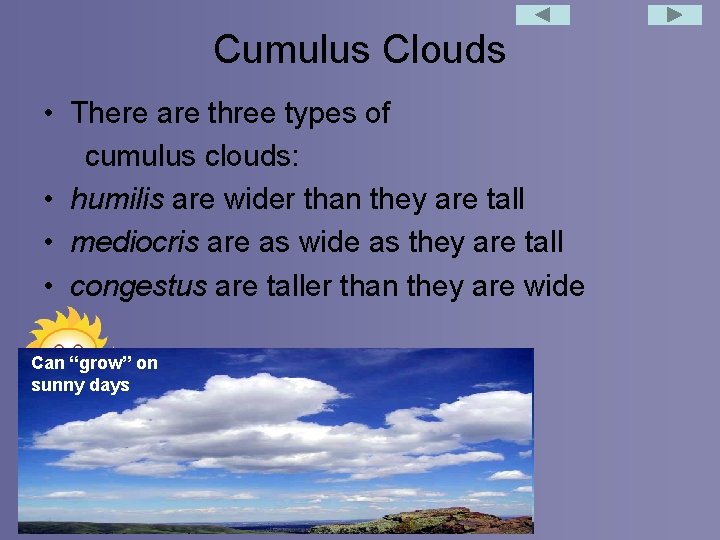
Cumulus Clouds • There are three types of cumulus clouds: • humilis are wider than they are tall • mediocris are as wide as they are tall • congestus are taller than they are wide Can “grow” on sunny days
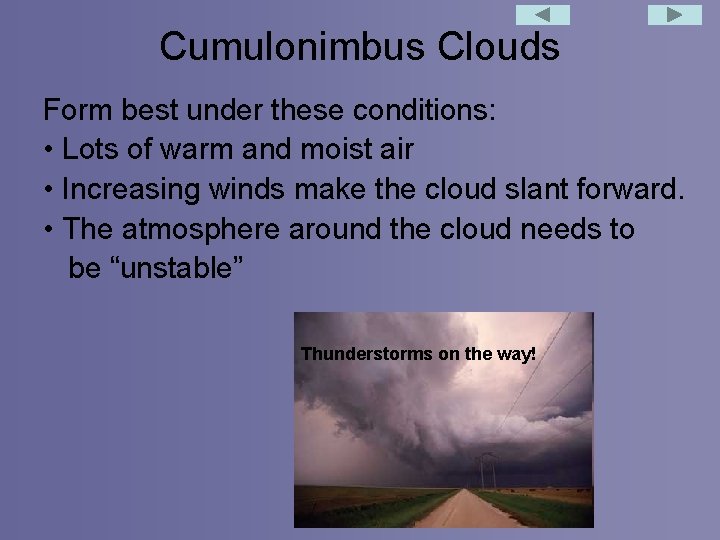
Cumulonimbus Clouds Form best under these conditions: • Lots of warm and moist air • Increasing winds make the cloud slant forward. • The atmosphere around the cloud needs to be “unstable” Thunderstorms on the way!
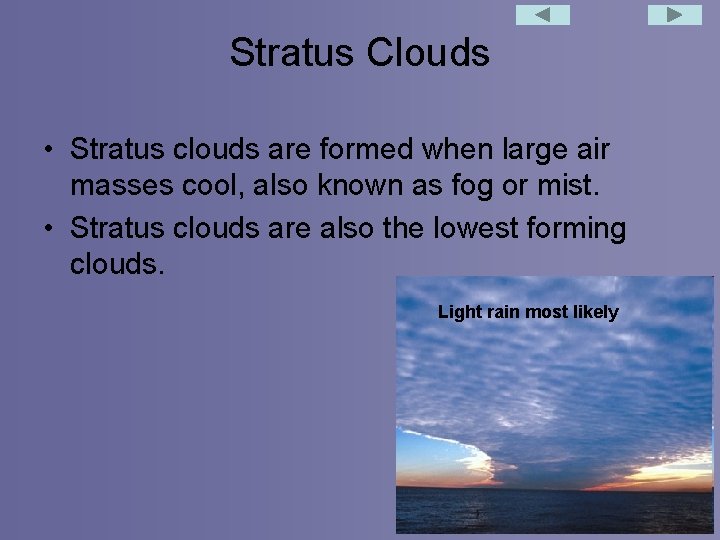
Stratus Clouds • Stratus clouds are formed when large air masses cool, also known as fog or mist. • Stratus clouds are also the lowest forming clouds. Light rain most likely
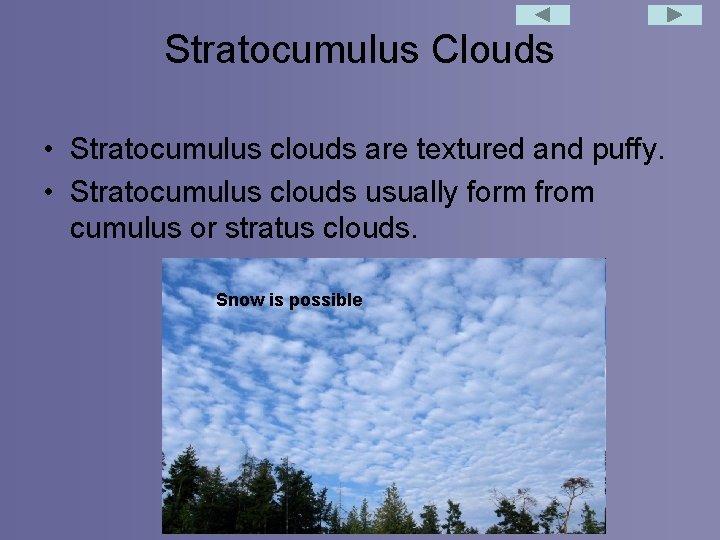
Stratocumulus Clouds • Stratocumulus clouds are textured and puffy. • Stratocumulus clouds usually form from cumulus or stratus clouds. Snow is possible
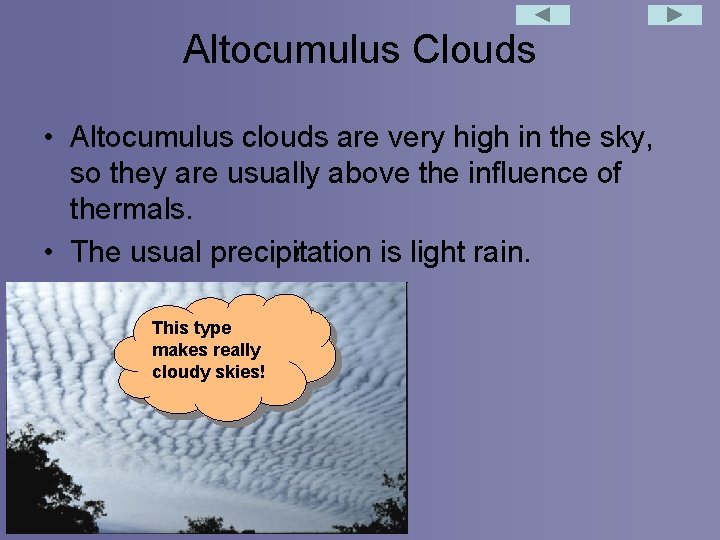
Altocumulus Clouds • Altocumulus clouds are very high in the sky, so they are usually above the influence of thermals. ! • The usual precipitation is light rain. This type makes really cloudy skies!
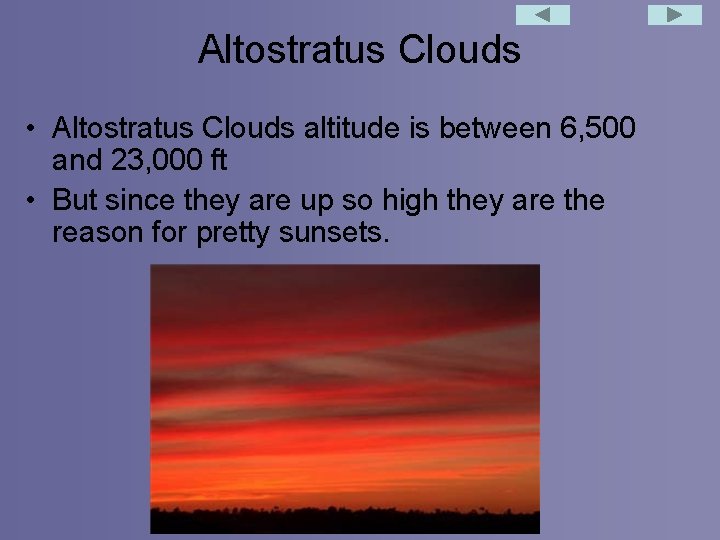
Altostratus Clouds • Altostratus Clouds altitude is between 6, 500 and 23, 000 ft • But since they are up so high they are the reason for pretty sunsets.
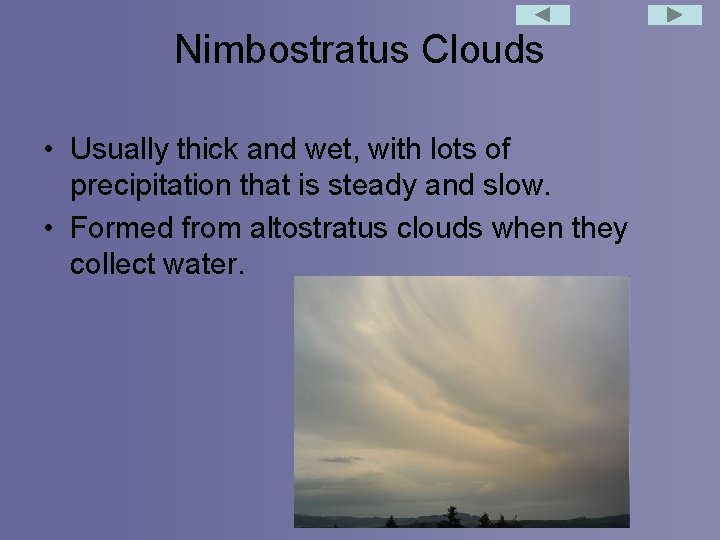
Nimbostratus Clouds • Usually thick and wet, with lots of precipitation that is steady and slow. • Formed from altostratus clouds when they collect water.
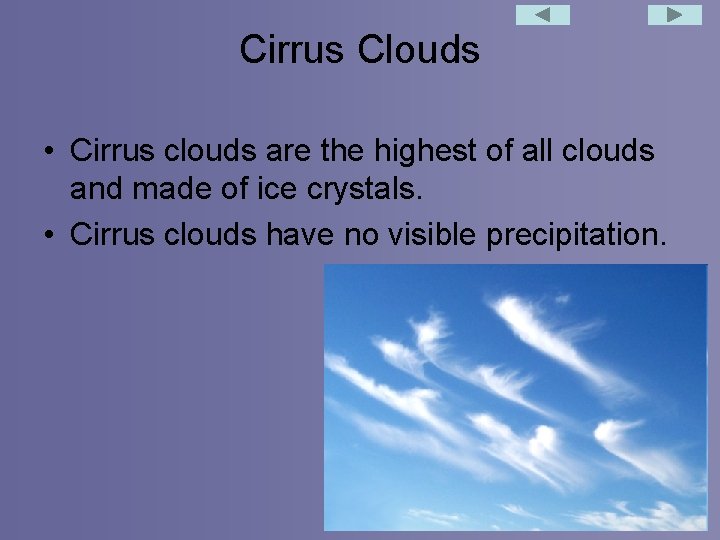
Cirrus Clouds • Cirrus clouds are the highest of all clouds and made of ice crystals. • Cirrus clouds have no visible precipitation.
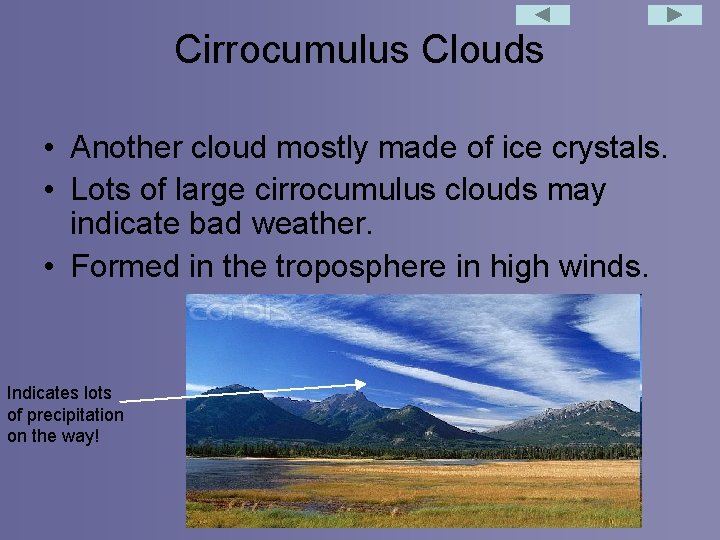
Cirrocumulus Clouds • Another cloud mostly made of ice crystals. • Lots of large cirrocumulus clouds may indicate bad weather. • Formed in the troposphere in high winds. Indicates lots of precipitation on the way!
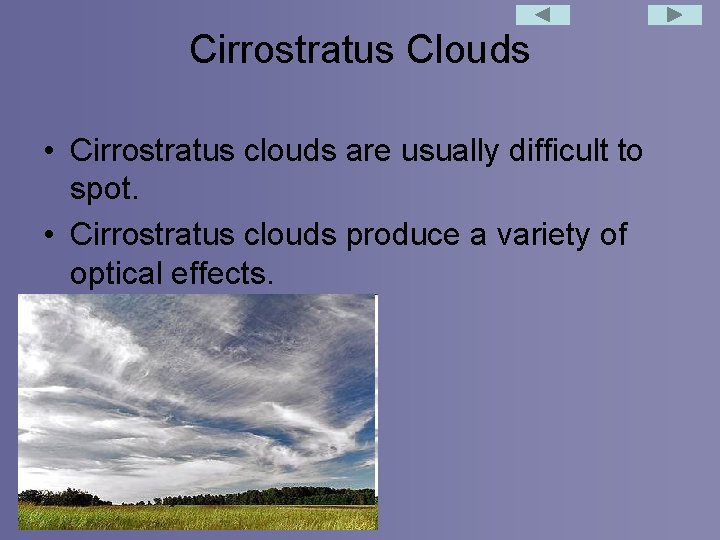
Cirrostratus Clouds • Cirrostratus clouds are usually difficult to spot. • Cirrostratus clouds produce a variety of optical effects.
Review • Lets watch this short video to review the cloud types! Play
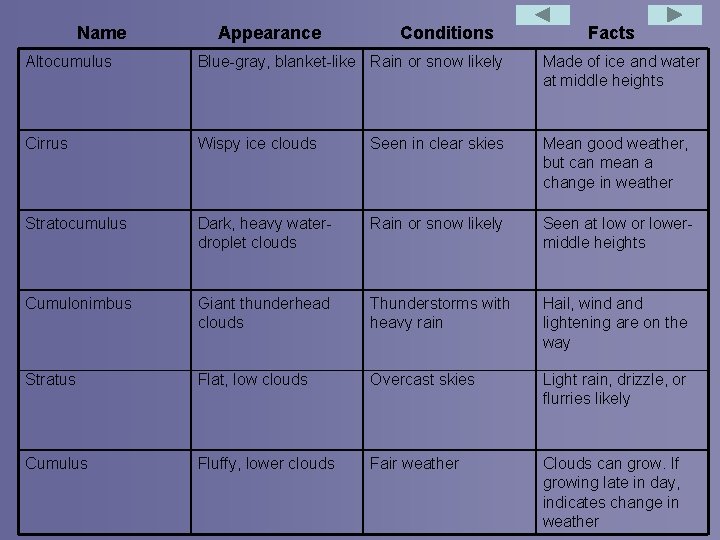
Name Appearance Conditions Facts Altocumulus Blue-gray, blanket-like Rain or snow likely Made of ice and water at middle heights Cirrus Wispy ice clouds Seen in clear skies Mean good weather, but can mean a change in weather Stratocumulus Dark, heavy waterdroplet clouds Rain or snow likely Seen at low or lowermiddle heights Cumulonimbus Giant thunderhead clouds Thunderstorms with heavy rain Hail, wind and lightening are on the way Stratus Flat, low clouds Overcast skies Light rain, drizzle, or flurries likely Cumulus Fluffy, lower clouds Fair weather Clouds can grow. If growing late in day, indicates change in weather
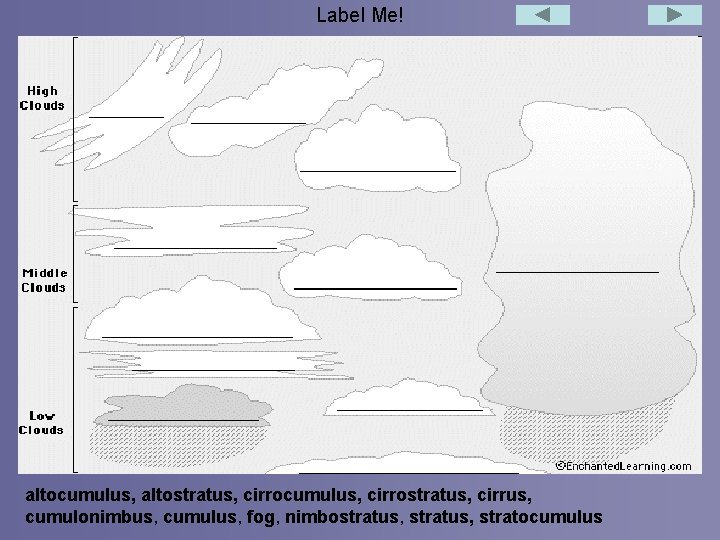
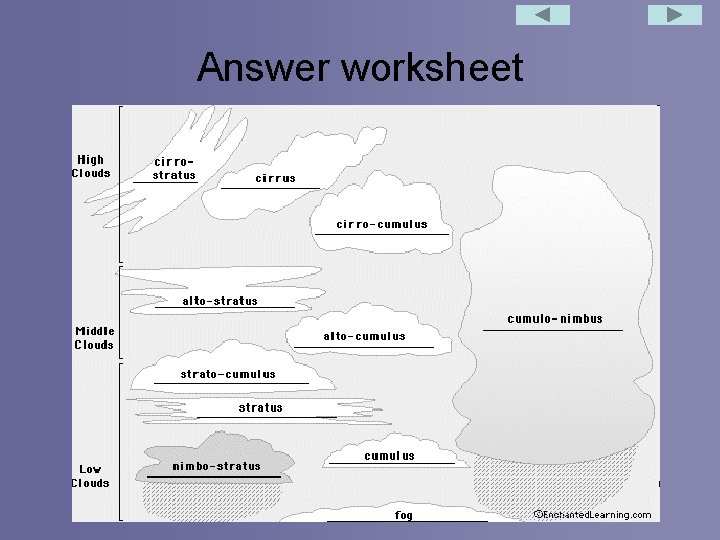
Label Me! altocumulus, altostratus, cirrocumulus, cirrostratus, cirrus, cumulonimbus, cumulus, fog, nimbostratus, stratocumulus
Answer worksheet
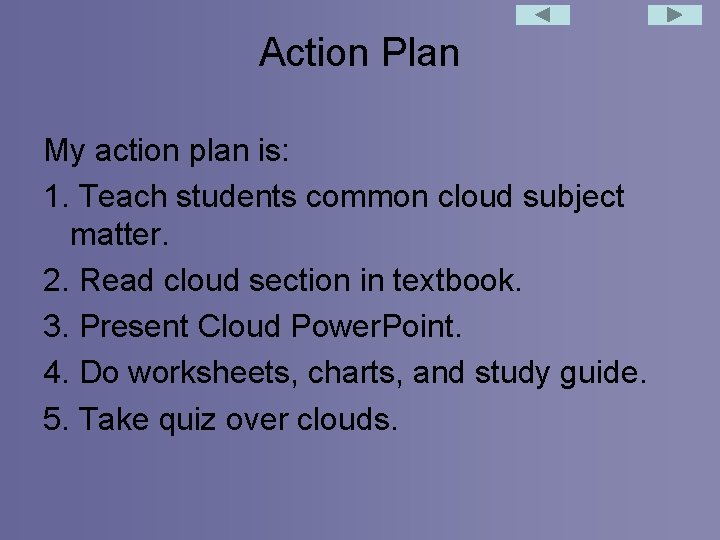
Action Plan My action plan is: 1. Teach students common cloud subject matter. 2. Read cloud section in textbook. 3. Present Cloud Power. Point. 4. Do worksheets, charts, and study guide. 5. Take quiz over clouds.
Objective/Goals • My goals are to teach the students the names of the clouds, the appearance, the conditions they form in, and a few facts about the cloud. • • • Rubric Student was able to name 6 common clouds -6 points Student was able to label the pictures of the 6 common clouds -6 points Student was able to state the conditions needed for at least 2 of the common clouds -3 points Student was able to state at least one fact for 5 of the common clouds -5 points Extra credit points are earned by additional information on chart or cloud labeling