
TYPES OF CLOUDS MARA SANZ Clouds Form when

- Slides: 19
TYPES OF CLOUDS MARÍA SANZ
Clouds • Form when air rises, cools to its dew point, and becomes saturated • Shape and height of clouds vary with temperature, pressure, and water vapor in atmosphere
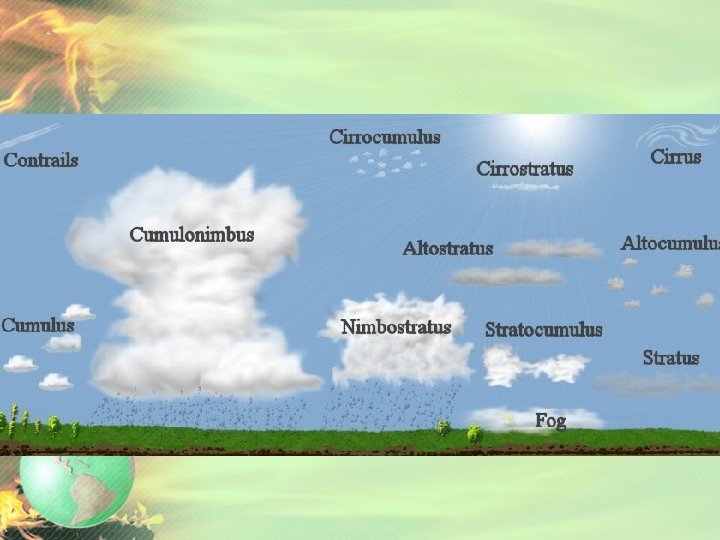
Clouds • Shape • Stratus-smooth, even sheets or layers at low altitudes • Cumulus-puffy, white clouds, often with flat bases • Cirrus-high, thin, white feathery clouds made of ice crystals • Height • Cirro – high clouds • Alto – middle-elevation clouds • Strato – low clouds • Nimbus clouds are dark and so full of water that
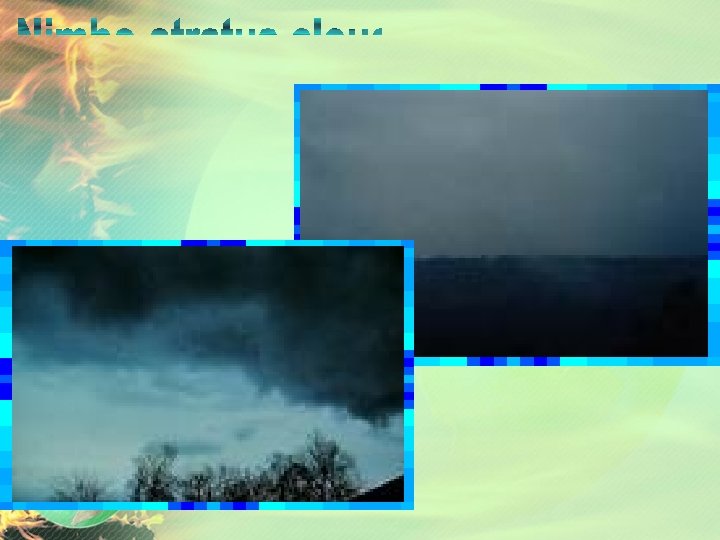
Clouds • LOW CLOUDS – form at 2, 000 m or less in altitude • Cumulus – puffy clouds formed when air currents rise and carry moisture • Stratus – layered dull, gray sheets that can cover the entire sky • Nimbostratus – low, dark, thick layers that hide the Sun
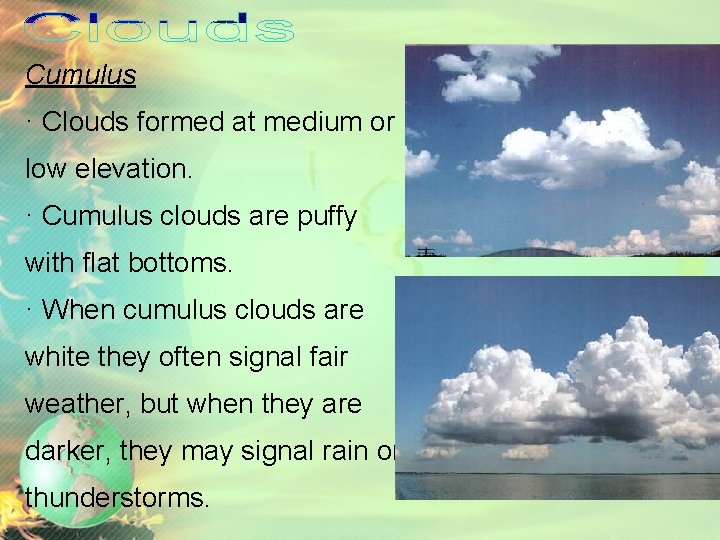
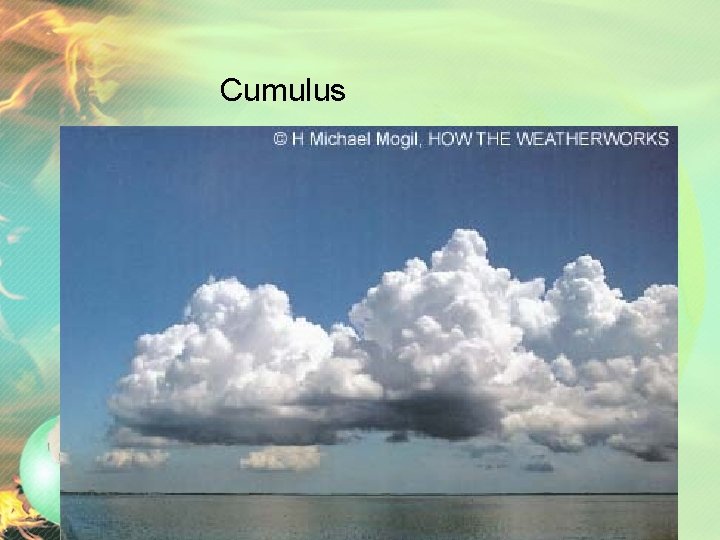
Cumulus · Clouds formed at medium or low elevation. · Cumulus clouds are puffy with flat bottoms. · When cumulus clouds are white they often signal fair weather, but when they are darker, they may signal rain or thunderstorms.
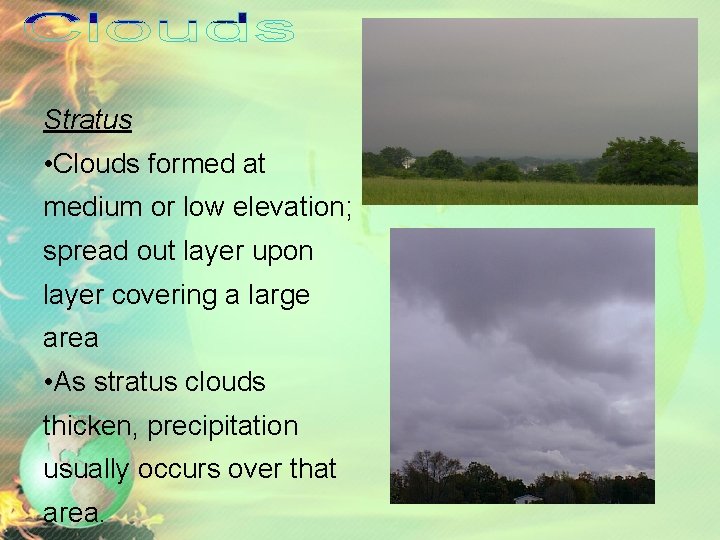
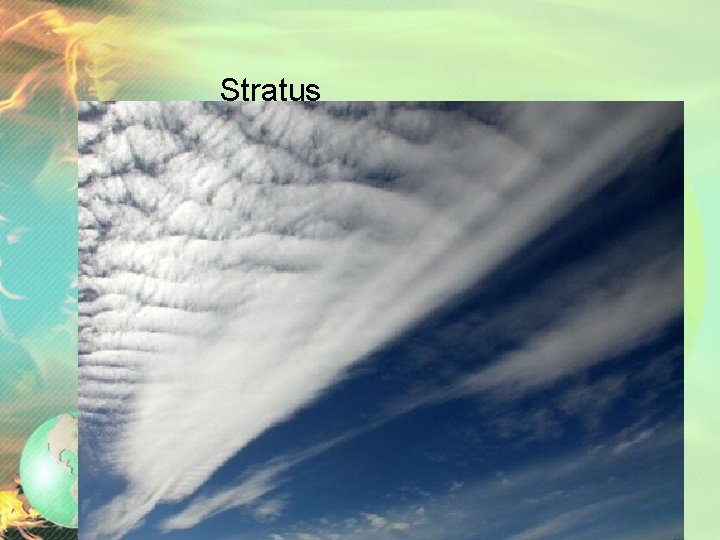
Stratus • Clouds formed at medium or low elevation; spread out layer upon layer covering a large area • As stratus clouds thicken, precipitation usually occurs over that area.
Cumulus
Stratus
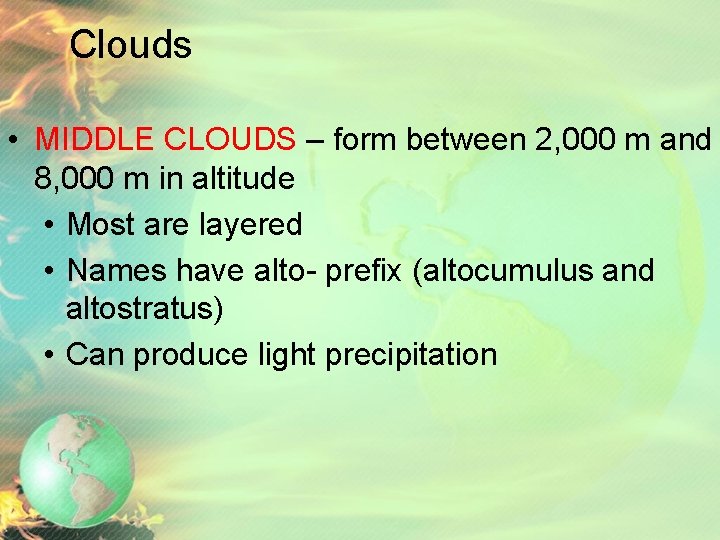
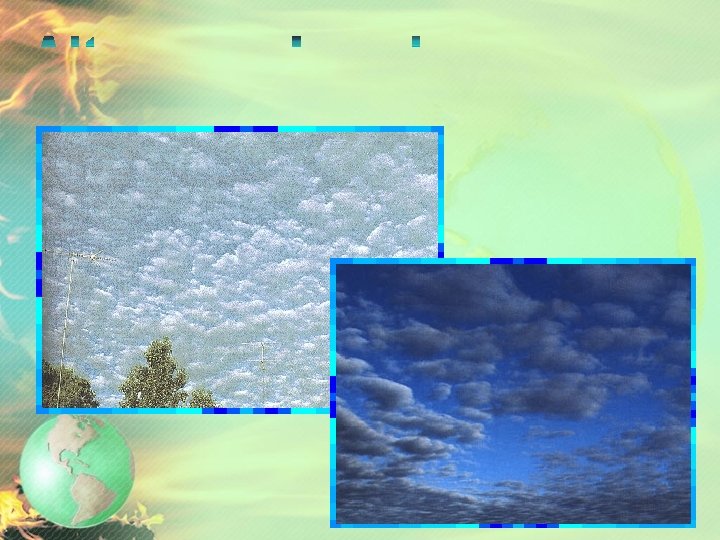
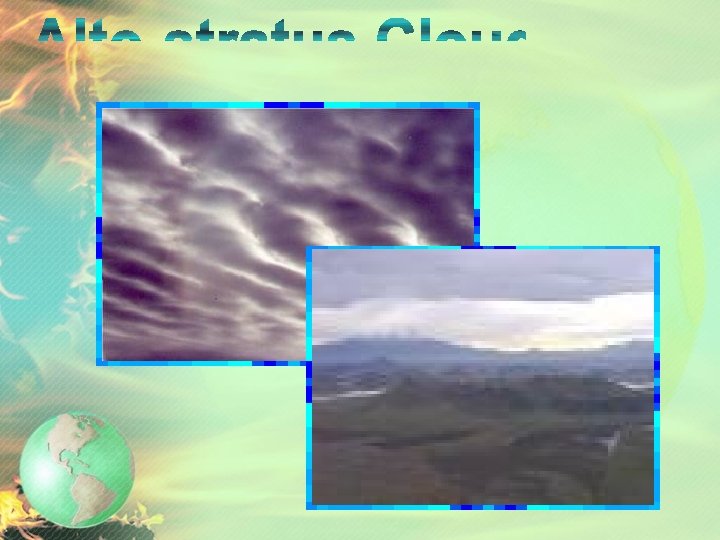
Clouds • MIDDLE CLOUDS – form between 2, 000 m and 8, 000 m in altitude • Most are layered • Names have alto- prefix (altocumulus and altostratus) • Can produce light precipitation
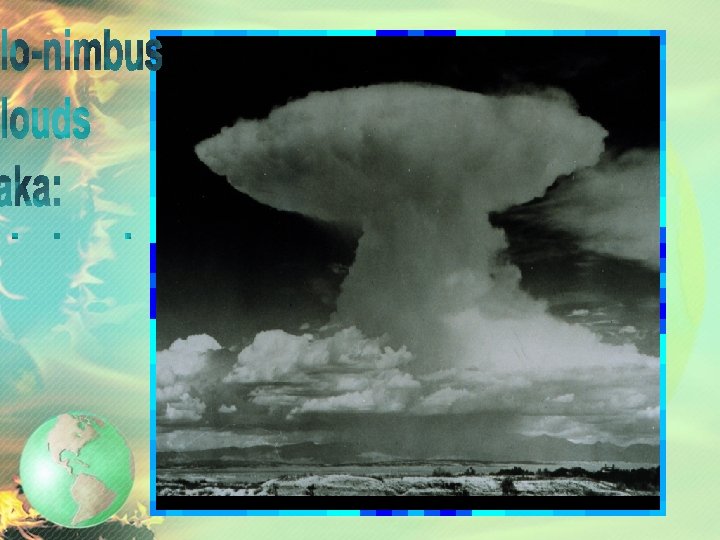
Clouds • HIGH AND VERTICAL CLOUDS • Cirrus – wispy, high-level clouds • Cirrostratus – high, layered clouds that can cover the sky • Cumulonimbus – known as thunderstorm clouds; produce heavy precipitation
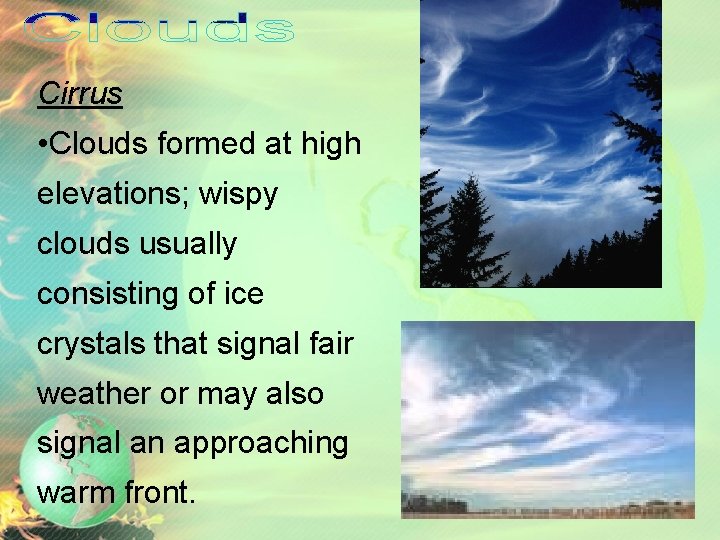
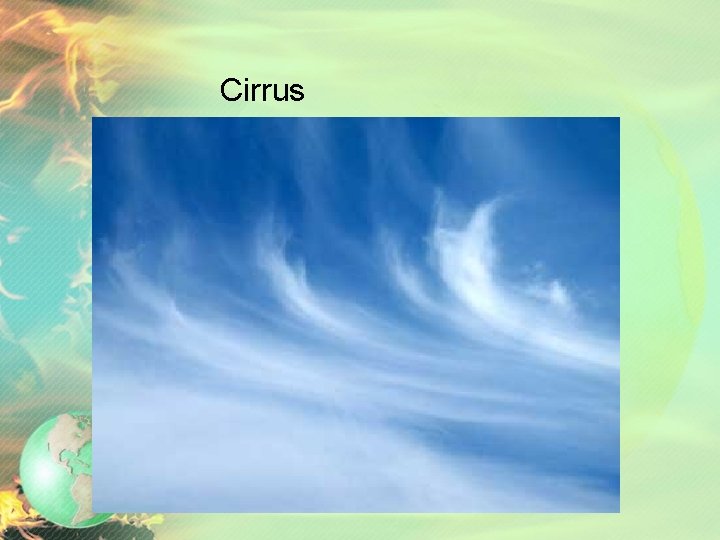
Cirrus • Clouds formed at high elevations; wispy clouds usually consisting of ice crystals that signal fair weather or may also signal an approaching warm front.
Cirrus