
Types of Chemical Reactions SYNTHESIS Reaction 2 or
- Slides: 15
Types of Chemical Reactions
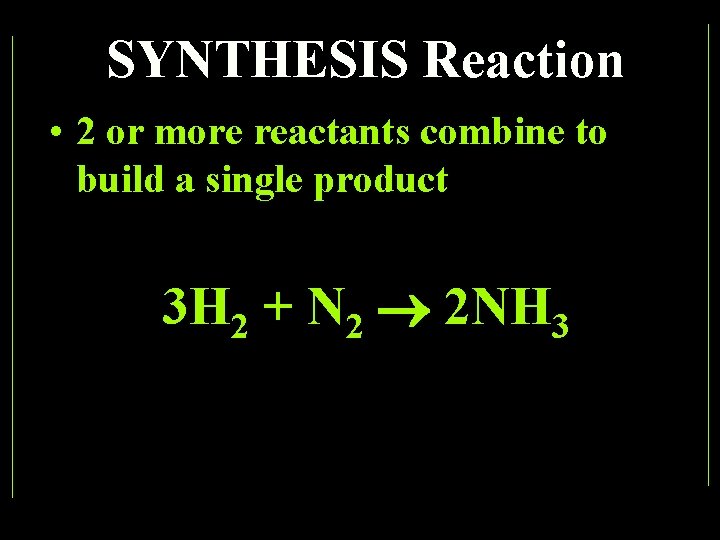
SYNTHESIS Reaction • 2 or more reactants combine to build a single product 3 H 2 + N 2 2 NH 3
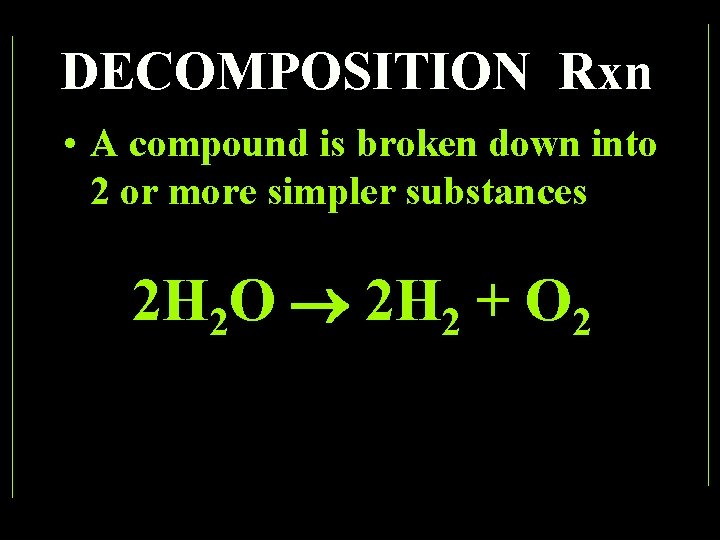
DECOMPOSITION Rxn • A compound is broken down into 2 or more simpler substances 2 H 2 O 2 H 2 + O 2
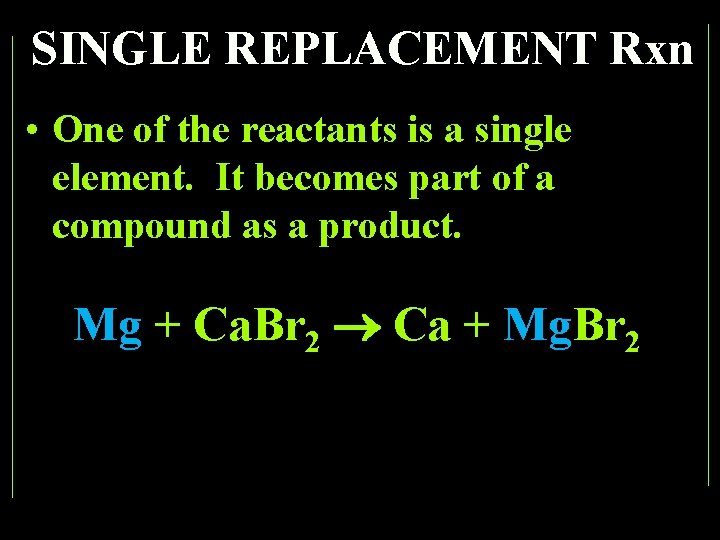
SINGLE REPLACEMENT Rxn • One of the reactants is a single element. It becomes part of a compound as a product. Mg + Ca. Br 2 Ca + Mg. Br 2
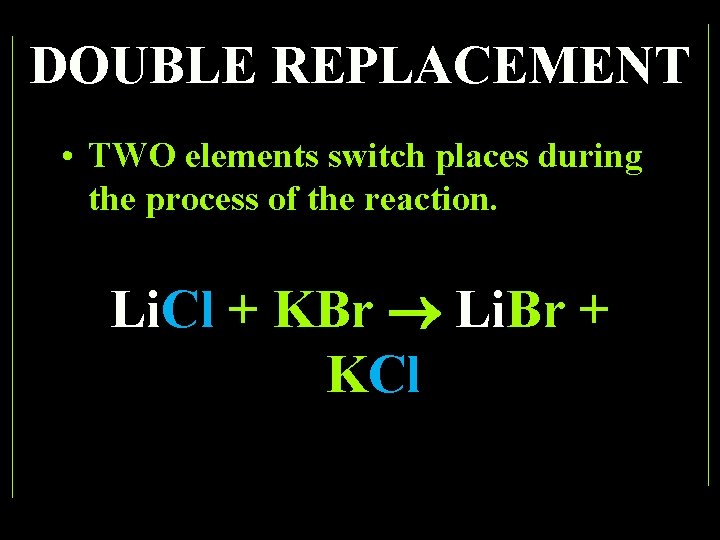
DOUBLE REPLACEMENT • TWO elements switch places during the process of the reaction. Li. Cl + KBr Li. Br + KCl
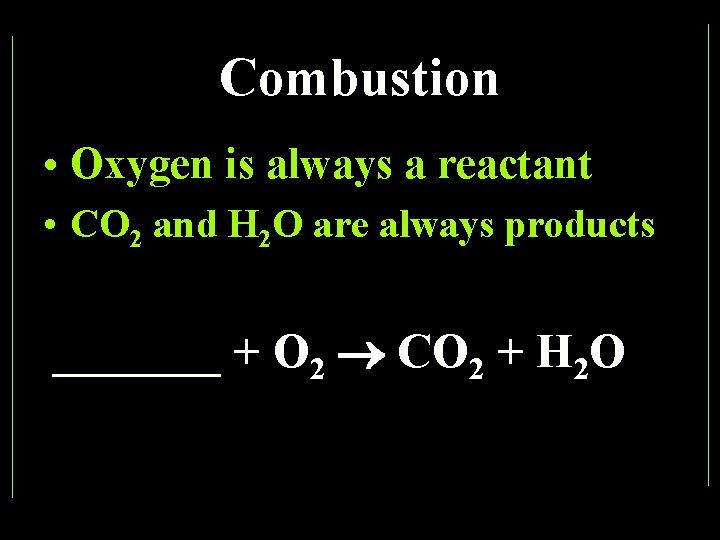
Combustion • Oxygen is always a reactant • CO 2 and H 2 O are always products _______ + O 2 CO 2 + H 2 O
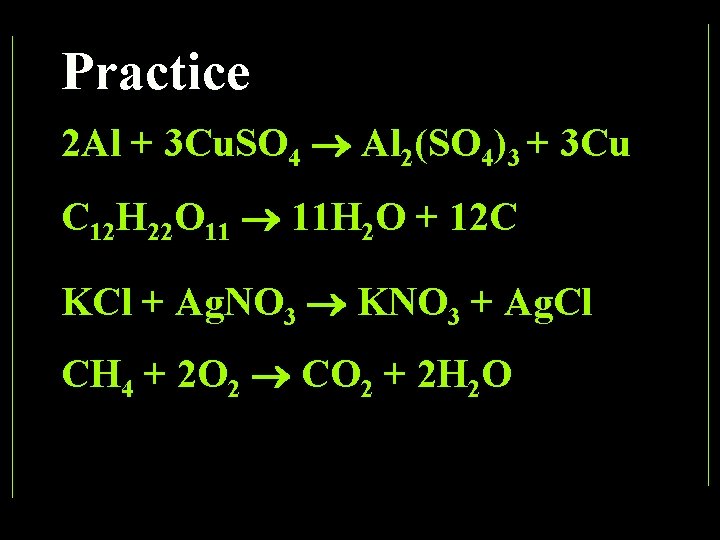
Practice 2 Al + 3 Cu. SO 4 Al 2(SO 4)3 + 3 Cu C 12 H 22 O 11 11 H 2 O + 12 C KCl + Ag. NO 3 KNO 3 + Ag. Cl CH 4 + 2 O 2 CO 2 + 2 H 2 O
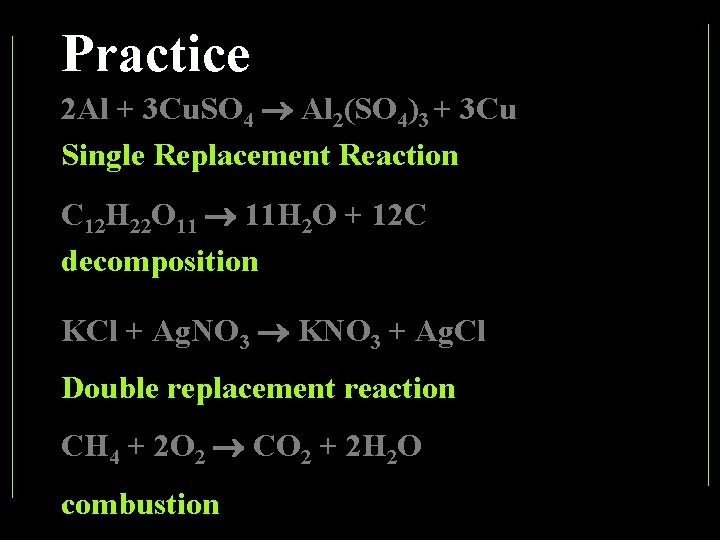
Practice 2 Al + 3 Cu. SO 4 Al 2(SO 4)3 + 3 Cu Single Replacement Reaction C 12 H 22 O 11 11 H 2 O + 12 C decomposition KCl + Ag. NO 3 KNO 3 + Ag. Cl Double replacement reaction CH 4 + 2 O 2 CO 2 + 2 H 2 O combustion
Balancing Equations • The LOCOM states –atoms are not created or destroyed during a chemical reaction –atoms are rearranged to form new substances
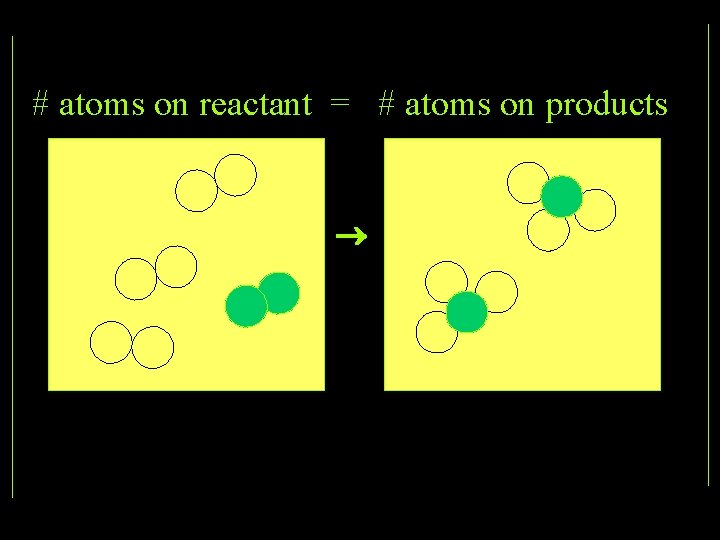
# atoms on reactant = # atoms on products
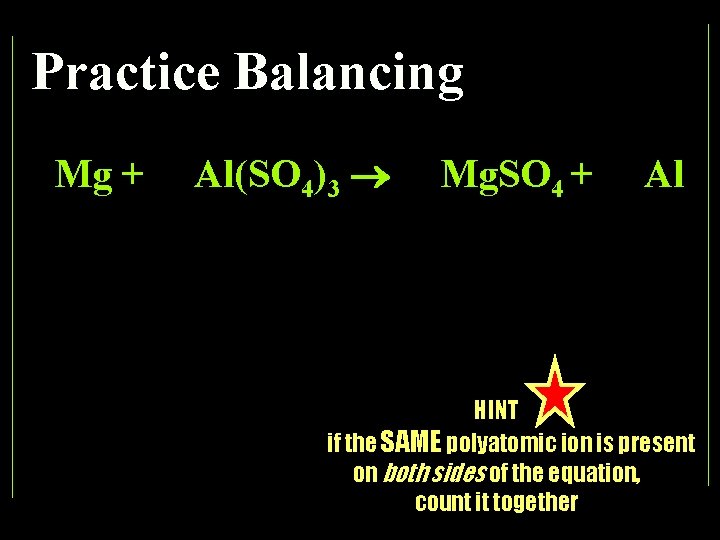
Practice Balancing Mg + Al(SO 4)3 Mg. SO 4 + Al HINT if the SAME polyatomic ion is present on both sides of the equation, count it together
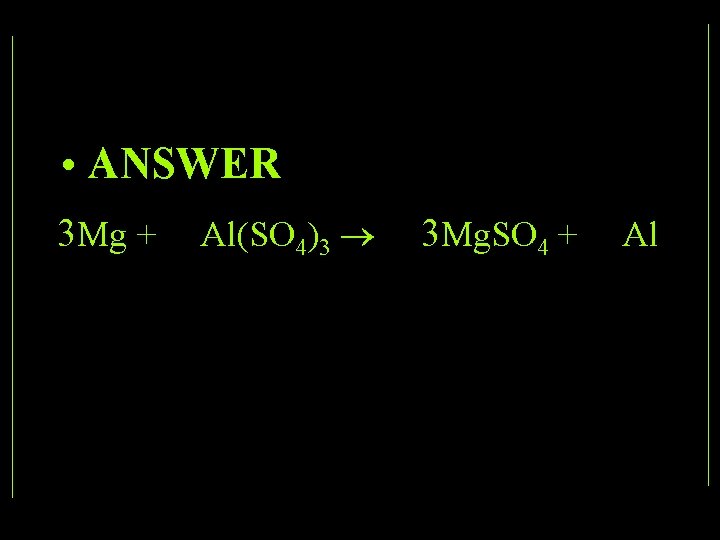
• ANSWER 3 Mg + Al(SO 4)3 3 Mg. SO 4 + Al
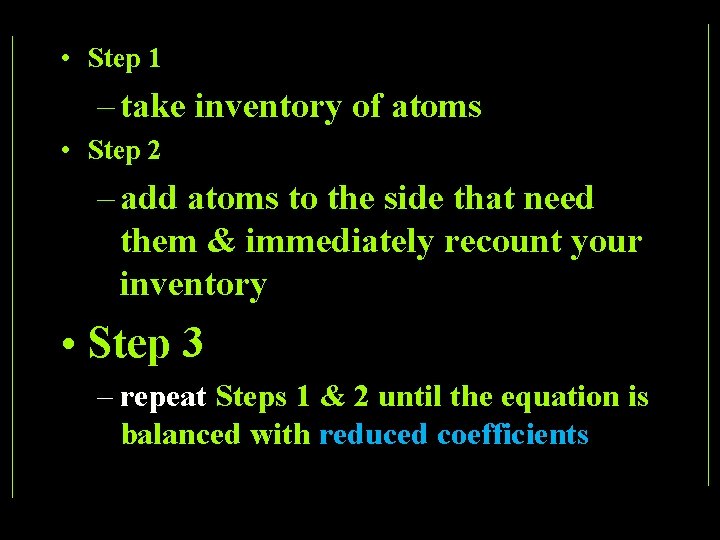
• Step 1 – take inventory of atoms • Step 2 – add atoms to the side that need them & immediately recount your inventory • Step 3 – repeat Steps 1 & 2 until the equation is balanced with reduced coefficients
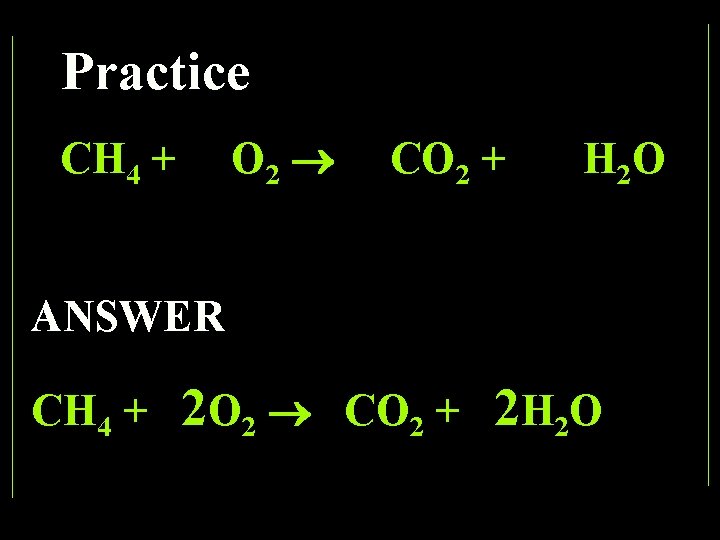
Practice O 2 CH 4 + CO 2 + H 2 O ANSWER CH 4 + 2 O 2 CO 2 + 2 H 2 O
THE END