
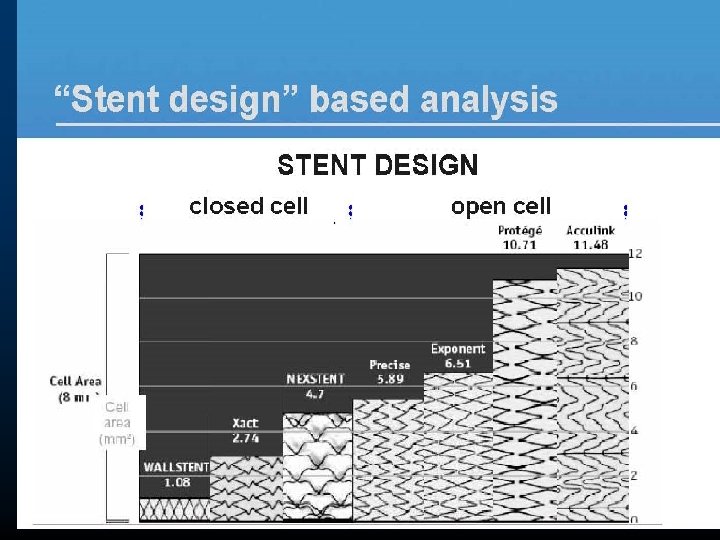
TYPES OF CAROTID STENTS Stent design based analysis


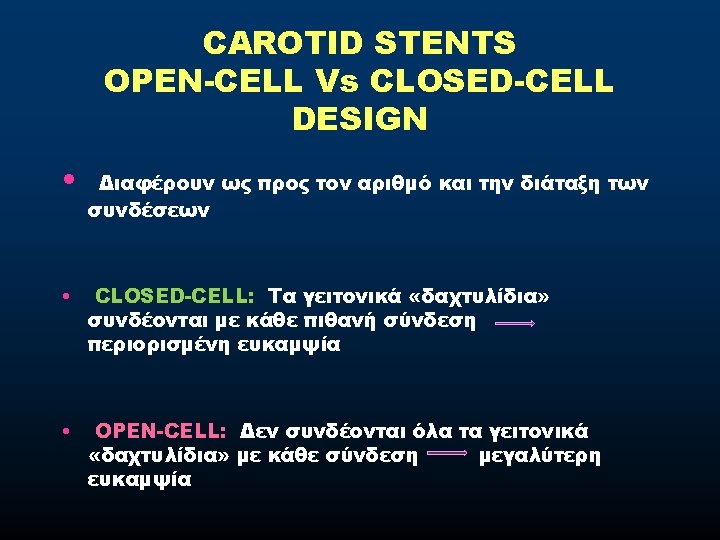
• TYPES OF CAROTID STENTS
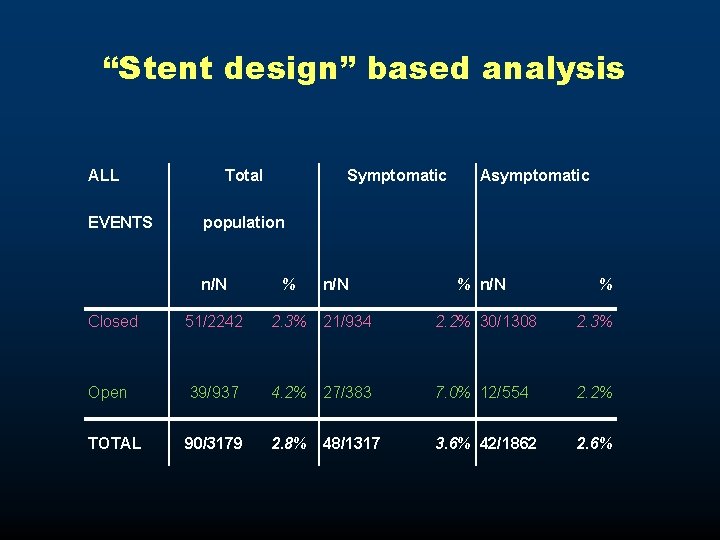
“Stent design” based analysis ALL EVENTS Total Symptomatic Asymptomatic population n/N % Closed 51/2242 2. 3% 21/934 2. 2% 30/1308 2. 3% Open 39/937 4. 2% 27/383 7. 0% 12/554 2. 2% TOTAL 90/3179 2. 8% 48/1317 3. 6% 42/1862 2. 6%

“Stent design” based analysis All events: open vs. < closed cell Odds Ratio 95% C. I. Total population 1. 876 [1. 227 -2. 868] Symptomatic population 3. 297 [1. 840 -5. 908] Asymptomatic population 0. 943 [0. 479 -1. 856]


“Stent design” based analysis LATE EVENTS Total Symptomatic Asymptomatic population n/N % Closed 29/2242 1. 3% 12/934 1. 3% 17/1308 1. 3% Open 32/937 3. 4% 24/383 6. 3% 8/554 1. 4% TOTAL 61/3179 1. 9% 36/1317 2. 7% 25/1862 1. 3%

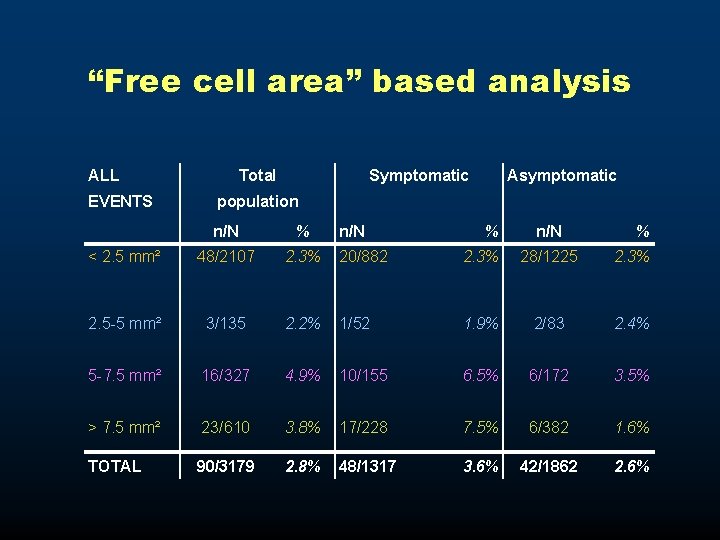
“Free cell area” based analysis ALL EVENTS Total Symptomatic Asymptomatic population n/N % < 2. 5 mm² 48/2107 2. 3% 20/882 2. 3% 28/1225 2. 3% 2. 5 -5 mm² 3/135 2. 2% 1/52 1. 9% 2/83 2. 4% 5 -7. 5 mm² 16/327 4. 9% 10/155 6. 5% 6/172 3. 5% > 7. 5 mm² 23/610 3. 8% 17/228 7. 5% 6/382 1. 6% TOTAL 90/3179 2. 8% 48/1317 3. 6% 42/1862 2. 6%
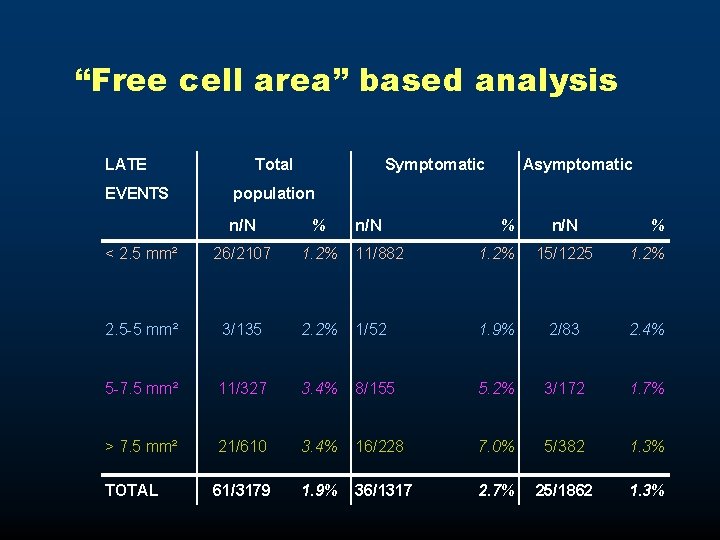
“Free cell area” based analysis LATE EVENTS Total Symptomatic Asymptomatic population n/N % < 2. 5 mm² 26/2107 1. 2% 11/882 1. 2% 15/1225 1. 2% 2. 5 -5 mm² 3/135 2. 2% 1/52 1. 9% 2/83 2. 4% 5 -7. 5 mm² 11/327 3. 4% 8/155 5. 2% 3/172 1. 7% > 7. 5 mm² 21/610 3. 4% 16/228 7. 0% 5/382 1. 3% TOTAL 61/3179 1. 9% 36/1317 2. 7% 25/1862 1. 3%

“Free cell area” based analysi. S Late events: Total population Free cell area Odds Ratio 95% C. I. 2. 5 -5 vs. < 2. 5 mm² 1. 869 [0. 557 -6. 267] 5 -7. 5 vs. < 2. 5 mm² 2. 681 [1. 310 -5. 490] > 7. 5 vs. < 2. 5 mm² 2. 963 [1. 653 -5. 313]
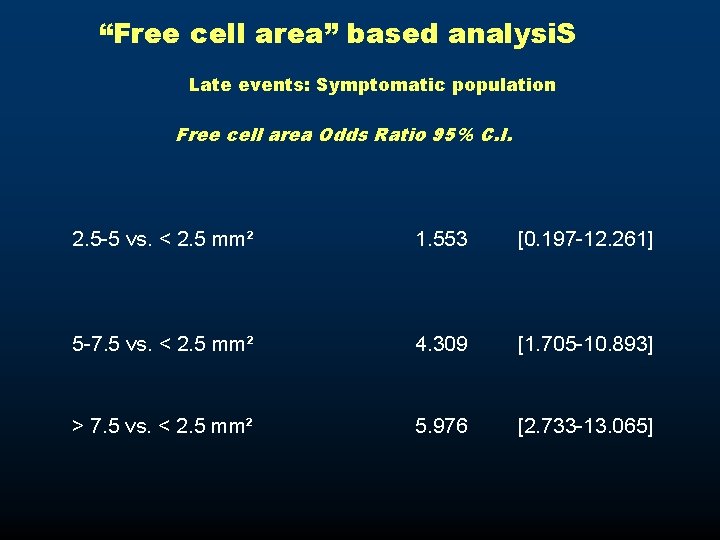
“Free cell area” based analysi. S Late events: Symptomatic population Free cell area Odds Ratio 95% C. I. 2. 5 -5 vs. < 2. 5 mm² 1. 553 [0. 197 -12. 261] 5 -7. 5 vs. < 2. 5 mm² 4. 309 [1. 705 -10. 893] > 7. 5 vs. < 2. 5 mm² 5. 976 [2. 733 -13. 065]
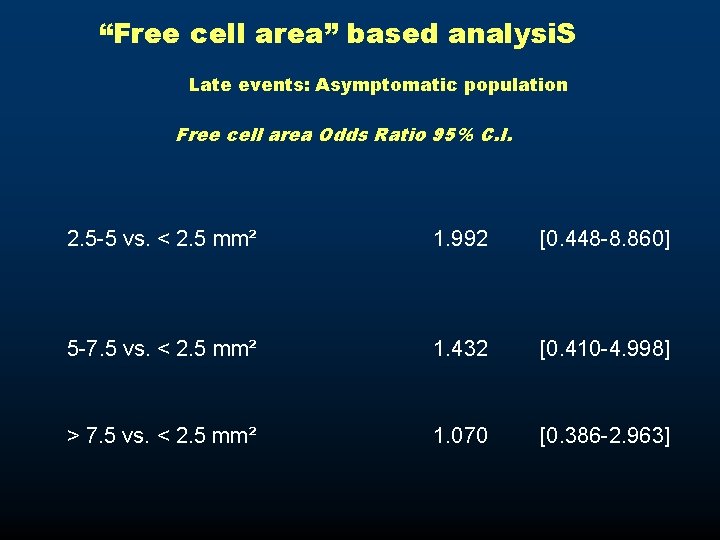
“Free cell area” based analysi. S Late events: Asymptomatic population Free cell area Odds Ratio 95% C. I. 2. 5 -5 vs. < 2. 5 mm² 1. 992 [0. 448 -8. 860] 5 -7. 5 vs. < 2. 5 mm² 1. 432 [0. 410 -4. 998] > 7. 5 vs. < 2. 5 mm² 1. 070 [0. 386 -2. 963]



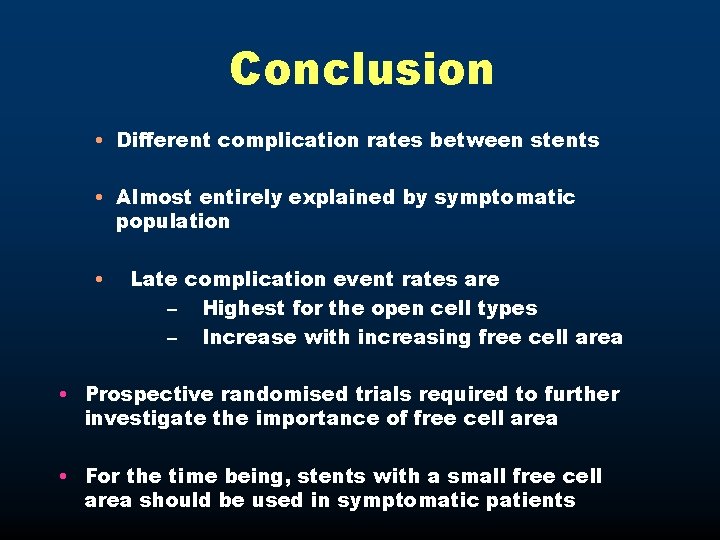
Conclusion • Different complication rates between stents • Almost entirely explained by symptomatic population • Late complication event rates are – Highest for the open cell types – Increase with increasing free cell area • Prospective randomised trials required to further investigate the importance of free cell area • For the time being, stents with a small free cell area should be used in symptomatic patients
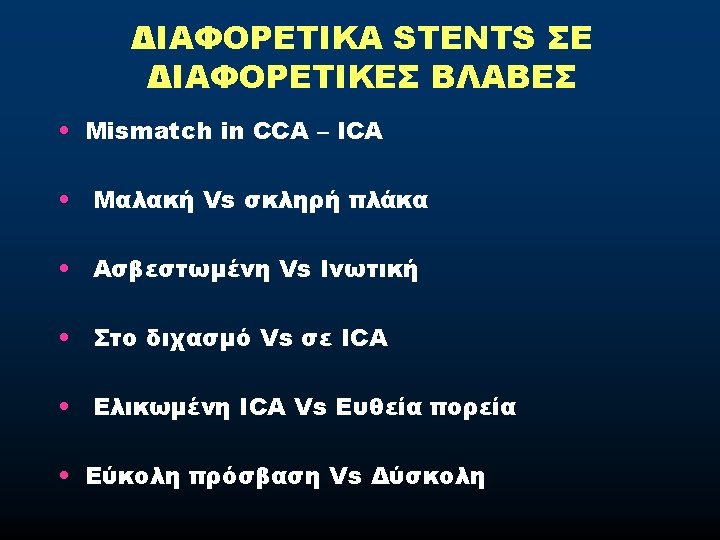


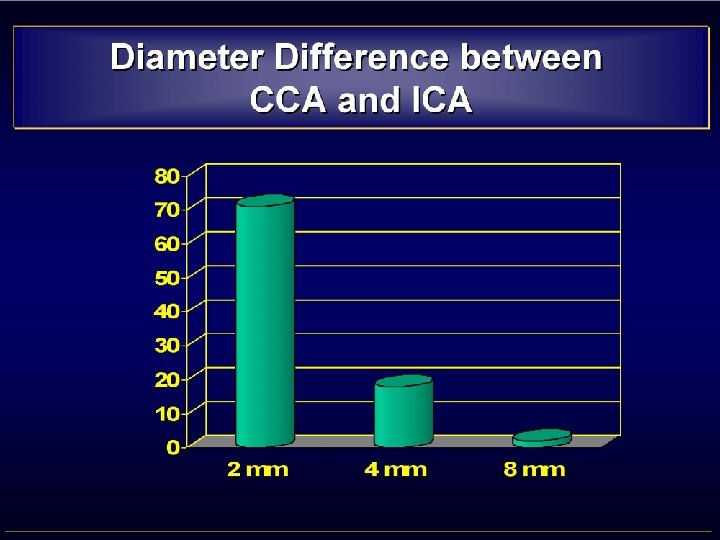
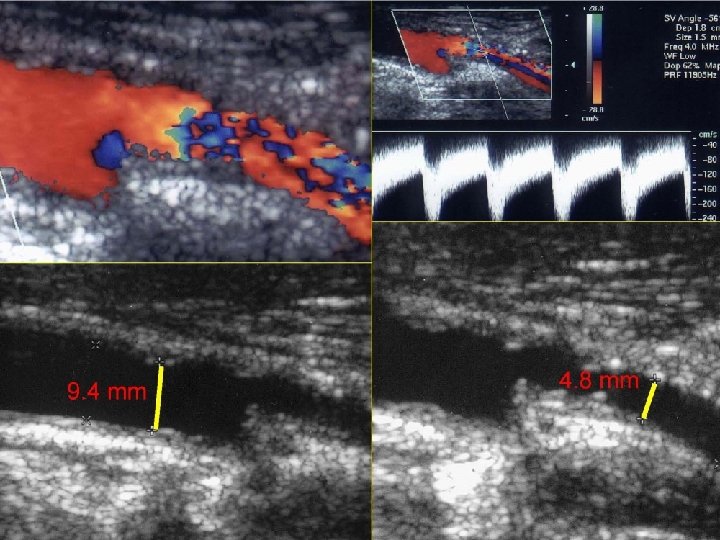
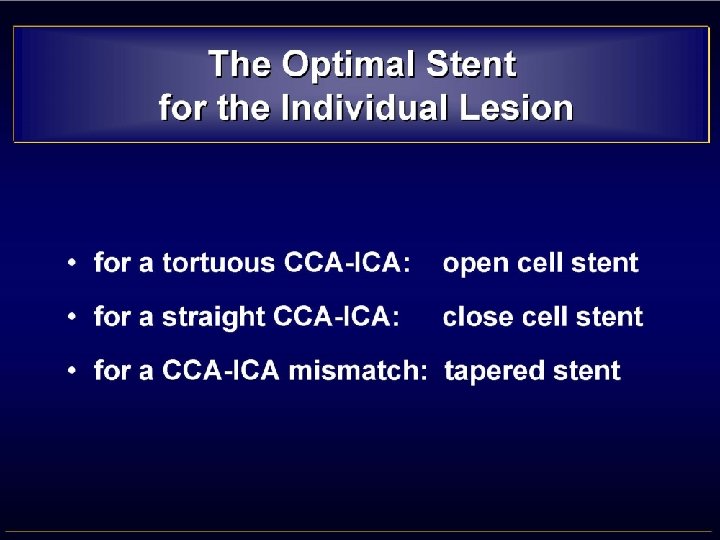
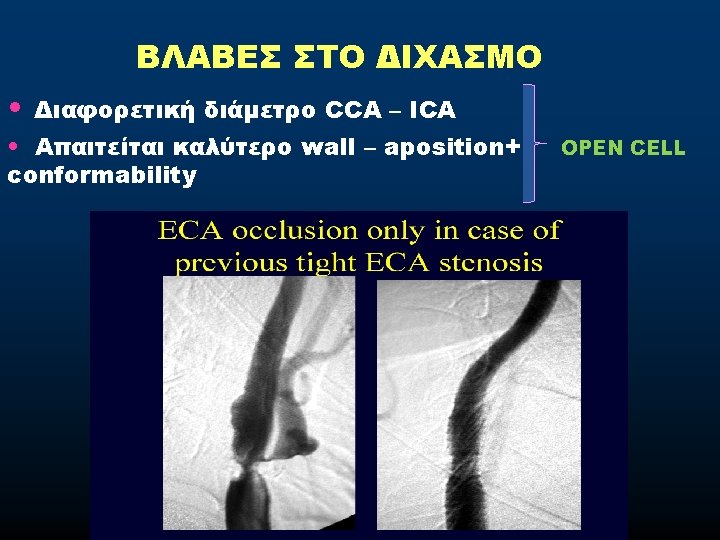
• MISMATCH CCA-ICA

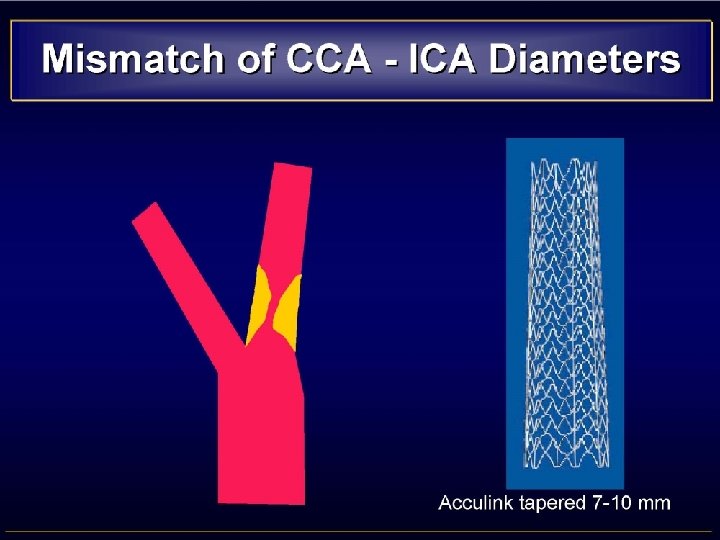

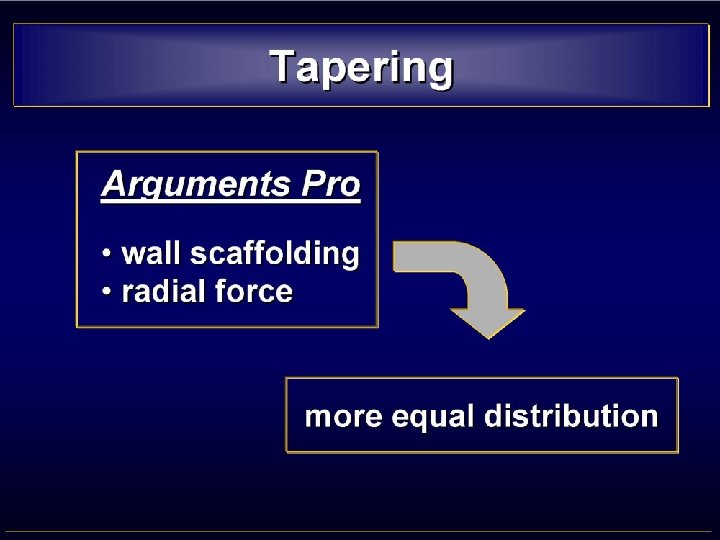
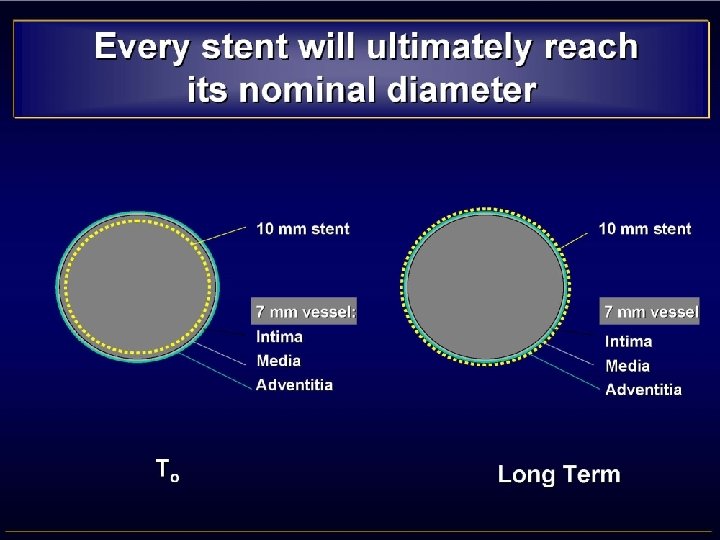
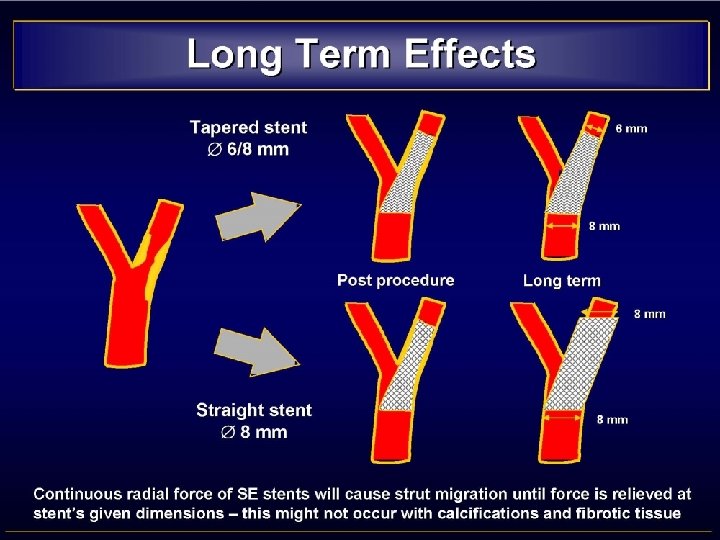


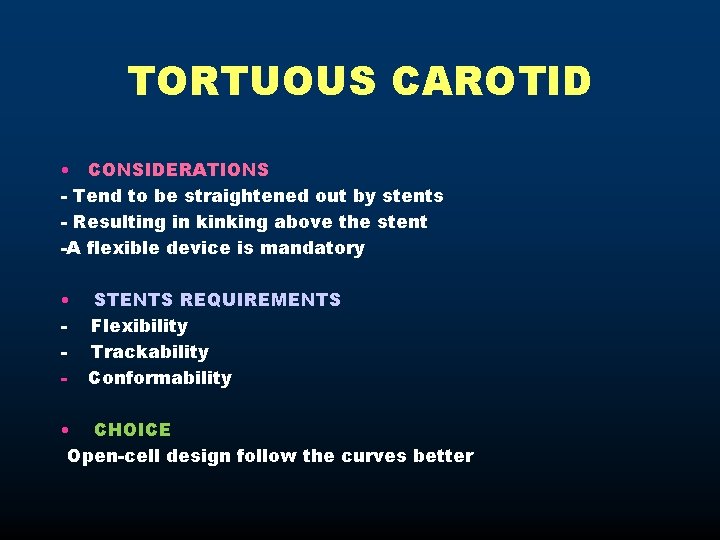
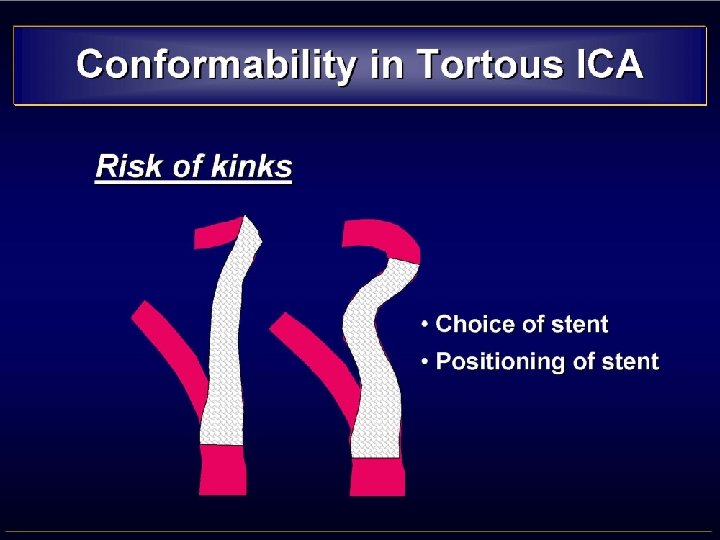
TORTUOUS CAROTID • CONSIDERATIONS - Tend to be straightened out by stents - Resulting in kinking above the stent -A flexible device is mandatory • STENTS REQUIREMENTS - Flexibility - Trackability - Conformability • CHOICE Open-cell design follow the curves better
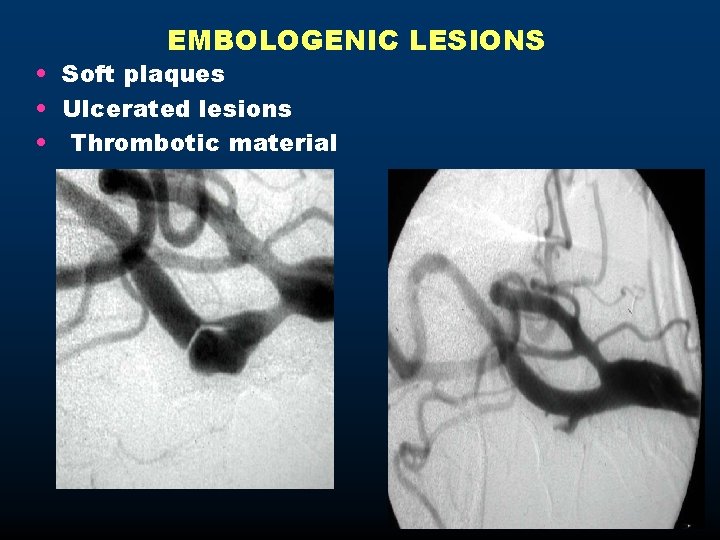
EMBOLΟGENIC LESIONS • Soft plaques • Ulcerated lesions • Thrombotic material

EMBOLΟGENIC LESIONS
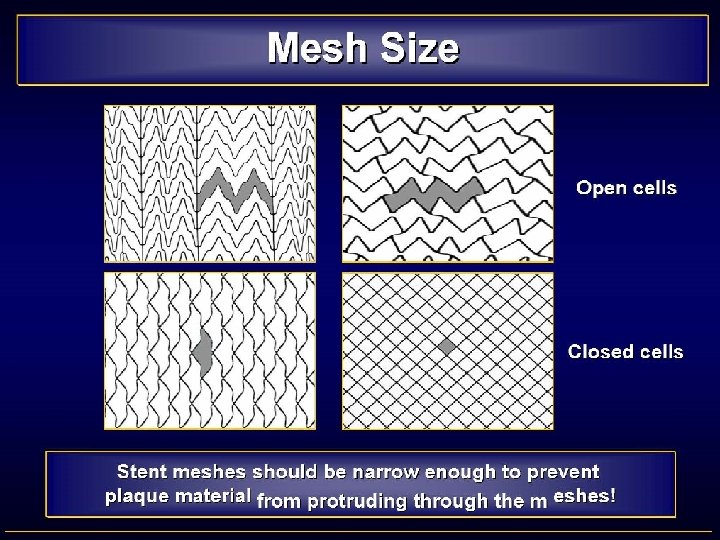
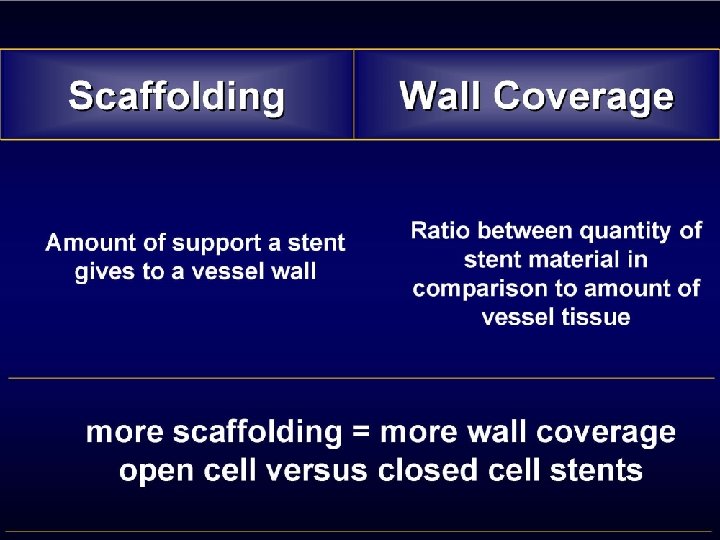
EMBOLIGENIC LESIONS • CONSIDERATIONS - Most emboli occur during stent-placement and postdilatation - 40% stroke after the procedure • STENTS REQUIREMENTS - Good wall coverage - Capturing of emboligenic material - Avoid plaque protrusion • CHOICE Closed-cell design

CALCIFIED LESIONS

CALCIFIED LESIONS • CONSIDERATIONS - In calcified lesions a higher radial force is desirable • STENTS REQUIREMENTS Stents with higher radial strength • CHOICE Closed-cell design

Take Home Messages • Get trained • It’s not as easy as it looks • Learning curve ~ 80 cases • Start with easy cases • Unilateral stenosis • No major co-morbidity • Ensure high standard of post procedure care • Transient hypotension/hypertension
- Slides: 47