
TYPES OF BONE CELLS January 22 2018 Osteoblas
TYPES OF BONE CELLS January 22, 2018

Osteoblas • Berfungsi dalam PEMBENTUKAN TULANG dengan mensekresikan matrik tulang. • Matrik tulang merupakan kerangka dimana garam mineral ditimbun terutama calcium, fluor, magnesium dan phosphor. • PENYUSUN TULANG – aktif saat kanak-kanak

Osteosit • Sel-sel tulang dewasa yang bertindak sebagai pemeliharaan fungsi tulang • SEL MATUR/ MATANG Osteoklas • Sel-sel besar berinti banyak memungkinkan mineral dan matriks tulang dapat diabsorpsi • REABSOROBSI TULANG – active during late adulthood

Bone remodelling cycle • Bone remodelling by the OSTEOCLAST in the osteons of mature bone is activated by the PTH • Bone formation by the OSTEOBLAST in the osteons is activated by the thyrocalcitonin
THE MUSCLES • Life moves. Even when standing still, the individual’s muscular system is still important and still working. • GENERAL FUNCTION: mobility, heart contraction and respiration. • There are more than 400 muscles in the human body causing human activities, like for example, movements of lips and tongue which produce speech, sitting with both legs crossed, and many more. .
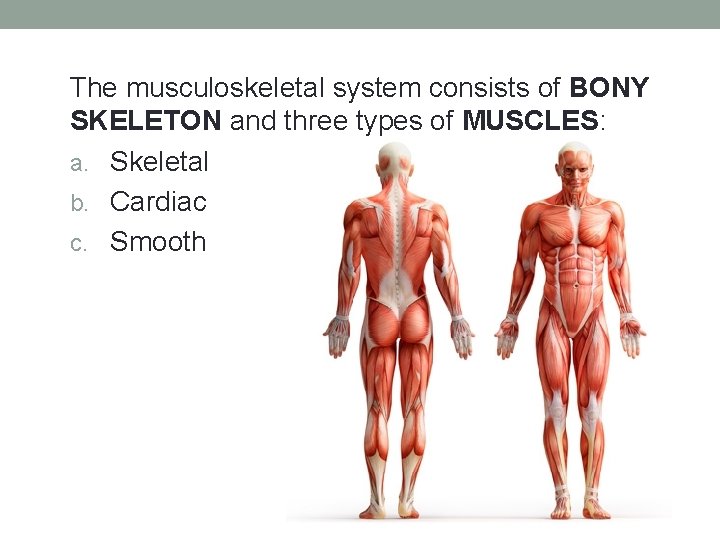
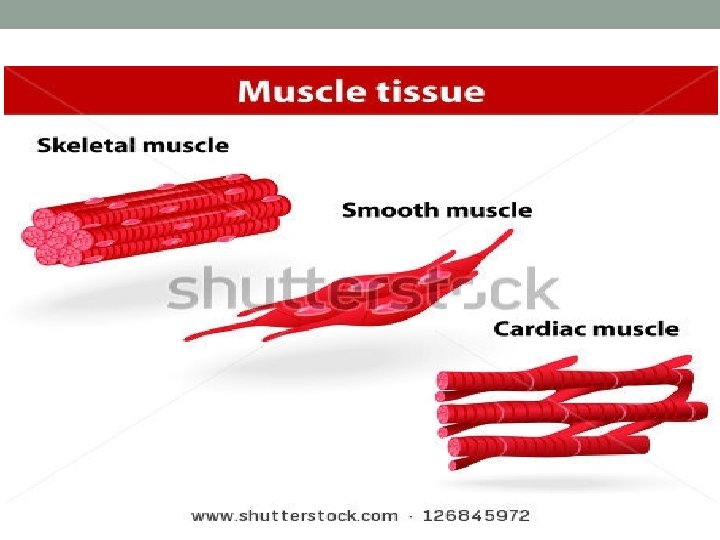
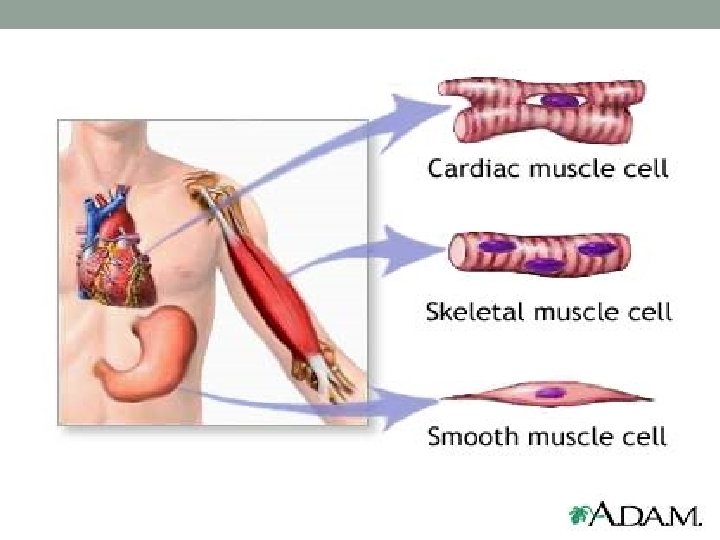
The musculoskeletal system consists of BONY SKELETON and three types of MUSCLES: a. Skeletal b. Cardiac c. Smooth
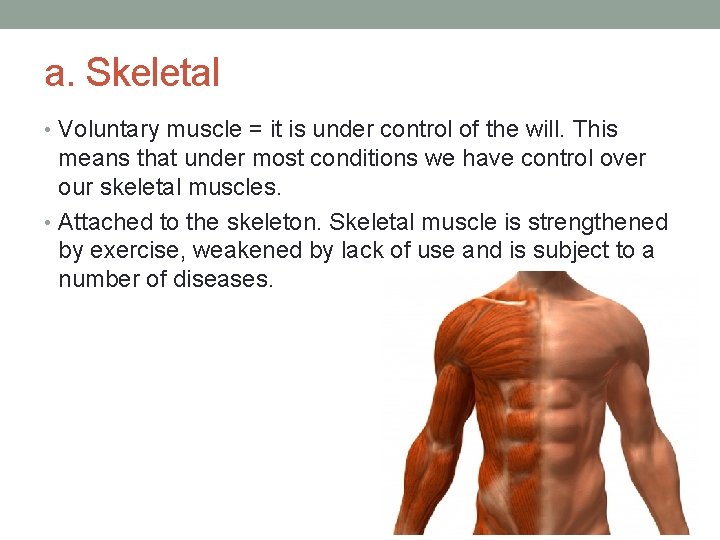
a. Skeletal • Voluntary muscle = it is under control of the will. This means that under most conditions we have control over our skeletal muscles. • Attached to the skeleton. Skeletal muscle is strengthened by exercise, weakened by lack of use and is subject to a number of diseases.
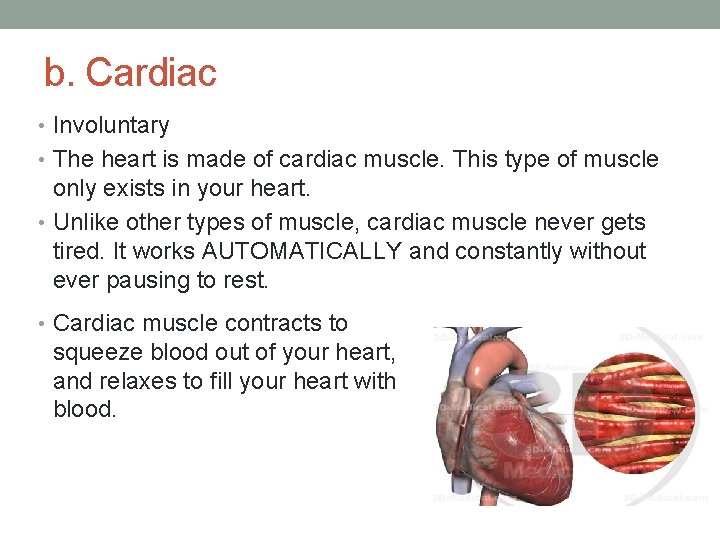
b. Cardiac • Involuntary • The heart is made of cardiac muscle. This type of muscle only exists in your heart. • Unlike other types of muscle, cardiac muscle never gets tired. It works AUTOMATICALLY and constantly without ever pausing to rest. • Cardiac muscle contracts to squeeze blood out of your heart, and relaxes to fill your heart with blood.
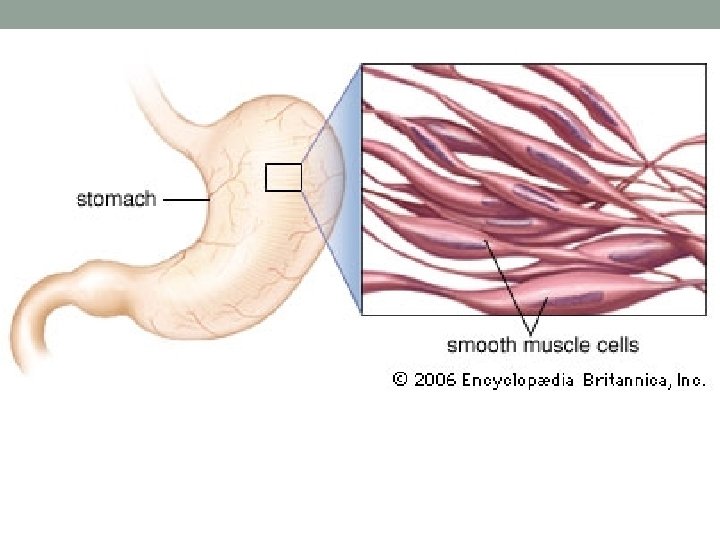
c. Smooth • Involuntary (in the walls of visceral organ, like in the intestines and stomach). • The ‘housekeeping' functions of the body. • For example: • the muscular walls in the intestines contract to push food inside the body. • muscles in the bladder wall contract to expel urine from the body • smooth muscles in a woman's uterus (or womb) help to push babies out of the body during childbirth • the pupillary sphincter muscle in the eye is a smooth muscle that shrinks the size of your pupil.
The Muscle of Facial Expression and Mastication • Occipito-frontalis: raising of the eyebrows and “wrinkling” • Orbicularis oculi: blink and close the eyes when asleep • Orbicularis oris: surrounds the mouth. Close the lips, can protrude (ex: whistle and kissing)
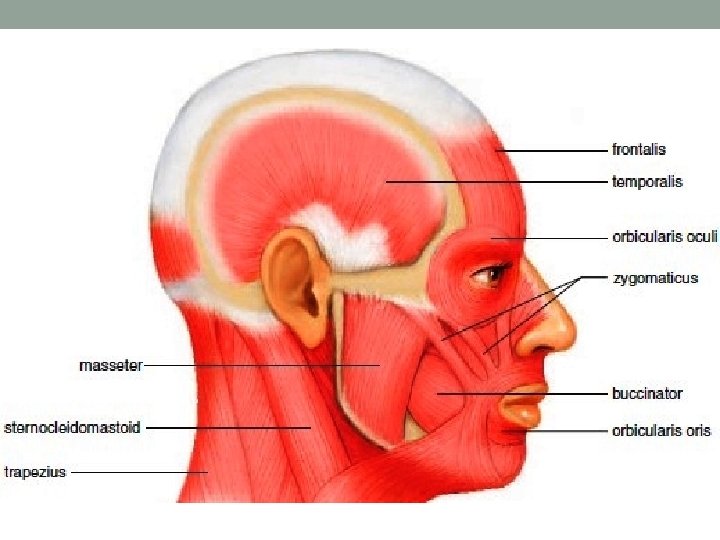
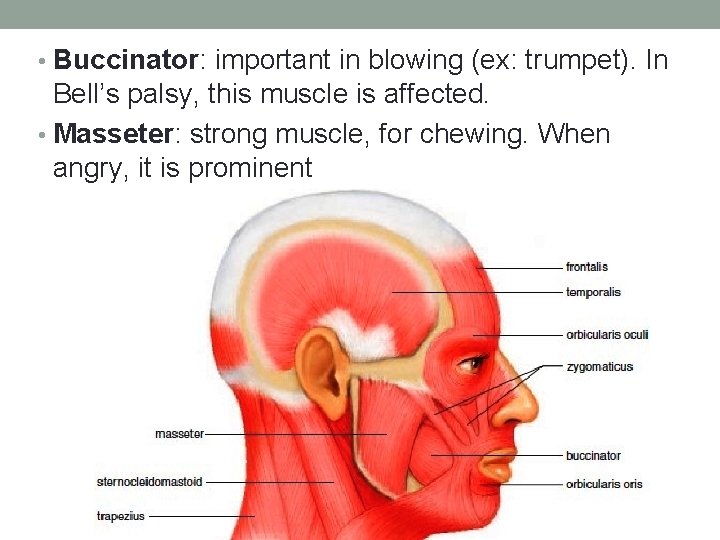
• Buccinator: important in blowing (ex: trumpet). In Bell’s palsy, this muscle is affected. • Masseter: strong muscle, for chewing. When angry, it is prominent
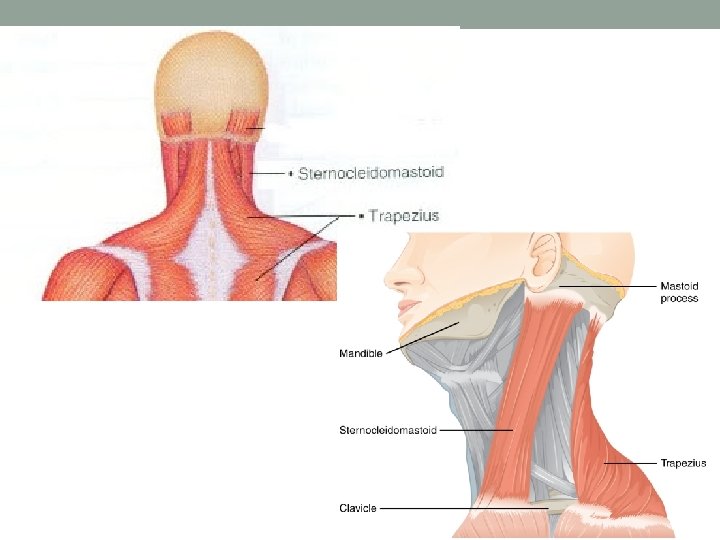
The Muscles of The Neck These muscles are responsible for flexing the head and turning it from side to side: • Sternocleidomastoid: arises from the sternum, clavicle, temporal bone. Contraction of the muscle sternocleidomastoid will pull the head (Accessory nerve XI), flexion • Trapezius: providing upright posture support, tilt and turn the head and neck, extension, shrug, steady the shoulders, and twist the arms.
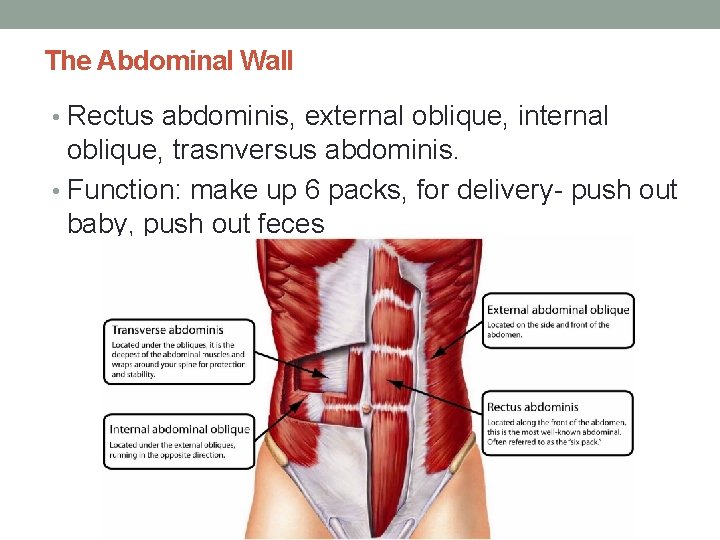
The Abdominal Wall • Rectus abdominis, external oblique, internal oblique, trasnversus abdominis. • Function: make up 6 packs, for delivery- push out baby, push out feces
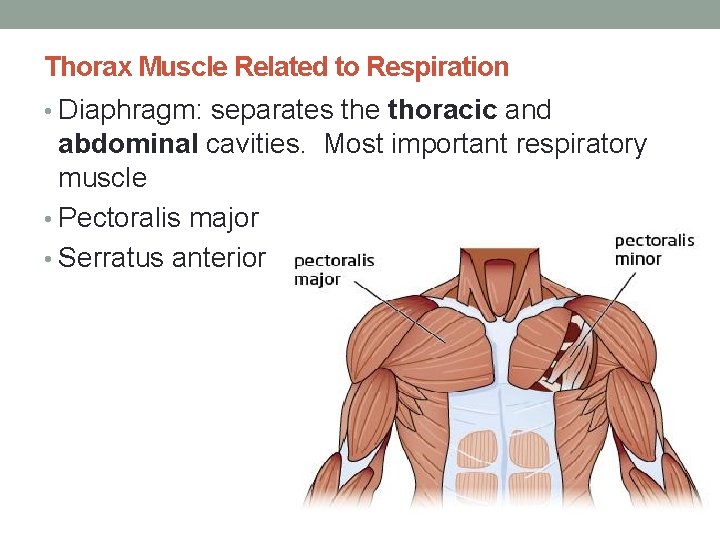
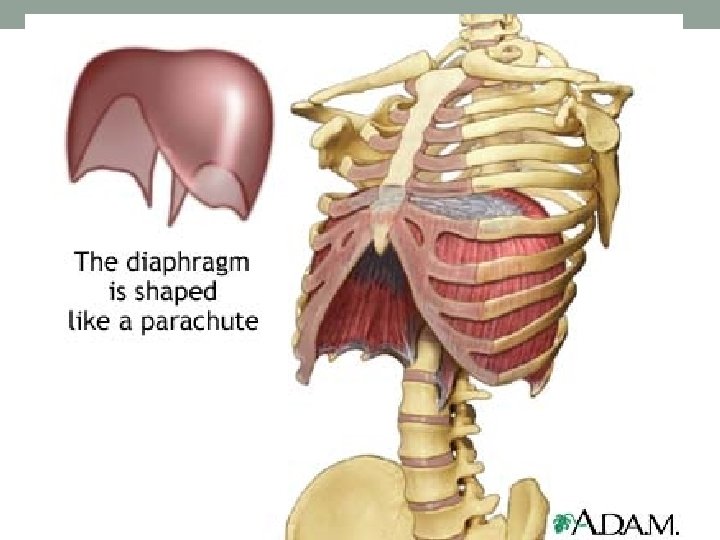
Thorax Muscle Related to Respiration • Diaphragm: separates the thoracic and abdominal cavities. Most important respiratory muscle • Pectoralis major • Serratus anterior
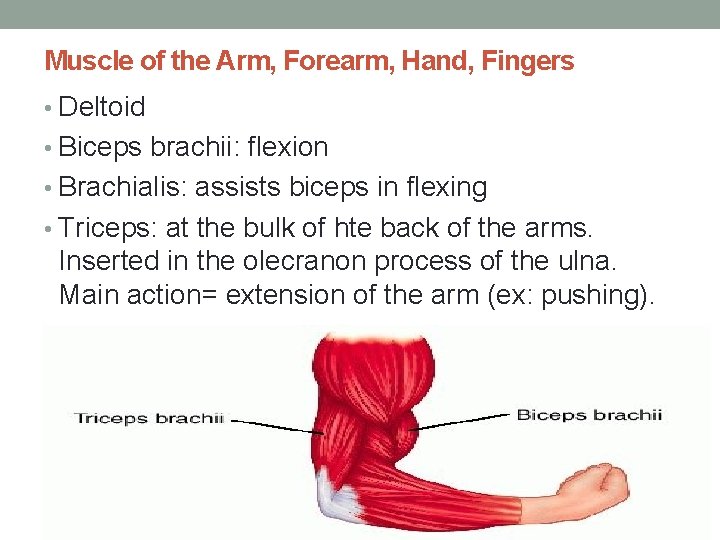
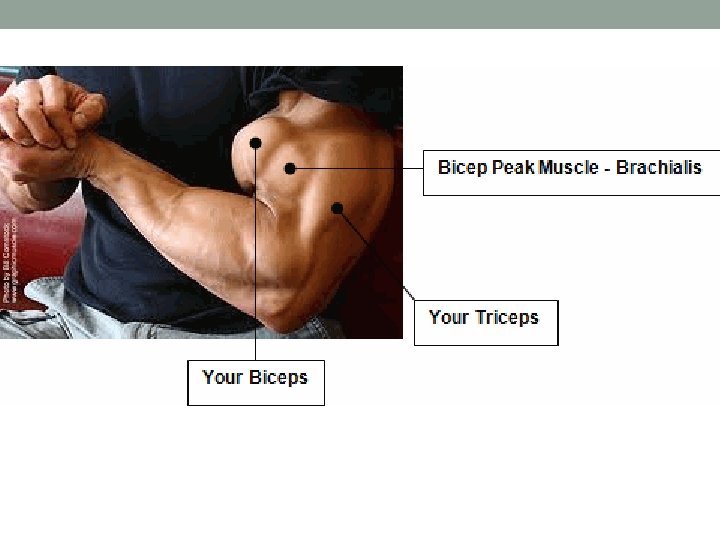
Muscle of the Arm, Forearm, Hand, Fingers • Deltoid • Biceps brachii: flexion • Brachialis: assists biceps in flexing • Triceps: at the bulk of hte back of the arms. Inserted in the olecranon process of the ulna. Main action= extension of the arm (ex: pushing).
Muscles Which Move the Joints of the Lower Limb • Specialized for support and locomotion • Muscles of the buttocks • Gluteus maximus: the largest (for running, climbing, rising from sitting position). • Gluteuns medius • Gluteus minimus
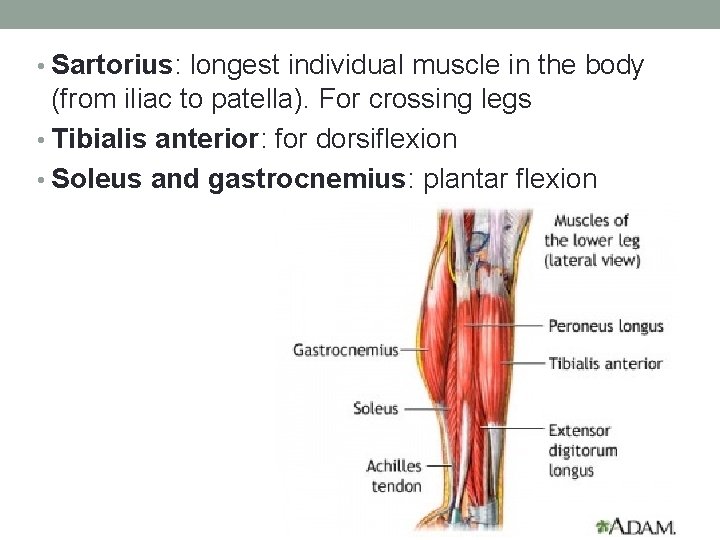
• Sartorius: longest individual muscle in the body (from iliac to patella). For crossing legs • Tibialis anterior: for dorsiflexion • Soleus and gastrocnemius: plantar flexion
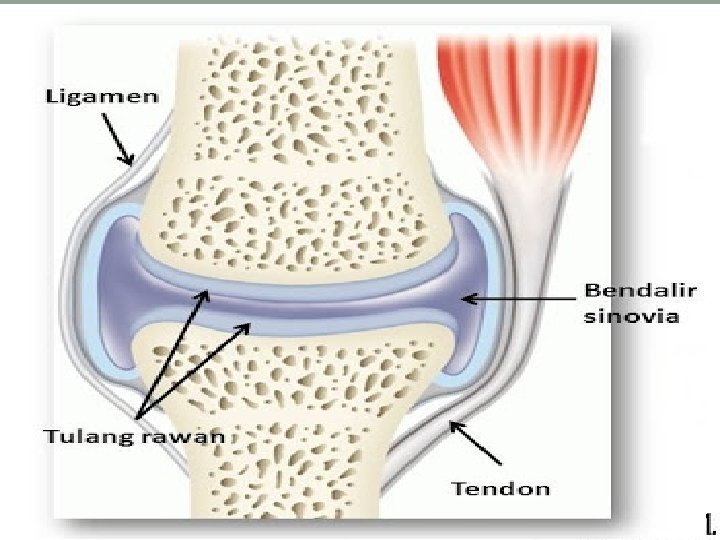
TERMINOLOGY • Tendon: fibrous connective tissue, tie bones to muscles - struktur dalam tubuh yang lentur tapi kuat yang menghubungkan otot ke tulang • Ligamen: fibrous connective tissue, tie bones to bones - penghubung antara tulang dengan tulang
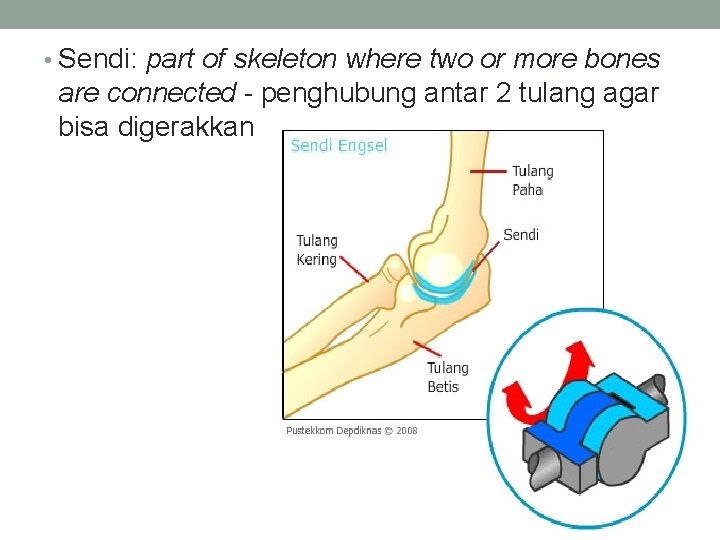
• Sendi: part of skeleton where two or more bones are connected - penghubung antar 2 tulang agar bisa digerakkan
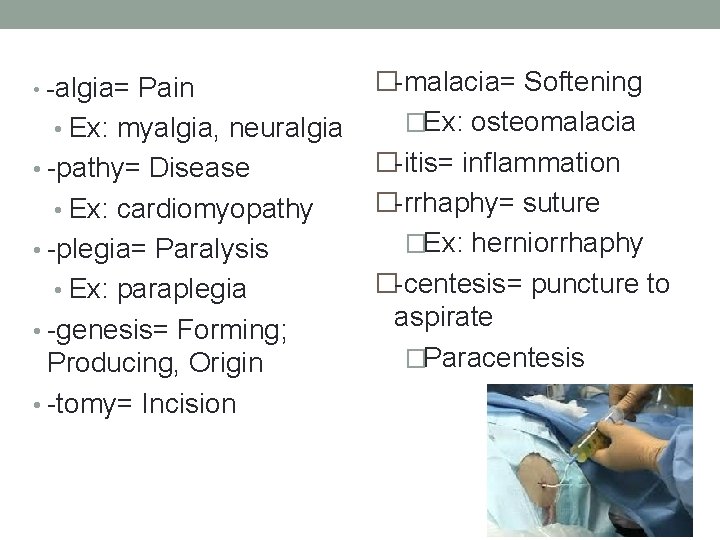
• -algia= Pain • Ex: myalgia, neuralgia • -pathy= Disease • Ex: cardiomyopathy • -plegia= Paralysis • Ex: paraplegia • -genesis= Forming; Producing, Origin • -tomy= Incision �-malacia= Softening �Ex: osteomalacia �-itis= inflammation �-rrhaphy= suture �Ex: herniorrhaphy �-centesis= puncture to aspirate �Paracentesis
• Quadri- = Four • Oste= Bone • Leukopoiesis= Formation or production of white blood cells • Erythropoiesis= Formation or production of red blood cells • Osteomalacia= Softening of bones • Arthritis= Inflammation of a joint • Arthrocentesis= Surgical punture of a joint • Arthroplasty= Surgical repair of a joint • Tendoplasty= A surgical repair of a tendon • Hemi- =Half
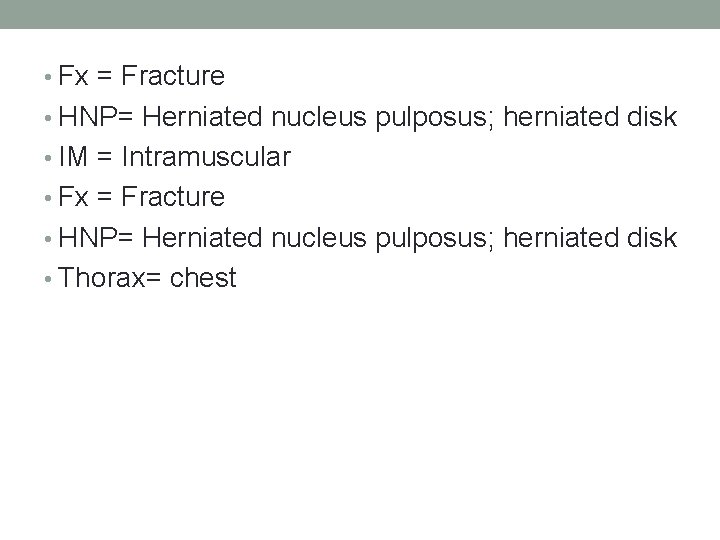
• Fx = Fracture • HNP= Herniated nucleus pulposus; herniated disk • IM = Intramuscular • Fx = Fracture • HNP= Herniated nucleus pulposus; herniated disk • Thorax= chest
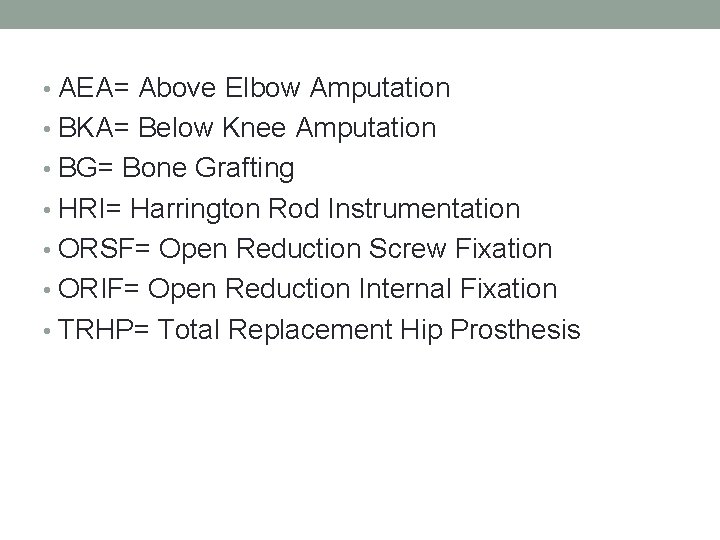
• AEA= Above Elbow Amputation • BKA= Below Knee Amputation • BG= Bone Grafting • HRI= Harrington Rod Instrumentation • ORSF= Open Reduction Screw Fixation • ORIF= Open Reduction Internal Fixation • TRHP= Total Replacement Hip Prosthesis
- Slides: 33