
TYPES OF BONDS TO START WHAT ARE WE
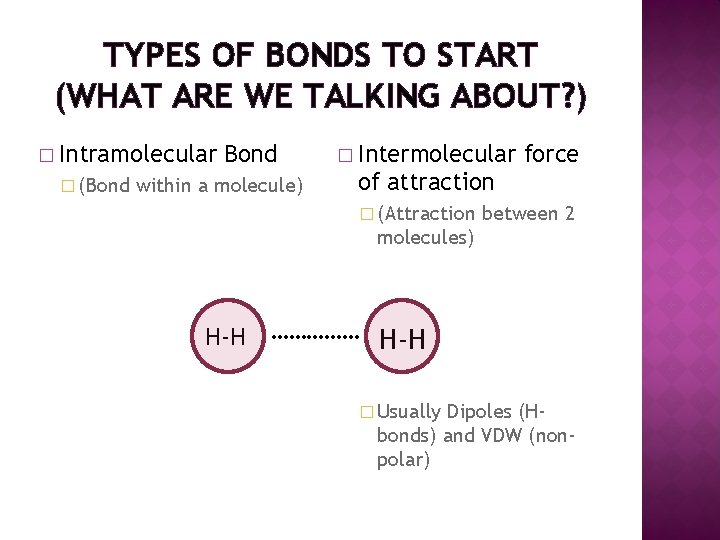
TYPES OF BONDS TO START (WHAT ARE WE TALKING ABOUT? ) � Intramolecular � (Bond within a molecule) � Intermolecular force of attraction � (Attraction between 2 molecules) H-H …………… H-H � Usually Dipoles (Hbonds) and VDW (nonpolar)
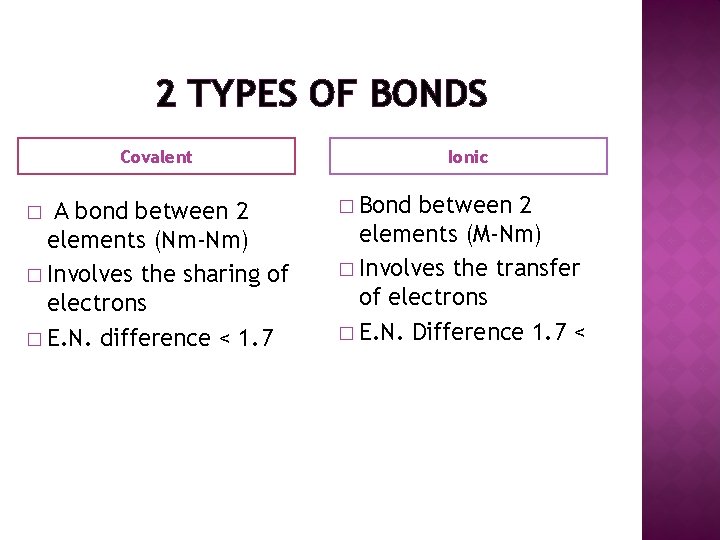
2 TYPES OF BONDS Covalent A bond between 2 elements (Nm-Nm) � Involves the sharing of electrons � E. N. difference < 1. 7 � Ionic � Bond between 2 elements (M-Nm) � Involves the transfer of electrons � E. N. Difference 1. 7 <
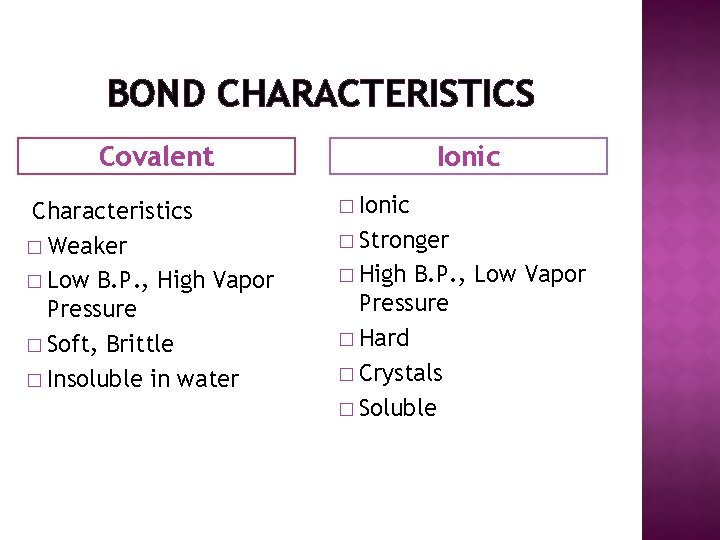
BOND CHARACTERISTICS Covalent Characteristics � Weaker � Low B. P. , High Vapor Pressure � Soft, Brittle � Insoluble in water Ionic � Stronger � High B. P. , Low Vapor Pressure � Hard � Crystals � Soluble
LEWIS DOTS 1. 2. 3. Show only the valence e-, (not Kernel e-) The goal with bonding is to achieve an outer valence of 8 Val e- (like a noble gas) ***To achieve a noble gas configuration*** a) (Rule of Octet) Metals (Grp 13) (Grp 14) NM Lose e. Gain e. Take on Noble Gas Configuration of the Noble Gas Before it! After it!
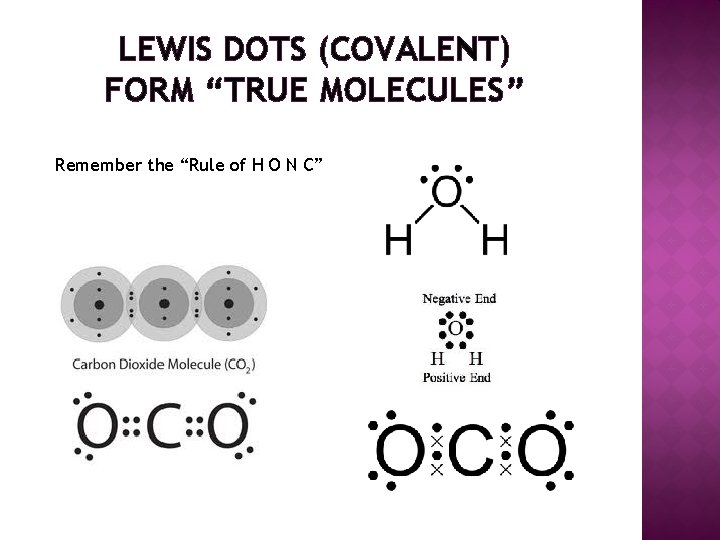
LEWIS DOTS (COVALENT) FORM “TRUE MOLECULES” Remember the “Rule of H O N C”
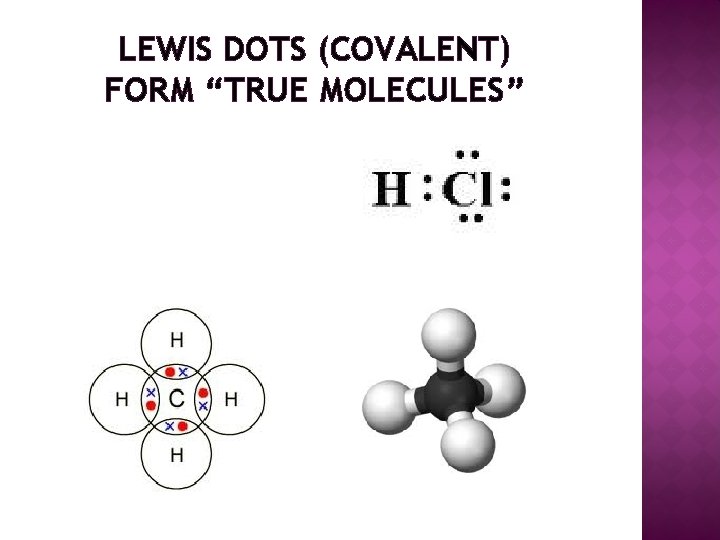
LEWIS DOTS (COVALENT) FORM “TRUE MOLECULES”
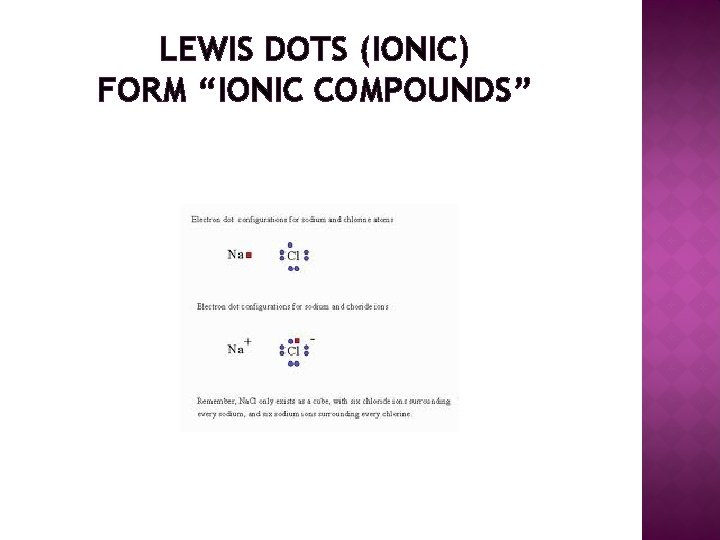
LEWIS DOTS (IONIC) FORM “IONIC COMPOUNDS”
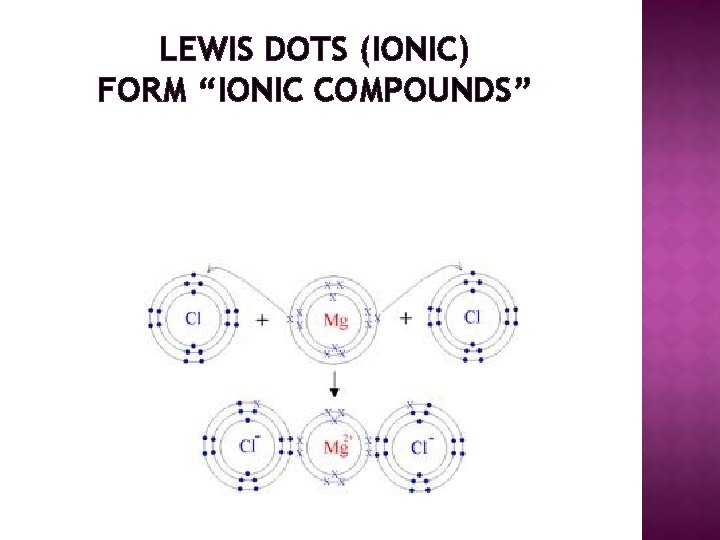
LEWIS DOTS (IONIC) FORM “IONIC COMPOUNDS”
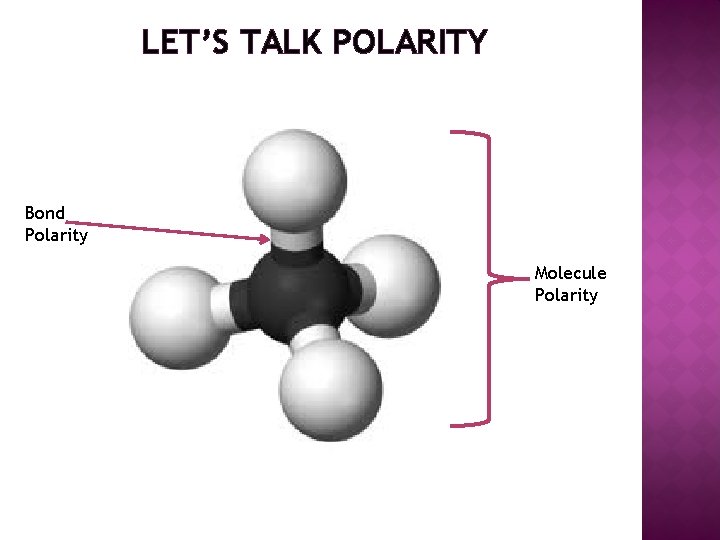
LET’S TALK POLARITY Bond Polarity Molecule Polarity
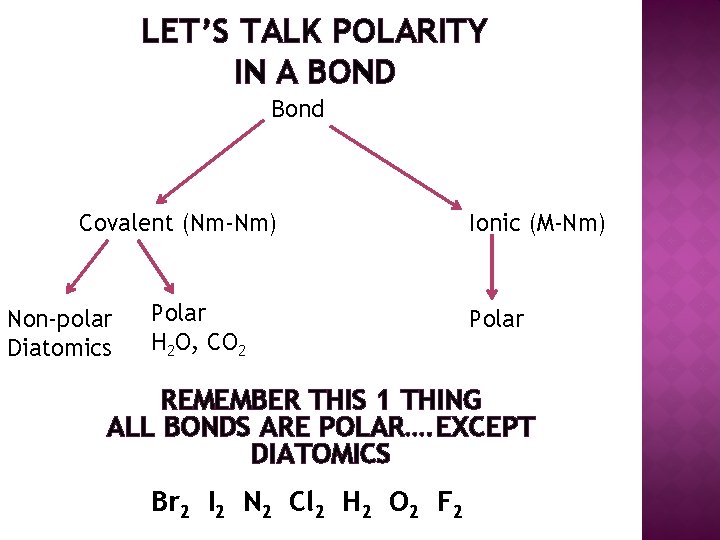
LET’S TALK POLARITY IN A BOND Bond Covalent (Nm-Nm) Non-polar Diatomics Polar H 2 O, CO 2 Ionic (M-Nm) Polar REMEMBER THIS 1 THING ALL BONDS ARE POLAR…. EXCEPT DIATOMICS Br 2 I 2 N 2 Cl 2 H 2 O 2 F 2
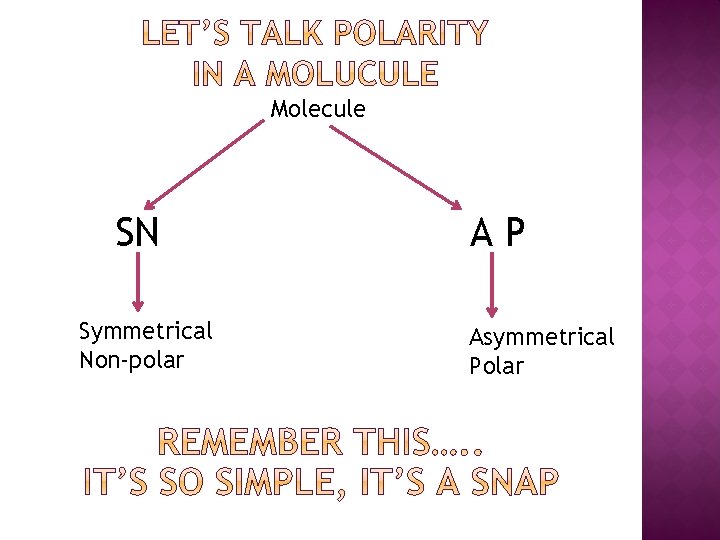
Molecule SN Symmetrical Non-polar AP Asymmetrical Polar
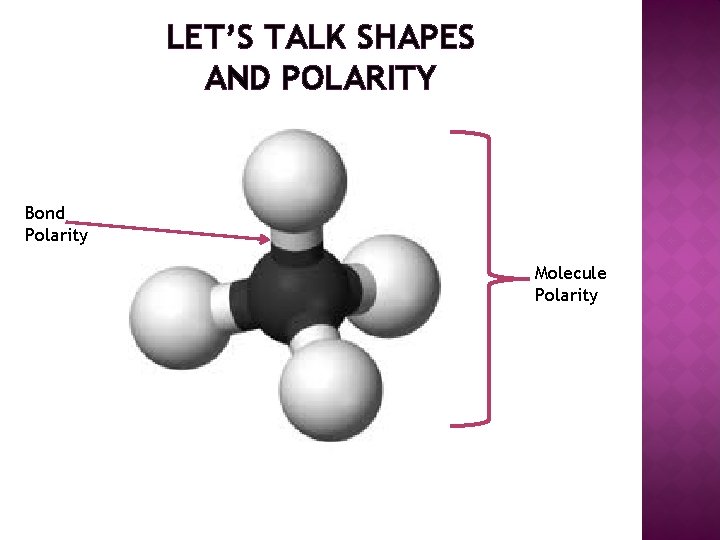
LET’S TALK SHAPES AND POLARITY Bond Polarity Molecule Polarity
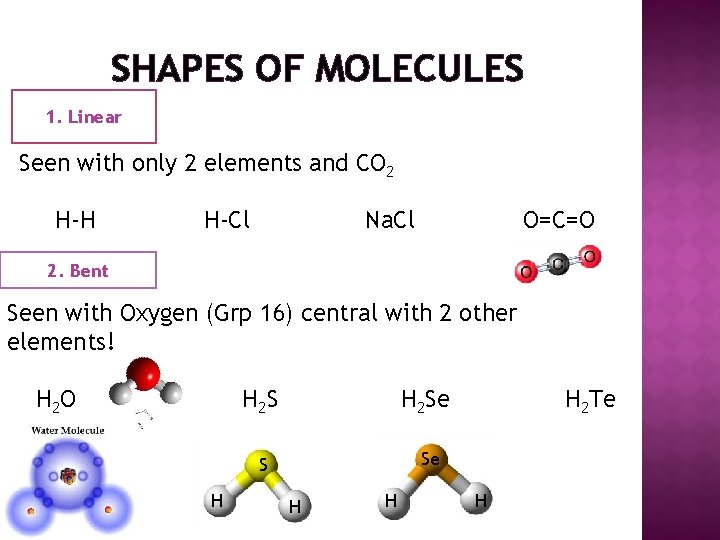
SHAPES OF MOLECULES 1. Linear Seen with only 2 elements and CO 2 H-H H-Cl Na. Cl O=C=O 2. Bent Seen with Oxygen (Grp 16) central with 2 other elements! H 2 O H H 2 Se S Se H H H 2 Te H
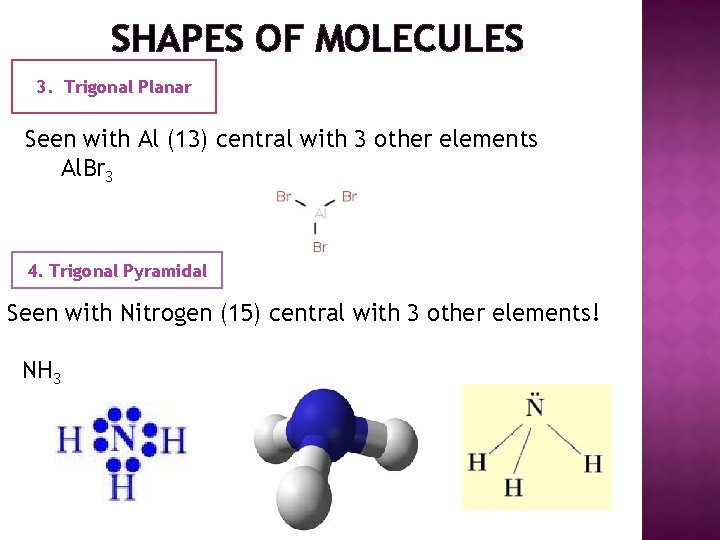
SHAPES OF MOLECULES 3. Trigonal Planar Seen with Al (13) central with 3 other elements Al. Br 3 4. Trigonal Pyramidal Seen with Nitrogen (15) central with 3 other elements! NH 3
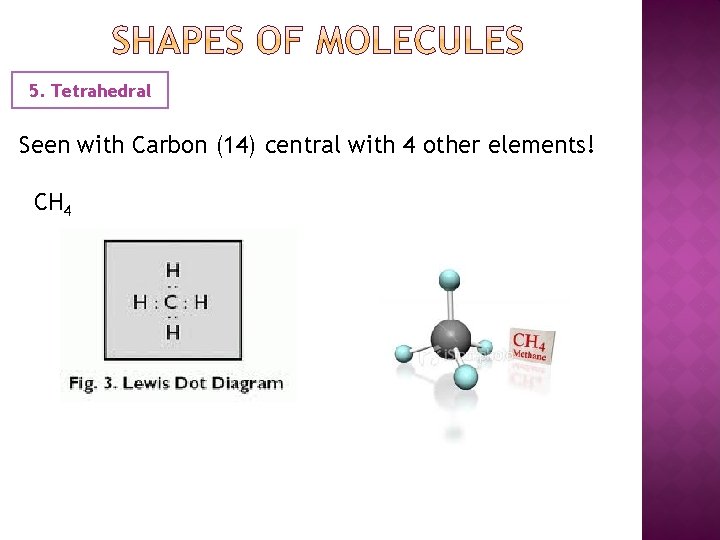
5. Tetrahedral Seen with Carbon (14) central with 4 other elements! CH 4
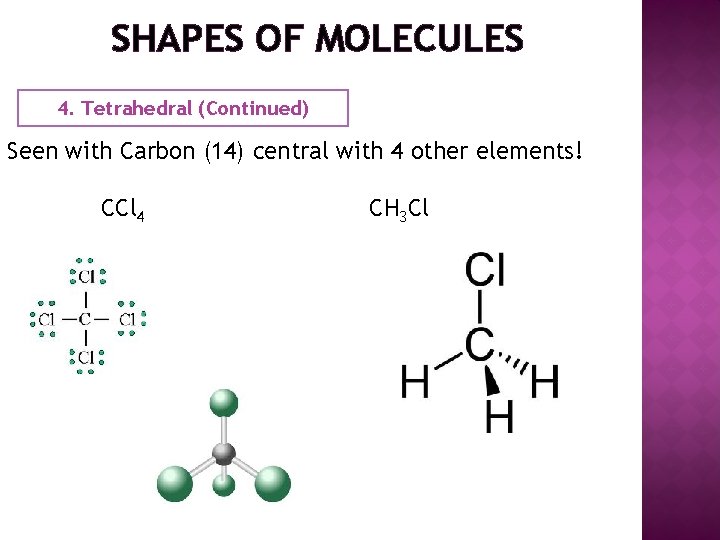
SHAPES OF MOLECULES 4. Tetrahedral (Continued) Seen with Carbon (14) central with 4 other elements! CCl 4 CH 3 Cl
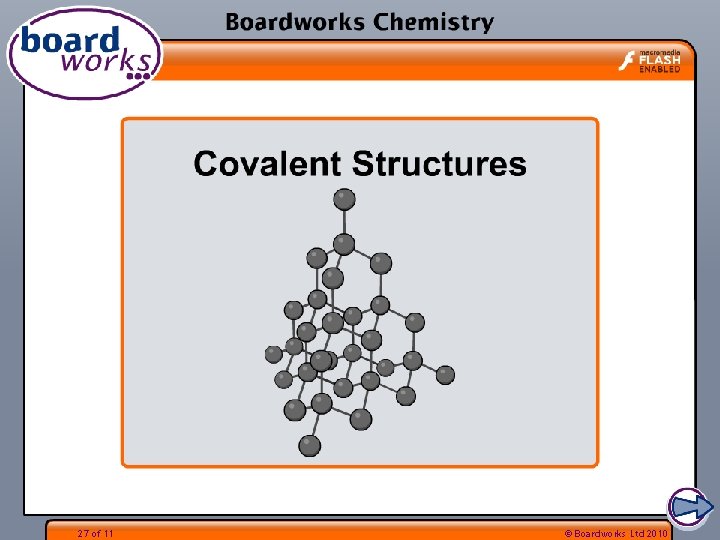
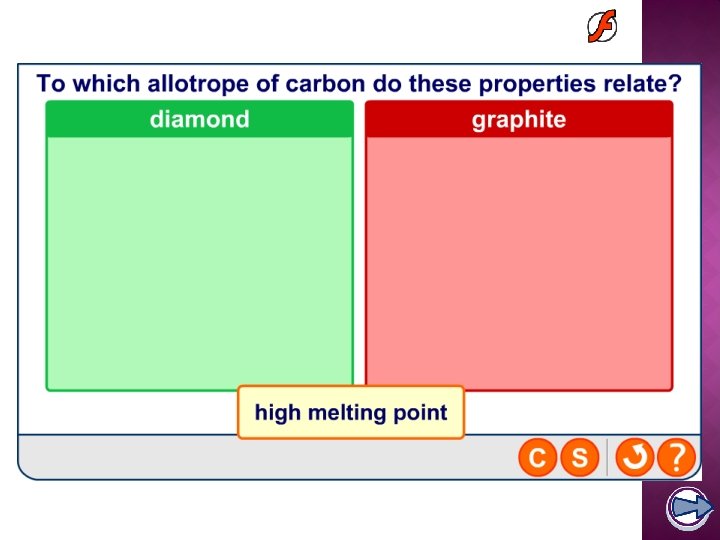
6 KINDS OF FORCES OF ATTRACTION 4 - INTRAMOLECULAR (WITH-IN) 2 - INTERMOLECULAR (IMF) Name Examples Characteristics 1. Network Solids Diamond, Graphite Strongest, Hardest Si. C Silicon Carbide ^^^^^ BP, MP Si. O 2 Silicon Dioxide Insoluble in water Poor conductor of electricity
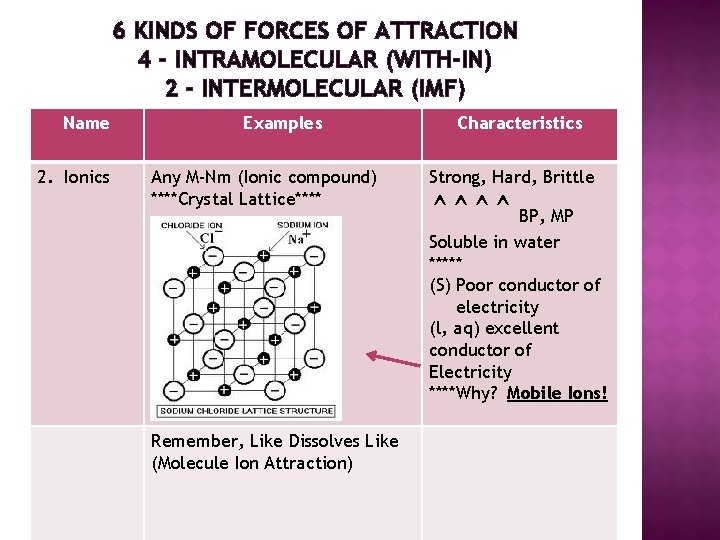
6 KINDS OF FORCES OF ATTRACTION 4 - INTRAMOLECULAR (WITH-IN) 2 - INTERMOLECULAR (IMF) Name 2. Ionics Examples Any M-Nm (Ionic compound) ****Crystal Lattice**** Characteristics Strong, Hard, Brittle ^^^^ BP, MP Soluble in water ***** (S) Poor conductor of electricity (l, aq) excellent conductor of Electricity ****Why? Mobile Ions! Remember, Like Dissolves Like (Molecule Ion Attraction)
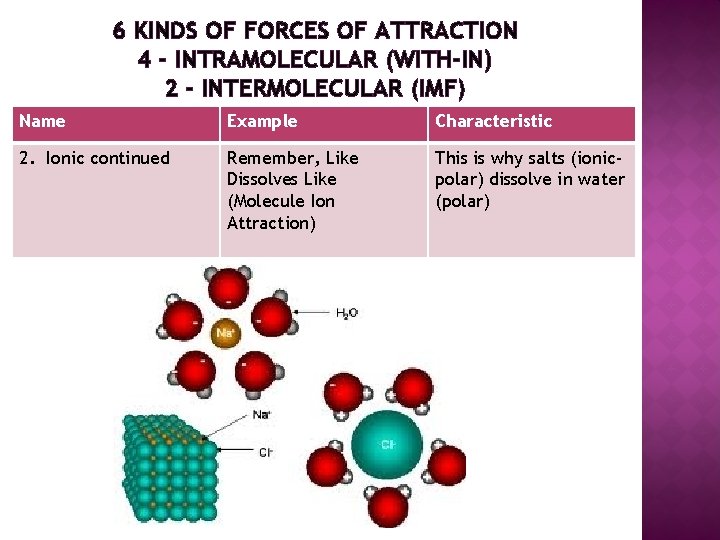
6 KINDS OF FORCES OF ATTRACTION 4 - INTRAMOLECULAR (WITH-IN) 2 - INTERMOLECULAR (IMF) Name Example Characteristic 2. Ionic continued Remember, Like Dissolves Like (Molecule Ion Attraction) This is why salts (ionicpolar) dissolve in water (polar)
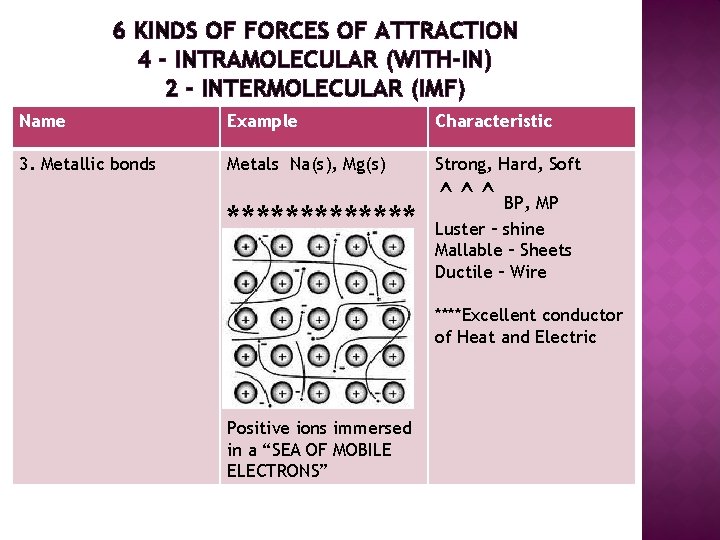
6 KINDS OF FORCES OF ATTRACTION 4 - INTRAMOLECULAR (WITH-IN) 2 - INTERMOLECULAR (IMF) Name Example Characteristic 3. Metallic bonds Metals Na(s), Mg(s) Strong, Hard, Soft ******* ^^^ BP, MP Luster – shine Mallable – Sheets Ductile – Wire ****Excellent conductor of Heat and Electric Positive ions immersed in a “SEA OF MOBILE ELECTRONS”
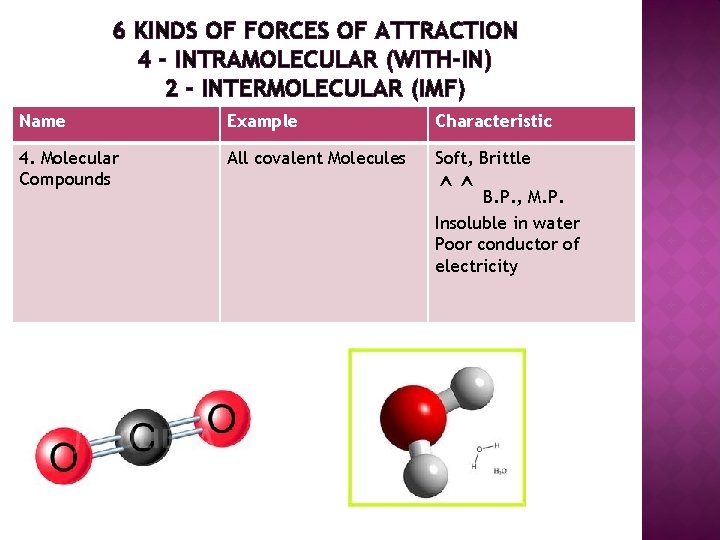
6 KINDS OF FORCES OF ATTRACTION 4 - INTRAMOLECULAR (WITH-IN) 2 - INTERMOLECULAR (IMF) Name Example Characteristic 4. Molecular Compounds All covalent Molecules Soft, Brittle ^^ B. P. , M. P. Insoluble in water Poor conductor of electricity
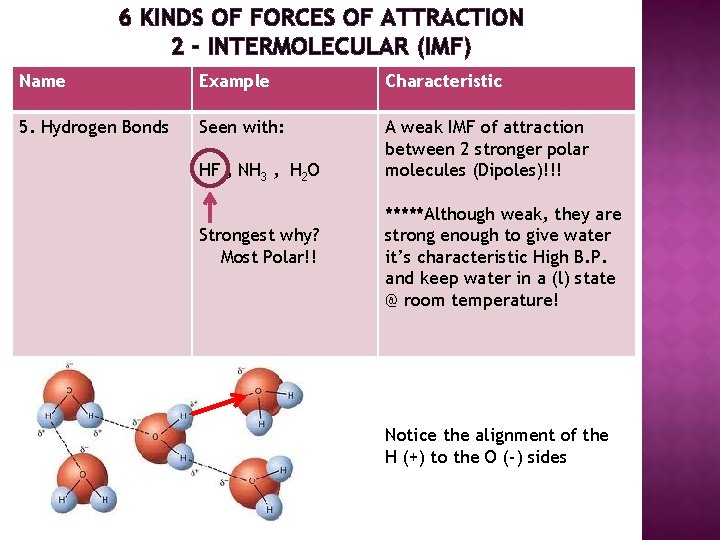
6 KINDS OF FORCES OF ATTRACTION 2 - INTERMOLECULAR (IMF) Name Example Characteristic 5. Hydrogen Bonds Seen with: A weak IMF of attraction between 2 stronger polar molecules (Dipoles)!!! HF , NH 3 , H 2 O Strongest why? Most Polar!! *****Although weak, they are strong enough to give water it’s characteristic High B. P. and keep water in a (l) state @ room temperature! Notice the alignment of the H (+) to the O (-) sides
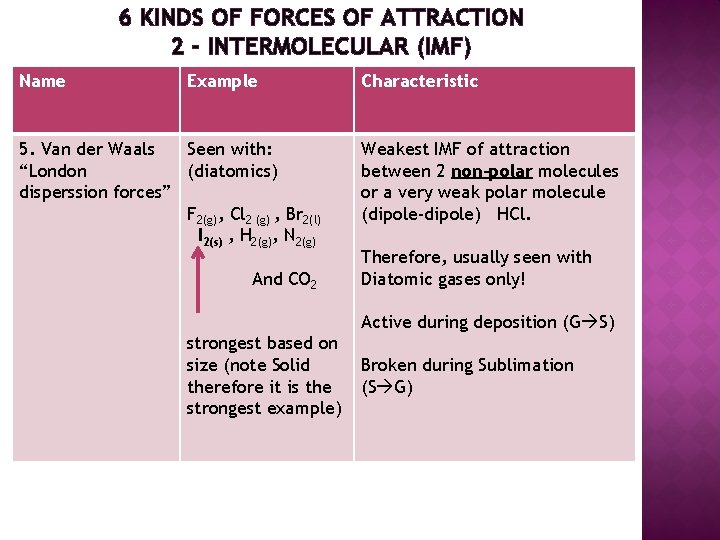
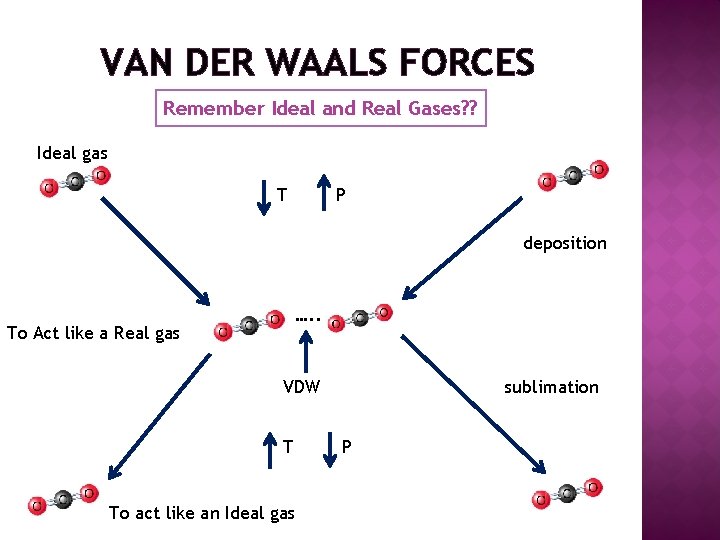
6 KINDS OF FORCES OF ATTRACTION 2 - INTERMOLECULAR (IMF) Name Example 5. Van der Waals Seen with: “London (diatomics) disperssion forces” F 2(g), Cl 2 (g) , Br 2(l) I 2(s) , H 2(g), N 2(g) And CO 2 Characteristic Weakest IMF of attraction between 2 non-polar molecules or a very weak polar molecule (dipole-dipole) HCl. Therefore, usually seen with Diatomic gases only! Active during deposition (G S) strongest based on size (note Solid therefore it is the strongest example) Broken during Sublimation (S G)
VAN DER WAALS FORCES Remember Ideal and Real Gases? ? Ideal gas T P deposition …. . To Act like a Real gas VDW T To act like an Ideal gas sublimation P
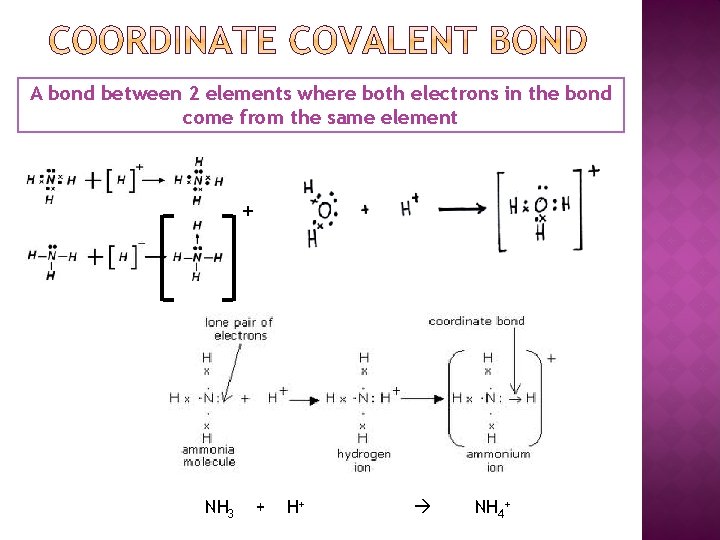
A bond between 2 elements where both electrons in the bond come from the same element + NH 3 + H+ NH 4+
27 of 11 © Boardworks Ltd 2010
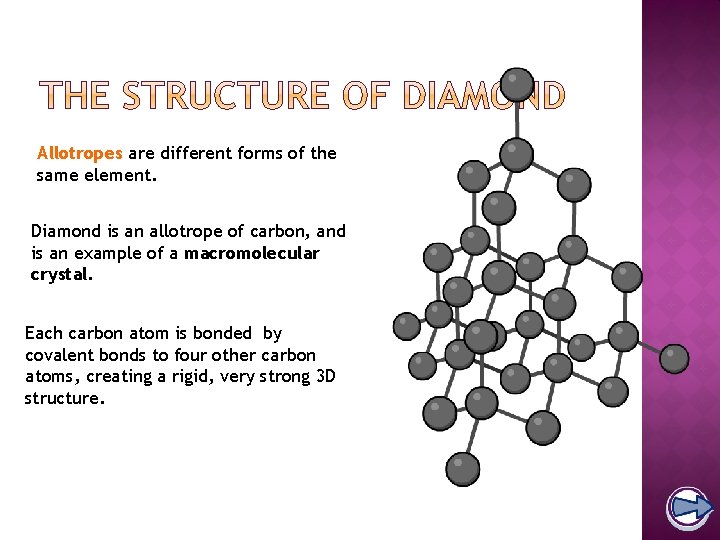
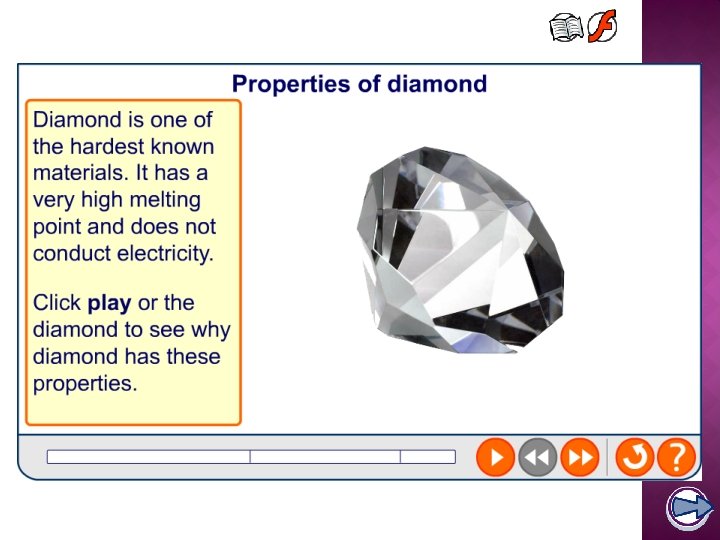
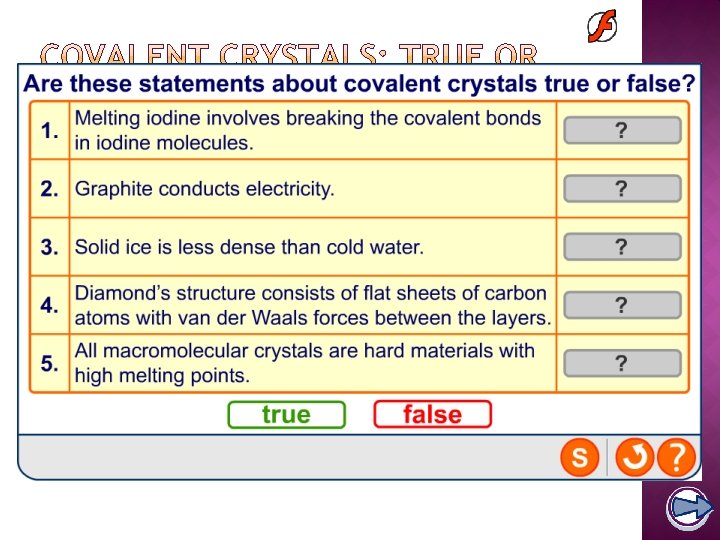
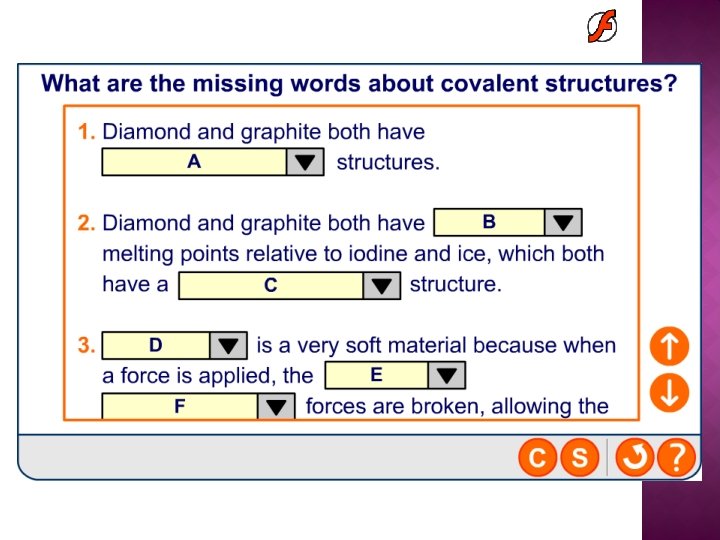
Allotropes are different forms of the same element. Diamond is an allotrope of carbon, and is an example of a macromolecular crystal. Each carbon atom is bonded by covalent bonds to four other carbon atoms, creating a rigid, very strong 3 D structure.
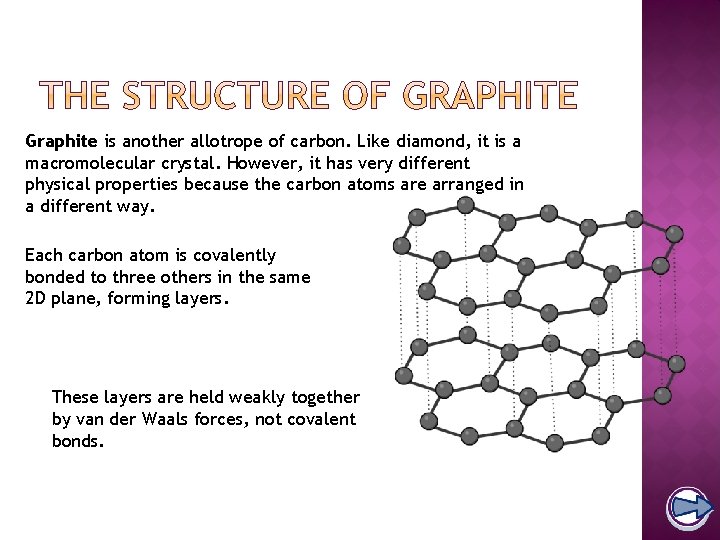
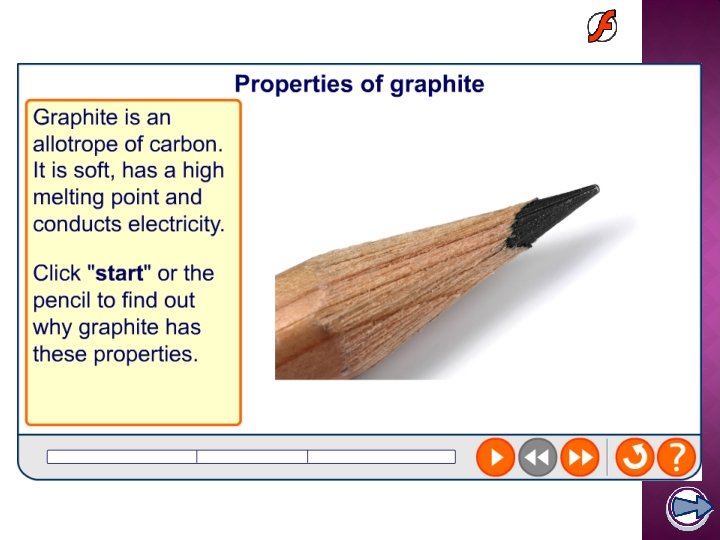
Graphite is another allotrope of carbon. Like diamond, it is a macromolecular crystal. However, it has very different physical properties because the carbon atoms are arranged in a different way. Each carbon atom is covalently bonded to three others in the same 2 D plane, forming layers. These layers are held weakly together by van der Waals forces, not covalent bonds.
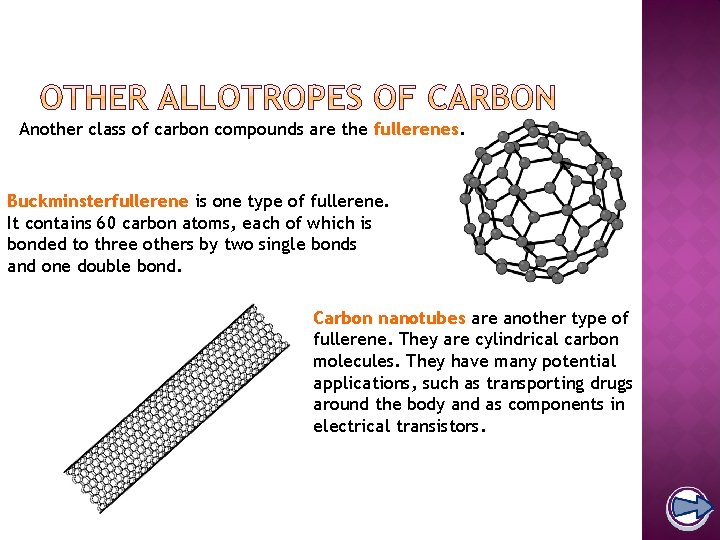
Another class of carbon compounds are the fullerenes. Buckminsterfullerene is one type of fullerene. It contains 60 carbon atoms, each of which is bonded to three others by two single bonds and one double bond. Carbon nanotubes are another type of fullerene. They are cylindrical carbon molecules. They have many potential applications, such as transporting drugs around the body and as components in electrical transistors.
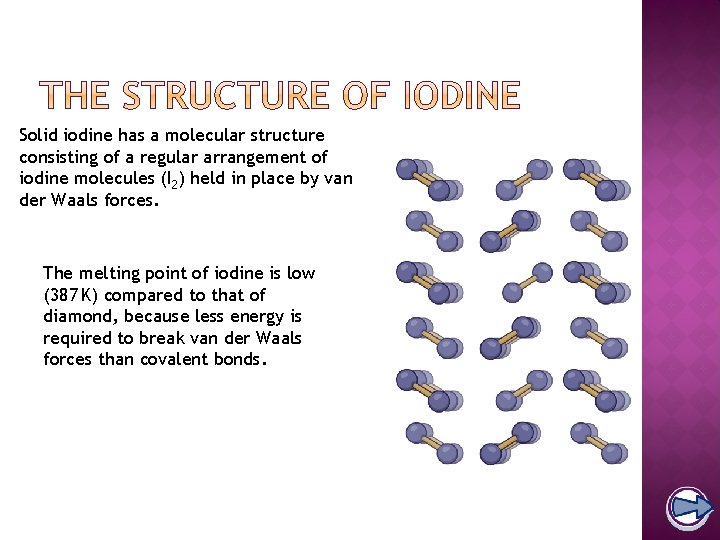
Solid iodine has a molecular structure consisting of a regular arrangement of iodine molecules (I 2) held in place by van der Waals forces. The melting point of iodine is low (387 K) compared to that of diamond, because less energy is required to break van der Waals forces than covalent bonds.
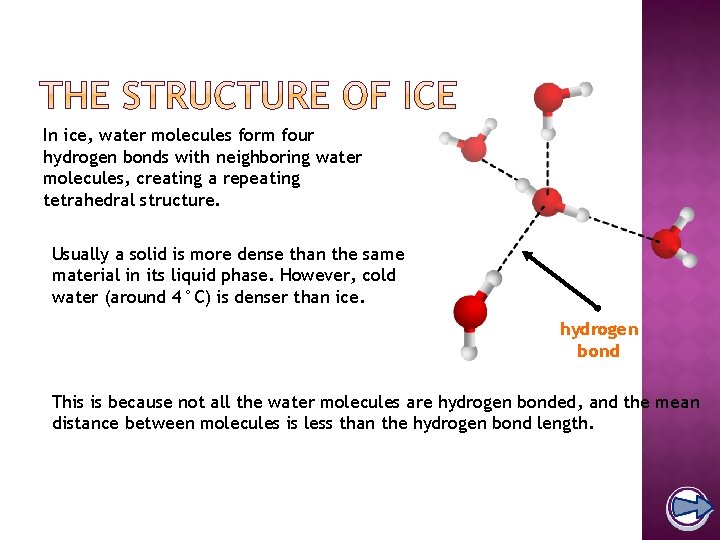
In ice, water molecules form four hydrogen bonds with neighboring water molecules, creating a repeating tetrahedral structure. Usually a solid is more dense than the same material in its liquid phase. However, cold water (around 4 °C) is denser than ice. hydrogen bond This is because not all the water molecules are hydrogen bonded, and the mean distance between molecules is less than the hydrogen bond length.
- Slides: 37