
TYPES OF BIRTH AND REPRODUCTION Amanda Harrison 2018
TYPES OF BIRTH AND REPRODUCTION Amanda Harrison 2018 & Ben Cherry
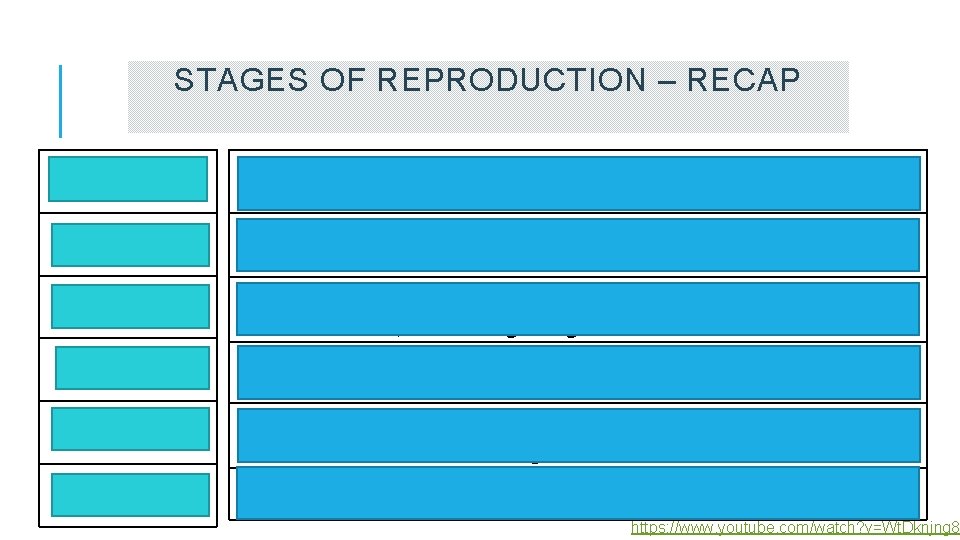
STAGES OF REPRODUCTION – RECAP Ovulation The female produces an egg (ovum) Copulation Male and female mate, or the female is inseminated Fertilisation Sperm, containing genetic material from the male, combines with the ovum, containing the genetic material from the female Implantation The fertilised egg is implanted in the uterus (womb) Gestation The female animal nurtures the early embryo and foetus during gestation Parturition The animal gives birth https: //www. youtube. com/watch? v=Wt. Dknjng 8
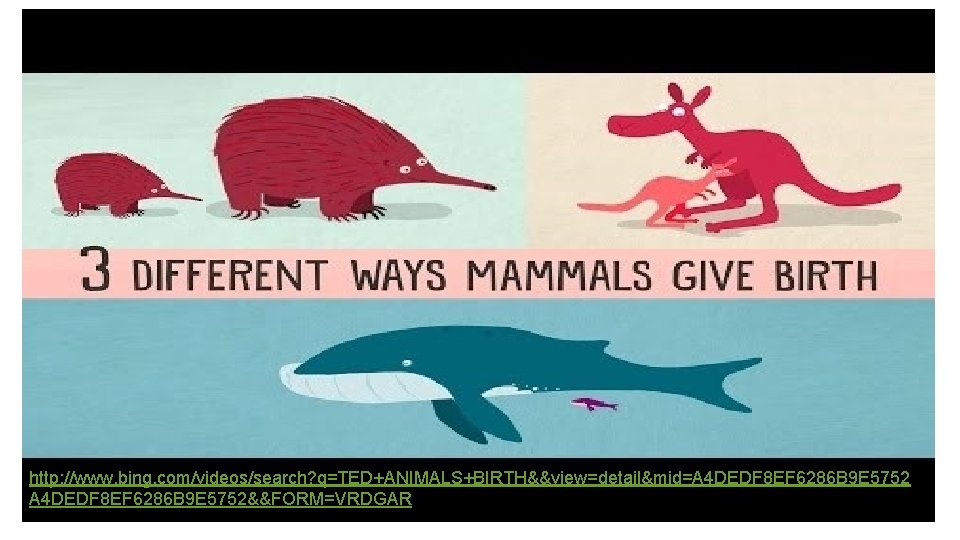
http: //www. bing. com/videos/search? q=TED+ANIMALS+BIRTH&&view=detail&mid=A 4 DEDF 8 EF 6286 B 9 E 5752&&FORM=VRDGAR
INTERNAL AND EXTERNAL FERTILISATION There are two mechanisms by which fertilisation can take place. The first is external (the eggs are fertilised outside of the body), and the second is internal (the eggs are fertilised within the female reproductive tract).
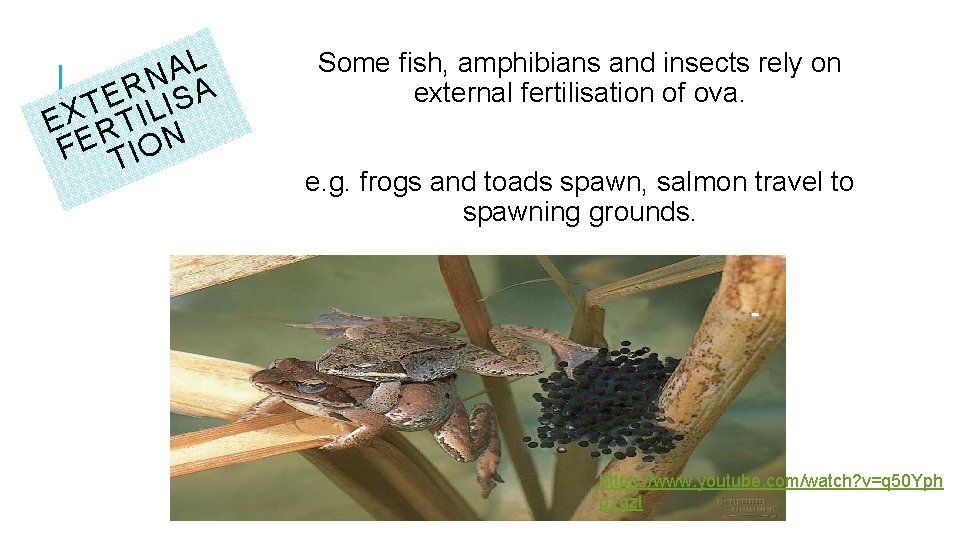
L A N A R E LIS T EX RTI N FE TIO Some fish, amphibians and insects rely on external fertilisation of ova. e. g. frogs and toads spawn, salmon travel to spawning grounds. https: //www. youtube. com/watch? v=q 50 Yph p 1 gz. I
ADVANTAGES AND DISADVANTAGES OF INTERNAL AND EXTERNAL FERTILISATION What is internal fertilisation? Can you name examples? What is external fertilisation? Can you name examples? With the person sitting next to you, discuss and write down the advantages and disadvantages of internal and external fertilisation
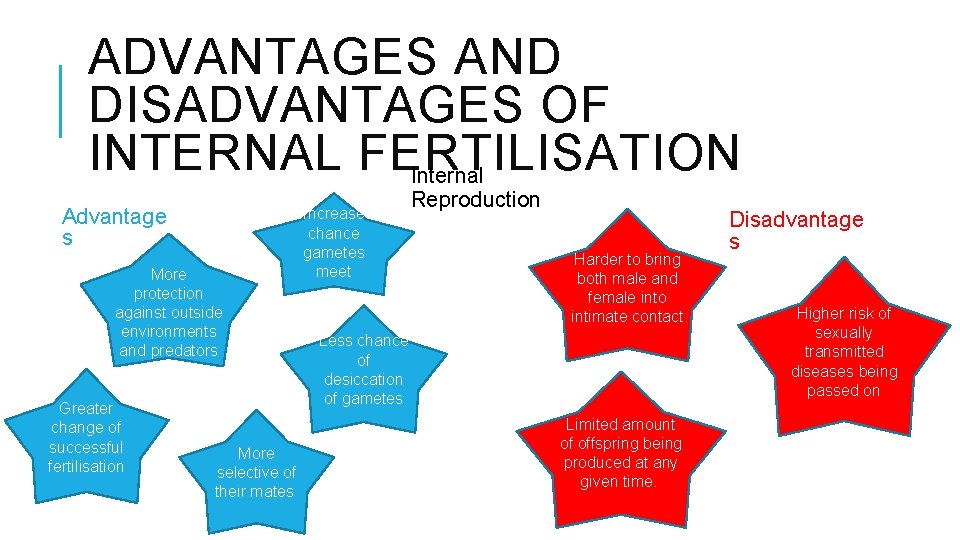
ADVANTAGES AND DISADVANTAGES OF INTERNAL FERTILISATION Internal Advantage s More protection against outside environments and predators Greater change of successful fertilisation More selective of their mates Increase chance gametes meet Reproduction Harder to bring both male and female into intimate contact Less chance of desiccation of gametes Limited amount of offspring being produced at any given time. Disadvantage s Higher risk of sexually transmitted diseases being passed on

ADVANTAGES AND DISADVANTAGES OF EXTERNAL FERTILISATION External Reproduction Advantage s Results in the production of a large number of offspring More genetic variation Easier to find mates as the gametes released can drift (wind, water etc). Environmental hazards such as predators reduce the change of surviving into adulthood. Not guaranteed that sperm will come in contact with eggs Disadvantage s Large amounts of gametes go unfertilised and wasted. Greater chance of desiccation of gametes/zygotes.
- Slides: 8