
TYPES OF ASSESSMENT ITEMS INTRODUCTION PURPOSE Identify describe
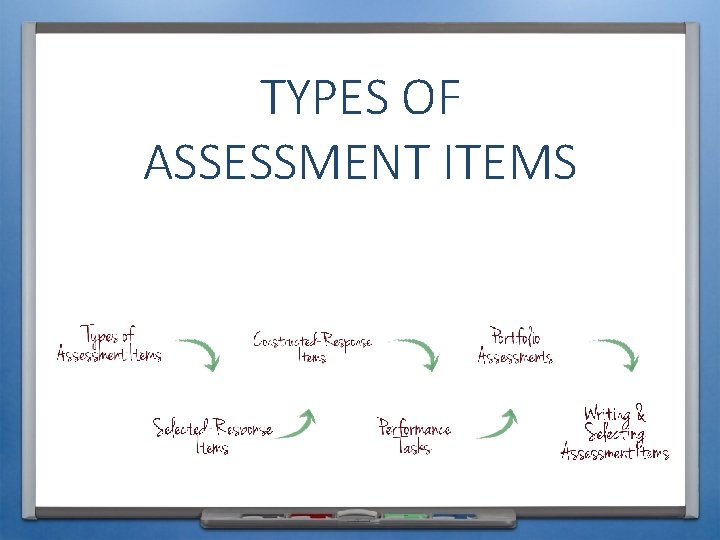
TYPES OF ASSESSMENT ITEMS
INTRODUCTION & PURPOSE Identify, describe and tell the difference between three different TYPES OF ASSESSMENT ITEMS
KEY CONCEPTS
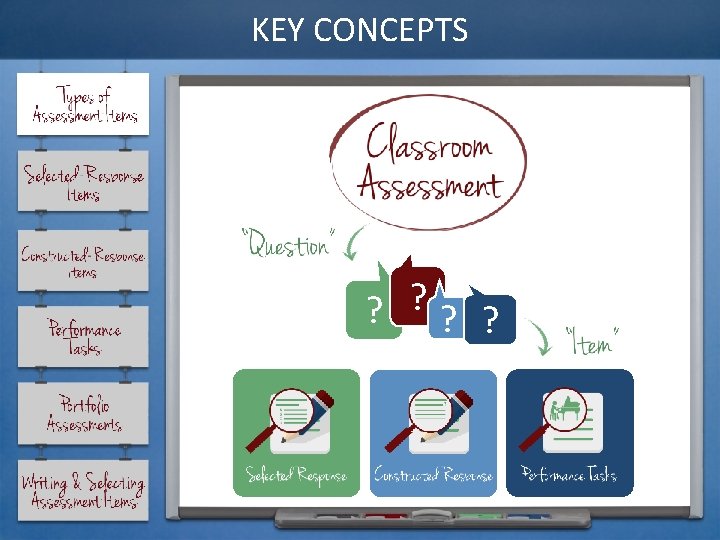
KEY CONCEPTS ? ?
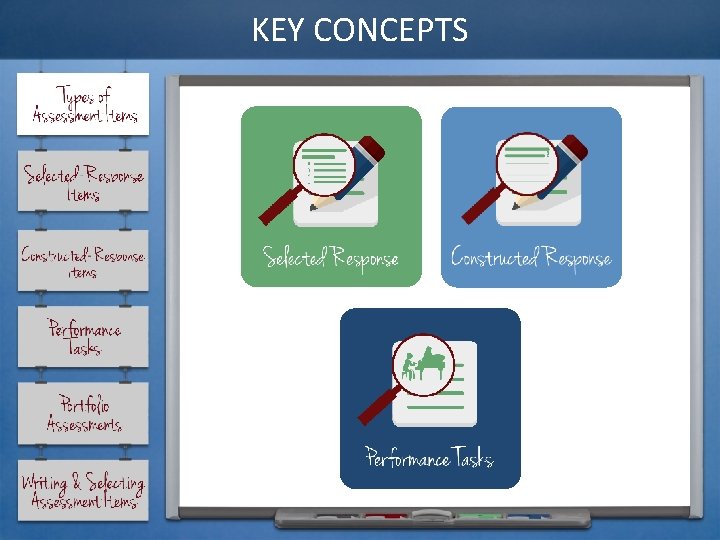
KEY CONCEPTS
KEY CONCEPTS
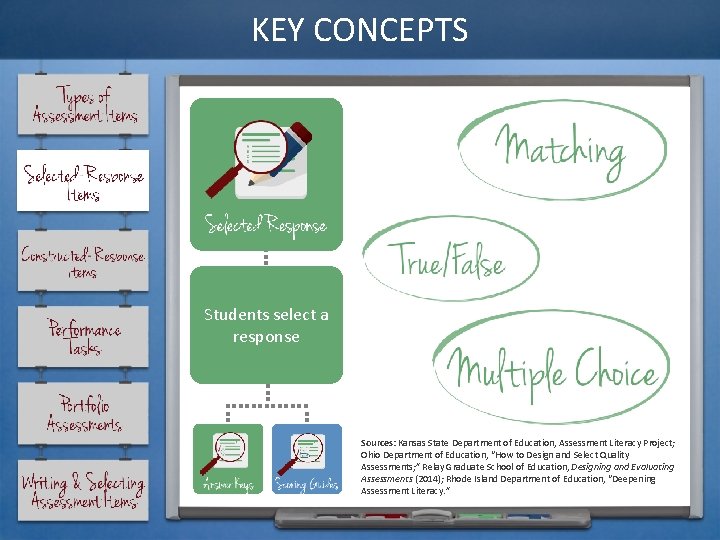
KEY CONCEPTS Students select a response Sources: Kansas State Department of Education, Assessment Literacy Project; Ohio Department of Education, “How to Design and Select Quality Assessments; ” Relay Graduate School of Education, Designing and Evaluating Assessments (2014); Rhode Island Department of Education, “Deepening Assessment Literacy. ”
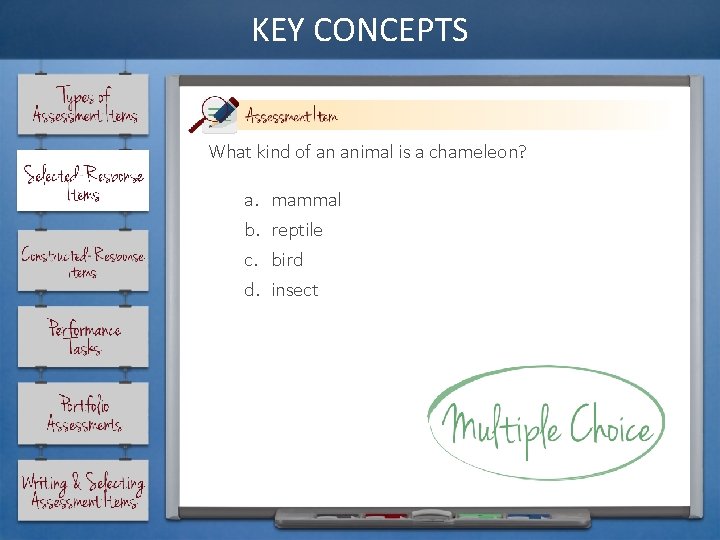
KEY CONCEPTS What kind of an animal is a chameleon? a. b. c. d. mammal reptile bird insect
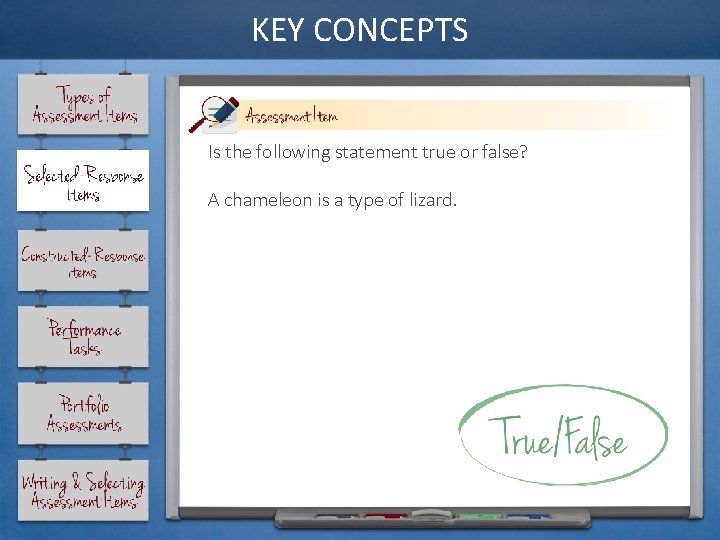
KEY CONCEPTS Is the following statement true or false? A chameleon is a type of lizard.
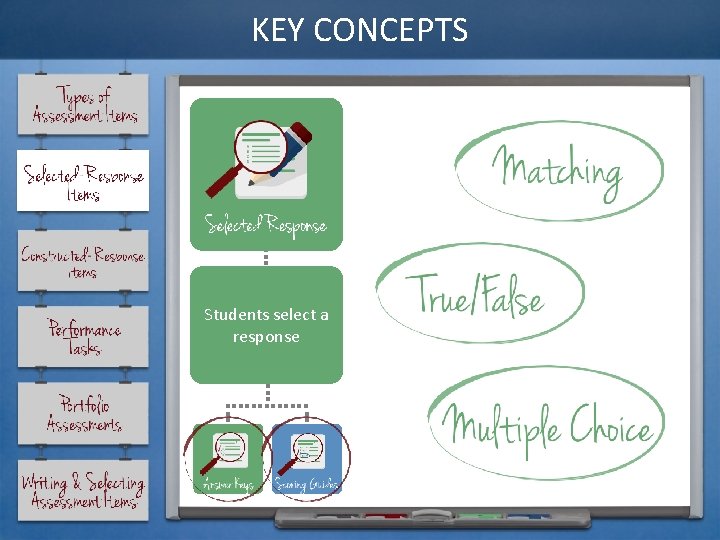
KEY CONCEPTS Students select a response
KEY CONCEPTS
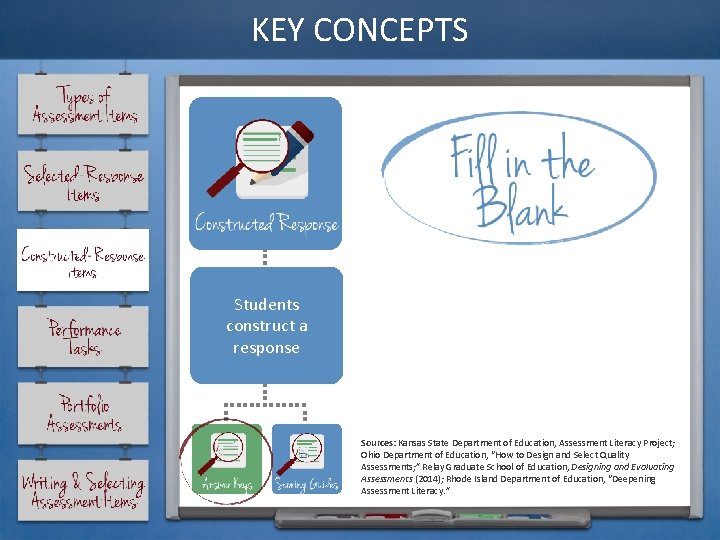
KEY CONCEPTS Students construct a response Sources: Kansas State Department of Education, Assessment Literacy Project; Ohio Department of Education, “How to Design and Select Quality Assessments; ” Relay Graduate School of Education, Designing and Evaluating Assessments (2014); Rhode Island Department of Education, “Deepening Assessment Literacy. ”
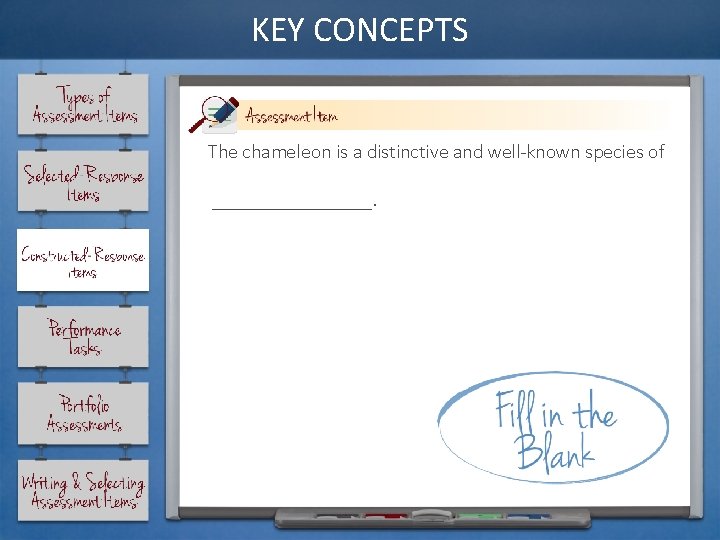
KEY CONCEPTS The chameleon is a distinctive and well-known species of ________.
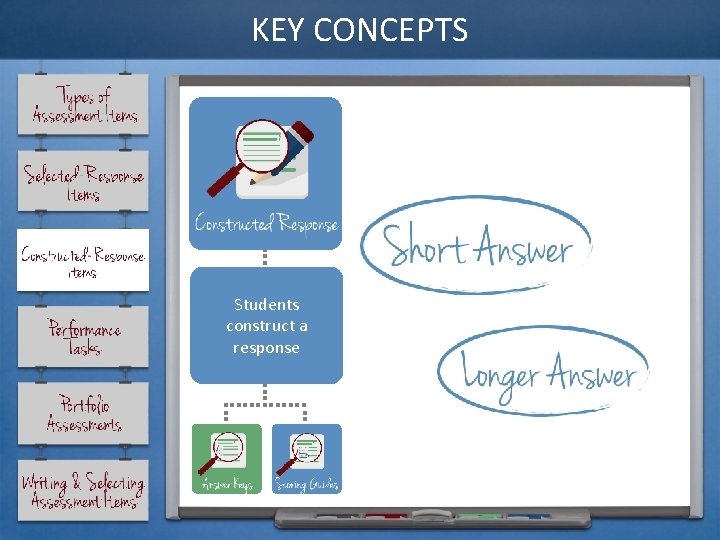
KEY CONCEPTS Students construct a response
KEY CONCEPTS Describe at least three distinguishing features of chameleons. Use complete sentences.
KEY CONCEPTS
KEY CONCEPTS
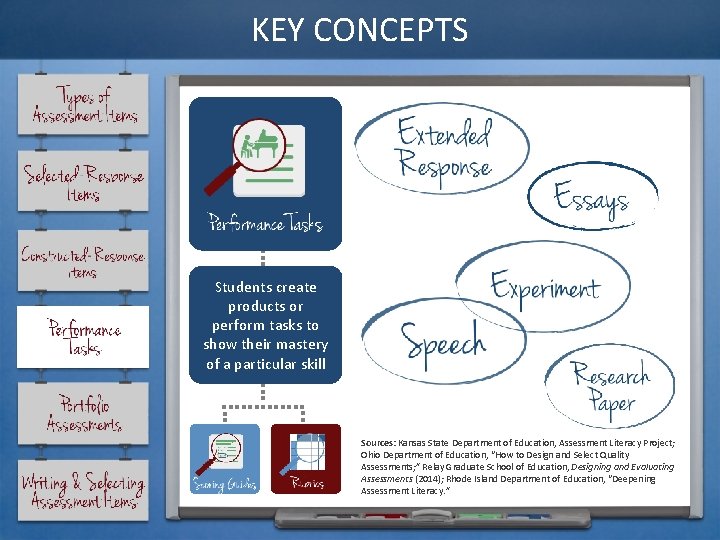
KEY CONCEPTS Students create products or perform tasks to show their mastery of a particular skill Sources: Kansas State Department of Education, Assessment Literacy Project; Ohio Department of Education, “How to Design and Select Quality Assessments; ” Relay Graduate School of Education, Designing and Evaluating Assessments (2014); Rhode Island Department of Education, “Deepening Assessment Literacy. ”
KEY CONCEPTS
KEY CONCEPTS
KEY CONCEPTS
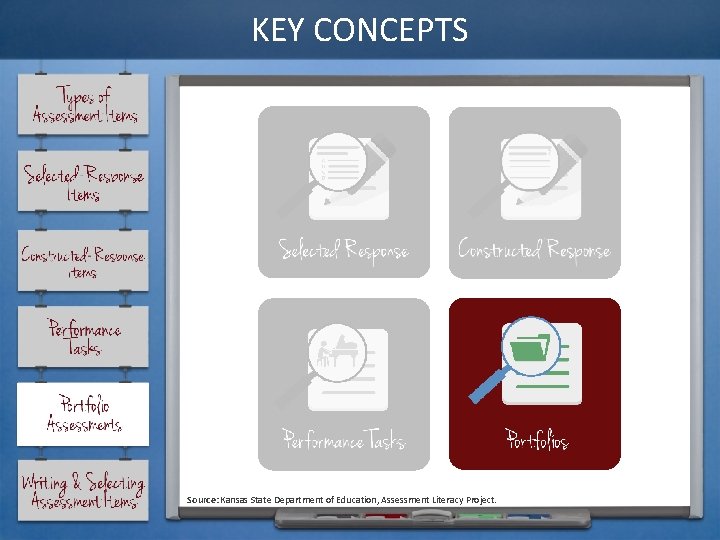
KEY CONCEPTS Source: Kansas State Department of Education, Assessment Literacy Project.
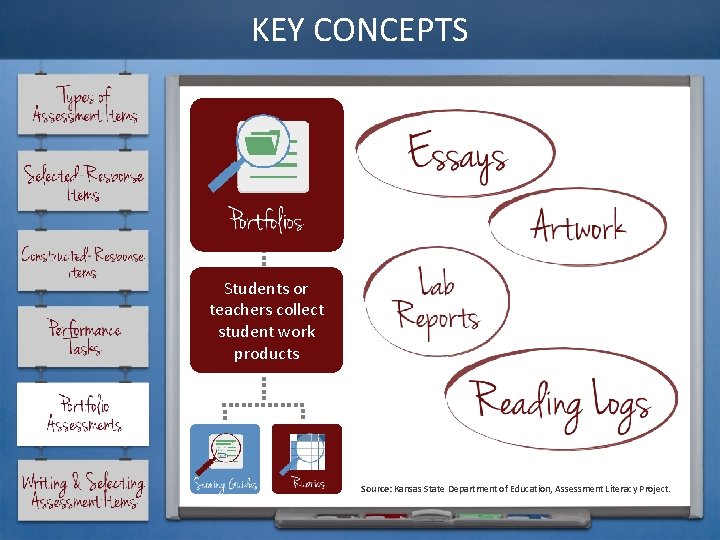
KEY CONCEPTS Students or teachers collect student work products Source: Kansas State Department of Education, Assessment Literacy Project.
KEY CONCEPTS
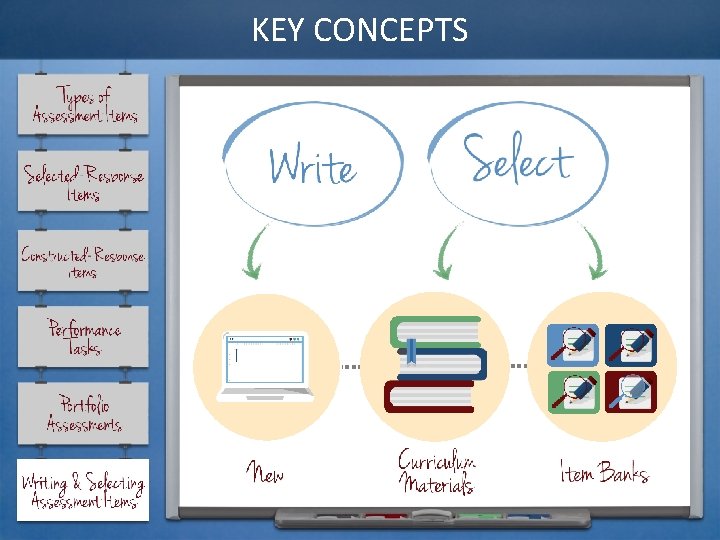
KEY CONCEPTS
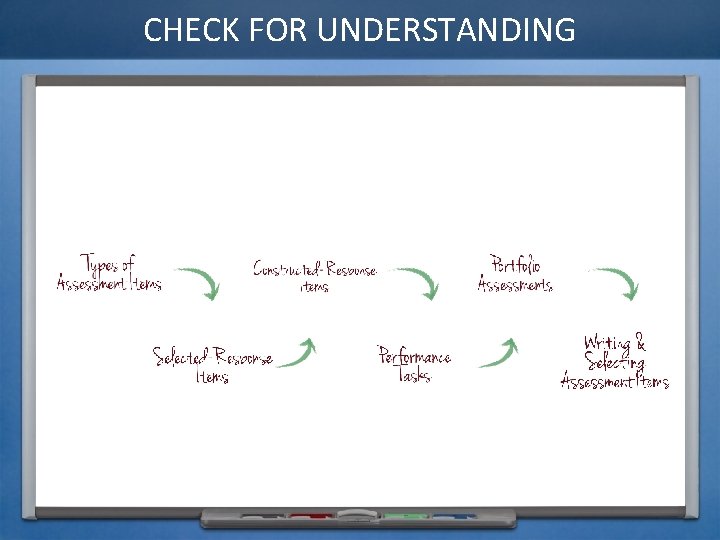
CHECK FOR UNDERSTANDING
CHECK FOR UNDERSTANDING Identify, describe and tell the difference between three different TYPES OF ASSESSMENT ITEMS
CHECK FOR UNDERSTANDING
CHECK FOR UNDERSTANDING Compare and contrast the three types of assessment items we discussed in this module according to how students demonstrate learning.
CHECK FOR UNDERSTANDING Compare and contrast the three types of assessment items we discussed in this module according to how students demonstrate learning.
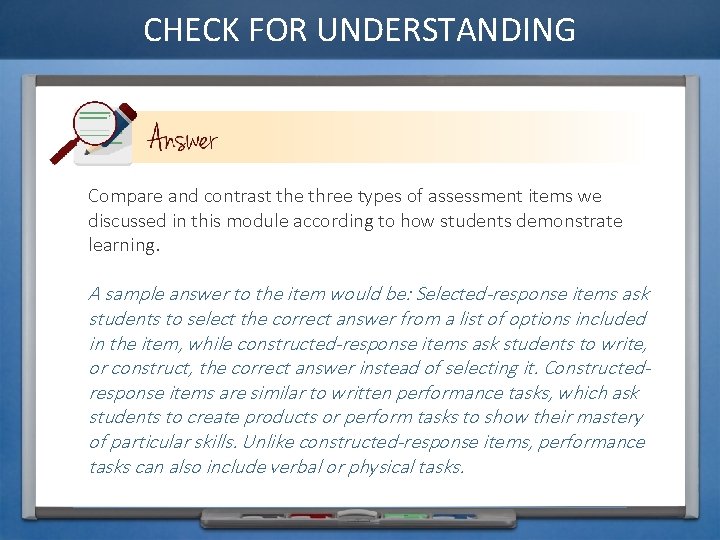
CHECK FOR UNDERSTANDING Compare and contrast the three types of assessment items we discussed in this module according to how students demonstrate learning. A sample answer to the item would be: Selected-response items ask students to select the correct answer from a list of options included in the item, while constructed-response items ask students to write, or construct, the correct answer instead of selecting it. Constructedresponse items are similar to written performance tasks, which ask students to create products or perform tasks to show their mastery of particular skills. Unlike constructed-response items, performance tasks can also include verbal or physical tasks.
CONCLUSION
- Slides: 32