
Types of Agriculture Communication and Leadership Communication Need
- Slides: 36
Types of Agriculture Communication and Leadership
Communication Need words, body language, actions, or gestures to communicate.
Communication § The exchange of accurate information about the agricultural and natural resource industries. § It is deliverable, through effective and efficient channels, using appropriate communication techniques and theories
Types of Communication n Dyadic (two-person) – most informal exchanges between two people – Close proximity – Both people send and receive messages – Includes verbal and nonverbal stimulus n Small Group – three or more members of a group
Types of Communication n Public – “Public” places, formal and structured, speaker addresses large group in an event as a speaker n Mass – most formal and most expensive, may include media
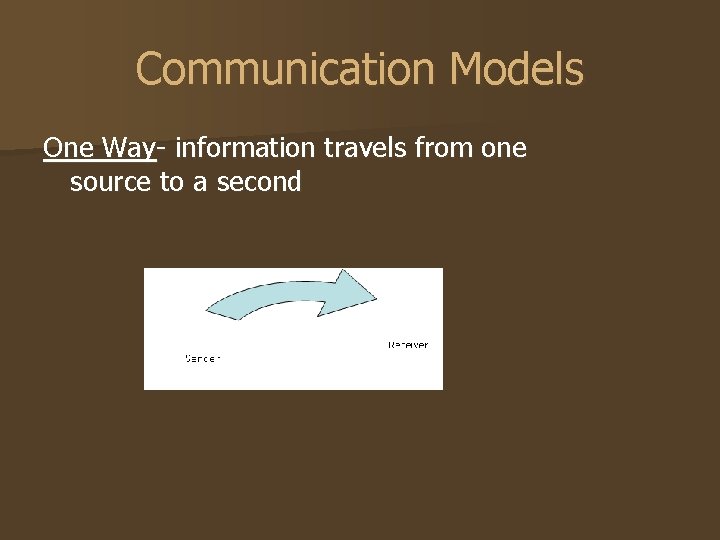
Communication Models One Way- information travels from one source to a second
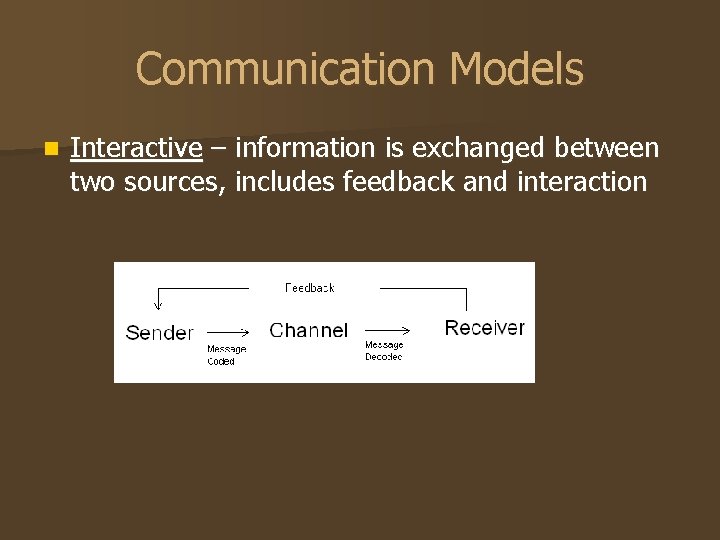
Communication Models n Interactive – information is exchanged between two sources, includes feedback and interaction
Styles of Communication Three Styles of Communication: n Verbal: Information that flows through verbal means, such as words, speeches, presentation, sounds, etc. . . – Two forms: Written and oral n Non-verbal: Communicating by sending and receiving wordless messages. – Body language, facial expressions, body movement and posture, gestures, tone of voice, etc. . .
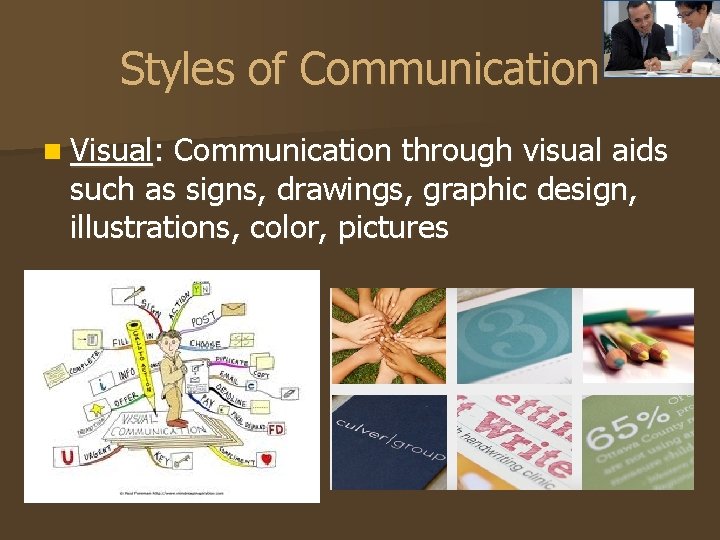
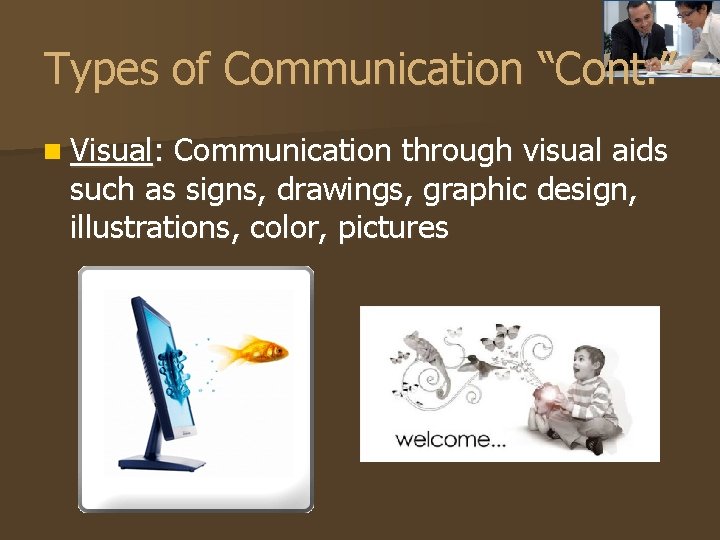
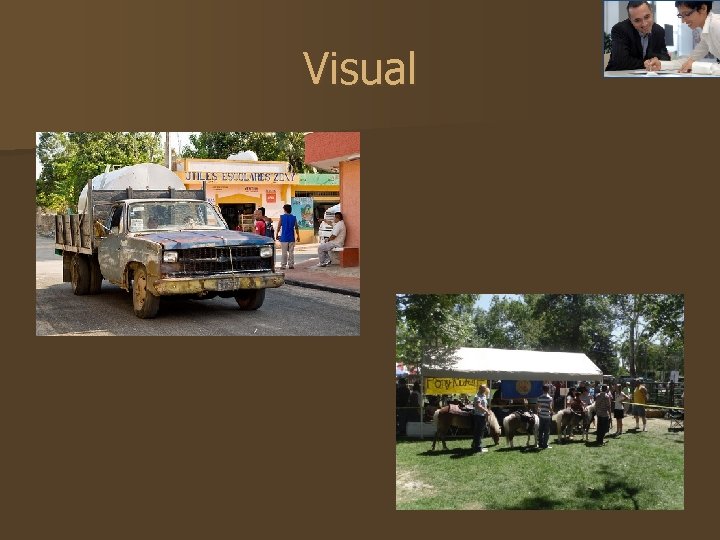
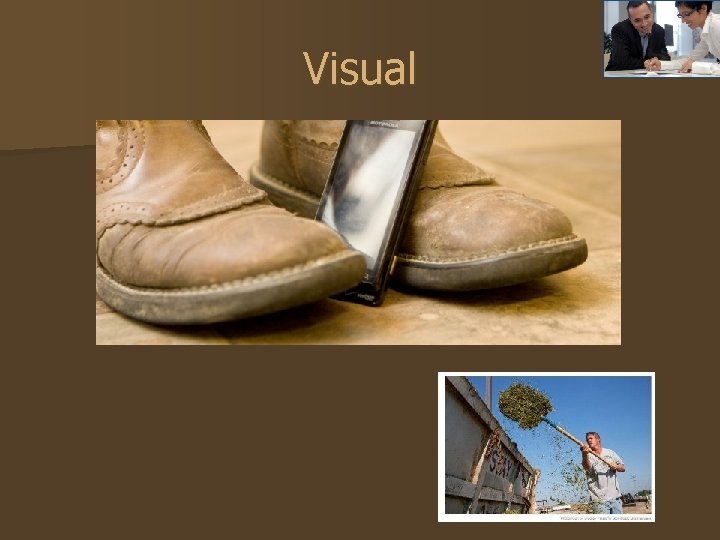
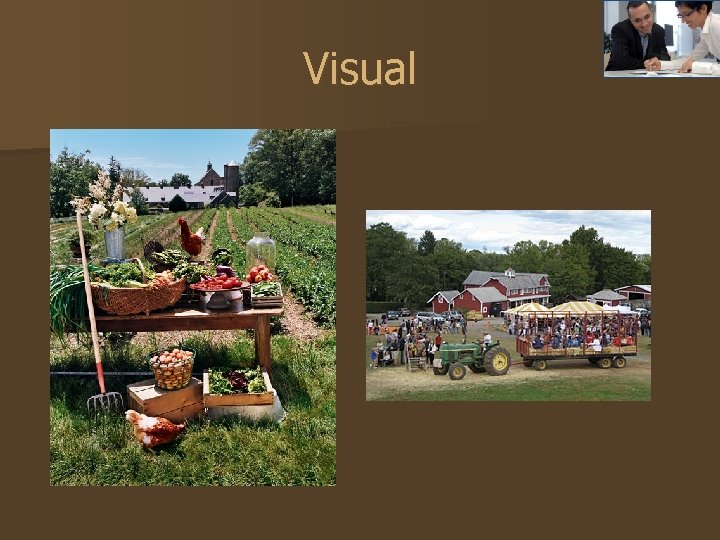
Styles of Communication n Visual: Communication through visual aids such as signs, drawings, graphic design, illustrations, color, pictures
Verbal & Non-verbal Communication
Types of Verbal Communication n Demonstrative – a demonstration of how to do something – Task or presentation on how to bake or make things n Narrative – read a story (books or someone's story) n Persuasive/Inspirational – Persuade the listener to do something
n Informative/Instructional – Information to the listener – Breaking story – Radio broadcast n Entertain/Impress – Guest speech at a banquet/convention/event
Formats of Speeches n Prepared – plenty of time to write and practice the speech n Extemporaneous – Speeches prepared in a short time with little/no time for practice n Impromptu – No time to prepare or practice
Parts of the Speech n Introduction – Develop an interest – Gain attention – Personal story – Statistic, joke, quote, incident, etc. – Make your thesis statement
Part of the Speech n Body – Make your case – Past-present-future n Conclusion – Tie it all together – Refer to something in the introduction – Close by repeating thesis statement
Non-verbal Communication
Rules of Thumb Eye Contact n Great speeches address wants and needs n Great speakers address the audience – DO NOT read your speech n Look em’ in the eyes – Or … on the forehead
Rules of Thumb Hand & Body Movements n Effective hand & arm movements! n Avoid: – Dancing, – Wobbling, – Aimless walking § Use your feet to your advantage n Lean into the audience for effect
Rules of Thumb Voice n Sometimes a whisper is louder than a holler n Be careful … volume makes us screech n Who loves a monotone? n News Casters & Mutterers
Rules of Thumb Pace n We ALL speak too fast in public n Force yourself to slow down – Try singing the words – Try enunciating the last consonant in each word
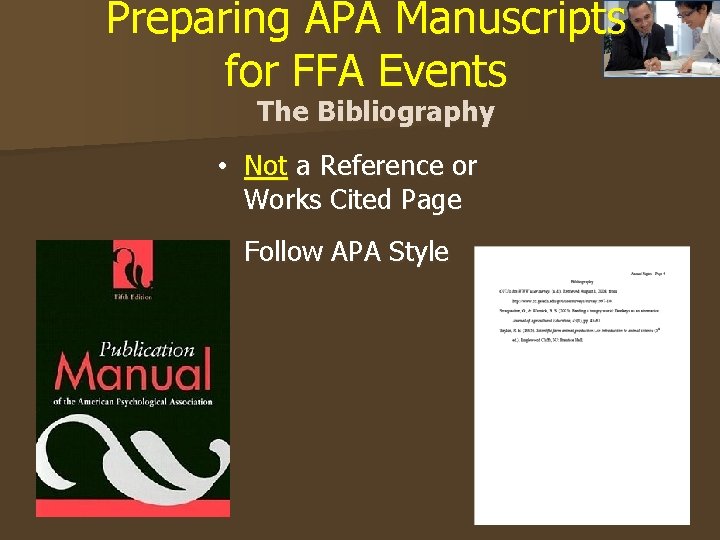
Preparing APA Manuscripts for FFA Events The Bibliography • Not a Reference or Works Cited Page • Follow APA Style
Communication Visual Communication
Types of Communication “Cont. ” n Visual: Communication through visual aids such as signs, drawings, graphic design, illustrations, color, pictures
Types of Communication n Effective communication is essential for success. n A good understanding of different types of communications and communication styles help you know and deal with people better, clear up misunderstandings and misconceptions, and contribute to the success of the enterprise
Types of Communication n Visual: – Good visual composition involves a please selection and arrangement of subjects within the picture. n Rules – – – Rules of thirds Lines Balance Framing Simplicity
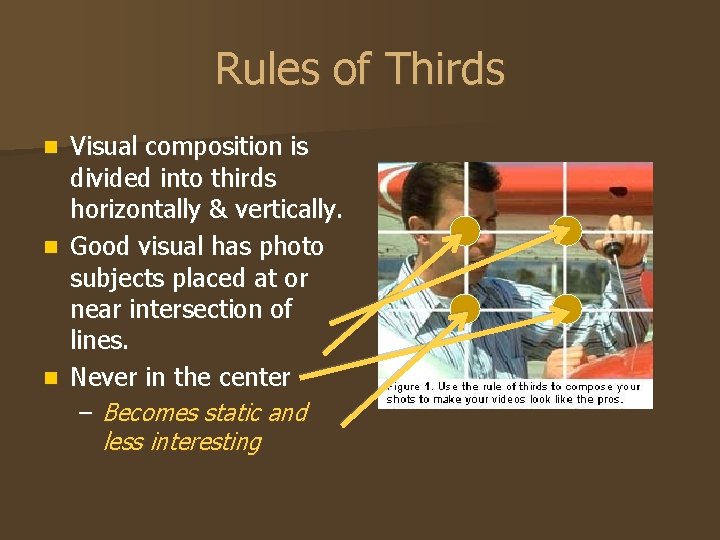
Rules of Thirds Visual composition is divided into thirds horizontally & vertically. n Good visual has photo subjects placed at or near intersection of lines. n Never in the center – Becomes static and less interesting n
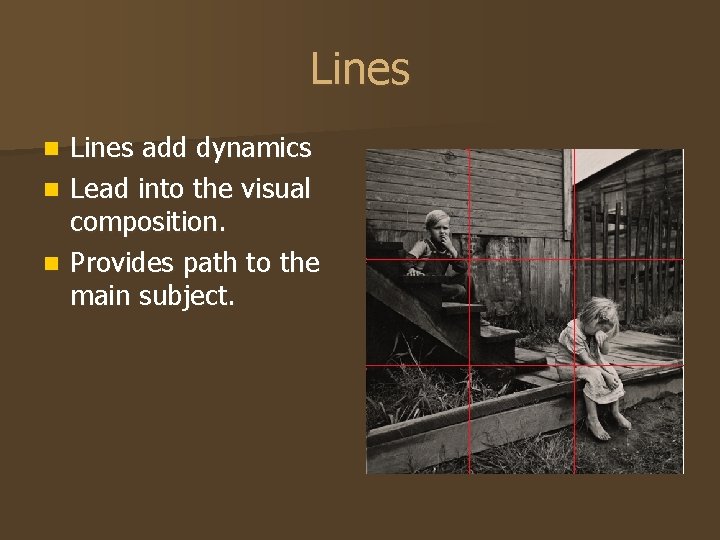
Lines add dynamics n Lead into the visual composition. n Provides path to the main subject. n
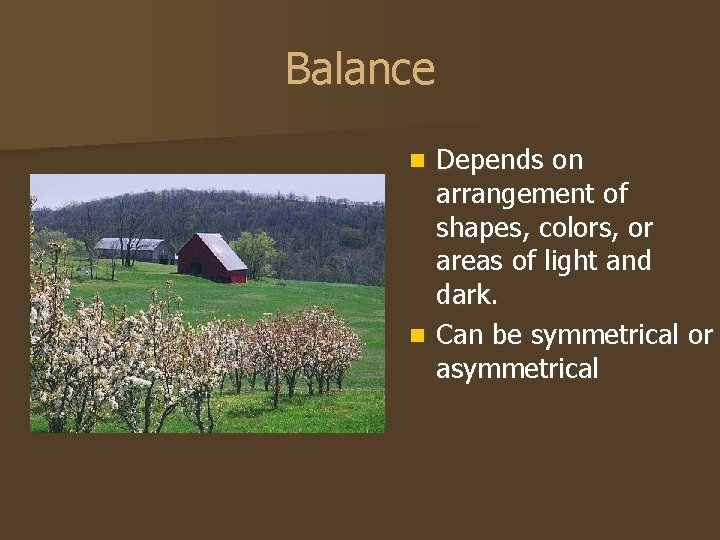
Balance Depends on arrangement of shapes, colors, or areas of light and dark. n Can be symmetrical or asymmetrical n
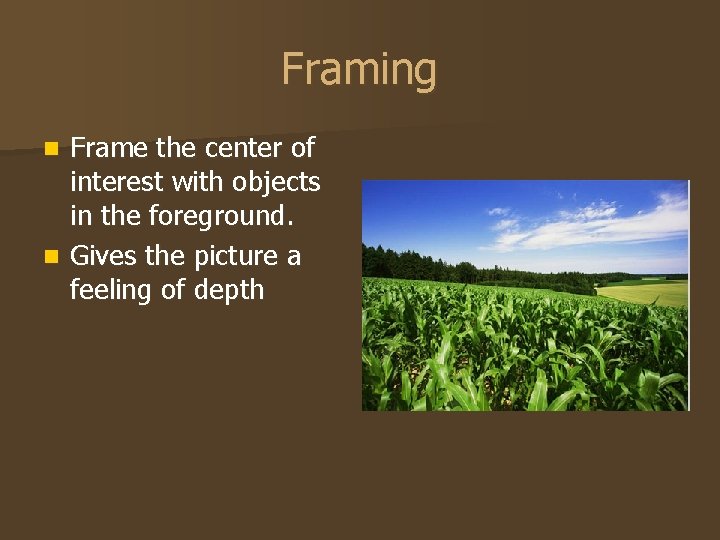
Framing Frame the center of interest with objects in the foreground. n Gives the picture a feeling of depth n
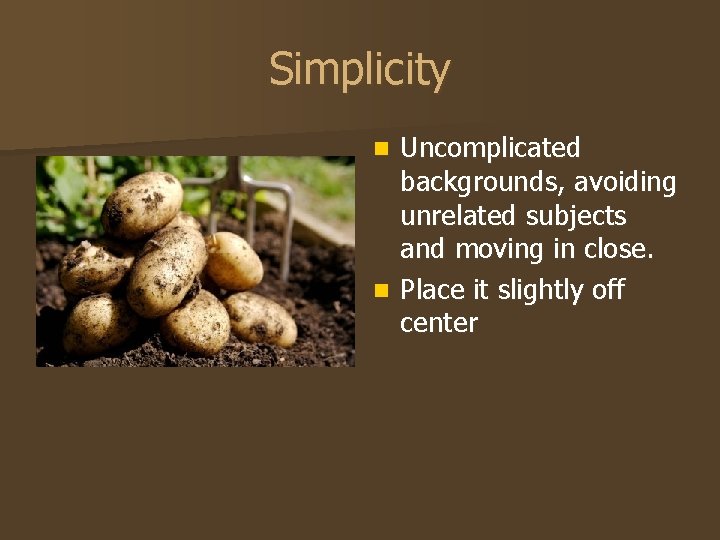
Simplicity Uncomplicated backgrounds, avoiding unrelated subjects and moving in close. n Place it slightly off center n
Visual Composition Examples
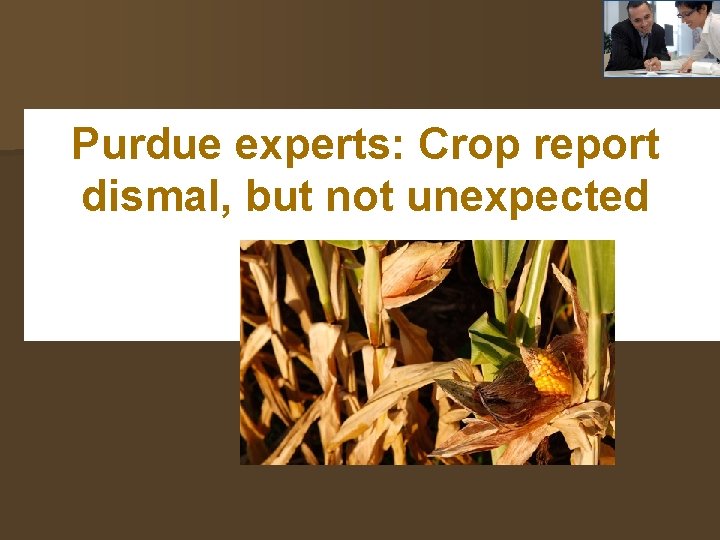
Purdue experts: Crop report dismal, but not unexpected
Visual
Visual
Visual
Types of Communication Photo Job Sheet Verbal/Non Verbal Job Sheets