
Type III Secretion System Complex protein secretion system



- Slides: 69
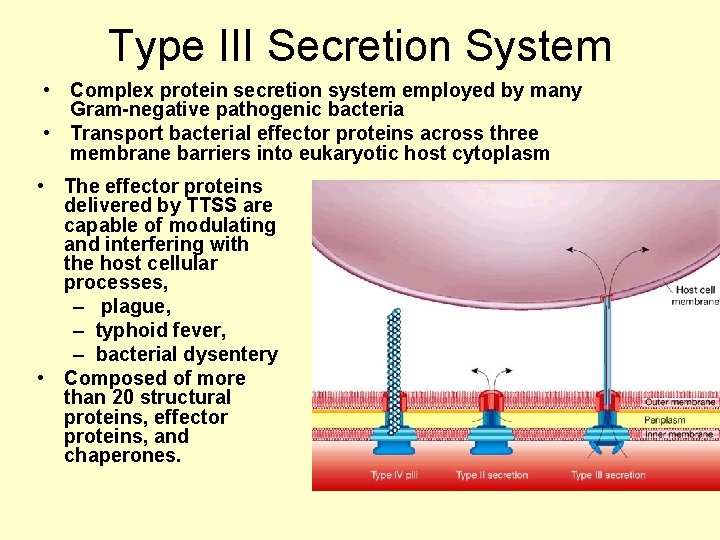
Type III Secretion System • Complex protein secretion system employed by many Gram-negative pathogenic bacteria • Transport bacterial effector proteins across three membrane barriers into eukaryotic host cytoplasm • The effector proteins delivered by TTSS are capable of modulating and interfering with the host cellular processes, – plague, – typhoid fever, – bacterial dysentery • Composed of more than 20 structural proteins, effector proteins, and chaperones.
Helminths John Scott Meschke Office: Suite 2338, 4225 Roosevelt Phone: 206 -221 -5470 Email: jmeschke@u. washington. edu
What is Parasitology • Lives on or in another organism its host • Symbiosis - two types of organisms living together. • Three types of symbiotic relationships • Mutualism • Commensalism • Parasitism
Parasites in the United States • • • Ascaris lumbricoides Necator americanus Trichinella spiralis Giardia lamblia Enterobius vermicularis
Impacts of Parasites • 4. 5 billion helminthes infections • Estimated 60 million people die every year • More than half of the deaths are children under the age of 5. • Poor nutrition leads to reduced resistance • High calorie demand (up to 5, 000 calories/day)
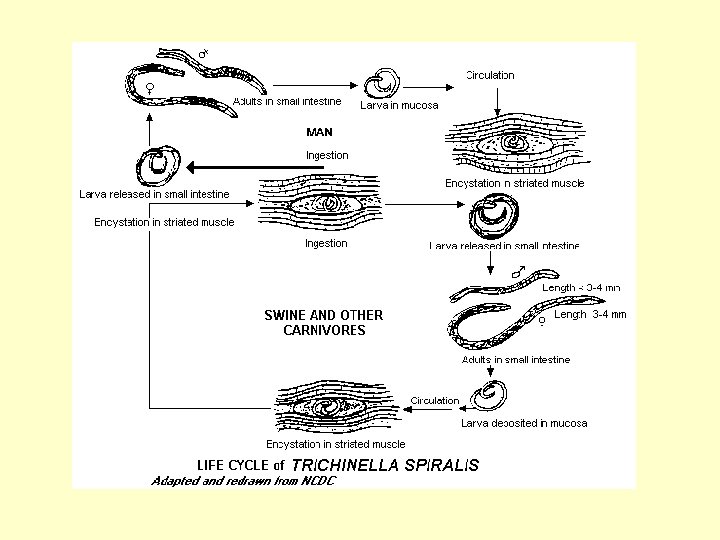
Zoonosis • Wild or domestic animals serve as reservoir hosts in transmission to man. • Sylvantic cycle - wild host to man – Trichinella spiralis - wild boar, bear, walrus • Urban or domestic cycle - domestic animals – Trichinella spiralis - domestic pigs
Terms Describing Parasites • • Ectoparasites and Endoparasites Obligatory and Facultative Accidental or Incidental Permanent and Temporary or Intermediate • Parasitoid
Terms Describing Hosts • • • Definitive Intermediate Paratenic or transport host Reservoir host Vector
Reproductive Potential of Parasites • Extremely complex life cycles • Reproductive system highly specialized • Small chance of any one individual living so there is a large initial reproductive output – Female Ascaris produces 200, 000 eggs /day – Many animals have both asexual and sexual cycle
Helminths (Worms) • Multicellular animals • Some are human and/or animal parasites • Eggs are small enough to pose environmental health problems from human and animal excreta in water, food, soil, etc. • Several major groups: – Nematodes (roundworms): ex. Ascaris – Trematodes (flukes; flatworms): ex. Schistosomes – Cestodes (tapeworms): pork and beef tapeworms
Helminths (Worms): Some Important Ones Most acquired from ingestion of or contact with fecescontaminated soil or food • Nematodes (Roundworms): – Ascaris lumbricoides GI illness; pneumonitis – Trichuris trichuria chronic GI • Hookworms: – Ancylostoma duodenale chronic anemia – Necator americanus chronic anemia – Strongyloides stercoralis chronic anemia • Cestodes (tapeworms): – Hymenolepis nana GI illness
Family Ascaridae • - Ascaiss lumbricoides (from humans) and (Ascaris suum from pigs) • Because of size, cosmopolitan distribution, and size, these are well known parasites. • Two species one in humans and the other in pigs. Thought to be the same specie but they show remarkable host specificity.
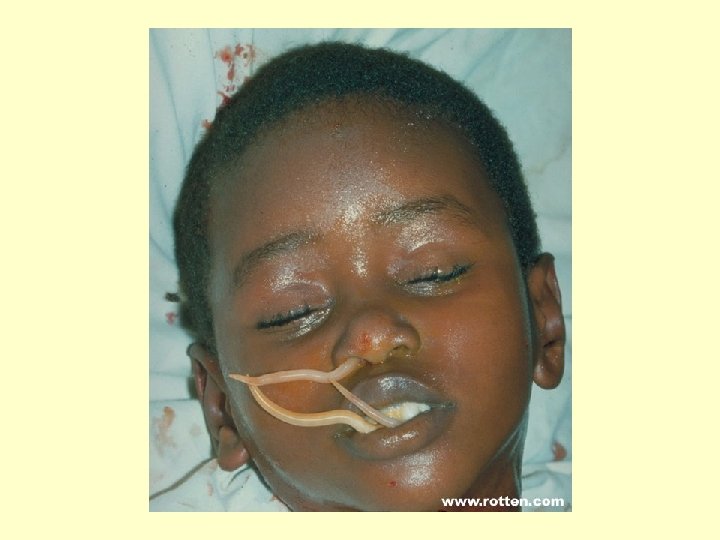
Ascaris lumbdrioides • Large intestinal roundworm of man • In some areas in the Orient, 100% of the population is infected. • Most infections light but heavy infections may occur. Reported record (5, 000) • Glycogen consumption of Ascarids in China equal to glycogen of 143, 000 tons of rice.
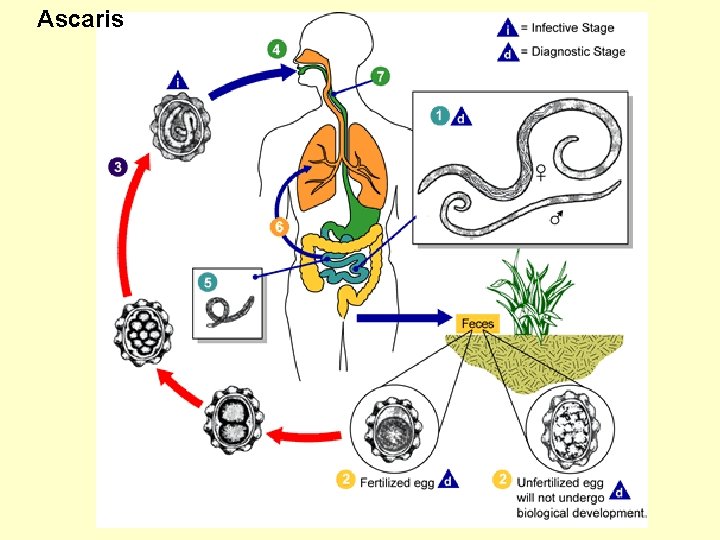
Ascaris • Female lays eggs into host intestine (200, 000 per day), passed out in host feces. • Eggs are resistant to low temperatures, dessication, and strong chemicals. • Have remained viable for up to to 10 years.
Ascaris
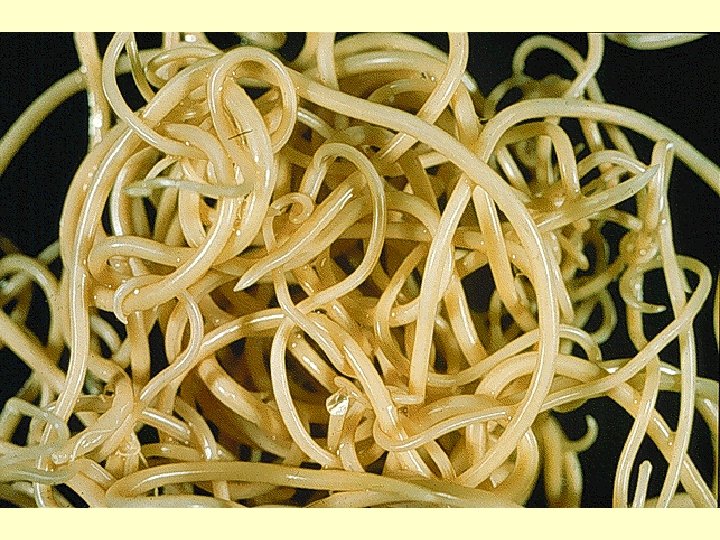
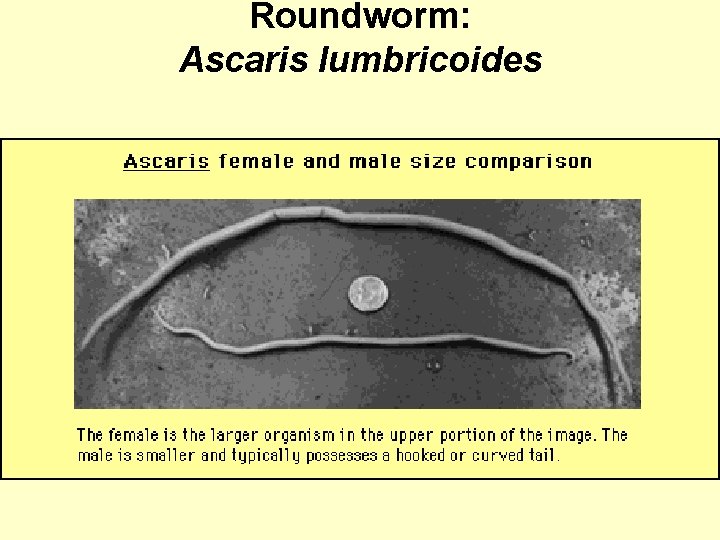
Roundworm: Ascaris lumbricoides
Ascaris Shedding after Antihelminthic Drug Use
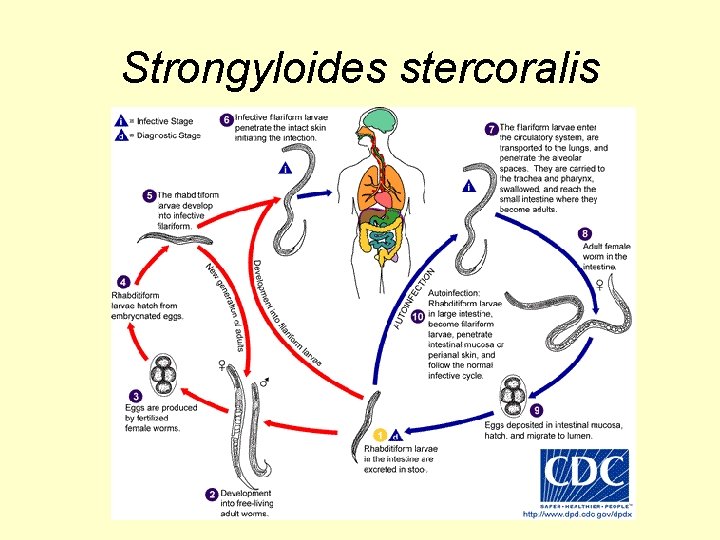
Strongyloides stercoralis
Family Ancylostomidae • Commonly known as hookworms • Live in intestines feed on blood and tissue fluids obtained from intestinal mucosa • Morphology-especially important copulatory bursa of male.
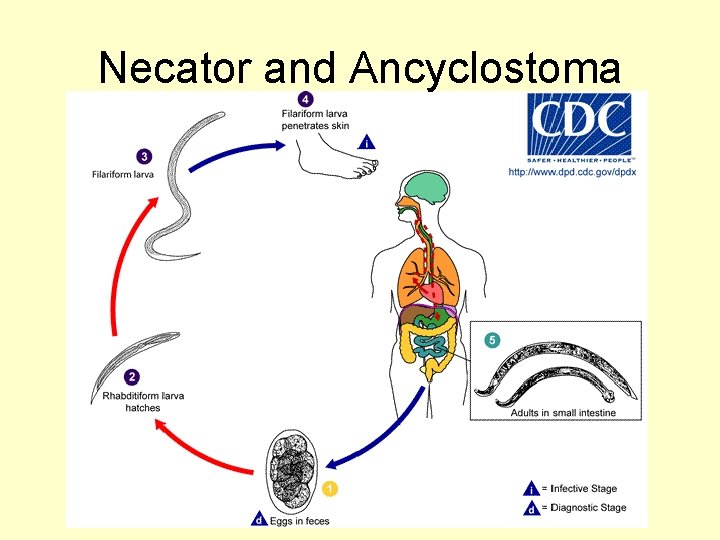
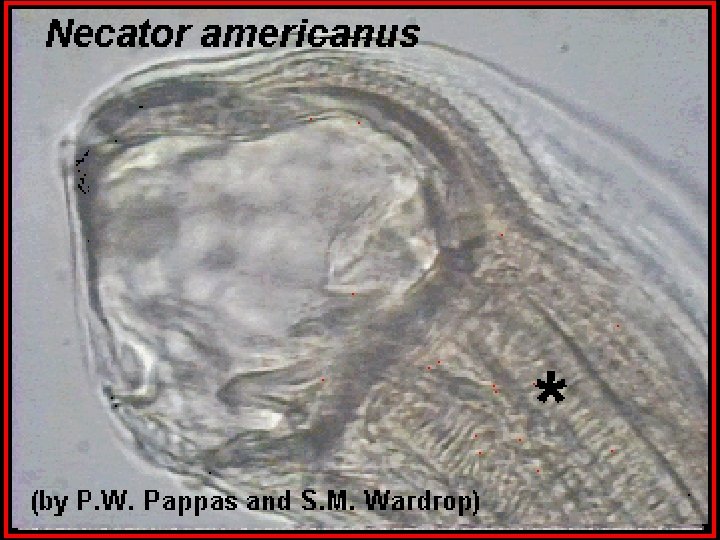
Necator and Ancyclostoma
Necator americanus • "The American Killer" New World Hookworm – Probably introduced by slave trading – Major impact on development of southern U. S. – In 1947 estimated 1. 5 million cases in North America – Current estimates in S. E. U. S. 4 -5
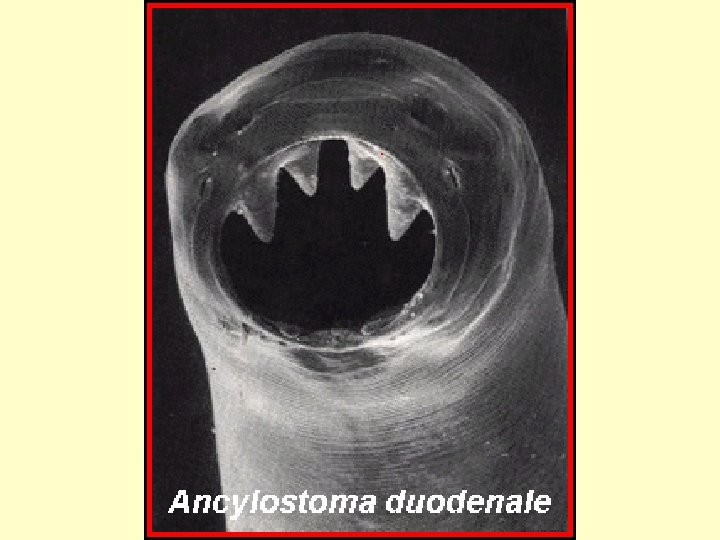
Ancyclostoma duodenale • - Old World Hookworm – Predominately found in southern Europe, – northern Africa, India, China, southeastern Asia – In mines of England Belgium
Hookworm disease • Sometimes asymptomatic-pathology depends on worm load and nutritional condition of the infected person • Disease restricted to warmer regions of world also adequate amounts of moisture • White people 10 (ten) times more susceptible to hookworm than black persons -"poor white trash"
Family Toxocaridae • Toxocara canis (dog) and Toxocara cati (cat) – common parasite of domestic dogs and cats and can be parasites of humans. • Nearly 100 % of puppies and kittens infected. 98% puppies • Adults able to repress worms. When females become pregnant, the worm is awaken and migrates to the offspring.
Family Toxocaridae • If unnatural host (small child) becomes infected, worms have a tendency to migrate throughout organs. This is known as visceral larval migrans. • Can be a very important parasite depending upon which organs it migrates into.
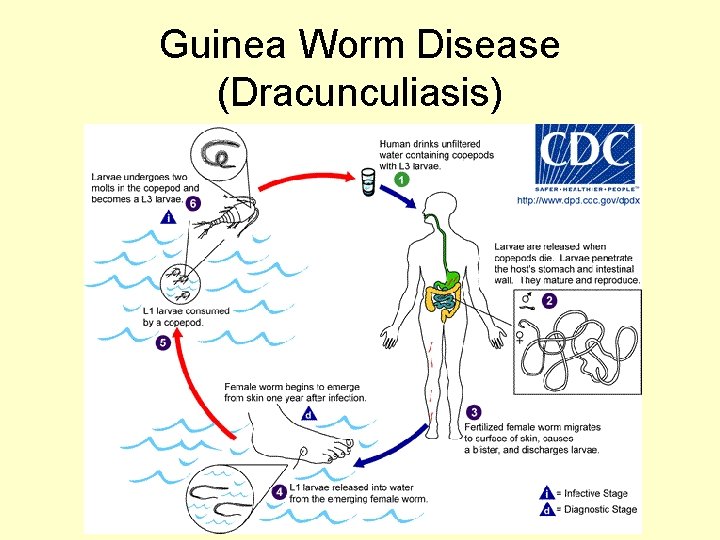
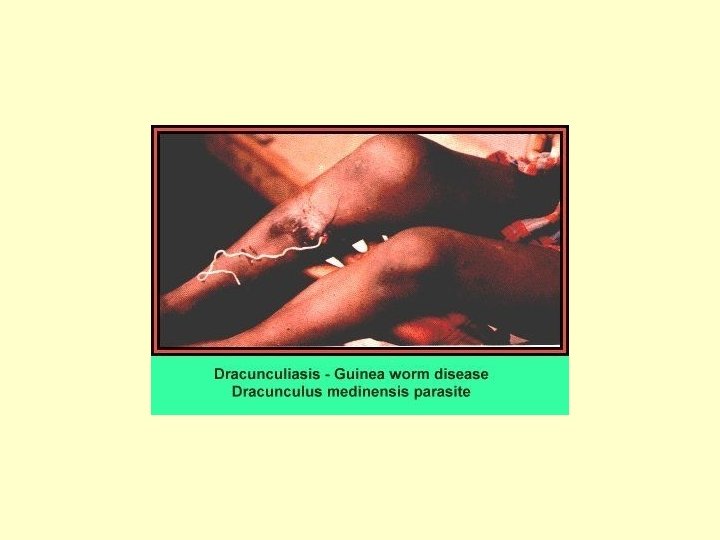
Guinea Worm Disease (Dracunculiasis)
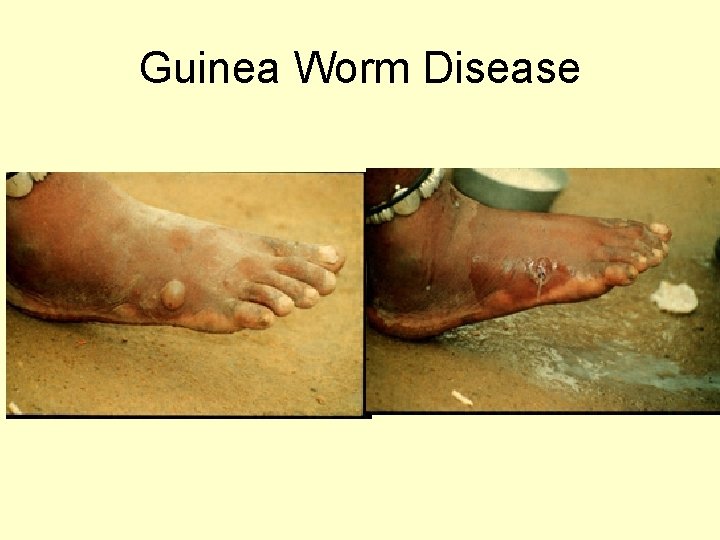
Guinea Worm Disease
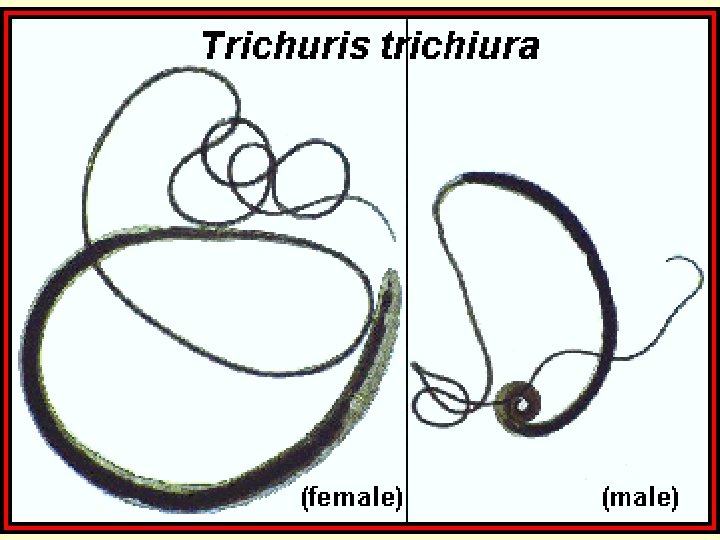
Family Trichuridae - Whipworms • Morphology thick relatively short, posterior end with long thread - like anterior end, whip like in appearance (Trichocephalus) thread-head used in some texts.
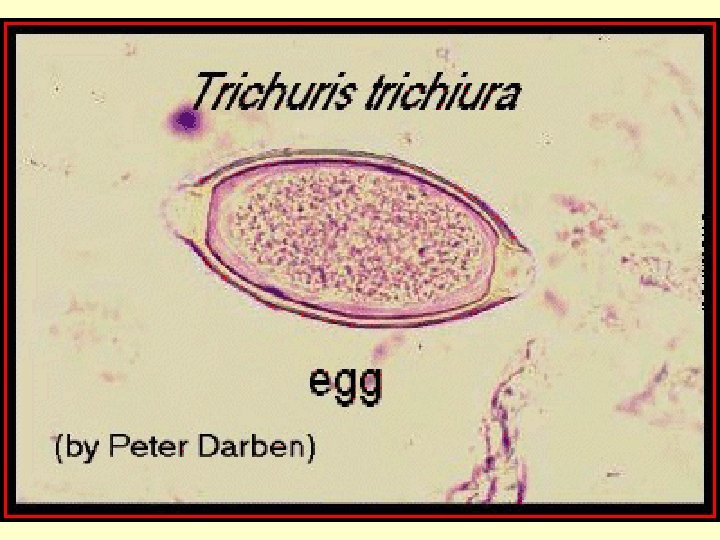
Trichuris trichiura • 30 -50 mm long • Produces 1000 -7000 eggs per day - eggs embryonate in soil. • When swallowed infective juvenile hatches in small intestine enters intestinal crypts. • After development reenters lumen of intestine matures. • Can live a long time (many years).
Trichinella spiralis • Causes disease trichinosis, trichiniasis, or trichinelliasis – Vague symptoms leads to misidentification – Morphology • Males 1. 4 -1. 6 mm long females 2. 8 -3. 2 mm long • Slender at anterior end • Biology – same animal can serve as definitive and intermediate host with juvenile and adults located in different organs.
Family Oxyuridae – Pinworms • Enterobius vermicularis • Small worms of colon area. • Females leave anus at night to lay eggs (contain embryonic juveniles. Severe rectal itching results. • Children often reinfect themselves. • If the anal folds are not cleaned, the worms may hatch and the larvae reenter the anus causing retroinfection.
Family Oxyuridae – Pinworms • Epidemiology – bedding, clothing, stuffed animals, become seeded with ova. Very light can be carried in the air. • Children often scratch where it itches, then insert fingers in mouth. • Footed pajamas, mittens, wash with very hot water, treat the whole family.
Tapeworms • All tapeworms are parasites • Most parasitize wild animals few important parasites of men. • Only orders Pseudophyllidea and other Cyclophyllidea contain tapeworms of importance to humans or parasites of man. • Can cause cysticercosis (Subcutaneous tissue, brain or eyes)
Most Important Species • Taenia solium • Taeniarhynchus saginatus • Echinococcus granulosus • • Echinococcus multilocularis
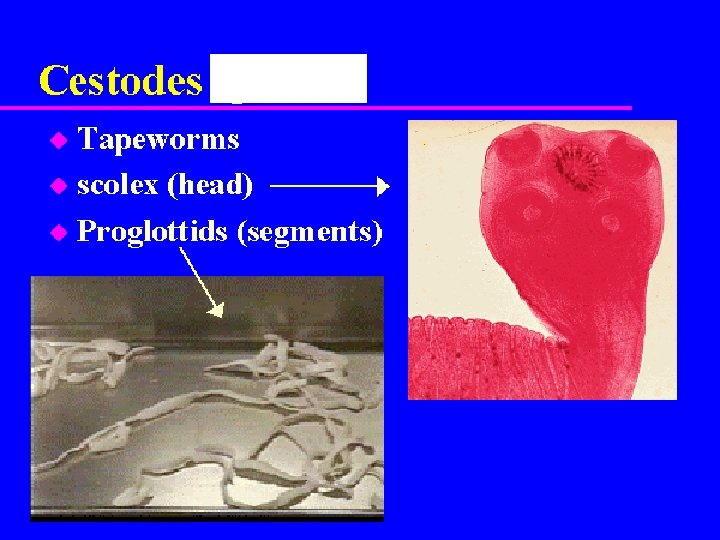
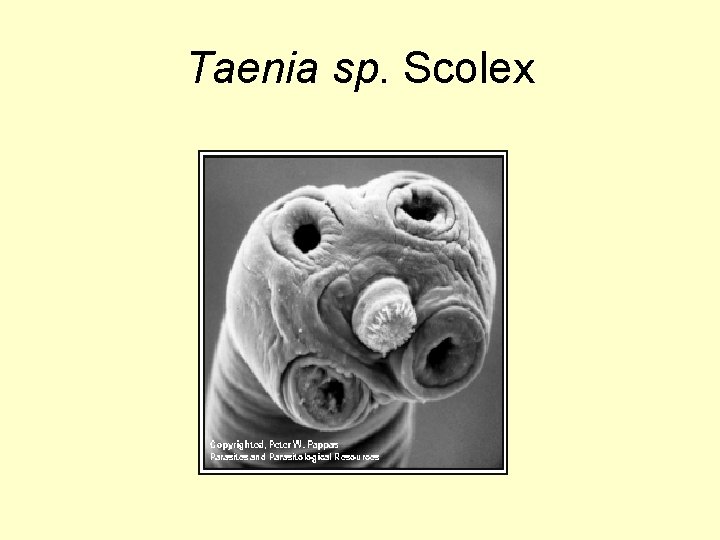
Taenia sp. Scolex
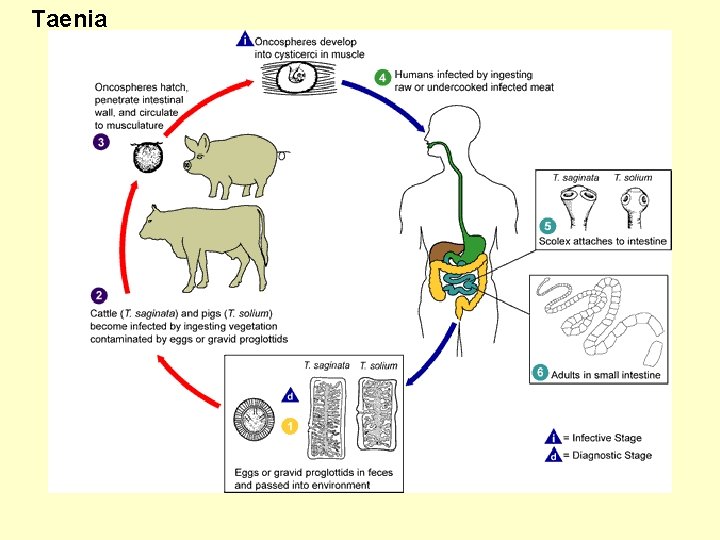
Taenia
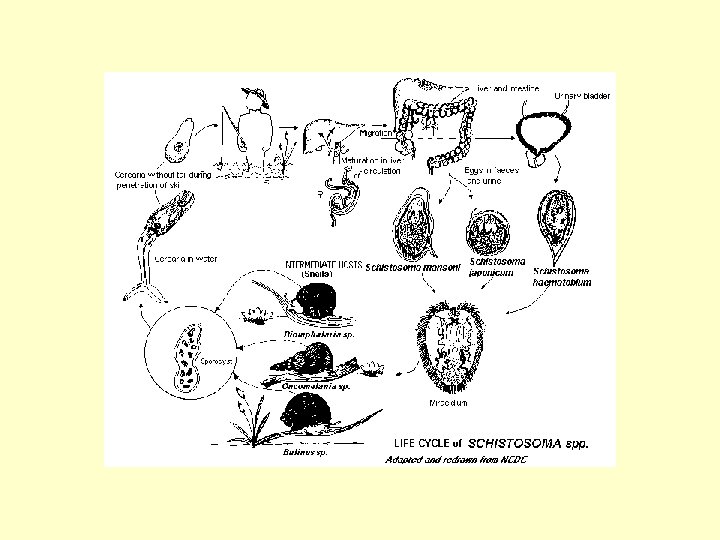
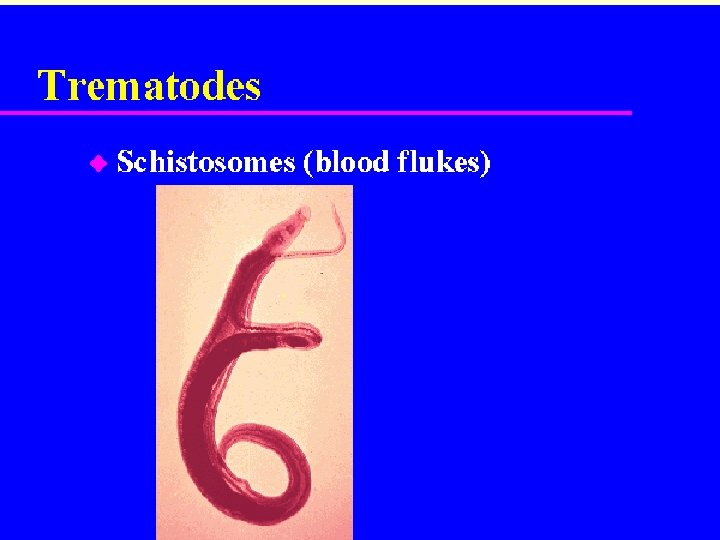
Schistosoma sp. • Important parasites of man and some domesticated animals • Three species infect man • Schistosoma mansoni • Schistosoma japonicum • Schistosoma haematobium
Schistosoma japonicum. • Common in parts of Japan, China, Taiwan, Philippines, Thailand, and other parts of Southeast Asia. • Most pathogenic and most difficult to control • Located in blood vessels of small intestine. • Eggs may lodge in brain causing CNS damage, coma, and paralysis. • Low host specificity
Schistosoma mansoni • Common in Egypt, the Middle East, parts of Africa, and parts of South and Central America. • Found in portal veins draining large intestine • The sharp lateral spine is distinctive • Primary pathological effects come from the damage done by eggs.
Schistosoma mansoni • In heavy infections eggs become trapped in the mucous and submucosa of the gut and cause granuloma formation • If extensive, they can cause colon blockage and significant blood loss. • In liver can cause hepatomegaly. • Destruction of lungs and heart tissue. • Reservoir hosts are of limited or no importance.
Schistosoma haematobium • often referred to as Bilharzia after Theodore Bilharz who discovered it. • found in parts of Africa, and parts of the Middle East, southern Europe and some parts of Asia. • Found primarily in the veins of the urinary bladder. Eggs released in urine. • They are least pathogenic
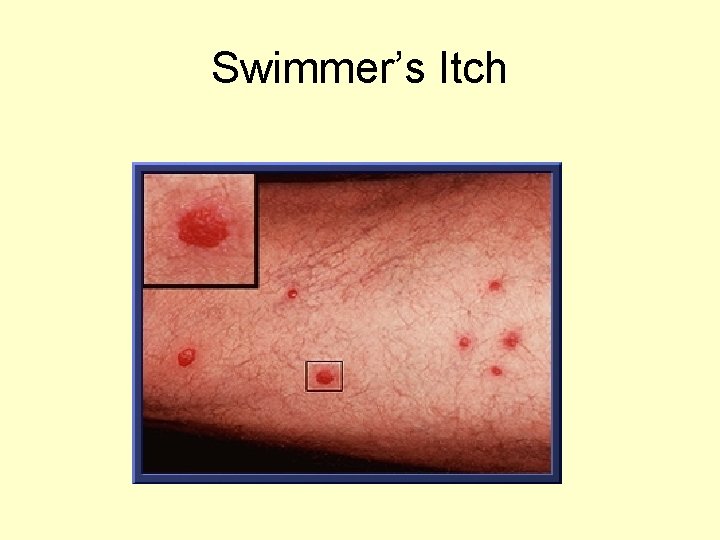
Schistosome cercarial dermatitis or swimmers itch • Schistosomes of animals other than man (usually rodents and birds) try to penetrate the skin of man, they can not establish themselves in the blood vascular system of man. • Often cause a dermatitis which can be severe and in some cases life threatening. • Allergic reaction
Swimmer’s Itch
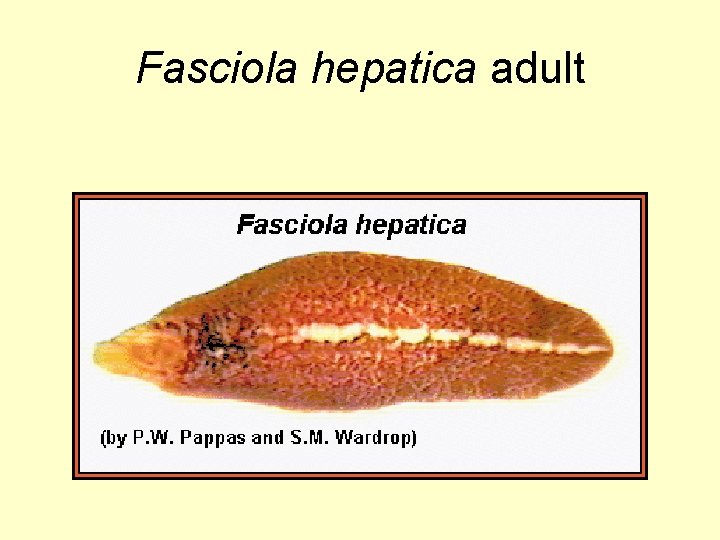
Fasciola hepatica • Commonly known as the sheep liver fluke • Important parasite of sheep and cattle (other grazers) can be found in humans. • Morphology – Large size, frequently over 30 mm long – Characteristic cone-shaped projection at anterior end followed by wide shoulders
Fasciola hepatica adult
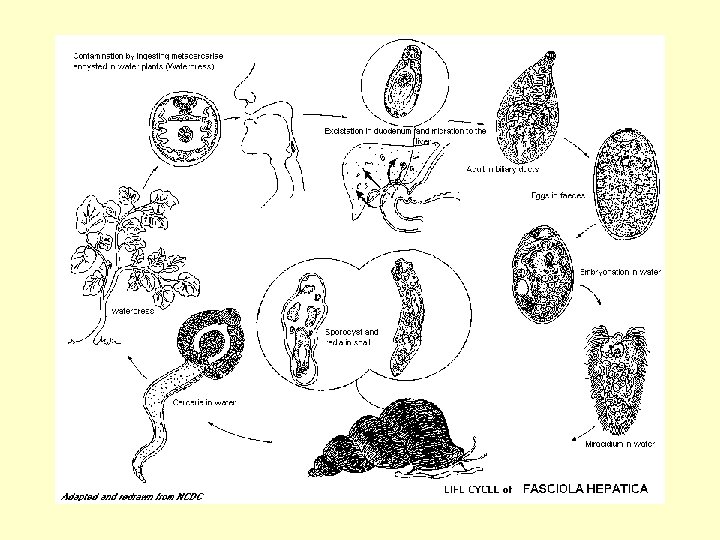
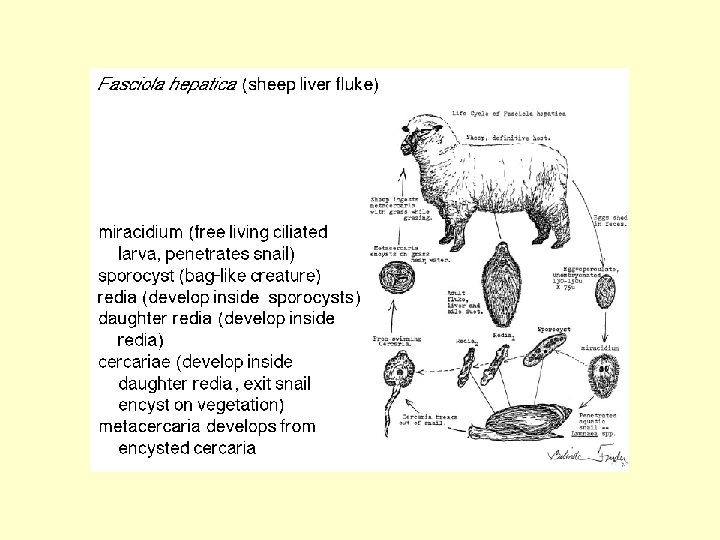
Fasciola hepatica • Adult in bile duct of definitive host passes eggs in feces. • If eggs land in water, they hatch into miracidium that actively swims until it finds an appropriate snail. • Penetrates snail, develops into germinal sac (sporocyst), asexual stages of rediae and cercariae formed.
Fasciola hepatica • Cercariae leave snail, encyst on vegetation, and form metacercaria. • Herbivore infected when it ingests vegetation with metacercaria. • Metacercaria develop into adult penetrates gut wall, moves to the liver. • Humans infected by eating watercress that has metacercaria on it.
Fasciola hepatica Epidemiology • liver blockage and watercress consumption • Prevention - Eschewing (shunning or avoiding) watercress. • Rabbits are probably important in spreading • In some parts of southeastern United States, it is important parasite of domestic animals
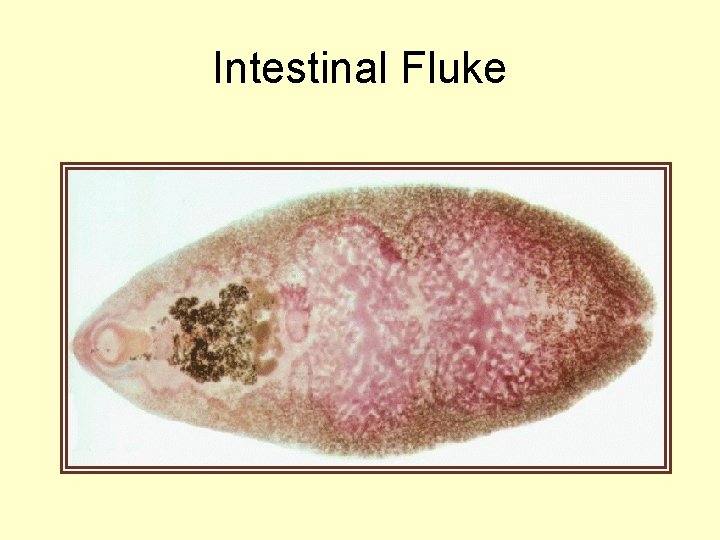
Fasciolopsis buski Intestinal fluke of man • large fluke infects man when he ingests metacercaria found on vegetation including water chestnuts, bamboo, and water caltrop. • eat these raw or peel or crack with teeth. • elimination of feces (human and animal) into water and use of night soil for farming
Intestinal Fluke
Other Helmithic Parasites • Baylisascaris procyonis (Racoon Round Worm) • Human echinococcosis (hydatidosis, or hydatid disease) – caused by the larval stages of cestodes (tapeworms) of the genus Echinococcus • Hymenolepliasis (Hemnolepis nana and dimnuta) (dwarf and rat tapeworms) • Dipylidium caninum (dog tapeworm)
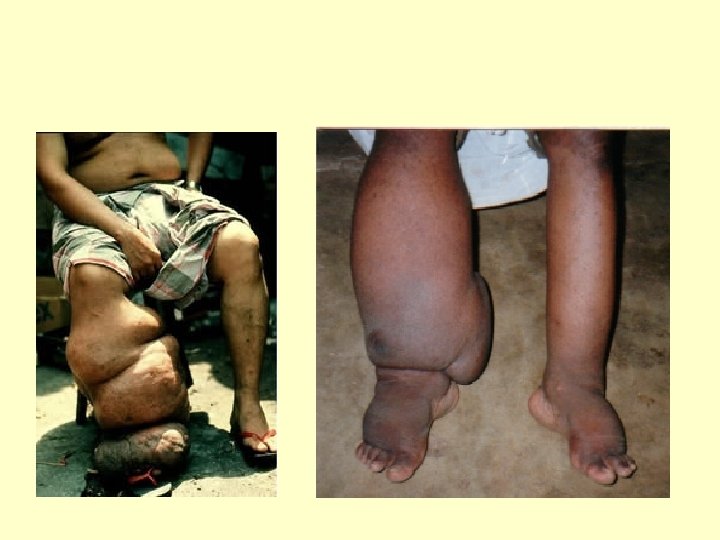
Filariasis • Eight Species in Humans • Wuchereria bancrofti and Brugia malayi cause lymphatic filariasis • Onchocerca volvulus causes onchocerciasis (river blindness) • Loa loa, Mansonella perstans, M. streptocerca, M. ozzardi, and Brugia timori. (The last species also causes lymphatic filariasis. ) • Vectored by insect vectors (e. g. Black Fly)
Other Helminthic Infections • Angiostrongylus spp. (rat lungworm) (nematode) – A. cantonensis (human eosinophilic meningitis) – A. costaricensis (intestinal angiostronglyiasis) • Anisakis simplex and Pseudoterranova decipiens (Anisakiasis) (nematode) • Capillaria spp. (nematode) – C. philippinensis (abdominal) – C. hepatica (liver) – C. aerophila (lung) • Clonorchis sinensis (Chinese or oriental liver fluke) • Gnathostomiasis (nematode) – Gnathostoma spinigerum and Gnathostoma hispidum
Other Helminthic Infections • Opisthorchiasis (trematode) – Opisthorchis viverrini (Southeast Asian liver fluke) and O. felineus (cat liver fluke) • Paragonimiasis (trematode) – Paragonimus spp. • Diphyllobothriasis – Diphyllobothrium latum (Fish tapeworm; largest human tapeworm) (cestode) • Heterophyasis – Heterophyes heterophyes (trematode) • Metagonimiasis – Metagonimus yokogawai (smallest human fluke)