
Type 1 Diabetes Whats New Thomas Donner M
Type 1 Diabetes What’s New? Thomas Donner, M. D. Johns Hopkins University School of Medicine Division of Endocrinology, Diabetes and Metabolism
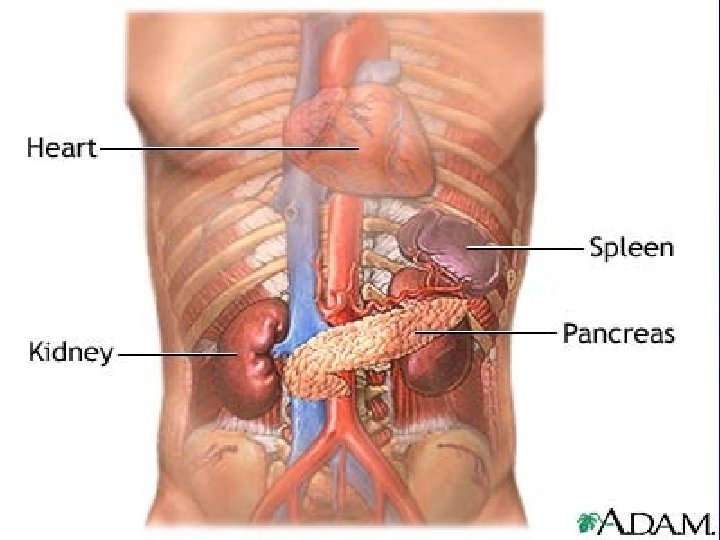
Insulin • Insulin is a hormone produced by the pancreas in the abdomen • It’s released into the bloodstream where it travels to different parts of the body to help a sugar called glucose enter into cells to be used as energy
How Does Type 1 Diabetes Develop? • The body’s immune system attacks and destroys the Beta cells in the pancreas that produce insulin • For an unknown reason • Persons affected require lifelong insulin replacement
High Blood Glucose Levels Causes Diabetes Complications • When glucose is unable to enter cells in the body, glucose levels build up in the blood • The longer blood glucose levels are high, and the higher they stay, the more rapidly glucose sticks to the lining of blood vessels and body tissues to cause diabetes complications
Diabetes A leading cause of: • Vision loss • Decreased kidney function • Heart and other circulatory problems
Keeping Blood Glucose Levels Close to Normal will Largely Prevent Diabetes Complications
That’s why health care teams work hard with patients to get their diabetes under good control!
How Aggressively Does Diabetes Need to be Controlled?
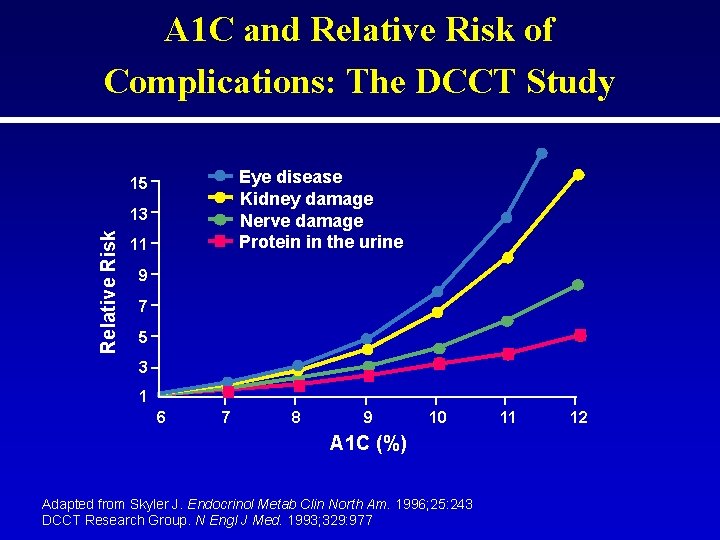
A 1 C and Relative Risk of Complications: The DCCT Study Eye disease Kidney damage Nerve damage Protein in the urine 15 Relative Risk 13 11 9 7 5 3 1 6 7 8 9 10 A 1 C (%) Adapted from Skyler J. Endocrinol Metab Clin North Am. 1996; 25: 243 DCCT Research Group. N Engl J Med. 1993; 329: 977 11 12
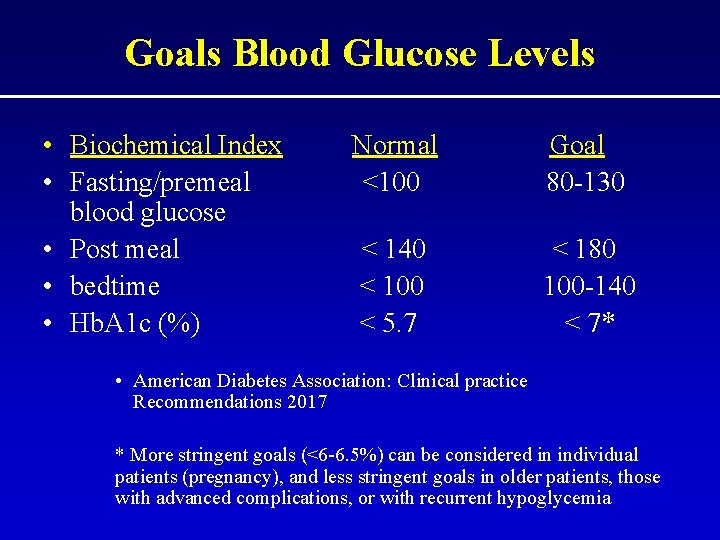
Goals Blood Glucose Levels • Biochemical Index • Fasting/premeal blood glucose • Post meal • bedtime • Hb. A 1 c (%) Normal <100 Goal 80 -130 < 140 < 100 < 5. 7 < 180 100 -140 < 7* • American Diabetes Association: Clinical practice Recommendations 2017 * More stringent goals (<6 -6. 5%) can be considered in individual patients (pregnancy), and less stringent goals in older patients, those with advanced complications, or with recurrent hypoglycemia
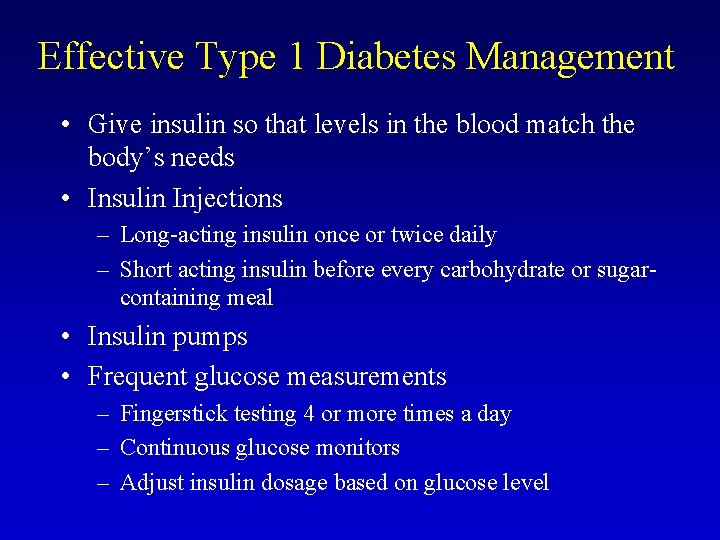
Effective Type 1 Diabetes Management • Give insulin so that levels in the blood match the body’s needs • Insulin Injections – Long-acting insulin once or twice daily – Short acting insulin before every carbohydrate or sugarcontaining meal • Insulin pumps • Frequent glucose measurements – Fingerstick testing 4 or more times a day – Continuous glucose monitors – Adjust insulin dosage based on glucose level
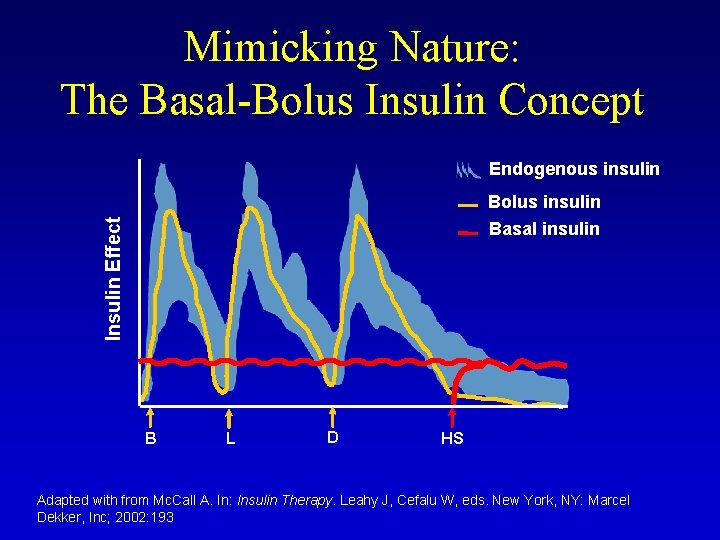
Mimicking Nature: The Basal-Bolus Insulin Concept Endogenous insulin Insulin Effect Bolus insulin Basal insulin B L D HS Adapted with from Mc. Call A. In: Insulin Therapy. Leahy J, Cefalu W, eds. New York, NY: Marcel Dekker, Inc; 2002: 193
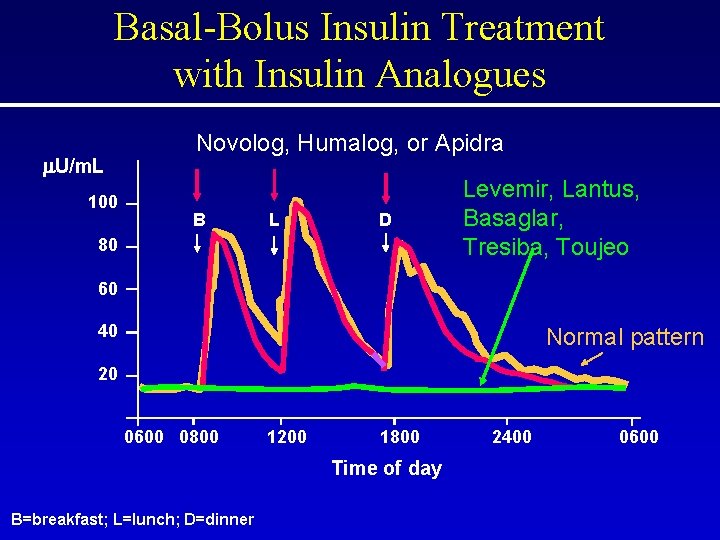
Basal-Bolus Insulin Treatment with Insulin Analogues U/m. L 100 Novolog, Humalog, or Apidra B L D 80 Levemir, Lantus, Basaglar, Tresiba, Toujeo 60 40 Normal pattern 20 0600 0800 1200 1800 Time of day B=breakfast; L=lunch; D=dinner 2400 0600
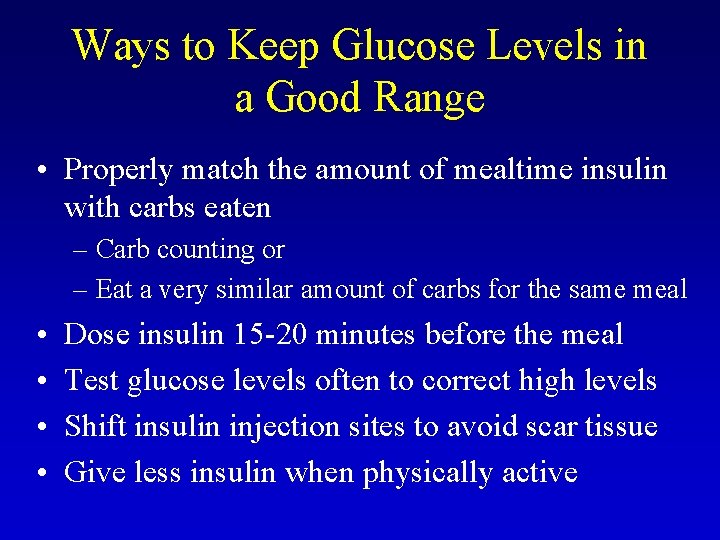
Ways to Keep Glucose Levels in a Good Range • Properly match the amount of mealtime insulin with carbs eaten – Carb counting or – Eat a very similar amount of carbs for the same meal • • Dose insulin 15 -20 minutes before the meal Test glucose levels often to correct high levels Shift insulin injection sites to avoid scar tissue Give less insulin when physically active
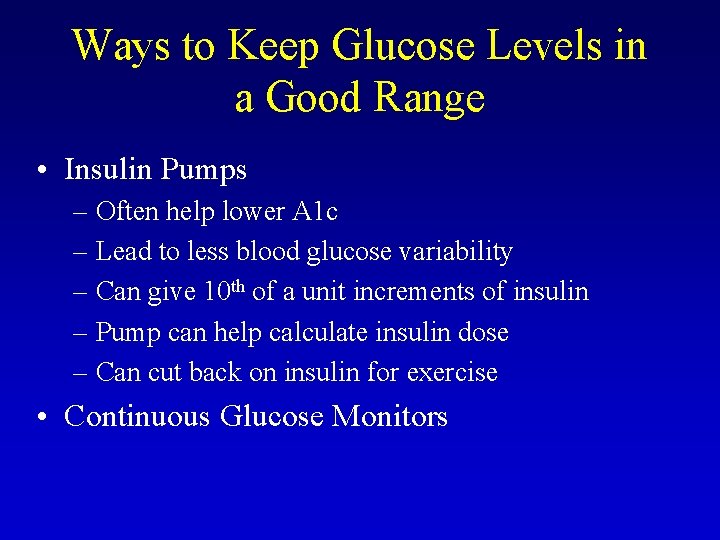
Ways to Keep Glucose Levels in a Good Range • Insulin Pumps – Often help lower A 1 c – Lead to less blood glucose variability – Can give 10 th of a unit increments of insulin – Pump can help calculate insulin dose – Can cut back on insulin for exercise • Continuous Glucose Monitors
Striving for Near-Normal Glucose Levels with Insulin Increases the Risk of a Low Blood Glucose Level (Hypoglycemia)
Severe Hypoglycemia • A very low glucose reaction that requires assistance from another person
Severe Hypoglycemia in Intensively Controlled Type 1 Diabetes • Happens in up to 25% of patients each year • Altered level of consciousness may take hours to fully resolve • Can lead to seizures and loss of consciousness
What’s New in Type 1 Diabetes Management?
What’s New in Type 1 Diabetes Management? A Lot!
Newer Insulins • Tresiba and Toujeo are much longer acting than other long-acting insulins – lead to even more steady insulin levels – cause fewer low glucose levels, especially overnight • New more rapid-acting insulins are in development that can be given right before a meal and cause lower after meal glucose levels • They are more expensive
Subcutaneous Continuous Glucose Monitors • Medtronic Mini. Med, Dex. Com • Now more accurate • Provide every 5 minute subcutaneous glucose readings • Alarms for high and low glucose readings • Useful for catching periods of hypoglycemia (especially overnight) of which persons are unaware • Useful to observe glucose trends to assist with insulin dosage adjustments • Shown in adults with type 1 diabetes to reduce the incidence of severe hypoglycemia and reduce Hb. A 1 c levels
The Artificial Pancreas • An insulin pump • A continuous glucose sensor and • A computer that analyzes the glucose readings and automatically tells the pump to given more or less insulin to get glucose back to 120 • Has been shown to lower A 1 c and reduce time spent with a blood sugar < 70 • Medtronic Mini. Med 670 G FDA-approved • Other pumps working towards similar systems
What Diabetes Research Provides
What Patients with Type 1 Diabetes Want Most

PANEL DISCUSSION YOUNG PROFESSIONALS LIVING WITH DIABETES 2017 Research Symposium
- Slides: 28