
Type 1 Diabetes Mellitus Pathophysiology of T 1
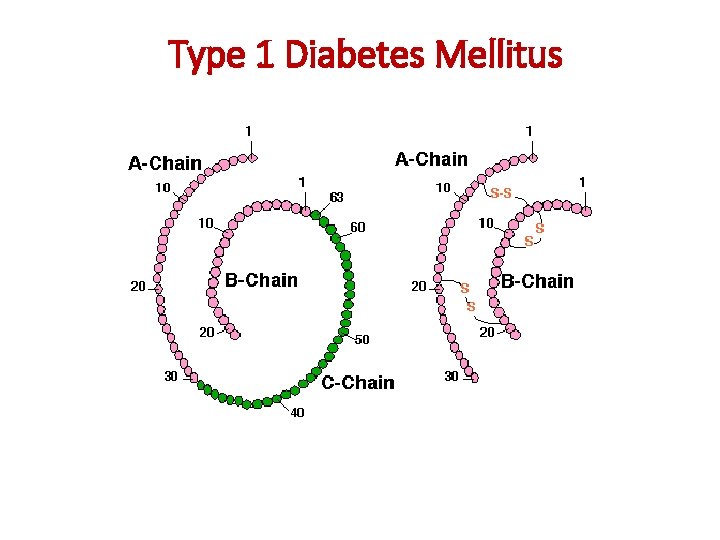
Type 1 Diabetes Mellitus
Pathophysiology of T 1 DM • Chronic autoimmune disorder occurring in genetically susceptible individuals • May be precipitated by environmental factors • Immune system is triggered to develop an autoimmune response • Altered pancreatic beta cell antigens • Molecules in beta cells that resemble a viral protein • ~ 85% of T 1 DM patients have circulating islet cell antibodies Maahs DM, et al. Endocrinol Metab Clin North Am. 2010; 39: 481 -497.
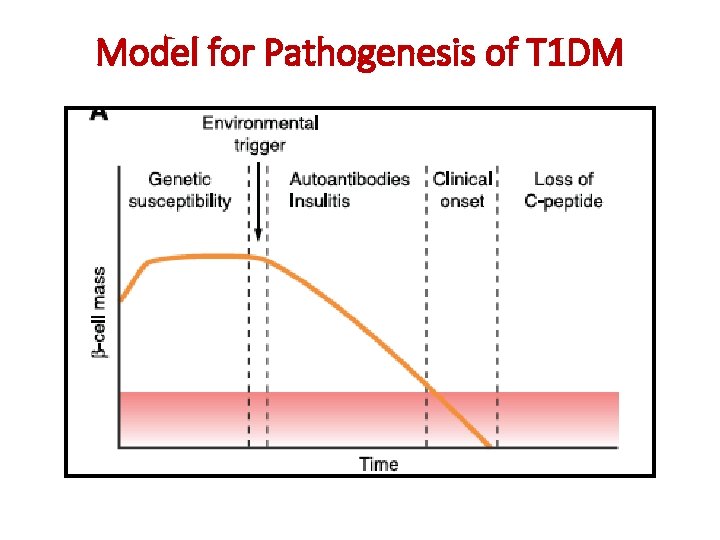
Model for Pathogenesis of T 1 DM van Belle TL, et al. Physiol Rev. 2011; 91: 79 -118.
Pathophysiology of T 1 DM: Bottom Line • T 1 DM is associated with an (eventual) absolute insulin deficiency • Insulin treatment is a necessity • The treatment plan should also include: • Physical activity recommendations • Dietary recommendations • Diabetes self-management education/support (DSME/S)
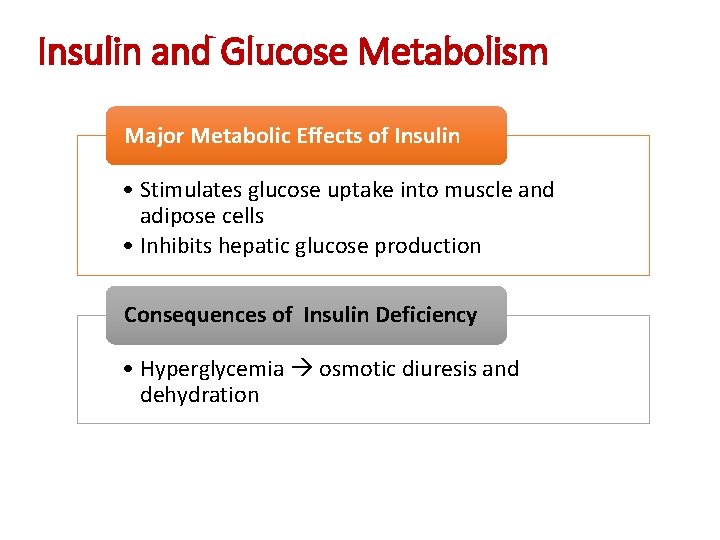
Insulin and Glucose Metabolism Major Metabolic Effects of Insulin • Stimulates glucose uptake into muscle and adipose cells • Inhibits hepatic glucose production Consequences of Insulin Deficiency • Hyperglycemia osmotic diuresis and dehydration
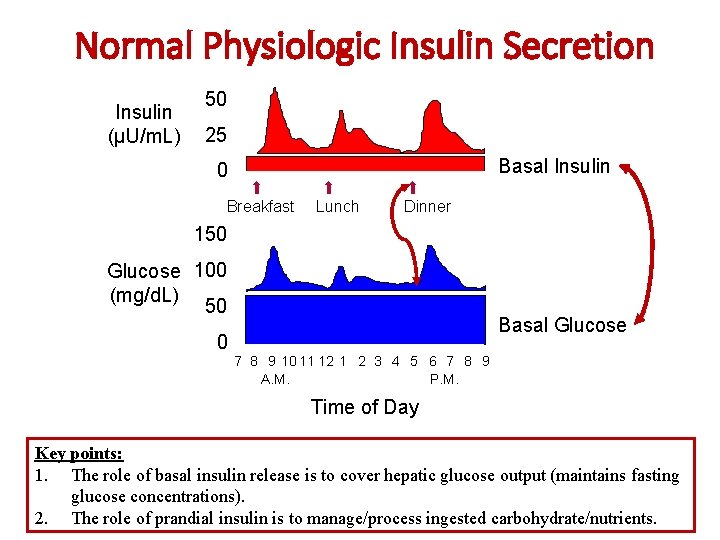
Normal Physiologic Insulin Secretion Insulin (µU/m. L) 50 25 Basal Insulin 0 Breakfast Lunch Dinner 150 Glucose 100 (mg/d. L) 50 Basal Glucose 0 7 8 9 10 11 12 1 2 3 4 5 6 7 8 9 A. M. P. M. Time of Day Key points: 1. The role of basal insulin release is to cover hepatic glucose output (maintains fasting glucose concentrations). 2. The role of prandial insulin is to manage/process ingested carbohydrate/nutrients.
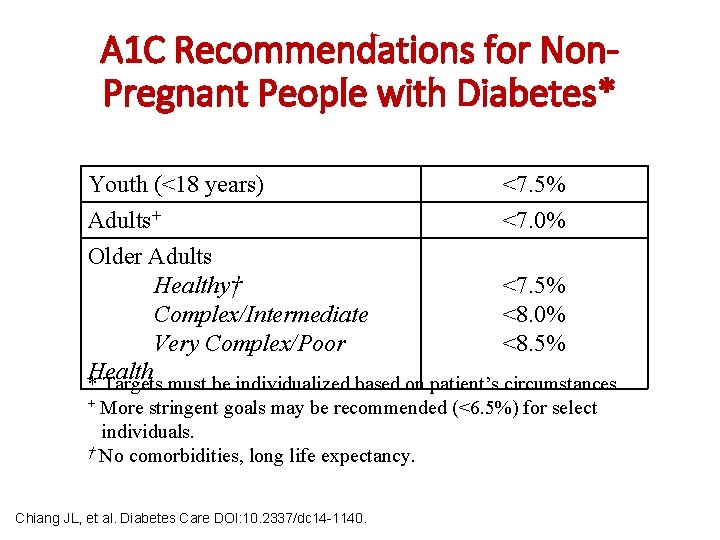
A 1 C Recommendations for Non. Pregnant People with Diabetes* Youth (˂18 years) ˂7. 5% Adults+ ˂7. 0% Older Adults Healthy† ˂7. 5% Complex/Intermediate ˂8. 0% Very Complex/Poor ˂8. 5% Health * Targets must be individualized based on patient’s circumstances. More stringent goals may be recommended (˂6. 5%) for select individuals. † No comorbidities, long life expectancy. + Chiang JL, et al. Diabetes Care DOI: 10. 2337/dc 14 -1140.

ADA 2018: Summary of Glycemic Recommendations Glycemic Targets: Standards of Medical Care in Diabetes - 2018. Diabetes Care 2018; 41 (Suppl. 1): S 55 -S 64.
- Slides: 8