
Type 1 diabetes mellitus IDDM Insulin Dependent Diabetes


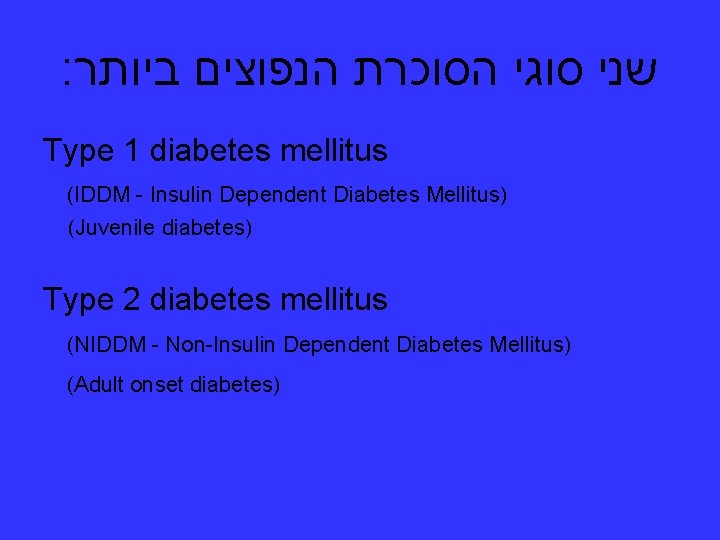
: שני סוגי הסוכרת הנפוצים ביותר Type 1 diabetes mellitus (IDDM - Insulin Dependent Diabetes Mellitus) (Juvenile diabetes) Type 2 diabetes mellitus (NIDDM - Non-Insulin Dependent Diabetes Mellitus) (Adult onset diabetes)
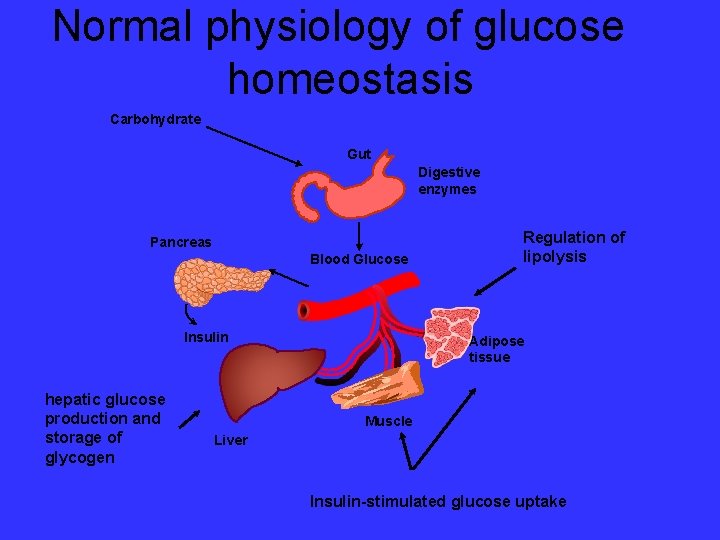
Normal physiology of glucose homeostasis Carbohydrate Gut Digestive enzymes Pancreas Blood Glucose Insulin hepatic glucose production and storage of glycogen Regulation of lipolysis Adipose tissue Muscle Liver Insulin-stimulated glucose uptake
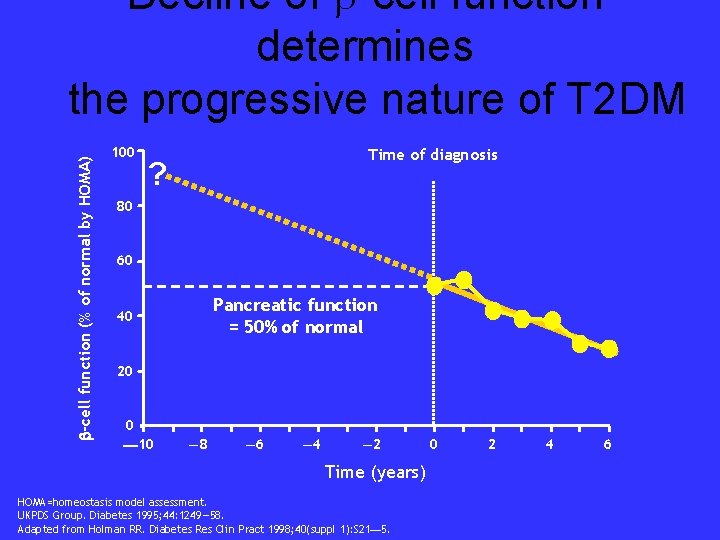
-cell function (% of normal by HOMA) Decline of -cell function determines the progressive nature of T 2 DM 100 Time of diagnosis ? 80 60 Pancreatic function = 50% of normal 40 20 0 ― 10 ― 8 ― 6 ― 4 ― 2 Time (years) HOMA=homeostasis model assessment. UKPDS Group. Diabetes 1995; 44: 1249― 58. Adapted from Holman RR. Diabetes Res Clin Pract 1998; 40(suppl 1): S 21― 5. 0 2 4 6
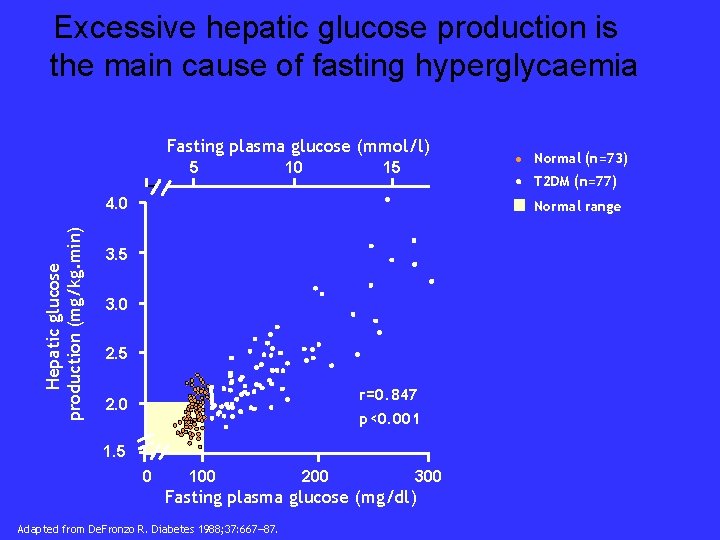
Excessive hepatic glucose production is the main cause of fasting hyperglycaemia Fasting plasma glucose (mmol/l) 5 10 15 T 2 DM (n=77) 4. 0 Hepatic glucose production (mg/kg. min) Normal (n=73) Normal range 3. 5 3. 0 2. 5 r=0. 847 p<0. 001 2. 0 1. 5 0 100 200 300 Fasting plasma glucose (mg/dl) Adapted from De. Fronzo R. Diabetes 1988; 37: 667 87.

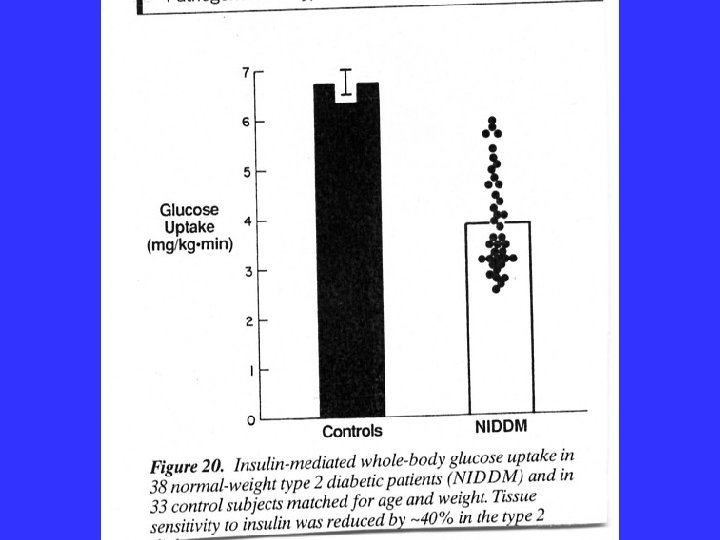
Insulin resistance Carbohydrate Compensatory increase in insulin secretion Gut Digestive enzymes Blood Glucose Pancreas Insulin Excess glucose production Excessive fat breakdown leading to increase in free fatty acids Adipose tissue Muscle Liver Decreased insulin-dependent glucose uptake
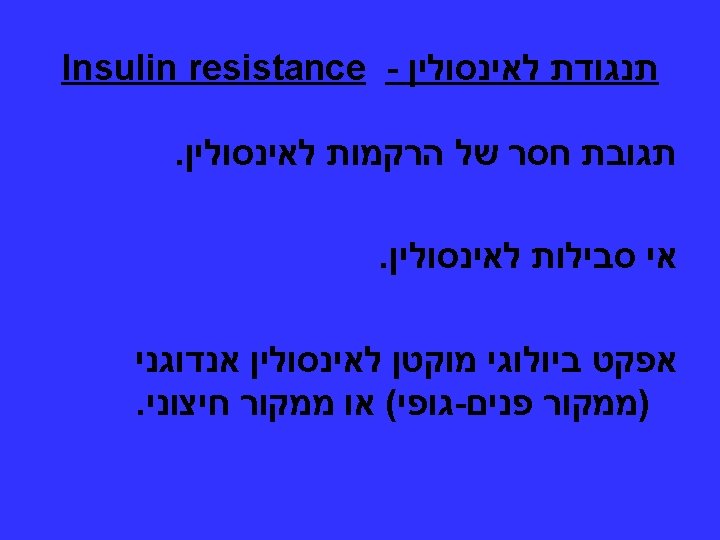
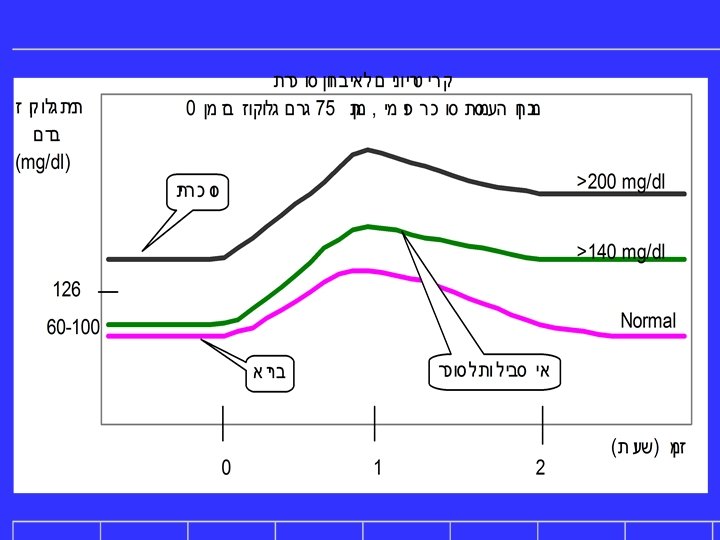
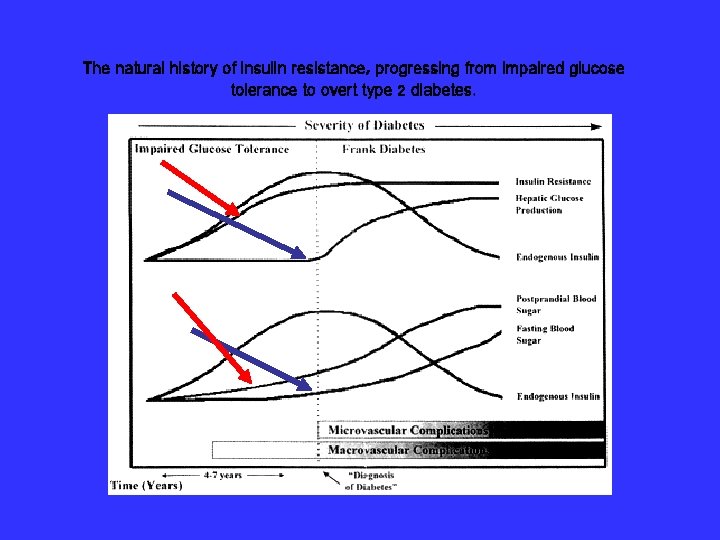
The natural history of insulin resistance, progressing from impaired glucose tolerance to overt type 2 diabetes.
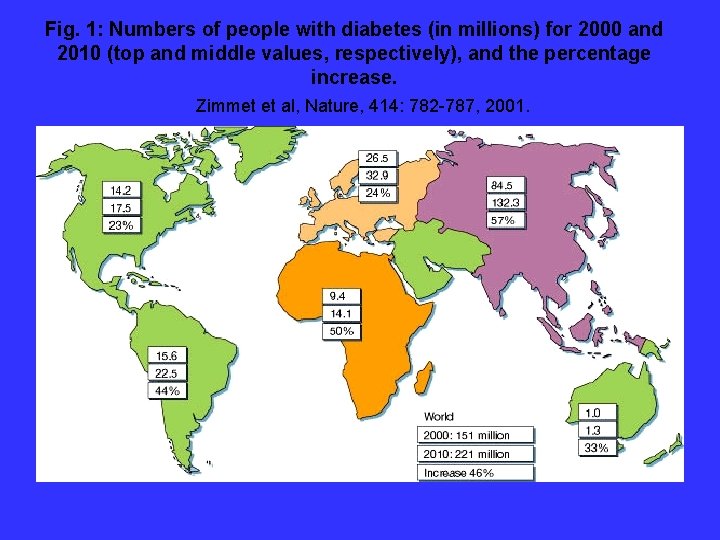
Fig. 1: Numbers of people with diabetes (in millions) for 2000 and 2010 (top and middle values, respectively), and the percentage increase. Zimmet et al, Nature, 414: 782 -787, 2001.

- Slides: 16