
Twoway ANOVA problems Fixed effects analysis in a
Two-way ANOVA problems Fixed effects analysis in a Two–way ANOVA 1
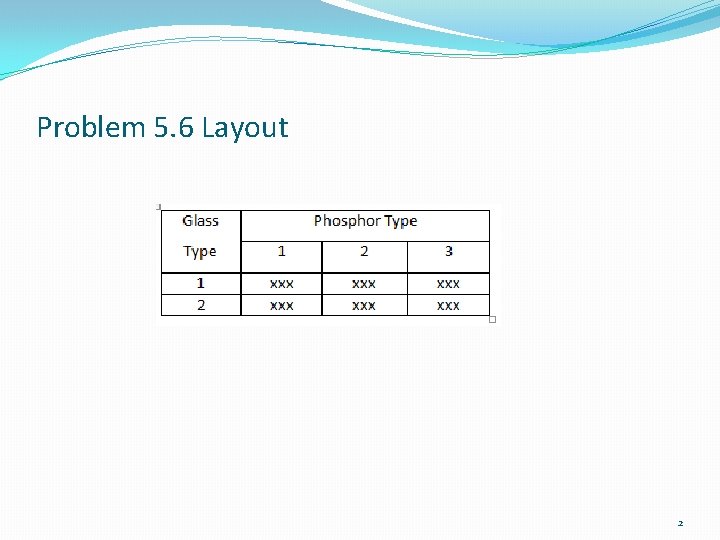
Problem 5. 6 Layout 2
Crossing and Nesting, Balanced � Phosphor Type and Glass Type (the main effects) are crossed � For example, Phosphor Type 1 means the same thing regardless of Glass Type � Since main effects are crossed we can check for interaction � Experimental units are nested within combinations of Phosphor Type and Glass Type � Experimental unit 1 for one combination of Phosphor Type and Glass Type does not mean the same thing as Experimental unit 1 for a different combination of Phosphor Type and Glass Type � Since there are three observations for each cell the design is balanced 3
Fixed and Random effects Suppose we ran the experiment again. �Phosphor type and Glass type would mean the same thing in another run of the experiment so we call them Fixed Effects in the Model. �The experimental units are not the same, so we call them Random Effects in the Model. 4
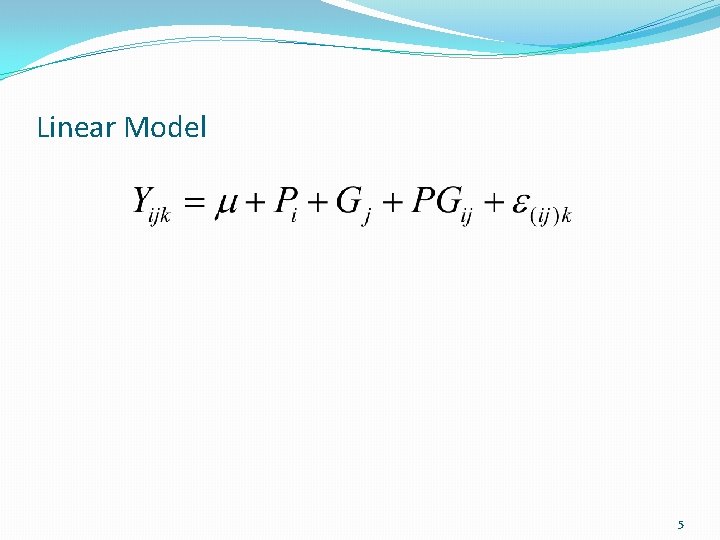
Linear Model 5
Parameters and hypotheses 6
Expected mean squares- EMS 7
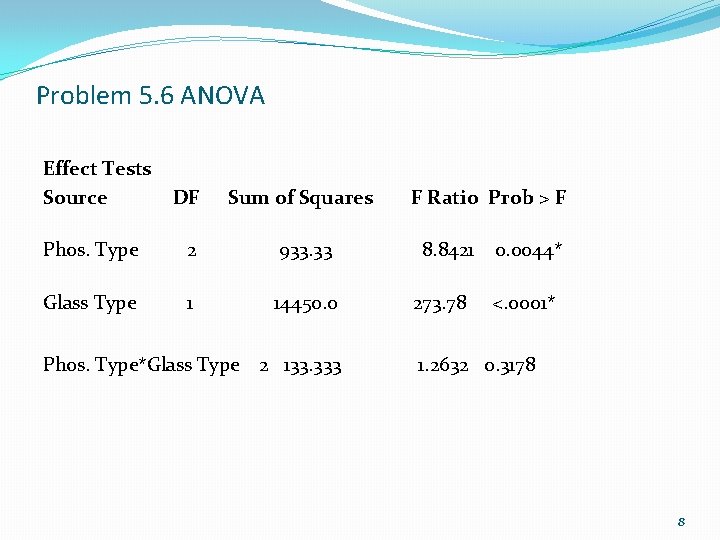
Problem 5. 6 ANOVA Effect Tests Source DF Sum of Squares Phos. Type 2 933. 33 Glass Type 1 14450. 0 Phos. Type*Glass Type 2 133. 333 F Ratio Prob > F 8. 8421 273. 78 0. 0044* <. 0001* 1. 2632 0. 3178 8
Test and do interaction plot, then look at main effects. �F-test and plot of interaction. (F-test and plot of cell means) �If not significant, go on to test Main Effects. 9
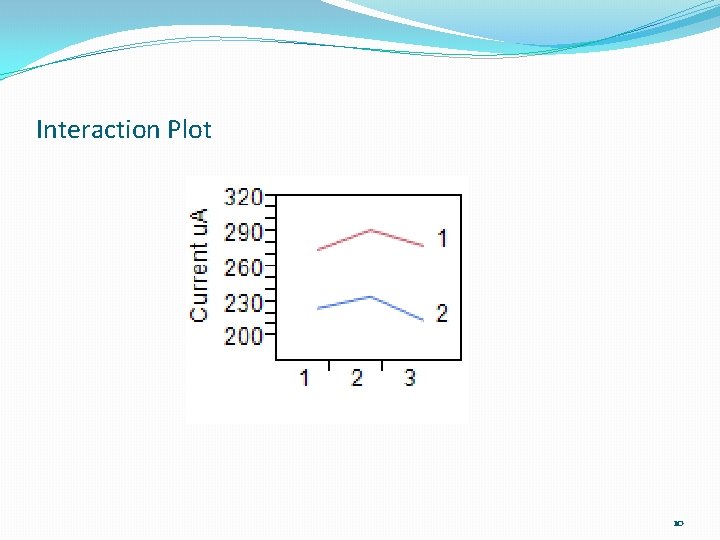
Interaction Plot 10
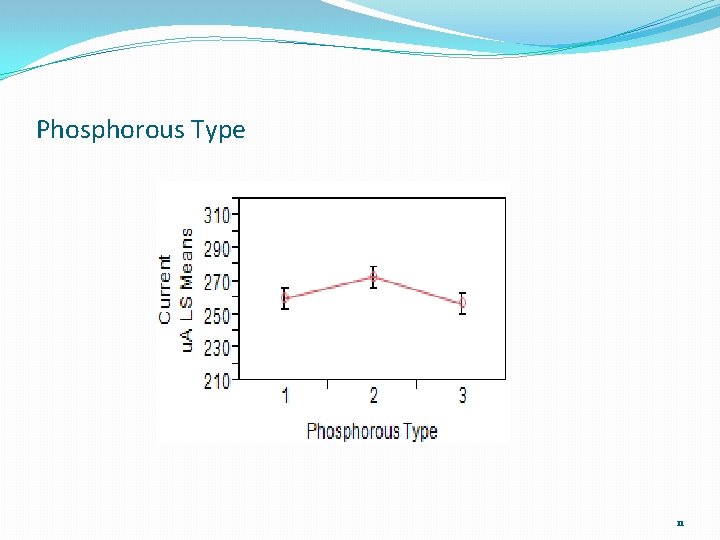
Phosphorous Type 11
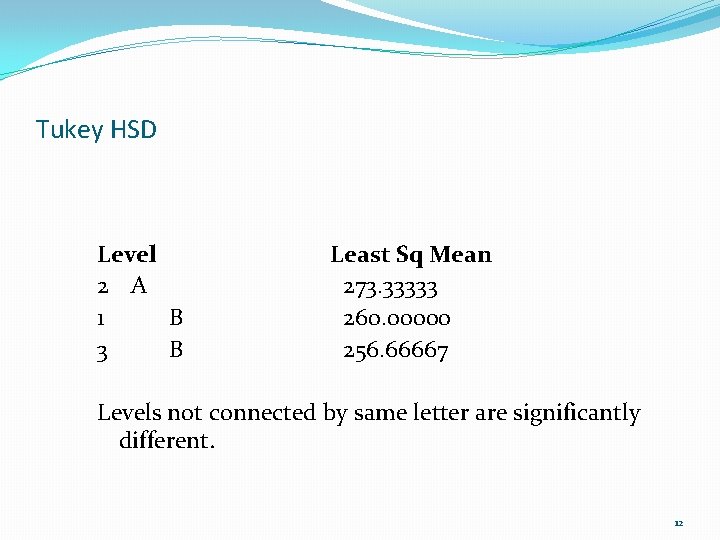
Tukey HSD Level 2 A 1 B 3 B Least Sq Mean 273. 33333 260. 00000 256. 66667 Levels not connected by same letter are significantly different. 12
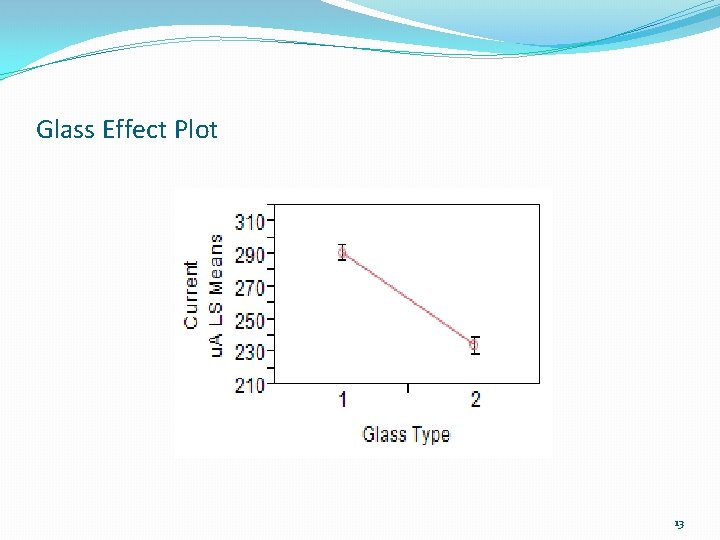
Glass Effect Plot 13
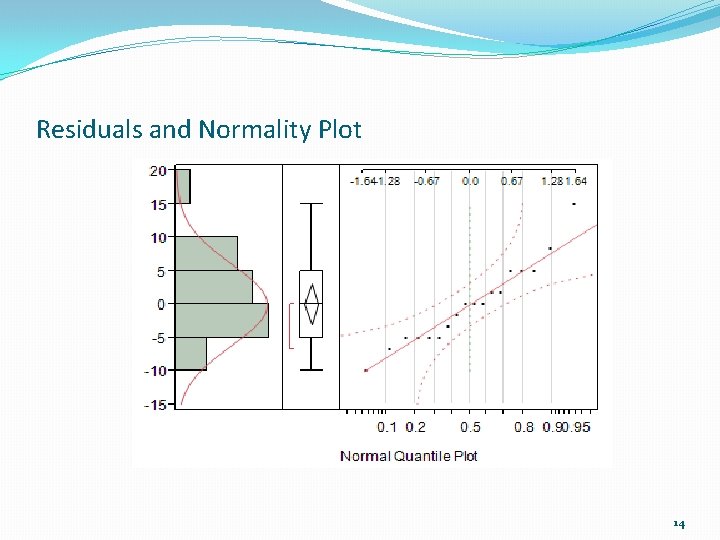
Residuals and Normality Plot 14
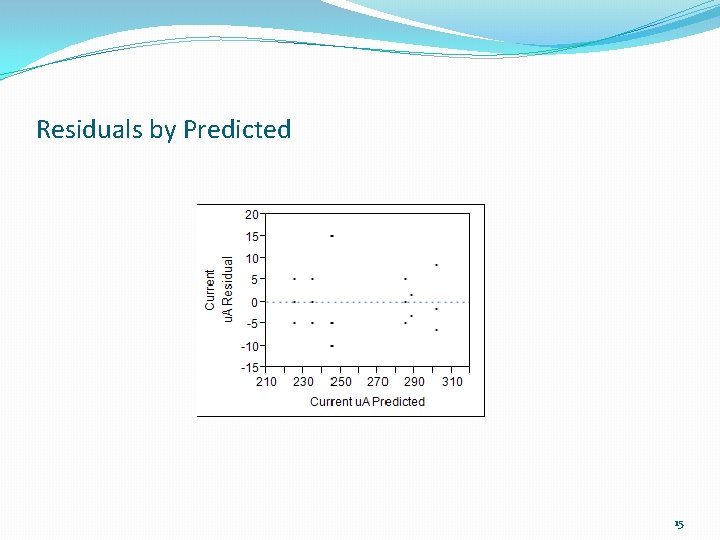
Residuals by Predicted 15
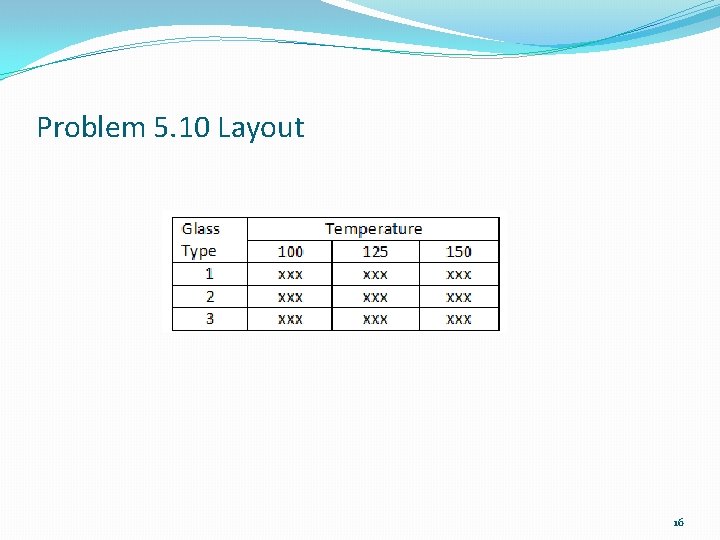
Problem 5. 10 Layout 16
Crossed and Nested �Temperature and Glass are crossed �Can check for Interaction �Experimental units are Nested within Treatment combinations �There are three observations per cell so the design is balanced 17
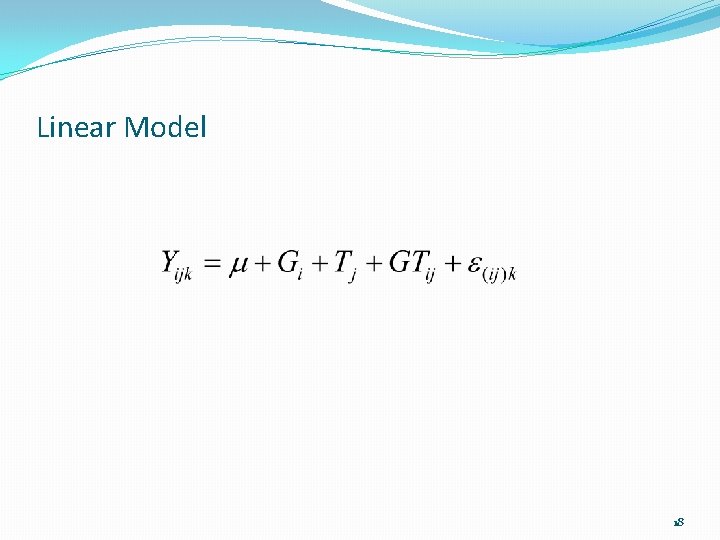
Linear Model 18
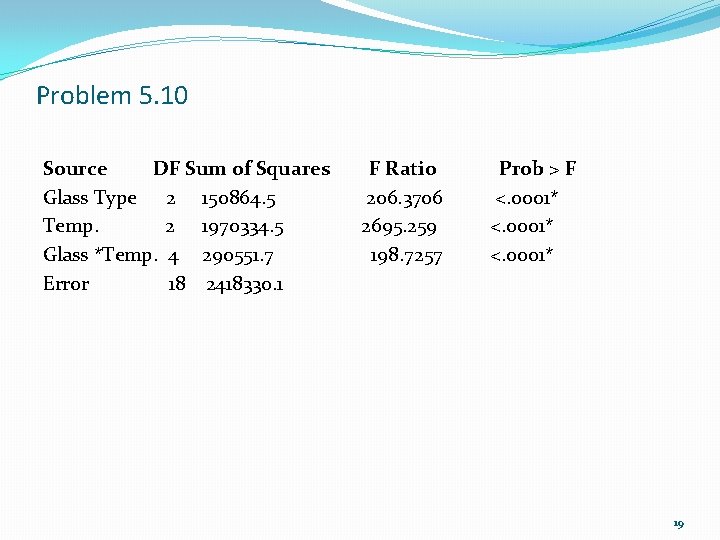
Problem 5. 10 Source DF Sum of Squares Glass Type 2 150864. 5 Temp. 2 1970334. 5 Glass *Temp. 4 290551. 7 Error 18 2418330. 1 F Ratio 206. 3706 2695. 259 198. 7257 Prob > F <. 0001* 19
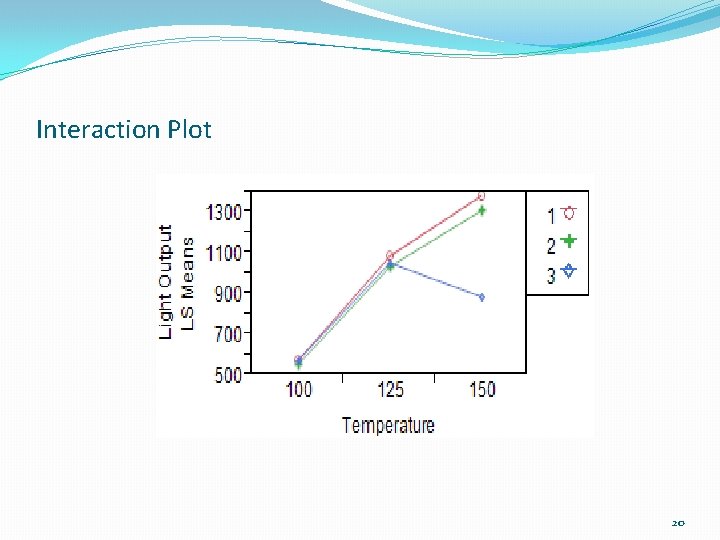
Interaction Plot 20
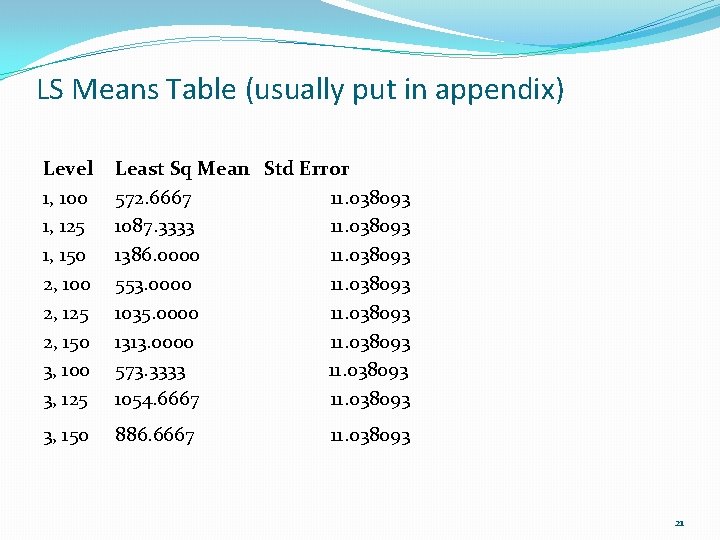
LS Means Table (usually put in appendix) Level 1, 100 1, 125 1, 150 2, 100 2, 125 2, 150 3, 100 3, 125 Least Sq Mean Std Error 572. 6667 11. 038093 1087. 3333 11. 038093 1386. 0000 11. 038093 553. 0000 11. 038093 1035. 0000 11. 038093 1313. 0000 11. 038093 573. 3333 11. 038093 1054. 6667 11. 038093 3, 150 886. 6667 11. 038093 21
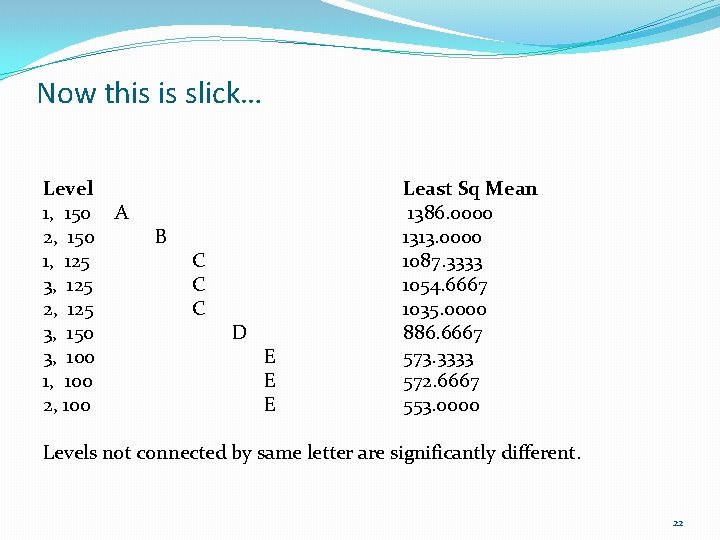
Now this is slick… Level 1, 150 2, 150 1, 125 3, 125 2, 125 3, 150 3, 100 1, 100 2, 100 A B C C C D E E E Least Sq Mean 1386. 0000 1313. 0000 1087. 3333 1054. 6667 1035. 0000 886. 6667 573. 3333 572. 6667 553. 0000 Levels not connected by same letter are significantly different. 22
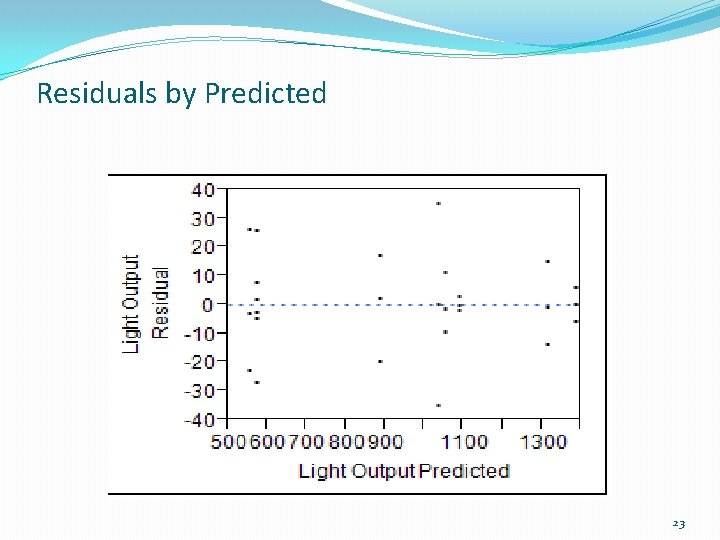
Residuals by Predicted 23
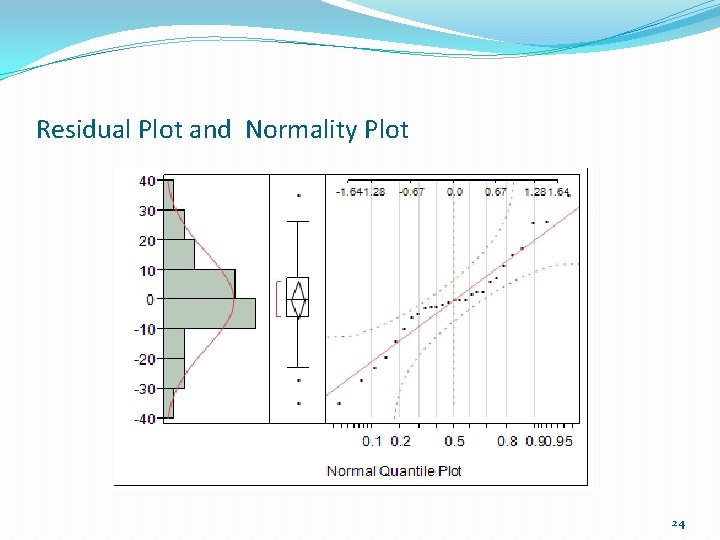
Residual Plot and Normality Plot 24
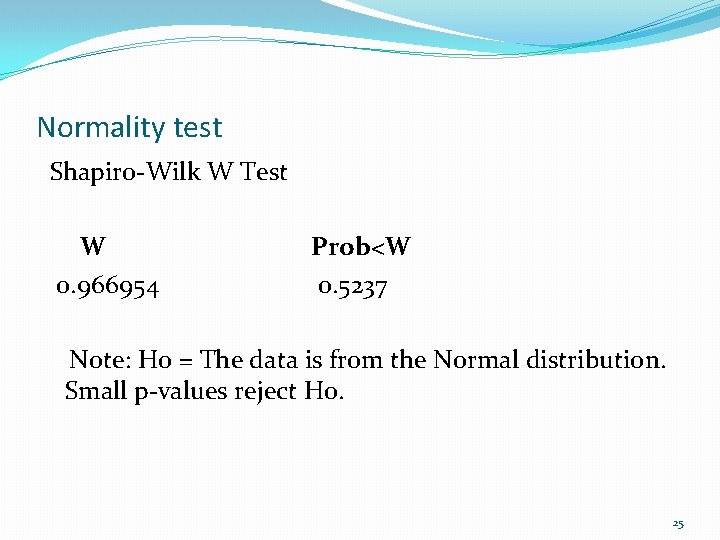
Normality test Shapiro-Wilk W Test W 0. 966954 Prob<W 0. 5237 Note: Ho = The data is from the Normal distribution. Small p-values reject Ho. 25
- Slides: 25