
TWOSTAGE REVERSE OSMOSIS OPTIMAL ELEMENT CONFIGURATION ENERGY SAVINGS





- Slides: 23
TWO-STAGE REVERSE OSMOSIS: OPTIMAL ELEMENT CONFIGURATION & ENERGY SAVINGS Quantum J. Wei*, Ronan K. Mc. Govern, John H. Lienhard V 17 WC: 57917
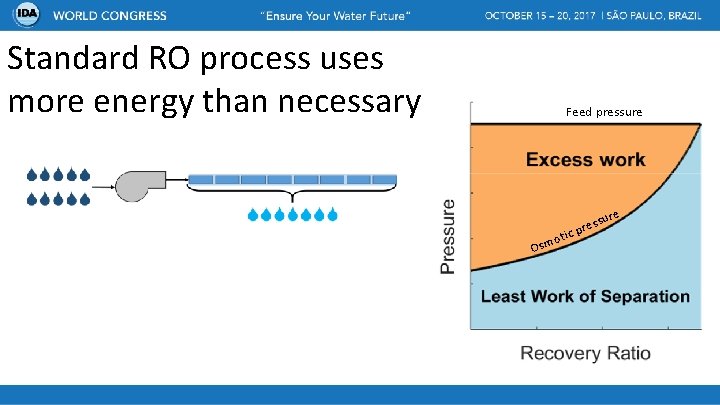
Standard RO process uses more energy than necessary Feed pressure August 30 – September 4, 2015 | San Diego California ti o Osm ure ess c pr
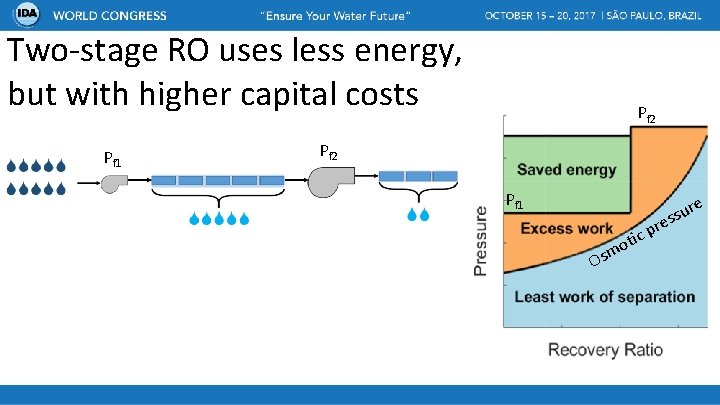
Two-stage RO uses less energy, but with higher capital costs Pf 1 Pf 2 August 30 – September 4, 2015 | San Diego California Pf 1 re u s es m Os o r p c ti
August 30 – September 4, 2015 | can San Diego California If SWRO plants operate at ~65% recovery, they should use 2 stages.
How much energy can we save? August 30 – September 4, 2015 | San Diego California Do energy savings justify increased costs?
How much energy can we save? August 30 – September 4, 2015 | San Diego California Do energy savings justify increased costs?
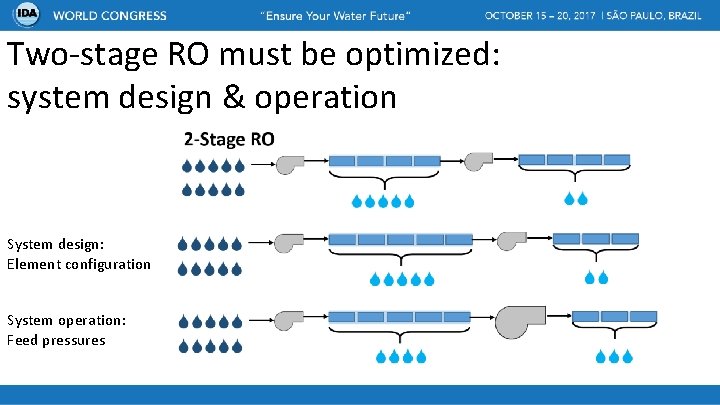
Two-stage RO must be optimized: system design & operation August 30 – September 4, 2015 | San Diego California System design: Element configuration System operation: Feed pressures
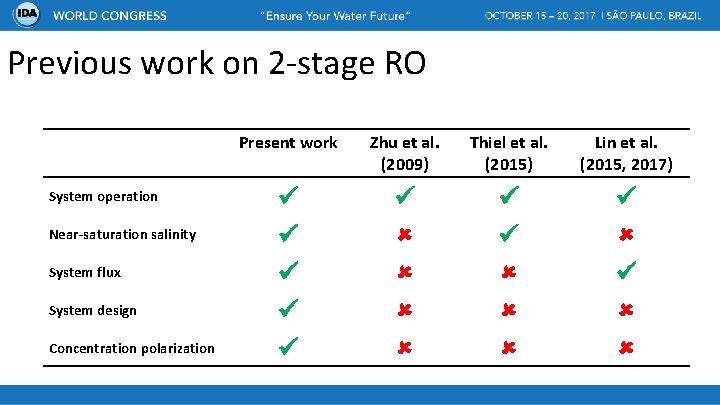
Previous work on 2 -stage RO Present work System operation Zhu et al. Thiel et al. (2009) (2015) August 30 – September 4, 2015 | San Diego California Near-saturation salinity System flux System design Concentration polarization Lin et al. (2015, 2017)
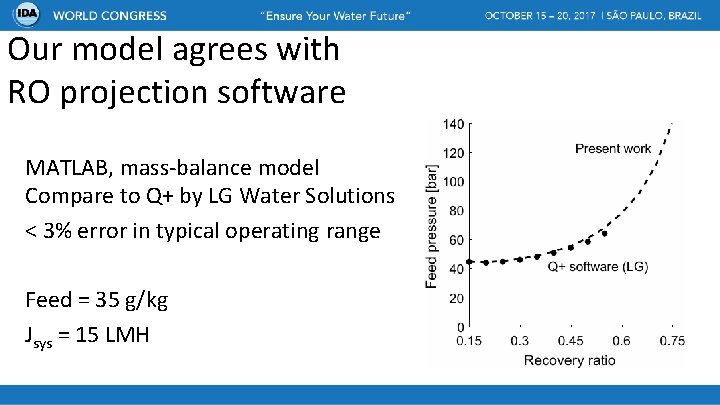
Our model agrees with RO projection software MATLAB, mass-balance model August 30 – September 4, 2015 | San Diego California Compare to Q+ by LG Water Solutions < 3% error in typical operating range Feed = 35 g/kg Jsys = 15 LMH
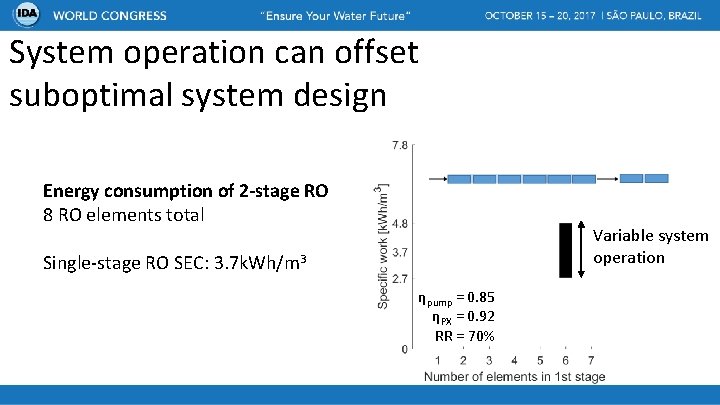
System operation can offset suboptimal system design Augustof 302 -stage – September. RO 4, 2015 | San Diego California Energy consumption 8 RO elements total Single-stage RO SEC: 3. 7 k. Wh/m 3 Worse than single-stage Variable system Better than operation single-stage ηpump = 0. 85 ηPX = 0. 92 RR = 70%
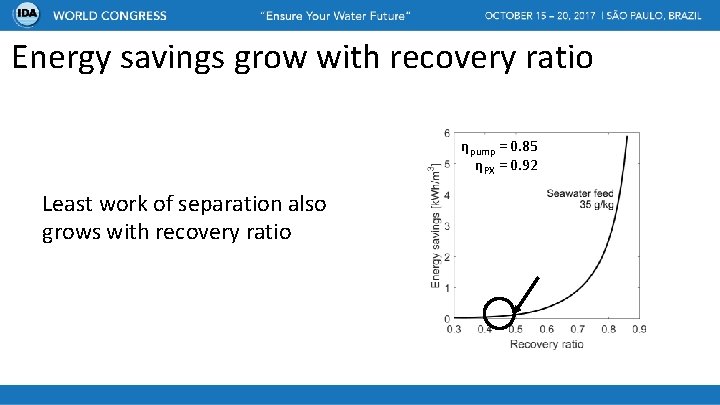
Energy savings grow with recovery ratio ηpump = 0. 85 ηPX = 0. 92 August 30 – September 4, 2015 | San Diego California Least work of separation also grows with recovery ratio
How much energy can we save? August 30 – September 4, 2015 | San Diego California Do energy savings justify increased costs?
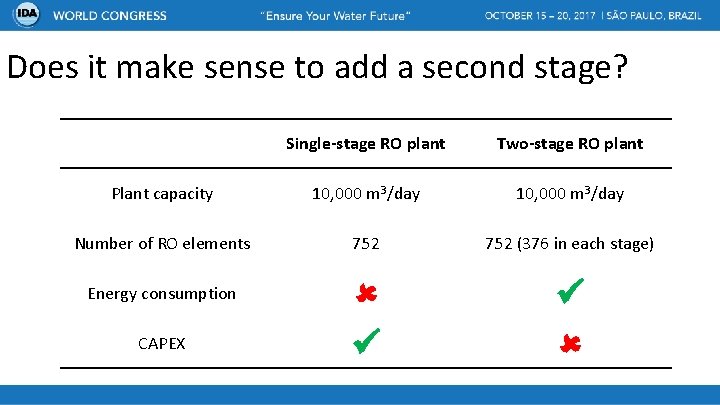
Does it make sense to add a second stage? Single-stage RO plant August 30 – September 10, 000 4, 2015 | m San 3/day Diego California Plant capacity Two-stage RO plant 10, 000 m 3/day Number of RO elements 752 (376 in each stage) Energy consumption CAPEX
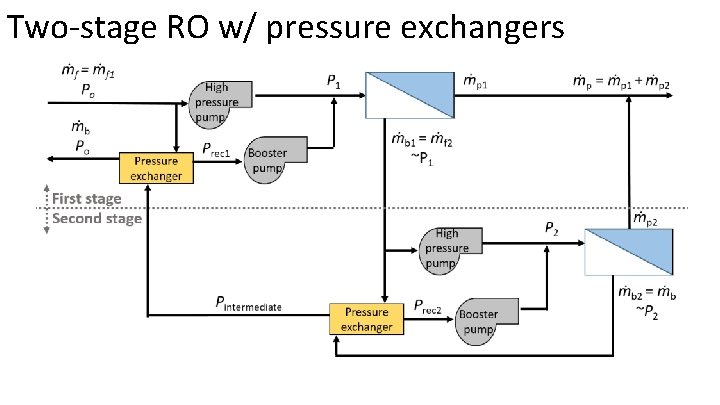
Two-stage RO w/ pressure exchangers
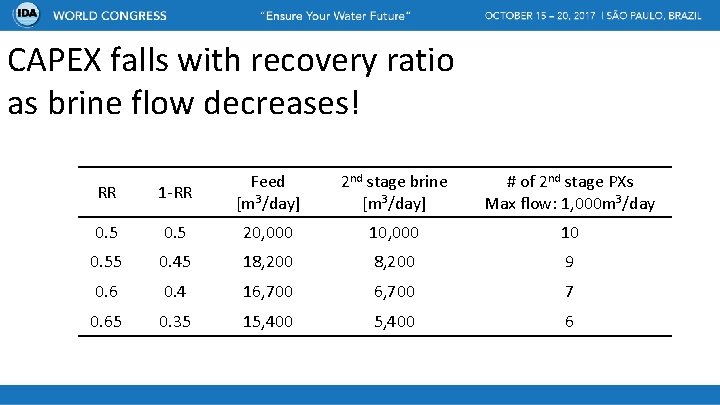
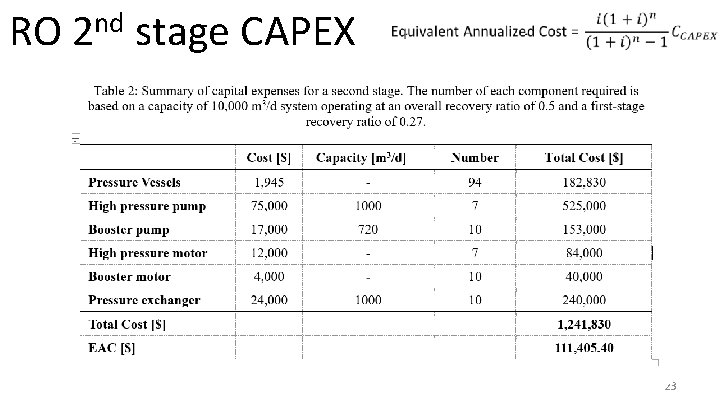
CAPEX falls with recovery ratio as brine flow decreases! RR Feed 2 nd| stage brine # of 2 nd stage PXs August 30 – September 4, 2015 San Diego California 1 -RR [m 3/day] Max flow: 1, 000 m 3/day 0. 5 20, 000 10 0. 55 0. 45 18, 200 9 0. 6 0. 4 16, 700 7 0. 65 0. 35 15, 400 6
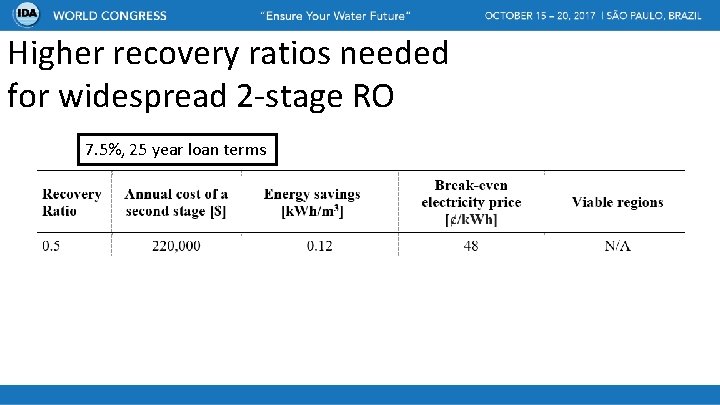
Higher recovery ratios needed for widespread 2 -stage RO 7. 5%, 25 year loan terms August 30 – September 4, 2015 | San Diego California
10, 000 m 3/day SWRO plant 65% recovery, 10¢/k. Wh August 30 – September 4, 2015 | San Diego California Add a 2 nd stage Save $200, 000 annually
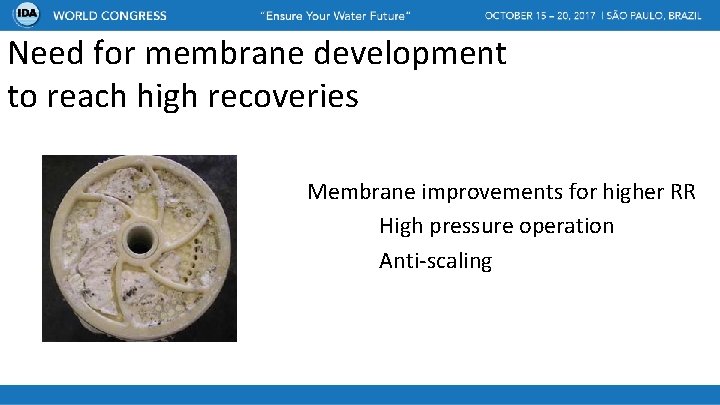
Need for membrane development to reach high recoveries August 30 – September. Membrane 4, 2015 | San Diegoimprovements California for higher RR High pressure operation Anti-scaling
If SWRO plants can operate at ~65% recovery, they should use 2 stages. August 30 – September 4, 2015 | San Diego California
When SWRO plants can operate at ~65% recovery, they should use 2 stages. August 30 – September 4, 2015 | San Diego California
Questions? August 30 – September 4, 2015 | San Diego California Lienhard Research Group Co-authors Dr. Ronan K. Mc. Govern Prof. John H. Lienhard V
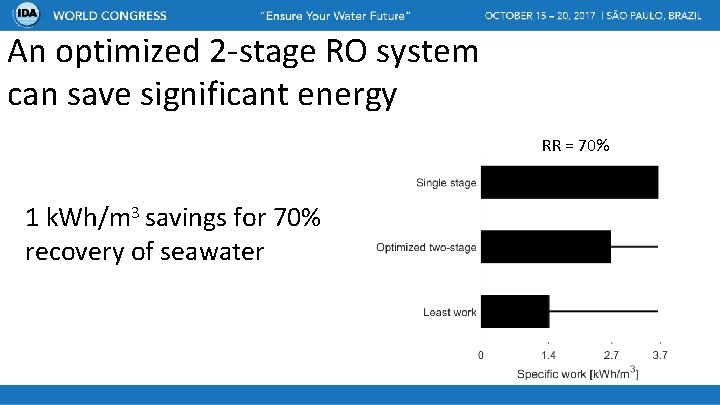
An optimized 2 -stage RO system can save significant energy RR = 70% August 30 – September 4, 2015 | San Diego California 1 k. Wh/m 3 savings for 70% recovery of seawater
RO nd 2 stage CAPEX 23