
Twophase design for a highthroughput proteomics experiment Kevin

- Slides: 23
Two-phase design for a high-throughput proteomics experiment Kevin Chang, Richard Jarrett and Kathy Ruggiero 1
Overview Two-phase experiments Quantitative proteomics experiment ◦ Developing experimental design ◦ ANOVA tables ◦ Results 2
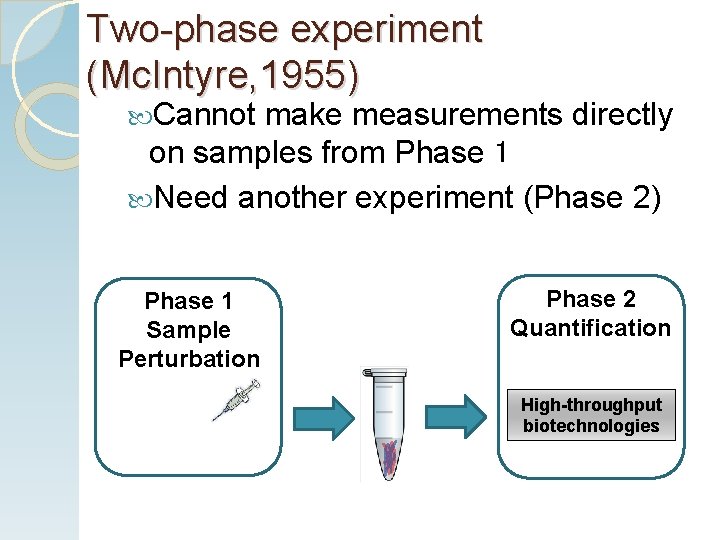
Two-phase experiment (Mc. Intyre, 1955) Cannot make measurements directly on samples from Phase 1 Need another experiment (Phase 2) Phase 1 Sample Perturbation Phase 2 Quantification High-throughput biotechnologies
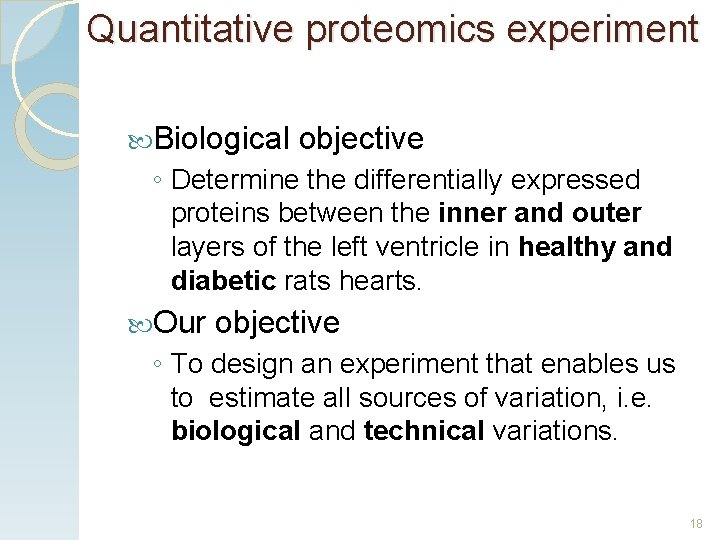
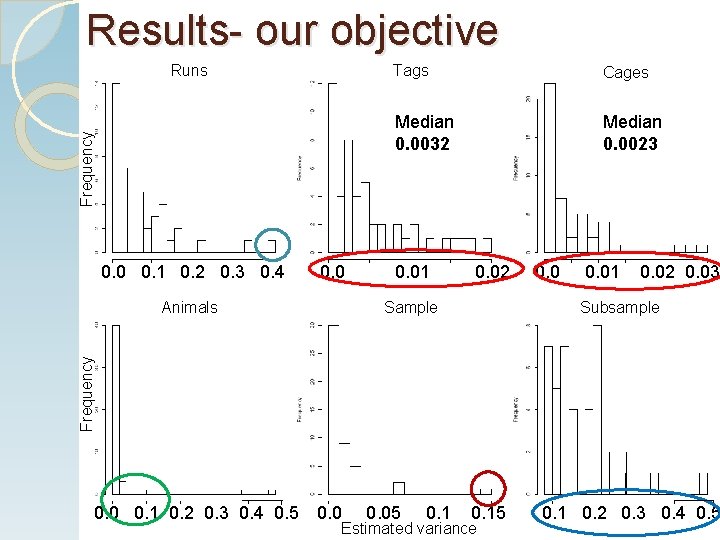
Quantitative proteomics experiment Biological objective ◦ Determine the differentially expressed proteins between the inner and outer layers of the left ventricle wall of healthy and diabetic rats hearts. Our objective ◦ To design an experiment that enables us to estimate all sources of variation, i. e. biological and technical variations. 4
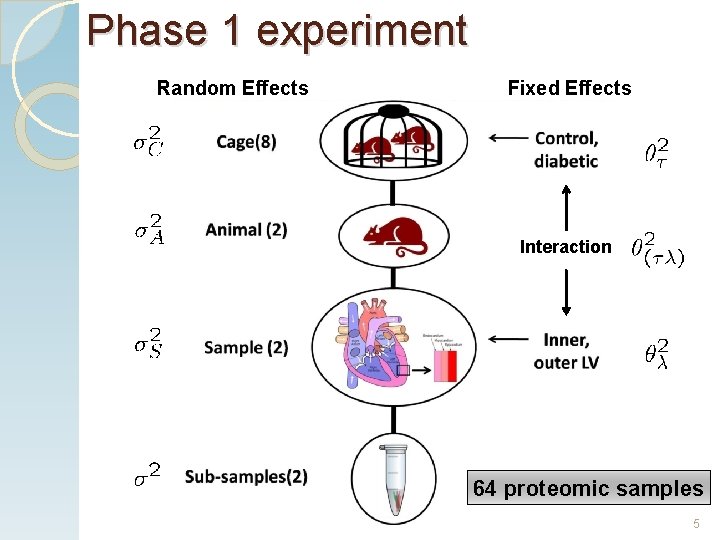
Phase 1 experiment Random Effects Fixed Effects Interaction 64 proteomic samples 5
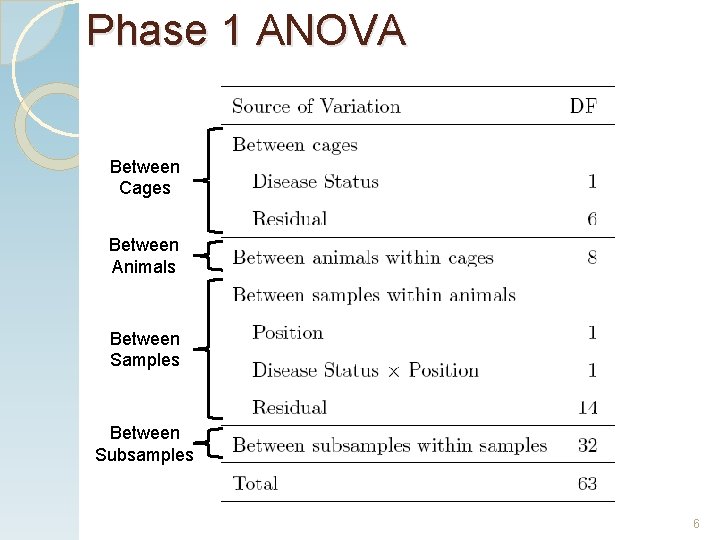
Phase 1 ANOVA Between Cages Between Animals Between Samples Between Subsamples 6
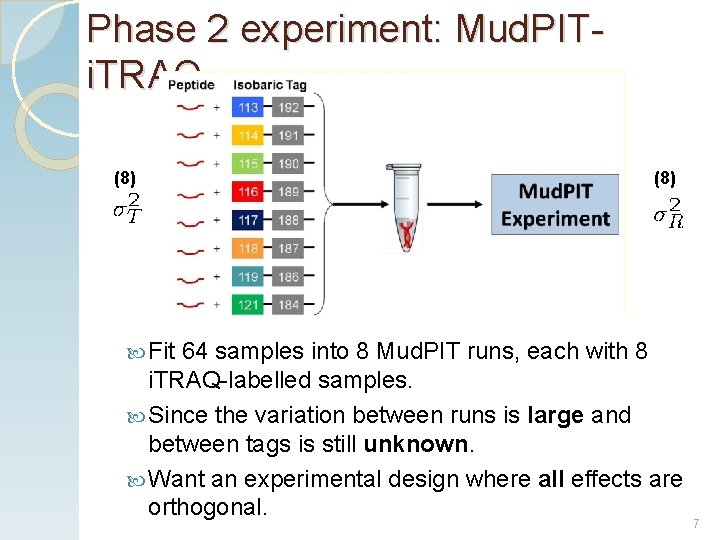
Phase 2 experiment: Mud. PITi. TRAQ (8) Fit 64 samples into 8 Mud. PIT runs, each with 8 i. TRAQ-labelled samples. Since the variation between runs is large and between tags is still unknown. Want an experimental design where all effects are orthogonal. 7
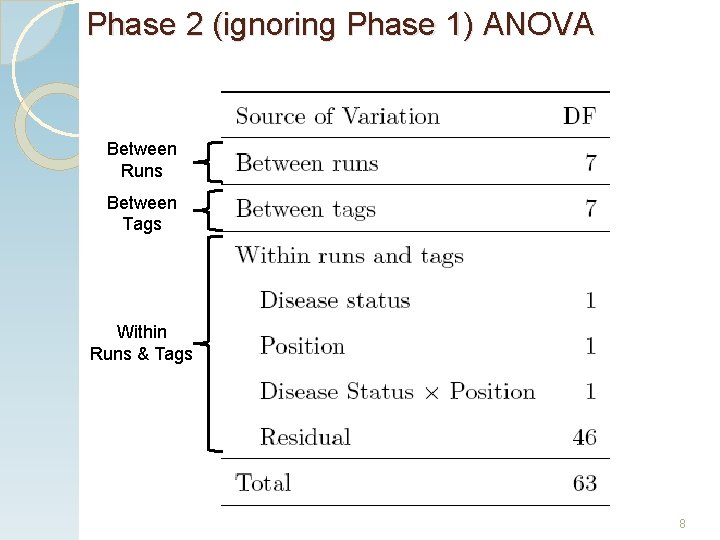
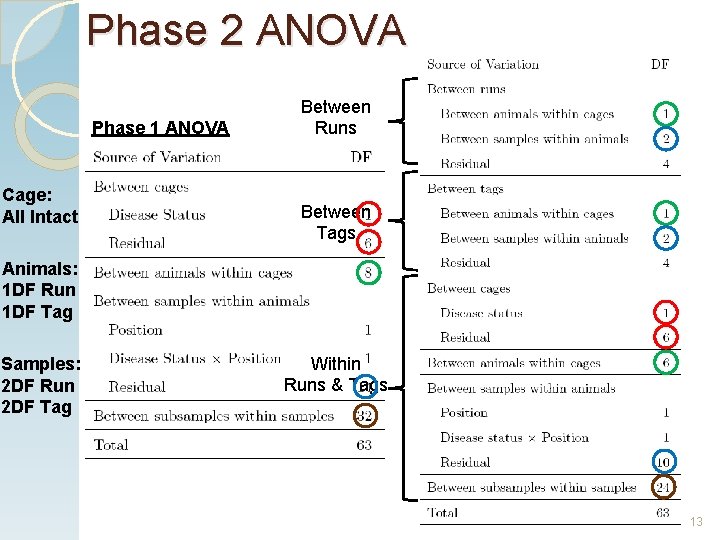
Phase 2 (ignoring Phase 1) ANOVA Between Runs Between Tags Within Runs & Tags 8
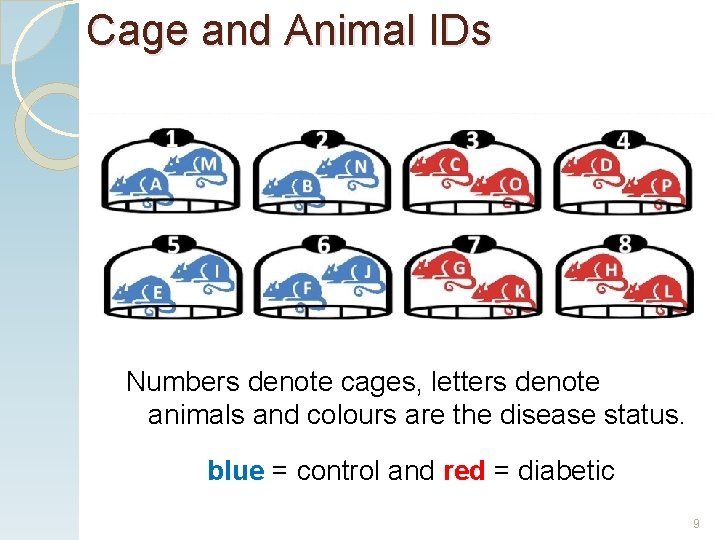
Cage and Animal IDs Numbers denote cages, letters denote animals and colours are the disease status. blue = control and red = diabetic 9
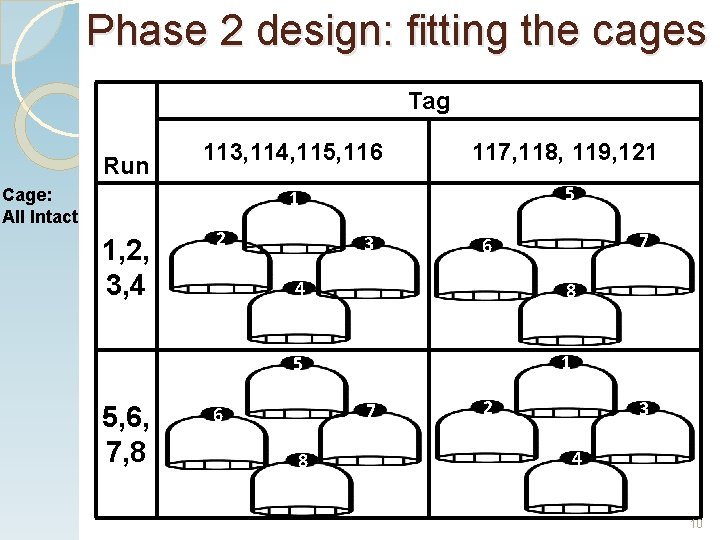
Phase 2 design: fitting the cages Tag Run Cage: All Intact 1, 2, 3, 4 5, 6, 7, 8 113, 114, 115, 116 117, 118, 119, 121 1 5 2 3 7 6 4 8 5 1 7 6 8 2 3 4 10
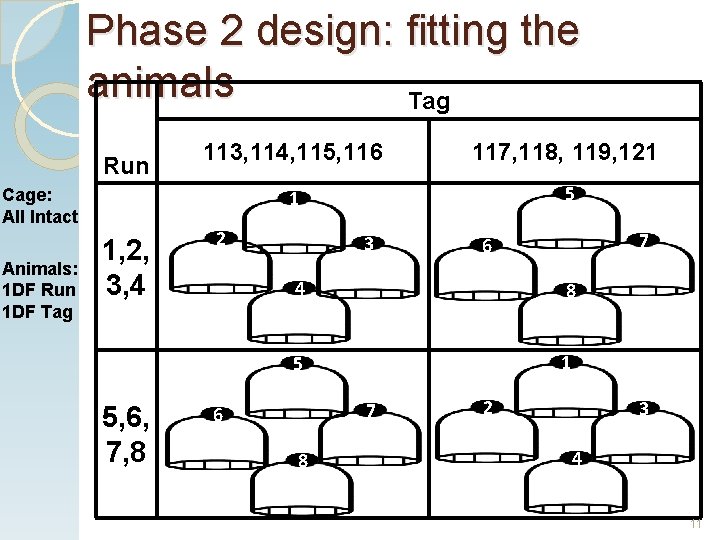
Phase 2 design: fitting the animals Tag Run Cage: All Intact Animals: 1 DF Run 1 DF Tag 1, 2, 3, 4 113, 114, 115, 116 117, 118, 119, 121 1 5 A 2 B 3 C 4 6 F D J G 8 1 I 6 7 H 5 5, 6, 7, 8 E 8 L 7 2 K N M 3 O 4 P 11
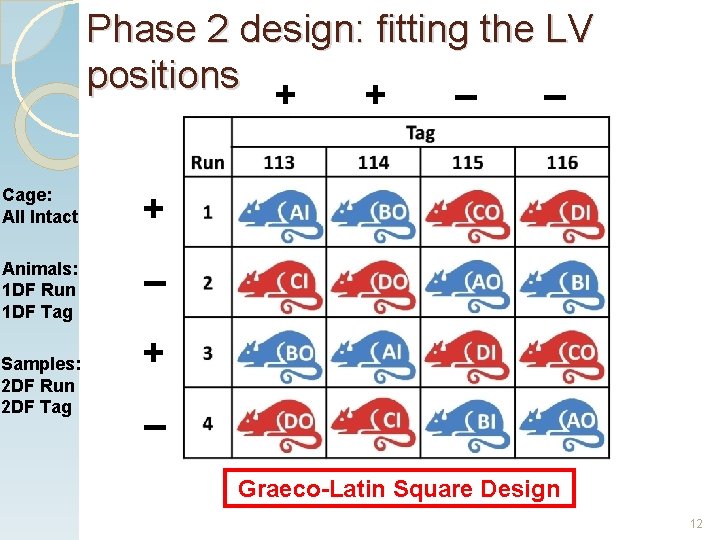
Phase 2 design: fitting the LV positions + + – – Cage: All Intact + Animals: 1 DF Run 1 DF Tag – Samples: 2 DF Run 2 DF Tag + – Graeco-Latin Square Design 12
Phase 2 ANOVA Phase 1 ANOVA Cage: All Intact Between Runs Between Tags Animals: 1 DF Run 1 DF Tag Samples: 2 DF Run 2 DF Tag Within Runs & Tags 13
Quantitative proteomics experiment Biological objective ◦ Determine the differentially expressed proteins between the inner and outer layers of the left ventricle in healthy and diabetic rats hearts. Our objective ◦ To design an experiment that enables us to estimate all sources of variation, i. e. biological and technical variations. 14
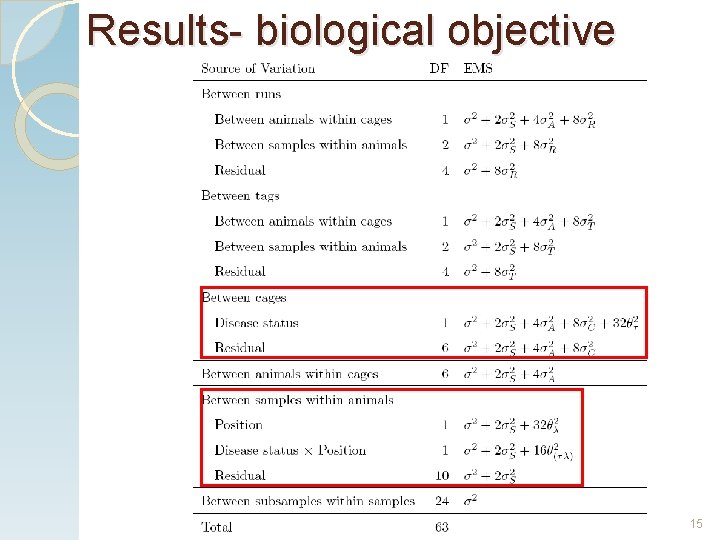
Results- biological objective . 15
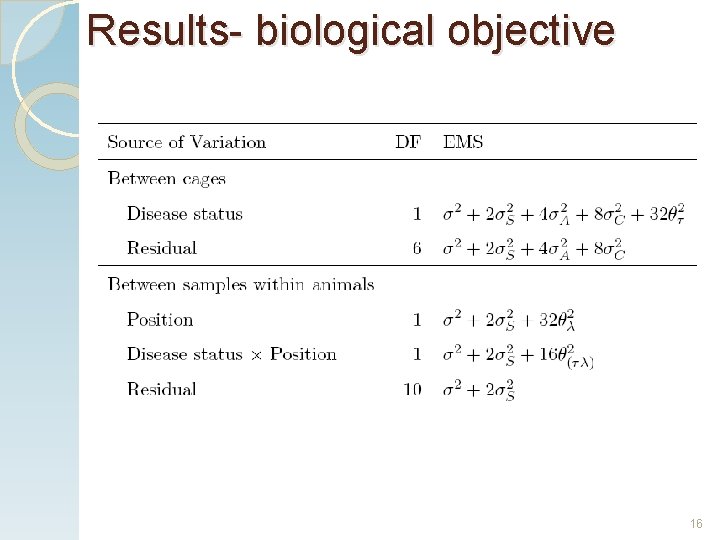
Results- biological objective 16
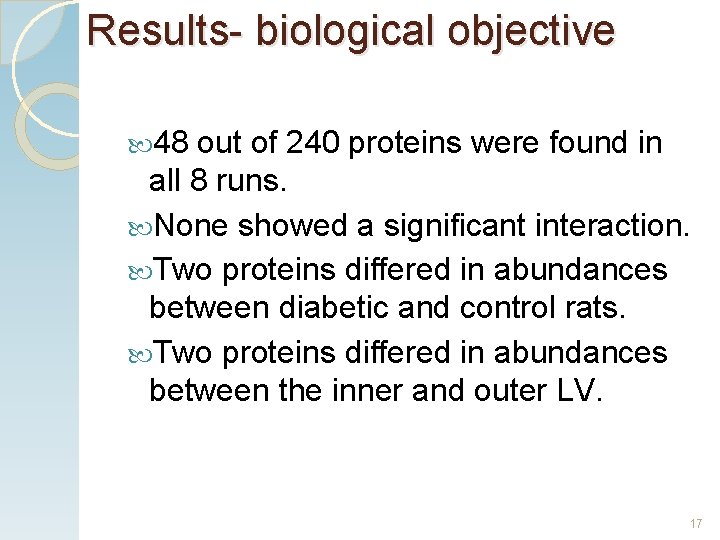
Results- biological objective 48 out of 240 proteins were found in all 8 runs. None showed a significant interaction. Two proteins differed in abundances between diabetic and control rats. Two proteins differed in abundances between the inner and outer LV. 17
Quantitative proteomics experiment Biological objective ◦ Determine the differentially expressed proteins between the inner and outer layers of the left ventricle in healthy and diabetic rats hearts. Our objective ◦ To design an experiment that enables us to estimate all sources of variation, i. e. biological and technical variations. 18
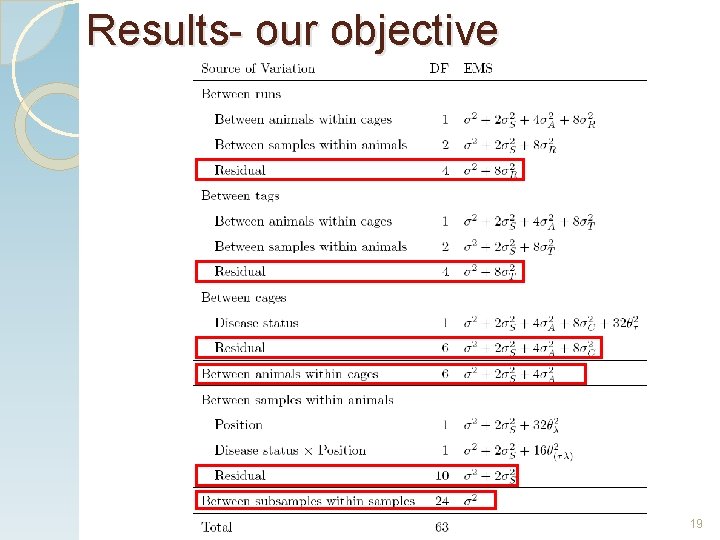
Results- our objective. . . 19
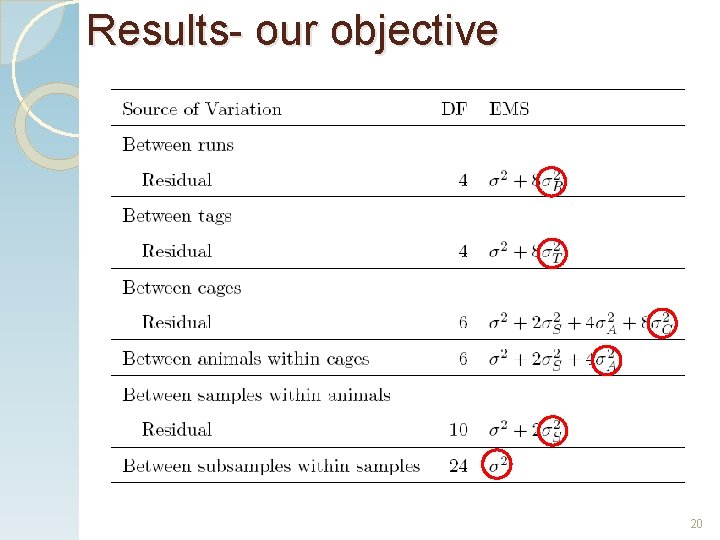
Results- our objective 20
Results- our objective Frequency Runs 0. 0 0. 1 0. 2 0. 3 0. 4 0. 0 Cages Median 0. 0032 Median 0. 0023 0. 01 0. 02 Sample 0. 01 0. 02 0. 03 Subsample Frequency Animals Tags 0. 0 0. 1 0. 2 0. 3 0. 4 0. 5 0. 05 0. 15 Estimated variance 0. 1 0. 2 0. 3 0. 4 210. 5
Future Work Further analyse this data. Generalise the two-phase design methodology. Technology is still improving! 22
Acknowledgments Mud. PIT-i. TRAQ ◦ Martin Middleditch ◦ Dr Tony Hickey ◦ Julia Mac. Donald And ◦ The Bioinformatics Institute 23