
Two ways our body control itself 1 Chemical
Two ways our body control itself: 1. Chemical 2. Electrical
• Main Function: It releases hormones into the blood to signal other cells to behave in certain ways. It is a slow but widespread form of communication. It also has a long lasting effect.
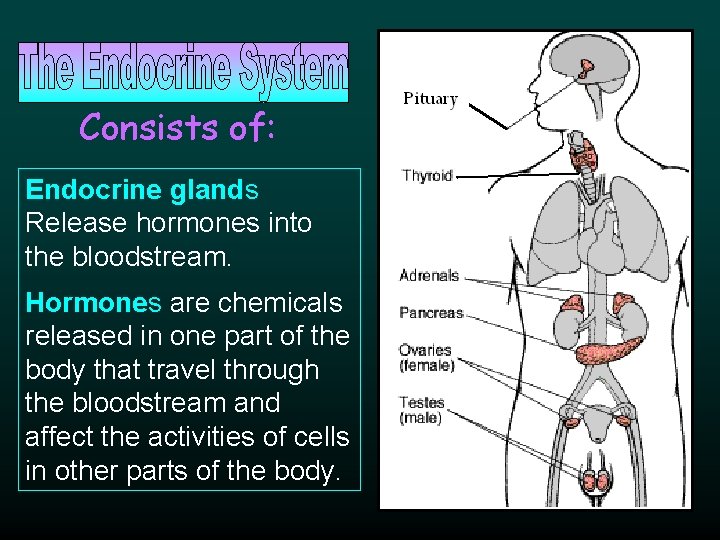
Consists of: Endocrine glands Release hormones into the bloodstream. Hormones are chemicals released in one part of the body that travel through the bloodstream and affect the activities of cells in other parts of the body.
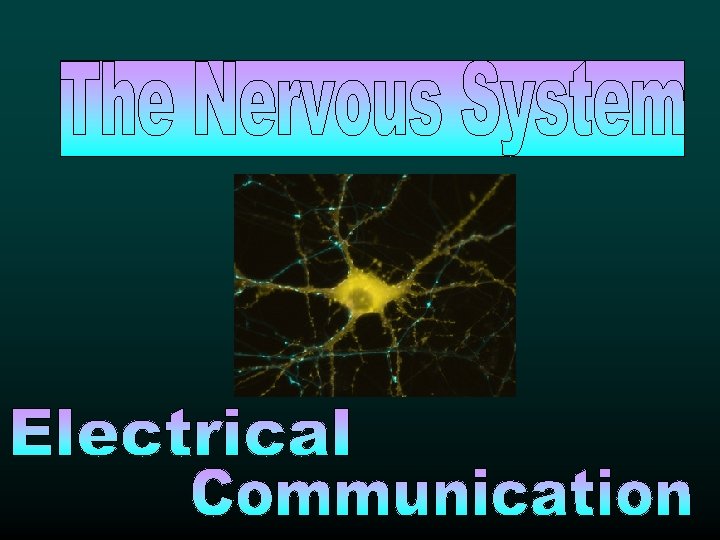

Main Function: This communication system controls and coordinates functions throughout the body and responds to internal and external stimuli. It is quick, but only influence direct areas. Our nervous system Our survival depends on us being allows us to feel pain. sensitive to our surroundings. We need to be able to detect any changes and be able to respond to them.
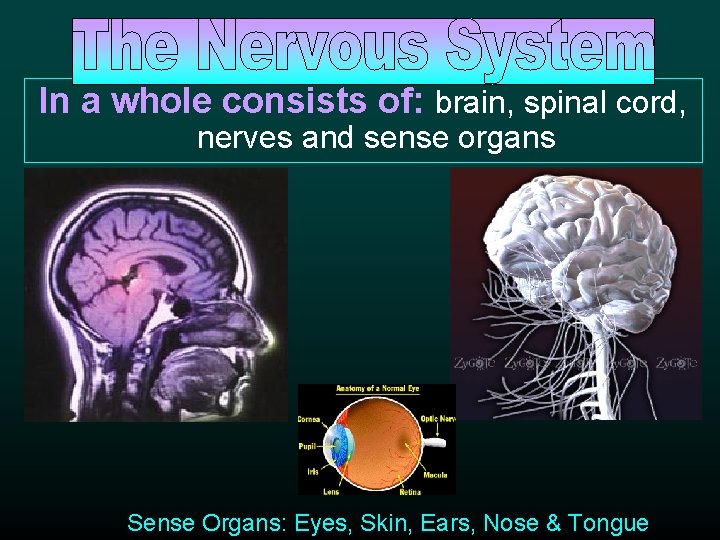
In a whole consists of: brain, spinal cord, nerves and sense organs Sense Organs: Eyes, Skin, Ears, Nose & Tongue
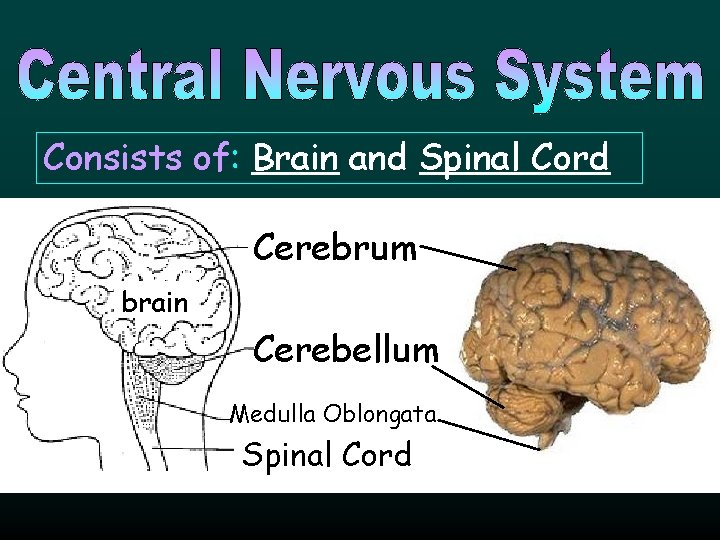
Consists of: Brain and Spinal Cord Cerebrum brain Cerebellum Medulla Oblongata Spinal Cord
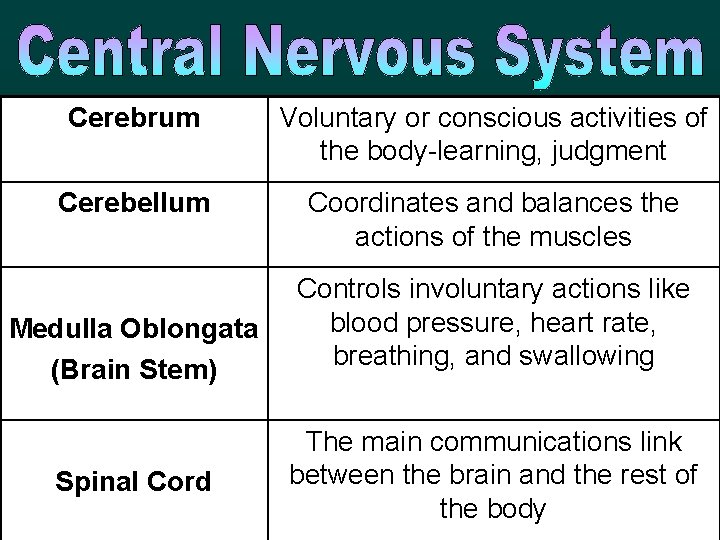
Cerebrum Voluntary or conscious activities of the body-learning, judgment Cerebellum Coordinates and balances the actions of the muscles Medulla Oblongata (Brain Stem) Spinal Cord Controls involuntary actions like blood pressure, heart rate, breathing, and swallowing The main communications link between the brain and the rest of the body
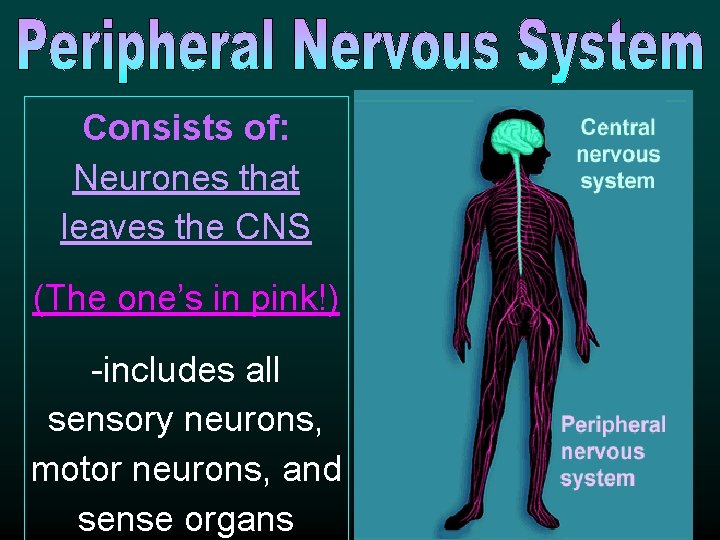
Consists of: Neurones that leaves the CNS (The one’s in pink!) -includes all sensory neurons, motor neurons, and sense organs
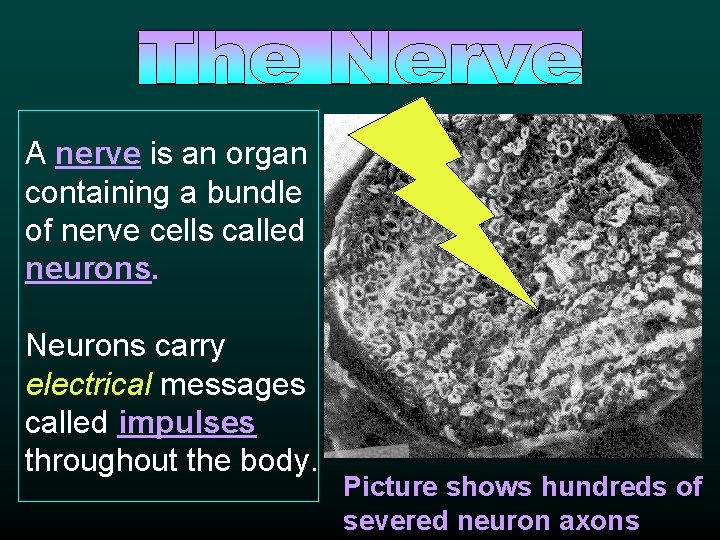
A nerve is an organ containing a bundle of nerve cells called neurons. Neurons carry electrical messages called impulses throughout the body. Picture shows hundreds of severed neuron axons
Fun Fact: Where can the largest cells in the world be found? The giraffe’s neurons! Some must bring impulses from the bottom of their legs to their spinal cord several meters away!!
What are our sense organs? The sense organs are: These organs sense: • • • The eyes The ears The nose Tongue skin Light Sound and balance Smell Taste Pressure, pain, temperature
How does our nervous system work then? • Our sense organs contain special receptor cells which will detect a change in our surroundings (a stimulus) • The receptor cells will change the stimulus into an electrical impulse which is passed along nerve cells • The message will usually go to the brain which will then process it • The brain then sends a message along nerves to an effector organ (usually a muscle or a gland) • The effector organ will then give a response (e. g. a muscle will move, or a gland will produce a hormone)
- Slides: 14