
Two types of Cloning Therapeutic Cloning the formation
- Slides: 8
Two types of Cloning:
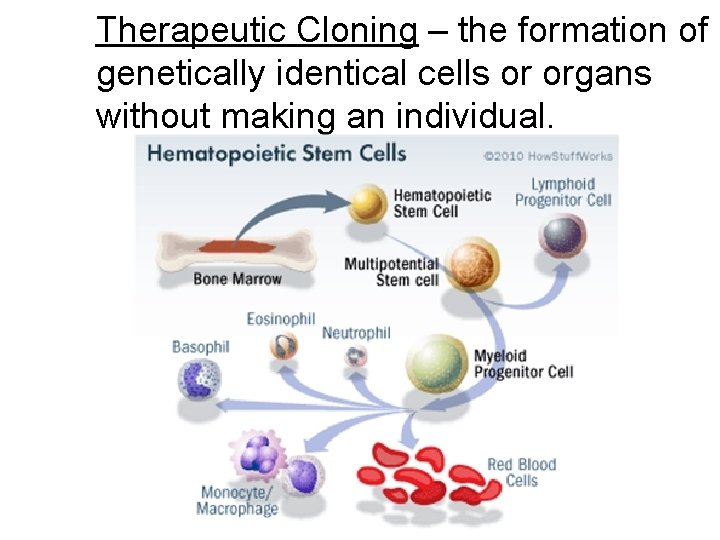
Therapeutic Cloning – the formation of genetically identical cells or organs without making an individual.
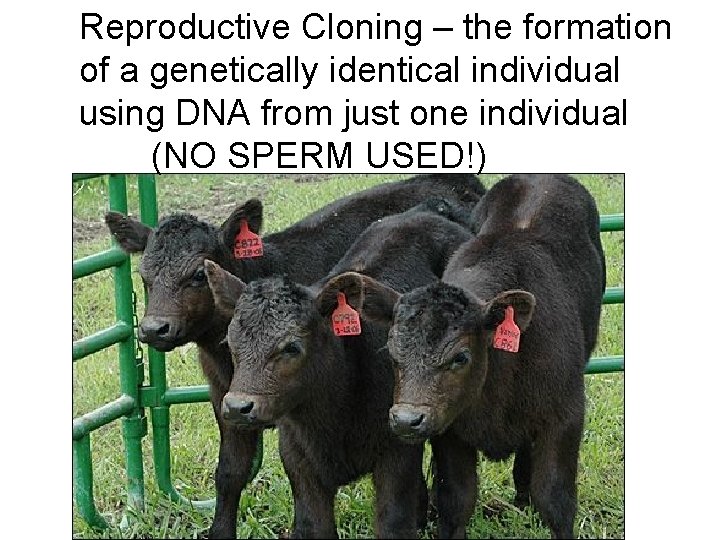
Reproductive Cloning – the formation of a genetically identical individual using DNA from just one individual (NO SPERM USED!)
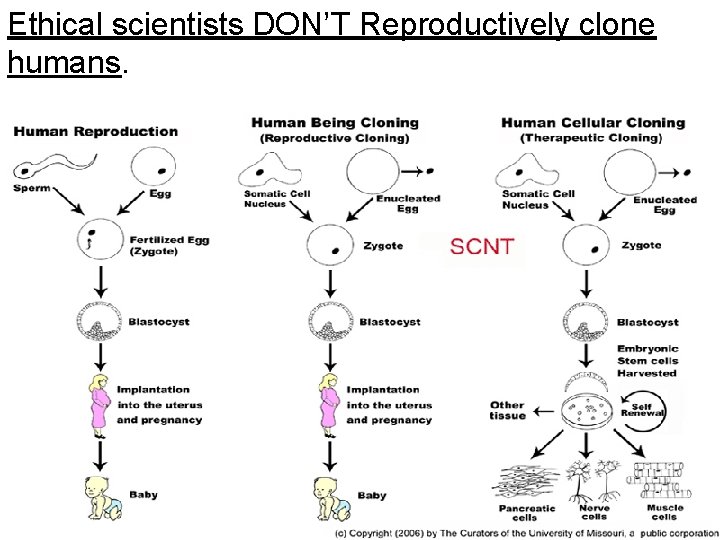
Ethical scientists DON’T Reproductively clone humans.
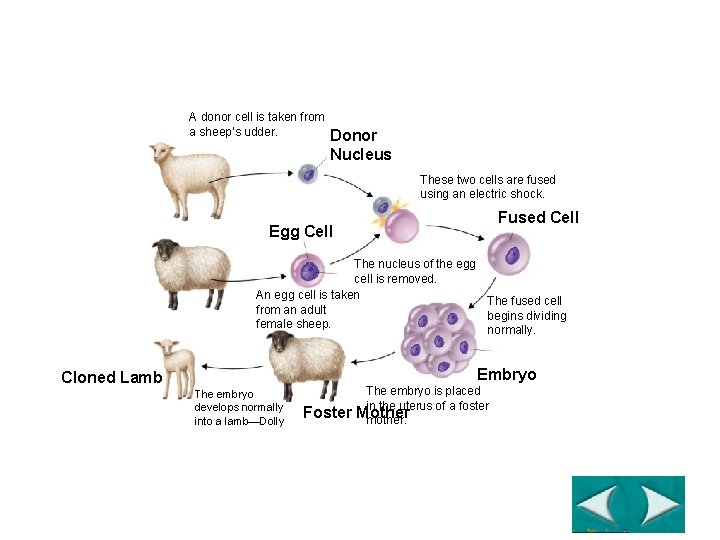
Figure 13 -13 Cloning of the First Mammal Section 13 -4 A donor cell is taken from a sheep’s udder. Donor Nucleus These two cells are fused using an electric shock. Fused Cell Egg Cell The nucleus of the egg cell is removed. An egg cell is taken The fused cell from an adult begins dividing female sheep. normally. Embryo Cloned Lamb The embryo develops normally into a lamb—Dolly Go to Section: Foster The embryo is placed in the uterus of a foster Mother mother.
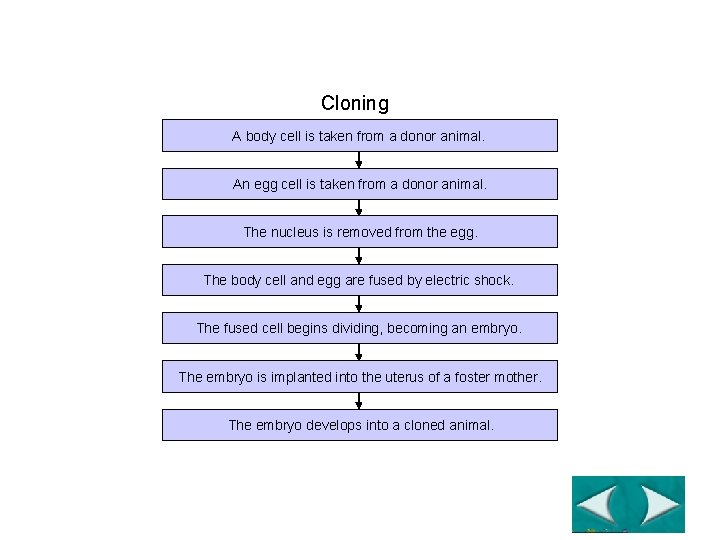
Flowchart Section 13 -4 Cloning A body cell is taken from a donor animal. An egg cell is taken from a donor animal. The nucleus is removed from the egg. The body cell and egg are fused by electric shock. The fused cell begins dividing, becoming an embryo. The embryo is implanted into the uterus of a foster mother. The embryo develops into a cloned animal. Go to Section:
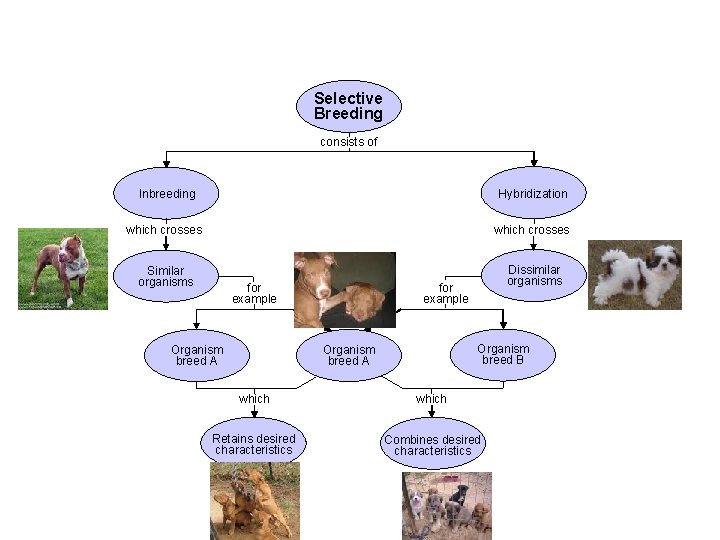
Concept Map Section 13 -1 Selective Breeding consists of Inbreeding Hybridization which crosses Similar organisms Dissimilar organisms Organism breed A Go to Section: for example Organism breed B Organism breed A which Retains desired characteristics Combines desired characteristics
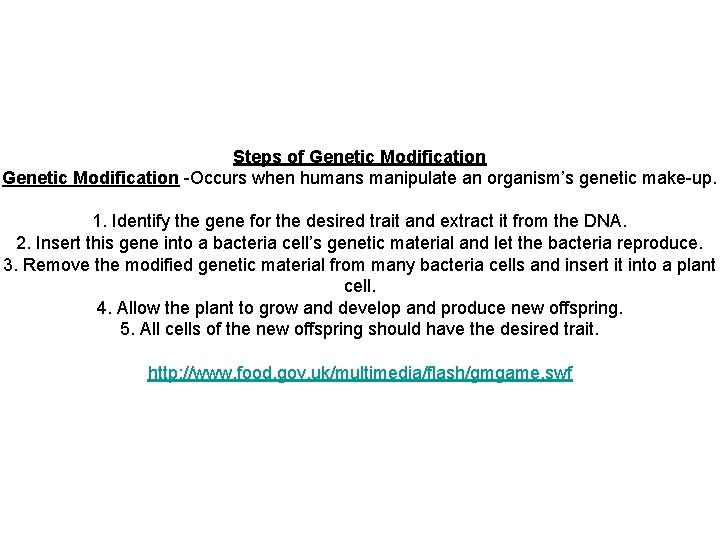
Steps of Genetic Modification -Occurs when humans manipulate an organism’s genetic make-up. 1. Identify the gene for the desired trait and extract it from the DNA. 2. Insert this gene into a bacteria cell’s genetic material and let the bacteria reproduce. 3. Remove the modified genetic material from many bacteria cells and insert it into a plant cell. 4. Allow the plant to grow and develop and produce new offspring. 5. All cells of the new offspring should have the desired trait. http: //www. food. gov. uk/multimedia/flash/gmgame. swf