
Two principles of assertion You dont get what
- Slides: 6
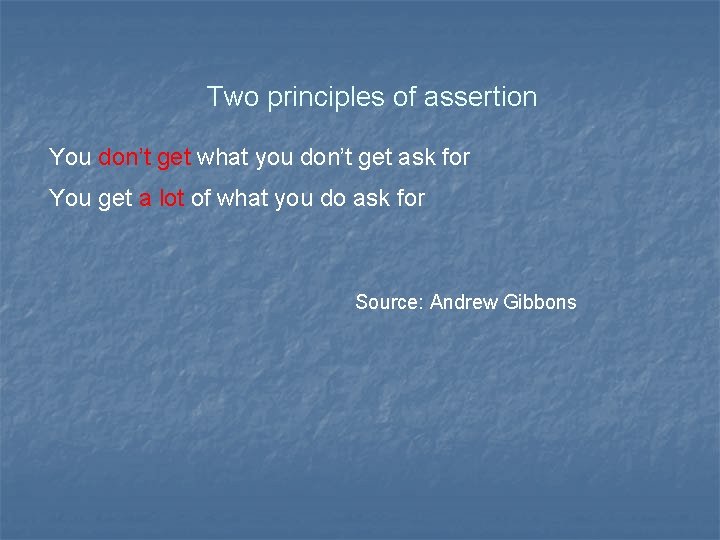
Two principles of assertion You don’t get what you don’t get ask for You get a lot of what you do ask for Source: Andrew Gibbons
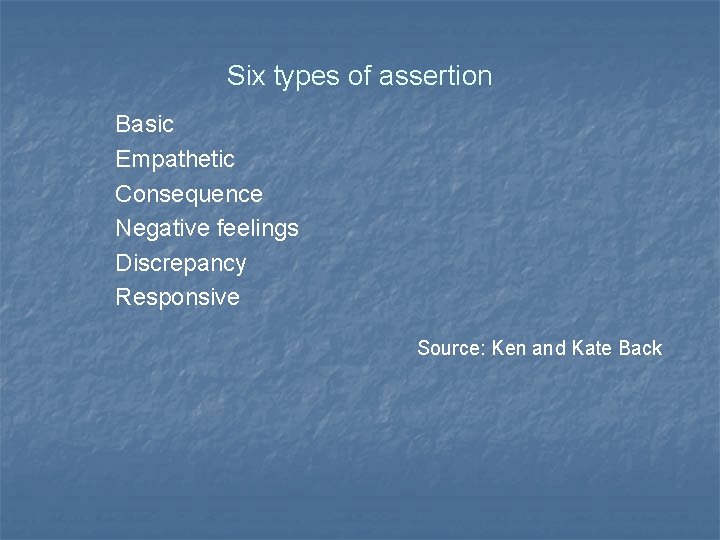
Six types of assertion Basic Empathetic Consequence Negative feelings Discrepancy Responsive Source: Ken and Kate Back
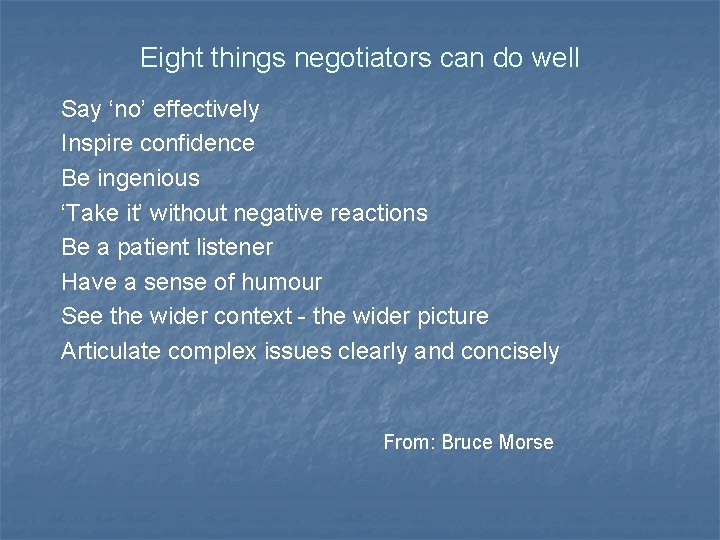
Eight things negotiators can do well Say ‘no’ effectively Inspire confidence Be ingenious ‘Take it’ without negative reactions Be a patient listener Have a sense of humour See the wider context - the wider picture Articulate complex issues clearly and concisely From: Bruce Morse
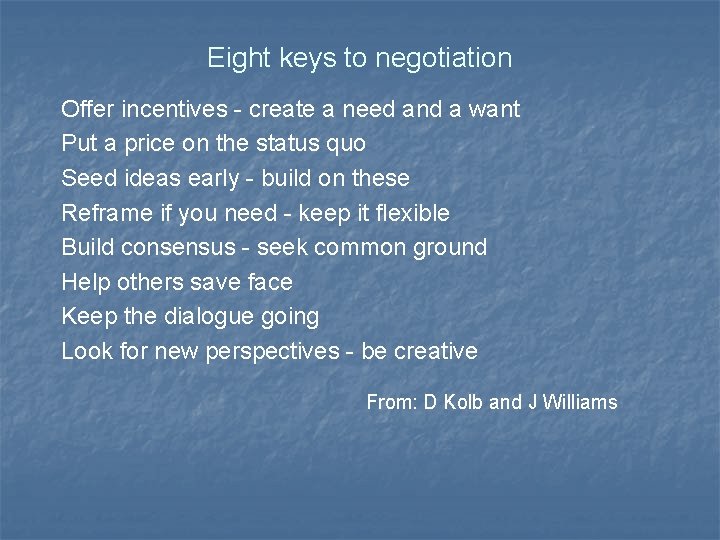
Eight keys to negotiation Offer incentives - create a need and a want Put a price on the status quo Seed ideas early - build on these Reframe if you need - keep it flexible Build consensus - seek common ground Help others save face Keep the dialogue going Look for new perspectives - be creative From: D Kolb and J Williams
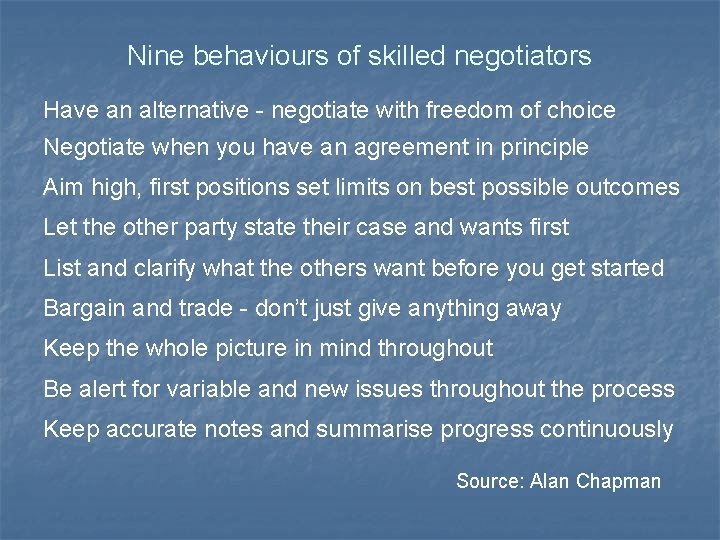
Nine behaviours of skilled negotiators Have an alternative - negotiate with freedom of choice Negotiate when you have an agreement in principle Aim high, first positions set limits on best possible outcomes Let the other party state their case and wants first List and clarify what the others want before you get started Bargain and trade - don’t just give anything away Keep the whole picture in mind throughout Be alert for variable and new issues throughout the process Keep accurate notes and summarise progress continuously Source: Alan Chapman
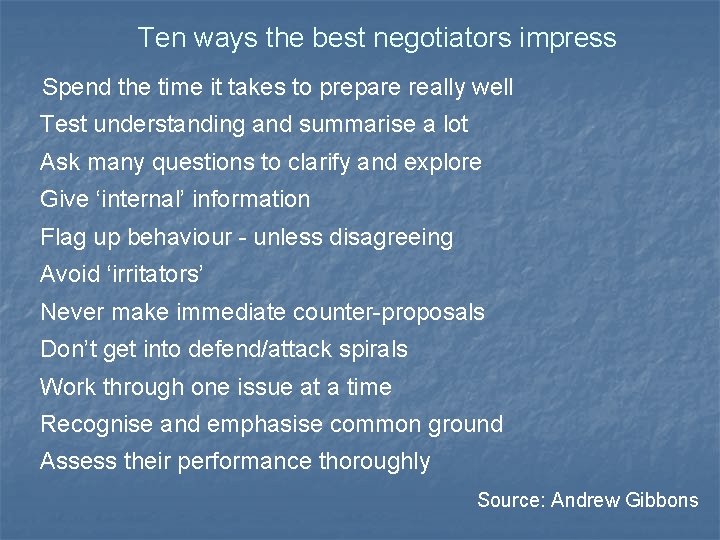
Ten ways the best negotiators impress Spend the time it takes to prepare really well Test understanding and summarise a lot Ask many questions to clarify and explore Give ‘internal’ information Flag up behaviour - unless disagreeing Avoid ‘irritators’ Never make immediate counter-proposals Don’t get into defend/attack spirals Work through one issue at a time Recognise and emphasise common ground Assess their performance thoroughly Source: Andrew Gibbons