
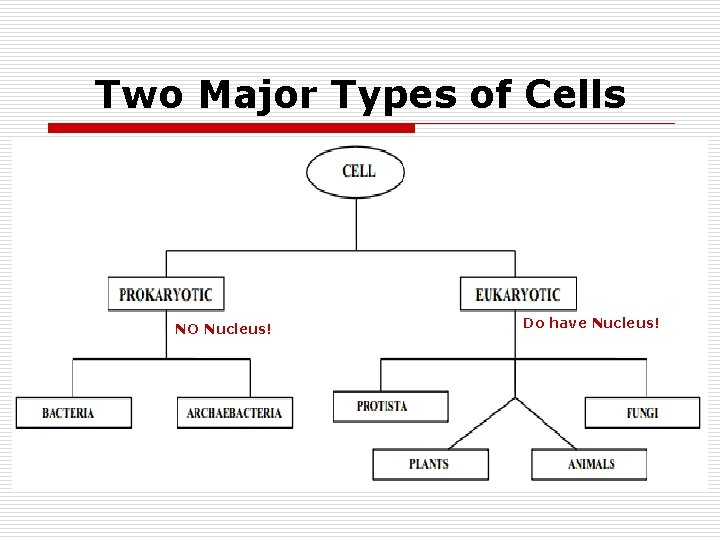
Two Major Types of Cells NO Nucleus Do
- Slides: 15
Two Major Types of Cells NO Nucleus! Do have Nucleus!
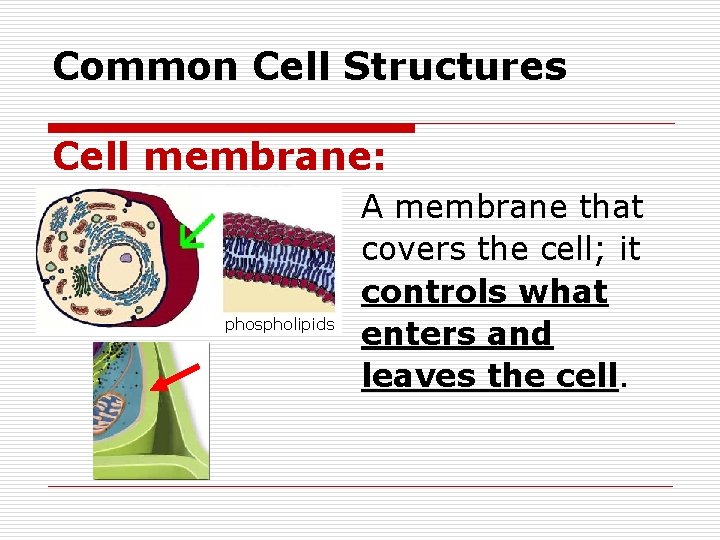
Common Cell Structures Cell membrane: phospholipids A membrane that covers the cell; it controls what enters and leaves the cell.
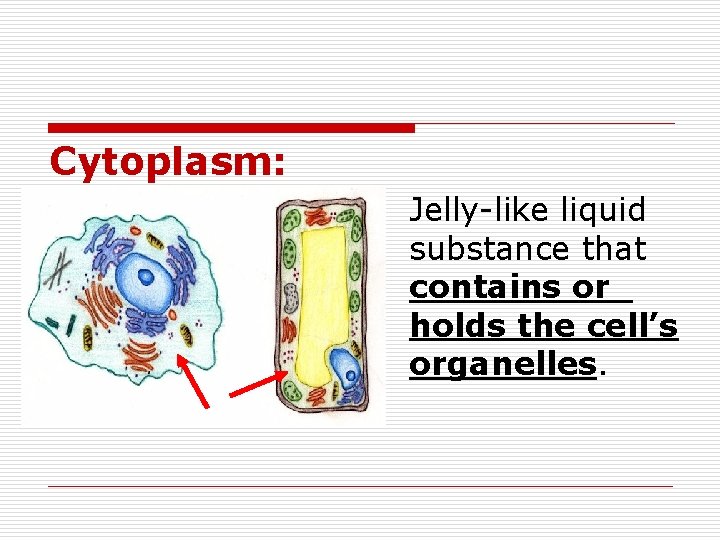
Cytoplasm: Jelly-like liquid substance that contains or holds the cell’s organelles.
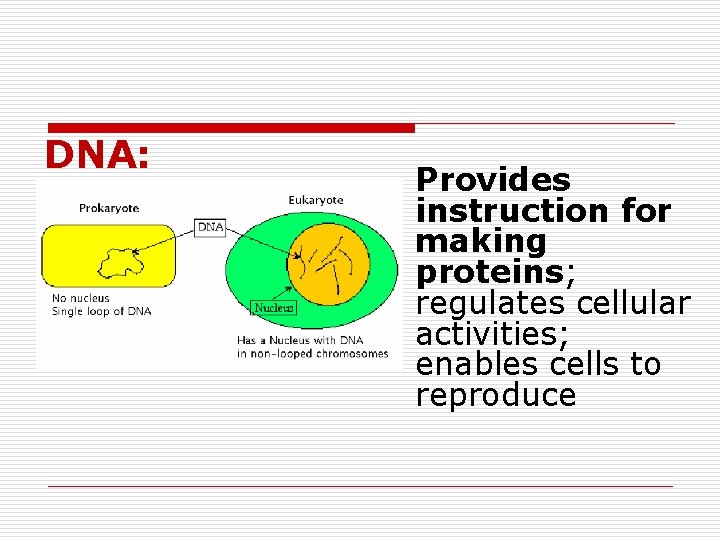
DNA: Provides instruction for making proteins; regulates cellular activities; enables cells to reproduce
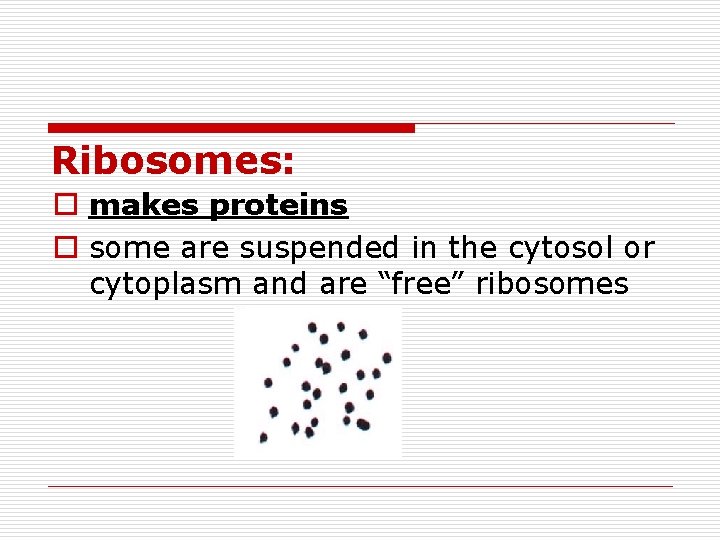
Ribosomes: o makes proteins o some are suspended in the cytosol or cytoplasm and are “free” ribosomes
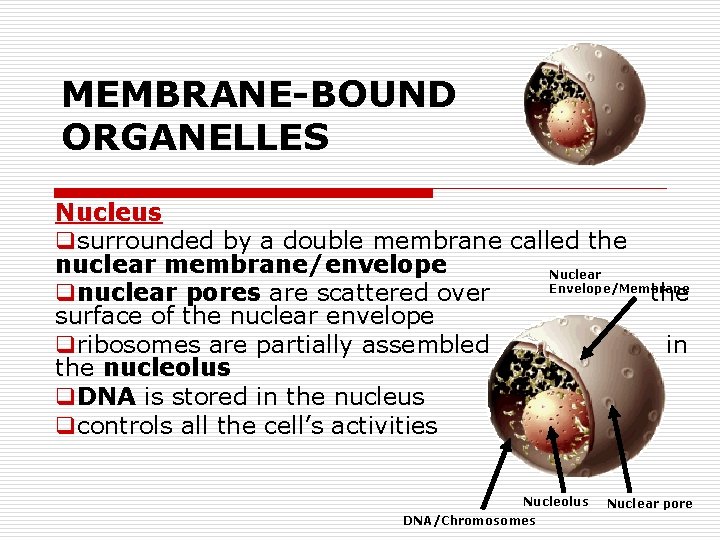
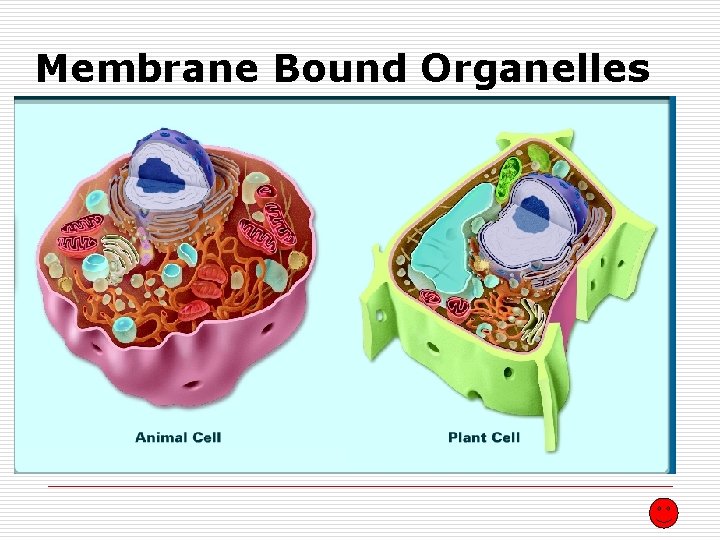
MEMBRANE-BOUND ORGANELLES Nucleus qsurrounded by a double membrane called the nuclear membrane/envelope Nuclear Envelope/Membrane qnuclear pores are scattered over the surface of the nuclear envelope qribosomes are partially assembled in the nucleolus q. DNA is stored in the nucleus qcontrols all the cell’s activities Nucleolus DNA/Chromosomes Nuclear pore
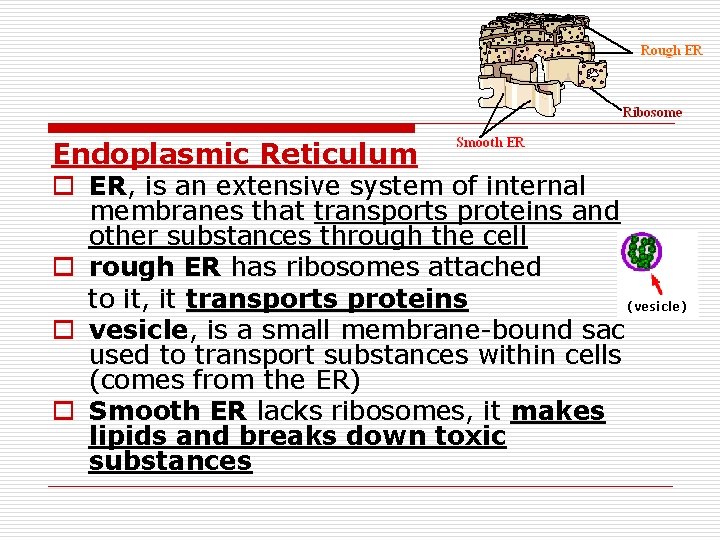
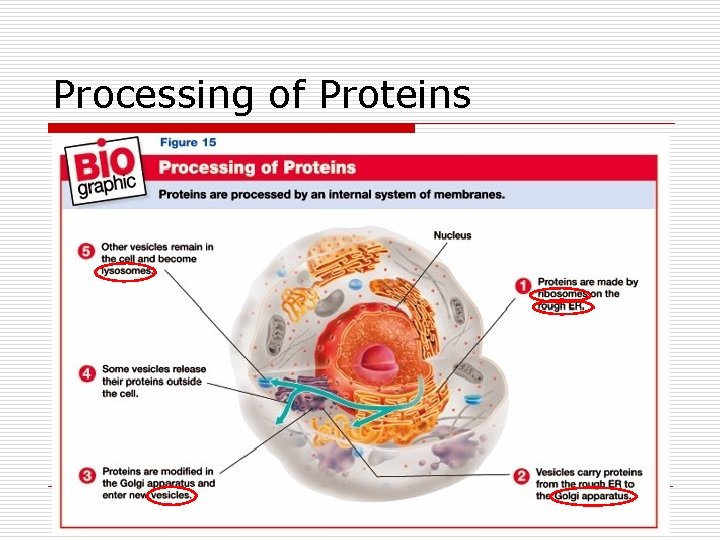
Endoplasmic Reticulum o ER, is an extensive system of internal membranes that transports proteins and other substances through the cell o rough ER has ribosomes attached to it, it transports proteins (vesicle) o vesicle, is a small membrane-bound sac used to transport substances within cells (comes from the ER) o Smooth ER lacks ribosomes, it makes lipids and breaks down toxic substances
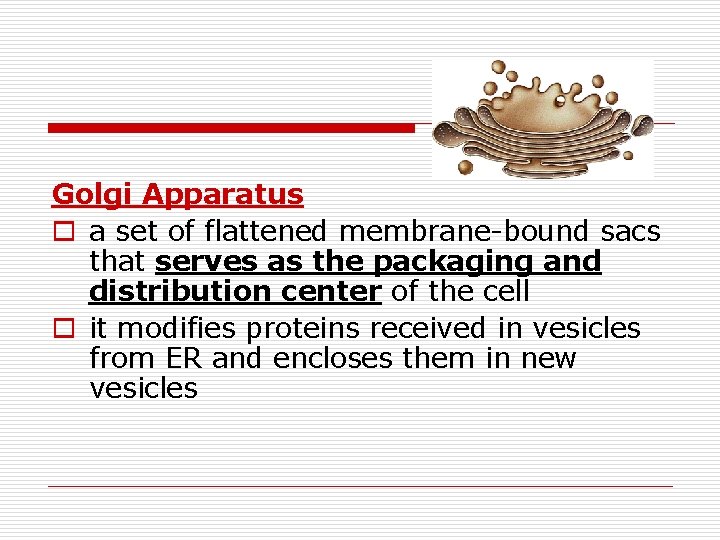
Golgi Apparatus o a set of flattened membrane-bound sacs that serves as the packaging and distribution center of the cell o it modifies proteins received in vesicles from ER and encloses them in new vesicles
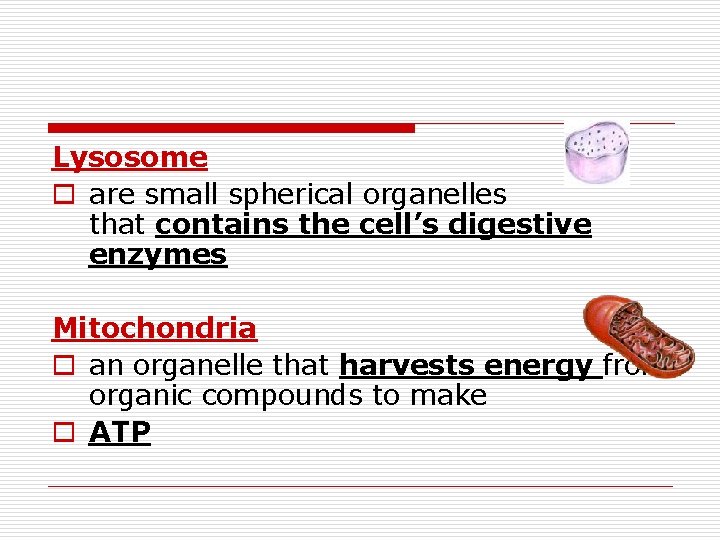
Lysosome o are small spherical organelles that contains the cell’s digestive enzymes Mitochondria o an organelle that harvests energy from organic compounds to make o ATP
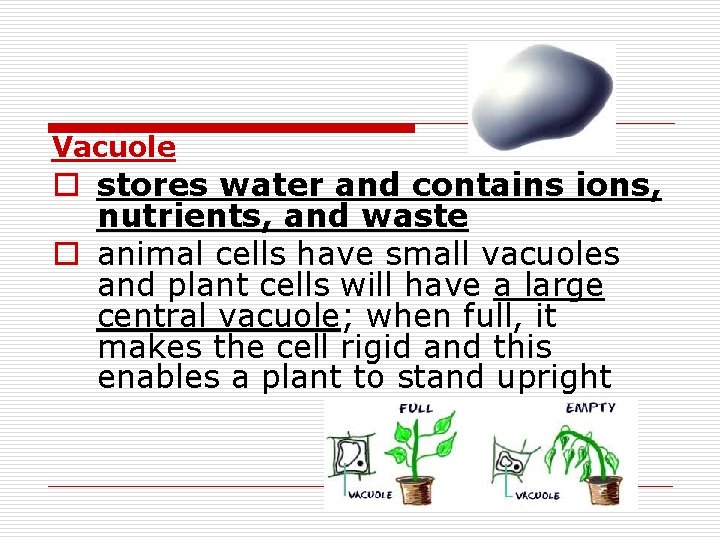
Vacuole o stores water and contains ions, nutrients, and waste o animal cells have small vacuoles and plant cells will have a large central vacuole; when full, it makes the cell rigid and this enables a plant to stand upright
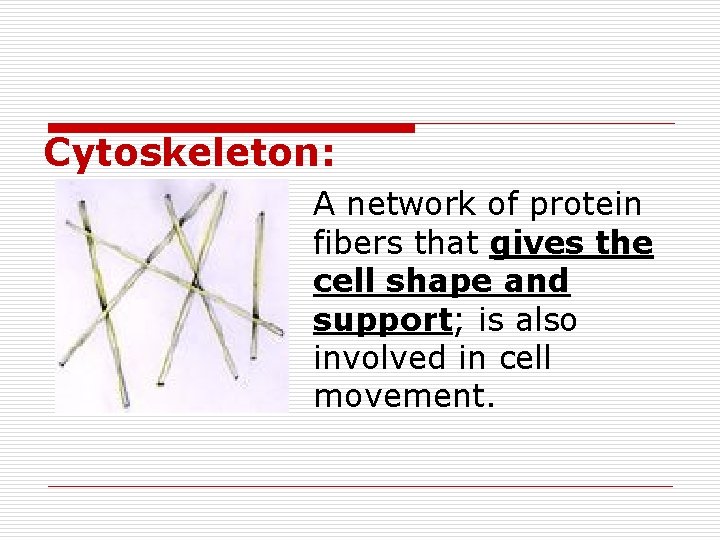
Cytoskeleton: A network of protein fibers that gives the cell shape and support; is also involved in cell movement.
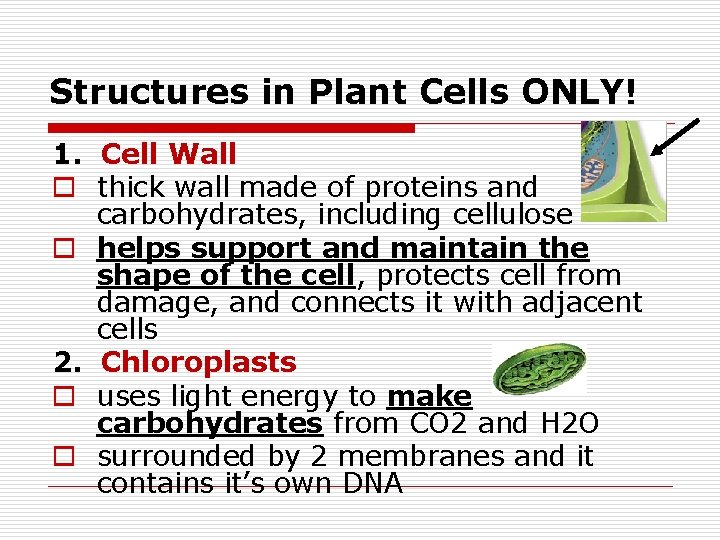
Structures in Plant Cells ONLY! 1. Cell Wall o thick wall made of proteins and carbohydrates, including cellulose o helps support and maintain the shape of the cell, protects cell from damage, and connects it with adjacent cells 2. Chloroplasts o uses light energy to make carbohydrates from CO 2 and H 2 O o surrounded by 2 membranes and it contains it’s own DNA
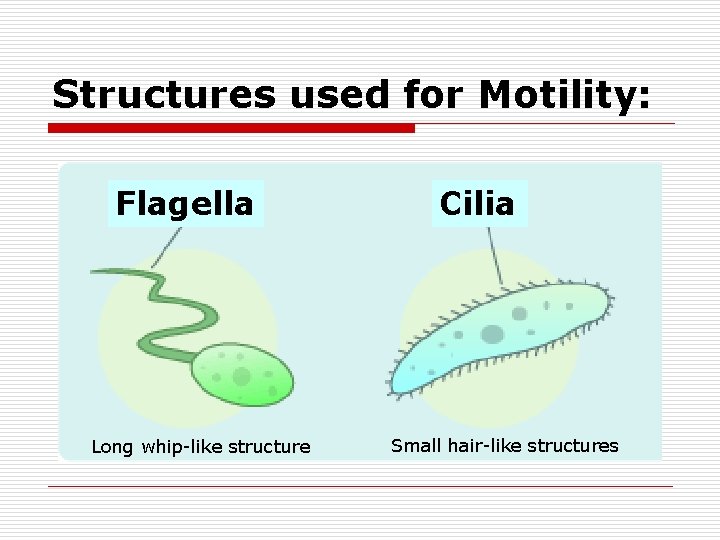
Structures used for Motility: Flagella Long whip-like structure Cilia Small hair-like structures
Membrane Bound Organelles
Processing of Proteins