
Two IO Methods Two IO Methods Synchronous Asynchronous
- Slides: 10
Two I/O Methods
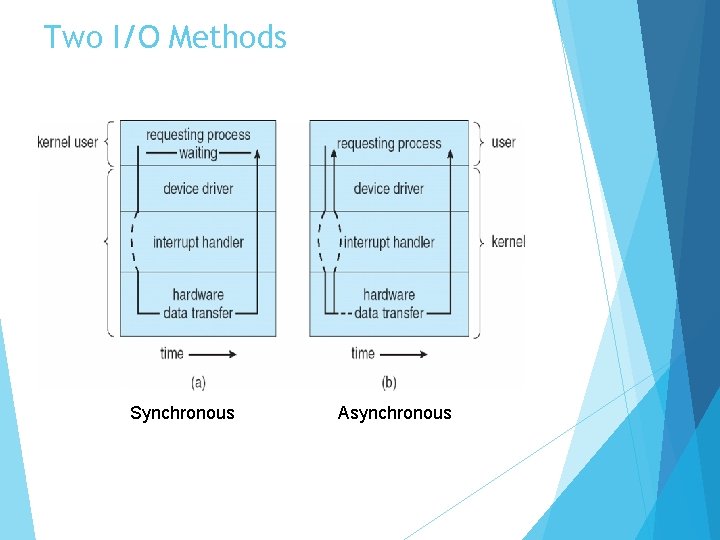
Two I/O Methods Synchronous Asynchronous
Vectored I/O � Vectored I/O allows one system call to perform multiple I/O operations � For example, Unix readve() accepts a vector of multiple buffers to read into or write from � This scatter-gather method better than multiple individual I/O calls � Decreases context switching and system call overhead � Some versions provide atomicity � Avoid for example worry about multiple threads changing data as reads / writes occurring
Kernel I/O Subsystem � � Scheduling � Some I/O request ordering via per-device queue � Some OSs try fairness � Some implement Quality Of Service (i. e. IPQOS) Buffering - store data in memory while transferring between devices � To cope with device speed mismatch � To cope with device transfer size mismatch � To maintain “copy semantics”
Kernel I/O Subsystem � Double buffering – two copies of the data � Kernel and user � Varying sizes � Full / being processed and not-full / being used � Copy-on-write can be used for efficiency in some cases
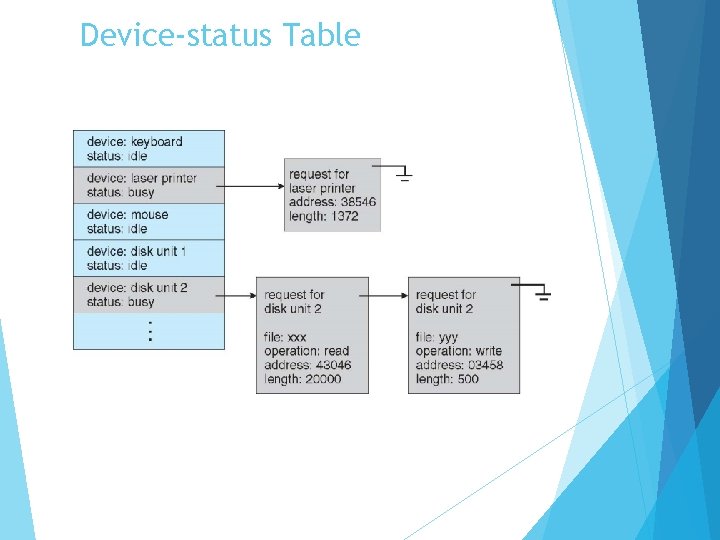
Device-status Table
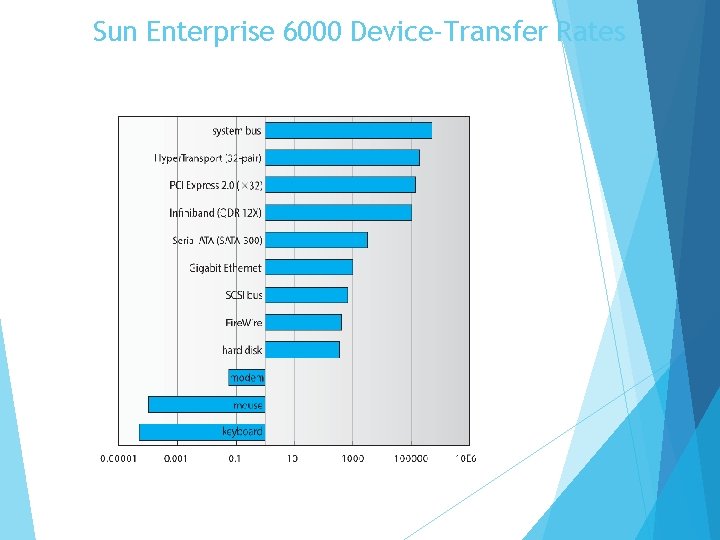
Sun Enterprise 6000 Device-Transfer Rates
Kernel I/O Subsystem � � Caching - faster device holding copy of data � Always just a copy � Key to performance � Sometimes combined with buffering Spooling - hold output for a device � If device can serve only one request at a time � � i. e. , Printing
Kernel I/O Subsystem � Device reservation - provides exclusive access to a device � System calls for allocation and de-allocation � Watch out for deadlock
References � “Operating System Concepts, " by Abraham Silberschatz, et al, 9 th Edition, 2012, John Wiley & Sons Inc. � Operating Systems: A Spiral Approach 1 st Edition by Ramez Elmasri , A Carrick , David Levine