
Two Full Capacity Generators Why is the Calculated


- Slides: 24
Two Full Capacity Generators – Why is the Calculated Emergency Power System PFD so High? Arthur M. (Art) Dowell, III, PE Process Improvement Institute, Inc. © 2020 Process Improvement Institute, Inc. , all rights reserved
Content • Introduction • Fault Tree Analysis • Recommendations to Reduce PFD • Maintaining Integrity • Conclusion
Introduction: Emergency Power Needed to Protect During Power Loss • For some LOPA scenarios with power outage leading to IE • Human Harm • Equipment Damage Consequences • Environmental Damage Candidate IPLs • Protection Layers may include • Pumps, compressors, and blowers operating during the power outage • Emergency lighting for emergency responders during the power outage • Need EPS to support IPLs
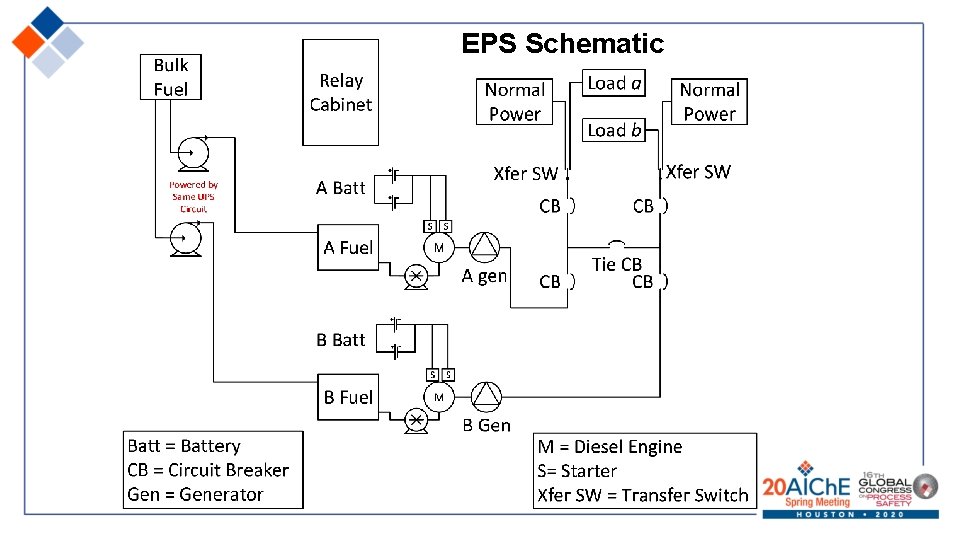
EPS Schematic
Tests • Generators run weekly • Quarterly inspection and maintenance • Full functional test every 4 years
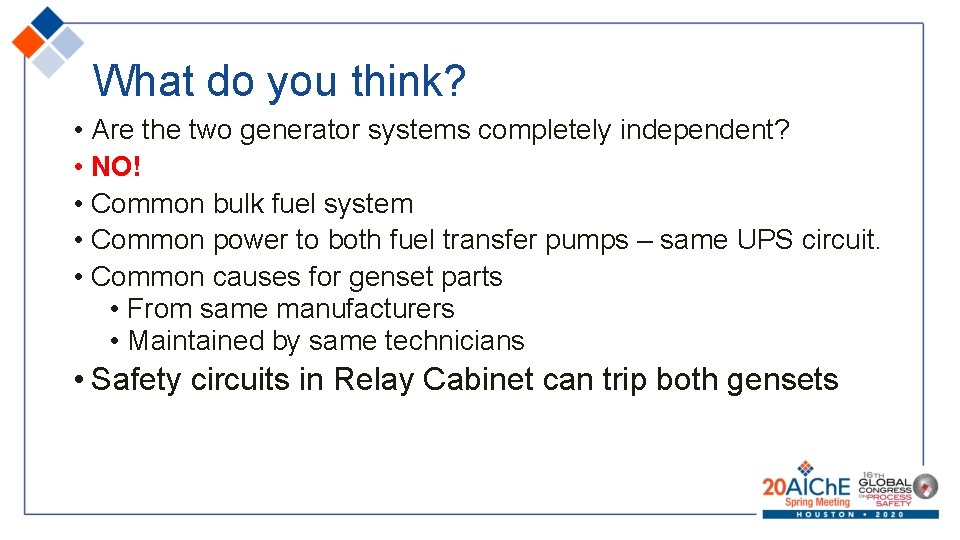
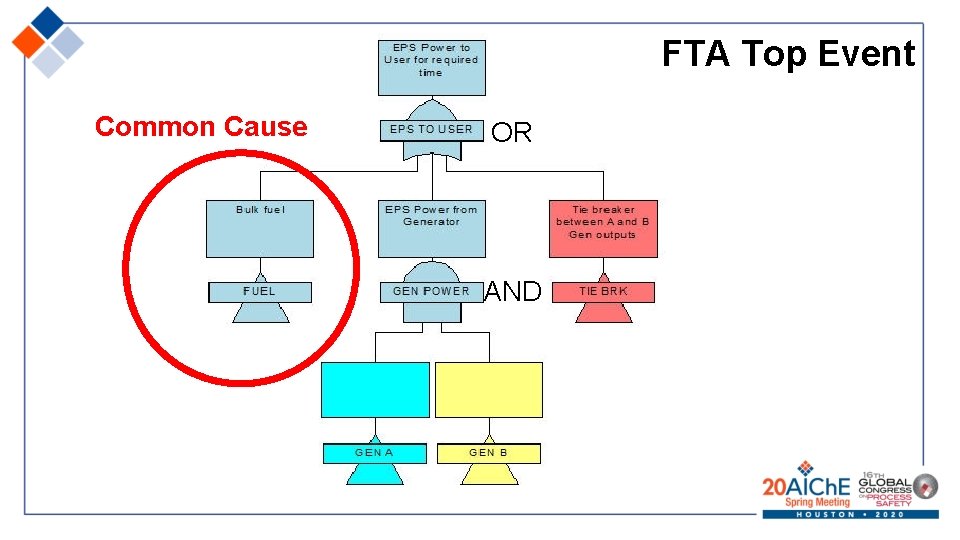
What do you think? • Are the two generator systems completely independent? • NO! • Common bulk fuel system • Common power to both fuel transfer pumps – same UPS circuit. • Common causes for genset parts • From same manufacturers • Maintained by same technicians • Safety circuits in Relay Cabinet can trip both gensets
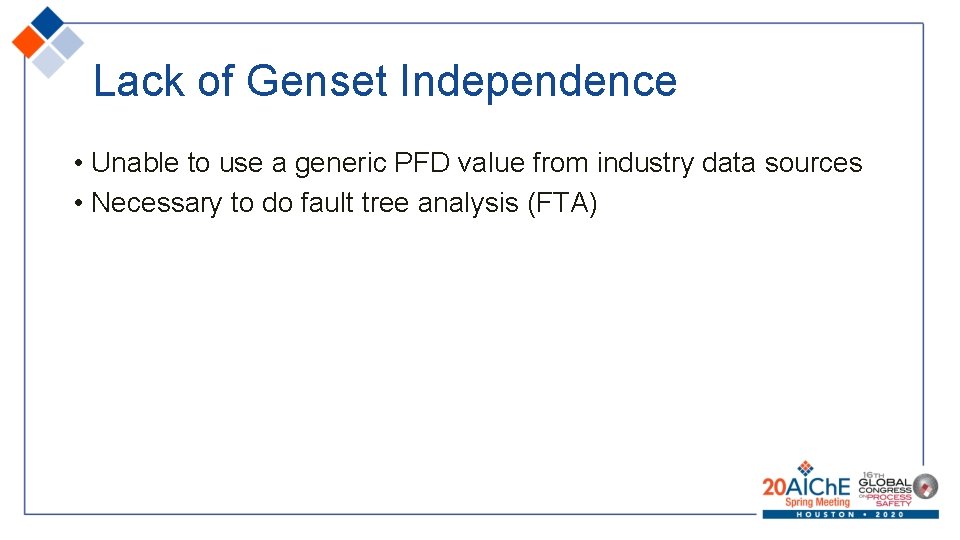
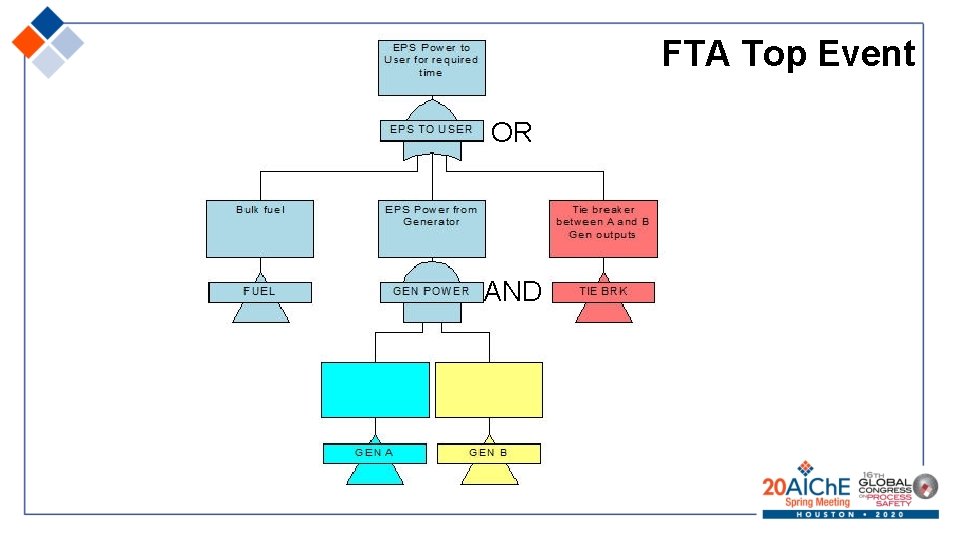
Lack of Genset Independence • Unable to use a generic PFD value from industry data sources • Necessary to do fault tree analysis (FTA)
FTA Top Event OR AND
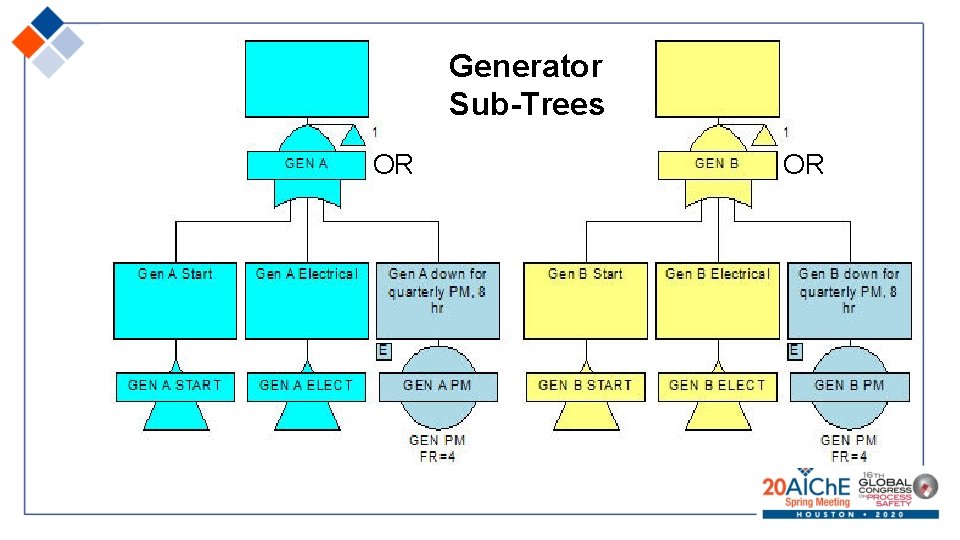
Generator Sub-Trees OR OR
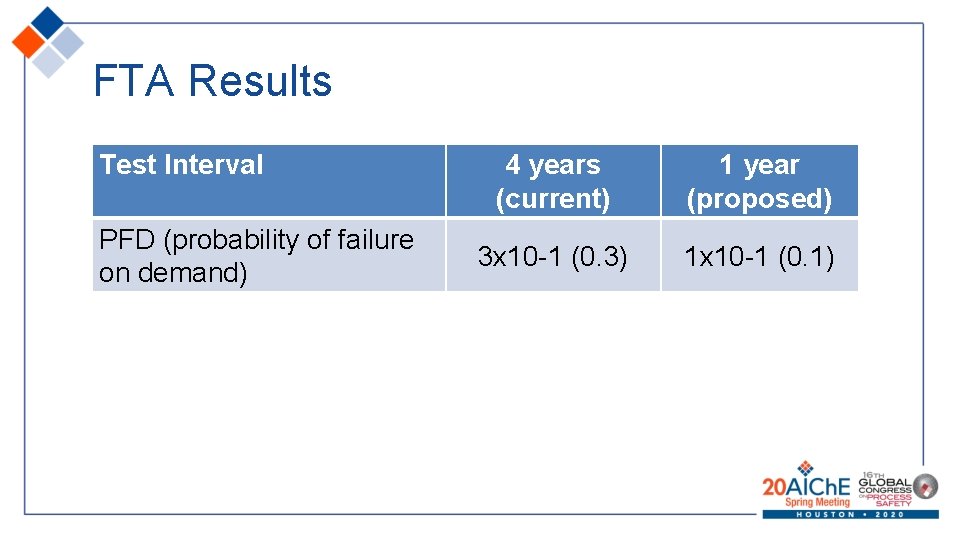
FTA Results Test Interval PFD (probability of failure on demand) 4 years (current) 1 year (proposed) 3 x 10 -1 (0. 3) 1 x 10 -1 (0. 1)
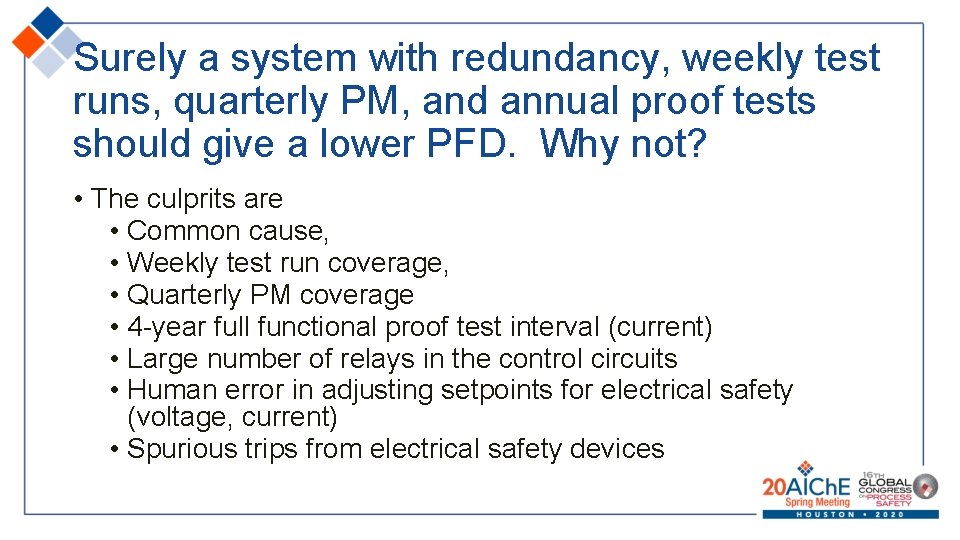
Surely a system with redundancy, weekly test runs, quarterly PM, and annual proof tests should give a lower PFD. Why not? • The culprits are • Common cause, • Weekly test run coverage, • Quarterly PM coverage • 4 -year full functional proof test interval (current) • Large number of relays in the control circuits • Human error in adjusting setpoints for electrical safety (voltage, current) • Spurious trips from electrical safety devices
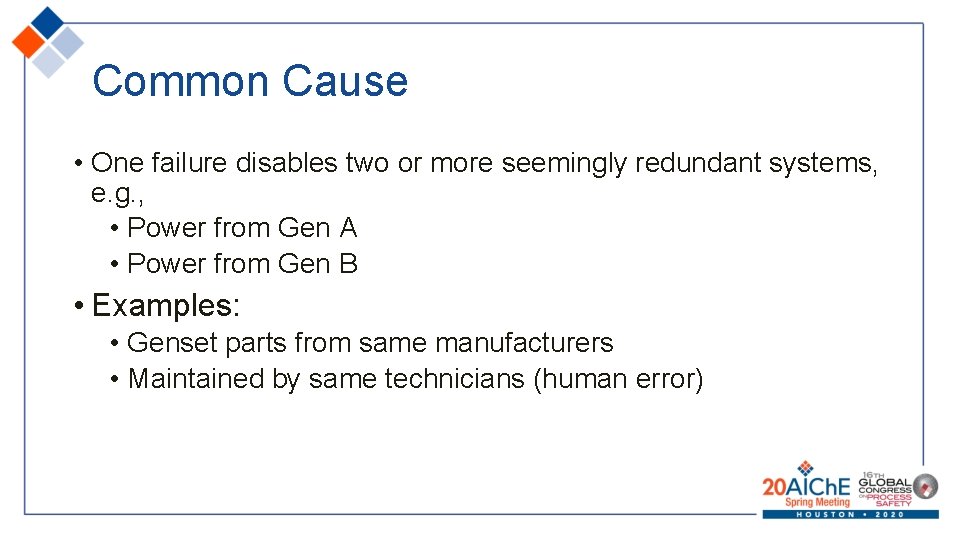
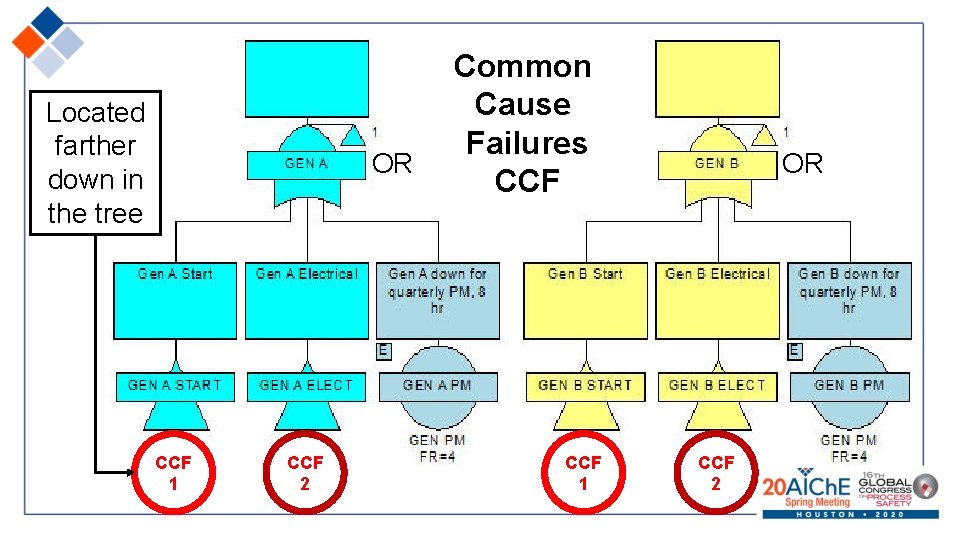
Common Cause • One failure disables two or more seemingly redundant systems, e. g. , • Power from Gen A • Power from Gen B • Examples: • Genset parts from same manufacturers • Maintained by same technicians (human error)
FTA Top Event Common Cause OR AND
Located farther down in the tree OR CCF 1 CCF 2 Common Cause Failures CCF 1 OR CCF 2
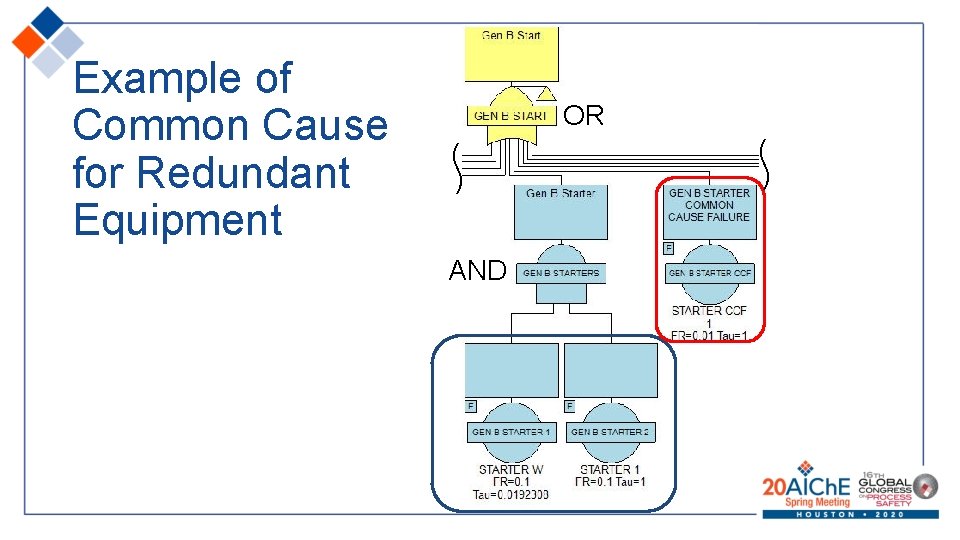
Example of Common Cause for Redundant Equipment OR ( ) AND ( )
Coverage for weekly, quarterly, and 4 year tests • Coverage is the fraction of failures that a given test can detect. • Weekly test • Generator diesel engine starts – know that 1 oo 2 battery and 1 oo 2 starters are working. Don’t know the status of each battery or each starter. • Quarterly PM – oil change, some inspections • 4 -year full functional proof test interval (current) • Many hidden failures cannot be detected until full functional test
Large number of relays in the control circuits • Opportunities for loose wires to cause spurious trips
Human error in adjusting setpoints for electrical safety (voltage, current, timers) • Old equipment was cumbersome to adjust • Required meter hook-up and turning a screw • Error-prone
Spurious trips from electrical safety devices • “Safe” failures from protective equipment • Electrical fault • Bus failure • Voltage failure • Generator Trip • Engine failure • Can trip one or both gensets.
Recommendations to Reduce PFD • Reduce common cause failures where possible • Improve weekly and monthly test coverage • Increase the frequency of full functional proof tests • Replace obsolete relay cabinet with a safety-rated PLC • Minimize the effect of “safe” failures of protective equipment • Reduce human errors by • Replace error-prone electromechanical timers with safetyrated PLC • Stagger maintenance and calibration between Gen A and Gen B (Different crews or different days)
Maintaining EPS Integrity • Use a management system to maintain the EPS system integrity throughout its life cycle. • Ensure the organization is committed to process safety, including process safety culture, compliance with standards, process safety competency, and workforce involvement: • Who does what when, • training required, • competency, • audit, • investigate deviations, • MOC
Conclusion • Facility knew that the performance of the backup emergency power supply from the two generators was less than desirable. • Facility was somewhat surprised that the fault tree analysis showed a relatively large number of device failures that could prevent both generators from operating correctly. • Fault tree analysis provided the basis for recommendations to improve the PFD of the EPS. • Need management system to ensure that the integrity of the EPS is managed throughout its lifecycle
Questions? Art Dowell Process Improvement Institute adowell@piii. com This Photo by Unknown Author is licensed under CC BY-SA