
TWO BASIC CELL TYPES PROKARYOTIC VS EUKARYOTIC CELLS
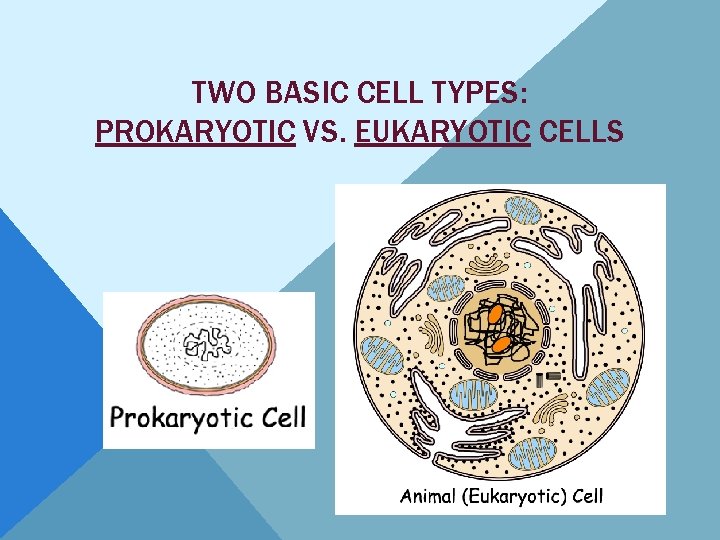
TWO BASIC CELL TYPES: PROKARYOTIC VS. EUKARYOTIC CELLS

TWO BASIC CELL TYPES Remember: Cells are the basic unit of life for ALL living things! There are two basic types of cells: 1. Eukaryotic cells – protists, fungi, plants and animals 2. Prokaryotic cells – single-celled bacteria and archaea

SHARED CHARACTERISTICS § Perform the same basic functions § Surrounded by plasma/cell membrane to control what enters and leaves the cell § “Filled” with cytoplasm § Contain ribosomes to make protein § Contain DNA to give the general instructions for the cell’s life
WHAT MAKES EUKARYOTIC CELLS DIFFERENT? Much larger Much more complex § Contain a nucleus to house the genetic material (DNA) § Has Linear DNA packaged into chromatin found inside the nucleus § Contains many organelles -specialized structures in the cytoplasm called to carry out various functions § Some have a cell wall
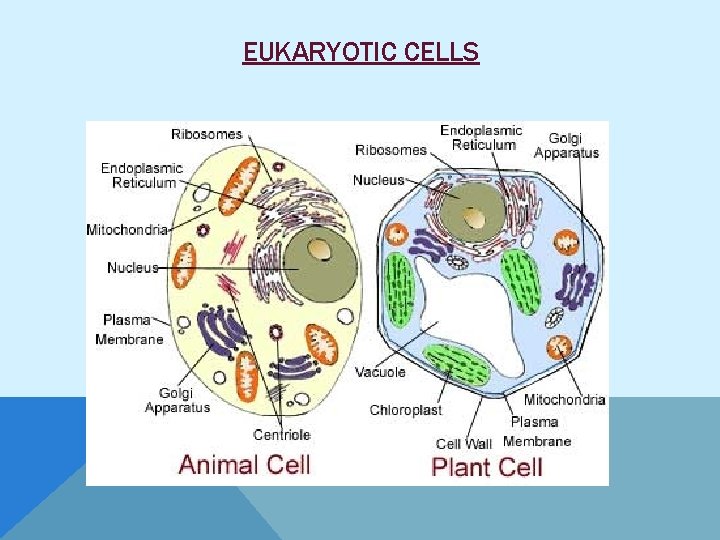
EUKARYOTIC CELLS
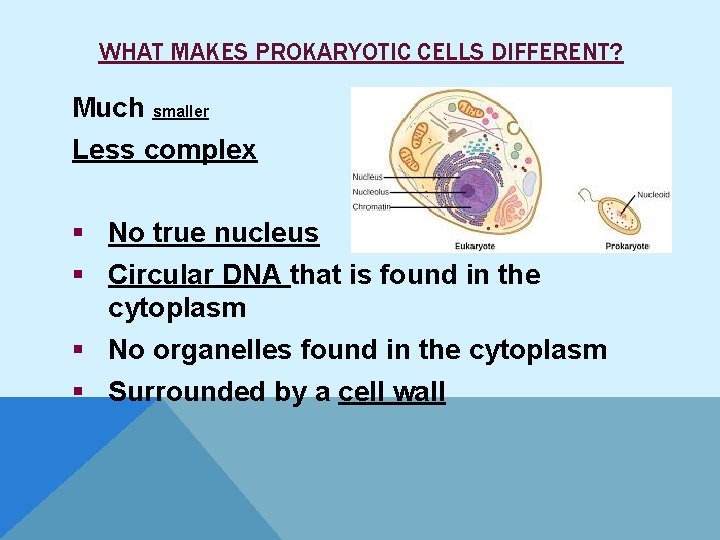
WHAT MAKES PROKARYOTIC CELLS DIFFERENT? Much smaller Less complex § No true nucleus § Circular DNA that is found in the cytoplasm § No organelles found in the cytoplasm § Surrounded by a cell wall
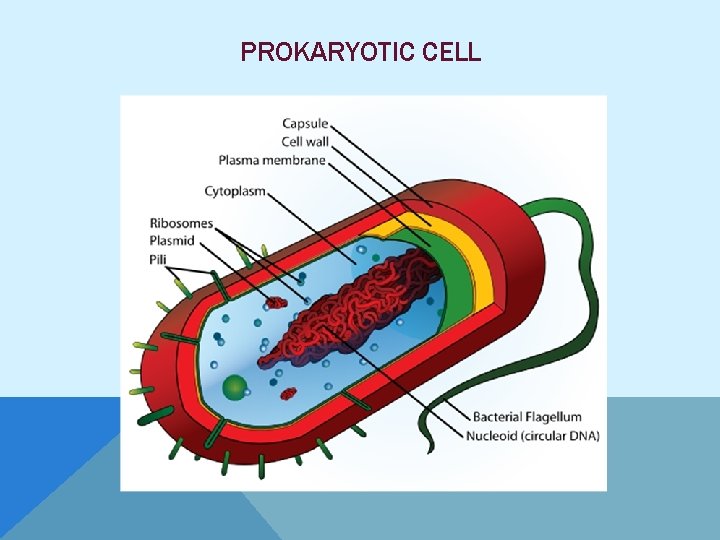
PROKARYOTIC CELL
WHY IS CELL SIZE IMPORTANT? Prokaryotic cells are much smaller than eukaryotic cells. Why? § Smaller surface area to volume allows easier movement of nutrients. § Eukaryotic cells are larger = can not pass nutrients as easily. § Need specialized organelles to: § carry out metabolism § provide energy § transport chemicals throughout the cell
- Slides: 8