
Two Approaches for Orientation field segmentation based on

Two Approaches for Orientation field segmentation based on Directional Morphology Luis A. Morales Hernández, Federico Manríquez Guerrero, Iván Terol-Villalobos
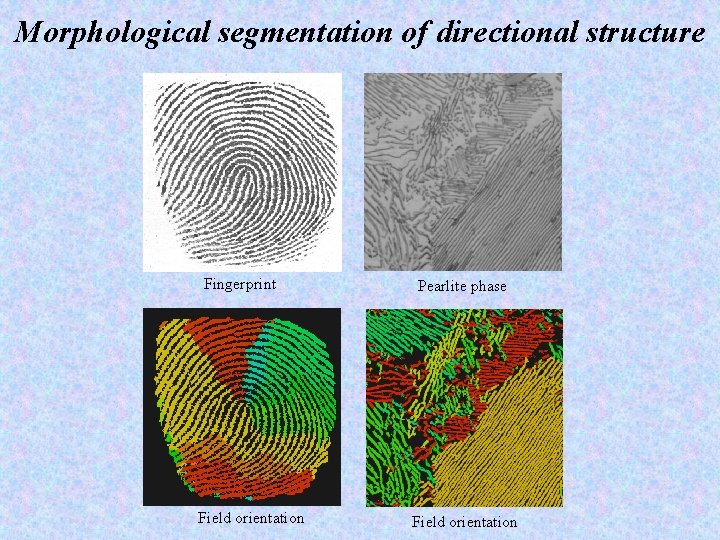
Morphological segmentation of directional structure Fingerprint Field orientation Pearlite phase Field orientation
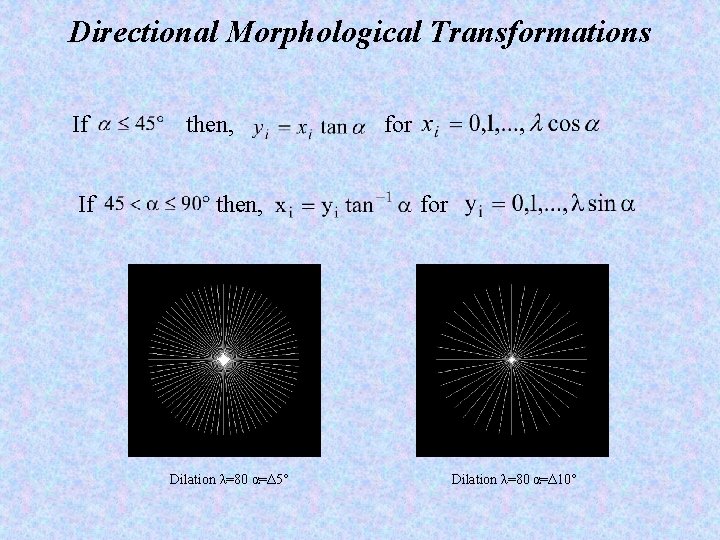
Directional Morphological Transformations If If then, Dilation λ=80 α=Δ 5° for Dilation λ=80 α=Δ 10°
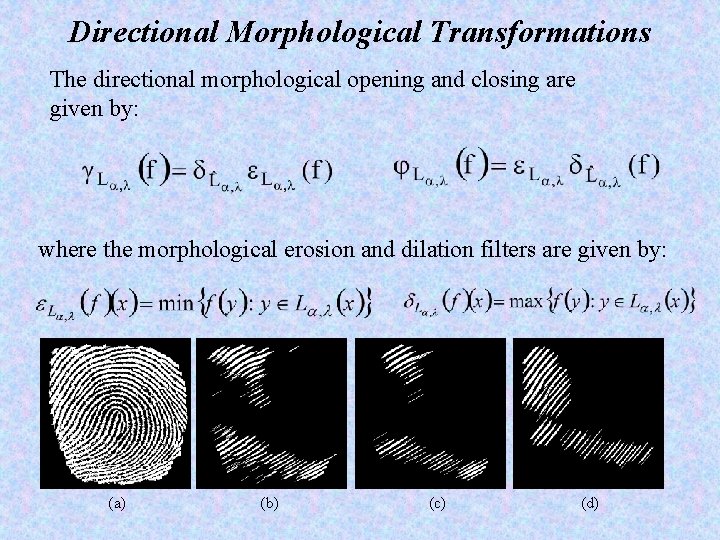
Directional Morphological Transformations The directional morphological opening and closing are given by: where the morphological erosion and dilation filters are given by: (a) (b) (c) (d)
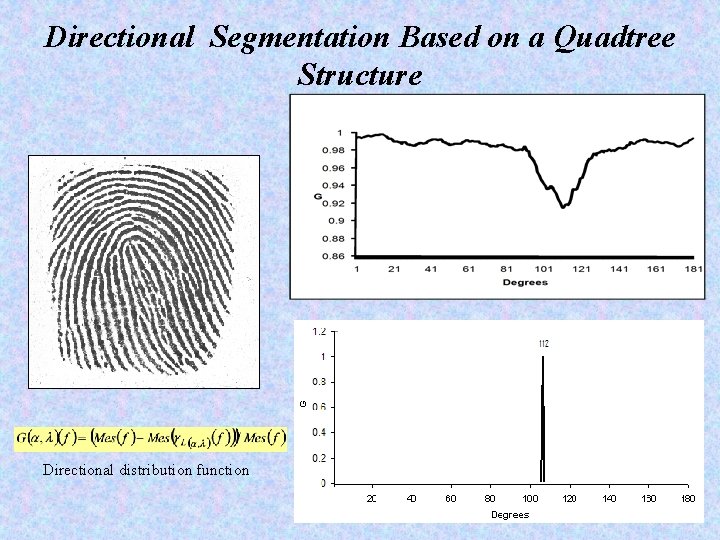
Directional Segmentation Based on a Quadtree Structure Directional distribution function
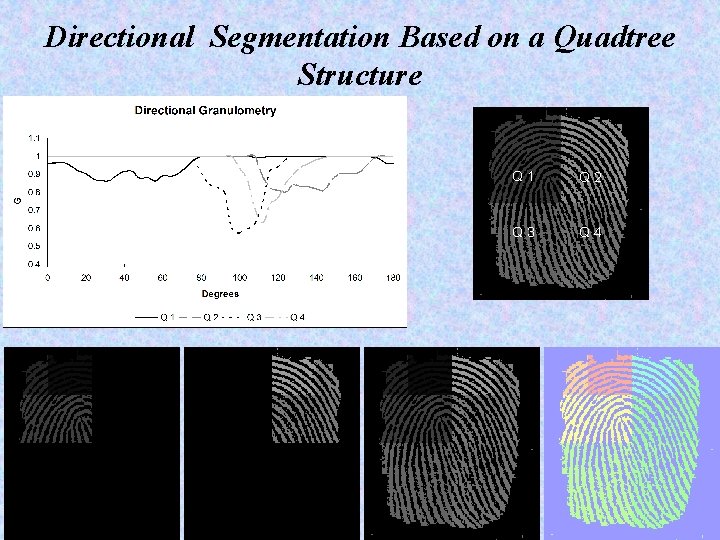
Directional Segmentation Based on a Quadtree Structure Q 1 Q 2 Q 3 Q 4
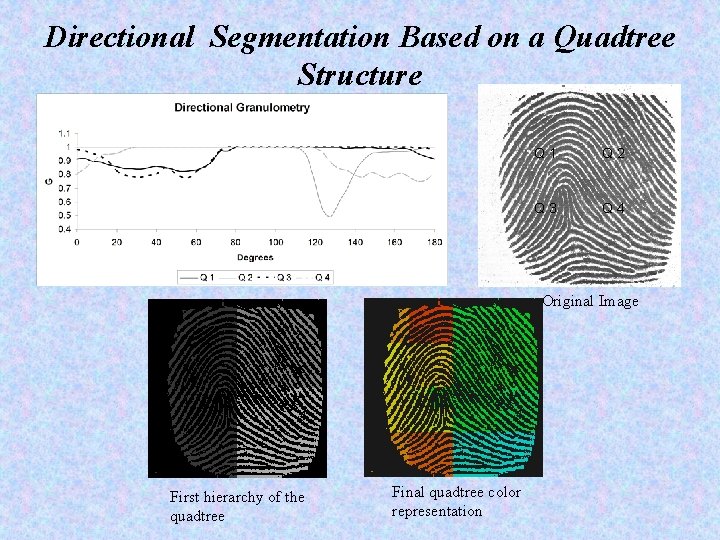
Directional Segmentation Based on a Quadtree Structure Q 1 Q 2 Q 3 Q 4 Original Image First hierarchy of the quadtree Final quadtree color representation
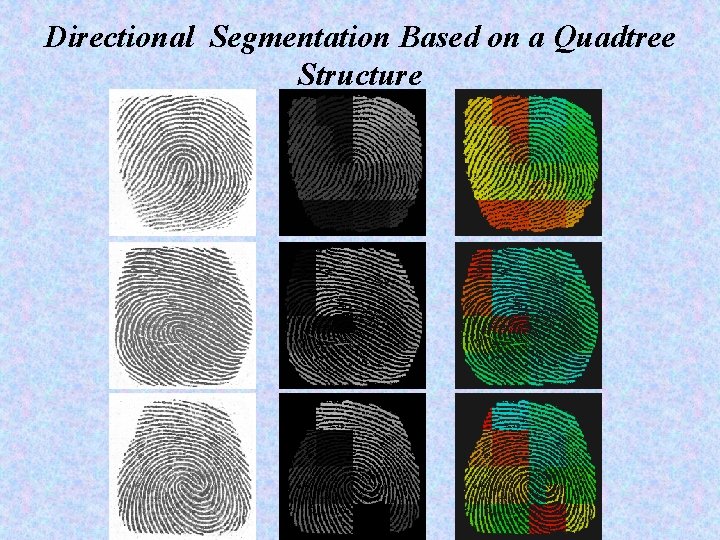
Directional Segmentation Based on a Quadtree Structure
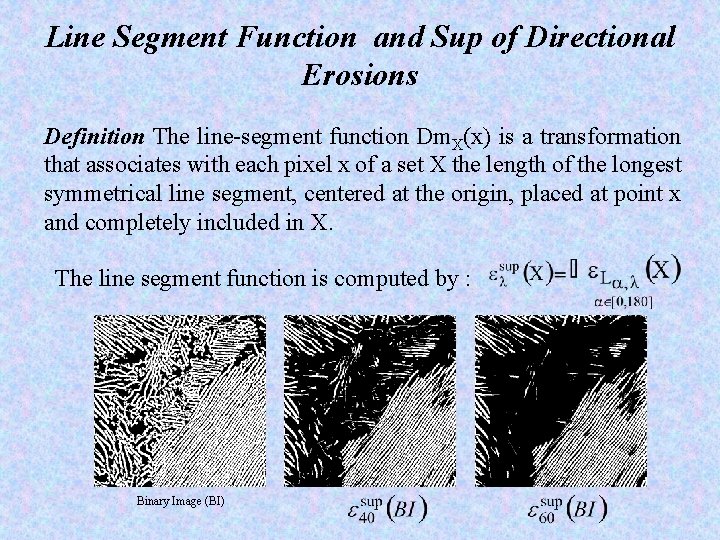
Line Segment Function and Sup of Directional Erosions Definition The line-segment function Dm. X(x) is a transformation that associates with each pixel x of a set X the length of the longest symmetrical line segment, centered at the origin, placed at point x and completely included in X. The line segment function is computed by : Binary Image (BI)
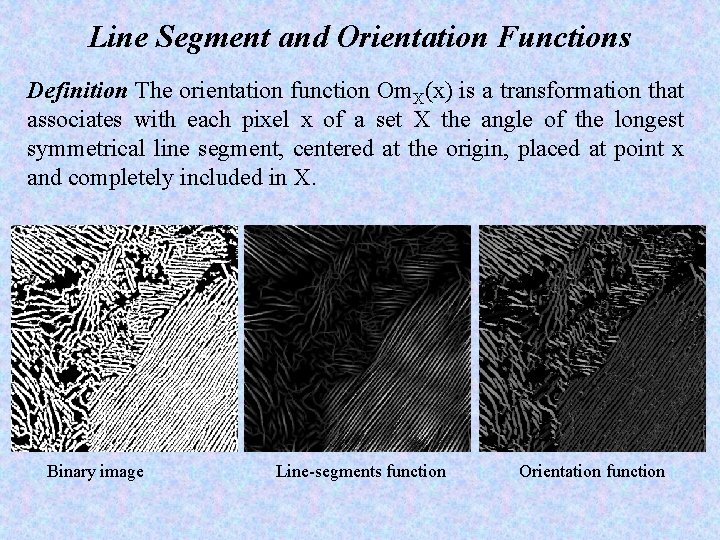
Line Segment and Orientation Functions Definition The orientation function Om. X(x) is a transformation that associates with each pixel x of a set X the angle of the longest symmetrical line segment, centered at the origin, placed at point x and completely included in X. Binary image Line-segments function Orientation function
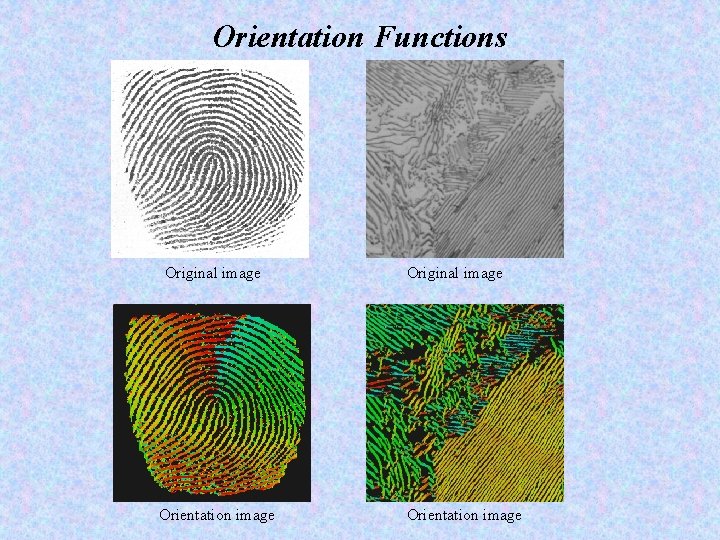
Orientation Functions Original image Orientation image
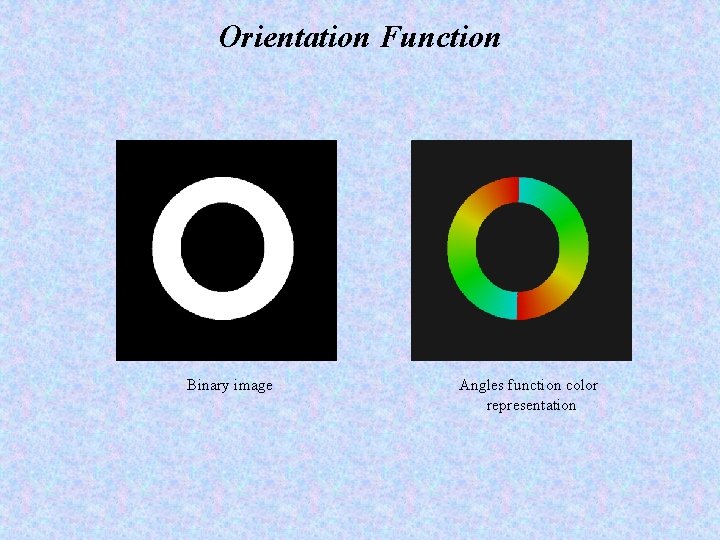
Orientation Function Binary image Angles function color representation
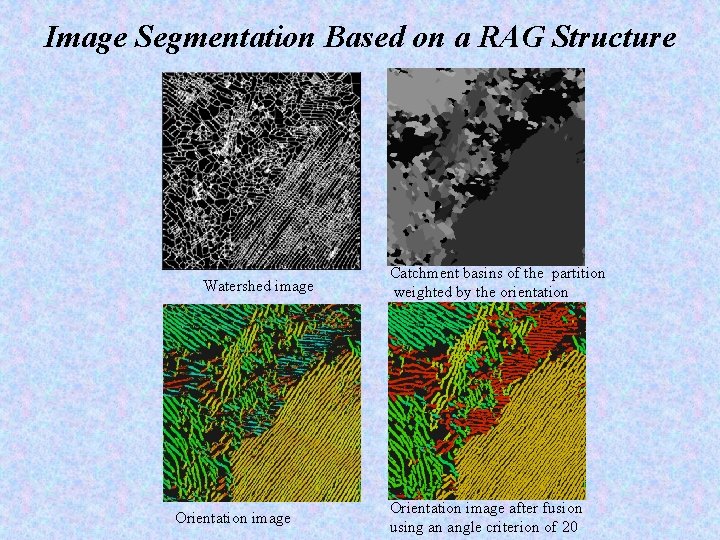
Image Segmentation Based on a RAG Structure Watershed image Orientation image Catchment basins of the partition weighted by the orientation Orientation image after fusion using an angle criterion of 20
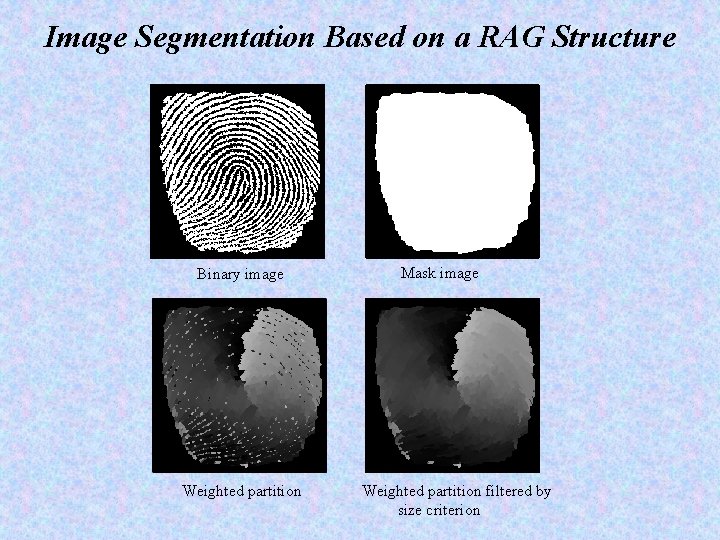
Image Segmentation Based on a RAG Structure Binary image Weighted partition Mask image Weighted partition filtered by size criterion
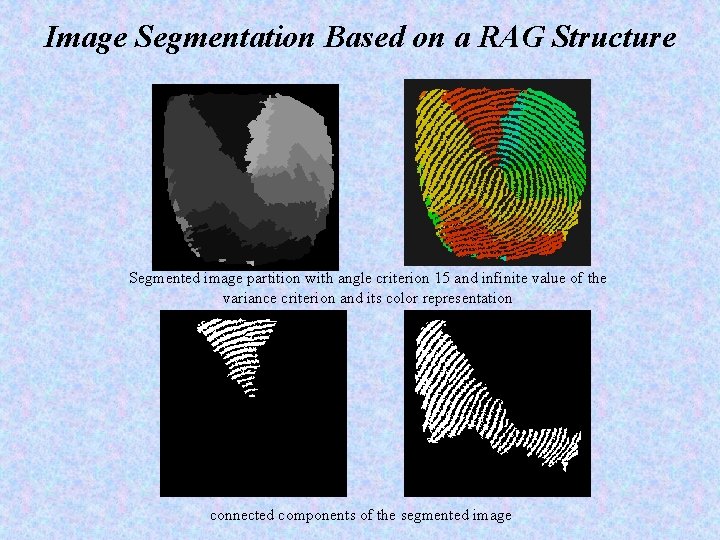
Image Segmentation Based on a RAG Structure Segmented image partition with angle criterion 15 and infinite value of the variance criterion and its color representation connected components of the segmented image
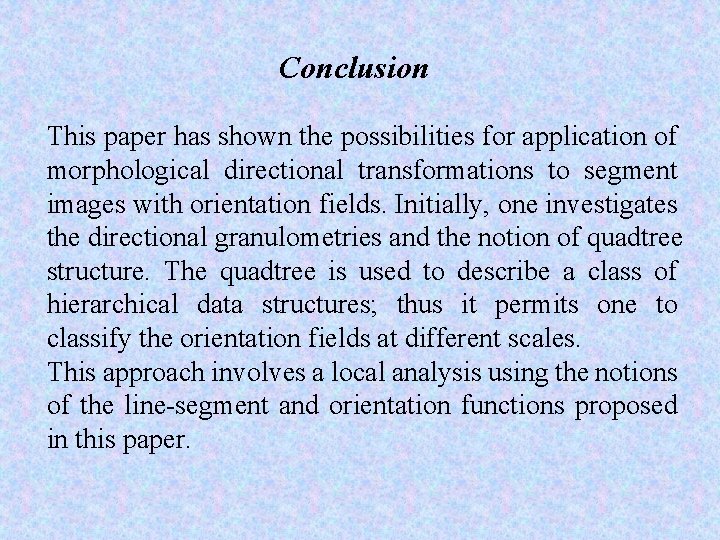
Conclusion This paper has shown the possibilities for application of morphological directional transformations to segment images with orientation fields. Initially, one investigates the directional granulometries and the notion of quadtree structure. The quadtree is used to describe a class of hierarchical data structures; thus it permits one to classify the orientation fields at different scales. This approach involves a local analysis using the notions of the line-segment and orientation functions proposed in this paper.
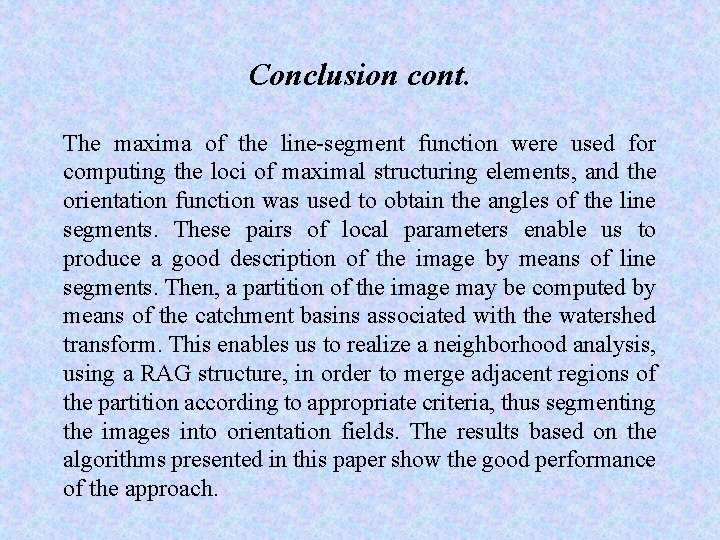
Conclusion cont. The maxima of the line-segment function were used for computing the loci of maximal structuring elements, and the orientation function was used to obtain the angles of the line segments. These pairs of local parameters enable us to produce a good description of the image by means of line segments. Then, a partition of the image may be computed by means of the catchment basins associated with the watershed transform. This enables us to realize a neighborhood analysis, using a RAG structure, in order to merge adjacent regions of the partition according to appropriate criteria, thus segmenting the images into orientation fields. The results based on the algorithms presented in this paper show the good performance of the approach.
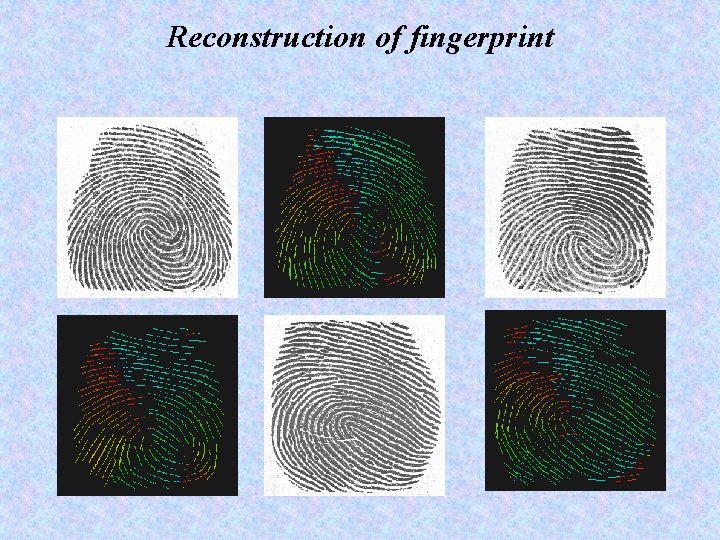
Reconstruction of fingerprint
- Slides: 18