
Tutorial on Titration curve for acids bases and
Tutorial on Titration curve for acids bases and indicators used for titration. Prepared by Lawrence Kok http: //lawrencekok. blogspot. com
Titration Strong Acid + Strong Base
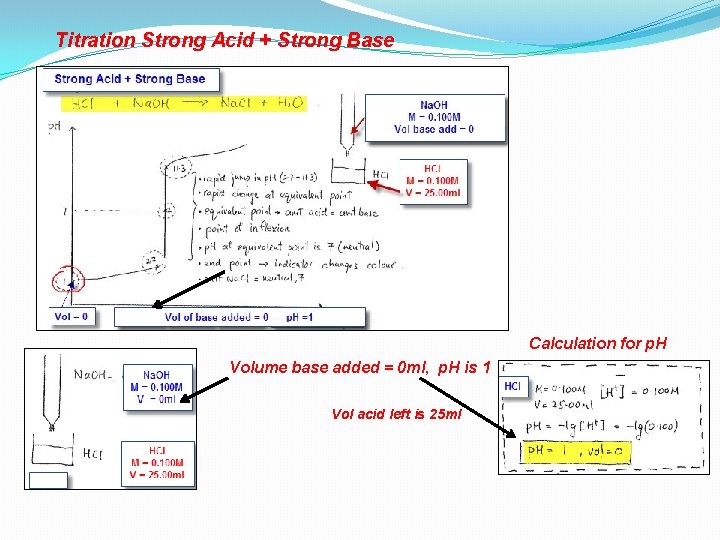
Titration Strong Acid + Strong Base HCI M = 0. 100 M V = 25. 00 ml Calculation for p. H Volume base added = 0 ml, p. H is 1 Vol acid left is 25 ml
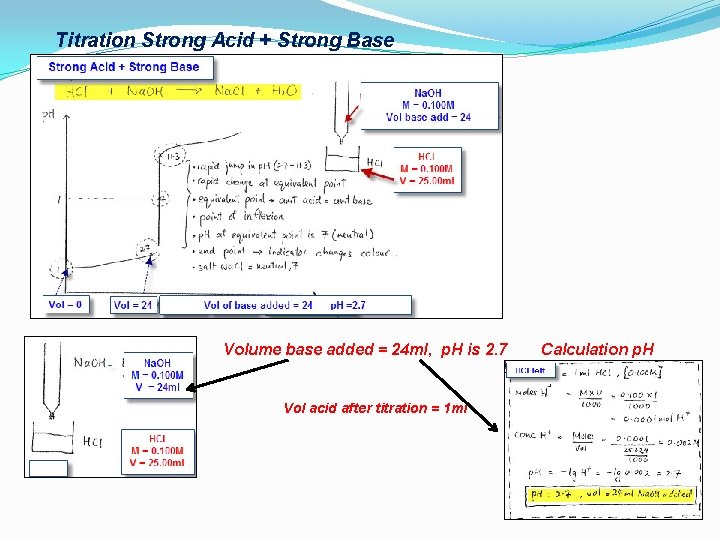
Titration Strong Acid + Strong Base Volume base added = 24 ml, p. H is 2. 7 Vol acid after titration = 1 ml Calculation p. H
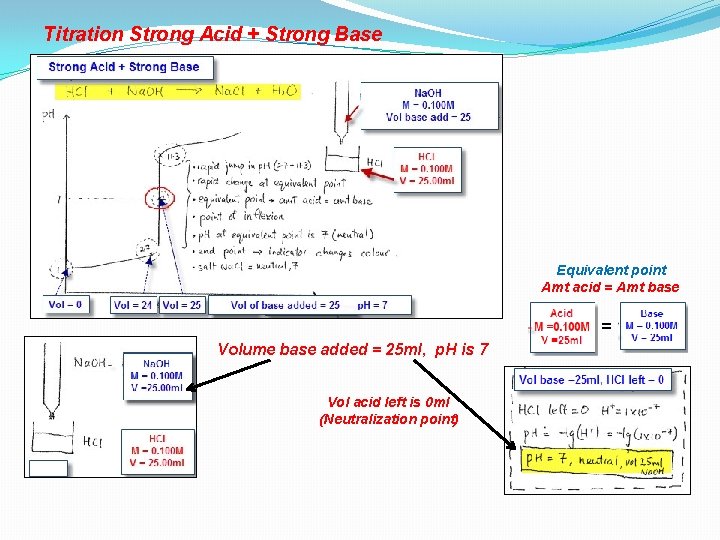
Titration Strong Acid + Strong Base Equivalent point Amt acid = Amt base = Volume base added = 25 ml, p. H is 7 Vol acid left is 0 ml (Neutralization point)
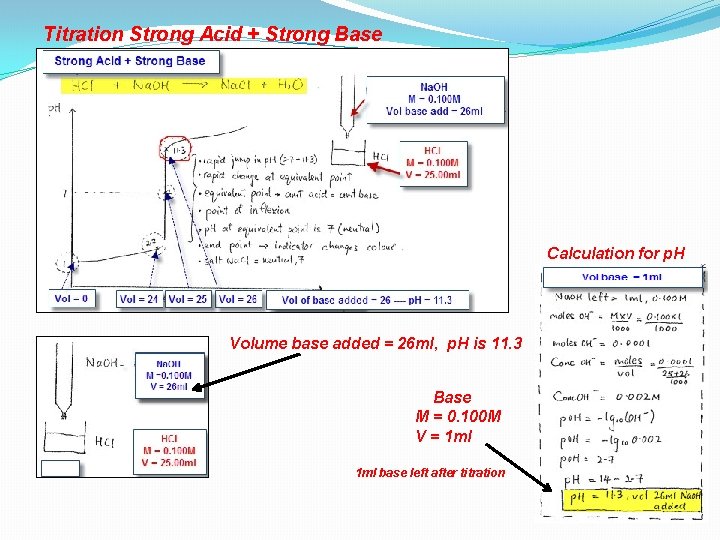
Titration Strong Acid + Strong Base Calculation for p. H Volume base added = 26 ml, p. H is 11. 3 Base M = 0. 100 M V = 1 ml base left after titration
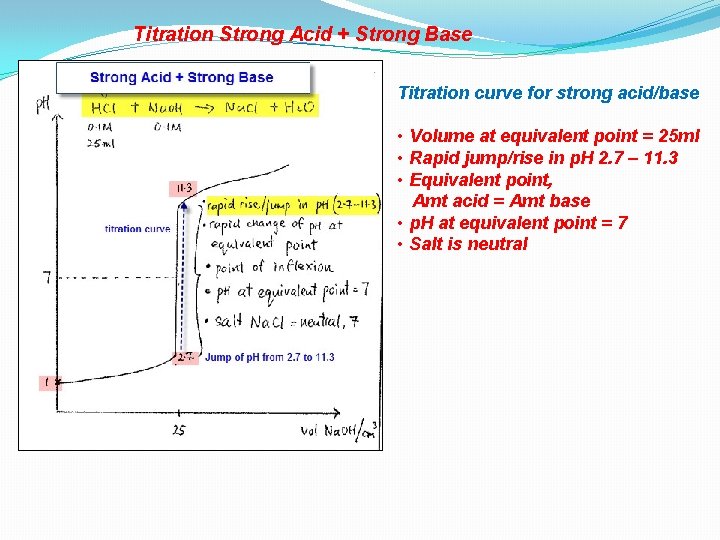
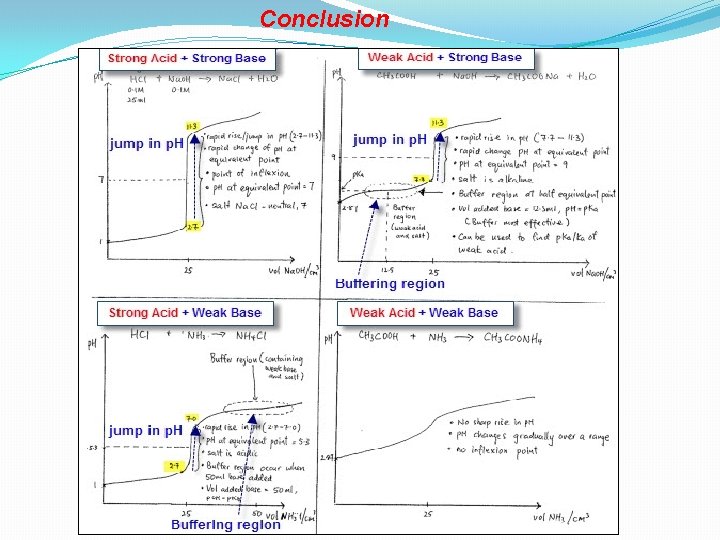
Titration Strong Acid + Strong Base Titration curve for strong acid/base • Volume at equivalent point = 25 ml • Rapid jump/rise in p. H 2. 7 – 11. 3 • Equivalent point, Amt acid = Amt base • p. H at equivalent point = 7 • Salt is neutral
Titration Weak Acid + Strong Base
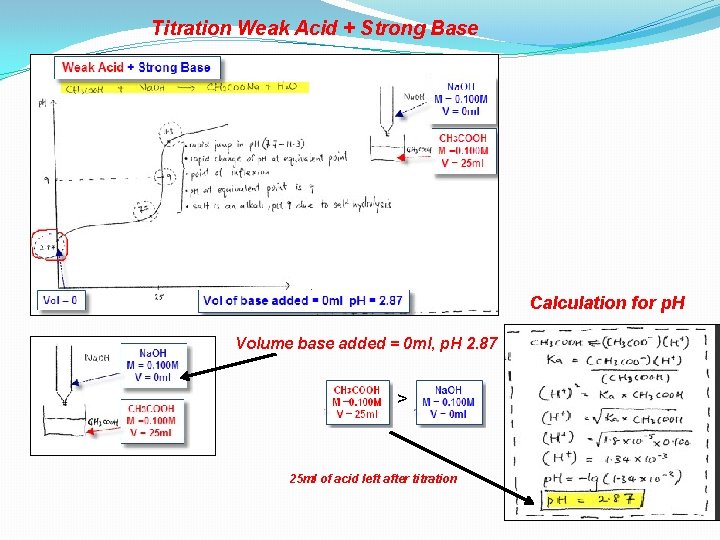
Titration Weak Acid + Strong Base Calculation for p. H Volume base added = 0 ml, p. H 2. 87 > 25 ml of acid left after titration
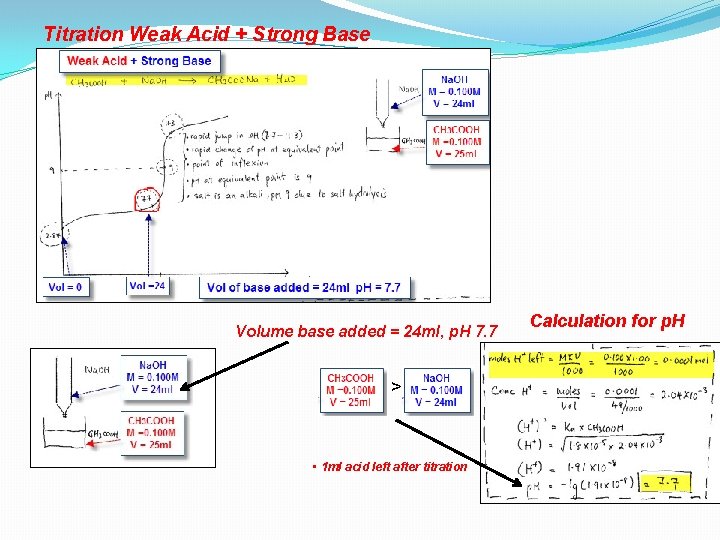
Titration Weak Acid + Strong Base Volume base added = 24 ml, p. H 7. 7 > • 1 ml acid left after titration Calculation for p. H
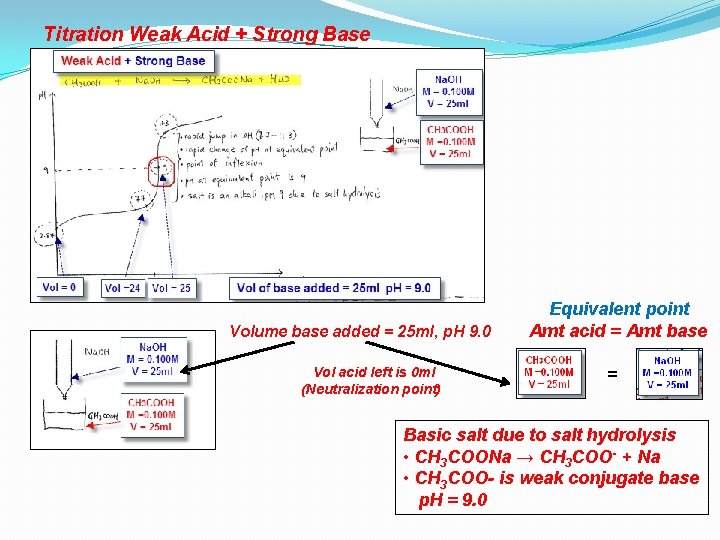
Titration Weak Acid + Strong Base Volume base added = 25 ml, p. H 9. 0 Vol acid left is 0 ml (Neutralization point) Equivalent point Amt acid = Amt base = Basic salt due to salt hydrolysis • CH 3 COONa → CH 3 COO- + Na • CH 3 COO- is weak conjugate base p. H = 9. 0
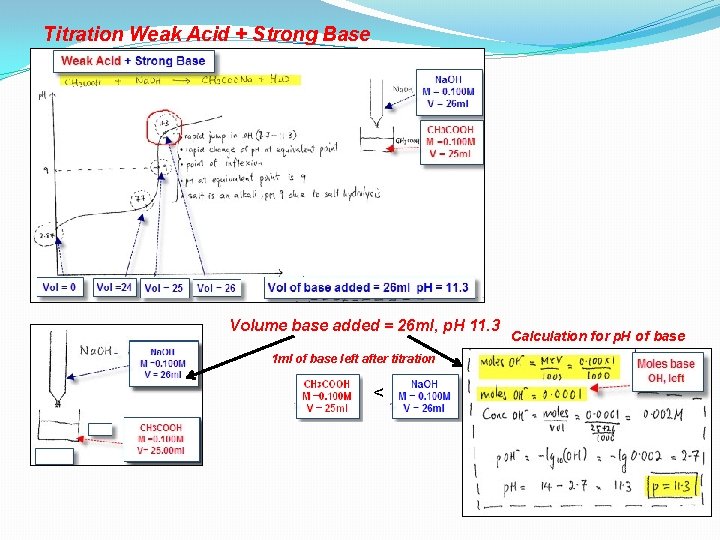
Titration Weak Acid + Strong Base Volume base added = 26 ml, p. H 11. 3 1 ml of base left after titration < Calculation for p. H of base
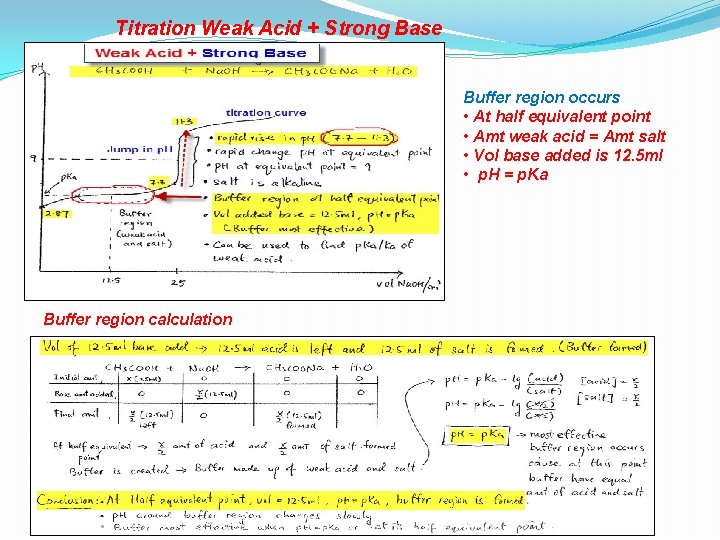
Titration Weak Acid + Strong Base Buffer region occurs • At half equivalent point • Amt weak acid = Amt salt • Vol base added is 12. 5 ml • p. H = p. Ka Buffer region calculation
Titration Strong Acid + Weak Base
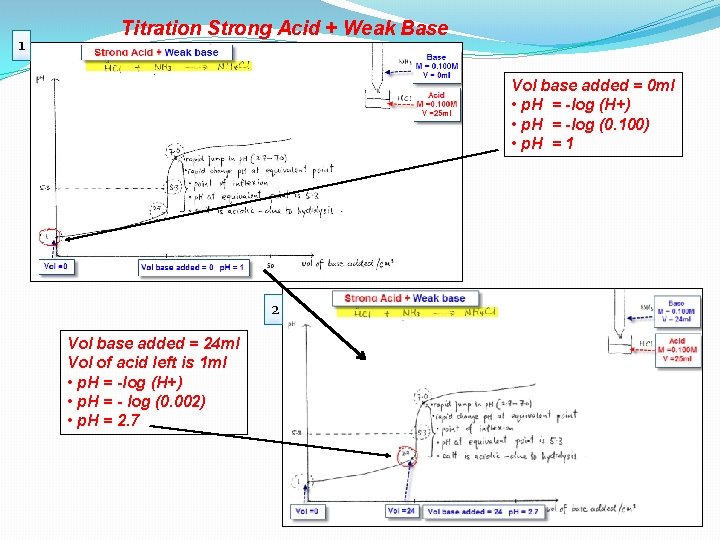
1 Titration Strong Acid + Weak Base Vol base added = 0 ml • p. H = -log (H+) • p. H = -log (0. 100) • p. H = 1 2 Vol base added = 24 ml Vol of acid left is 1 ml • p. H = -log (H+) • p. H = - log (0. 002) • p. H = 2. 7
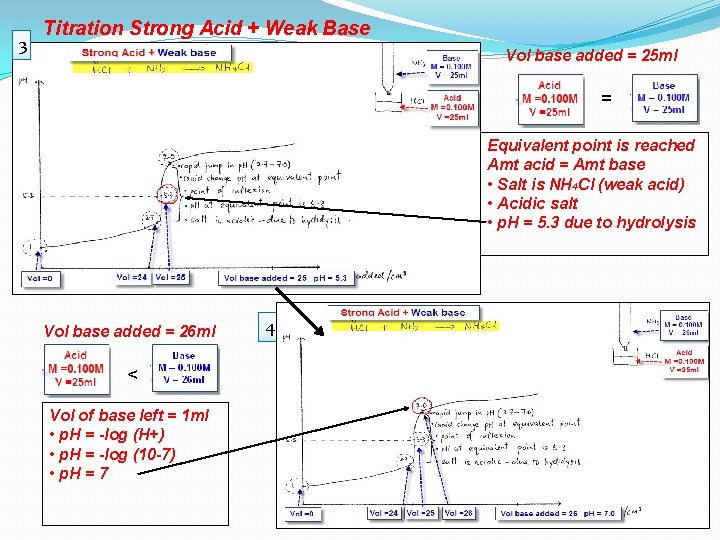
3 Titration Strong Acid + Weak Base Vol base added = 25 ml = Equivalent point is reached Amt acid = Amt base • Salt is NH 4 CI (weak acid) • Acidic salt • p. H = 5. 3 due to hydrolysis Vol base added = 26 ml < Vol of base left = 1 ml • p. H = -log (H+) • p. H = -log (10 -7) • p. H = 7 4
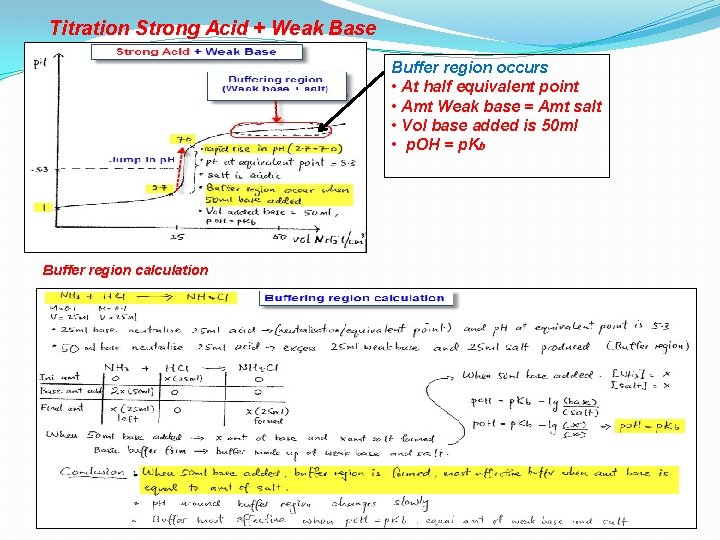
Titration Strong Acid + Weak Base Buffer region occurs • At half equivalent point • Amt Weak base = Amt salt • Vol base added is 50 ml • p. OH = p. Kb Buffer region calculation
Titration Weak Acid + Weak Base
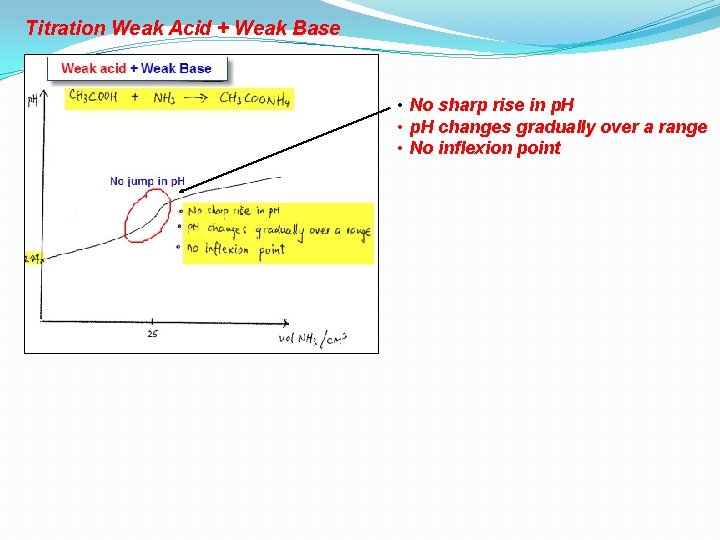
Titration Weak Acid + Weak Base • No sharp rise in p. H • p. H changes gradually over a range • No inflexion point
Conclusion
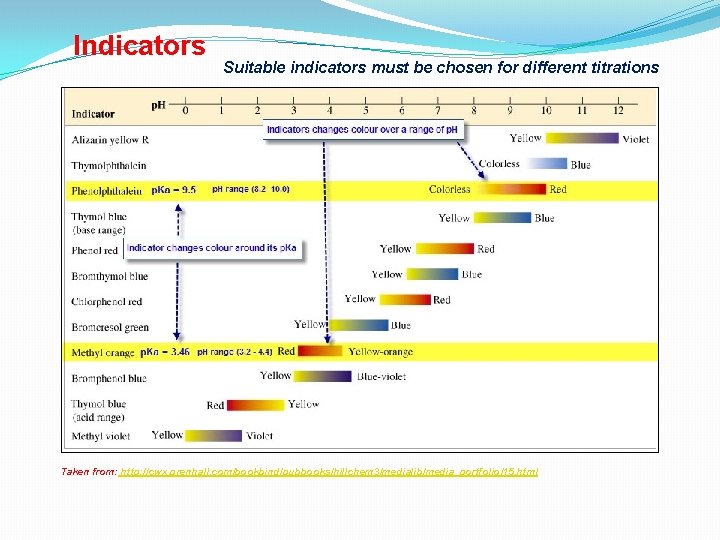
Indicators Suitable indicators must be chosen for different titrations Taken from: http: //cwx. prenhall. com/bookbind/pubbooks/hillchem 3/medialib/media_portfolio/15. html
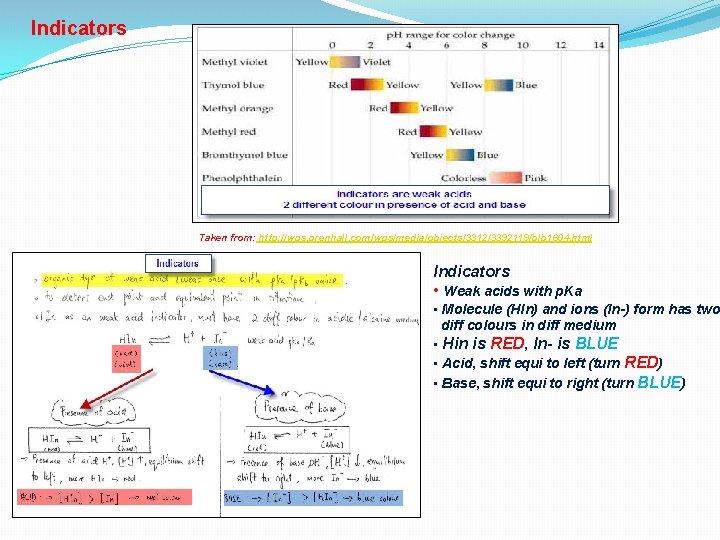
Indicators Taken from: http: //wps. prenhall. com/wps/media/objects/3312/3392119/blb 1604. html Indicators • Weak acids with p. Ka • Molecule (HIn) and ions (In-) form has two diff colours in diff medium • Hin is RED, In- is BLUE • Acid, shift equi to left (turn RED) • Base, shift equi to right (turn BLUE)
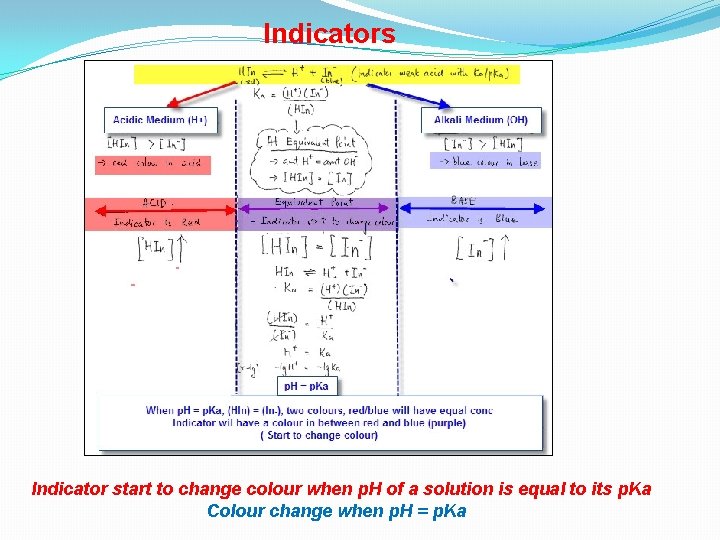
Indicators Indicator start to change colour when p. H of a solution is equal to its p. Ka Colour change when p. H = p. Ka
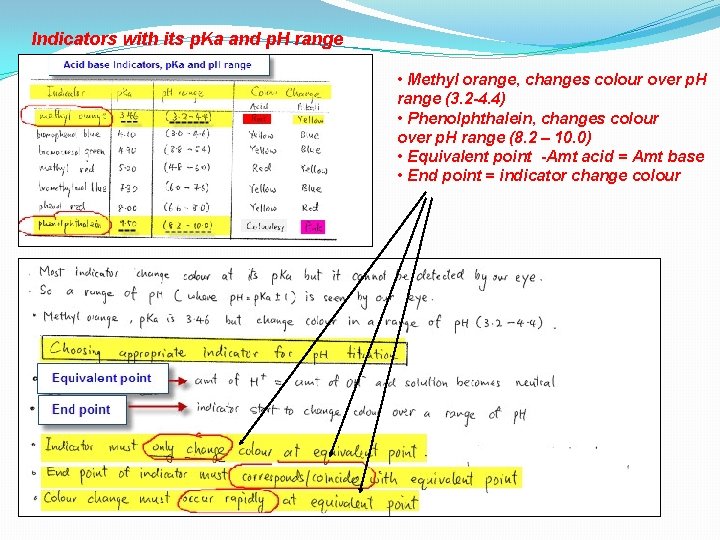
Indicators with its p. Ka and p. H range • Methyl orange, changes colour over p. H range (3. 2 -4. 4) • Phenolphthalein, changes colour over p. H range (8. 2 – 10. 0) • Equivalent point -Amt acid = Amt base • End point = indicator change colour
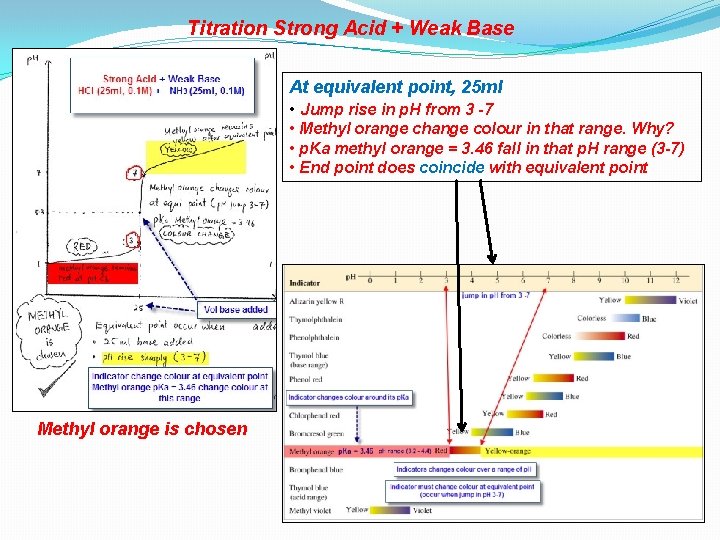
Titration Strong Acid + Weak Base At equivalent point, 25 ml • Jump rise in p. H from 3 -7 • Methyl orange change colour in that range. Why? • p. Ka methyl orange = 3. 46 fall in that p. H range (3 -7) • End point does coincide with equivalent point Methyl orange is chosen
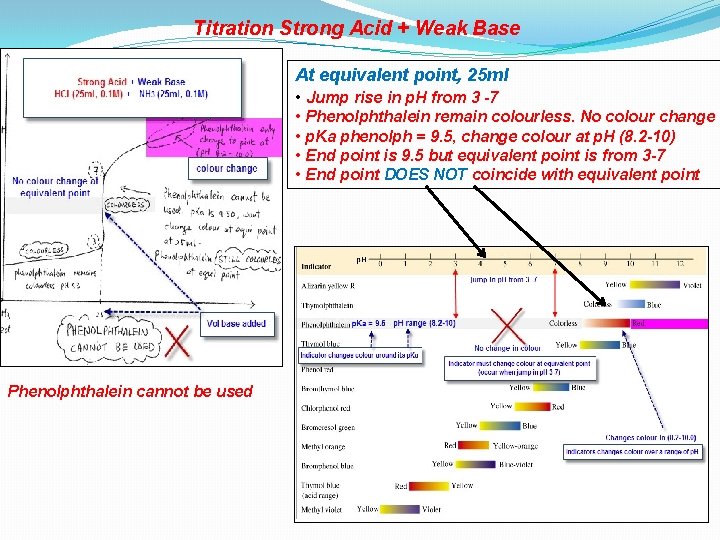
Titration Strong Acid + Weak Base At equivalent point, 25 ml • Jump rise in p. H from 3 -7 • Phenolphthalein remain colourless. No colour change • p. Ka phenolph = 9. 5, change colour at p. H (8. 2 -10) • End point is 9. 5 but equivalent point is from 3 -7 • End point DOES NOT coincide with equivalent point Phenolphthalein cannot be used
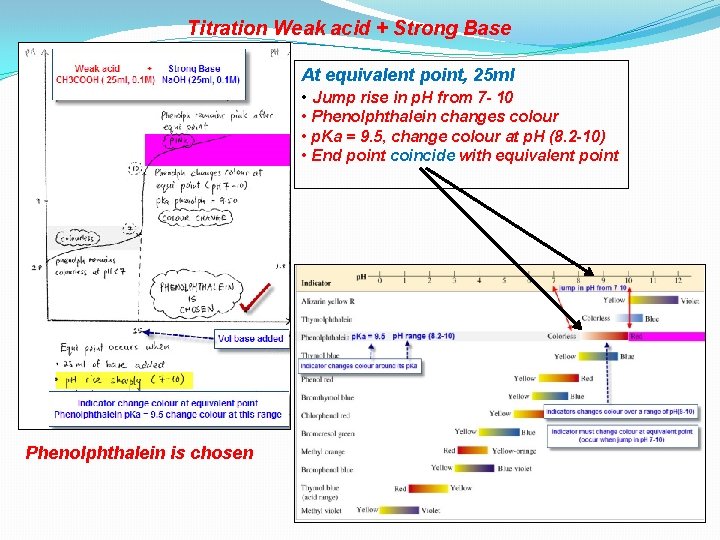
Titration Weak acid + Strong Base At equivalent point, 25 ml • Jump rise in p. H from 7 - 10 • Phenolphthalein changes colour • p. Ka = 9. 5, change colour at p. H (8. 2 -10) • End point coincide with equivalent point Phenolphthalein is chosen
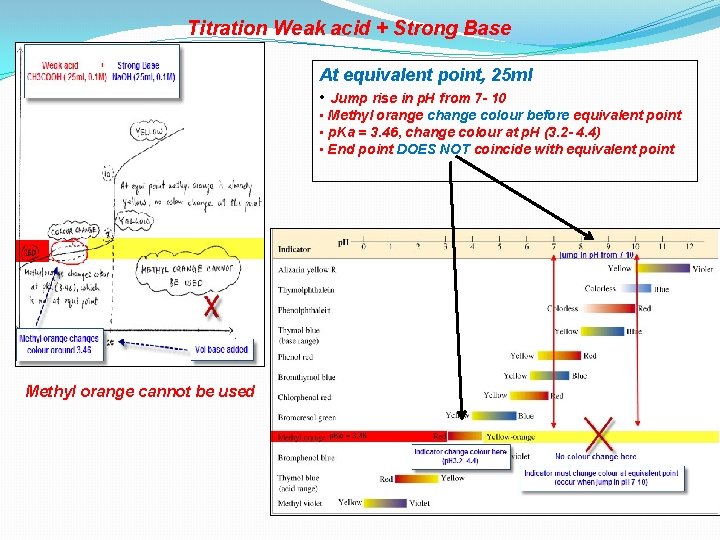
Titration Weak acid + Strong Base At equivalent point, 25 ml • Jump rise in p. H from 7 - 10 • Methyl orange change colour before equivalent point • p. Ka = 3. 46, change colour at p. H (3. 2 - 4. 4) • End point DOES NOT coincide with equivalent point Methyl orange cannot be used
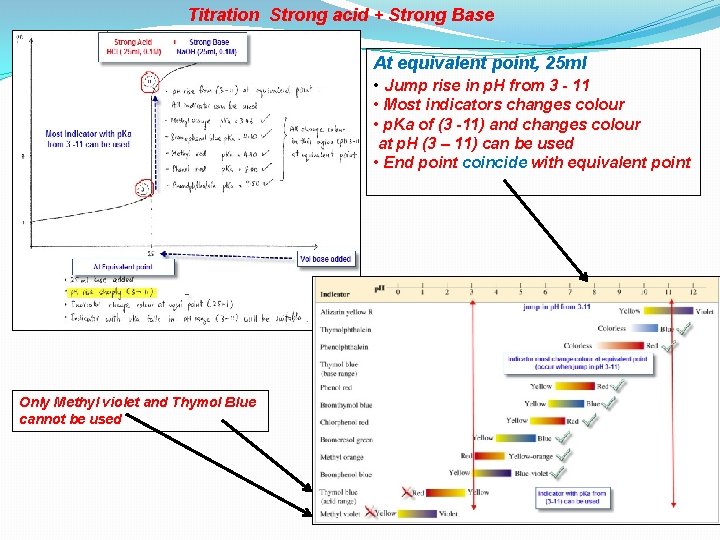
Titration Strong acid + Strong Base At equivalent point, 25 ml • Jump rise in p. H from 3 - 11 • Most indicators changes colour • p. Ka of (3 -11) and changes colour at p. H (3 – 11) can be used • End point coincide with equivalent point Only Methyl violet and Thymol Blue cannot be used
- Slides: 29