
Tutorial 3 Exchange Matthew Robson Introduction Introduction If
Tutorial 3: Exchange Matthew Robson
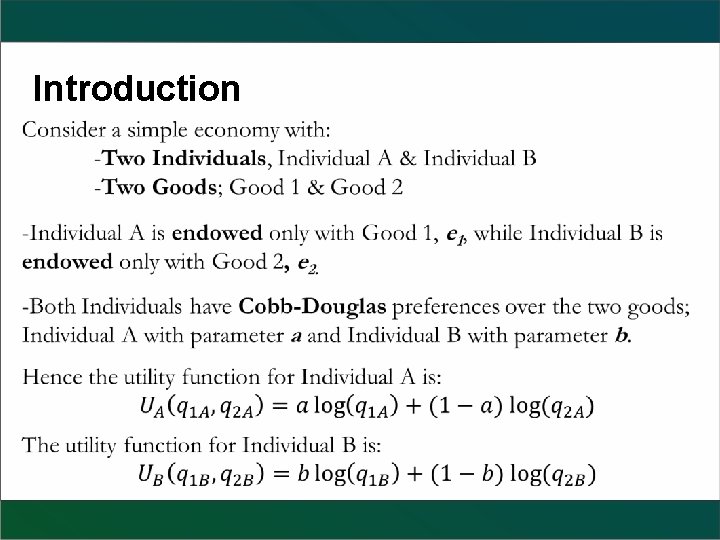
Introduction
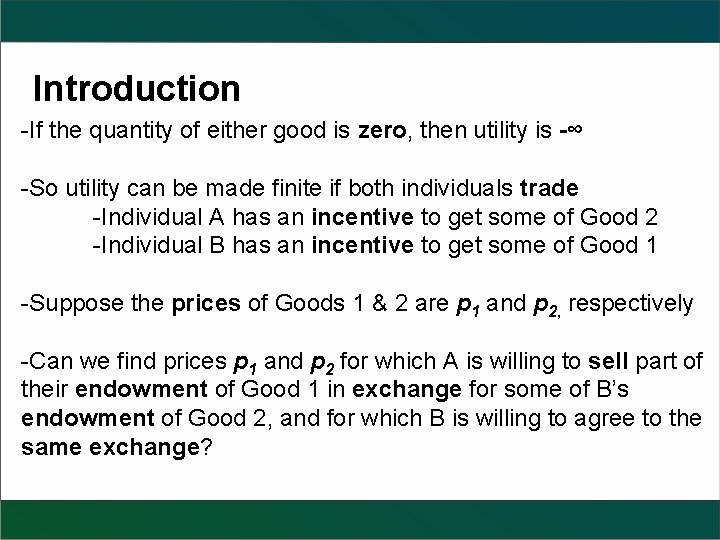
Introduction -If the quantity of either good is zero, then utility is -∞ -So utility can be made finite if both individuals trade -Individual A has an incentive to get some of Good 2 -Individual B has an incentive to get some of Good 1 -Suppose the prices of Goods 1 & 2 are p 1 and p 2, respectively -Can we find prices p 1 and p 2 for which A is willing to sell part of their endowment of Good 1 in exchange for some of B’s endowment of Good 2, and for which B is willing to agree to the same exchange?
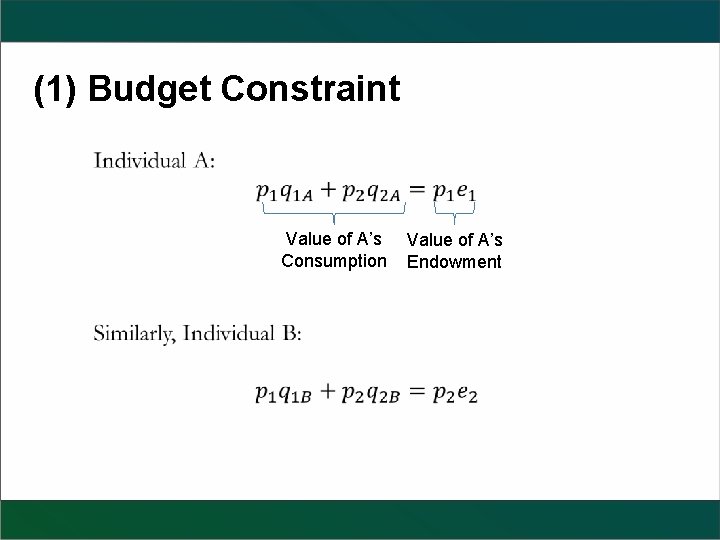
(1) Budget Constraint Value of A’s Consumption Value of A’s Endowment
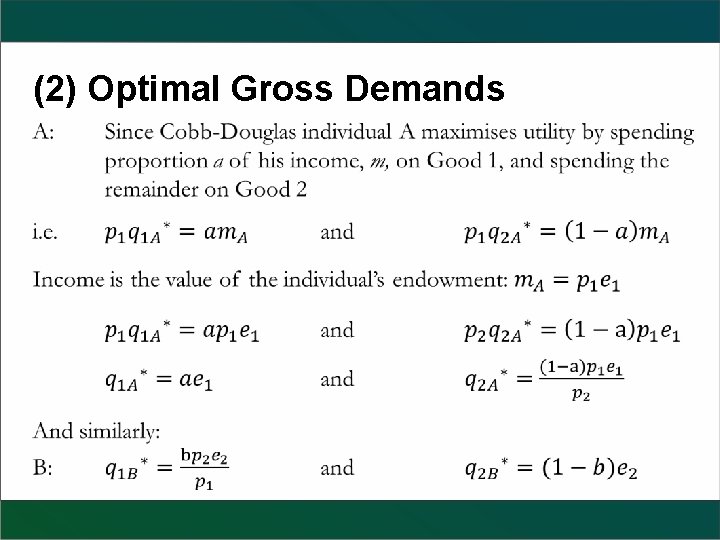
(2) Optimal Gross Demands
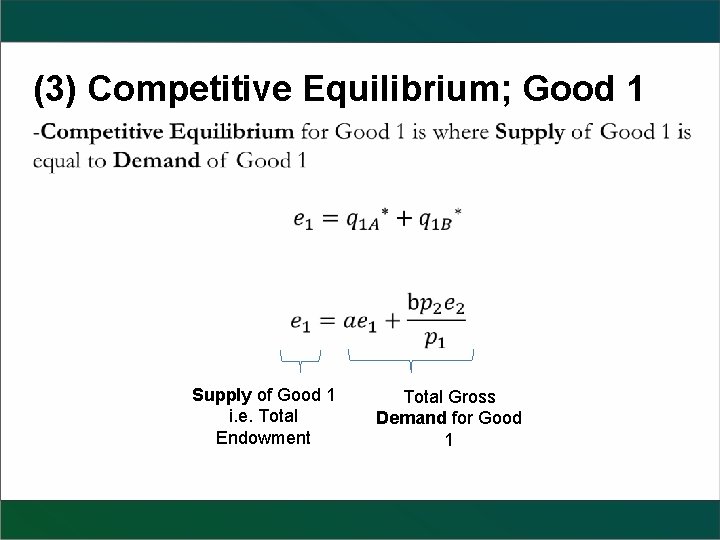
(3) Competitive Equilibrium; Good 1 Supply of Good 1 i. e. Total Endowment Total Gross Demand for Good 1
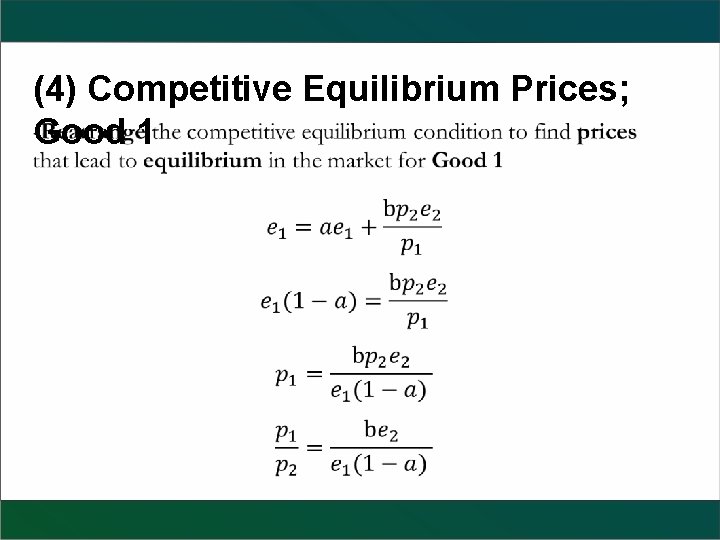
(4) Competitive Equilibrium Prices; Good 1
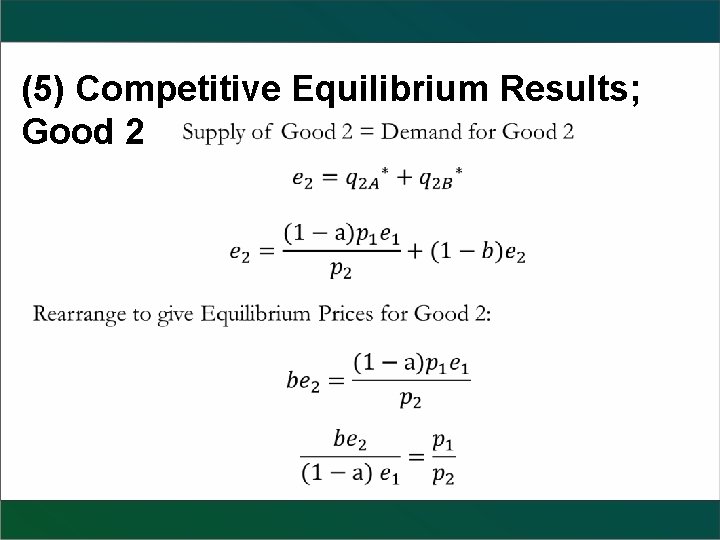
(5) Competitive Equilibrium Results; Good 2
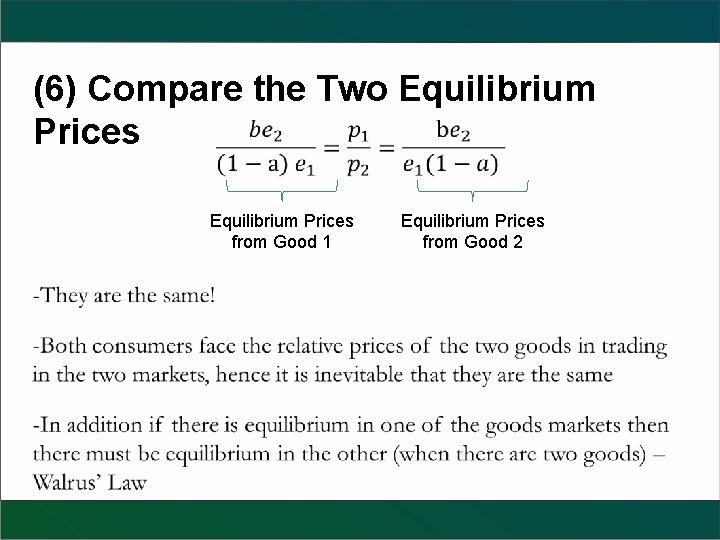
(6) Compare the Two Equilibrium Prices Equilibrium Prices from Good 1 Equilibrium Prices from Good 2
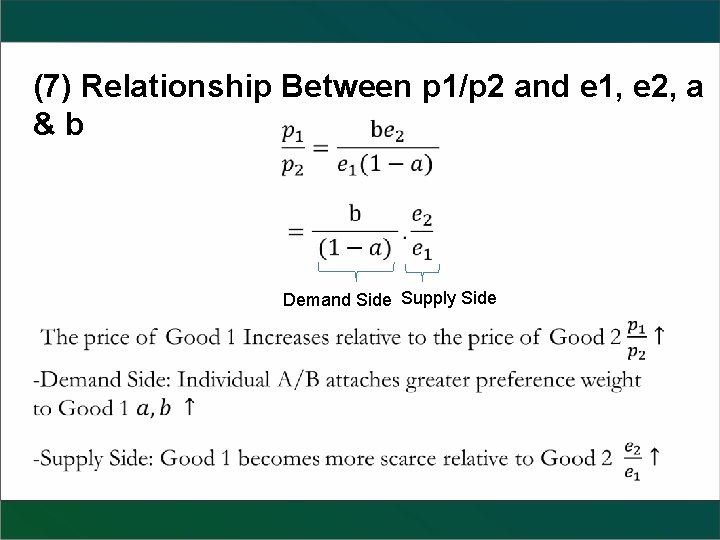
(7) Relationship Between p 1/p 2 and e 1, e 2, a & b Demand Side Supply Side
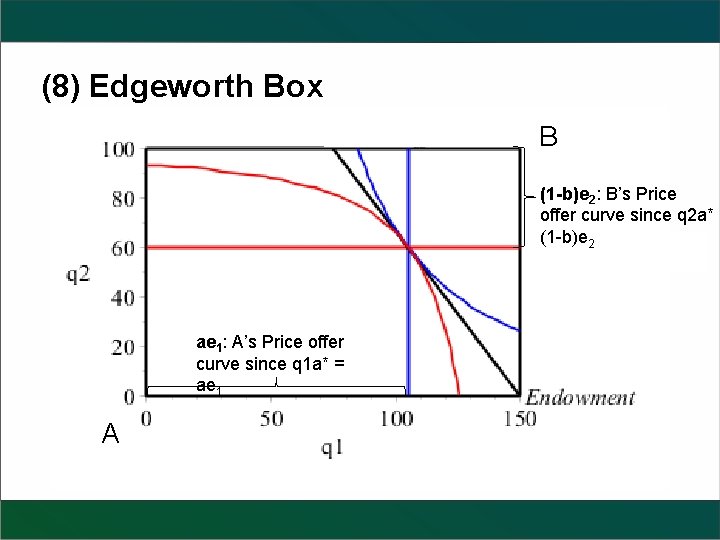
(8) Edgeworth Box B (1 -b)e 2: B’s Price offer curve since q 2 a* (1 -b)e 2 ae 1: A’s Price offer curve since q 1 a* = ae 1 A
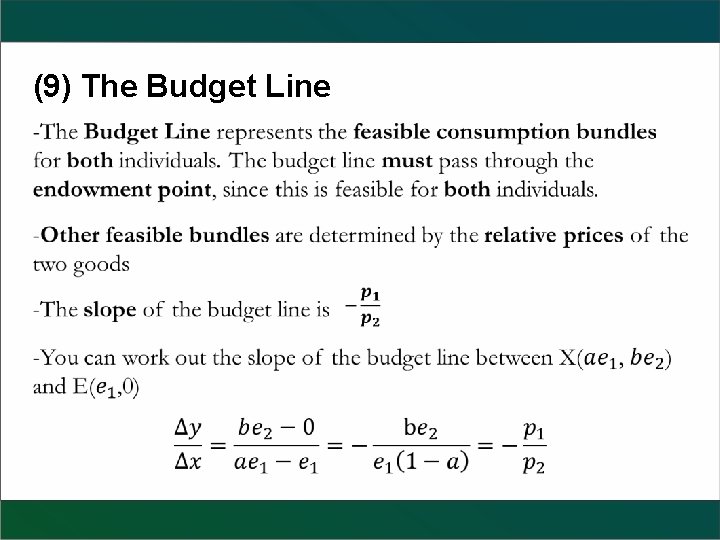
(9) The Budget Line
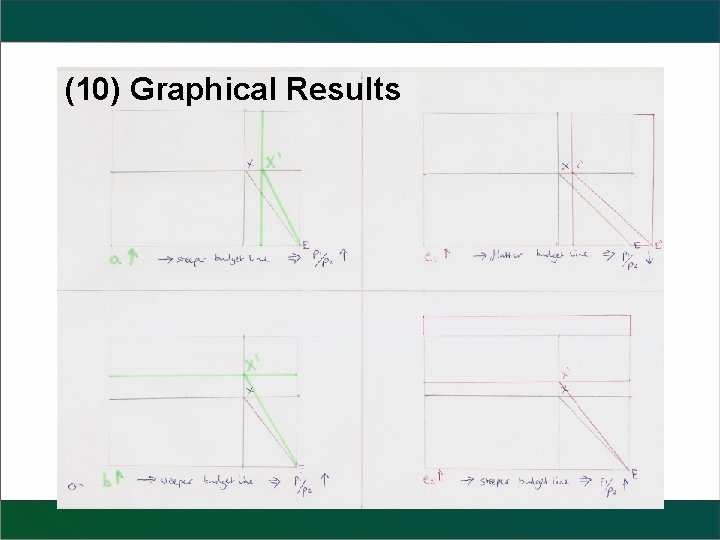
(10) Graphical Results
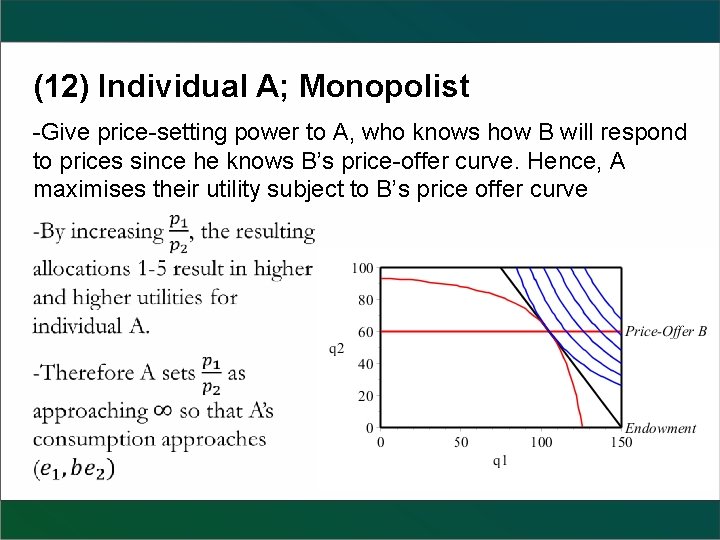
(12) Individual A; Monopolist -Give price-setting power to A, who knows how B will respond to prices since he knows B’s price-offer curve. Hence, A maximises their utility subject to B’s price offer curve

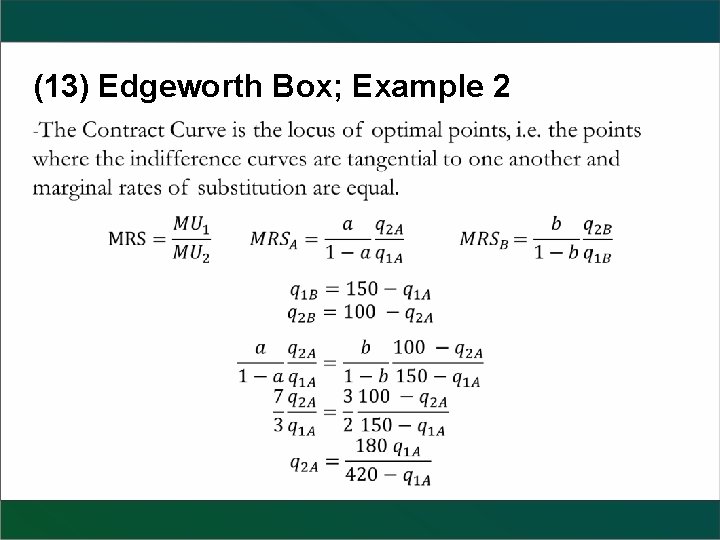
(13) Edgeworth Box; Example 2
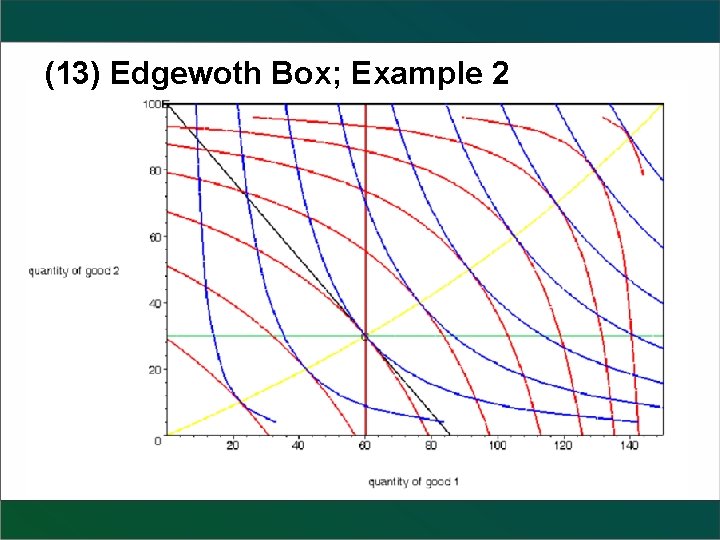
(13) Edgewoth Box; Example 2
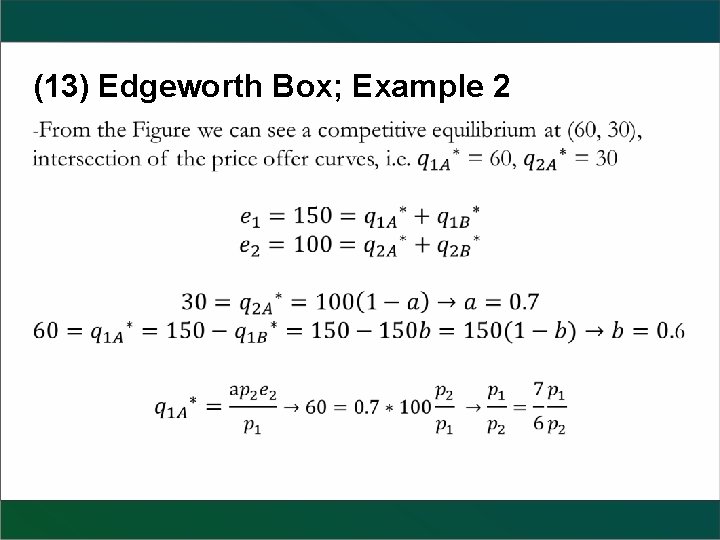
(13) Edgeworth Box; Example 2
(13) Edgeworth Box; Example 2
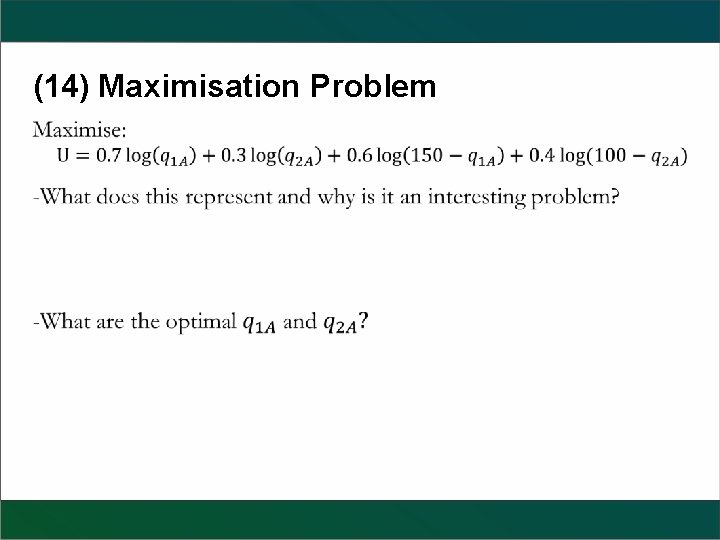
(14) Maximisation Problem
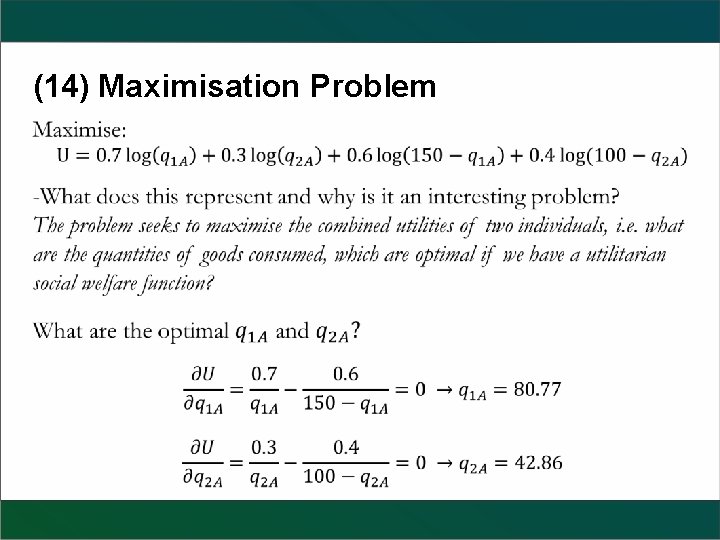
(14) Maximisation Problem
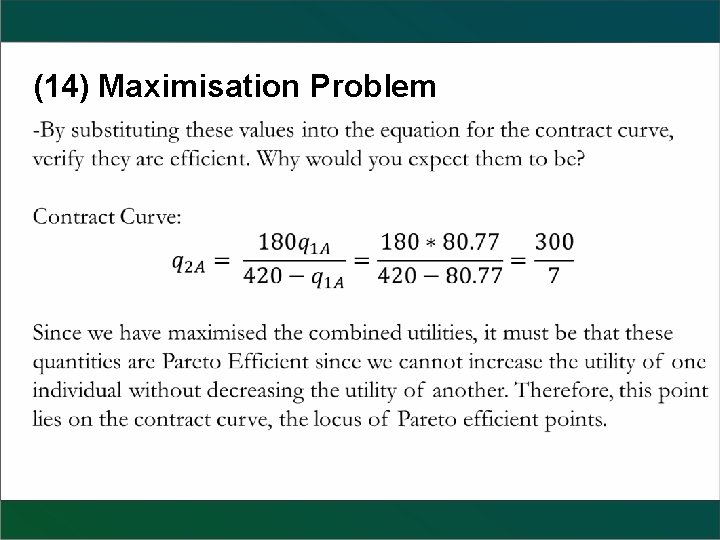
(14) Maximisation Problem
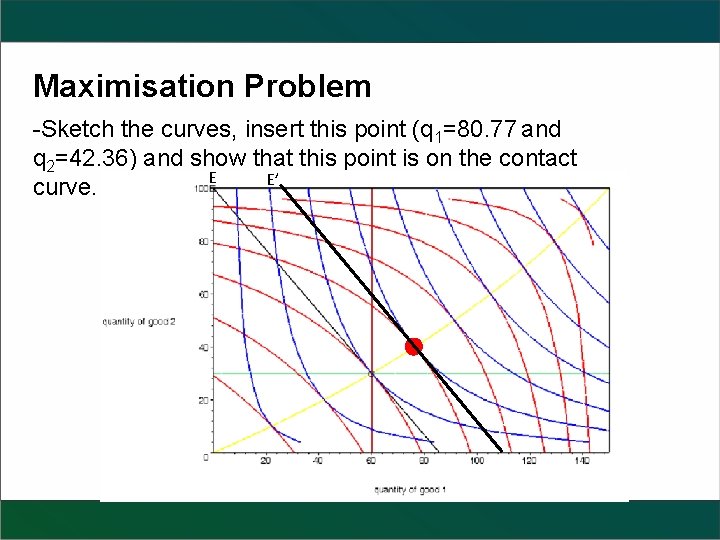
Maximisation Problem -Sketch the curves, insert this point (q 1=80. 77 and q 2=42. 36) and show that this point is on the contact E E’ curve.
(14) Maximisation Problem -Find another endowment point, at the edge of the Edgeworth Box, from which another efficient point could be found on the Contract curve. What does this have to do with the Second Welfare Theorem? If we have different initial endowment point, we can get to an optimal utilitarian allocation through trade. Where the point lies on the Contract curve. The Second Fundamental Theorem of Welfare, states that if we can to end up at a specific point on the contract curve, we can get there by changing the initial endowments, then trade should occur naturally to obtain an efficient allocation.
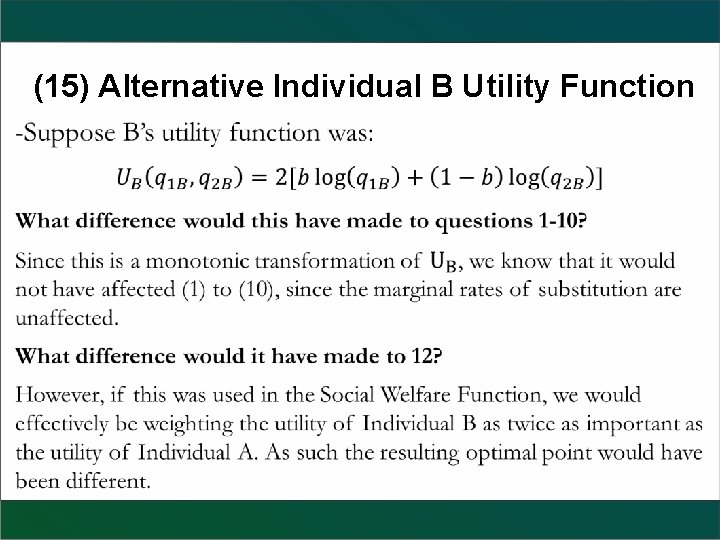
(15) Alternative Individual B Utility Function
- Slides: 24