
TURP TURP Indications for TURP What does it
![Effects of Absorption on [Na+] • • absorption of electrolyte +ve irrigating fluid leads](https://slidetodoc.com/presentation_image/4d91ac050bf0f9ba7cca41a5c5876f8e/image-10.jpg "Effects of Absorption on [Na+] • • absorption of electrolyte +ve irrigating fluid leads")
![Metabolic signs • Decreased [Na+]](https://slidetodoc.com/presentation_image/4d91ac050bf0f9ba7cca41a5c5876f8e/image-15.jpg "Metabolic signs • Decreased [Na+]")
![Treatment of TUR syndrome unconscious patient • • Establish diagnosis - [Na+], [glucose], [urea],](https://slidetodoc.com/presentation_image/4d91ac050bf0f9ba7cca41a5c5876f8e/image-17.jpg "Treatment of TUR syndrome unconscious patient • • Establish diagnosis - [Na+], [glucose], [urea],")
- Slides: 18
TURP
TURP • • • Indications for TURP What does it involve? What are the complications and how should they be managed?
Indications for TURP • • • Acute Retention of Urine Significant symptoms from BOO not responsive to tablets Persistent or recurrent UTI Significant bleeding (if due to Prostate) Bladder stones secondary to bladder outlet obstruction
What is a TURP?
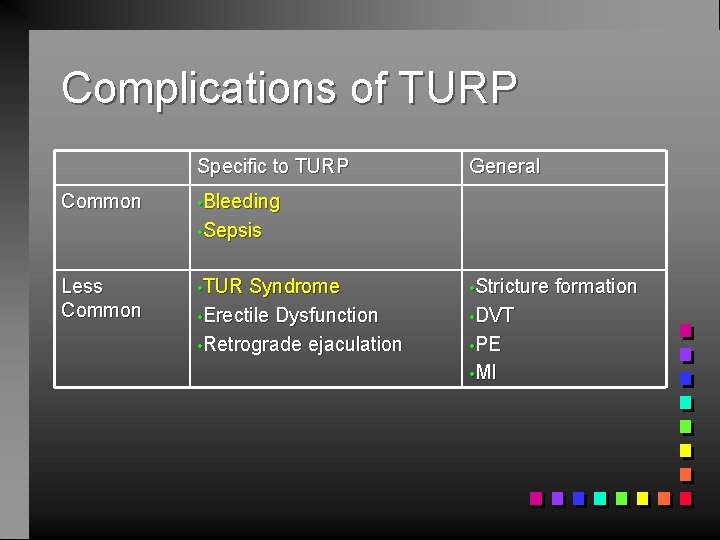
Complications of TURP Specific to TURP Common General • Bleeding • Sepsis Less Common • TUR Syndrome • Erectile Dysfunction • Retrograde ejaculation • Stricture • DVT • PE • MI formation
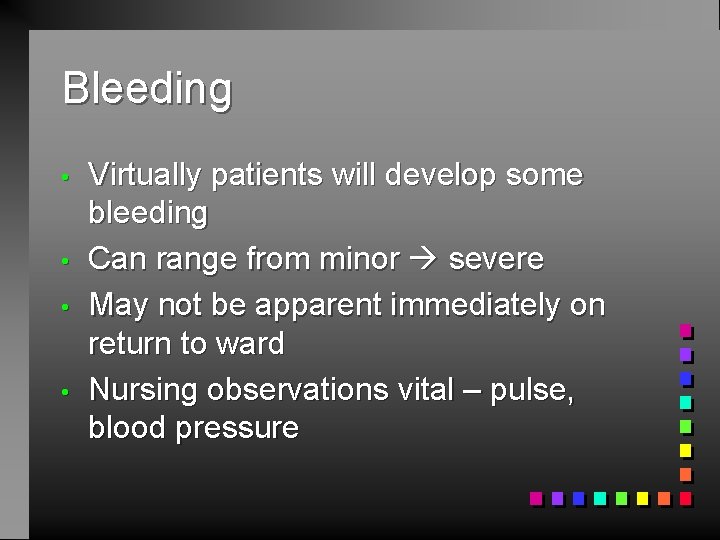
Bleeding • • Virtually patients will develop some bleeding Can range from minor severe May not be apparent immediately on return to ward Nursing observations vital – pulse, blood pressure
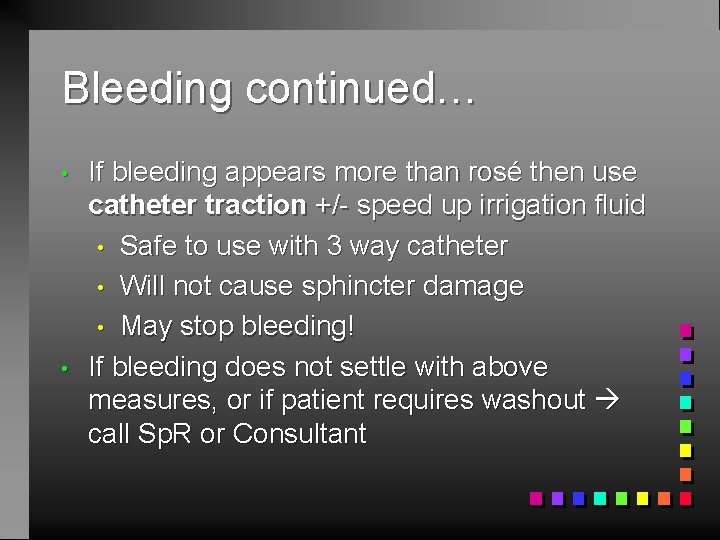
Bleeding continued… • • If bleeding appears more than rosé then use catheter traction +/- speed up irrigation fluid • Safe to use with 3 way catheter • Will not cause sphincter damage • May stop bleeding! If bleeding does not settle with above measures, or if patient requires washout call Sp. R or Consultant
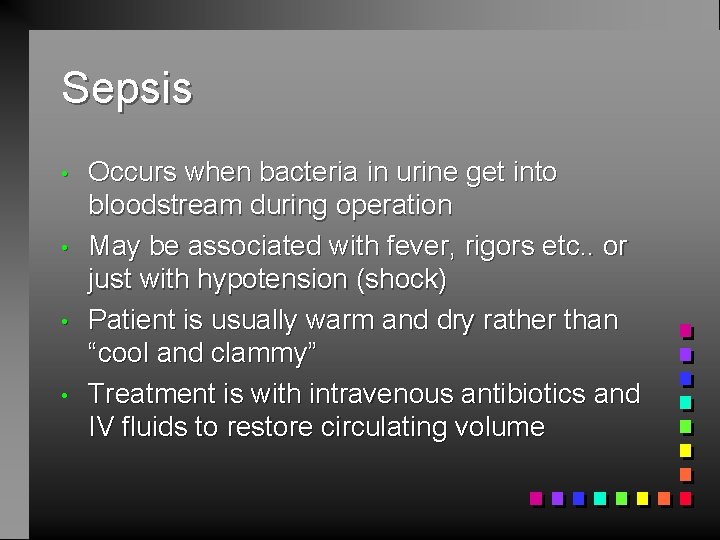
Sepsis • • Occurs when bacteria in urine get into bloodstream during operation May be associated with fever, rigors etc. . or just with hypotension (shock) Patient is usually warm and dry rather than “cool and clammy” Treatment is with intravenous antibiotics and IV fluids to restore circulating volume
TUR Syndrome • • • Occurs when intraoperative irrigant fluid (glycine) enters bloodstream via veins Glycine metabolised to ammonia and water Effect is therefore same as giving IV Water hypotonic transfusion lowers blood sodium
Effects of Absorption on [Na+] • • absorption of electrolyte +ve irrigating fluid leads to dilutional hyponatraemia (but more than would be expected from absorption of equivalent amount of water) [Na+] < 120 mmol/l = severe TUR syndrome
Factors affecting absorption • • • Hydrostatic pressure of irrigating fluid Number of open venous sinuses Peripheral venous pressure Duration of Surgery Experience of surgeon
Presentation • • • Cardiovascular CNS Metabolic
Cardiovascular signs • • Increased CVP Bradycardia Increased BP (May be masked by blood loss) Pulmonary oedema Angina ECG Changes Cardiovascular collapse (Decreased BP and HR, Cardiac arrest) Falling Hb and Haematocrit
CNS signs • • • Apprehension Disorientation Restlessness Nausea Visual disturbances Stupor Coma Seizures Delayed recovery from GA
Metabolic signs • Decreased [Na+]
Treatment of TUR syndrome Mildly symptomatic • • =Nausea, vomiting, confusion +/- visual disturbances in the presence of stable CVS Check plasma electrolytes - [Na+] > 120 mmol/l Observation only If signs of fluid overload consider loop diuretic
Treatment of TUR syndrome unconscious patient • • Establish diagnosis - [Na+], [glucose], [urea], osmolality, ammonia level, ABG’s, ECG Differential diagnosis • Supratentorial mass • Subtentorial mass • Metabolic condition • Psychiatric • Anaesthetic causes • Gram -ve septicaemia
Treatment of severe TUR syndrome • • • Requires specialist treatment +/- admission to HDU or ITU Hypertonic saline (5%) - give 100 mls over 1 hour and repeat until [Na+] is > 120 mmol/l Correction should take place over several hours acute fluid shifts can lead to greater cerebral irritation and a (permanent) worsening of neurological status