
Turn in Nothing IB Psychology 12 13 16
➢Turn in: ➢ Nothing IB Psychology 12. 13. 16 ➢Take out: ➢Notes, notes ➢Today’s Learning Objectives: 6. 9. Evaluate two models or theories of one cognitive process. Discuss, with reference to relevant research studies, the extent to which one cognitive process is reliable. Today’s Agenda: ➢ 3. 4 -3. 5 ➢ MSM vs LOP HW: ➢ Discussion piece by Friday ➢ Celebrate knowledge of 3. 1 -3. 5 on Thursday! You will NOT want to miss it!
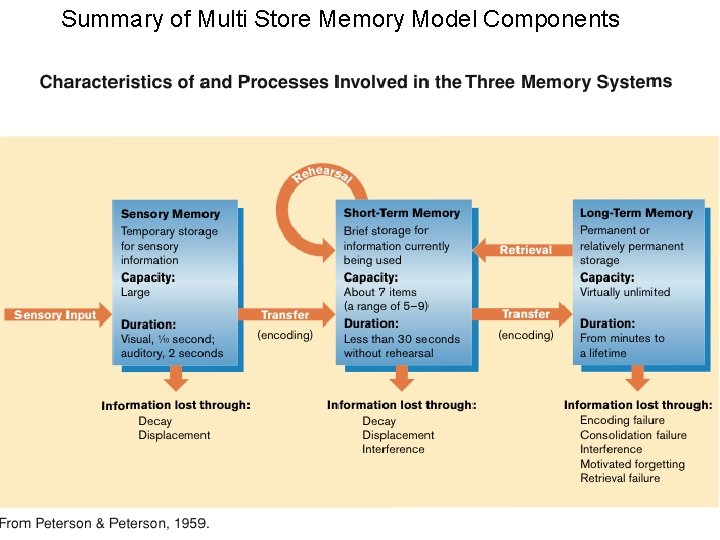
Summary of Multi Store Memory Model Components
QUICK…WITHOUT LOOKING… WHAT WERE THE NUMBERS I GAVE YOU YESTERDAY IN CLASS? Did you remember? How? !? Did you forget? Why? !?
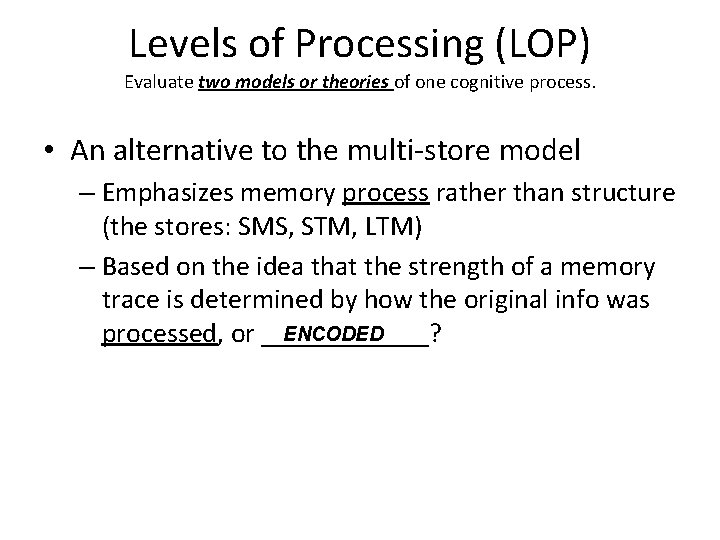
Levels of Processing (LOP) Evaluate two models or theories of one cognitive process. • An alternative to the multi-store model – Emphasizes memory process rather than structure (the stores: SMS, STM, LTM) – Based on the idea that the strength of a memory trace is determined by how the original info was ENCODED processed, or ______?
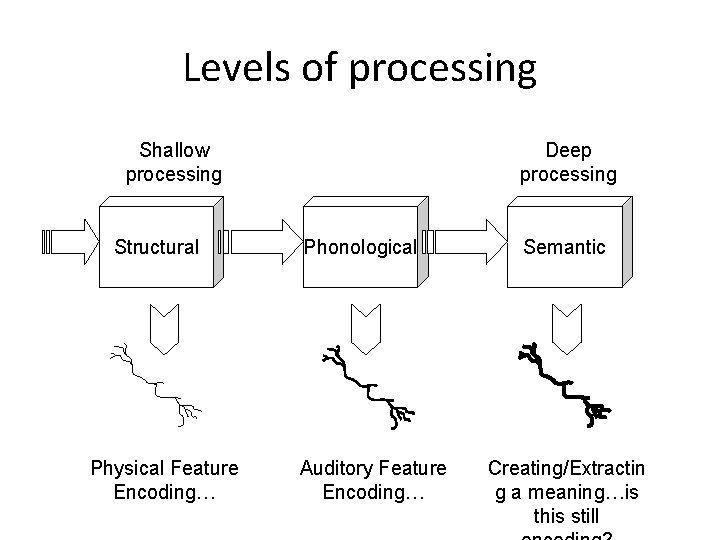
Levels of processing Shallow processing Structural Physical Feature Encoding… Deep processing Phonological Auditory Feature Encoding… Semantic Creating/Extractin g a meaning…is this still
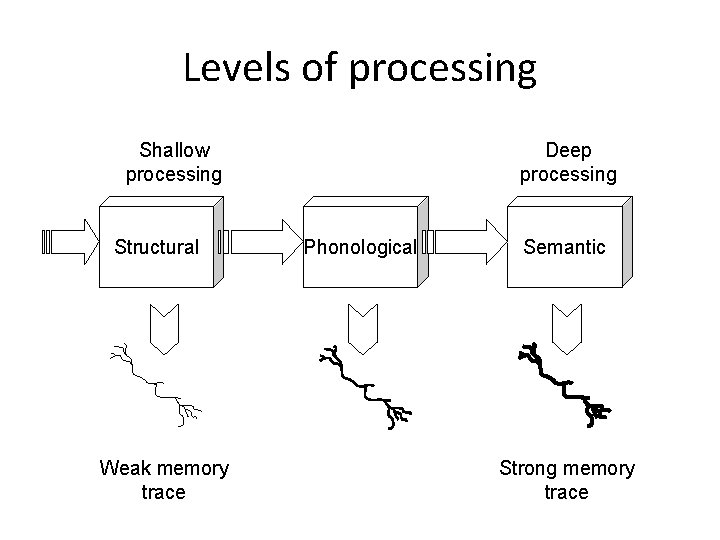
Levels of processing Shallow processing Structural Weak memory trace Deep processing Phonological Semantic Strong memory trace
Levels of processing • Incoming stimuli pass through a series of analysing mechanisms • Memory traces are a product of how stimuli are analysed • Strength of trace depends on: – Attention (there’s that idea again…) paid to stimulus – Depth of processing carried out – Connections with existing knowledge • Consider why Skyline has constructed the humanities department in the way it has…any thoughts on the principles behind the practice?
Levels of processing • Different levels of processing: – Structural – appearance – Phonological – auditory/sound – Semantic – meaning • Structural is the shallowest, semantic is the deepest
Levels of processing • The basic prediction of the LOP approach is that the amount of info pps will recall/recognise will depend on how deeply the experimental stimuli were processed
Levels of processing • Elias & Perfetti (1973) – PPs had greater recognition of words they had thought of similes for (semantic) than word they had thought of rhymes for (phono) • Craik & Tulving (1975) – Highest recognition of semantically processes stimuli, followed by phono, followed by structural
Levels of processing • Morris et al (1977) – Semantic processing was not always best; it depended on how recall was measured: – Recognition – semantic best – Rhyming recognition – phono best • Why is it that songs help us remember things? • Let’s see how you do: https: //www. youtube. com/watch? v=DJ 1 y. Pz 14 Lr. U
Levels of processing Strengths: • Influential model that focused researchers on processes that they had tended to neglect • The idea that the nature of a memory trace depends on encoding processes is well supported
Levels of processing “Challenges” • Many different variables involved in determining how a stimulus is processed: – Depth – Spread – Elaboration – Distinctiveness • Very difficult to isolate these variables experimentally
LOP and revision • You will recall more if you use… – Depth – make sure you understand & make connections between the topics & ideas – Spread – use several different techniques on the material – Elaboration – mental effort is required to store material effectively – Distinctiveness – make the material your own
- Slides: 14