
Turmoil of the 1960 s and economic problems

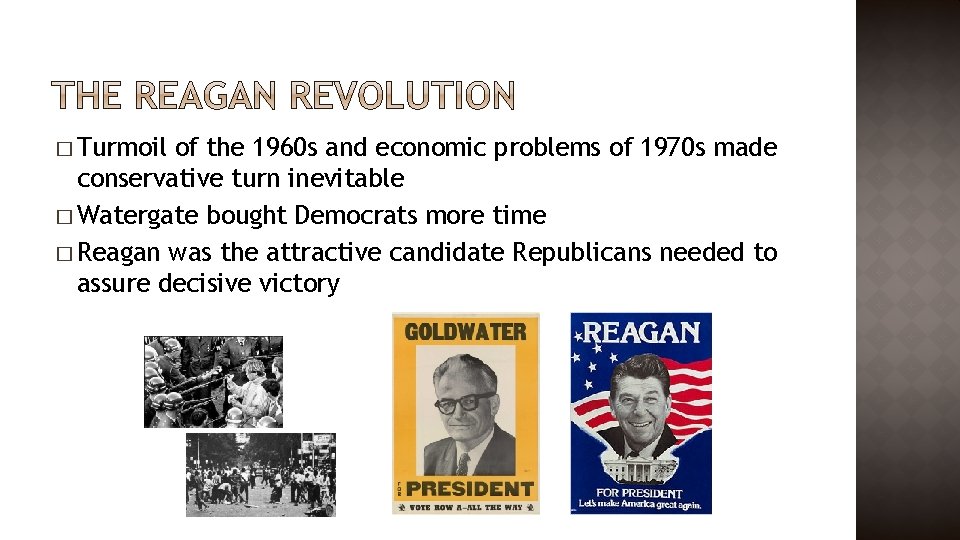
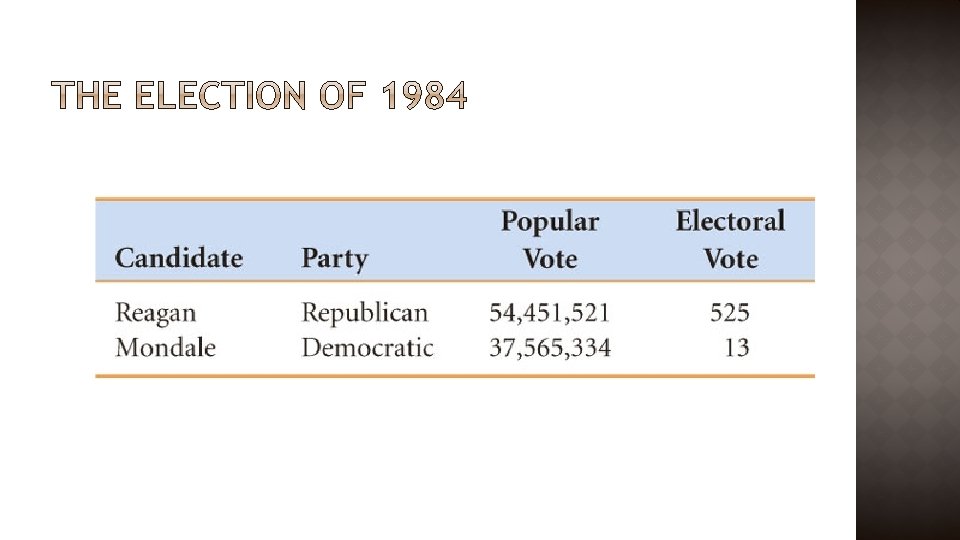
� Turmoil of the 1960 s and economic problems of 1970 s made conservative turn inevitable � Watergate bought Democrats more time � Reagan was the attractive candidate Republicans needed to assure decisive victory
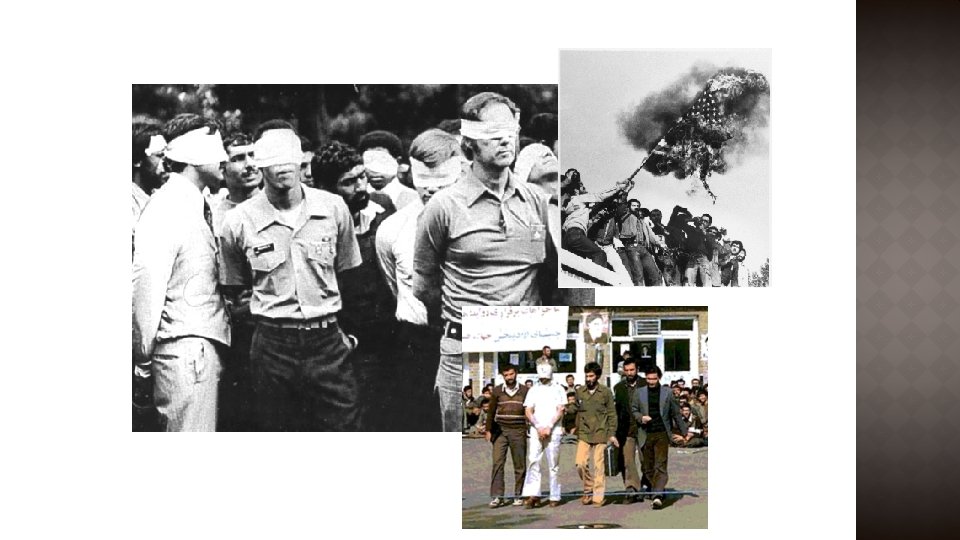
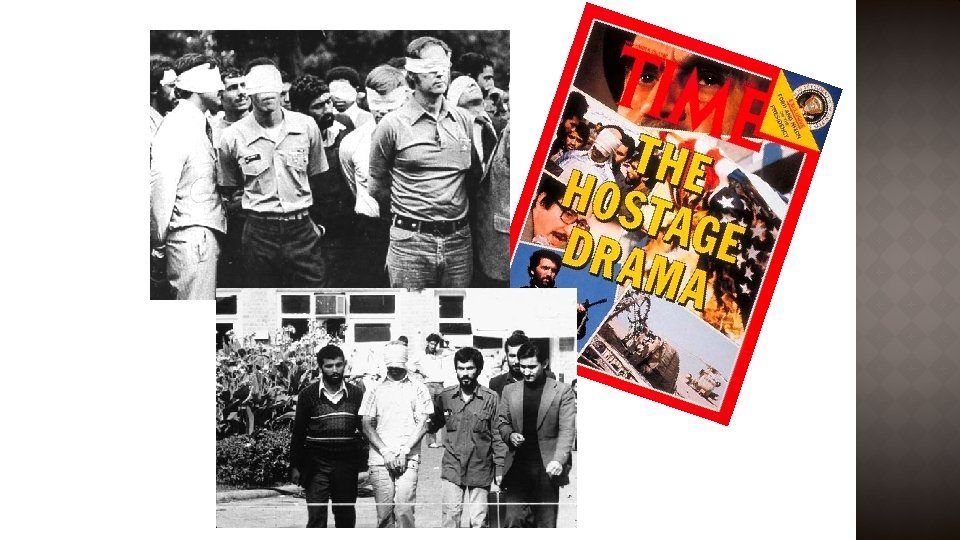
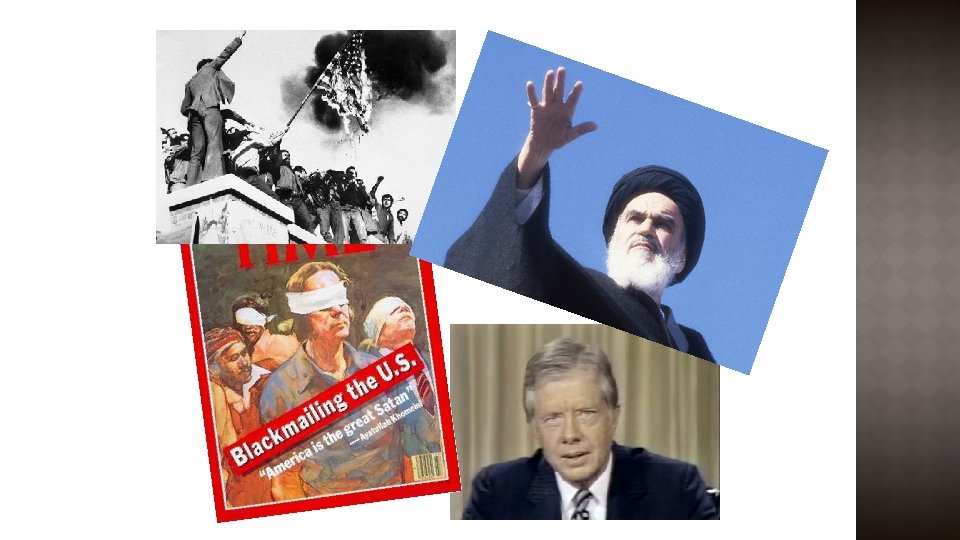
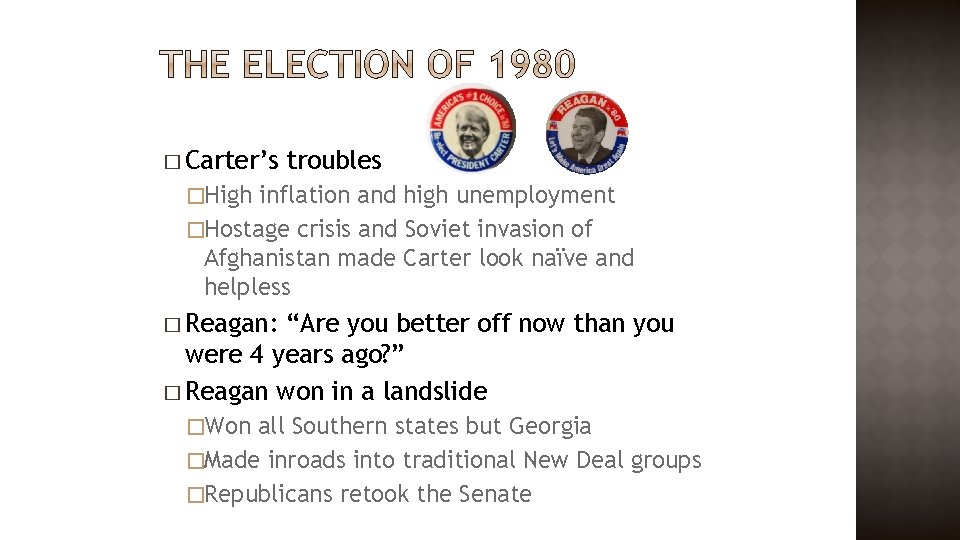
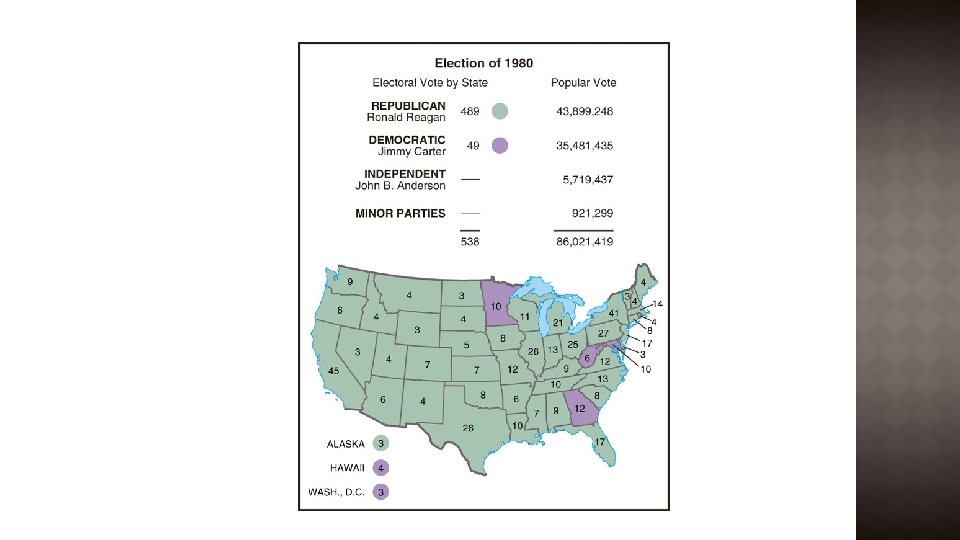
� Carter’s troubles �High inflation and high unemployment �Hostage crisis and Soviet invasion of Afghanistan made Carter look naïve and helpless � Reagan: “Are you better off now than you were 4 years ago? ” � Reagan won in a landslide �Won all Southern states but Georgia �Made inroads into traditional New Deal groups �Republicans retook the Senate
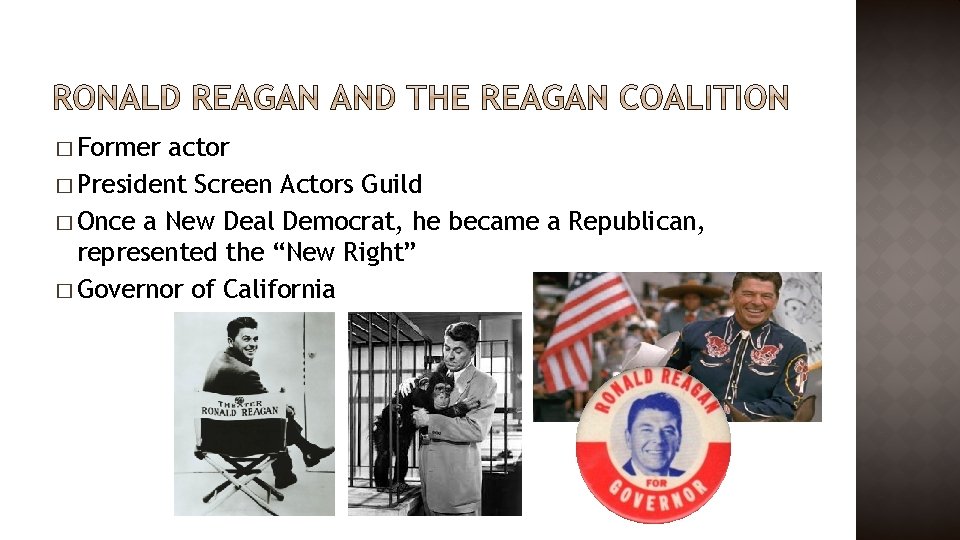
� Former actor � President Screen Actors Guild � Once a New Deal Democrat, he became a Republican, represented the “New Right” � Governor of California
� The Reagan Revolution � Taxes took less of people’s incomes, the federal debt ballooned, and a 50 -year period in which labor unions could rely on a friendly government came to an end. � The Cold War ended
� By the 1980 s, the public had grown tired of the New Deal and Great Society and were ready to slash bills � Cut taxes � Social programs cut � Increasing disparity between rich and poor
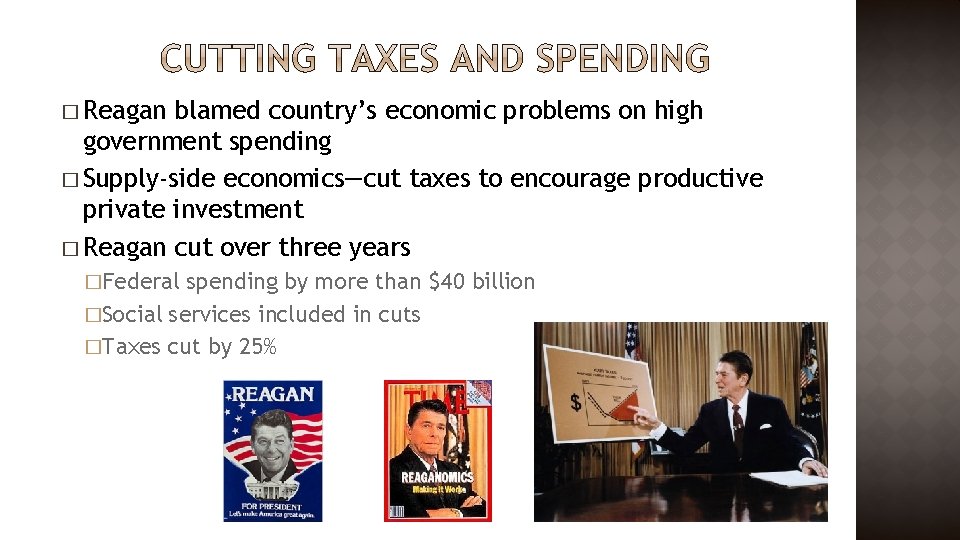
� Reagan blamed country’s economic problems on high government spending � Supply-side economics—cut taxes to encourage productive private investment � Reagan cut over three years �Federal spending by more than $40 billion �Social services included in cuts �Taxes cut by 25%
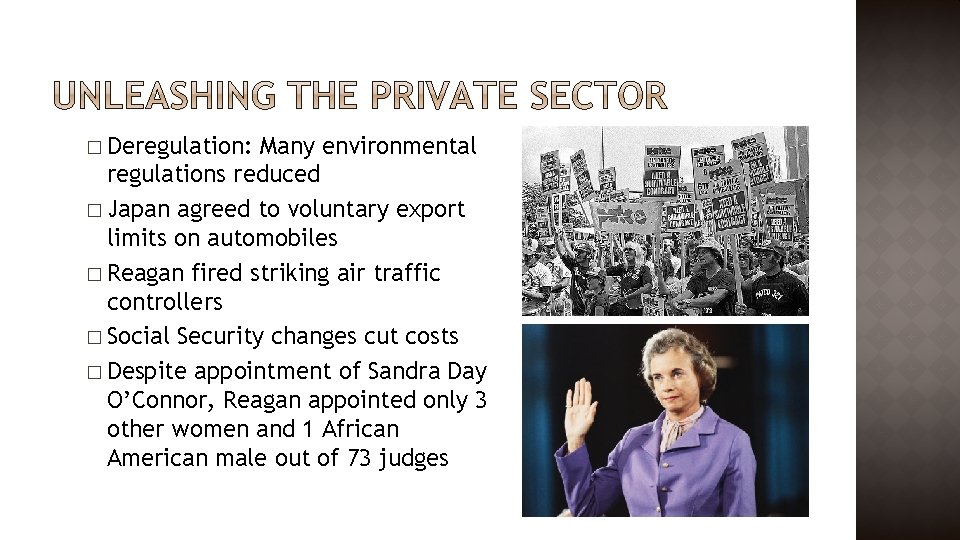
� Deregulation: Many environmental regulations reduced � Japan agreed to voluntary export limits on automobiles � Reagan fired striking air traffic controllers � Social Security changes cut costs � Despite appointment of Sandra Day O’Connor, Reagan appointed only 3 other women and 1 African American male out of 73 judges
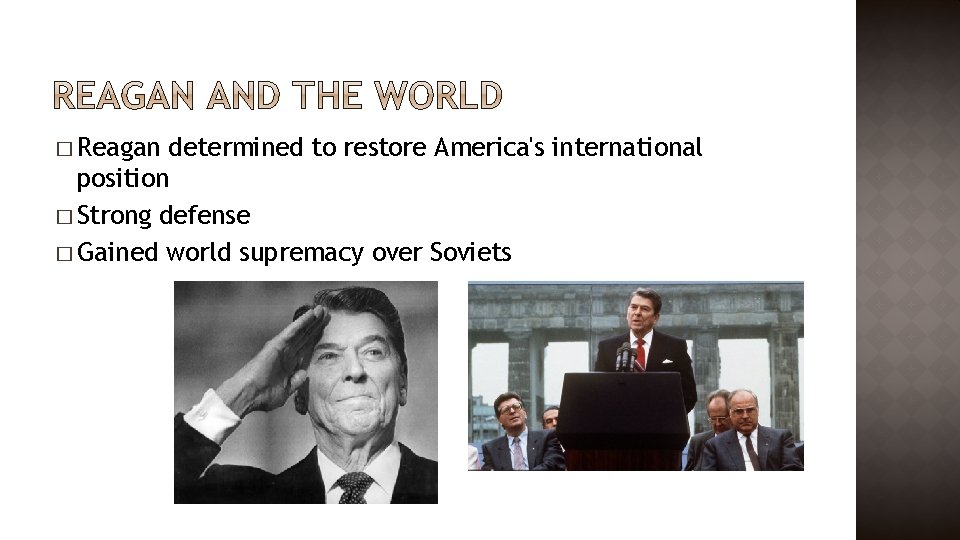
� Reagan determined to restore America's international position � Strong defense � Gained world supremacy over Soviets
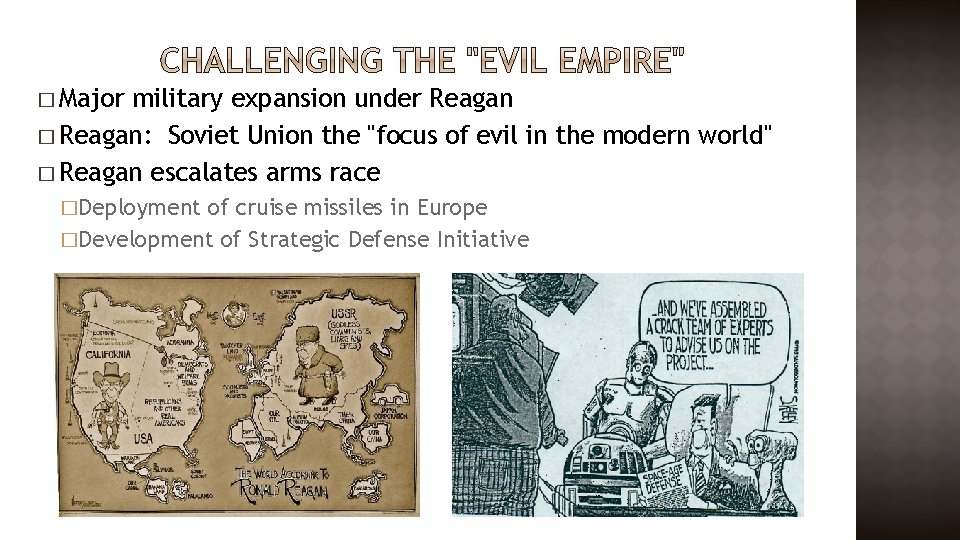
� Major military expansion under Reagan � Reagan: Soviet Union the "focus of evil in the modern world" � Reagan escalates arms race �Deployment of cruise missiles in Europe �Development of Strategic Defense Initiative
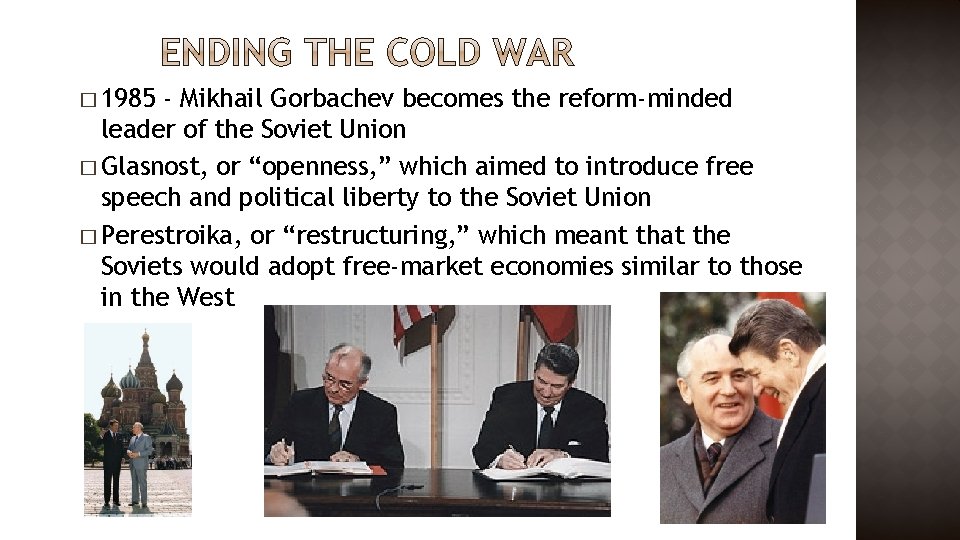
� 1985 - Mikhail Gorbachev becomes the reform-minded leader of the Soviet Union � Glasnost, or “openness, ” which aimed to introduce free speech and political liberty to the Soviet Union � Perestroika, or “restructuring, ” which meant that the Soviets would adopt free-market economies similar to those in the West
� 1985– 1988: Reagan-Gorbachev summits � 1987: Destroyed intermediate range missiles � 1988: Afghanistan evacuated � Foreign scandal policy triumphs with Soviets, offsets Iran-Contra
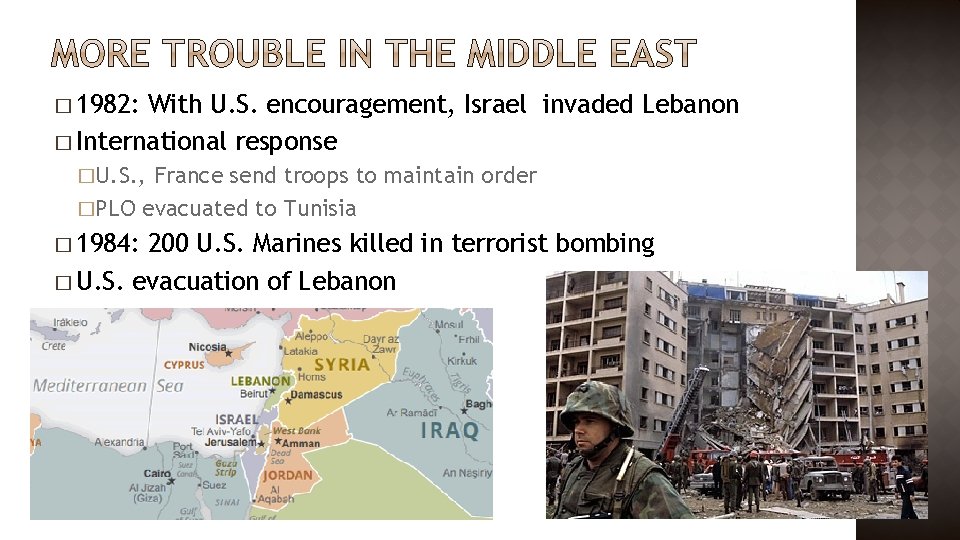
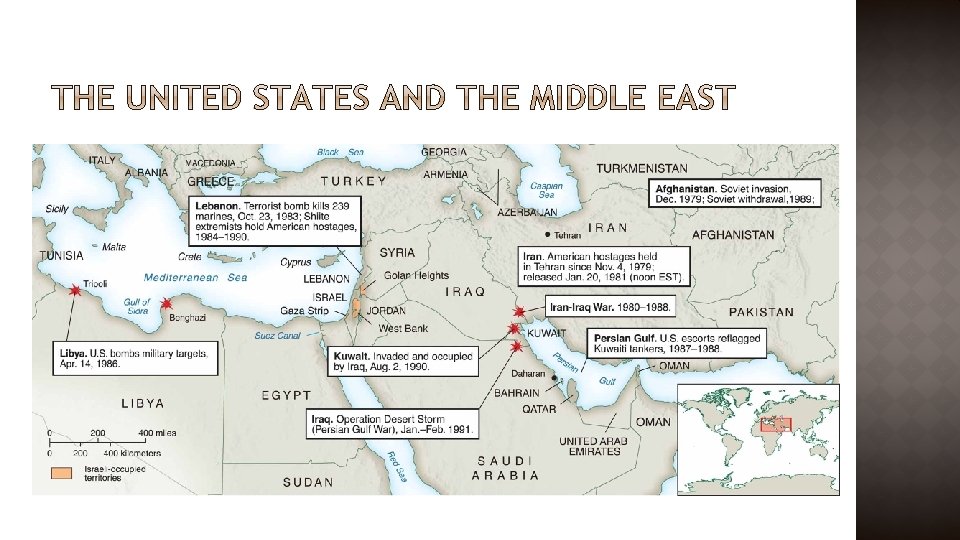
� 1982: With U. S. encouragement, Israel invaded Lebanon � International response �U. S. , France send troops to maintain order �PLO evacuated to Tunisia � 1984: 200 U. S. Marines killed in terrorist bombing � U. S. evacuation of Lebanon
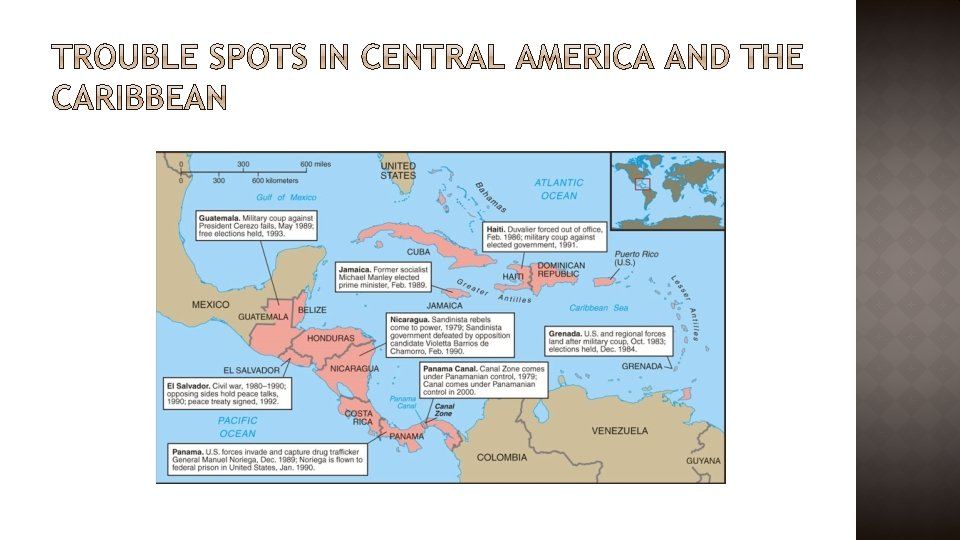
� Lack of moderate, middle-class regimes led U. S. to support oppressive right-wing dictatorships � This put U. S. at odds with reform movements, whom U. S. saw as linked to Communism � Reagan reversed Carter support for Sandinistas, driving them to Soviets � Reagan began covert support for Contras after Congress rejects overt support
� Iranian-backed Lebanese militants seized 6 Americans hostage � Advanced weapons sold to Iran for influence in freeing American hostages � Oliver North’s plan: Iran-Contra scandal �Profit from Iran arms sales to Contras �Funding clearly violates Boland Amendment �Reagan escaped impeachment, North and others were jailed
- Slides: 23