
Turf Pests of Southern Florida Advanced Training Program
- Slides: 32
Turf Pests of Southern Florida
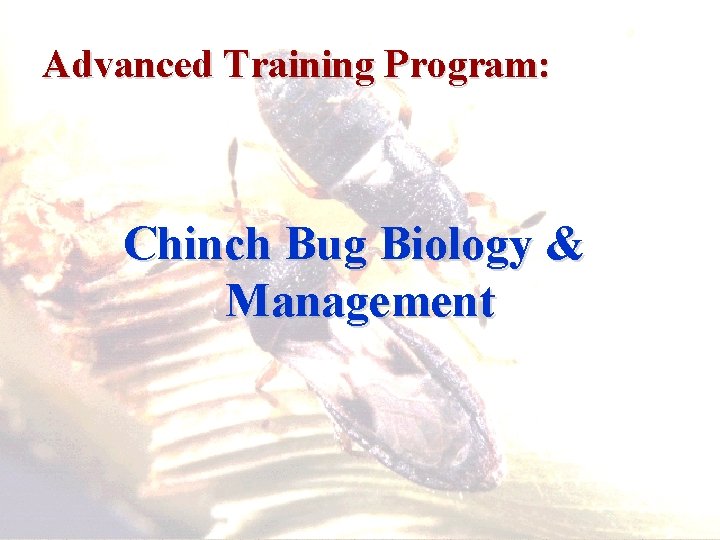
Advanced Training Program: Chinch Bug Biology & Management
North American Species • Hemiptera: Lygaeidae • Blissus leucopterus: Common chinch bug • Distributed from the midwest to the east, reported as far south as Alabama • Blissus leucopterus hirtus: Hairy chinch bug • Distributed from the east and north of the common chinch bug • Blissus arenarius: • Distributed from Canada south to Virginia
• Blissus arenarius maritimus: • Distributed from North Carolina, south to Jupiter, Fl. • Blissus insularis: Southern chinch bug • Throughout Florida, along the southern portions of the Gulf states, and coastal through N. Carolina
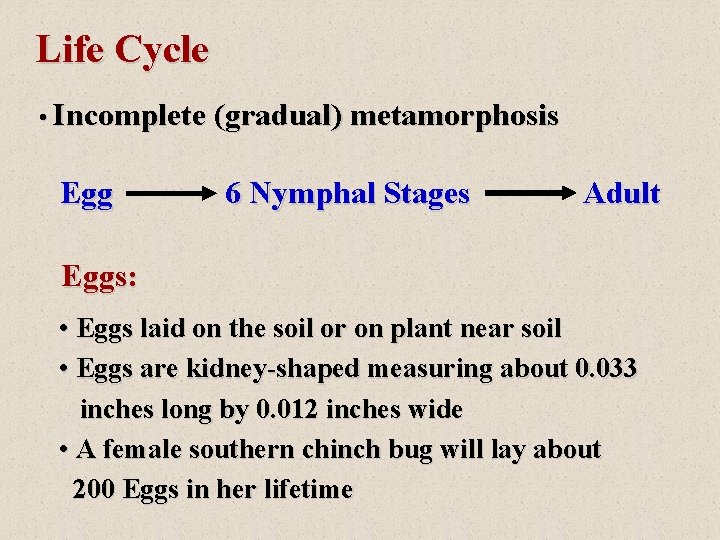
Life Cycle • Incomplete (gradual) metamorphosis Egg 6 Nymphal Stages Adult Eggs: • Eggs laid on the soil or on plant near soil • Eggs are kidney-shaped measuring about 0. 033 inches long by 0. 012 inches wide • A female southern chinch bug will lay about 200 Eggs in her lifetime
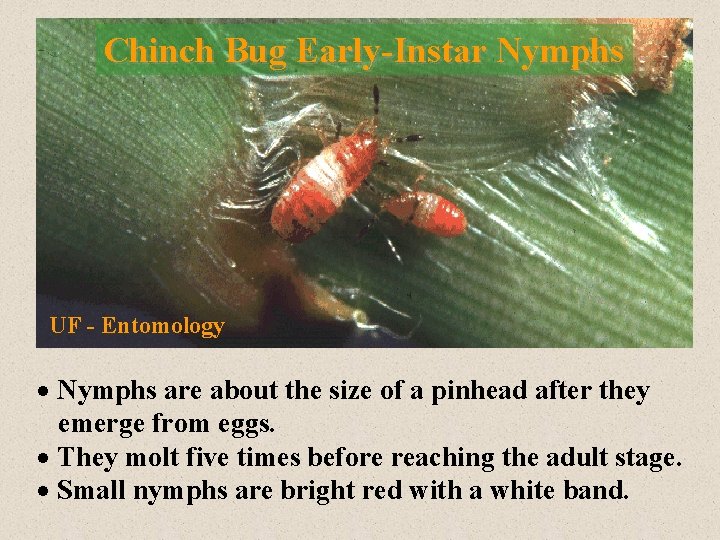
• In south Florida, eggs begin hatching in late February and there are 7 generations per year Nymphs: • Undergo 5 molts • Upon eclosion, nymphs are bright red, about the size of a pinhead and start to feed as soon as a suitable spot is found • Preferred feeding site is the area between the leaf sheath and the stem • Nymphs tend to feed gregariously and will not leave the site until the sprig dies • Wing pads develop on later instars
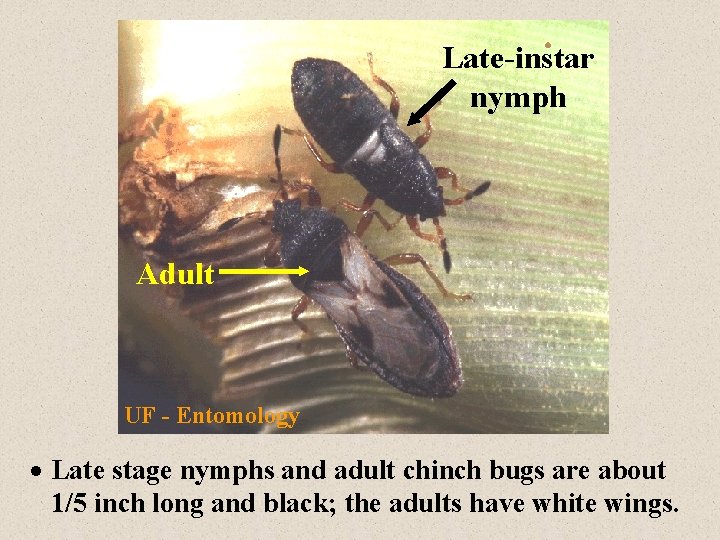
Adults: • After molting, adults are light colored and soft • After hardening, the body turns black • Two body forms can exist: • Long-winged: macropterous • Short-winged: brachyopterous • Flight is known in macropterous forms
Mating • Courtship occurs through a series of antennal movements • Male and females mate several times • Copulation lasts from 2 - 12 hours • Males adults live an average of 8 days and adult females live an average of 10 days
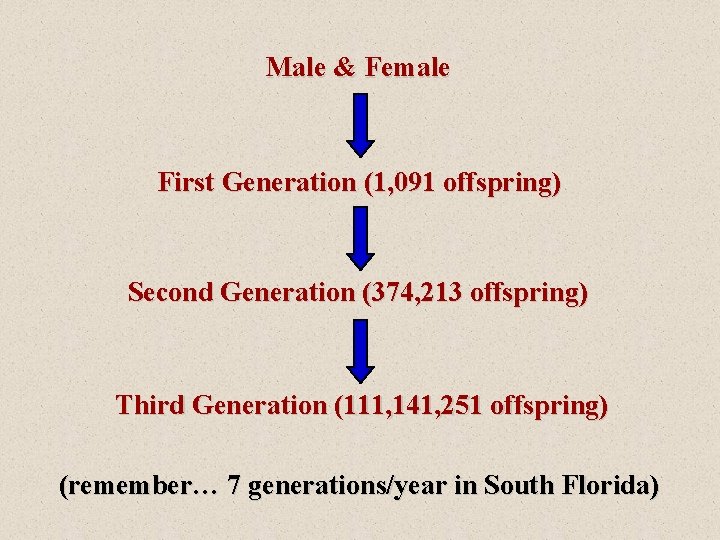
Male & Female First Generation (1, 091 offspring) Second Generation (374, 213 offspring) Third Generation (111, 141, 251 offspring) (remember… 7 generations/year in South Florida)
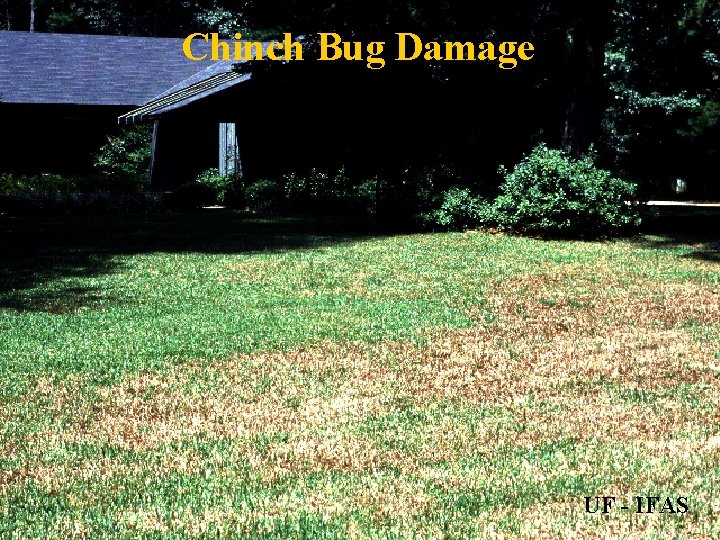
Damage • Beak pierces the plant and sucks sap • feeding results in a reddish stain • Feeding causes death to the cells • Feeding by a large number of bugs can dwarf the plant causing death • Damage usually greatest during hot, dry weather in sunny rather than shady locations • Aggregations of up to 2, 300 bugs/square foot have been reported
Host Range · Are the most injurious pests of St. Augustinegrass in Florida. · Are not a serious pest on any of the other lawn grasses but have been observed feeding on torpedo grass, various pasture grasses, centipedegrass, Bermudagrass (rare), and rice
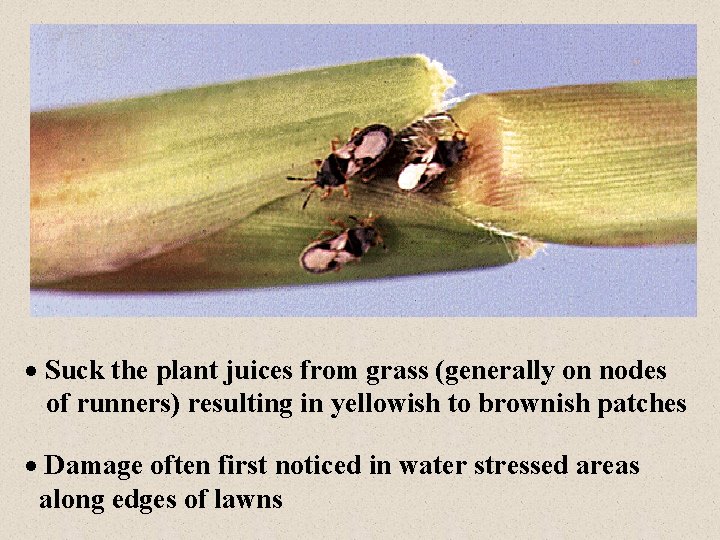
· Suck the plant juices from grass (generally on nodes of runners) resulting in yellowish to brownish patches · Damage often first noticed in water stressed areas along edges of lawns
Chinch Bug Damage UF - IFAS
Chinch Bug Early-Instar Nymphs UF - Entomology · Nymphs are about the size of a pinhead after they emerge from eggs. · They molt five times before reaching the adult stage. · Small nymphs are bright red with a white band.
Late-instar nymph Adult UF - Entomology · Late stage nymphs and adult chinch bugs are about 1/5 inch long and black; the adults have white wings.
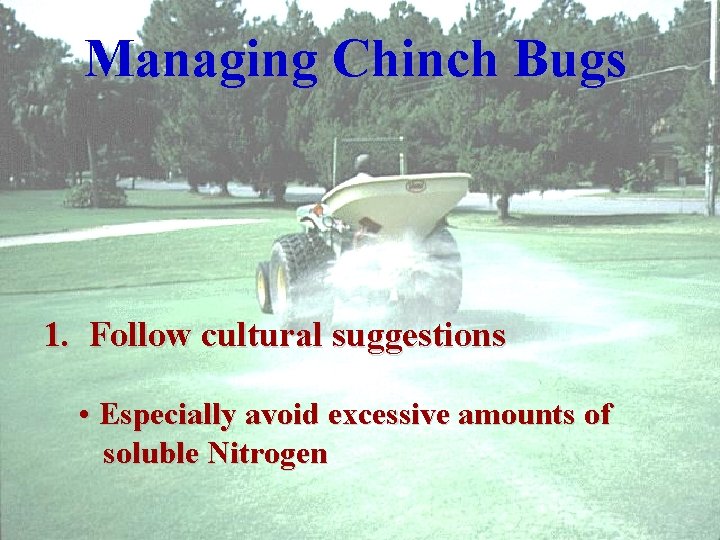
Managing Chinch Bugs 1. Follow cultural suggestions • Especially avoid excessive amounts of soluble Nitrogen
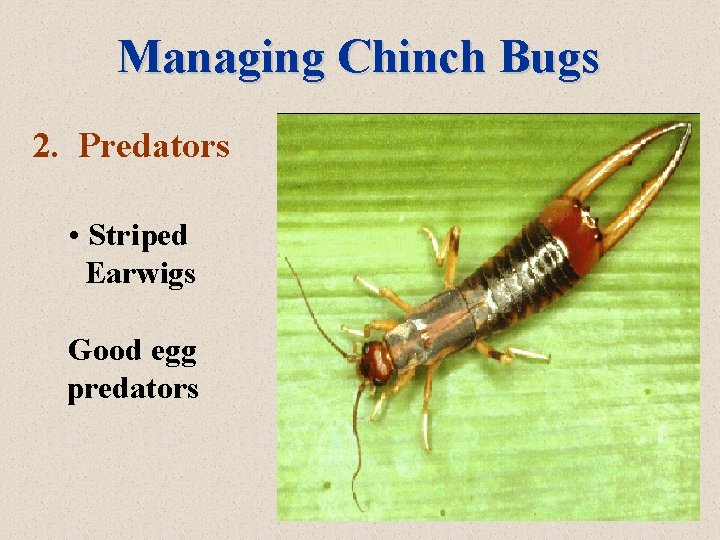
Managing Chinch Bugs 2. Predators • Striped Earwigs Good egg predators
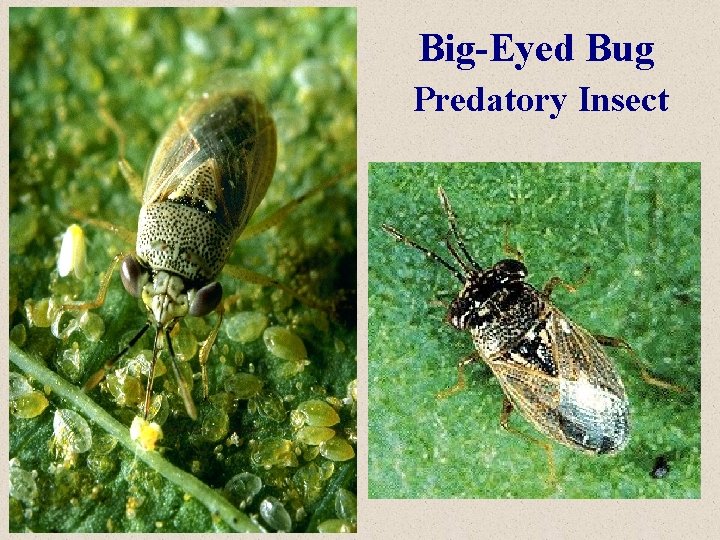
Big-Eyed Bug Predatory Insect
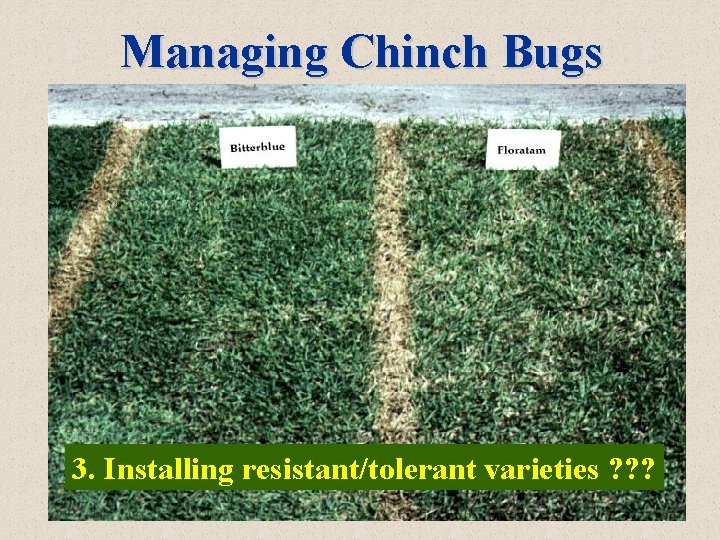
Managing Chinch Bugs 3. Installing resistant/tolerant varieties ? ? ?
Managing Chinch Bugs 4. Insecticide treatments • Threshold: 20 - 25 bugs per square foot • Many products are labeled • Can treat damaged areas plus a 5 foot buffer
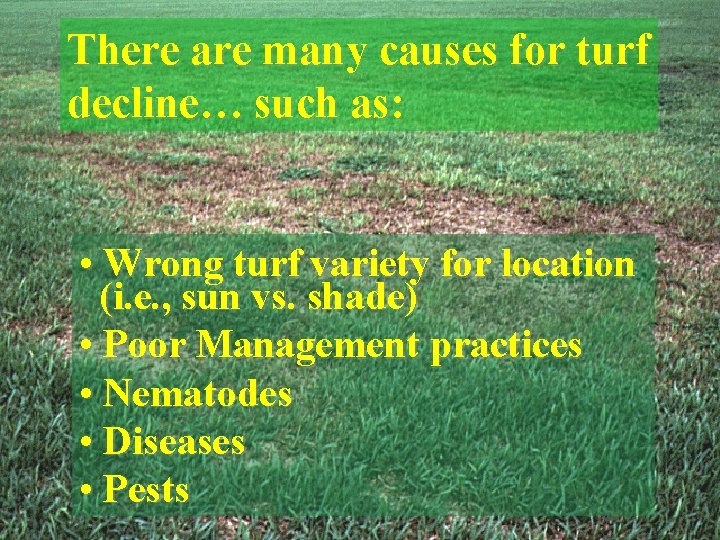
There are many causes for turf decline… such as: • Wrong turf variety for location (i. e. , sun vs. shade) • Poor Management practices • Nematodes • Diseases • Pests
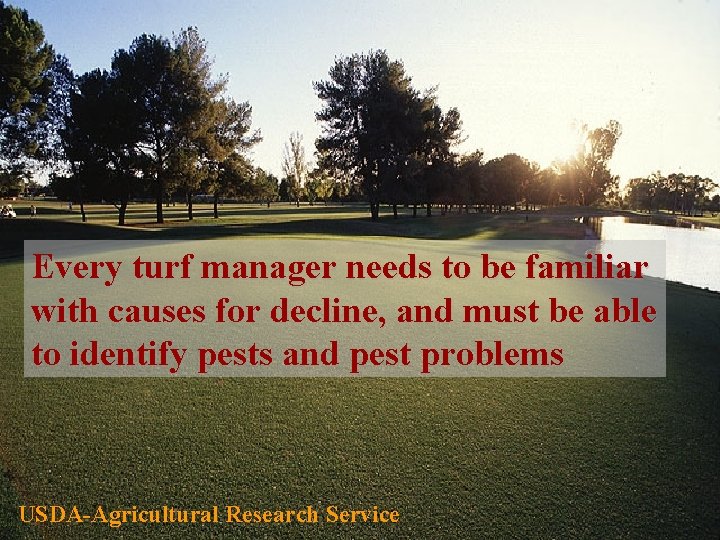
Every turf manager needs to be familiar with causes for decline, and must be able to identify pests and pest problems USDA-Agricultural Research Service
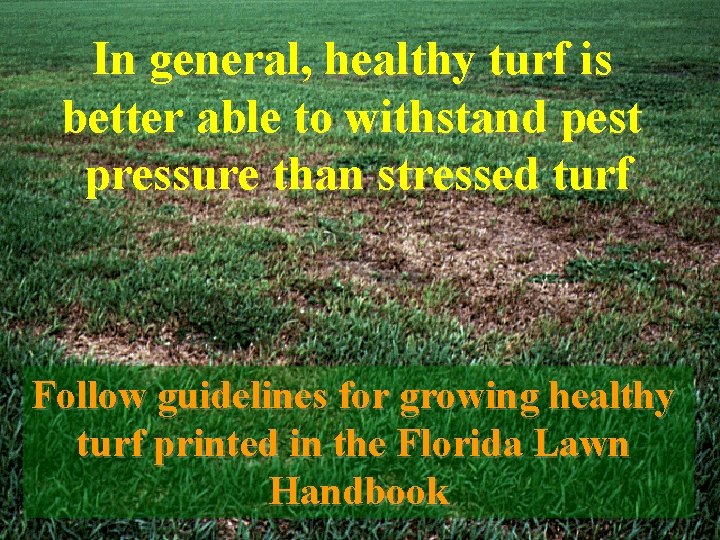
In general, healthy turf is better able to withstand pest pressure than stressed turf Follow guidelines for growing healthy turf printed in the Florida Lawn Handbook
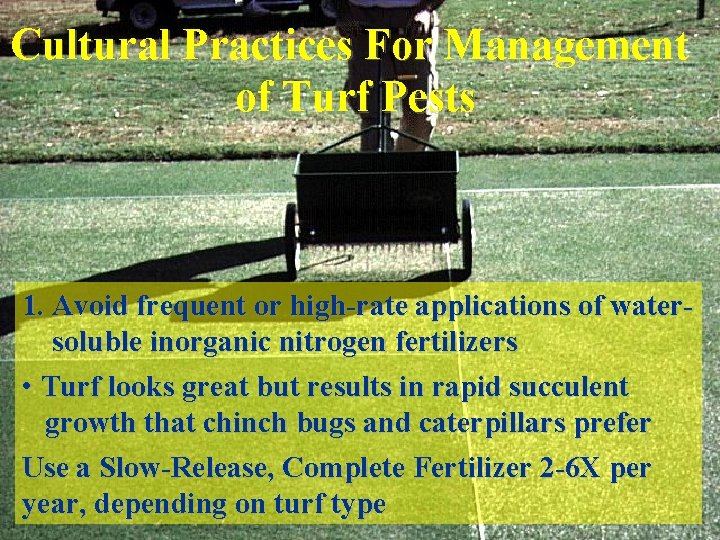
Cultural Practices For Management of Turf Pests 1. Avoid frequent or high-rate applications of watersoluble inorganic nitrogen fertilizers • Turf looks great but results in rapid succulent growth that chinch bugs and caterpillars prefer Use a Slow-Release, Complete Fertilizer 2 -6 X per year, depending on turf type
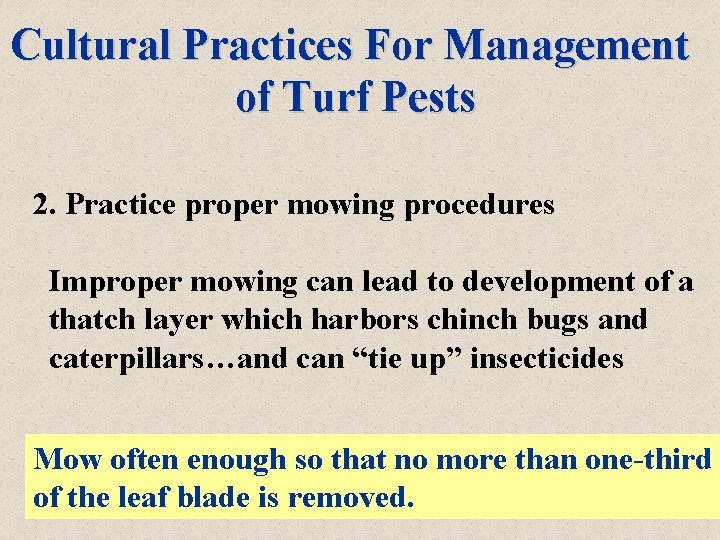
Cultural Practices For Management of Turf Pests 2. Practice proper mowing procedures Improper mowing can lead to development of a thatch layer which harbors chinch bugs and caterpillars…and can “tie up” insecticides Mow often enough so that no more than one-third of the leaf blade is removed.
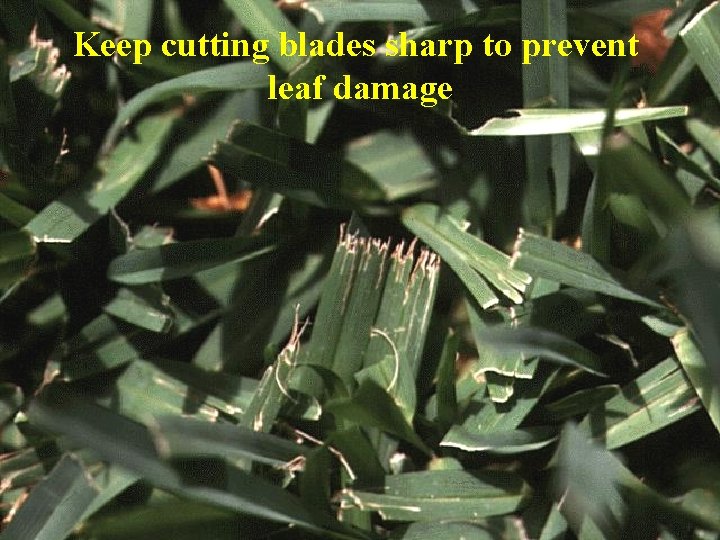
Keep cutting blades sharp to prevent leaf damage
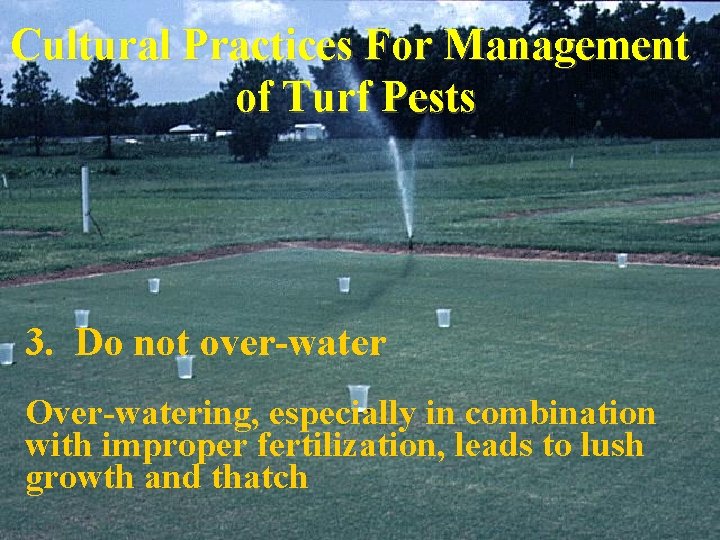
Cultural Practices For Management of Turf Pests 3. Do not over-water Over-watering, especially in combination with improper fertilization, leads to lush growth and thatch
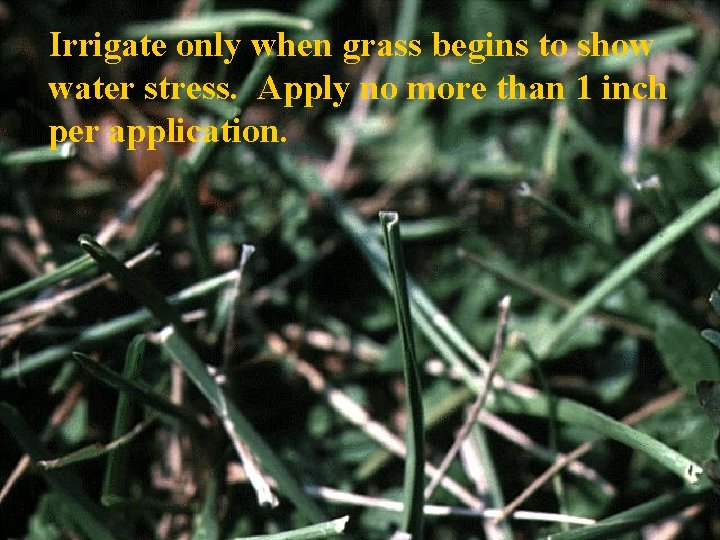
Irrigate only when grass begins to show water stress. Apply no more than 1 inch per application.
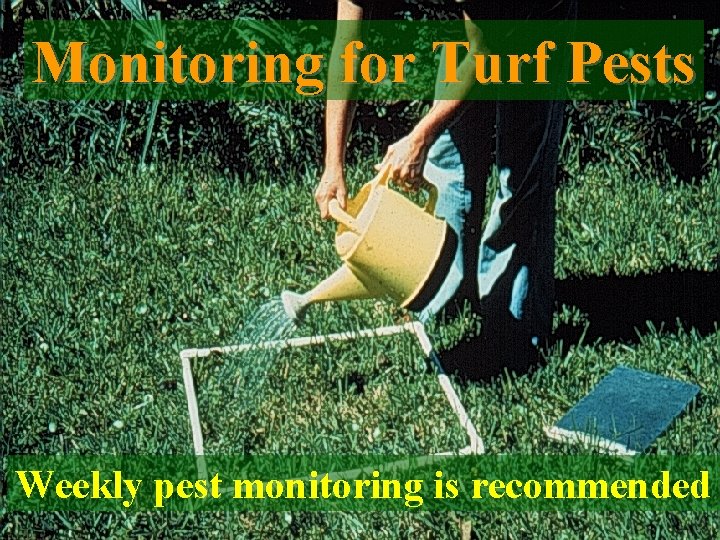
Monitoring for Turf Pests Weekly pest monitoring is recommended
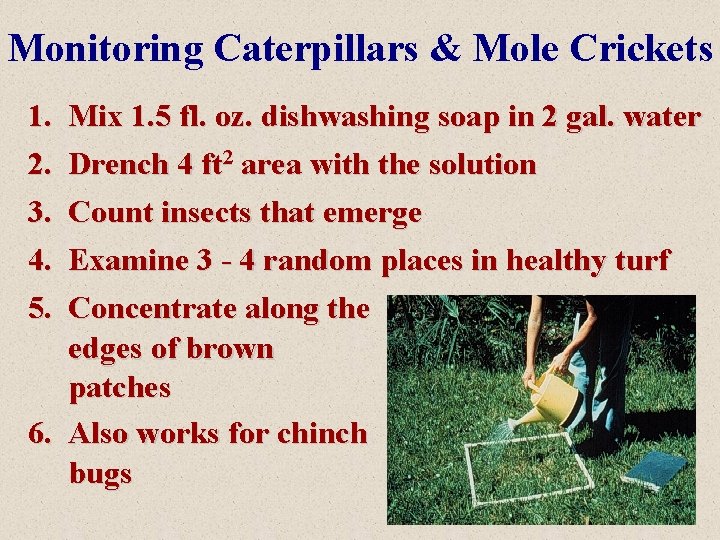
Monitoring Caterpillars & Mole Crickets 1. Mix 1. 5 fl. oz. dishwashing soap in 2 gal. water 2. Drench 4 ft 2 area with the solution 3. Count insects that emerge 4. Examine 3 - 4 random places in healthy turf 5. Concentrate along the edges of brown patches 6. Also works for chinch bugs
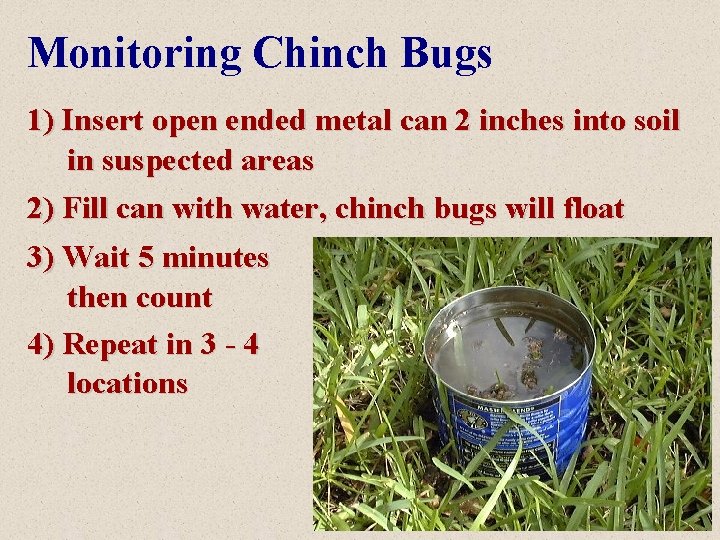
Monitoring Chinch Bugs 1) Insert open ended metal can 2 inches into soil in suspected areas 2) Fill can with water, chinch bugs will float 3) Wait 5 minutes then count 4) Repeat in 3 - 4 locations
Author: Tom Weissling, University of Florida Photos: University of Florida Entomology And Nematology Department Copyright University of Florida 2000 For more detailed information see the Featured Creatures WWW site at http: //creatures. ifas. ufl. edu/