
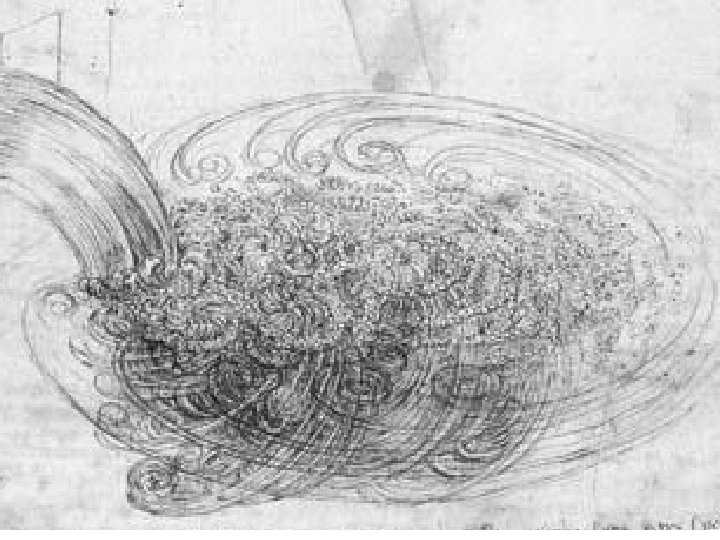
Turbulence an intuitive understanding Found in all fluids
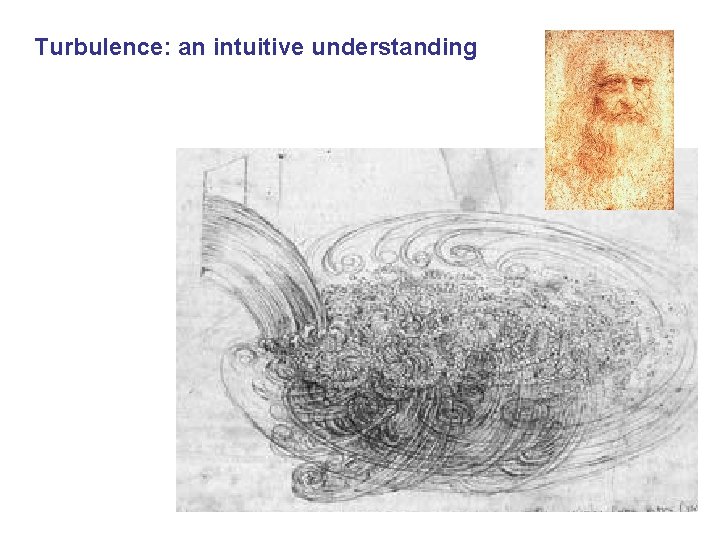
Turbulence: an intuitive understanding
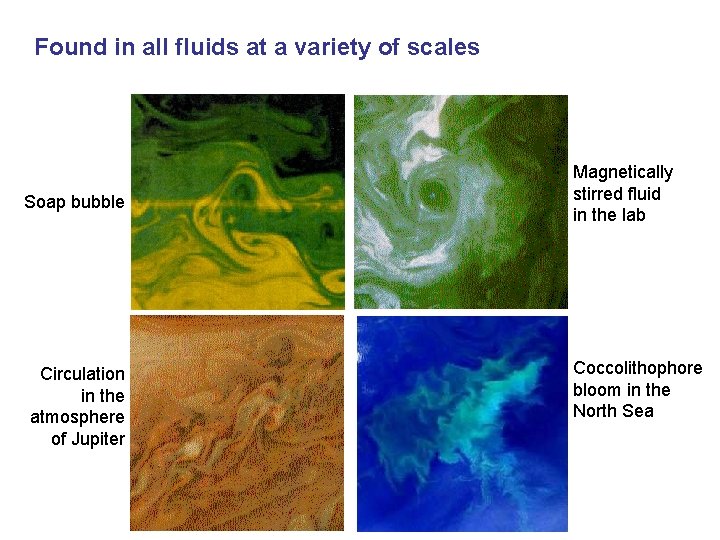
Found in all fluids at a variety of scales Soap bubble Circulation in the atmosphere of Jupiter Magnetically stirred fluid in the lab Coccolithophore bloom in the North Sea
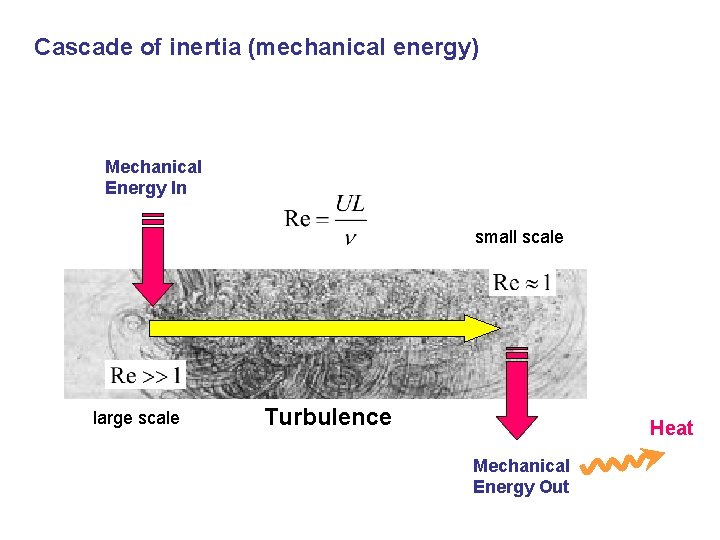
Cascade of inertia (mechanical energy) Mechanical Energy In small scale large scale Turbulence Heat Mechanical Energy Out
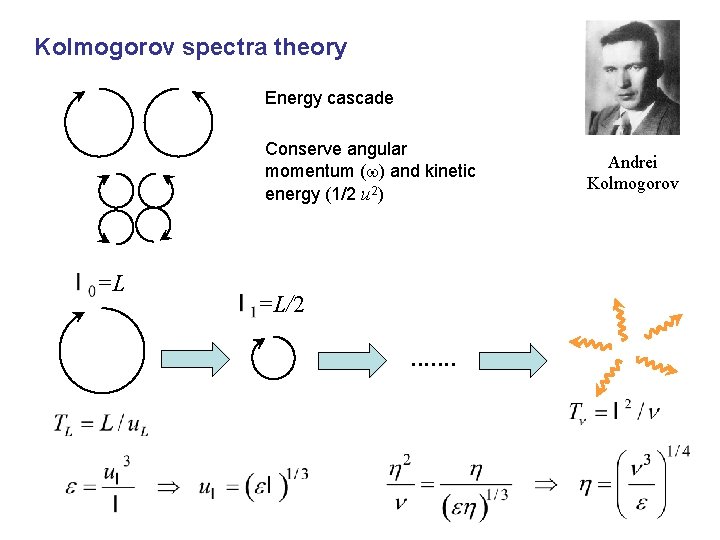
Kolmogorov spectra theory Energy cascade Conserve angular momentum (w) and kinetic energy (1/2 u 2) =L =L/2. . . . Andrei Kolmogorov
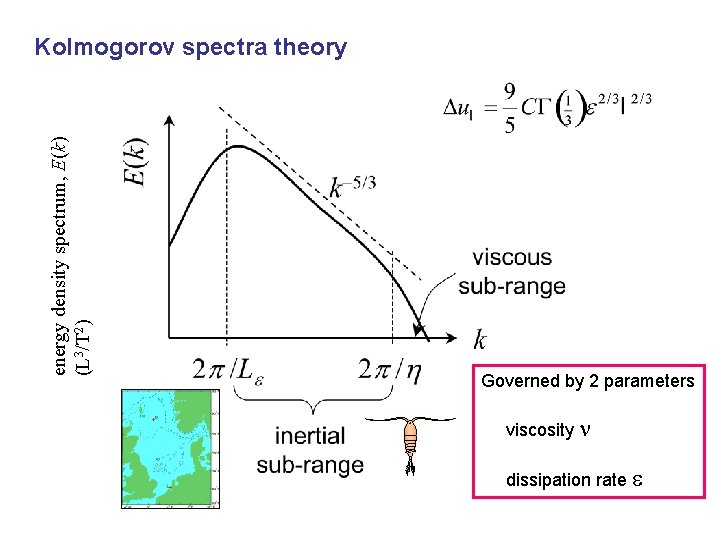
energy density spectrum, E(k) (L 3/T 2) Kolmogorov spectra theory Governed by 2 parameters wave number, k (2 p/ℓ) viscosity n dissipation rate e
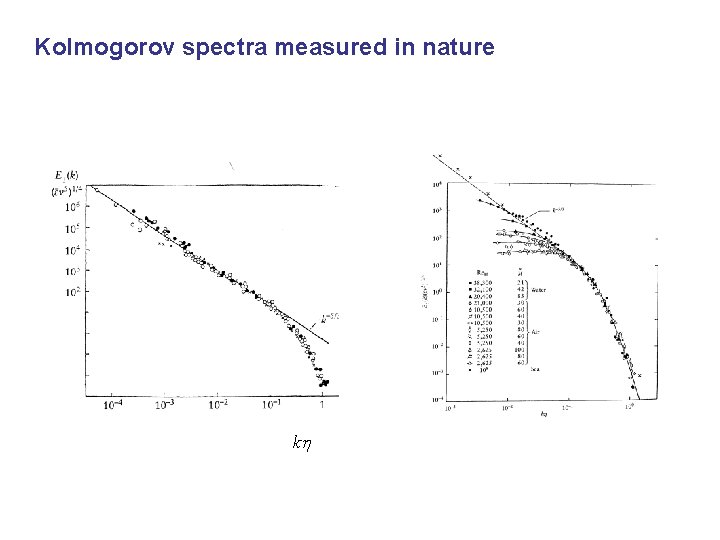
Kolmogorov spectra measured in nature kh
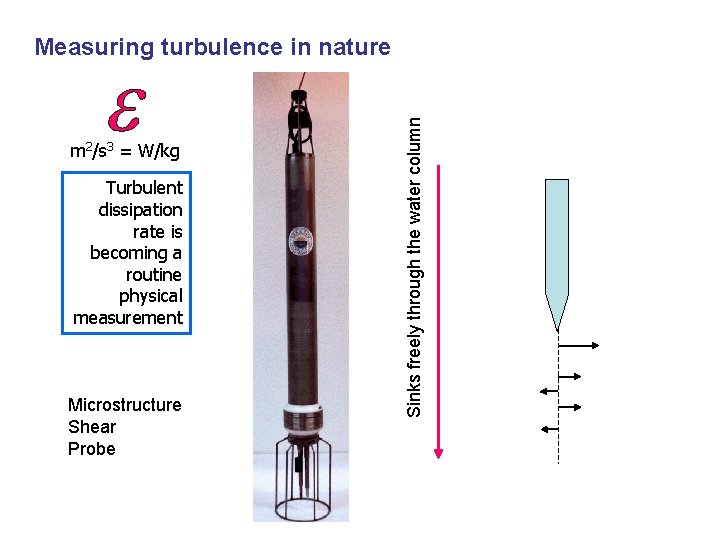
m 2/s 3 = W/kg Turbulent dissipation rate is becoming a routine physical measurement Microstructure Shear Probe Sinks freely through the water column Measuring turbulence in nature
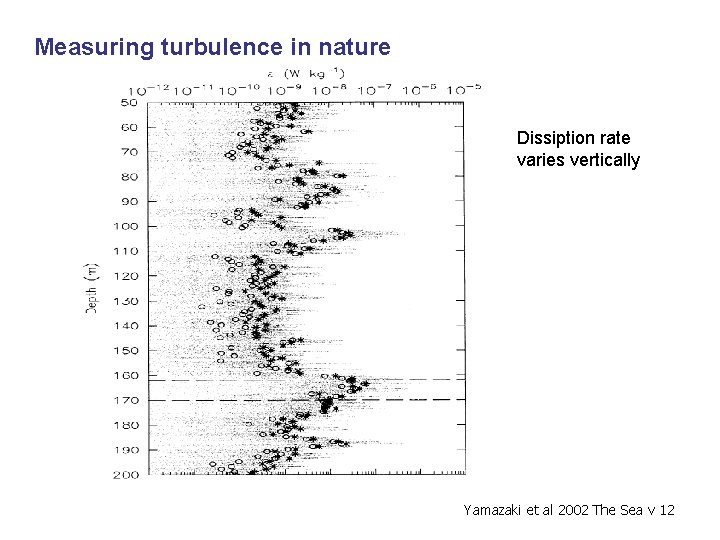
Measuring turbulence in nature Dissiption rate varies vertically Yamazaki et al 2002 The Sea v 12
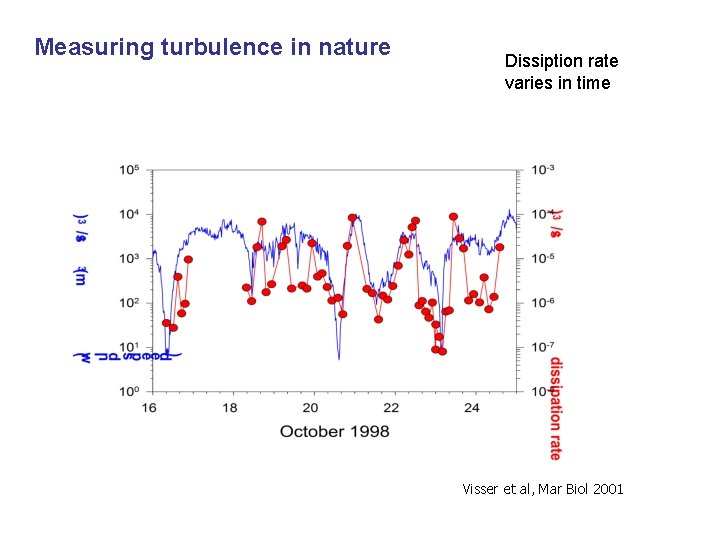
Measuring turbulence in nature Dissiption rate varies in time Visser et al, Mar Biol 2001
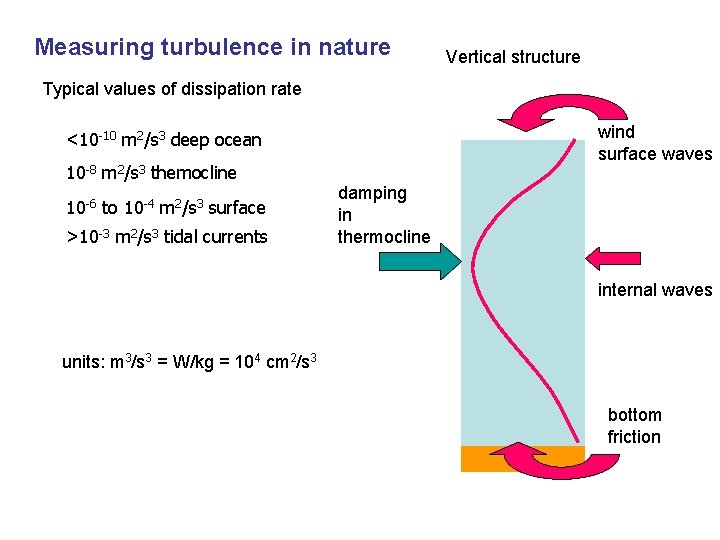
Measuring turbulence in nature Vertical structure Typical values of dissipation rate wind surface waves <10 -10 m 2/s 3 deep ocean 10 -8 m 2/s 3 themocline 10 -6 to 10 -4 m 2/s 3 surface >10 -3 m 2/s 3 tidal currents damping in thermocline internal waves units: m 3/s 3 = W/kg = 104 cm 2/s 3 bottom friction
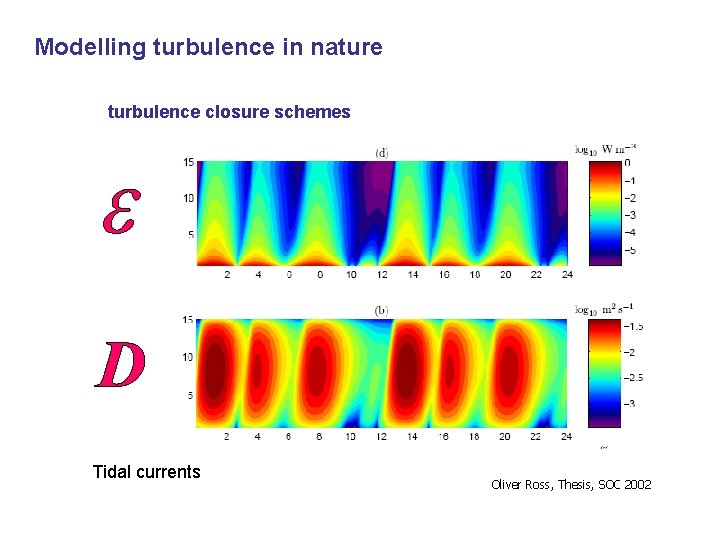
Modelling turbulence in nature turbulence closure schemes Tidal currents Oliver Ross, Thesis, SOC 2002
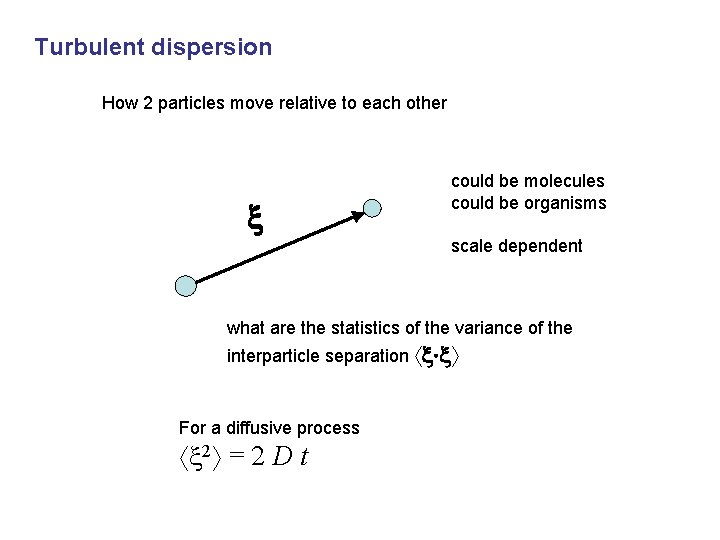
Turbulent dispersion How 2 particles move relative to each other could be molecules could be organisms scale dependent what are the statistics of the variance of the interparticle separation For a diffusive process 2 = 2 D t
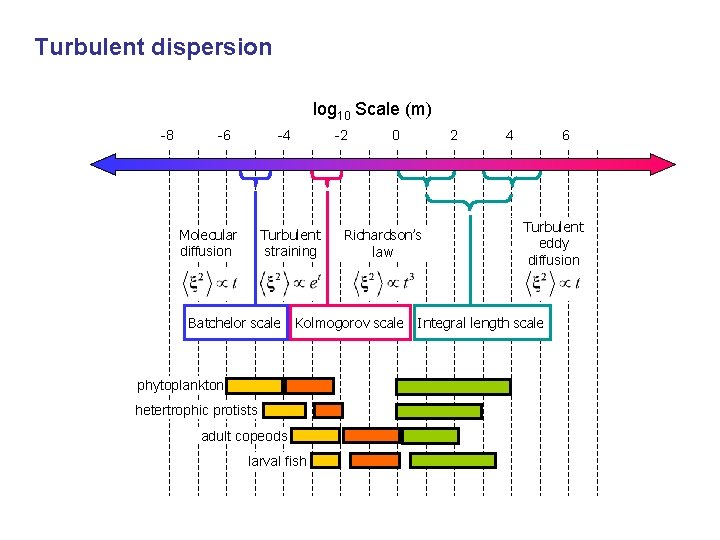
Turbulent dispersion log 10 Scale (m) -4 Molecular diffusion -2 Turbulent straining Batchelor scale 0 Richardson’s law 2 4 6 horizontal -6 vertical -8 Turbulent eddy diffusion Kolmogorov scale Integral length scale phytoplankton hetertrophic protists adult copeods larval fish

Turbulent dispersion: Richardsons law (inertial subrange) 1 ℓ n x 0 N ℓ 4/3 D (cm 2/s) 2 Scale dependent Diffusivity = the time rate of change of 2 10 m 1 km 100 km
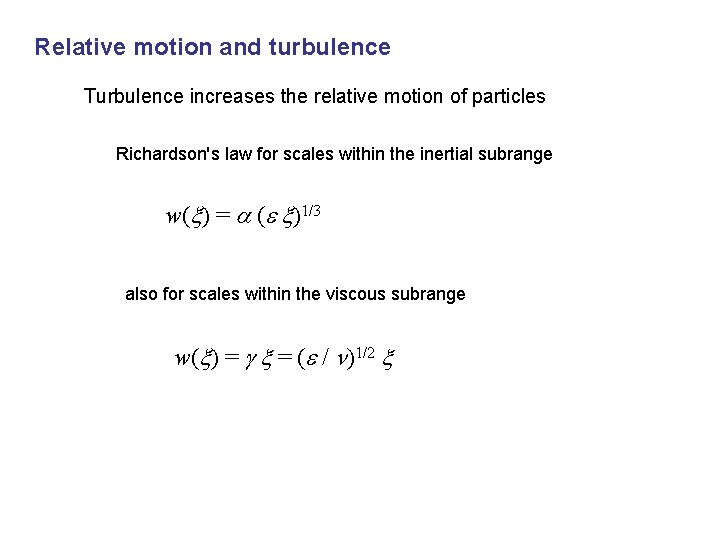
Relative motion and turbulence Turbulence increases the relative motion of particles Richardson's law for scales within the inertial subrange w(x) = a (e x)1/3 also for scales within the viscous subrange w(x) = g x = (e / n)1/2 x
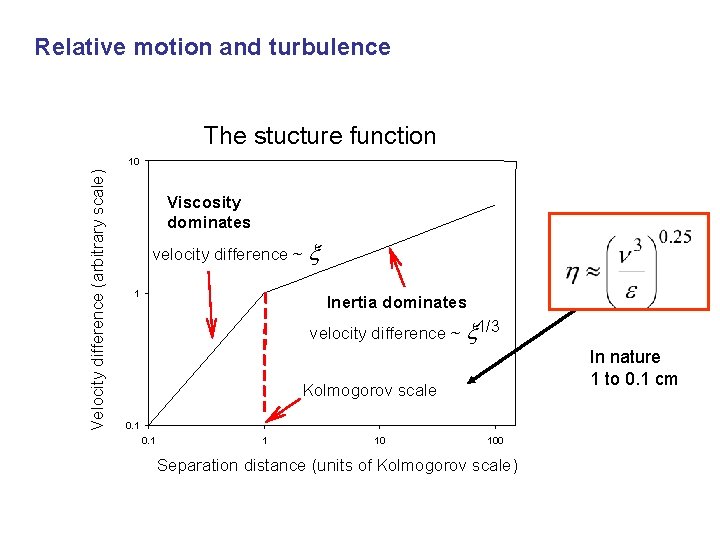
Relative motion and turbulence The stucture function Velocity difference (arbitrary scale) 10 Viscosity dominates velocity difference ~ x 1 Inertia dominates velocity difference ~ x 1/3 In nature 1 to 0. 1 cm Kolmogorov scale 0. 1 1 10 100 Separation distance (units of Kolmogorov scale)
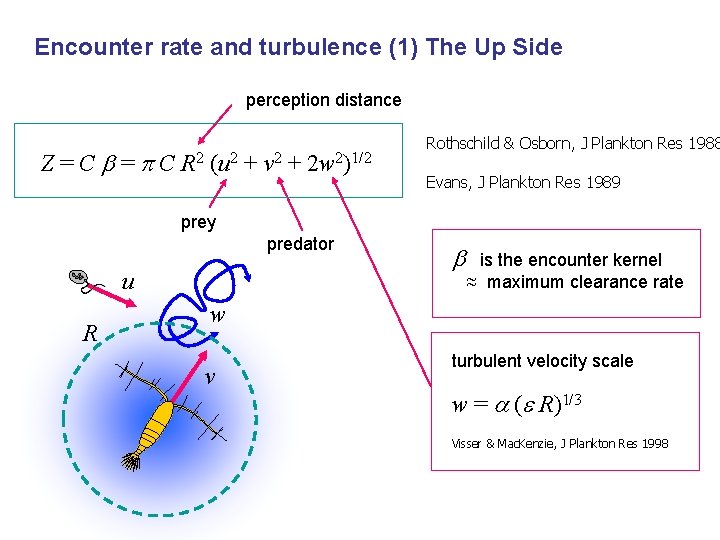
Encounter rate and turbulence (1) The Up Side perception distance Z=Cb=p. C R 2 (u 2 + v 2 + 2 w 2)1/2 Rothschild & Osborn, J Plankton Res 1988 Evans, J Plankton Res 1989 prey predator u R b is the encounter kernel ≈ maximum clearance rate w v turbulent velocity scale w = a (e R)1/3 Visser & Mac. Kenzie, J Plankton Res 1998
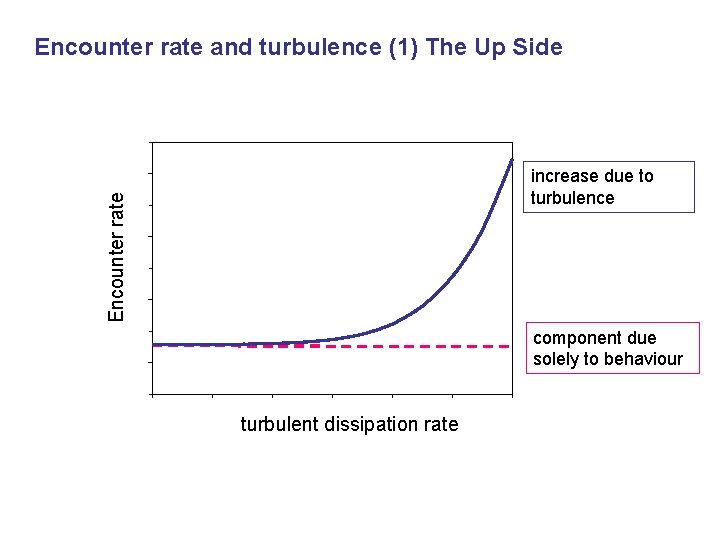
Encounter rate and turbulence (1) The Up Side Encounter rate increase due to turbulence component due solely to behaviour turbulent dissipation rate
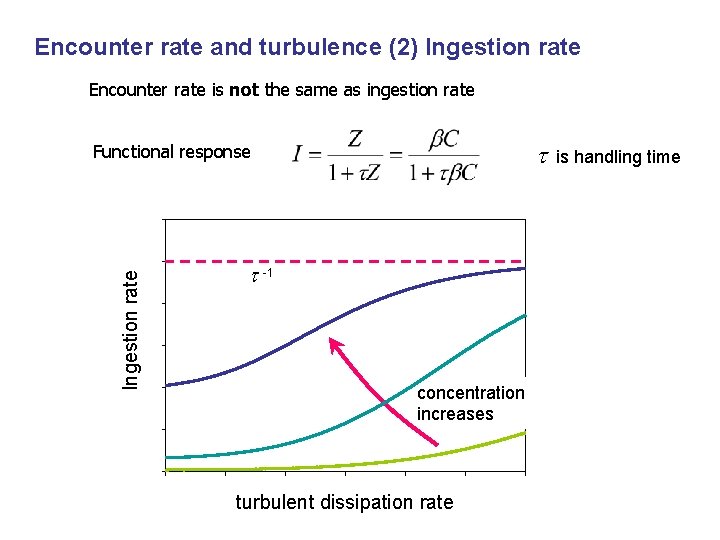
Encounter rate and turbulence (2) Ingestion rate Encounter rate is not the same as ingestion rate t Ingestion rate Functional response t -1 concentration increases turbulent dissipation rate is handling time
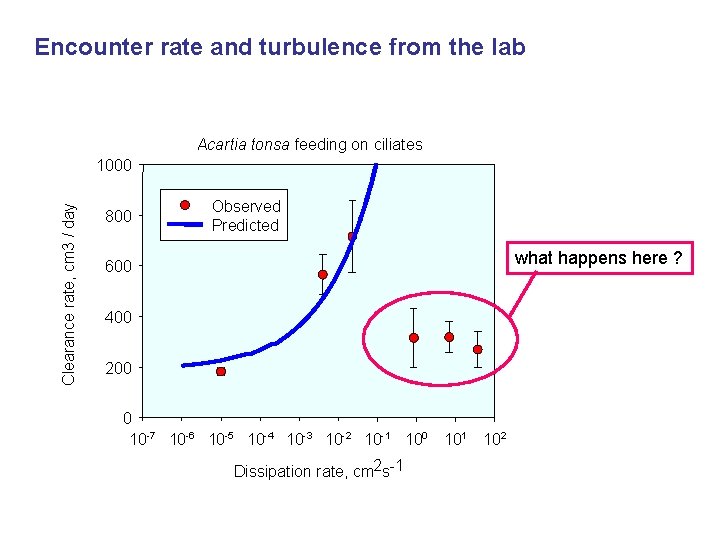
Encounter rate and turbulence from the lab Acartia tonsa feeding on ciliates Clearance rate, cm 3 / day 1000 800 Observed Predicted what happens here ? 600 400 200 0 10 -7 10 -6 10 -5 10 -4 10 -3 10 -2 10 -1 100 101 102 Dissipation rate, cm 2 s-1
Encounter rate and turbulence (3) The Down Side Turbulence interferes with the remote detection ability of organisms hydromechanical chemical Turbulence sweeps prey out of the detection zone before organísms can capture them Turbulence interferes with the structure and efficiency of feeding currents
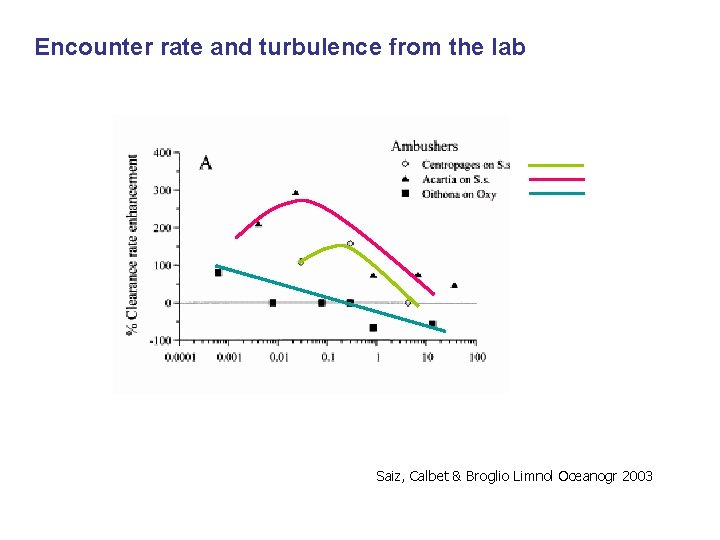
Encounter rate and turbulence from the lab Saiz, Calbet & Broglio Limnol Oceanogr 2003
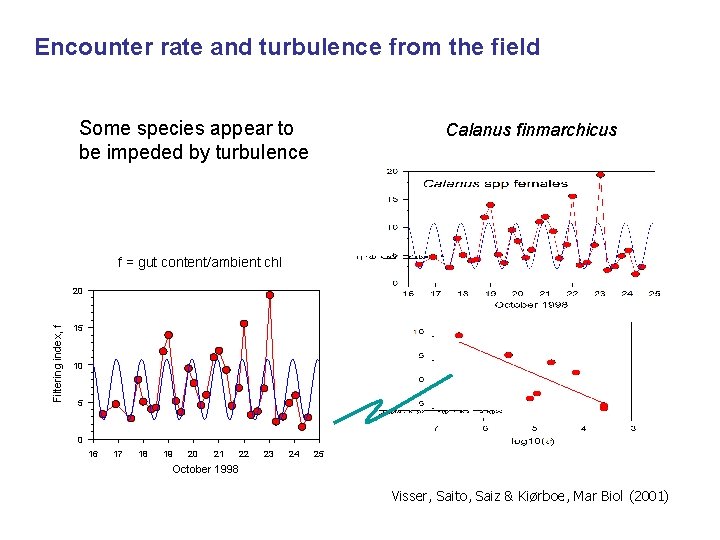
Encounter rate and turbulence from the field Some species appear to be impeded by turbulence Calanus finmarchicus f = gut content/ambient chl Filtering index, f 20 15 10 5 0 16 17 18 19 20 21 22 23 24 25 October 1998 Visser, Saito, Saiz & Kiørboe, Mar Biol (2001)
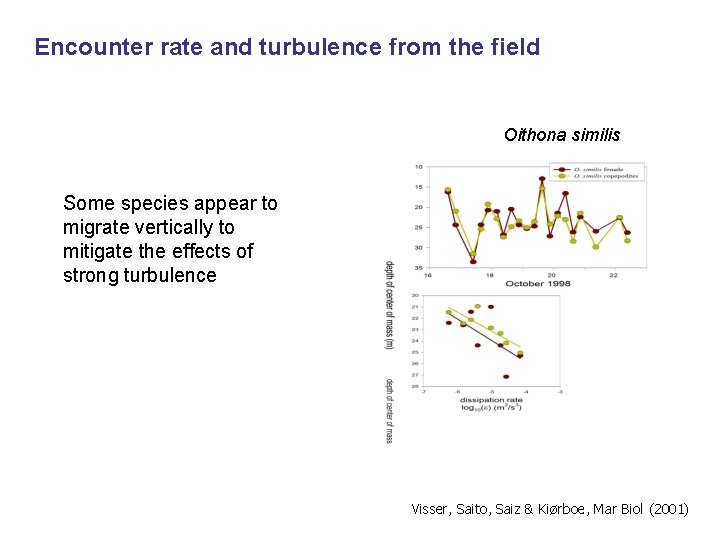
Encounter rate and turbulence from the field Oithona similis Some species appear to migrate vertically to mitigate the effects of strong turbulence Visser, Saito, Saiz & Kiørboe, Mar Biol (2001)
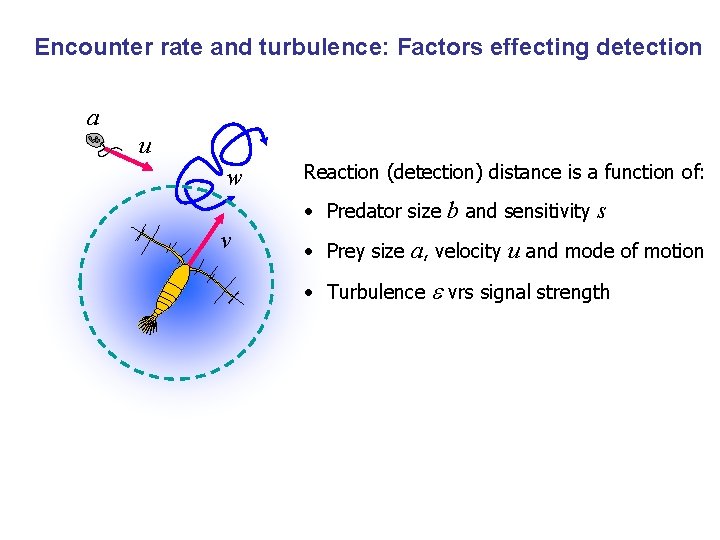
Encounter rate and turbulence: Factors effecting detection a u w Reaction (detection) distance is a function of: • Predator size b and sensitivity s v • Prey size a, velocity u and mode of motion • Turbulence e vrs signal strength
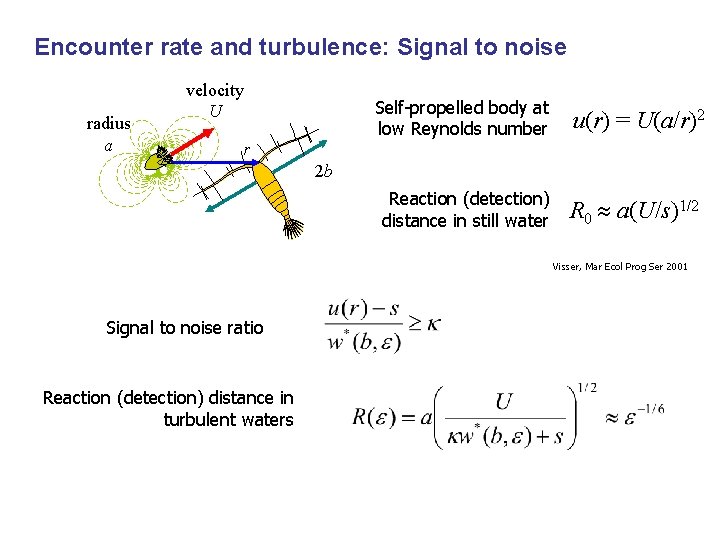
Encounter rate and turbulence: Signal to noise radius a velocity U Self-propelled body at low Reynolds number u(r) = U(a/r)2 Reaction (detection) distance in still water R 0 a(U/s)1/2 r 2 b Visser, Mar Ecol Prog Ser 2001 Signal to noise ratio Reaction (detection) distance in turbulent waters
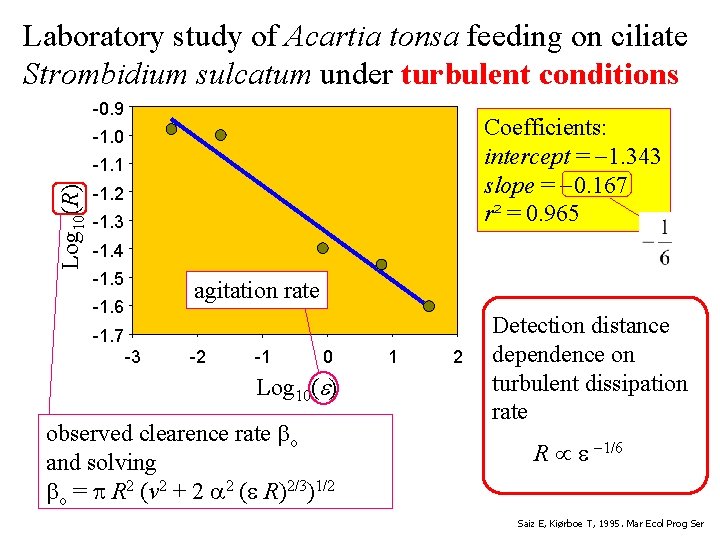
Laboratory study of Acartia tonsa feeding on ciliate Strombidium sulcatum under turbulent conditions -0. 9 Coefficients: intercept = -1. 343 slope = -0. 167 r² = 0. 965 -1. 0 Log 10(R) -1. 1 -1. 2 -1. 3 -1. 4 -1. 5 agitation rate -1. 6 -1. 7 -3 -2 -1 0 Log 10(e) observed clearence rate bo and solving bo = p R 2 (v 2 + 2 a 2 (e R)2/3)1/2 1 2 Detection distance dependence on turbulent dissipation rate R e -1/6 Saiz E, Kiørboe T, 1995. Mar Ecol Prog Ser
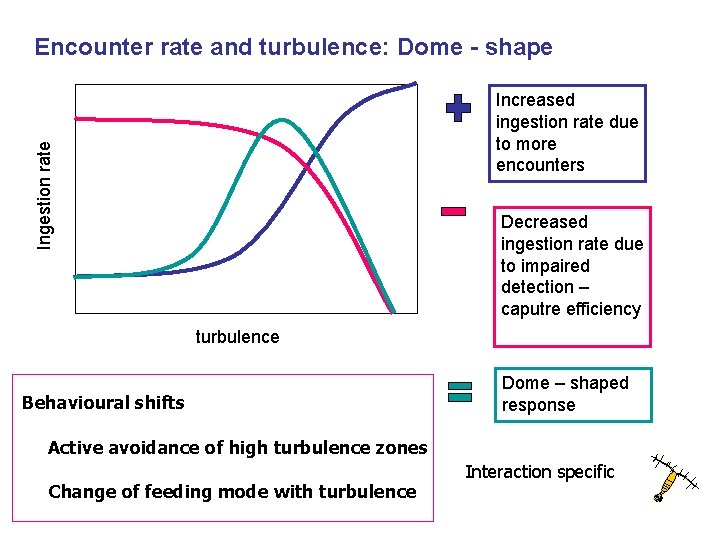
Encounter rate and turbulence: Dome - shape Ingestion rate Increased ingestion rate due to more encounters Decreased ingestion rate due to impaired detection – caputre efficiency turbulence Behavioural shifts Dome – shaped response Active avoidance of high turbulence zones Change of feeding mode with turbulence Interaction specific
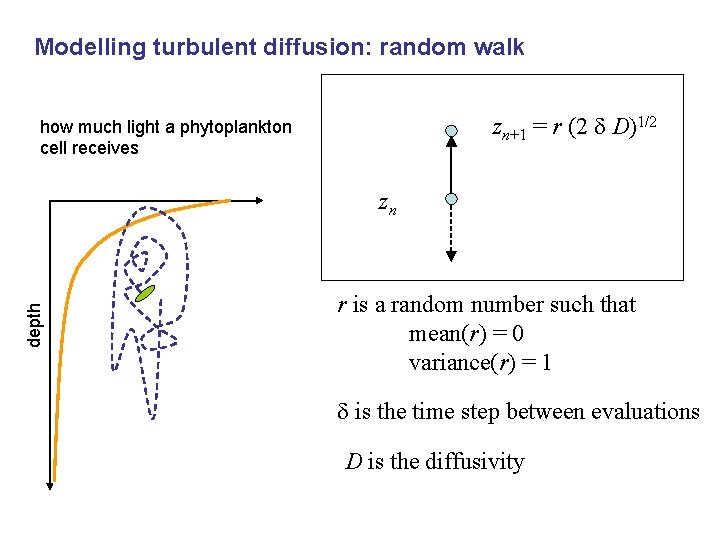
Modelling turbulent diffusion: random walk zn+1 = r (2 d D)1/2 how much light a phytoplankton cell receives depth zn r is a random number such that mean(r) = 0 variance(r) = 1 d is the time step between evaluations D is the diffusivity
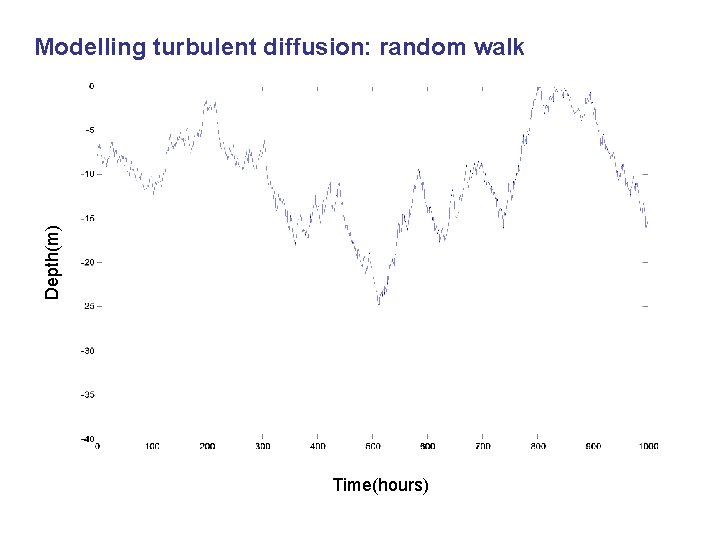
Depth(m) Modelling turbulent diffusion: random walk Time(hours)
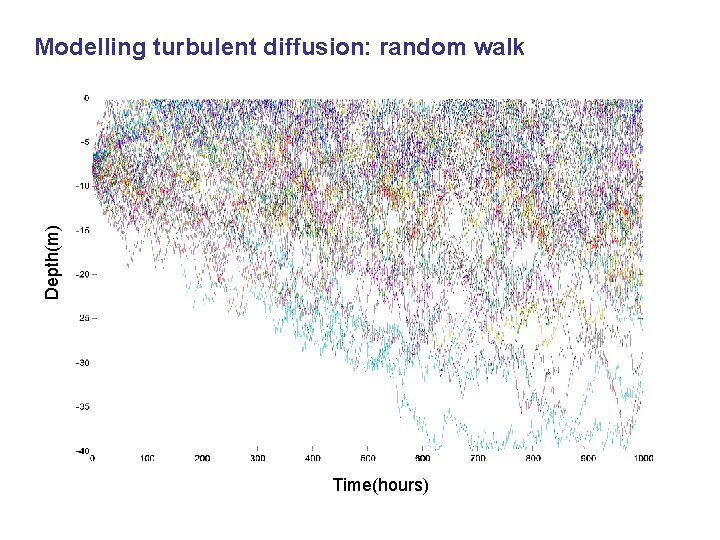
Depth(m) Modelling turbulent diffusion: random walk Time(hours)
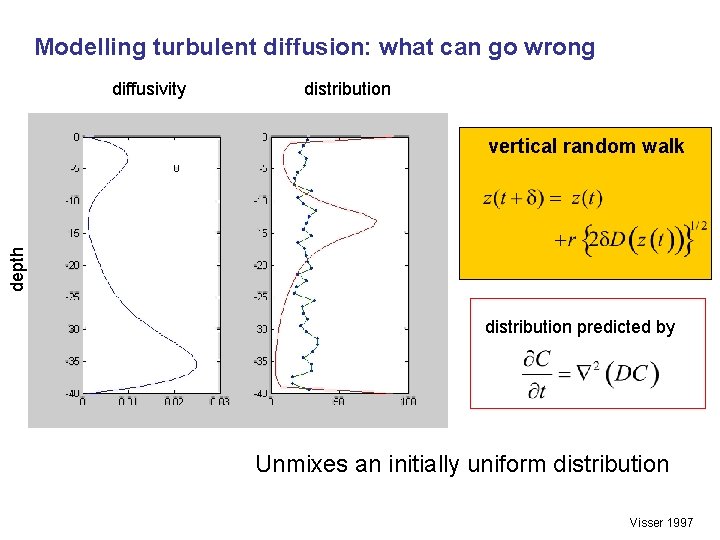
Modelling turbulent diffusion: what can go wrong diffusivity distribution depth vertical random walk distribution predicted by Unmixes an initially uniform distribution Visser 1997
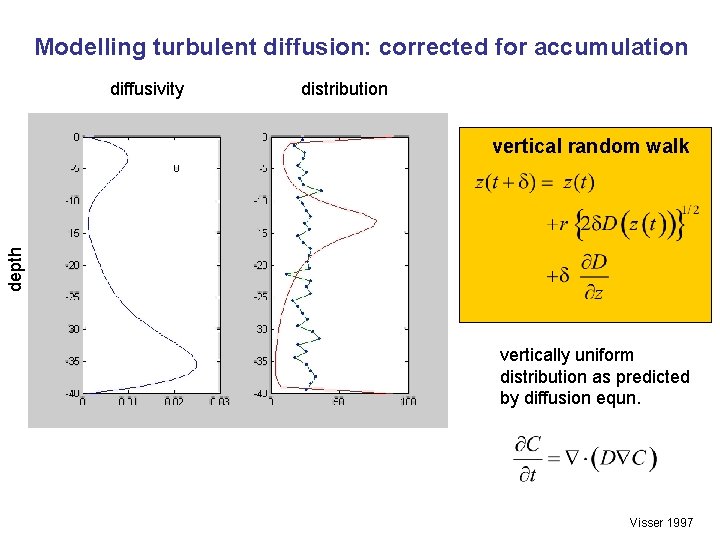
Modelling turbulent diffusion: corrected for accumulation diffusivity distribution depth vertical random walk vertically uniform distribution as predicted by diffusion equn. Visser 1997
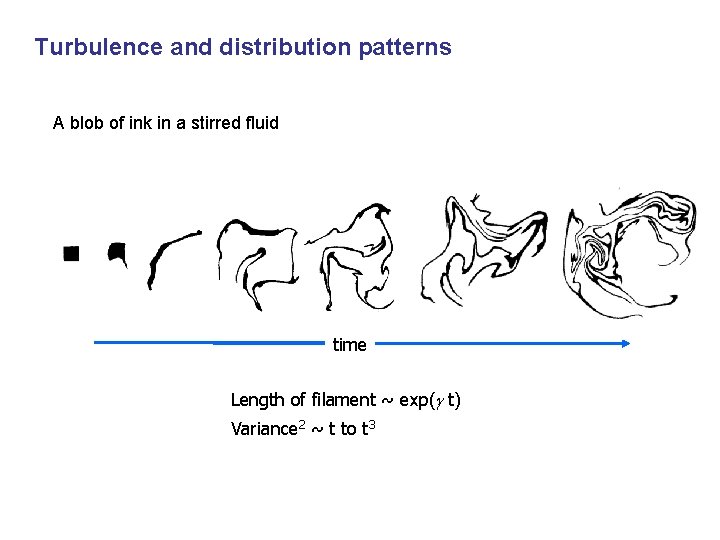
Turbulence and distribution patterns A blob of ink in a stirred fluid time Length of filament ~ exp(g t) Variance 2 ~ t to t 3
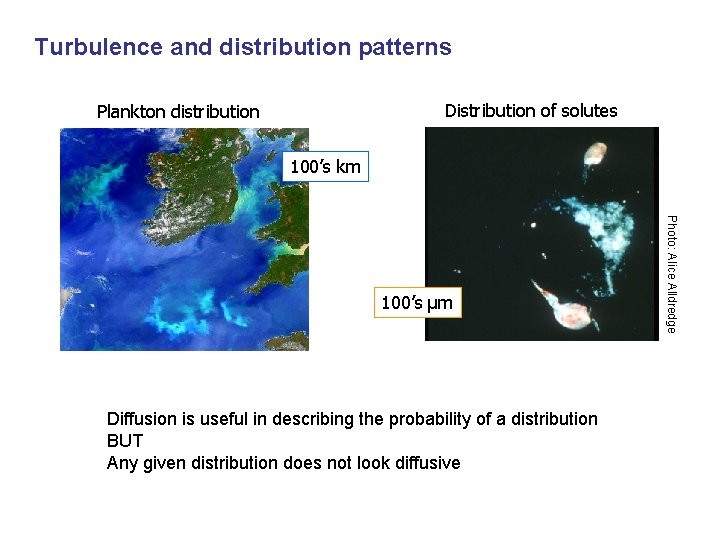
Turbulence and distribution patterns Distribution of solutes Plankton distribution 100’s km Diffusion is useful in describing the probability of a distribution BUT Any given distribution does not look diffusive Photo: Alice Alldredge 100’s µm
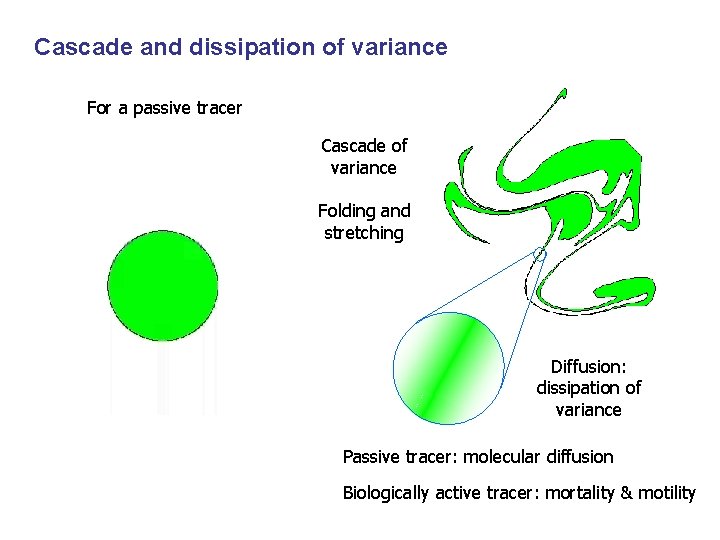
Cascade and dissipation of variance For a passive tracer Cascade of variance Folding and stretching Diffusion: dissipation of variance Passive tracer: molecular diffusion Biologically active tracer: mortality & motility
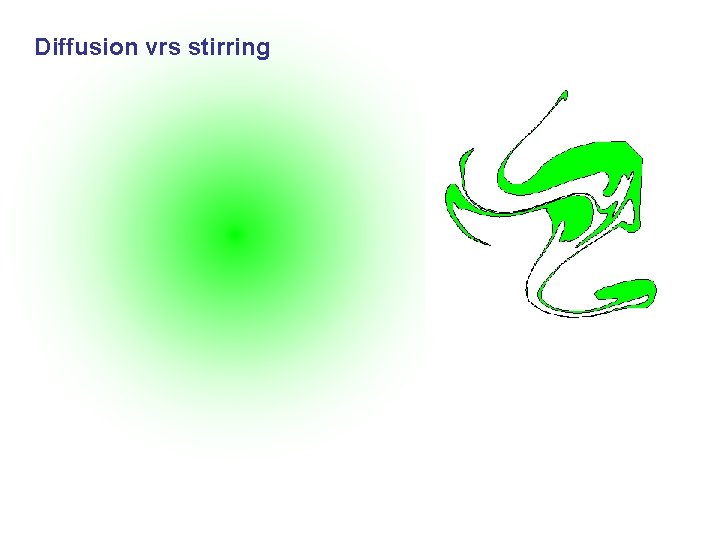
Diffusion vrs stirring
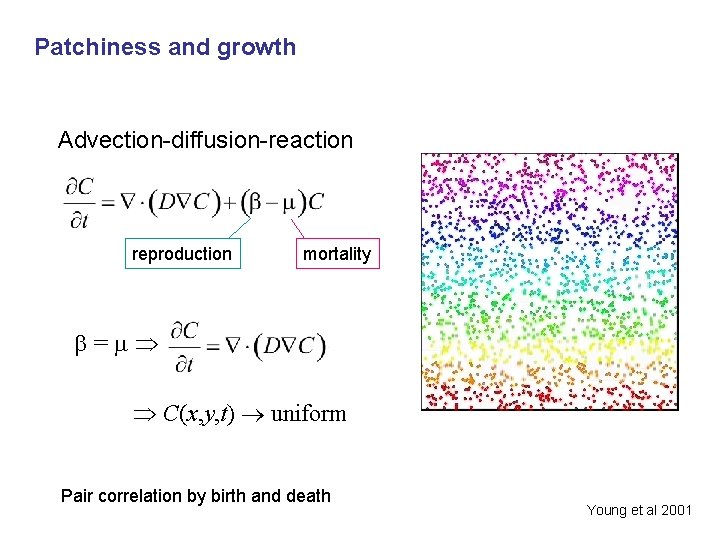
Patchiness and growth Advection-diffusion-reaction reproduction mortality b=m C(x, y, t) uniform Pair correlation by birth and death Young et al 2001
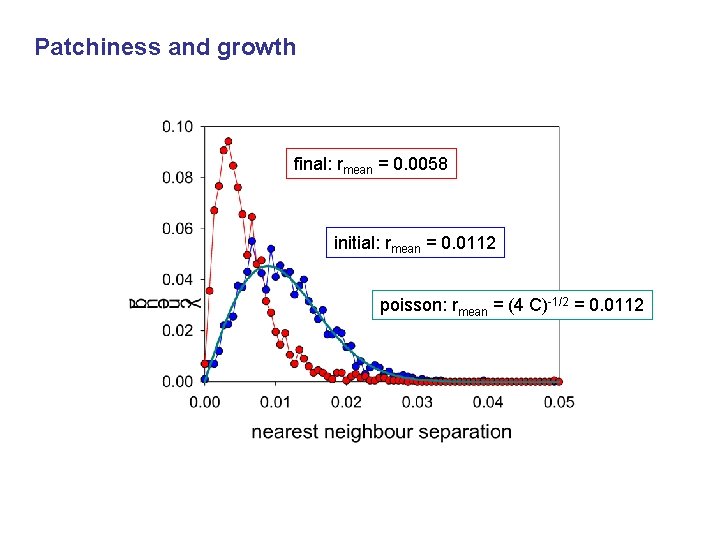
Patchiness and growth final: rmean = 0. 0058 initial: rmean = 0. 0112 poisson: rmean = (4 C)-1/2 = 0. 0112
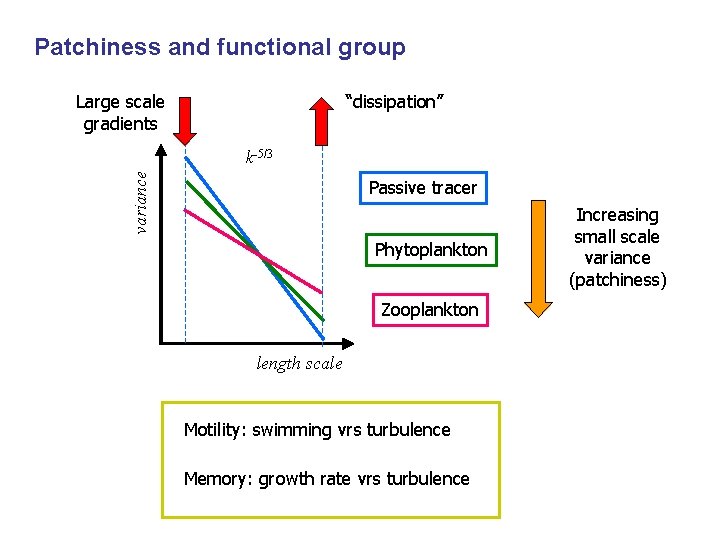
Patchiness and functional group “dissipation” Large scale gradients variance k-5/3 Passive tracer Phytoplankton Zooplankton length scale Motility: swimming vrs turbulence Memory: growth rate vrs turbulence Increasing small scale variance (patchiness)
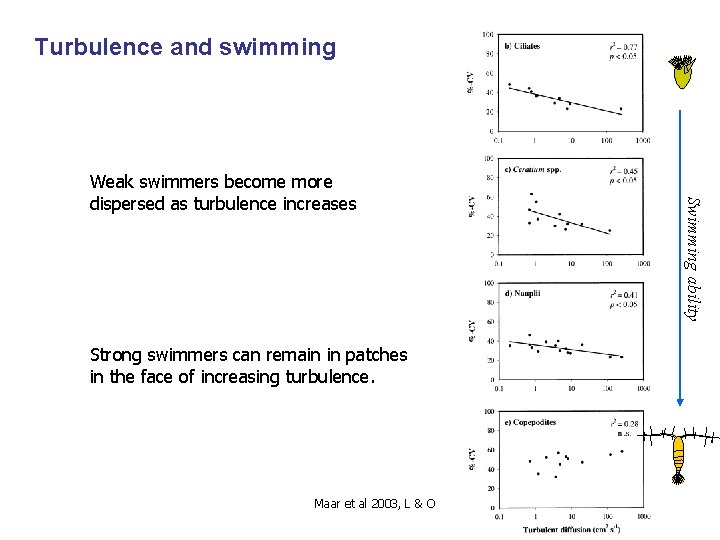
Turbulence and swimming Strong swimmers can remain in patches in the face of increasing turbulence. Maar et al 2003, L & O Swimming ability Weak swimmers become more dispersed as turbulence increases
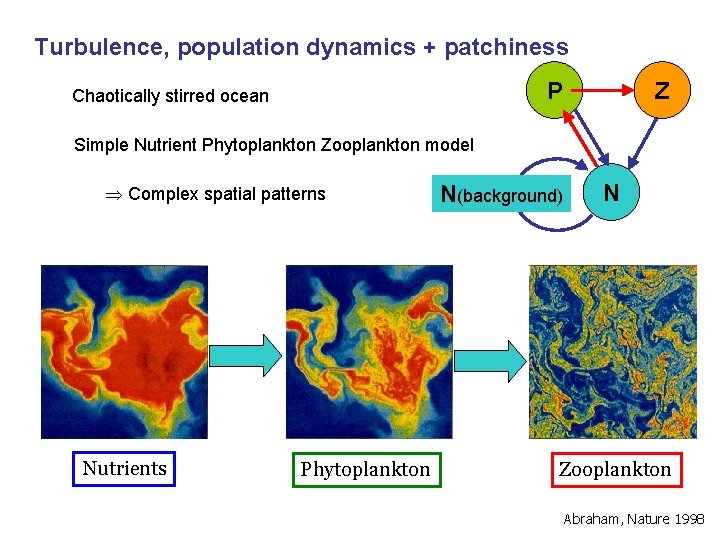
Turbulence, population dynamics + patchiness P Chaotically stirred ocean Z Simple Nutrient Phytoplankton Zooplankton model Complex spatial patterns Nutrients Phytoplankton N(background) N Zooplankton Abraham, Nature 1998
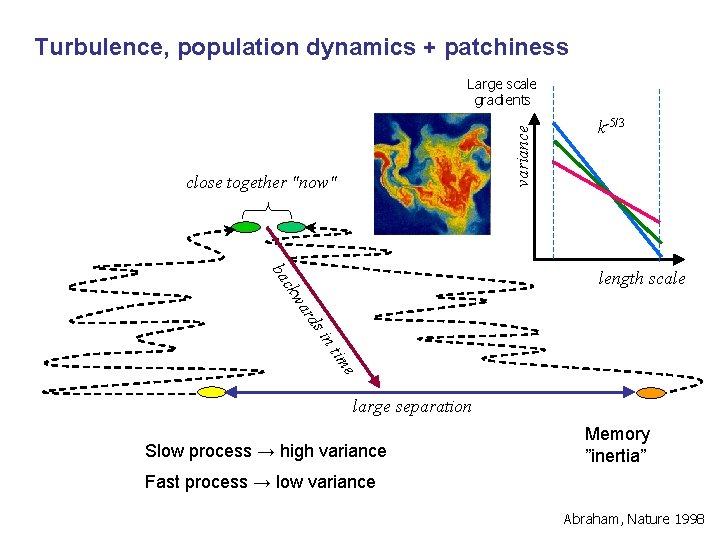
Turbulence, population dynamics + patchiness variance Large scale gradients close together "now" k-5/3 ds ar kw c ba length scale in e tim large separation Slow process → high variance Memory ”inertia” Fast process → low variance Abraham, Nature 1998
Summary statements Turbulence is an important environmental variable effecting the interaction of plankton. There are both positive effects (encounter rate) and negative effects (sensory impairment) leading to a general dome-shaped response curve. Because turbulence varies greatly in the vertical direction, some plankton can mitigate the negative effects of turbulence by migrating downwards. Chaotic stirring together with population dynamics generate complex spatial structures.
- Slides: 46